
You’re at the grocery store, and you’re reaching for something on the bottom shelf… but getting back up takes just a little more effort than it used to. Or maybe you watched your mom struggle to get out of a chair and thought, “I don’t want that to be me.”
That moment has a name. It’s called the tipping point. If you’re here, then you’ve probably already felt it. I’ve heard this from hundreds of clients who walked through my door feeling the same way.

Most people think they’re too late for strength training after 50. But they’re totally wrong. They think their joints can’t handle it. They think the weight room is for the young and already-fit.
But the truth is, your muscles still respond to training at 58, 65, or even 72. Real people get stronger every day, some who once needed help off the floor, even those written off as “just getting older.”
The confusion isn’t your fault. Most beginner programs are built for 25-year-olds. And the generic advice out there ignores what your body actually needs right now.
Here, I’ll walk through everything you need to know to start strength training safely… no gym intimidation required. You’ll learn exactly how to begin, which exercises matter most, how to protect your joints, and what to realistically expect in the first 8 weeks.
Quick Start: The Simplest Strength Training Plan for Seniors (Start Today)
You don’t need a complicated program. You don’t need to spend hours in the gym. All you need is a simple, highly effective plan that uses a minimalist approach.
For older adults, the main goal is to consistently and safely stimulate your muscles. But I’ve seen hundreds over 50 who arrived overwhelmed and doubtful.
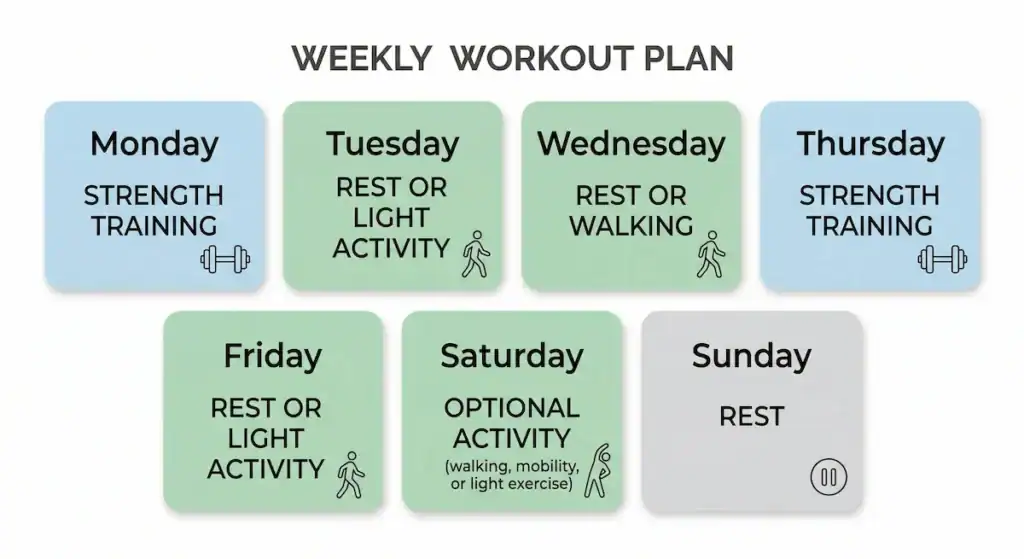
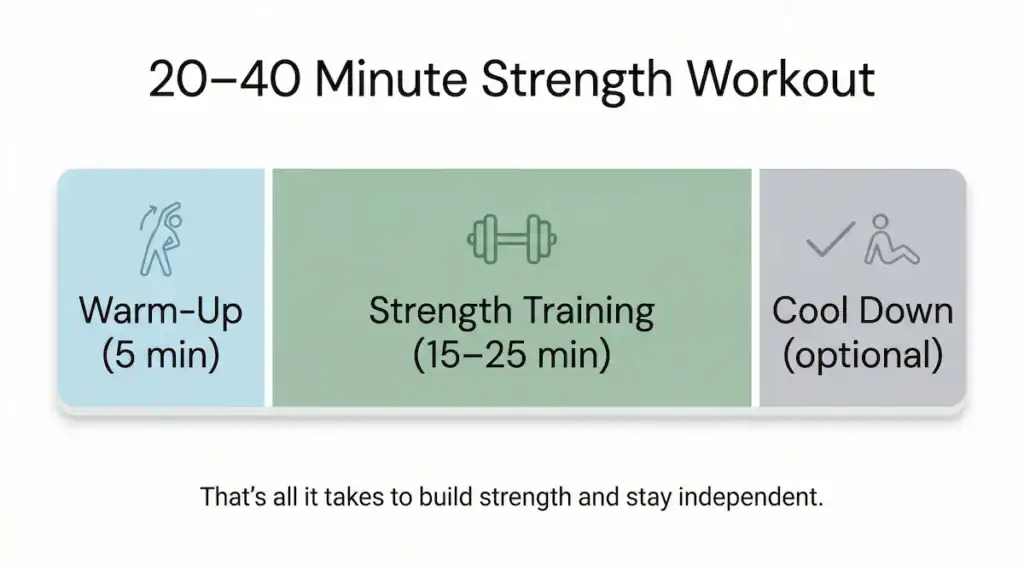
Most of them started with exactly what I’m about to show you. Two days a week. Five exercises. A highly effective workout can be done in just 20-40 minutes. That’s it.
Two days a week is enough to start. Research shows that training twice a week produces nearly the same muscle-building stimulus as training three days a week. But it also gives your body time to recover.
Here’s what the research shows…
A 2019 study published in the Journal of the International Society of Sports Nutrition found that, when weekly training volume was matched, resistance training performed 2 days per week produced similar strength and muscle-hypertrophy gains to training performed 3 days per week over 10 weeks.1
Nonconsecutive days perform best (i.e., Monday/Thursday, Tuesday/Friday), that way your muscles have time to repair and grow between sessions.
The Warm-Up:
Start with 3-5 minutes of light cardio on an elliptical, stationary bike, or brisk walking. This will raise your heart rate, lubricate your joints, and mentally get you ready for the workout.
If you’re working out at home, even a small under desk bike or walking pad with an incline can work great for this.
The Only 5 Exercises You Need
Forget the 20-exercise programs you’ve seen online. Those aren’t for you right now. Compound movements (exercises that train multiple muscle groups at once) give you the most benefit in the least time.
Pick one option from each category (free weight or machine):
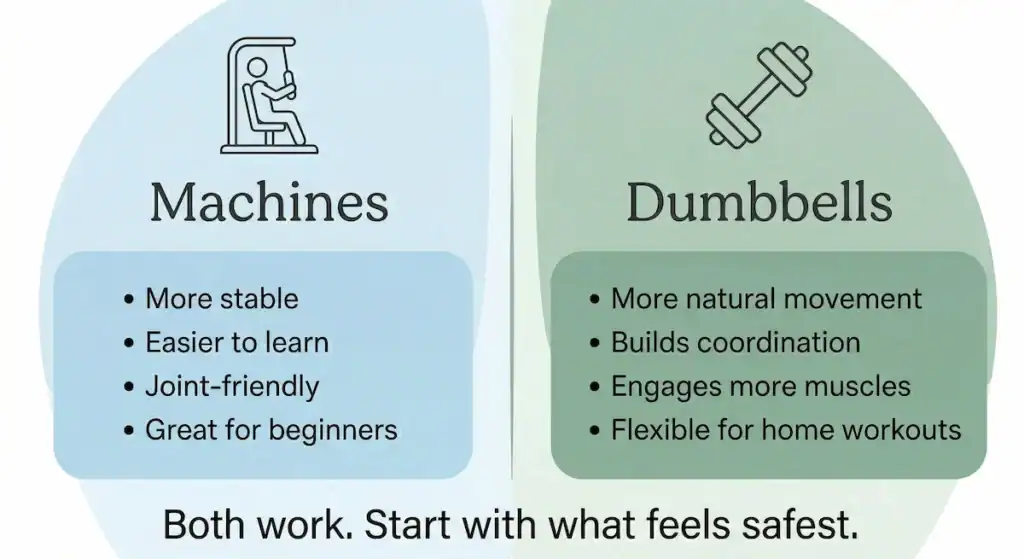
- Legs & Hips: Machine Leg Press or Dumbbell Goblet Squat
- Upper Body Push: Machine Chest Press or Dumbbell Bench Press
- Upper Body Pull: Machine Seated Row or Dumbbell One-Arm Row
- Shoulders: Machine Shoulder Press or Seated Dumbbell Shoulder Press
- Core: Machine Abdominal Flexion or the Dead Bug floor exercise
One of my clients is a woman in her early 70s. She came to me convinced she needed to “earn” the right to use machines. She didn’t. She started on the leg press and seated row, and within six weeks, she was carrying her groceries to her car without stopping to rest.
How to Actually Lift (This Part Matters More Than You Think)
Start with just 1 set per exercise for your first few weeks. One set sounds too easy, but it’s the right amount for a body that hasn’t trained in years. It creates enough stimulus to build strength without leaving you too sore to walk down stairs two days later.
Tracking your workouts (even in a simple notebook) makes a big difference in staying consistent and seeing your progress. You can use a dedicated workout log book or an app.
For each set, aim for 10 to 15 repetitions. Select a weight that feels easy for the first 10 reps but becomes challenging for the last 2-3 reps. If you finish a set and think you could easily complete 10 more reps with good form, then choose a heavier weight next time.
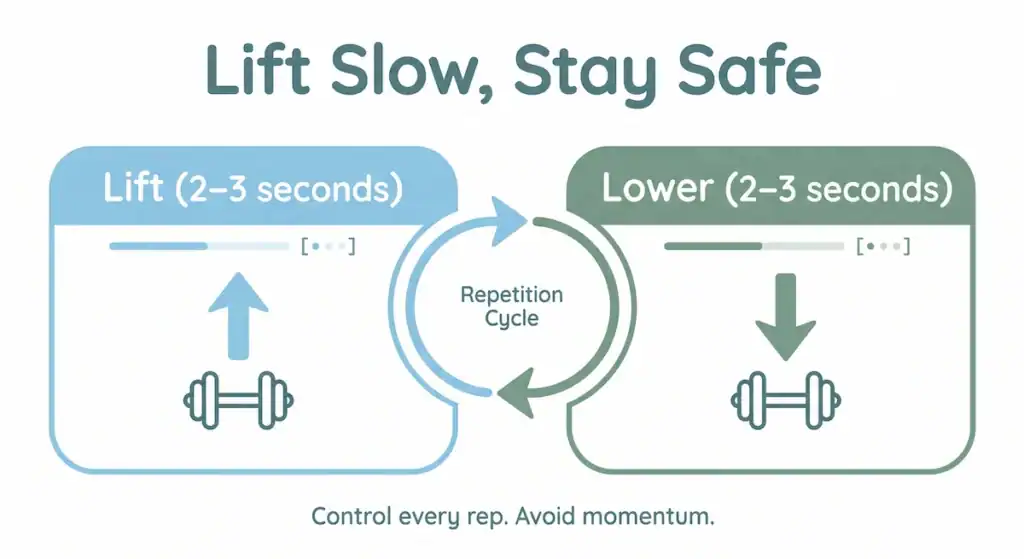
Perform each repetition slowly and with control. Take approximately 2-3 seconds to lift the weight and another 2-3 seconds to lower it. Avoid using momentum and focus on the movement. This careful pacing protects your joints and keeps tension on the muscles throughout each rep.
Remember to breathe regularly: exhale while lifting or pushing the weight (the hard part) and inhale as you lower or return to the starting position. After finishing a set, rest for 60-90 seconds before starting the next exercise to allow your muscles to recover.
A simple workout timer or interval app can help you stay on track without guessing.
How to Get Stronger & Keep Progressing
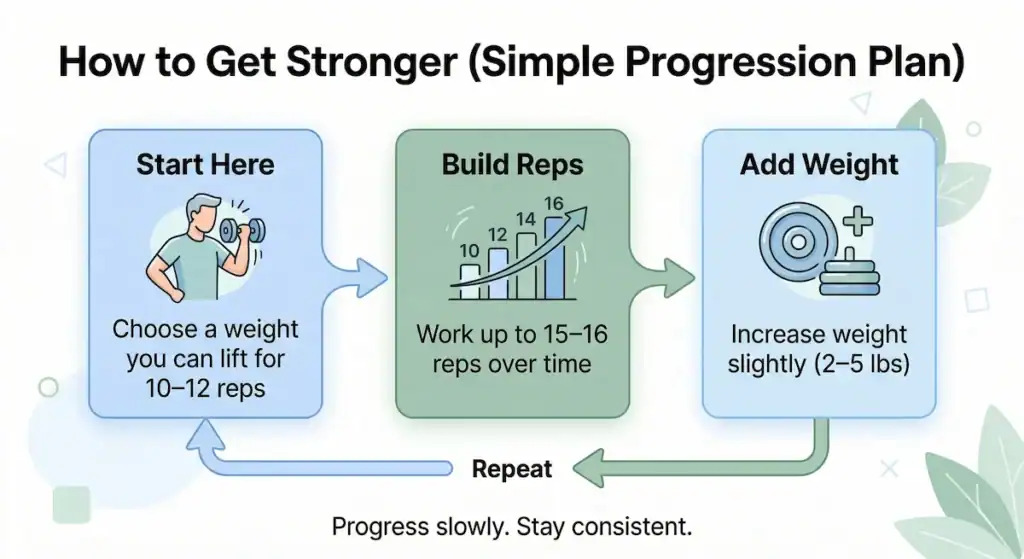
Use the double-progressive system to get stronger. First, increase your reps. Once you can easily complete the top of your rep range (15 or 16 reps) with good form for two workouts in a row, add about 5% more weight (usually 1-5 pounds).
Progress can feel slow here. But that’s not a flaw. It’s by design.
Treat your first two or three workouts as an assessment. Go light. Leave ego at the door. Sharp joint pain is your signal to stop that exercise and find a substitute. No single workout transforms you, but one bad injury can set you back months.
Why Strength Training Is Critical After 50 (It’s Not Only About Muscle)
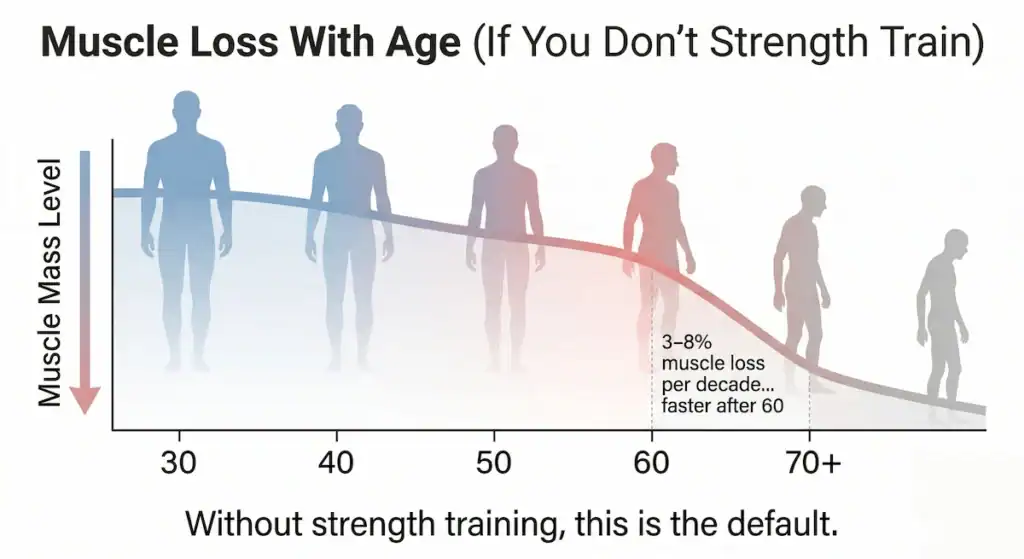
You’re not imagining it. The tasks that used to feel effortless now take more effort… stairs that never used to bother you. Groceries that feel heavier. A body that takes longer to bounce back.
This isn’t just aging. It’s called sarcopenia. And it’s been silently working against you for years now.
Sarcopenia is the age-related loss of muscle mass, strength, and function. It starts as early as age 30 and progresses at a rate of 3-8% per decade. After 60, the rate becomes even more noticeable. So without resistance training, your body loses 4-6 pounds of muscle tissue every decade (and loss can be greater in older age).
A 2024 review in the Journal of Applied Sports Science found that sarcopenia (the age-related loss of muscle mass, strength, endurance, and function) typically begins after age 30, with muscle mass declining about 3–8% per decade and the rate of loss increasing after age 60.2
Ten pounds of muscle… gone. And most people have no idea it’s happening until the damage is done and they really feel it.
The Chain Reaction You Didn’t Know About
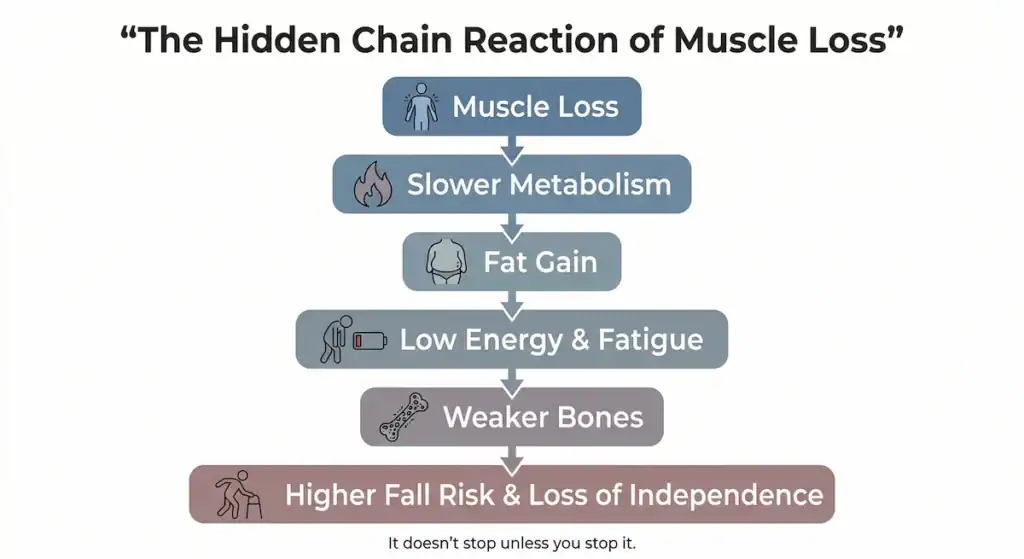
Muscle loss doesn’t just stop at weakness. It triggers a cascade.
Muscle is a metabolically active tissue. This means losing it directly lowers your resting metabolic rate (RMR) by about 3% per decade. So your body will burn fewer calories at rest.
This slowdown leads to an average gain of 15 pounds of fat per decade, even if you don’t eat more.
At the cellular level, your mitochondria (the energy-producing structures inside your muscle cells) deteriorate in both number and function as you age. Less mitochondrial output means less energy, more fatigue, and slower recovery.
Then there’s bone density. Adults who skip strength training can lose 0.3-1% of their bone density each year.3 This accelerates osteoporosis and the risk of fractures at the spine and hips.
A 2018 study in PLoS One found that older adults who spent more time sedentary and less time in moderate-to-vigorous physical activity had poorer bone mass, while resistance-style and weight-bearing exercise are known to help preserve or improve bone density in older adults.4
Why Strength Training Reverses the Damage
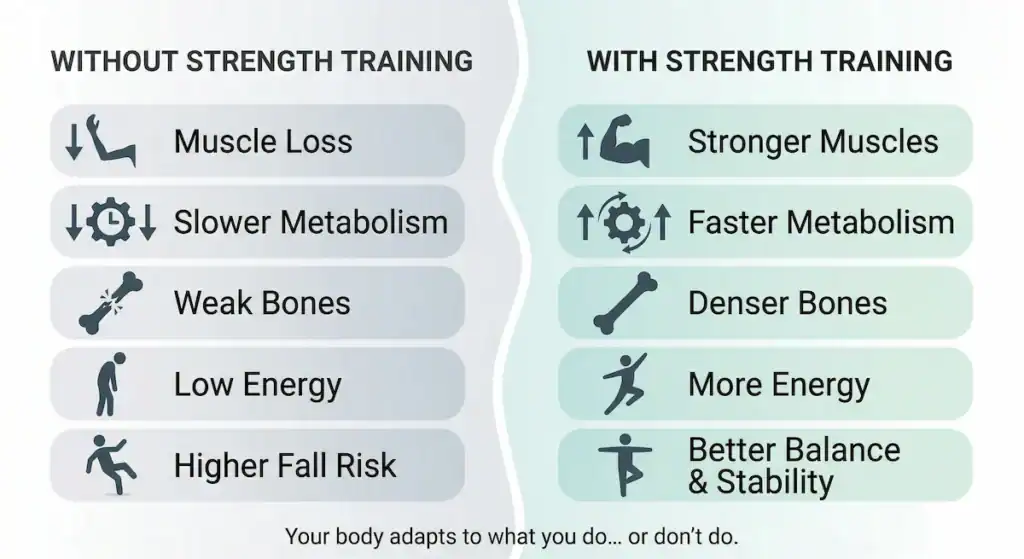
Lifting weights is not only about building muscle. It directly targets every piece of these age-related declines. Including the “big three” health issues: sarcopenia, metabolic decline, and osteoporosis.
Each pound of trained muscle burns about 9 calories a day at rest, versus 6 for untrained muscle.5 More muscle equals a faster metabolism, 24/7.
A 2023 analysis in Stronger by Science found that each pound of muscle burns about 6 calories per day at rest, and when active movement and load‑carrying costs are included, trained muscle can increase total daily energy expenditure by roughly 9–10 calories per pound.6
Weight-bearing exercise stimulates bone remodeling, making your skeleton denser and more fracture-resistant. Stronger muscles also improve balance and coordination. This reduces fall risk by roughly one-third.
Simple tools like a balance pad can also help to improve stability and reduce fall risk.
The cellular benefits go even deeper. A study of older adults who trained consistently for 6 months found that their muscle mitochondria regenerated to closely resemble those of adults in their 20s. Six months. That’s not a small shift. It’s like a biological reset.
A 2007 study from PLoS Biology found that older adults who trained consistently for 6 months saw their muscle mitochondrial gene‑expression profile reverse to closely resemble that of adults in their 20s, indicating a partial molecular ‘re‑youthening’ of muscle mitochondria.7
Strength training also improves insulin sensitivity, lowers LDL cholesterol, raises HDL cholesterol, reduces blood pressure, and is proven to significantly improve mood and memory.
Leg and grip strength are two of the strongest predictors of life expectancy and protection to heart disease in the research literature.
A 2015 study in The Lancet involving nearly 140,000 adults across 17 countries found that weaker grip strength strongly predicted higher risks of heart attack, stroke, and premature death.8
A 2010 study in the Journal of the American Geriatrics Society reported that poorer leg strength is independently associated with increased mortality in older men, highlighting leg strength as a key predictor of life expectancy.9
The Real Reasons Seniors Start Lifting Weights
Ask most people over 55 why they finally started strength training, and they will rarely tell you, “I wanted bigger arms.”
They say things like:
- “I couldn’t get up off the floor.”
- “I didn’t want to end up like my mother.”
- “My doctor showed me my bone scan, and I got scared.”
The benefits of strength training for seniors go far deeper than aesthetics. These are the ones that actually change lives.
Staying Independent Is the Whole Game
Overhead pressing strength determines whether you can stow your carry-on without asking for help. Leg strength determines whether you can get up from a low chair or a public toilet without grabbing the wall. These aren’t gym metrics… but they’re life metrics.
A 67-year-old client couldn’t get up from the floor. Six months later, he was helping his elderly neighbor carry boxes. This shift—from needing help to being able to give it—is the real value of strength training.
For frail seniors, the range of outcomes is even wider. Research documents cases in which consistent strength training helped individuals transition from wheelchair dependence back to walking independently.
A 2010 case study in NeuroRehabilitation documented that 10 weeks of locomotor plus resistance training enabled an elderly person with chronic spinal‑cord injury to regain independent walking, having previously relied on a wheelchair.10
Your Bones Need This More Than You Think
Weight-bearing exercise stimulates your skeleton to lay down new bone tissue. Denser bones indicate fewer fractures, especially at the spine and hips, where osteoporosis strikes hardest.
A 2018 review in Clinics found that weight‑bearing exercise stimulates the skeleton to lay down new bone tissue, increasing density at the spine and hip and reducing the risk of osteoporotic fractures.11
This isn’t a slow and marginal benefit. It’s a direct defense against the kind of injury that permanently changes the quality of life.
The BIG Mental Health Benefit
Resistance training has been shown to reduce symptoms of clinical depression. One study found that 80% of older participants no longer met clinical criteria for depression after just 10 weeks of strength training.
A 2001 study in the Journals of Gerontology found that 10 weeks of high‑intensity resistance training led to resolution of clinical depression in the majority of older adults who started with a diagnosis. Many analyses describing remission in over three‑quarters of the exercise group.12
Mood, memory, and cognitive sharpness all improve with consistent lifting. A woman I train kept telling me she felt “foggy” in the afternoons. She stopped mentioning it four weeks into training.
Pain Goes Down, Sleep Goes Up
Stronger lower back muscles provide better spinal support and shock absorption. This substantially reduces chronic lower back pain.13
Strength training also reduces the specific discomfort that’s linked with arthritis and fibromyalgia.14 This happens not by avoiding stress on the joints, but by building the muscle that protects them.
Sleep quality plus duration also improves measurably in people who lift weights consistently. This alone is worth starting strength training, since millions of seniors wake up at 3am and can’t get back to sleep.
A 2022 study involving 386 adults found that consistent resistance training measurably improved both sleep duration and quality, with the weight‑lifting group gaining about 40 extra minutes of sleep per night and higher sleep
efficiency than control and cardio‑only groups.15
If better sleep and recovery are hard to come by, BioTRUST Ageless Multi Magnesium is one option I like. Its blend of magnesium forms plus L-theanine is designed to support muscle relaxation and a calmer nighttime wind-down, which can make it easier to stay consistent with your training.
A 7-form magnesium complex designed for adults 40+ to support restful sleep, relaxation, muscle recovery, and whole-body health. Each serving provides 350mg of magnesium plus L-theanine and vitamin B6 for added nervous-system support.
- 7-Form Magnesium Blend: Combines glycinate, taurate, malate, citrate, Sucrosomial® magnesium & complementary forms
- Sleep & Relaxation Support: Magnesium glycinate plus L-theanine help support calm, relaxation & restful sleep
- Muscle Recovery & Comfort: Supports normal muscle relaxation, recovery & energy production
- Enhanced Absorption: Includes clinically studied Sucrosomial® Magnesium for high absorption & gentle digestion
- Heart, Bone & Nervous System Support: Provides 350mg of magnesium plus vitamin B6 for essential body functions

Your Cells Actually Get Younger
At a cellular level, six months of strength training regenerates mitochondria in older adults, bringing them to levels similar to those of people in their 20s.16
Older adults who strength train have experienced favorable changes in roughly 175 to 179 specific genes associated with age and exercise. These genetic adaptations cause the mitochondria to regenerate to create a youthful “genetic fingerprint.”
MRI scans show that the thigh muscles of a 70-year-old who trains consistently can look almost identical to those of a 40-year–old.16
Strength training creates new muscle cells through mechanotransduction. When you lift heavy weights, the mechanical stress causes microscopic damage (microtrauma) to your muscle fibers. This physical tension triggers a biochemical reaction that signals your body to make new cells to fix the damage.
Your body then responds by producing satellite cells. These act like building blocks to fuse your existing muscle fibers to repair the microtrauma. This results in thicker, stronger muscle tissues.
Your biology responds to the demand you place on it. It adapts by getting stronger. It always has.
Is Strength Training Safe for Seniors? What Most Doctors Won’t Tell You
The most common thing I hear from new clients over 60 isn’t “I’m ready.” It’s “Is this even safe for someone my age?”
The answer is… YES.
Most Seniors Can Start Today
You do not need to wait for your next annual physical. You do not need blood work cleared first. You can start this week, unless you’re currently managing a specific medical condition that a doctor is actively treating.
A 2025 review in Sports Medicine found that heavy strength training is safe and highly beneficial for healthy older adults, indicating that people without specific medical conditions can safely start a well‑structured strength‑training program.17
The real risk isn’t lifting weights. It’s the decade-by-decade muscle loss that happens when you don’t.
I’ve coached clients in their 80s and 90s. One woman didn’t touch a weight until she was 87 and still made measurable strength gains into her 90s.
These aren’t outliers. They’re what happens when people stop waiting for the “right” time.
The science backs this up… A 1990 JAMA study of frail nursing‑home residents, with an average age of 90, found that 8 weeks of high‑intensity resistance training increased leg strength by about 170% and increased thigh muscle area by 9%. Several participants showed marked gains in walking ability and functional independence.18
When You Should Check With a Doctor First
Most people don’t need medical clearance to start lifting. A specific group does.
Check with your physician before starting if any of the following apply to you:
- a history of heart disease
- chest pain or severe dizziness during exertion
- high blood pressure that isn’t well controlled
- respiratory conditions like asthma
- recent surgery
- an injury to a bone, joint, or muscle that exercise might aggravate
Common medications prescribed to seniors can directly affect your training.
Statins, corticosteroids, and beta-blockers all impact muscle recovery, heart rate response, and connective tissue strength in ways that matter when you’re lifting. A quick conversation with your doctor about your specific prescriptions is worth it, not to get clearance to start, but to train smarter.
If you have any family history of cardiac issues, wearing a heart rate monitor during your workouts is a practical safeguard worth building into your routine from day one.
I usually recommend my older clients to get an Apple Watch. It’ll track your heart rate and other vitals during the workout (and the rest of the day). Also has injury fall detection in case of accidents.
“Will Lifting Weights Hurt My Joints?”
Muscles function like the shock absorbers and springs of an automobile. Strong muscles protect joints from harmful external forces. Weak muscles leave those same joints exposed.
Research regularly shows that strength training decreases physical discomfort and reduces pain associated with arthritis and fibromyalgia.19 The joints aren’t being worn down by lifting… they’re being defended by the muscle built around them.
Here’s the simple rule: start with light weights, prioritize form over load, and stop immediately if any movement produces a sharp joint pain (not muscle fatigue, which is normal; sharp pain, which is a signal). Follow that, and your joints will thank you.
“Is It Actually Dangerous at My Age?”
Skipping strength training is a dangerous choice. Losing 5 to 10 pounds of muscle per decade triggers metabolic slowdown, accelerated fat gain, and deteriorating bone density. That cascade is what leads to falls, fractures, and lost independence.
Your body builds muscle through the exact same physiological mechanisms it always has. Mechanical tension on the muscle fiber, followed by repair and adapting.
That process doesn’t expire with your birthday. There are no exercises you must permanently avoid purely because of your age.
What changes are your starting point and your recovery window? Start lighter than you think you need to. Progress slowly. Control every rep. Those adjustments aren’t limitations; they’re the strategy.
One of my clients, a man in his early 70s, came to me convinced that his bad knees meant lifting was off the table. His doctor had never explicitly told him that… he’d just assumed it. Within 8 weeks of training, his knee pain had decreased noticeably because the muscles around the joint had finally gotten strong enough to do their job.
Strength training when done correctly isn’t a risk for seniors. Not doing it is.
The Best Strength Exercises for Seniors (Chosen for Real Life, Not the Gym)
Key Takeaways:
- Grip strength, trained through farmer walks and pulling movements, is one of the strongest measurable predictors of longevity.
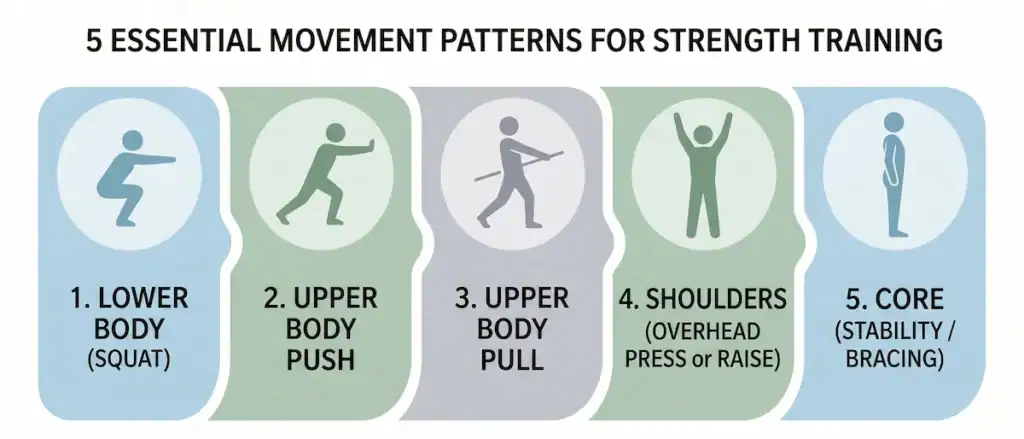
- Prioritize compound movements (squats, rows, presses, hip hinges) that train multiple muscle groups and map directly to real daily tasks.
- Modifications are available for every exercise; incline push-ups, wall squats, and resistance-band variations make this accessible regardless of starting fitness level.
Most exercise lists for older adults are built around what’s popular, not what’s practical. This list is different.
Every exercise below was chosen because it directly maps to something you actually need to do:
- getting up from a chair
- carrying bags
- reaching a shelf
- climbing stairs
- picking something up off the floor without flinching
You can do all of these at home with dumbbells, resistance bands, or just your bodyweight.
Recommended Equipment:
If you’re training at home then getting a simple set of adjustable dumbbells or resistance bands is more than enough to get started. Adjustable dumbbells will be a good investment since it prevents you fro
m having to buy additional dumbbells as you get stronger (they’ll also take up less space).
I recommend these adjustable dumbbells for men
Lower Body Exercises for Seniors
Your legs are your foundation. Leg strength determines your fall risk, your ability to get up independently, and how long you stay out of a wheelchair.
Squats are the starting point.
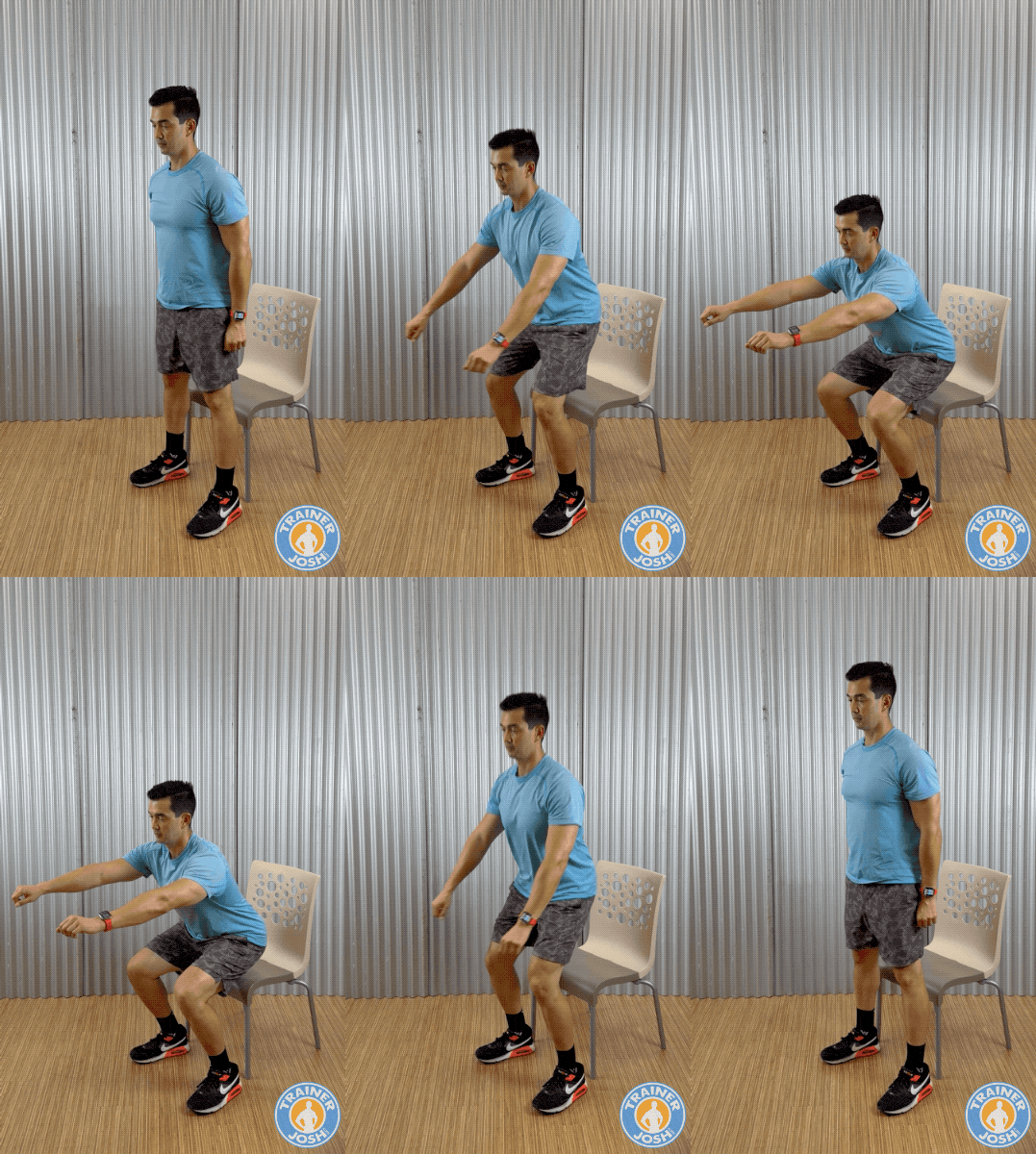
Bodyweight squats work. Wall squats using an exercise ball between your back and the wall add support if balance is a concern. Goblet squats (holding a dumbbell at your chest) add load once bodyweight feels easy. Resistance band squats are a strong at-home option that adds challenge without heavy equipment.
Reverse lunges are safer on the knees than forward lunges because the movement pattern reduces shear force on the joint.
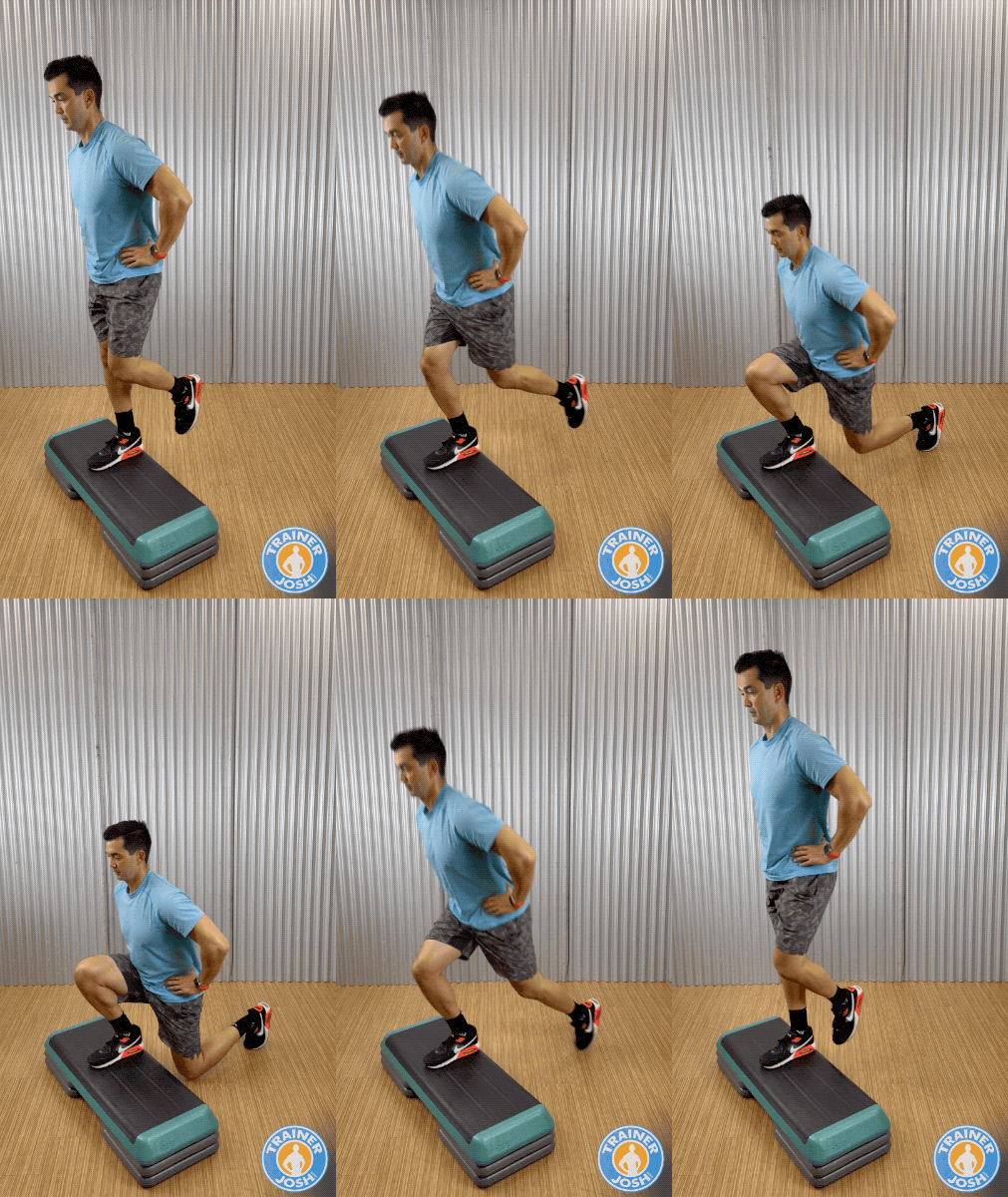
Step backward, lower your back knee toward the floor, and press back up. The glutes do most of the work.
Step-ups on a sturdy box or stair build single-leg strength, balance, and coordination simultaneously. I use this step up box with my clients.
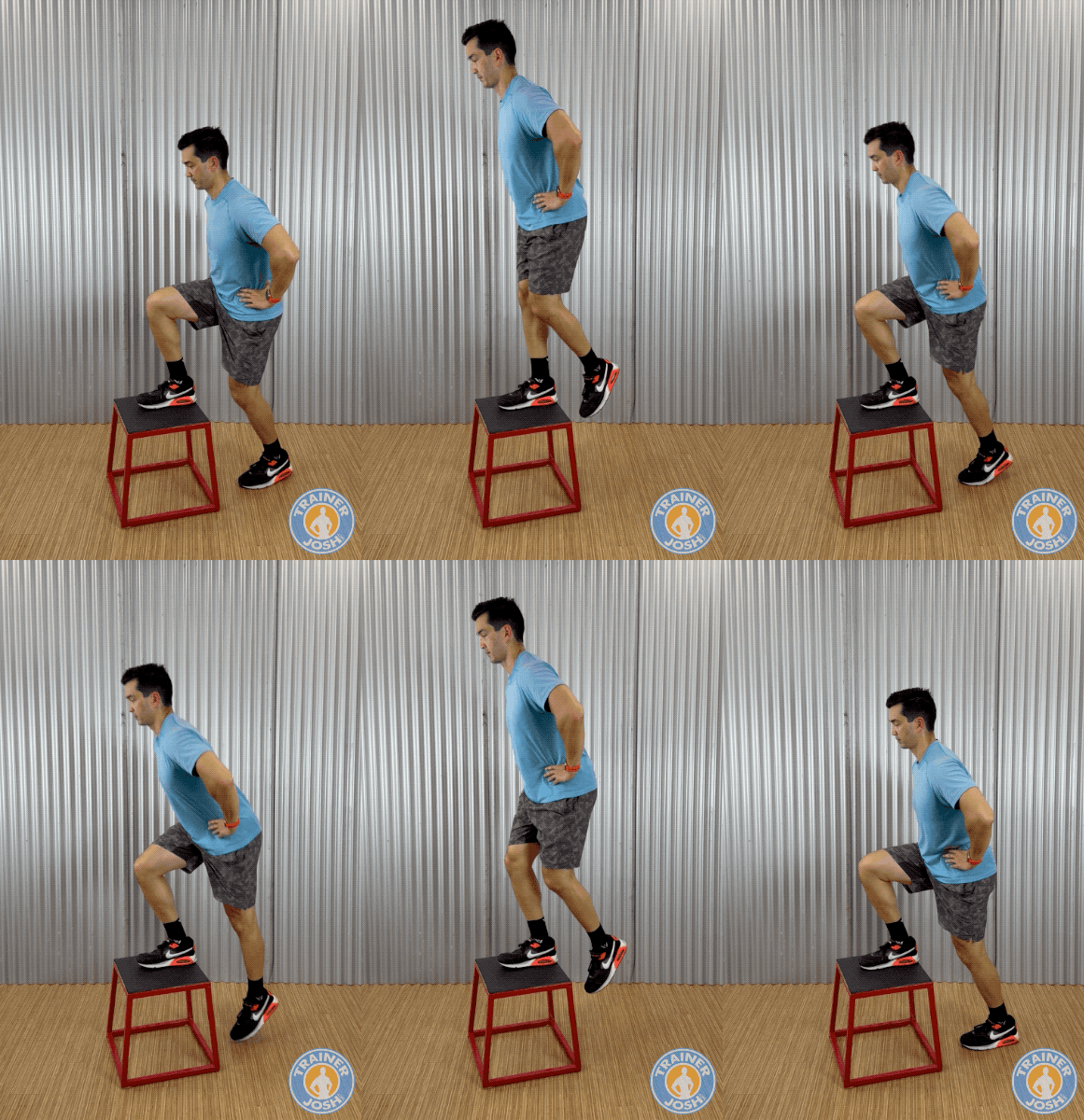
One of my clients, in his late 60s, told me step-ups were the exercise that finally made climbing stairs feel effortless again. He started with a 6-inch step.
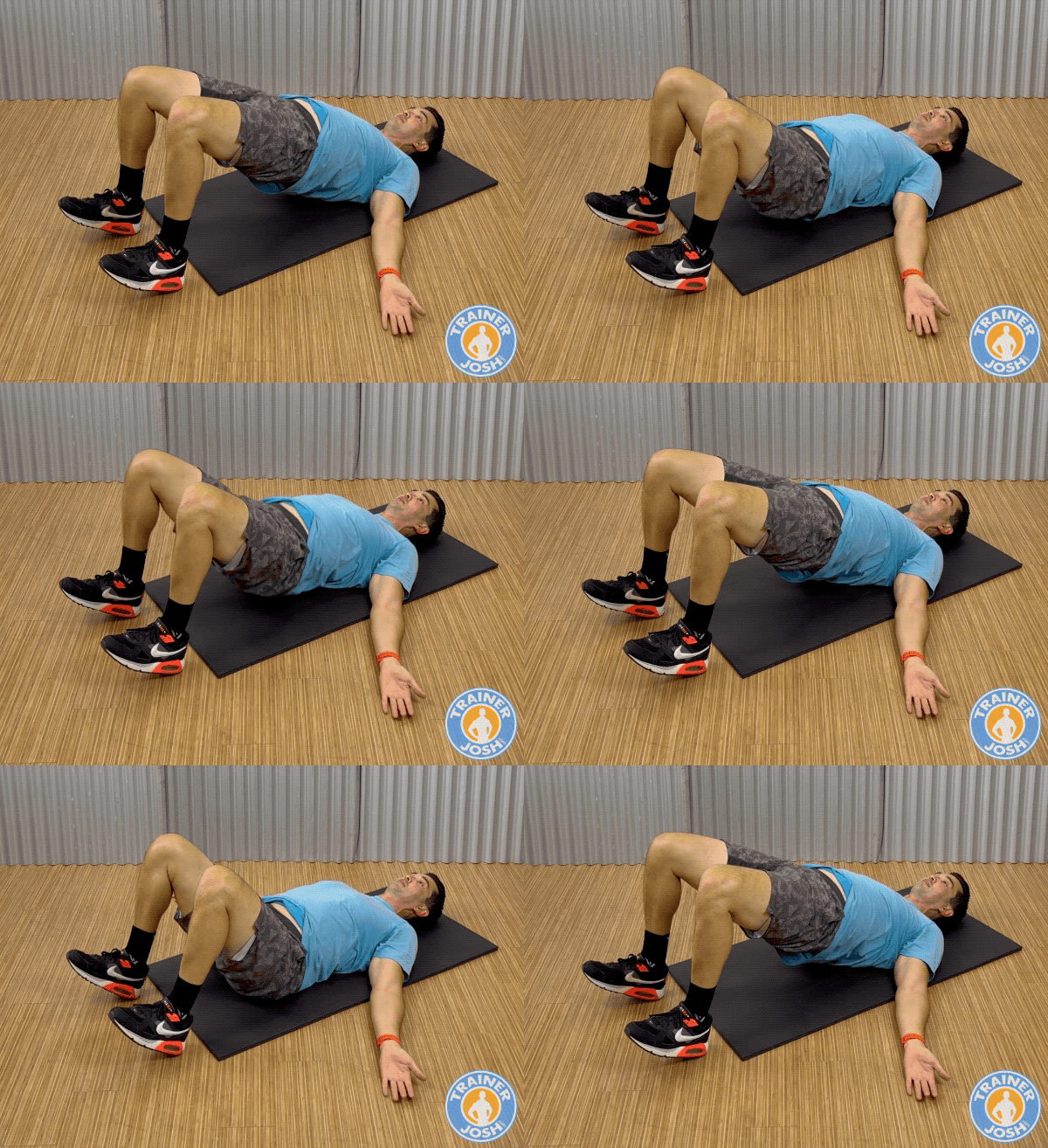
Glute bridges (lying on the floor and pressing your hips upward) restore posterior chain function and are gentle enough for almost everyone, including those with significant knee or hip discomfort.
Upper Body Exercises for Seniors
Upper body strength keeps you self-sufficient:
- lifting suitcases
- carrying grandchildren
- opening heavy doors
- getting up from the floor
Push-ups train the chest, shoulders, and triceps while working your core. Floor push-ups are the goal, but incline push-ups against a wall or countertop are a legitimate starting point.
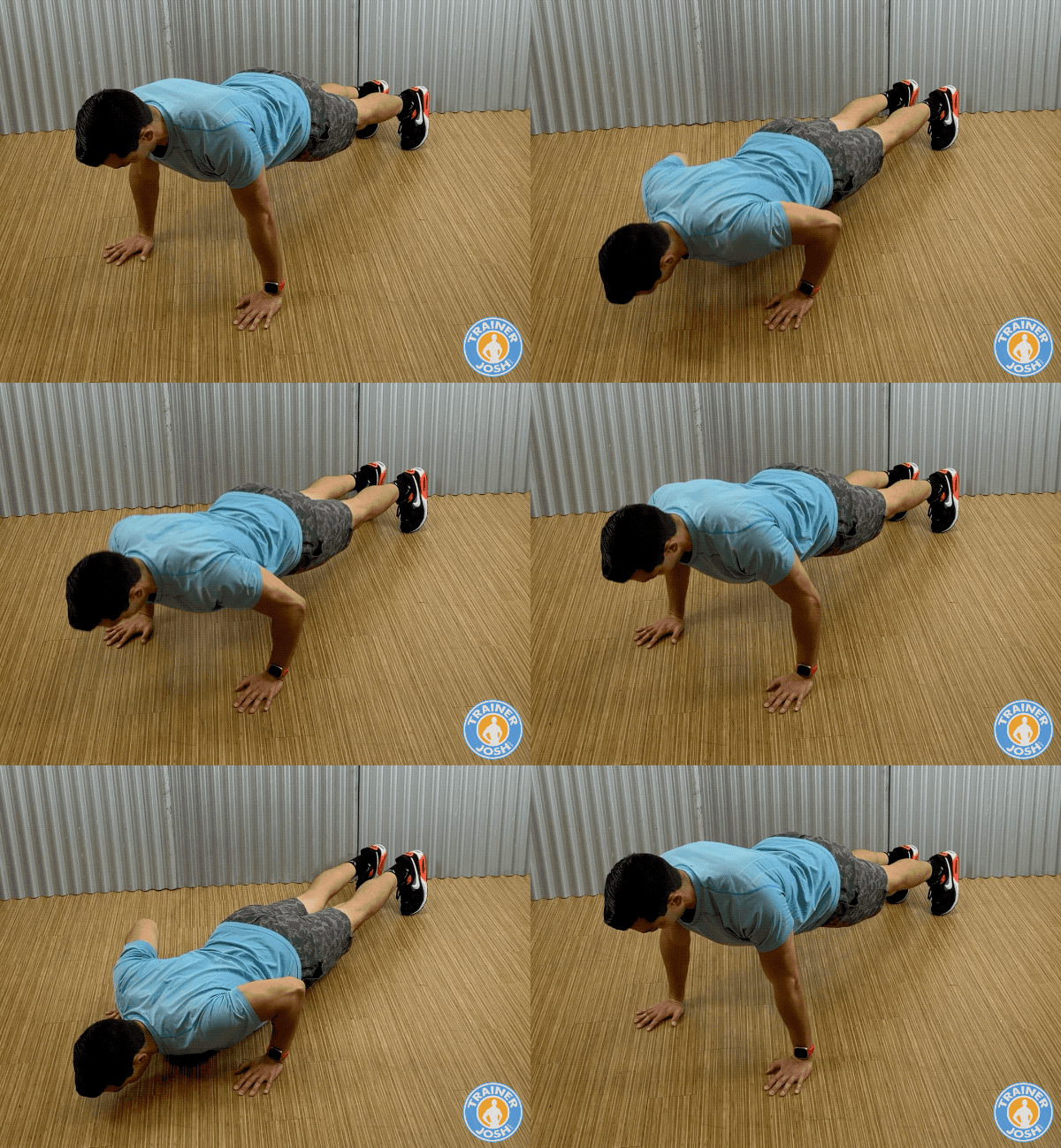
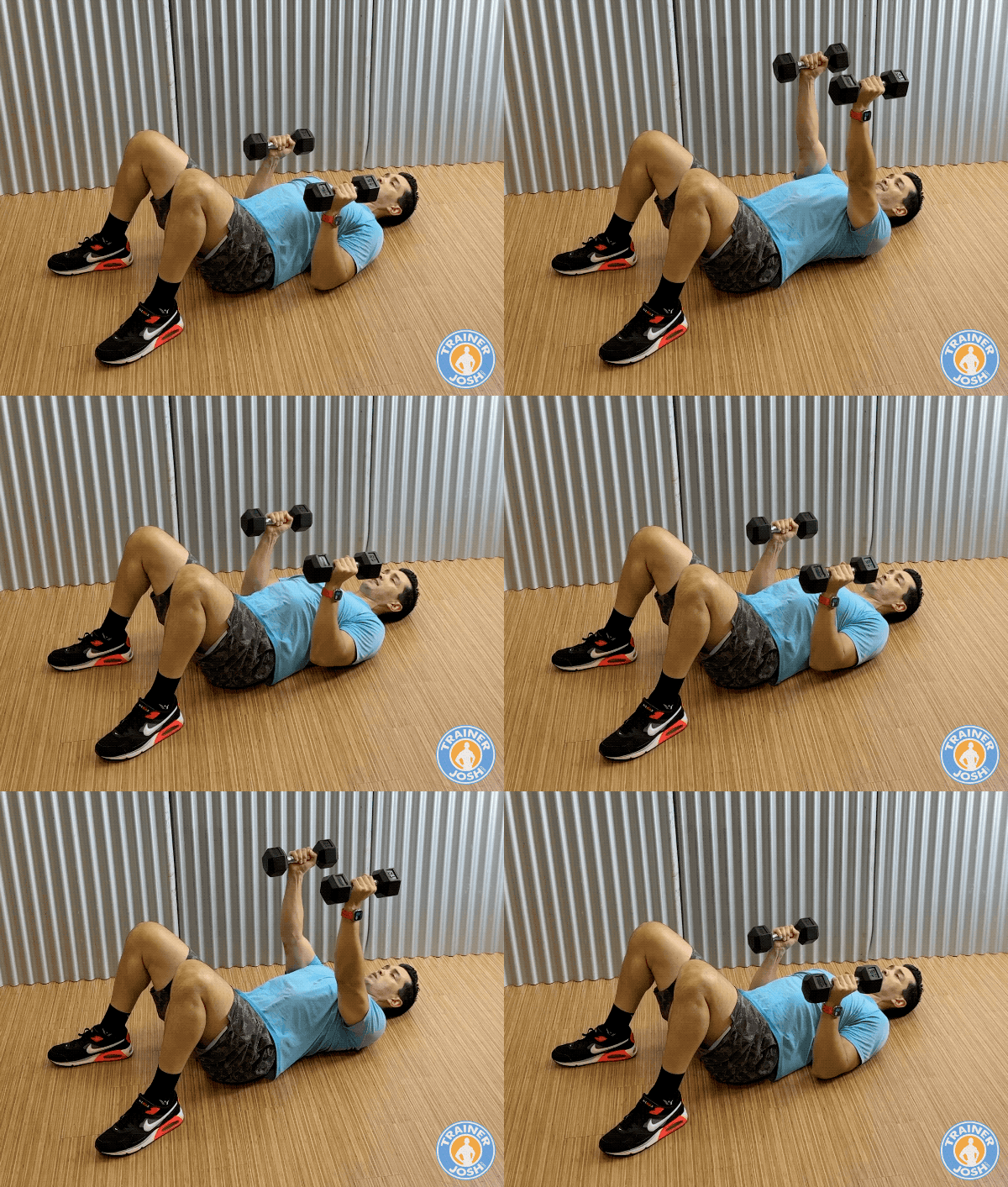
Floor chest presses with dumbbells can also be worth doing because the floor acts as a natural stopper, preventing your elbows from dropping past 90 degrees and protecting your shoulder joints.
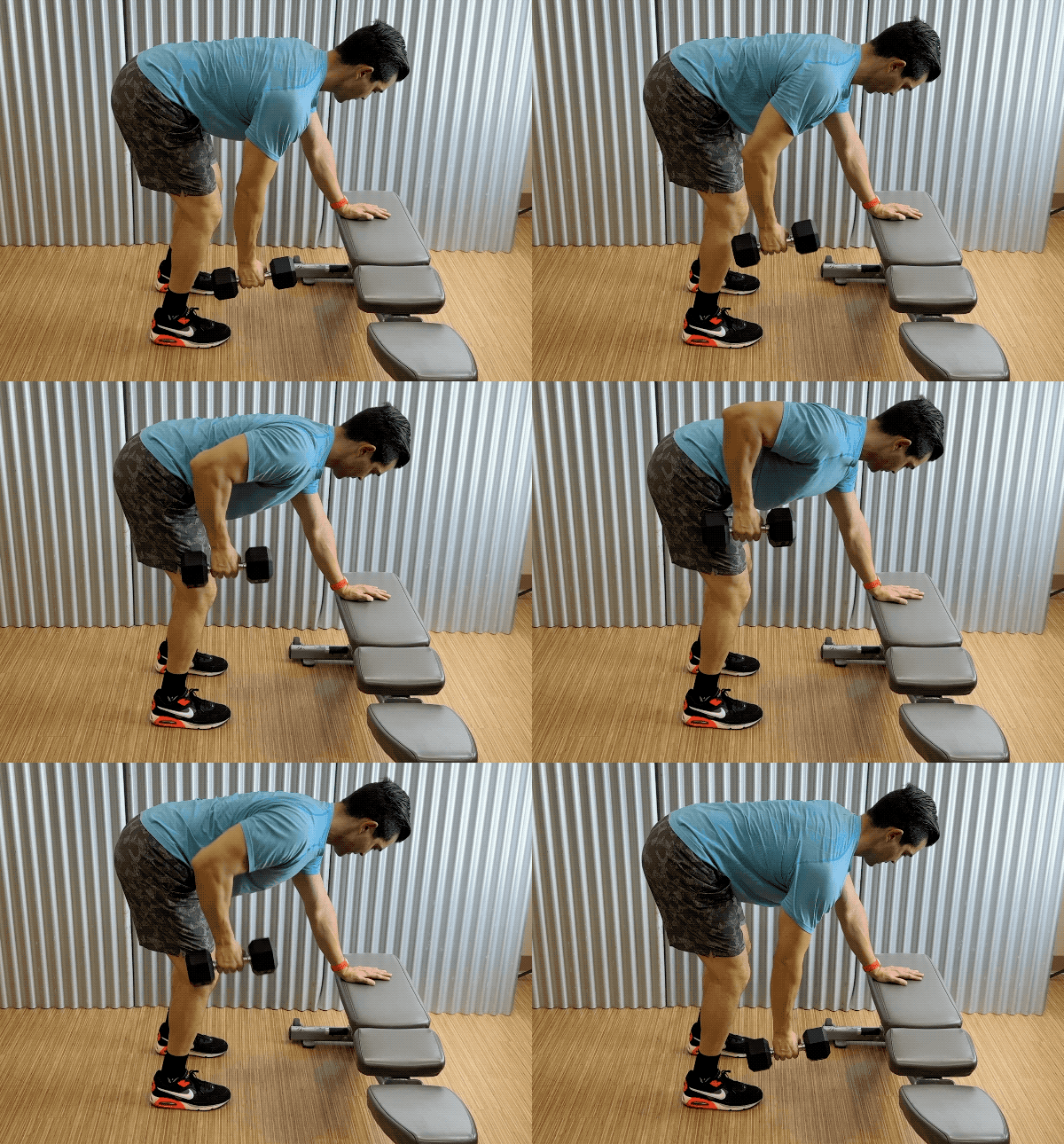
Dumbbell one-arm rows target the upper back and biceps. Resistance band seated rows work equally well at home and are generally joint-friendly for those with shoulder sensitivity.
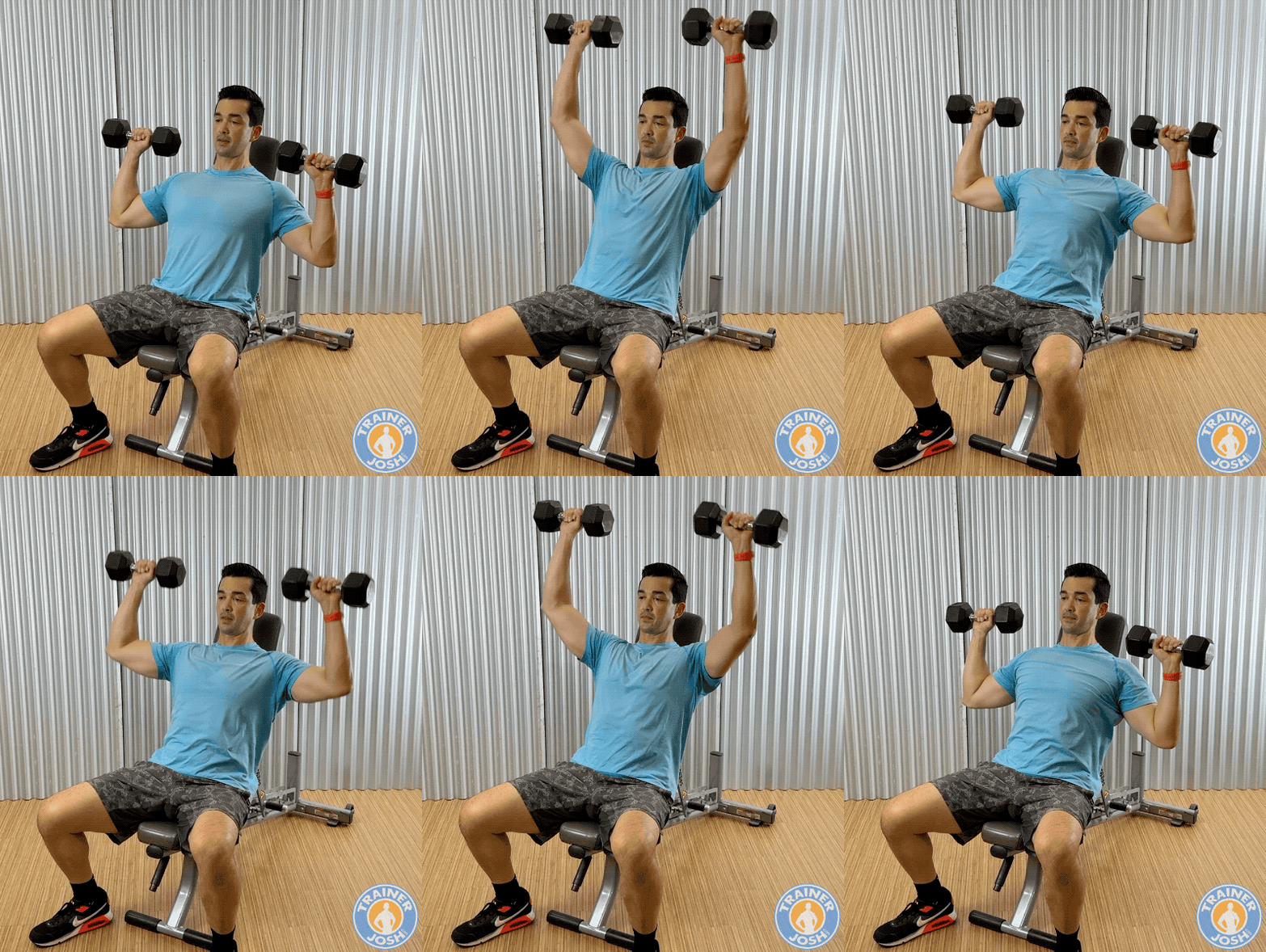
Seated dumbbell shoulder presses are recommended over standing for one specific reason: sitting eliminates the temptation to use leg momentum, which means the shoulder muscles actually do the work and your lower back stays out of it.
Core & Balance Exercises
Your core isn’t just your abs. It’s the entire cylinder of muscles that stabilizes your spine, transfers force between your upper and lower body, and keeps you upright when you stumble.
The Dead Bug is a premier spinal stabilization exercise. Lying on your back, you extend one arm and the opposite leg toward the floor while pressing your lower back flat into the mat. It looks simple. It’s not.
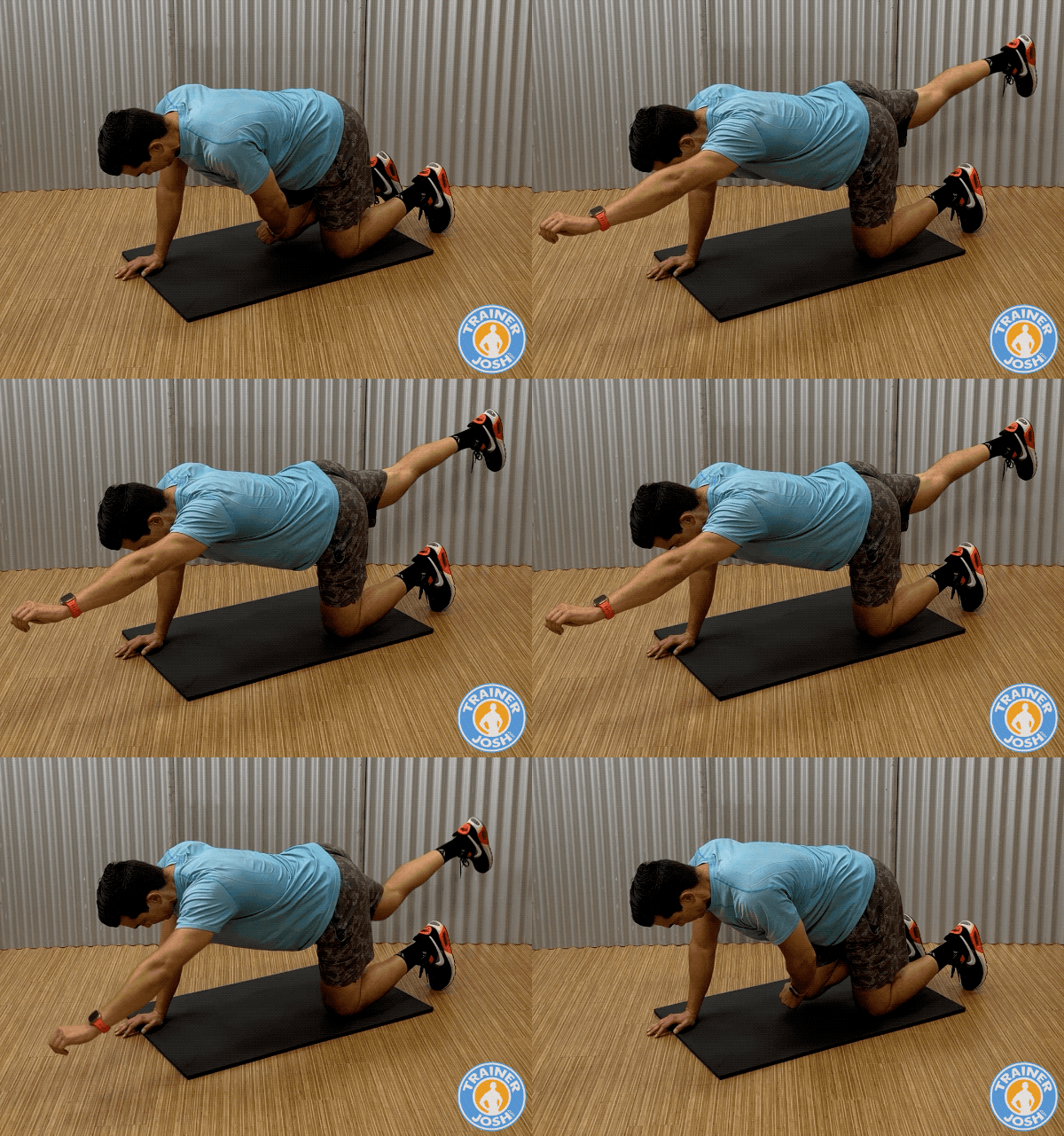
Bird Dog starts on hands and knees; extend the opposite arm and leg, hold, return. It trains the back side of your core cylinder and is especially effective for anyone recovering from lower back injury or pain.
Planks (front and side) build full-core stability without loading the spine. Hold each variation for time, starting with whatever duration you can maintain without losing form.
Single-leg balance drills are mandatory for fall prevention. Practice standing on one foot, use a tandem stance (one foot directly in front of the other, heel-to-toe), or progress to single-leg Romanian deadlifts with a light dumbbell for a serious balance challenge.
Functional Movements That Transfer Directly to Daily Life
A woman I train kept avoiding doing the deadlift pattern because she thought it was “too advanced.” Once she understood it was just practice in picking things up safely, she then was committed to it. Her back pain also dropped within a month.
Sit-to-stand is exactly what it sounds like: standing up from a chair without using your hands. Practice it with focus. It directly trains the same movement pattern of getting off a toilet, out of a car, or up from a couch independently.
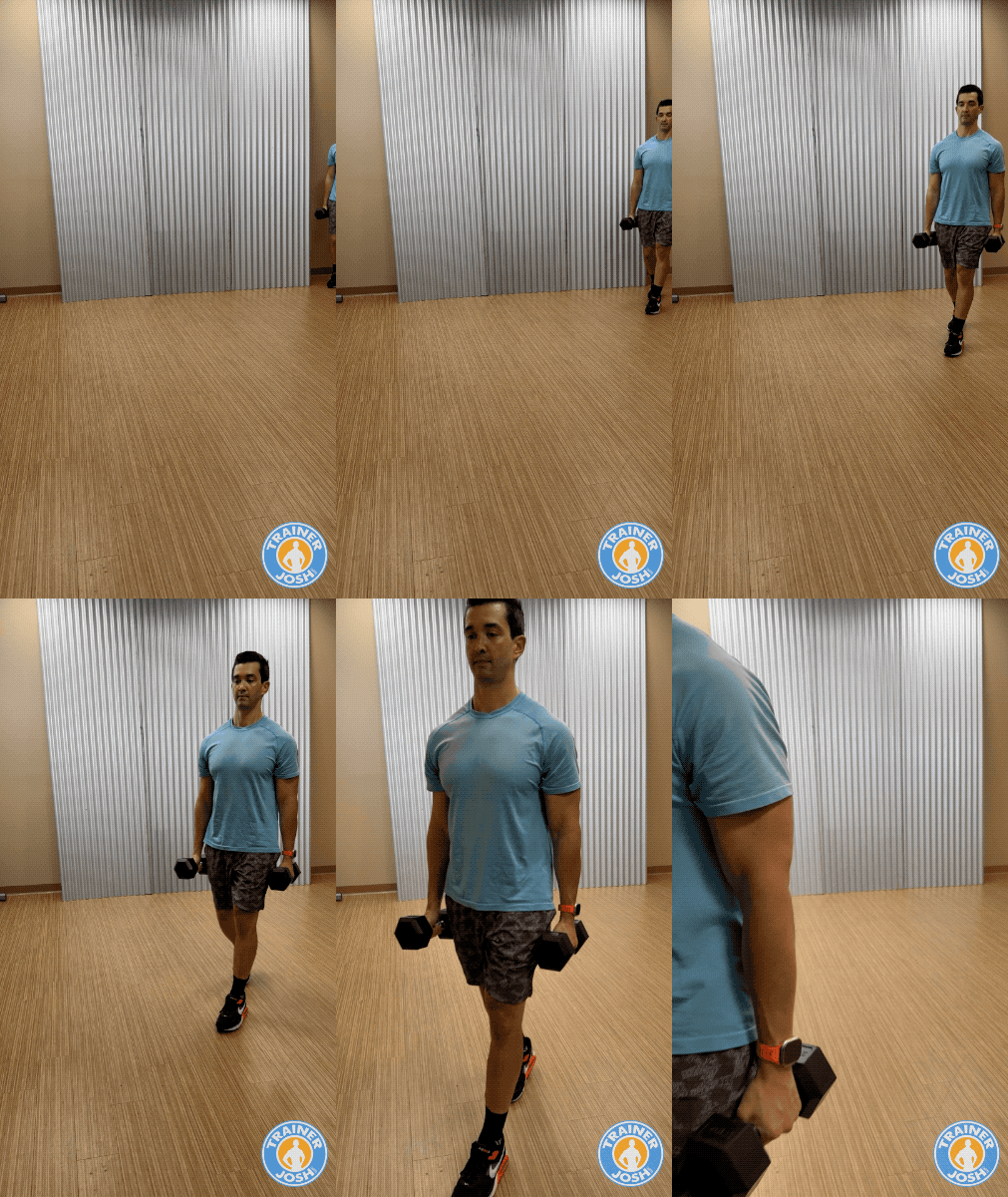
Farmer walks (carrying a heavy dumbbell in each hand) build grip strength and core stability simultaneously. Grip strength is one of the most reliable predictors of longevity in the research literature. This exercise trains it better than almost anything else.
The hip hinge (the foundation of deadlifts and kettlebell swings) teaches your body to lift by loading your hips and legs instead of your lower back. Learning this pattern prevents more injuries than any other movement skill you can develop.

How to Start Strength Training at Home After 50 (You Don’t Need a Gym, a Membership, or Any Equipment)
The gym is not a requirement. It never was.
Some of the most consistent progress I’ve seen in older clients happened in living rooms, spare bedrooms, and garages… not weight rooms. What matters is showing up and putting resistance on your muscles. Where you do that is secondary.
Your Equipment Options (From Zero to a Little)
Bodyweight first. Your own weight against gravity is enough to build a real foundation of strength. Squats, glute bridges, step-ups, and wall push-ups all qualify. Master the movement patterns before you add any load, and you’ll be ahead of most people who jump straight to dumbbells with sloppy form.
Resistance bands next. Bands are inexpensive, portable, and joint-friendly. Unlike dumbbells, which rely solely on gravity, bands provide resistance as they stretch, which means you can train muscles from angles that free weights simply can’t reach.
They’re usually color-coded by resistance level (yellow being the lightest), so progression is built into the system. One practical note: inspect your bands regularly for cracks or wear. A snapping band mid-exercise is startling and avoidable.
Light dumbbells when you’re ready. A single pair of adjustable or fixed dumbbells opens the door to a full-body program. Dumbbells have one advantage over barbells that matters a lot for older adults: each arm moves independently, so you can adjust your grip angle and elbow path to work around joint sensitivities.
No equipment budget yet? Soup cans, water bottles, and milk jugs filled with sand all work as starting substitutes.
Setting Up a Safe Space at Home
Floor surface matters more than most people realize. Tile and bare concrete are slippery, especially in socks, and a slip mid-exercise is exactly the kind of incident you’re training to prevent. A carpet, a rubber mat, or a dedicated exercise mat provides the grip and cushioning you need.
Space requirements are minimal. Moving a coffee table creates enough room for most exercises. What matters more than square footage is keeping the area uncluttered. Weights and bands left on the floor between sessions are a trip hazard (store them consistently).
Footwear is the detail most people skip. Wear supportive athletic shoes with good traction, specifically cross-training or tennis shoes with a normal heel width.
Avoid thick, highly cushioned running shoes. The extra cushioning under the heel sounds comfortable, but it actually restricts the natural mechanics of your ankle and foot, forcing your calves and knees to compensate.
Over time, that compensation creates the kind of nagging pain that makes people think training is the problem when the shoes are.
Zero-Equipment Options Using Only Your Home
A woman I train started with no equipment at all. Her entire first month was chair sit-to-stands, wall push-ups, and bird dogs on her kitchen floor.
She was embarrassed by how basic it felt. But four months later, she was using 15-pound dumbbells and had dropped two pant sizes.
Lower body: Sit-to-stands are the most functional exercise in this entire article. Sit in a sturdy chair, stand fully upright, and sit back down with control. Repeat.
That movement pattern is exactly what gets you off the toilet, out of the car, and up from the floor independently. The bottom step of your staircase doubles as a step-up platform for building single-leg strength and balance.
Upper body: Wall push-ups are a genuine strength exercise, not a compromise. Place your hands flat against the wall at chest height, lean in, and press back out.
As you get stronger, move to a countertop, then a sturdy chair, then the floor. The movement is the same, but the angle gradually increases the load.
Core: The bird dog (hands and knees, extend the opposite arm and leg, hold) and the dead bug (on your back, lower the opposite arm and leg while keeping your lower back pressed flat) require no equipment and deliver serious spinal stabilization.
Both are used in physical therapy settings for a reason. And they work.
How Often Should Seniors Strength Train? (Less Than You Think, More Than You’re Doing)
More is not better. Consistency is better.
This is the part where most people either overcomplicate the timetable or talk themselves out of starting because they can’t commit to five days a week. You don’t need five days. You need two.
The Ideal Weekly Schedule for Seniors
2-3 nonconsecutive days per week is the research-backed sweet spot for older adults building muscle strength, size, and function.
Studies comparing two versus three days of training in adults over 50 found the rate of muscle development was practically identical between the two groups.
Two days. Same result. Pick Monday and Thursday. Tuesday and Friday. Whatever fits your life and keeps a rest day between sessions.
Rest days aren’t being lazy. They’re where the adaptation actually happens. Your muscles require 48 to 96 hours to recover, assimilate protein, and rebuild after a training session.
Training the same muscles two days in a row doesn’t accelerate progress. It interrupts it.
One of my clients, in his early 60s, was convinced he needed to train every day to “make up for lost time.” He burned out in three weeks. We dropped him to twice a week, and he’s been consistent for over a year.
How Long Your Workouts Actually Need to Be
A single-set full-body routine takes 12 to 15 minutes. Add a second set, and you’re at 24-30 minutes. That’s the entire time commitment.
Numerous studies show that sessions lasting 20 to 40 minutes are more than sufficient to rebuild several pounds of muscle tissue in older adults. You don’t earn more results by staying longer; you earn results by applying enough stimulus and then recovering.
A 2011 review in Deutsches Ärzteblatt International found that resistance training in older adults increases muscle mass and strength, with typical effective programs using 20–30 minute sessions performed 2–3 times per week.19
Short on time some days? A 10 to 15-minute workout still delivers measurable benefit and is vastly superior to skipping. Done consistently, short workouts compound into real, visible change.
How Hard Should It Feel?
Fitness pros use the Rating of Perceived Exertion (RPE) scale to calibrate effort, and the target for seniors is simple: “moderately hard.”
Practically, that means you push each set until you reach momentary muscle fatigue, the point where completing one more rep with clean form would be genuinely difficult.
You should not train to absolute failure. Instead, aim to leave 1 or 2 reps in reserve at the end of each set. Hard enough to create an adaptation stimulus… but controlled enough to prevent injury or debilitating next-day soreness.
The sensation to expect is a dull muscle burn as the set progresses. That’s productive. Sharp joint pain is not. Stop immediately if you feel the latter and find a movement substitution.
How to Track Your Strength Training Progress After 50 (So You Know It’s Actually Working)
Most people train by feel. They show up, do something, and hope it’s adding up.
Tracking removes the guesswork. It takes the emotion out of your fitness and lets you see your results the way a scientist would: objectively, accurately, and without the distortion of a bad week or a stubborn scale.
Keep a Workout Journal (This Is the Biggest Secret Nobody Talks About)
Write down every exercise, every weight, every set, and every rep. That’s the baseline.
What separates good logs from great ones is the subjective data:
- how you felt (any joint discomfort)
- sleep quality the night before
- stress levels that day
A woman I train was convinced she was regressing until we reviewed her log. She’d done her “bad” workout on four hours of sleep after caring for a sick grandchild. Her numbers hadn’t dropped. Her recovery conditions had. That context made a huge difference.
Chase Personal Records, Not Perfection
Older adults don’t need to test their one-rep maximum. Your version of a personal record (PR) is simpler: beat last week’s performance in any measurable way. One extra rep. Five more pounds. The same routine with a cleaner form.
Every PR is documented proof that your body is responding. Collect them consistently, and motivation takes care of itself.
Ditch the Scale. Track Your Clothing Instead
Muscle and bone are denser than fat, which means the bathroom scale actively misleads you as you get stronger. Your weight can stay flat or even increase slightly while your body composition improves significantly.
Track how your clothes fit instead. Pants getting looser while your weight holds steady means you’re losing fat and gaining muscle simultaneously. That’s the outcome.
For better accuracy data, bioelectrical impedance devices (like the InBody analyzer) or body fat calipers give you actual composition numbers that the scale can’t.
Set Functional Benchmarks That Matter Outside the Gym
Track your ability to do something you couldn’t do before. Your first full floor push-up. Holding a plank for 60 seconds. Walking onto a taller box without knee pain.
These functional milestones connect your training directly to the life improvements you actually care about.
One of my clients, in his early 70s, established a benchmark for himself by carrying his own luggage through an airport without stopping. The day he did it, he sent me a photo from the gate. No weight or rep count could have matched that moment.
Monitor the Habits That Fuel Your Results
Your training results are a direct reflection of what happens outside your workouts. Track your sleep hours, daily water intake, protein grams, and stress levels. A poor workout usually traces back to poor inputs 24 hours earlier.
Annual blood work adds the deepest layer of evidence. Cholesterol, blood sugar, and hormone panels give you concrete medical data showing how strength training is improving your biological age from the inside out.
The Most Common Strength Training Mistakes Seniors Make (Exactly How to Fix Them)
Most people who quit don’t quit because training is too hard. They quit because they committed an error in the first few weeks that hurt them, burned them out, or convinced them it wasn’t working.
Every mistake below is preventable. Most are also incredibly common.
Doing Too Much Too Soon
Overzealous beginners stack mistakes: more weight, more reps, more sets, and more days all at once. The result isn’t faster progress… it’s overtraining, debilitating soreness, and often an injury that kills consistency entirely.
2-3 days per week, 40 to 60 minutes per session, and starting lighter than feels needed. That’s the prescription. Ignore the ego if it pushes back.
Avoiding Strength Training Altogether
Weakness is the actual danger, not lifting. Avoiding the weight room accelerates sarcopenia, bone density loss, and metabolic slowdown simultaneously.
The “too old to lift” belief and the “lifting makes women bulky” myth are both responsible for keeping people weaker, frailer, and more dependent than they need to be.
Women who fear getting “bulky” or “manly” from lifting weights is a very common myth. Women naturally produce way less testosterone than men. So it’s not grounded in human biology for women to fear developing massive, bulky muscles from a routine of 2-3 strength training workouts per week.
Instead of making you bulk, strength training helps women get firmer, leaner, and fitter bodies. All fitness experts agree that those who have trained women for decades have never seen a woman suddenly develop a “Hulk-like” physique from lifting weights.
One mindset shift I tell my female clients: instead of being afraid of bulking up, you should be afraid of losing muscle.
Only Doing Cardio
Cardio protects your heart. It does not build muscle, preserve bone density, or prevent age-related weakness. Excessive cardio can actually draw on your muscle tissue for fuel, lowering your resting metabolism and compounding the problem you’re trying to solve.
Walking is valuable. It just isn’t sufficient on its own after 50.
Holding Your Breath During Lifts
Most people don’t know this one. Holding your breath at the hardest point of a lift (called the Valsalva maneuver) can cause internal pressure to spike sharply, impeding blood flow and possibly raising blood pressure to dangerous levels. Dizziness and blackouts are real risks.
Exhale during the push or pull. Inhale as you lower the weight. Move slowly and deliberately, taking 4 to 6 seconds per repetition. Momentum is not your friend; control is.
Staying at the Same Weight Forever
Doing the same exercises with the same weight for the same reps, week after week, produces the same body. Your muscles adapt to a stimulus and then stop responding to it. If you never ask more of them, they deliver exactly that: nothing more.
Progressive overload (gradually increasing reps or weight over time) is obligatory for continued results.
I had a client in her early 60s who had been using 5-pound dumbbells for two years. She thought she was maintaining. She was stalling. Three months after we started progressing her load, her arms and posture had visibly changed.
Cutting Calories Without Lifting
Dieting without strength training strips both fat and muscle. Lost muscle lowers your resting metabolic rate, which nearly guarantees the weight comes back as fat once normal eating resumes.
Lifting while in a caloric deficit preserves the muscle that keeps your metabolism working.
Fat loss should not come at the cost of the muscle that keeps you strong and supports your metabolism. The BioTRUST GLP-1 Companion Stack is designed to support appetite control, lean-muscle preservation, and convenient protein intake, which makes it especially useful for adults over 40 who are eating less while trying to stay strong.
A 3-part daily stack designed to support people using GLP-1 medications or losing weight naturally. It combines muscle, protein, collagen, and appetite support to help you maintain a healthier body composition as you lose weight.
- Natural GLP-1 Support: Helps support healthy appetite signals, fullness & metabolic function
- Lean Muscle Support: Helps preserve muscle, strength & healthy body composition during weight loss
- High-Protein Collagen: Adds 20 g of protein with 5 collagen types to help support daily protein intake
- Skin, Joint & Hair Support: Provides collagen peptides to support skin elasticity, joints, hair & nails
- 3-Part Weight-Loss Support: Combines muscle, protein/collagen & appetite support in one simple daily stack

Confusing Soreness With Pain
Delayed onset muscle soreness (DOMS) is normal. It’s a dull, diffuse soreness that peaks 24 to 48 hours after training.
Sharp joint pain during a movement is not soreness… It’s a signal. Pushing through sharp pain can turn a minor issue into a serious injury. Stop the movement, find a substitution, and move on.
Not Getting Enough Protein
Many older adults really only consume the Recommended Daily Allowance (RDA) for protein, assuming this is enough. But the RDA is designed as the bare minimum for a sedentary person… and not for someone actively lifting heavy weights.
As you get older your body stop absorbing protein efficiently. Our skeletal muscles reduce their natural capacity to activate protein synthesis. Older adults do not assimilate the amino acids from protein as efficiently as they did in their youth.
A 2024 study in Engineering found that aging was associated with a marked decline in protein utilization, and that duodenal LAT2 protein expression was about 61.9% lower in older mice and 67.8% lower in elderly humans, which the authors linked to reduced amino acid absorption.19
To maintain muscle mass, older adults who strength train should eat 50% more than the standard RDA. To actively increase muscle mass, you’ll need 50-70% more protein than RDA.
You can use my free protein calculator to instantly determine your daily protein needs.
Want faster strength and fat loss results?
When people over 50 start strength training one of the biggest mistakes I see is not getting enough protein. Your body needs more protein as you age.
Strength Training With Bad Knees, Back Pain, or Arthritis (You Can Still Do This)
Pain is not a reason to stop. It’s a reason to modify.
This is the section most fitness articles skip entirely, replacing it with “consult your doctor” and moving on. That’s not helpful.
Most people reading this have some combination of achy knees, a stiff lower back, or joints that make noise when they move. Here’s what to actually do.
Arthritis: Train the Muscles Around the Joint, Not Through the Pain
Muscle weakness is extraordinarily common among arthritis sufferers and worsens the condition. Weak muscles leave joints exposed to forces they can’t absorb.
Stronger muscles cushion and protect those same joints. Strength training is a bedrock of arthritis therapy, not something to avoid.
Two rules apply. First, move only through a pain-free range of motion. Muscle soreness is acceptable and expected; sharp joint pain means you’ve gone too far.
Second, if your joints are severely inflamed on a given day, switch to isometric exercises: contract the muscle for 6 to 8 seconds without moving the joint. Wall sits, static holds, and isometric presses build real strength without aggravating inflamed tissue.
Applying heat (a heating pad works fine) to affected joints before training warms the surrounding tissue and makes movement noticeably more tolerable.
I’ll always use an adjustable weight vest with my clients. Especially with those with hand/finger arthritis. It makes is so you don’t have to hold and grip the weights. Also engages your core more and improves conditioning.
Knee Pain: Remove Compression, Keep the Training
Most knee-friendly modifications come down to one principle: reduce vertical compression on the joint without abandoning leg training altogether.
Partial squats work well when full-depth squats cause discomfort. Stop at the point where pain begins and build from there as strength improves.
A suspension trainer (like a TRX) can support a portion of your bodyweight during squats and lunges, dramatically reducing knee load while you develop the stabilizing muscles around the joint.
Switching to hip-hinge exercises (glute bridges, Romanian deadlifts, hip thrusts) removes almost all knee compression while still building the glutes, hamstrings, and hips that support the joint from above.
One of my clients, in her late 60s, had been told to avoid all squatting. We replaced her squats with glute bridges and step-ups on a low step. Her knee pain decreased within six weeks because her stabilizing muscles finally caught up.
Reverse lunges load the glutes more and the knees less than forward lunges. If lunges are in your program, step backward, not forward.
Back Pain: Stabilize First, Load Second
Rounding your lower back under load is where most back injuries happen. Avoid unsupported spinal flexion. That means steering clear of exercises that pull your spine into a forward curve under weight.
Core work must focus on bracing and resisting movement rather than creating it. Planks, bird dogs, and dead bugs protect your spine by training it to stay stable.
Repeated sit-ups and crunches do the opposite, repeatedly loading the very vertebrae that are already under stress.
For upper back training, the supine dumbbell pullover (lying face-up on the floor) lets you strengthen pulling muscles while the floor supports your spine in a neutral, lengthened position.
For cardio, a recumbent bike places minimal stress on the lumbar spine and is preferable to upright alternatives.
Tight hip flexors from prolonged sitting are a primary and frequently overlooked driver of lower back pain. Stretching and strengthening the hips reduces the compensatory load your lower back absorbs during every daily movement.
Bad Shoulder: How to Work Around It
Dealing with a bad shoulder is very common in older adults. MRI studies show that over 66% of people between ages 51 and 65 have an existing SLAP (superior labral anterior-posterior) tear in the shoulder.20
These tears usually go unnoticed until you begin lifting weights. But you can absolutely still build strength with a bad shoulder. But you have to train smartly to work around the joint and avoid causing further damage.
Here’s the best way to modify your strength routine to protect your shoulders:
Avoid the Barbell Bench Press
Traditional barbell bench press forces your hands and wrists into a fixed position. This can be a major culprit for aggravating asymptomatic shoulder tears and causing impingement.
The fix is to swap the barbell for dumbbells or a chest press machine. Dumbbells are way more recommended because they let your arms move independently. This means you can adjust the angle of your wrists and elbows to find a comfortable pain-free path of motion.
Pushups can also be a great alternative to bench pressing because they allow your shoulder blades to move freely instead of being pinned flat against a hard bench.
Try the “Floor Chest Press”
If you have shoulder pain while pressing weights on a bench, then move to the floor. Lie face up on a mat and do your dumbbell chest presses from the ground.
The floor will act like a built-in safety mechanism because it physically stops your elbows from dropping beyond a 90 degree angle. This will prevent you from overstretching the shoulder joint and places significant less strain on your rotator cuff.
Assess Your Overhead Mobility
Before you try to press heavy weights over your head, first try to simply reach your arms straight up. If you can’t get your arms vertical without arching your lower back or flaring your rib cage, then you have a lack of proper shoulder flexion and should not try to do standard overhead presses with dumbbells or barbells.
The next is to try to use a landmine press. You can wedge one end of the barbell securely into a corner of the room and press the other end of the barbell upward and slightly forward. This angle pressing motion is the absolute best alternative for those with limited mobility or irritable shoulders.
Train in the “Scapular Plane”
A common mistake is keeping your arms straight out to your sides during shoulder exercises like a seated dumbbell press or a lateral raise.
The fix is to bring your elbows slightly forward about 30-45 degrees in front of your body. This is known as the scapular plane and it matches the natural angle of your shoulder blades.
Pressing from this slightly forward position, especially when using a neutral grip with your palms facing inward toward each other, will dramatically reduce the risk of shoulder impingement.
Support your joints, bones and connective tissues…
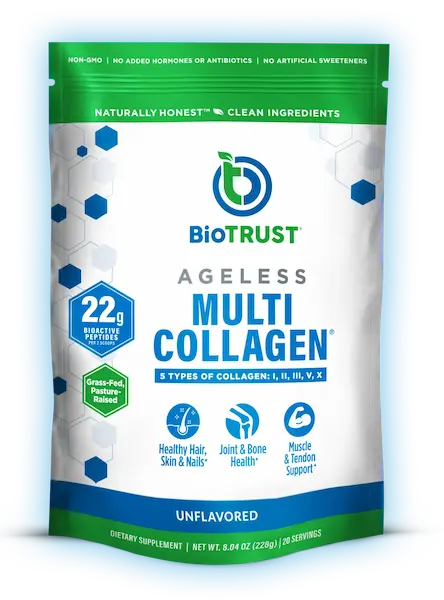
As you get older, collagen production naturally declines. That’s one of the reasons joints feel stiffer and recovery takes longer. Add a high-quality collagen supplement to help support:
- joint comfort
- tendon strength
- overall recovery
It’s also great for reducing the appearance of wrinkles by improving skin elasticity…
Powered by 5 Types of Bioactive Naturally Hydrolyzed Collagen Peptides for Full-Body Support (Odorless & Flavorless)
- Natural GLP-1 Support: Helps support healthy appetite signals, fullness & metabolic function
- Lean Muscle Support: Helps preserve muscle, strength & healthy body composition during weight loss
- High-Protein Collagen: Adds 20g of protein with 5 collagen types to help support daily protein intake
- Skin, Joint & Hair Support: Provides collagen peptides to support skin elasticity, joints, hair & nails
- 3-Part Weight-Loss Support: Combines muscle, protein/collagen & appetite support in one simple daily stack
Strength Training vs. Cardio for Seniors (Why Walking Alone Isn’t Enough)
Cardio gets all the credit. Strength training does most of the work.
For decades, older adults were told to walk more, ride a bike, and take an aerobics class. That advice isn’t wrong. It’s just incomplete, and for people over 50, incomplete is a problem.
Why Strength Training Takes Priority After 50
Cardio protects your heart. It does not preserve your muscle, rebuild your bone density, or maintain the fast-twitch muscle fibers you need to generate power and catch yourself before a fall.
Research confirms that lifelong aerobic exercise cannot prevent the loss of those type II muscle fibers. Walking, no matter how consistently, won’t stop that decline.
A 2023 study in Journal of Applied Physiology showed that lifelong endurance training does not maintain type II muscle‑fiber proportion or morphology, whereas lifelong strength training does. This shows that aerobic exercise alone cannot prevent the loss of type II fibers.21
Excessive steady-state cardio can actually work against you. Push it too far, and your body begins pulling from lean muscle tissue for fuel. This slows your metabolism and accelerates the exact decline you’re trying to prevent.
Strength training, when performed in a circuit style with compound movements and short rest periods, will give you meaningful cardiovascular benefits on its own. Resting blood pressure drops. LDL cholesterol decreases. HDL cholesterol rises. You get the heart benefits without sacrificing the muscle.
A woman I train walked five days a week for years and couldn’t understand why she kept feeling weaker. Her cardiovascular fitness was fine. Her muscle mass had been quietly eroding the entire time. Eight weeks of twice-weekly strength training changed her body more than five years of walking had.
Getting stronger also makes cardio better. Research shows increased strength improves endurance efficiency, delivering more power and speed per stride and allowing runners to achieve faster times even while running less frequently.22
Strength doesn’t compete with cardio. It upgrades it to the next level.
How to Combine Both Without Overtraining
You don’t have to choose. Combining strength and cardio (known as concurrent training) provides the strongest possible defense against aging, obesity, type 2 diabetes, and cardiovascular disease.
Arrange it this way:
Strength training comes first. Two to three days of full-body lifting per week is your non-negotiable foundation. Build everything else around it.
Add one to two brief HIIT sessions (short bursts of intense effort alternated with rest) if fat loss and cardiovascular performance are priorities. HIIT delivers faster results in less time and supports muscle-building hormones, yet keep it limited to avoid overloading your nervous system.
Use steady-state cardio (walking, hiking, moderate cycling) on your non-lifting days as active recovery. Keep your heart rate below 75 percent of its maximum to aid recovery rather than compete with it.
If you prefer combining both in a single session, order by primary goal: lift first if building strength is the priority; cardio first if endurance is the focus.
2-Day Strength Training Plan for Seniors:
For older adults, a highly effective and beginner-friendly approach is a two-day “bare minimum” full-body routine. This requires lifting on just two nonconsecutive days per week, providing sufficient stimulus to build muscle while allowing your body ample time to recover.
Workout A:
- Horizontal Pull: Machine seated row (3 sets of 10–15 repetitions).
- Horizontal Push: Dumbbell bench press (3 sets of 10–15 repetitions).
- Lower Body (Quad-dominant): Goblet squat (3 sets of 10–15 repetitions).
- Core: Dead bug floor exercise (3 sets of 10–15 repetitions per side).
Workout B:
- Vertical Pull: Lat pull-down or assisted pull-up (3 sets of 10–15 repetitions).
- Vertical Push: Seated dumbbell shoulder press (3 sets of 10–15 repetitions).
- Lower Body (Hip-dominant): Hip thrust (3 sets of 10–15 repetitions).
- Core: Pallof press or hold (2–3 sets of 30 seconds per side).
3-Day Strength Training Plan for Seniors:
If you prefer to train more frequently and do not rely heavily on other vigorous physical activities (like tennis or swimming) on your off days, you may seamlessly expand your routine to a three-day schedule.
You can simply alternate Workout A and Workout B across three nonconsecutive days (for example, Monday: Workout A, Wednesday: Workout B, Friday: Workout A).
Alternatively, you can introduce a third distinct routine (Workout C) to create a comprehensive “A-B-C” weekly rotation.
Workout C (to complement A & B):
- Mid-Range Pull: Single-arm dumbbell row on a bench or face pull (3 sets of 10–15 repetitions).
- Incline Push: Incline dumbbell or barbell bench press (3 sets of 10–15 repetitions).
- Lower Body Combo: Step-up or reverse lunge (3 sets of 10–15 repetitions).
- Calves/Shoulders: Machine standing calf raise or lateral raise (3 sets of 10–15 repetitions).
- Core: Farmer walk (3 sets of 30–60 seconds per side).
Simple, Repeatable Principles for Both Plans:
- Focus on compound movements: Focus on these exercises because they work multiple large muscle groups at once rather than isolating small muscles. This gives you balanced, full-body development and leaves no weak points that could lead to injury.
- Start light and be patient: Begin with very light weights to master the movement forms and avoid debilitating soreness. Depending on your initial fitness level, you may want to start with just 1 set of each exercise and slowly progress to 2 or 3 sets.
- Progress systematically: The sources recommend using a repetition range of 10 to 15 reps. Stick with the same weight until you can successfully complete the top end of the repetition range (15 reps) with perfect form. Once you achieve this, increase the weight by about 5% for your next workout to create a safe overload.
- Rest appropriately: Always allow at least 48 hours between strength training sessions. During the workout, take adequate rest periods between sets (generally 60 to 90 seconds) so your muscles have time to replenish their energy.
How to Stay Consistent With Strength Training After 50 (Even As Motivation Disappears)
Motivation is not the problem. Waiting for motivation is the problem.
Every person who has trained consistently for years will tell you the same thing: they didn’t always feel like going. They went anyway. That decision, repeated enough times, becomes a habit. Habits don’t require motivation.
Stop Relying on Motivation. Build Systems Instead.
Motivation fluctuates. Scheduled workouts don’t have to. The most consistent exercisers treat their training sessions like a job appointment: non-negotiable, already on the calendar, not subject to how they feel that morning.
Habit stacking accelerates this process. One good habit creates conditions for the next. Better sleep reduces junk food cravings. Better nutrition improves workout energy. Better workouts improve sleep quality.
Stack the habits in the right order, and they reinforce each other automatically.
The action creates the motivation, not the other way around. Show up on the days you don’t feel like it, and you’ll notice the motivation follows. It always does.
Short Workouts Are Not a Compromise
Ten minutes of actual genuine effort gives you a measurable health benefit. Intensity matters more than duration, especially in the early months when your body is acclimating to new demands.
A bare-minimum full-body routine, twice a week, is enough to build a real foundation of strength. Starting there removes the overwhelm and eliminates the most common reason people quit:
- They tried to do too much
- Felt crushed
- Stopped showing up
Showing up consistently for a short workout beats the perfect workout you never do.
Your Age Is Not the Obstacle You Think It Is
“I’m too old to start” is the single most common thing I hear from new clients over 60. My answer is always the same: you’re too old not to.
Your chronological age does not set your physical ceiling. Research and observed results confirm this repeatedly.
A 2024 analysis in PNAS confirms that chronological age is a poor predictor of physical capacity, demonstrating that your birth year does not set your true physical ceiling.23
One woman I trained didn’t touch a weight until she was 87 and continued improving her strength well into her 90s, retaining her independence until the end of her life.
I heard another story of a woman who started powerlifting in her late 60s after surviving breast cancer. Doctors told her she should never lift more than 10 pounds again. She won a World Bench Press Championship at age 70.
These aren’t just some inspirational exceptions. They’re proof of what’s possible when someone stops letting their age make decisions for them.
Mindset Is a Physiological Factor, Not Just a Motivational One
Your body responds to what your mind tells it. Believing that decline is inevitable accelerates decline. Believing you’re capable of more sends a different signal entirely.
Shift your focus from how your body looks to what your body can do. Strength builds capability. Capability builds confidence. Confidence unseals doors you thought were already closed.
Rewire “I can’t” to “How can I?”: Many older adults have a lifetime of conditioning telling them what they can’t do. This is often driven by societal stereotypes that expect seniors to “slow down,” “take it easy,” or “act their age.”
But a helpful mindset shift means actively rejecting these limitations and replacing “I’m too old to do that” with “How can I train to do that?”
Frequently Asked Questions On Strength Training for Seniors
Can seniors build muscle after 60/70?
Yes, seniors can absolutely build muscle after 60 or 70. Research shows older adults gain an average of 3–4 pounds of muscle in just 3–4 months of resistance training. Even nursing home residents in their late 80s increased leg strength by 80%. You’re never too old to lift.
What weight should I start with?
Q: What weight should I start with? A: Start with a weight you can lift 12–15 times in perfect form — that’s roughly 40–60% of your maximum effort. Beginners typically use 2–15 pounds per dumbbell depending on the exercise. When 15 reps feel easy for 2 workouts in a row, increase weight by about 5%.
Is walking enough?
Walking alone is not enough for seniors. It benefits your heart but won’t build muscle, prevent bone loss, or stop age-related metabolic slowdown. Without strength training, you’ll still lose muscle and independence over time. Add full-body resistance training at least 2 days per week for complete fitness.
How long until I see results?
Most seniors see results within 3–9 weeks of consistent training. Over 10–14 weeks, expect to gain 3–4 pounds of muscle and lose 6–9 pounds of fat. Strength can increase by 50% in just 2–3 months. Some clients drop 2 clothing sizes in their first 8–12 weeks.
You’ve Read the Guide. Now It’s Time to Actually Start
So, you just covered everything. Why muscle loss accelerates after 50. How to train safely around bad knees and achy joints. What a real beginner program looks like and how to track progress that actually means something.
This comes the part most people will skip…
They read the article, feel motivated for about 20 minutes and then life happens. The information sits in a browser tab. The tab gets closed nothing changes.
Don’t let that be you.
Your Next 24 Hours Matter More Than the Next 6 Months
Consistency is built from small decisions made immediately and not grand plans made for someday. The clients I’ve watched transform their bodies and reclaim their independence didn’t start with a perfect program. They just started with the decision to begin this week and not next Monday.
So here’s your action plan. Today pick your two training days for this week and put them in your calendar like a doctor’s appointment. Tomorrow clear a space in your living room, find a sturdy chair and do one round of sit to stands, wall pushups and bird dogs. That’s it. That’s your first workout.
It will take 10 minutes. It will almost feel embarrassing simple, but do it anyway.
What to Expect in the First 8 Weeks
Text 1 and 2 are about learning the movements and surviving the soreness. Go light, focus on form, don’t test yourself yet.
Weeks three and four is your nervous system starts adapting. Movements feel more natural, and you’ll notice you’re less winded. This is your body responding and improving.
Weeks 5-8 is when strength gains become visible in your numbers and daily life. Stairs feel easier, getting up from the chair needs less effort. Your energy holds longer throughout the day.
Most of my clients tell me week six is when they stop feeling like beginners and start feeling like someone who actually trains.
One Last Thing
Research is clear, and the stories are real. People at 68, 72, 81, and even 87 have picked up weights for the first time and surprised themselves completely.
You’re not too old, you’re not too far gone, and you’re not too out of shape to start.
You are exactly where countless older adults and seniors who are now stronger than they’ve been in decades once stood. The only difference between them and where you are right now is that they got started.
So find that chair, stand up and sit back down 10 times. That’s your first step. That’s the beginning.