

Eggs have gotten a bad reputation over the years.
Maybe it was the cholesterol scare of the ’80s. Maybe a that guy at work told you eggs are “high in fat.” Either way, you might have been second-guessing a food that’s always in your fridge and it’s just waiting to help you lose weight.
From years of training clients, I’ve noticed that those who reach their fat-loss goals usually keep things simple. Eggs are part of almost every one of their success stories.
But I get the confusion. One person says to eat them daily. Another warns about your heart… “the cholesterol!” And if you’ve ever tried one of those extreme boiled-egg diets floating around online, then you already know that’s not a sustainable path either.
So what’s actually true? Are eggs actually good for weight loss, or is that just wishful thinking from people who love breakfast?
In this article, I’ll break down what eggs do inside your body when you’re trying to lose fat. I’ll explain how many you can realistically eat, what the cholesterol research actually says, and how to use eggs as a weight loss tool.
Quick Answer: Are Eggs Good for Weight Loss?
Key Takeaways:
- Whole eggs outperform egg whites for both fat loss and muscle retention.
- The yolk contains choline, a nutrient your liver uses directly to process fat.
- Eggs cause no insulin spike, keeping your body in fat-burning mode longer.
Yes, eggs are some of the best foods for fat loss. Still, many people avoid the yolk, eat only the whites, or skip eggs because of old cholesterol fears. So they’ll be missing out on results.
Eggs are high in complete protein, low in calories, and very satisfying. Their protein is also highly bioavailable, which means your body absorbs more of it.
Eggs are high in natural cholesterol and healthy fats, like saturated and monounsaturated fats. Cholesterol helps suppress your appetite, so eggs keep you full and energized all morning.
One of my clients kept looking for a mid-morning snack every day until we substituted her cereal for three eggs at breakfast. The cravings stopped within a week. Her blood glucose levels were stable, and the eggs kept her satisfied for hours.
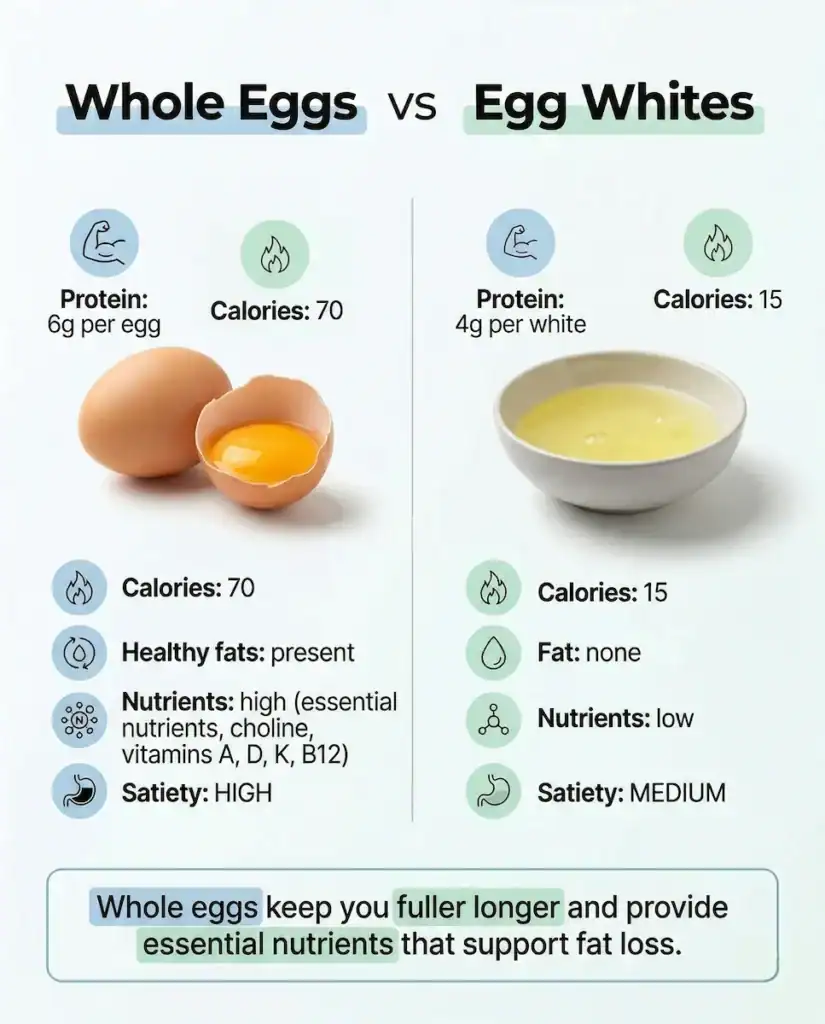
Whole eggs are better than egg whites for weight loss. Research shows that whole eggs help your body build more muscle protein than the same amount of protein from just egg whites.
A 2021 study in the Journal of Strength and Conditioning Research found that, in young men completing 12 weeks of resistance training, post-workout whole eggs led to a greater reduction in body fat percentage than egg whites. While also producing greater gains in knee extension and handgrip strength.1
A 2017 study in the American Journal of Clinical Nutrition found that eating whole eggs after resistance exercise stimulated greater myofibrillar protein synthesis than consuming the same amount of protein from egg whites.2
Most of the nutrients are in the yolk including choline, which your liver uses to process fat.3 Throwing out the yolk to save calories is one of the most common fat-loss mistakes I’ve seen. I just shake my head in disappointment.
Eggs also don’t spike insulin. With zero carbs, your body remains in fat-burning mode after eating them. This keeps your hunger down for hours on far fewer calories than most breakfasts.
A 2016 clinical trial in adults with type 2 diabetes showed that adding eggs to the diet did not raise blood glucose or insulin meaningfully.4
Yet eggs aren’t magic. Calories still count. Some studies have found evidence that egg consumption alone (without reducing calories) does not significantly lower body weight or composition in most people.5
But eggs make it much easier to stick to a calorie deficit because they keep you full without making you feel stuffed.
Bottom line: Eat the whole egg, skip sugary breakfasts, and let the protein work for you. Try it tomorrow and see how it affects your hunger and energy.
Why Eggs Help You Lose Weight (The Simple Science)
Key Takeaways:
- Eggs suppress hunger better than almost any food — their protein controls hunger hormones for hours, unlike carbs that crash and leave you craving more.
- Keep the yolk — the fat and nutrients inside are what make eggs uniquely filling and worth eating in the first place.
- Eggs protect your muscle while you cut calories — preserving lean mass keeps your metabolism from stalling mid-diet.
High Protein = Less Hunger (Eggs Have the Best Kind)
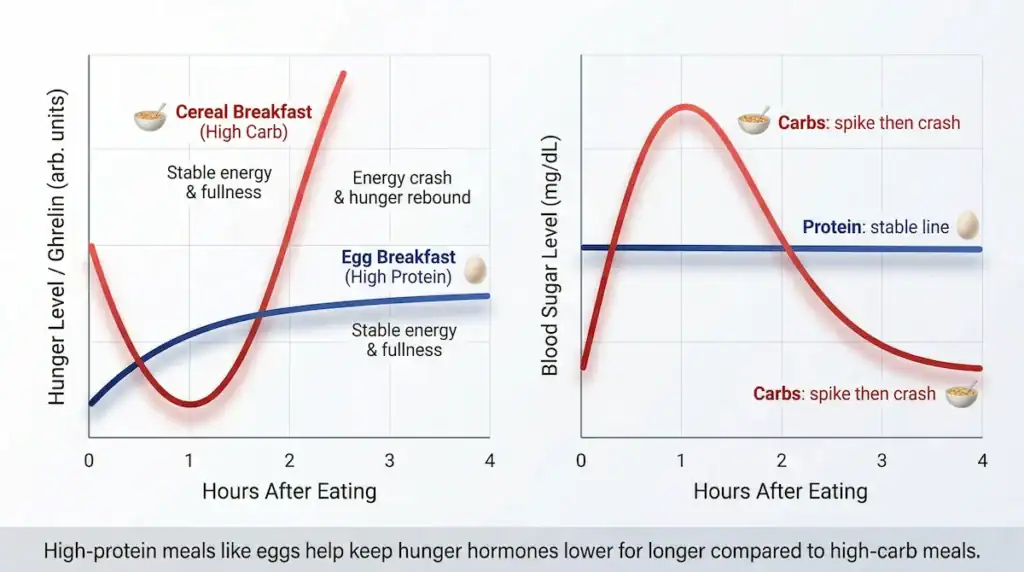
Protein reduces hunger by directly modulating your satiety hormones ghrelin and leptin. Ghrelin is the hormone that signals to your brain that you’re hungry. Eating protein suppresses it faster and keeps it lower longer than carbs or fat.
A 2005 study in the American Journal of Clinical Nutrition found that increasing dietary protein from 15% to 30% of energy markedly increased satiety and reduced spontaneous calorie intake.6
Eggs give you the most bioavailable protein of any whole food. Your body absorbs about 91% of egg protein, which is higher than meat, poultry, fish, or even whey protein.
A 1998 study assessing digestibility of cooked and raw egg protein in humans reported that cooked egg protein has a true ileal digestibility of 90.9 ± 0.8%. This shows that egg protein is very well digested and highly bioavailable, but raw egg protein is only about 51% digestible.7
Cereal spikes your blood sugar, crashes it within two hours, and leaves ghrelin screaming for more food by 10 am. But eggs contain zero carbohydrates that keep your hunger down for hours and body in fat-burning mode.
A 2025 controlled‑diet study showed that reducing carbohydrates to roughly 50 g per day, even without calorie restriction, increased fat oxidation and ketone production. This shows that low‑carb intake shifts the body toward a more fat‑burning metabolic state.8
Struggling to hit your protein goal?
If you’re not getting enough protein from whole foods, then it’s almost impossible to control hunger or protect muscle while dieting. A clean, low-carb protein powder can make this easy… especially on busy days when cooking eggs isn’t realistic.
Thermic Effect of Protein
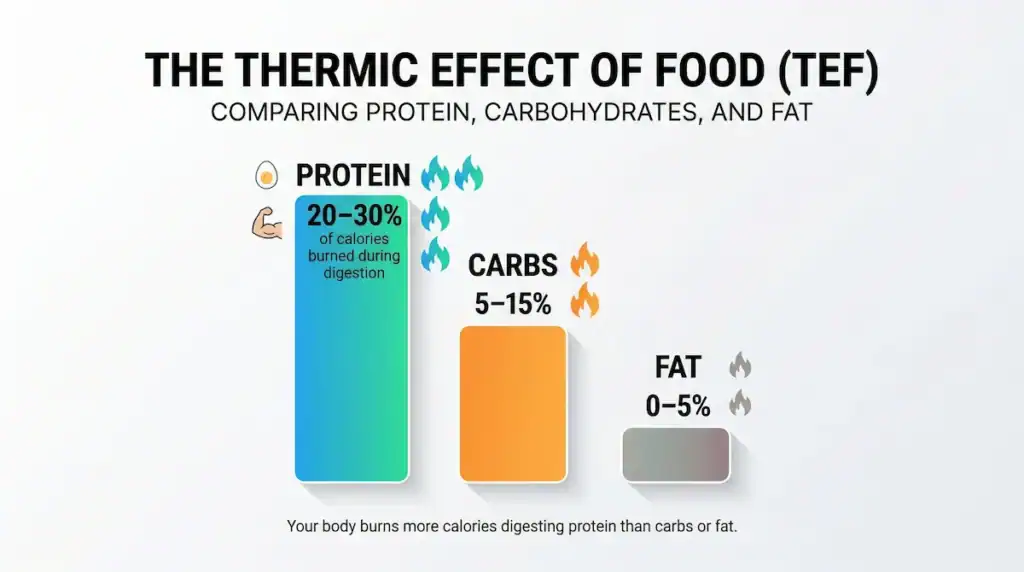
The Thermic Effect of Food (TEF) is the energy your body burns through to process, digest, and extract energy from the food you eat. It’s like a combustion engine: converting fuel into energy is not perfectly efficient so your body has to “spend” energy to get energy from your meals.
Protein has one of the highest thermic effects of any macronutrient, with an estimated 20–30% of its calories burned during digestion, absorption, and metabolism.9
Because eggs are a rich, high‑quality protein source, a substantial portion of their protein calories is used up just to process them. Carbohydrates use about 5-15%, and fat uses almost none.
This high energy cost is likely because digesting and utilizing protein increases muscle protein takeover. This is the highly energy-dependent process that requires significant amount of ATP (cellular energy) to run.10
A 2008 study in the International Journal of Obesity found that overweight and obese adults who ate two eggs for breakfast as part of a calorie-restricted diet lost 65% more weight and had a 61% greater reduction in BMI than those who ate a matched-calorie bagel breakfast.11
Whole Eggs Beat Egg Whites for Fat Loss
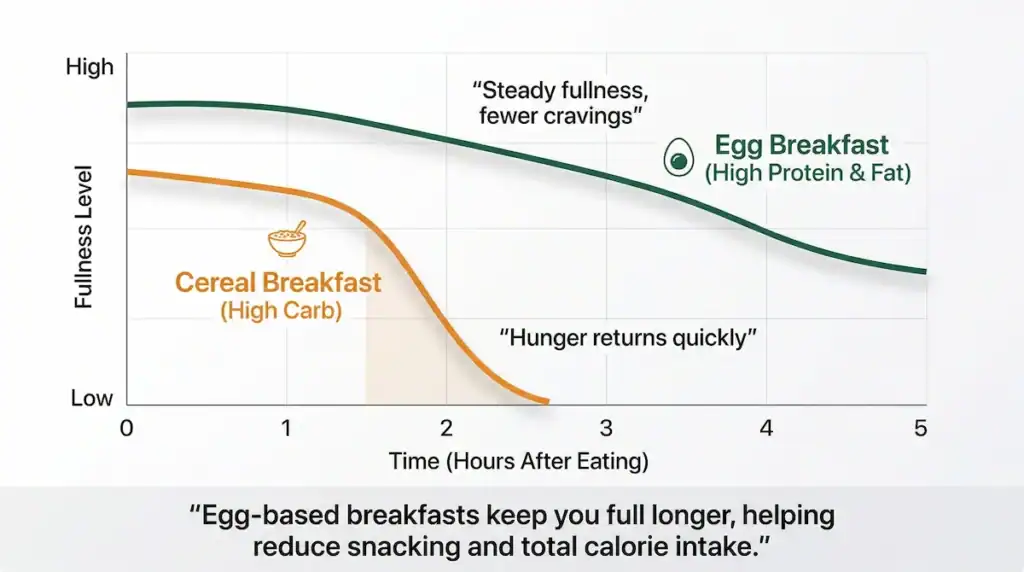
The cholesterol and fats in the yolk help suppress your appetite. Three whole eggs have about 180 calories, but they keep you full for hours.
A 2010 study in Nutrition Research showed that an egg‑based breakfast produced greater short‑term fullness and reduced later‑meal energy intake compared to an isocaloric bagel breakfast.12
It’s a common dieting mistake to consume only egg whites to save calories or avoid cholesterol. Egg whites are digested fast, leave you hungry sooner, and miss the nutrients that make eggs worth eating in the first place.
The yolk is one of the most nutrient-dense foods on the planet. It’s packed with:
- healthy saturated fats
- omega-3s
- antioxidants
- choline
- folate
- lecithin
- phospholipids
- fat-soluble vitamins A, D, and K2
- B complex vitamins
- cholesterol your body uses to make hormones & support metabolism
One of my clients had ditched the yolks for months, trying to “eat clean,” and couldn’t figure out why she was starving mid-morning every day. We put the whole egg back in, and the problem solved itself.
Low in Calories, High in Nutrition
One egg has about 70 calories. It also contains complete protein, B vitamins, iron, zinc, choline, lutein, zeaxanthin, and fat-soluble vitamins A, D, E, and K. That ratio is hard to beat in any food, let alone one that costs less than a dollar.
Most of the nutrition is in the yolk. Egg whites provide about 3.5 grams of protein for 15 calories and have no fat. They’re helpful when you need more food volume on a tight calorie budget, but the yolk contains the fat-soluble vitamins, choline, and antioxidants.
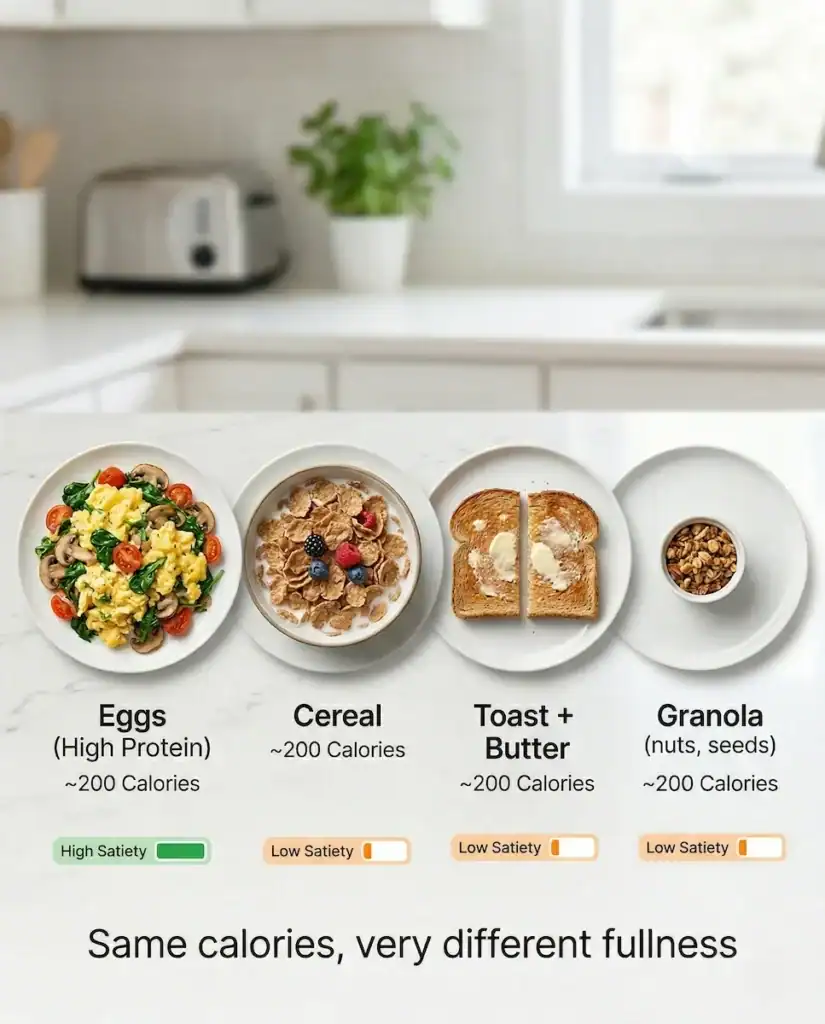
A smart approach is to use both. Try one or two whole eggs with extra egg whites. This way, you get the nutrients from the yolk and more protein without adding many calories.
Choosing pasture-raised or omega-3 enriched eggs increases the nutrition even more. These eggs have more healthy fats and antioxidants than regular grocery store eggs.
Preserves Muscle When Losing Fat
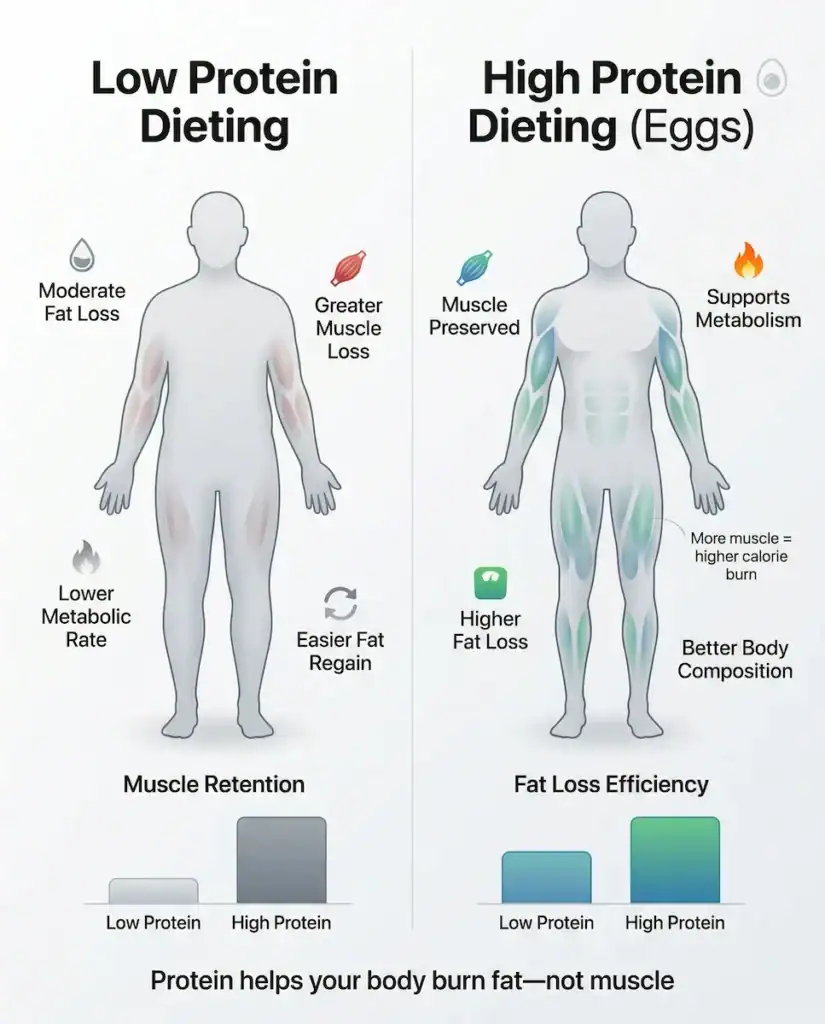
Muscle loss is one of the most common and least-discussed side effects of dieting. When you cut calories without enough protein, your body starts breaking down muscle tissue for energy.
Losing muscle slows your metabolism, making weight regain much easier.
Eggs have long been seen as the gold standard for protein quality. Your body uses the amino acids from eggs to repair tissue and maintain muscle, which helps keep your metabolism steady during a calorie deficit.
I had a client in his 50s who was losing weight but felt weaker every week. He wasn’t eating enough protein. Adding eggs to two of his meals each day stopped the muscle loss, and his strength started coming back within a month.
Whole eggs also help your body build more muscle protein than egg whites alone. The cholesterol in the yolk supports muscle growth in a way that egg whites can’t match.
Best Ways to Eat Eggs for Weight Loss (Ranked)
Key Takeaways:
- Boiled and poached eggs are the most calorie-controlled methods because no fat is added during cooking.
- Scrambled and fried eggs can absolutely support weight loss. The variable is how much oil or butter you use in the pan.
- Whole eggs beat egg whites for nutrition and muscle retention. Use whites to boost protein when calories are tight.
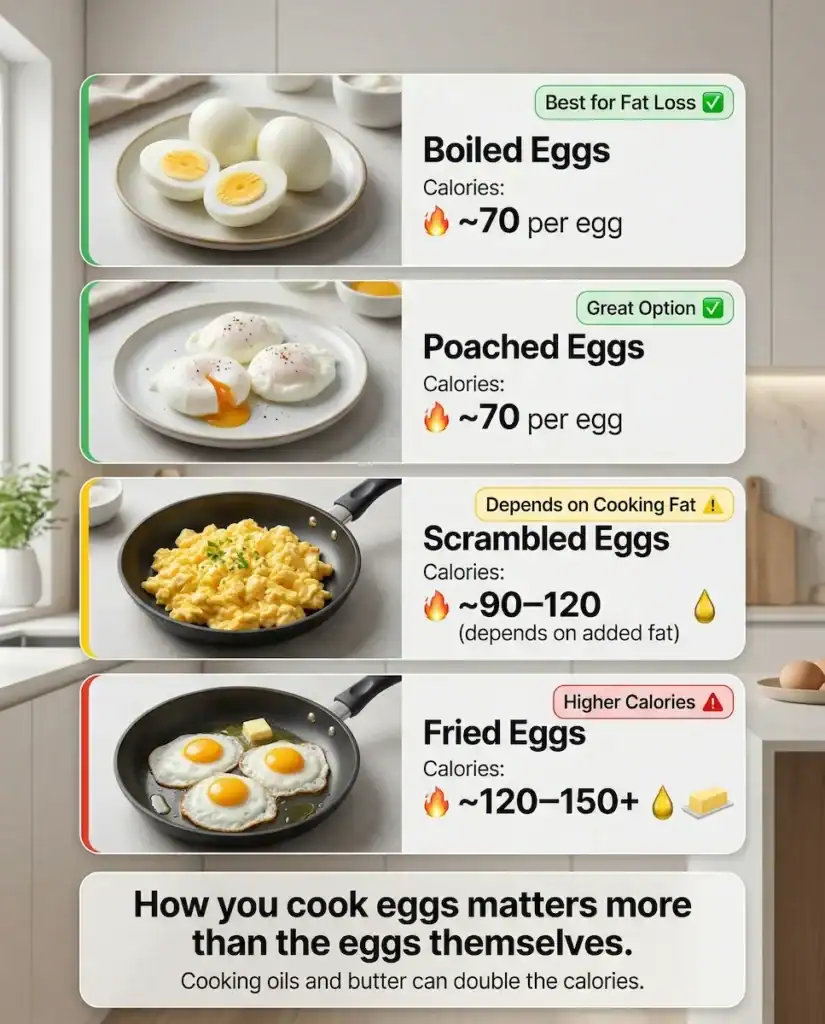
Boiled Eggs: The Easiest Win for Weight Loss
Boiled eggs require only water. No oil, no butter, no hidden calories added during cooking.
A single big egg contains about 70 calories, 6 grams of protein, and 5 grams of fat. Boiling keeps that number exact and predictable.
One of my clients meal-prepped a dozen hard-boiled eggs every Sunday and said it was the single habit that kept her on track all week.
They’re also easy to portion without a scale. You just count eggs instead of grams, and that simple approach makes a big difference.
I like to use this egg cooker. You can easily just “set it and forget it.” Makes boiling eggs easy.
Poached Eggs: Same Benefits, Different Texture
Poached eggs are cooked in water like boiled eggs. No added fat required, so the calorie count stays clean.
Make sure the whites are fully set. Undercooked egg whites are poorly absorbed by the body, which cuts into the protein you’re actually getting from the meal.
Scrambled Eggs: Good for Weight Loss If You Watch the Pan
Scrambled eggs can quickly become a calorie problem. Most people eyeball the butter or oil, and fat has 9 calories per gram. Small mis-pours add up quickly.
Avoid using non-stick pans, as they contain PFAS (“forever chemicals”) and Teflon coating that can leach into your food. I prefer a carbon steel pan instead.
Use stable animal fats like tallow, ghee, grass-fed butter, or bacon fat when frying eggs. You can also use avocado oil, macadamia nut oil, or extra virgin olive oil.
Don’t use highly processed vegetable oils to cook. These oils promote cellular inflammation and actively block your body’s ability to burn stored fat.
Adding fibrous vegetables like spinach, mushrooms, or zucchini bulks up the volume of the meal without adding many calories.
Fried Eggs: It Comes Down to the Oil
A fried egg is perfectly fine for weight loss. The oil in the pan is where it can go south.
One tablespoon of butter or oil adds about 100 to 120 calories to the egg’s 70 calories. If you don’t track that, you’re not really tracking your breakfast.
Use a small, measured amount of oil and make sure to count it.
Avoid frying eggs in vegetable oils like corn, canola, cottonseed, soybean, sunflower, or safflower. These oils break down into harmful compounds when heated.
How Many Eggs Per Day for Weight Loss? (The Answer Is Less Complicated Than You Think)
Key Takeaways:
- 2-4 eggs per day is a practical starting point; your total protein target matters more than the exact number.
- More active people can fit more whole eggs into their diet. Sedentary dieters may need to substitute some whole eggs for whites to stay in a deficit.
- Eating 6-7 eggs a day isn’t dangerous for cholesterol, but it can use up most of your daily fat allowance and leave less room for other important foods.
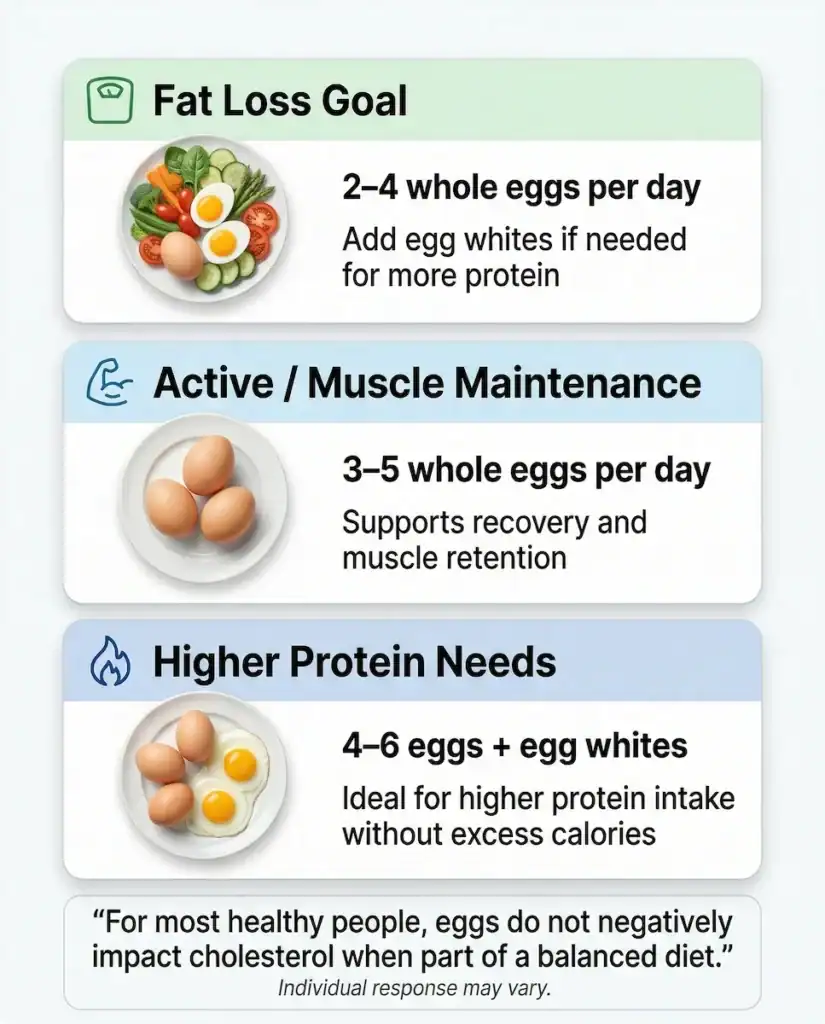
2-4 whole eggs per day is a solid baseline for most people. That’s roughly 12 to 28 grams of protein and 140 to 280 calories, which fits comfortably into most fat-loss diets.
Your total daily protein target matters more than the exact egg count. Aim for around 1.6 to 1.8 grams of protein per kilogram of body weight. Eggs are one tool to help you hit that number, not the whole strategy.
You can use my free protein calculator to instantly find your daily protein needs.
Modify Based on Your Goals & Activity Level
Fat loss and muscle gain call for different approaches. For fat loss, calories are tight, so mixing 1-2 whole eggs with extra whites helps maximize protein and food volume without blowing your fat budget.
For muscle gain, you have more room… multiple whole eggs fit easily into a larger calorie budget and support better muscle protein synthesis than whites alone.
Activity level shifts the math a lot. A highly active person burns significantly more calories and can fit more whole eggs into their day without going over. A sedentary dieter has a smaller budget and needs to be more deliberate about where fat calories go.
One of my clients was eating four whole eggs every morning during a desk-job stretch with minimal exercise. She wasn’t losing weight and couldn’t figure out why. We swapped two of the whole eggs for whites, kept her protein the same, and she dropped back into a deficit without changing anything else.
Is Eating 6 to 7 Eggs a Day Too Much?
I’ve seen this question come up constantly on Reddit and fitness forums. The short answer: it’s not dangerous, but it’s worth running the numbers.
Seven whole eggs have roughly 35 grams of fat and about 490 calories. On many fat-loss diets where daily fat is capped at 30 to 50 grams, that’s your entire fat allowance in one meal. That leaves almost no room for anything else.
The cholesterol fear driving this question is largely outdated. For about 70 percent of people, dietary cholesterol has minimal impact on blood cholesterol levels.
The liver regulates its own cholesterol output based on how much you consume. The 2015 US Dietary Guidelines officially removed the cap on dietary cholesterol for this reason.
The bigger problem with eating 6-7 eggs a day is that it leaves less room for other foods. You still need fiber from vegetables, omega-3s from fish, and other nutrients from a variety of whole foods. Eggs are great, but they’re not a complete diet by themselves.
Bottom line: Focus on reaching your protein goal first, fit eggs into your calorie budget, and don’t worry too much about cholesterol.
Best Time to Eat Eggs for Weight Loss (One Window Works Better Than the Others)
Key Takeaways:
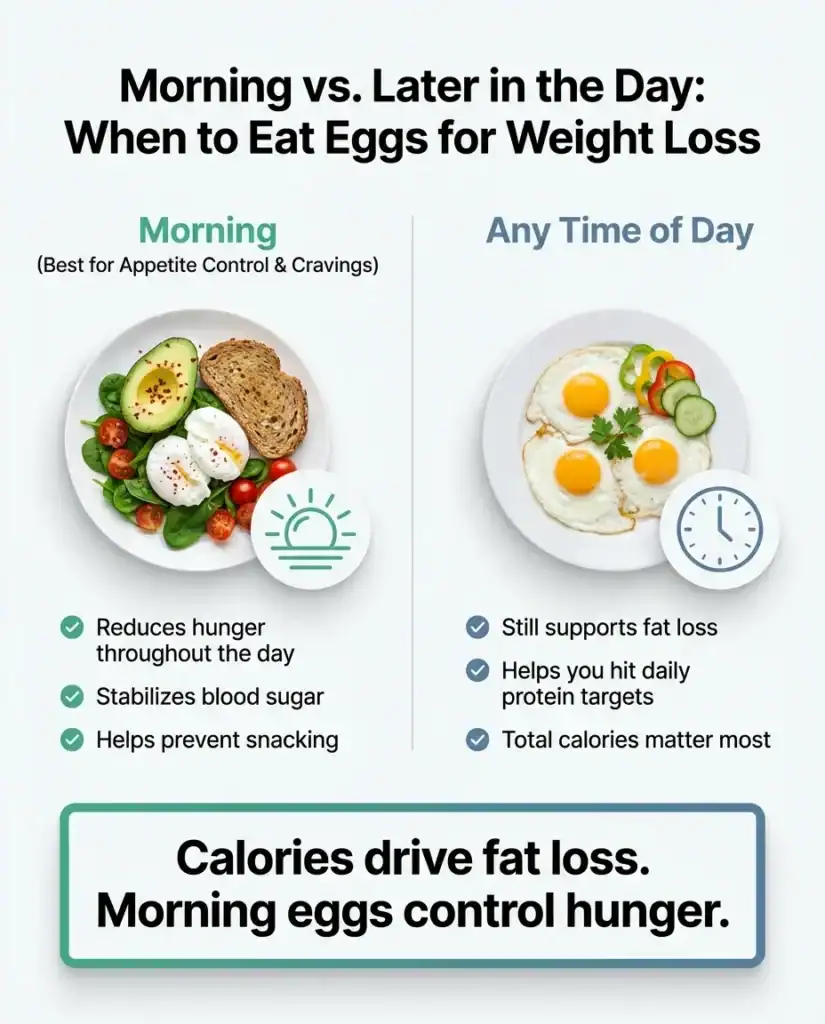
- A high-protein breakfast suppresses appetite more than the same protein eaten later in the day; eggs in the morning reduce cravings that would otherwise hit mid-morning or mid-afternoon
- Eating eggs at night does not cause fat gain; total daily calories are what matter, not meal timing.
- Eggs at night work well after evening workouts or as a strategy to prevent late-night snacking on higher-calorie foods
Eggs for Breakfast: Why Morning Is the Most Effective Time
Research shows that a high-protein breakfast suppresses appetite more than the same protein eaten later in the day. Eggs in the morning cut ghrelin, your primary hunger hormone, and keep it lower for hours.
Three eggs at breakfast are about 180 calories. Most people who eat that aren’t hungry again until well past noon. That’s the satiety effect of solid protein and fat working together.
One of my clients used to eat a yogurt and a banana every morning and wondered why she was starving by 10am. We switched her to three scrambled eggs. The mid-morning cravings stopped almost immediately, and she stopped snacking without even trying.
Protein also has the highest thermic effect of any macronutrient. Starting the day with eggs gives your metabolism an immediate boost after an overnight fast.
Front-loading protein early also sets up the rest of your day. Appetite hormones including GLP-1, CCK, and PYY stay elevated after a protein-rich breakfast. Cravings that used to hit at 3 pm tend to shrink or disappear entirely.
Eggs at Night: Not as Bad as People Think
The idea that eating at night automatically causes fat gain is a myth. Fat loss comes down to total daily calories, not the time of day. When calorie intake is controlled, eating eggs at night does not negatively affect body composition.
That said, timing does matter for one specific reason: if you struggle with evening hunger then saving calories for a high-protein dinner of eggs can prevent a nighttime binge on something way worse. A satiating protein source at night beats mindless snacking every time.
Eggs at night also make sense after evening workouts. Protein consumed before sleep is digested and absorbed effectively. It supports overnight muscle repair and helps protect lean mass during a calorie deficit.
The best time to eat eggs is whenever it helps you stick to your daily calorie goal. For most people, that’s breakfast, but for others, it’s dinner. Either option works.
Bottom line: Eat eggs at breakfast for the best appetite control, but have them at night if that helps you stay on track.
Struggling with constant hunger?
Eggs work so well for weight loss because they naturally increase satiety hormones like GLP-1, but if you’re still dealing with cravings or constant hunger then there are ways to support that same pathway even more.
A 3-part daily stack designed to support people using GLP-1 medications or losing weight naturally. It combines muscle, protein, collagen, and appetite support to help you maintain a healthier body composition as you lose weight.
- Natural GLP-1 Support: Helps support healthy appetite signals, fullness & metabolic function
- Lean Muscle Support: Helps preserve muscle, strength & healthy body composition during weight loss
- High-Protein Collagen: Adds 20 g of protein with 5 collagen types to help support daily protein intake
- Skin, Joint & Hair Support: Provides collagen peptides to support skin elasticity, joints, hair & nails
- 3-Part Weight-Loss Support: Combines muscle, protein/collagen & appetite support in one simple daily stack

Egg Diets: Do They Actually Work? (Here’s What Happens After Day 3)
Key Takeaways:
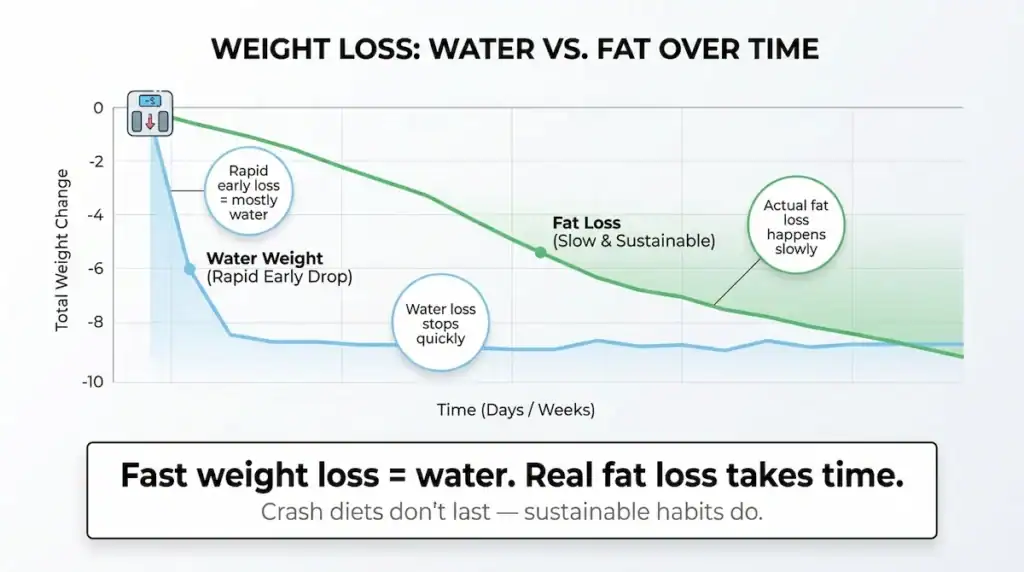
- The boiled egg diet creates weight loss through severe calorie restriction; so most early results are water weight, not fat.
- Long-term, crash diets trigger metabolic slowdown and elevated hunger hormones, making rebound weight gain almost inevitable.
- Eggs alone create major nutritional gaps; they contain zero fiber, zero vitamin C, and none of the phytonutrients found in plants.
The Boiled Egg Diet: What It Is & Why It Works (For a While)
The boiled egg diet is a crash diet that focuses on hard-boiled eggs while cutting out carbohydrates, sugars, and most other foods. It works for one reason: severe calorie restriction.
Hard-boiled eggs are filling, require no cooking fat, and are naturally portioned. Eating several a day makes it difficult to hit a high-calorie target without stuffing yourself. The diet exploits that satiety effect to keep intake extremely low.
Will You Lose Weight Eating Only Eggs?
Yes, but you’ll also lose a lot of water.
Eggs contain zero carbohydrates. Cutting carbs depletes glycogen stores fast, and each gram of glycogen holds three to four grams of water. That rapid drop on the scale in the first three days is mostly water weight, not fat.
One of my clients tried a three-day egg diet before a reunion and lost six pounds. She was thrilled until it all came back within a week of eating normally again. The fat loss was minimal; the water loss was the whole story.
Long-term, the picture gets worse. Extreme calorie restriction triggers adaptive thermogenesis: your metabolism slows, hunger hormones spike, and your body fights to hold onto fat.
Diets have less than a 5% success rate over three years, and crash diets are a big reason why. When you stop, the weight comes back fast, often with extra fat replacing any muscle you lost.
The Real Risks You Should About
Eggs are nutrient-dense, but they contain zero fiber and zero vitamin C. Gut bacteria need fiber to survive. Without it, digestion suffers and systemic inflammation increases.
That’s why a sustainable egg-based eating plan still needs a dependable fiber source. BioTRUST Ageless Multi-Fiber helps fill that nutritional gap with a convenient blend designed to support regularity, digestive health, and a healthier gut environment without changing the meals you already enjoy.
A 6-fiber daily blend designed for adults 40+ to support regularity, gut health, and a healthier microbiome. Each serving provides 6g of fiber, including clinically studied resistant starch, in a gentle formula made for everyday use.
- 6-Fiber Blend: Combines soluble, insoluble, fermentable fiber & resistant starch for more complete digestive support
- Gut Microbiome Support: Helps feed beneficial gut bacteria and supports healthy microbial balance
- Regularity & Digestive Comfort: Supports healthy stool consistency and everyday digestive regularity
- Clinically Studied Resistant Starch: Provides 3.5g of Solnul® resistant potato starch to support gut barrier & metabolic health
- Gentle Daily Formula: Uses slow-fermenting, well-tolerated fibers designed to minimize gas & bloating

Eating only eggs also means cutting out the phytonutrients, antioxidants, and plant compounds that support long-term health. No single food covers all of that, not even eggs.
The sustainability problem runs deeper than boredom. Rigid, all-or-nothing diets are strongly linked to binge eating and yo-yo dieting. The moment you break the diet, even slightly, the psychological guilt can trigger a full rebound. Willpower alone cannot override biology indefinitely.
Eggs are a great part of a fat-loss diet, but they shouldn’t be the only thing you eat.
Bottom line: Eggs are one of the best foods for weight loss, but eating only eggs is one of the worst ways to keep the weight off.
Eggs vs Other Breakfast Foods for Weight Loss
Eggs vs Oatmeal: The Satiety Gap Is Bigger Than You Think
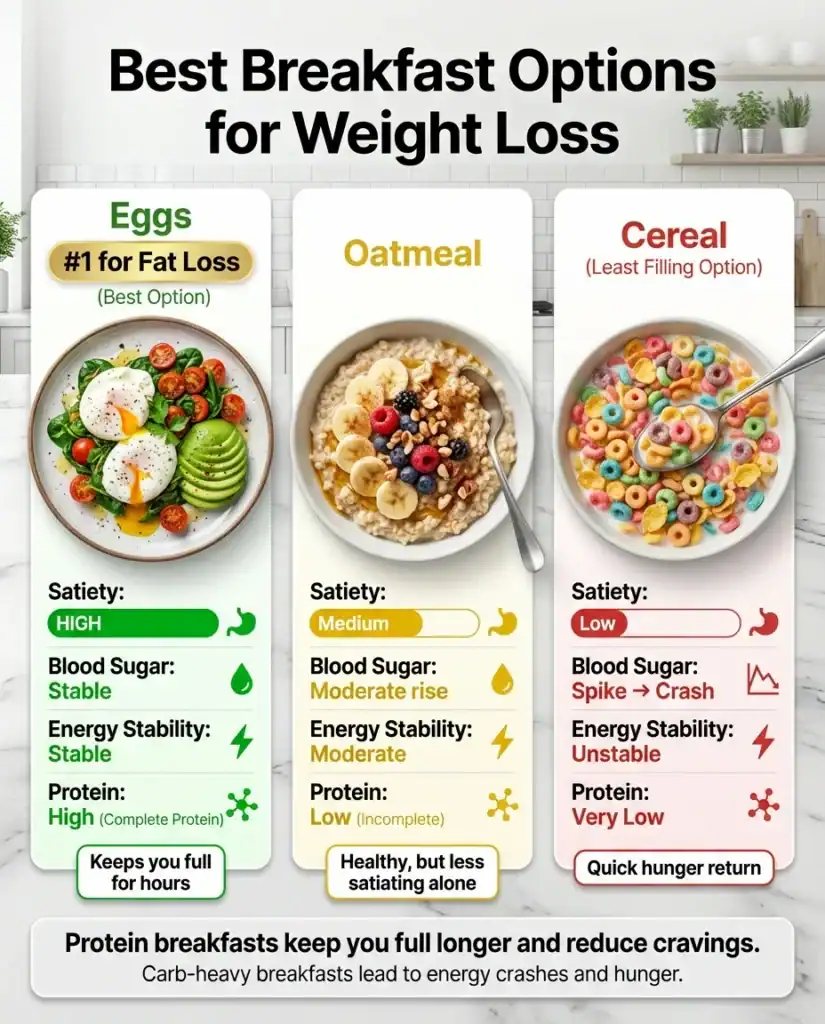
Eggs suppress hunger through protein and fat. They trigger anti-hunger hormones, including GLP-1, CCK, and PYY, that signal your brain to stop eating and stay full. Oatmeal uses fiber and bulk to fill the stomach, which is a much weaker mechanism for controlling appetite.
A Harvard study found that kids who ate instant oatmeal consumed 81% more food later in the day than kids who ate a vegetable omelet. Even the steel-cut oats group ate 51% more.
Plain oatmeal without protein or fat leaves your stomach quickly. If you want to eat oatmeal, pair it with eggs or add some fat. On its own, it can lead to a mid-morning crash. For weight loss, eggs are the better choice.
Oatmeal makes sense for high-volume endurance athletes who need to replenish glycogen before hard training. For everyone else focused on fat loss, eggs are the better call.
Eggs vs Cereal: This Isn’t Even a Close Contest
Most commercial cereals are heavily processed carbohydrates that surge blood sugar fast and hard. The pancreas pumps out insulin to clear it, blood sugar crashes shortly after, and intense hunger follows. That cycle makes it extremely difficult to stay in a calorie deficit.
A woman I train was eating “heart-healthy” granola every morning and couldn’t understand why she was ravenous by 9:30am. We switched her to two eggs, and the hunger problem disappeared within days.
Eggs have almost no carbohydrates. They don’t cause a blood sugar spike or crash, so your appetite stays steady, and it’s easier to control calories throughout the day.
Want to stay in fat-burning mode longer?
One of the biggest challenges with fat loss is getting your body to actually use fat for energy instead of carbs. This is where something like Keto Elevate can help. It supports fat metabolism and helps your body stay in a fat-burning keto state longer.
Eggs vs Protein Shakes: Convenience Has a Cost
Protein shakes win on speed. If you have zero time, a shake with quality protein and added fat gets you out the door faster than anything else.
Shakes don’t keep you full for long. Liquid calories leave your stomach quickly, and you miss out on chewing, which helps your body feel satisfied. You can drink a shake and still feel hungry.
Solid foods like eggs slow digestion, especially because the yolk contains fat. That’s why eggs keep most people full for 3-4 hours, while a shake might last only ninety minutes.
If you use shakes and still feel hungry, try adding a fat source like nut butter or coconut milk. It may not solve the problem completely, but it helps.
Common Mistakes Why Eggs Stop Helping You Lose Weight
Key Takeaways:
- Untracked cooking fats are the most common hidden-calorie problem in egg-based meals.
- Skipping the yolk removes choline and the fat that keeps hunger suppressed. Combine whole eggs with whites instead of going whites-only
- Pairing eggs with refined carbohydrates or sugary drinks spikes insulin and cancels the fat-burning advantage eggs give you.
Adding Too Much Fat Without Tracking It
Butter, oil, and cheese aren’t the problem. The issue is adding them to the pan without measuring. Fat has 9 calories per gram. One tablespoon of butter adds over 100 calories to a meal that most people think of as “just eggs.”
A client I worked with couldn’t figure out why her breakfast kept her full, but her weight wasn’t moving. She was using three tablespoons of butter every morning without realizing it. Cutting to one made the difference.
The solution isn’t to avoid fat, but to keep track of what you add to the pan so your calorie count matches what you actually eat.
Pairing Eggs with the Wrong Foods
Eggs paired with bacon are fine. Eggs paired with toast, hash browns, or sweetened coffee creamers work against you. Refined carbohydrates spike insulin. That spike shuts down fat burning and stores the calories you just ate.
Regular bread, even most “whole wheat” types, digests quickly like sugar. If you want toast with your eggs, choose real sourdough or sprouted grain bread, which digests much more slowly.
Orange juice is another quiet sabotage maker. A glass has as much sugar as a can of soda and cancels the stable blood sugar benefit eggs would otherwise give you.
Eating Only Egg Whites & Skipping the Yolk
Ditching the yolk to save calories deprives your liver of choline, a nutrient it uses to metabolize fat. It also removes the fat that slows digestion, helping keep hunger hormones suppressed. Egg whites alone digest fast and leave most people hungry within two hours.
Research shows whole eggs produce significantly more fat loss than the same amount of protein from whites alone. The cholesterol in the yolk supports muscle protein synthesis in a way isolated whites simply can’t match.
A better approach is to combine one or two whole eggs with extra egg whites. This way, you get the nutrients from the yolk and more protein without adding many calories.
Not Tracking Portions or Treating Eggs Like a “Free” Food
Eggs aren’t magic. They’re a high-quality, filling protein source, but they still have calories.
Six or seven whole eggs a day add up to about 490 calories and 35 grams of fat. On a fat-loss diet with a limited fat budget, that could use up your entire allowance at breakfast.
Eggs work best when they’re part of a calorie-controlled plan. Not tracking your food and assuming “healthy food” means you can eat as much as you want are common reasons people stop losing weight (even if they’re eating well).
Add fibrous vegetables to your eggs. Spinach, mushrooms, peppers, and tomatoes add physical volume to the meal for almost no calories, which stretches the stomach and signals fullness to the brain.
Easy Egg Meals for Weight Loss (That Actually Fit Into a Real Day)
Simple Breakfast Ideas That Keep You Full Until Lunch
The best breakfast for weight loss combines protein, fat, and food volume. Try 1-2 whole eggs mixed with three or four egg whites, scrambled with spinach and mushrooms. This gives you a big plate of food for under 300 calories.
Whole eggs with sliced avocado are another strong option. Both are high-fat foods with a low energy density. That combination keeps you full for hours without a large calorie cost.
If you have no time to cook, then poached or boiled eggs require no oil and no pan.
One of my clients kept a bag of pre-peeled hard-boiled eggs in her work bag every day. She stopped skipping breakfast entirely because the prep barrier disappeared.
High-Protein Lunch Options That Travel Well
A Cobb-style salad with two or three chopped hard-boiled eggs, half an avocado, romaine, bacon, and tomato is one of the most filling lunches you can make. It takes about five minutes to put together and gives you protein, fat, and fiber in one bowl.
Egg salad made with avocado oil mayo and Dijon mustard served over spinach is another solid option. Skip the bread to keep calories low; the greens add volume without much extra calorie cost.
Egg muffin cups baked ahead of time are a convenient way for busy weeks. Whisk whole eggs and egg whites with diced peppers and onions, pour into a muffin tin, and bake. Each cup is a pre-portioned serving you can grab from the fridge.
Quick Low-Calorie Snacks When You Need Something Fast
Hard-boiled eggs are the most underrated grab-and-go snack in a fat-loss diet. Each egg is a pre-portioned unit with no tracking guesswork; one big egg is about 70 calories, 6 grams of protein, and 5 grams of fat.
Egg whites are the better snack option when your calorie budget is very tight. One egg white is roughly 15 calories and 3.5 grams of protein. A small container of cooked white beans with hot sauce takes two minutes to make and keeps hunger at bay between meals.
For a snack that keeps you full longer, pair a hard-boiled egg with some avocado slices and olives. The fat slows digestion and helps you stay full longer than protein alone.
Are Eggs Good or Bad for Belly Fat? (The Answer Might Surprise You)
No food burns fat from a specific area. Spot reduction isn’t possible. You can’t eat eggs, do crunches, or follow any plan that removes fat just from your belly. Your body’s fat storage is determined by hormones and genetics, not by your food choices.
Think of it like a swimming pool: you can’t drain the deep end first. You lower the entire pool’s water level, and the belly fat eventually goes with it.
That said, belly fat is actually the most metabolically active fat you carry. It responds faster to a calorie deficit than stubborn subcutaneous fat on your hips or thighs. Get into a real deficit, and the belly tends to move first.
Protein is the most hunger-suppressing macronutrient. Research shows that eating eggs at breakfast lowers ghrelin, the primary hunger hormone, and reduces total calorie intake for the rest of the day. Less hunger makes it easier to sustain a deficit.
I had a client in his 50s who had carried belly fat for years despite trying multiple diets. He switched his breakfast cereal to 3 eggs and lost 4″ off his waist in 12 weeks. He didn’t change much else. He just stopped spiking insulin every morning and stopped being hungry by 10am.
Eggs also protect muscle while you’re dieting. Muscle burns calories at rest. Losing it slows your metabolism and makes belly fat harder to shift over time.
Bottom line: Eggs won’t directly burn belly fat, but they make it much easier to stick to the calorie deficit that does.
Final Verdict: Should You Eat Eggs to Lose Weight?
Yes. Eggs are one of the best foods you can eat for fat loss, and the science is not complicated.
Eggs suppress hunger better than most breakfast foods. They help protect muscle during a calorie deficit, keep insulin stable, are inexpensive, and take just five minutes to cook.
The case for eggs is simple and straightforward: eggs are a tool, not a transformation. They work when they’re part of a diet built around a real calorie deficit.
They don’t work when you eat six whole eggs, skip the vegetables, ignore the cooking oil, and assume “healthy food” means unlimited food.
Use eggs to control hunger. Not to replace your entire diet.
Here’s exactly how to put this into practice:
Start with 2-3 eggs at breakfast, cooked with a measured amount of fat and served with fibrous vegetables. Track everything you add to the pan. Keep the yolk. If you need to save calories, add extra egg whites and use fewer whole eggs.
Stop eating cereal. Making this one change removes the blood sugar crash that causes mid-morning cravings and makes your day harder than it should be.
Keep hard-boiled eggs in your fridge all week. The biggest threat to any fat-loss diet is getting hungry when nothing is ready. A pre-portioned egg has 70 calories and needs no prep time.
Don’t worry about cholesterol, don’t skip the yolk, and don’t try to live on eggs alone. Pair eggs with vegetables, whole foods, and a diet you can stick with long term.
Eggs have been around longer than any diet trend. There’s a reason people who stay lean all year keep eggs in their kitchens.
FAQ
Are eggs good for weight loss every day?
Yes, eating eggs every day is one of the best strategies for weight loss. Eggs are highly satiating, prevent insulin spikes, and protect muscle mass in a calorie deficit. Aim for 2–4 whole eggs daily, and choose omega-3 enriched varieties for an even better fatty acid profile.
How many boiled eggs should I eat to lose weight?
Eating 2–4 boiled eggs per day is a practical guideline for weight loss. Boiled eggs add zero cooking-oil calories, keep you full, and protect muscle mass. What matters most is staying in a calorie deficit and hitting your protein targets consistently each day.
Is it better to eat egg whites or whole eggs?
Whole eggs are generally superior to egg whites for fat loss, muscle growth, and nutrition. Studies show trainees eating 3 whole eggs post-workout lost more body fat and built more strength than those eating 6 egg whites. Choose egg whites only if calories are extremely restricted.
Can eggs help burn belly fat?
Eggs can’t spot-reduce belly fat — only a sustained calorie deficit does that. But eggs make hitting that deficit easier: they’re highly satiating, nutrient-dense, and protein burns 20–30% of its own calories during digestion. That combination makes eggs a powerful fat-loss tool overall.
What is the healthiest way to cook eggs?
The healthiest way to cook eggs is poaching or soft-boiling — no added fats, and low heat prevents toxic AGE compounds that drive inflammation. If frying, use avocado oil, coconut oil, or grass-fed butter. Always eat the yolk — it contains vitamins A, D, E, K, and choline.