

Your upper back is the missing link between looking strong and feeling strong. If you’ve been working out at home but still have rounded shoulders, a stiff neck, or that hunched desk posture, you’re definitely not alone. And it’s one of the most common frustrations with those lifting at home.
Picture yourself standing taller with a strong, V-shaped back. All from using a few dumbbells you already have. These upper back moves don’t just build muscle. They fix your posture, speed up your metabolism, and make you stronger in every workout.
But if you have bad form, then you’re probably missing the specific cues that create the mind-muscle connection in your upper back. These are critical details that determine if you hit your lats and rhomboids or just torch your biceps and lower back. You need proper scapular retraction, elbow positioning, and tempo control, or else you won’t get that upper back activation.
After training for over 20 years, I’ve noticed most people have trouble with back workouts and repeat the same dumbbell mistakes. Fix those using the right upper back exercises, and you’ll target your rear delts, rhomboids, and traps… without arm dominance or lower back pain.
Why You Should Train Your Upper Back
Key Takeaways:
When you train your upper back more, it evens out your physique, fixes your posture, boosts your overall look, and gives the appearance of a slimmer midsection.
It helps fix muscle imbalances from too much pushing, keeps your shoulders strong and stable, improves upper-back flexibility, and fights bad posture from sitting too long.
When you sit at a computer all day, your shoulders roll forward and your neck stays tight, no matter how much you stretch. Even if your chest and arms get stronger from push-ups and bench presses, your posture can still get worse, making you look slouched all the time.
What’s happening is your upper back muscles can’t keep up. Your chest-focused workouts and desk posture are pulling your shoulders forward and throwing things off balance.
When your chest is more developed than your upper back, then the strength and balance pulls your shoulders forward. This creates the hunched appearance and puts serious stress on your shoulders and neck.
Not working your back muscles (like your lats, rhomboids & traps) can lead to poor posture. It also raises your chances of getting injuries in your neck, shoulders, elbows, or forearms.
Having a strong upper back fixes posture, boosts performance, and prevents injury. It reverses the hunched shoulders from desk work, relieving joint pressure.
During pressing movements, being able to retract your shoulder blades protects against impingement. Arching your upper back triples the subacromial space width, which will dramatically cut injury risk.
For Men
Having a weak upper back destroys the aesthetic V-taper physique. When you build up your upper back, it makes your body look more athletic and creates the illusion of a slimmer midsection. But most strength training programs lead to an underdeveloped upper back with an overdeveloped pec and arms.
For Women
A well-defined back gives you a terrific aesthetic asset. Having strong upper and middle back muscles makes you look great in backless clothes or bikinis. More importantly, they support good posture and keep your shoulders strong and stable. So you’ll stand taller, look more confident, and eliminate the forward head position.
Muscle Anatomy in the Upper Back
Here’s a quick breakdown of the primary muscles that make up your upper back, with their anatomy and function.
Trapezius (Upper & Mid Traps)
The trapezius is a large fan-shaped muscle that’s divided into three distinct regions. Each one requires a different exercise to fully develop.
The upper traps originate from your skull and extend down to your cervical spine, inserting on your clavicle. These are primarily responsible for scapular elevation, the shrugging motion you do when you say, “I don’t know.”
The middle traps run nearly horizontally from your spine to your shoulder blade. Their main job is scapular retraction, pulling your shoulder blades back and together. This is critical for posture correction and the squeeze you feel during ropes.
Rhomboids
Your rhomboids (major & minor) sit between your shoulder blades and work together with your mid-traps to adduct your scapula. These are the muscles you’ll feel when contracting during the pull of your shoulder blades together. They’re known as scapula retractors.
Rhomboids are also downward rotators of your shoulder blade. If you can’t feel these muscles during rows, your biceps are likely taking over. Try starting the movement by pulling your shoulder blades back first.
Rear Deltoids (Posterior Delts)
The rear delts originate on the spine of your scapula and insert on the lateral side of the humerus. They perform transverse (horizontal) abduction and shoulder extension. They are the primary hyperextensors when your elbow travels behind your body during pulling movements.
This muscle is usually weak because most pulling exercises don’t move through the full range needed to work the back of your shoulders. So you need specific exercises like reverse flies or high rows to maximize rear delt stimulation.
Latissimus Dorsi (Upper Fibers)
Your lats are one of the most versatile muscles in your body, with attachments all over your torso. They connect to your vertebrae, pelvis, sacrum, ribs, scapula, and humerus.
Your lats mainly help you pull your arms down and back, like in a chin-up. They also help bring your arms toward your body and turn your shoulders inward.
Shoulder extension movements tend to only target the upper lats and teres major. While shoulder adduction hits your lower lats. This is why you need multiple rowing angles to fully develop your back width and thickness.
Supporting Muscles (Rotator Cuff & Spinal Erectors)
Your rotator cuff muscles, like the teres minor and infraspinatus, keep your shoulder stable and help prevent injuries when you lift heavy. These external rotators originate on your scapula and insert on your humerus. They help to decelerate your arm during throwing movements.
Your spinal erectors (iliocostalis, longissimus & spinalis) run from your sacrum to the base of your neck. They’re responsible for spinal extension and stabilization. So they help prevent your spine from folding over during bent-over rows and create that “Christmas tree” lower back when well developed.
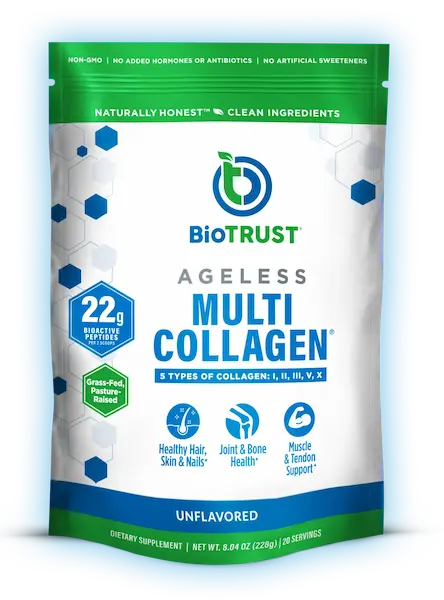
Heavy rows challenge more than just muscle. If you want extra support for the joints, tendons, and connective tissue that help keep your upper body moving well, BioTRUST Ageless Multi Collagen gives you five types of collagen in one easy-to-mix powder.
Powered by 5 Types of Bioactive Naturally Hydrolyzed Collagen Peptides for Full-Body Support (Odorless & Flavorless)
- Natural GLP-1 Support: Helps support healthy appetite signals, fullness & metabolic function
- Lean Muscle Support: Helps preserve muscle, strength & healthy body composition during weight loss
- High-Protein Collagen: Adds 20g of protein with 5 collagen types to help support daily protein intake
- Skin, Joint & Hair Support: Provides collagen peptides to support skin elasticity, joints, hair & nails
- 3-Part Weight-Loss Support: Combines muscle, protein/collagen & appetite support in one simple daily stack
Are Dumbbells Enough to Build Your Upper Back?
Key Takeaways:
Yes, dumbbells are absolutely enough to build your upper back. Your muscles don’t care whether tension comes from a barbell, cable machine, or dumbbell. What matters is applying sufficient mechanical tension to the muscle fibers.
How Dumbbells Can Replace Machines & Cables
Dumbbells can give you a vast range of exercises while substituting for most fixed-path equipment. Just about every exercise performed with a barbell or machine (like bent-over rows or lat pull-downs) can be done well with dumbbells.
Since the movement path isn’t fixed with dumbbells, it’ll be easier on your joints than barbells. This allows for individual differences and a greater variety of motion.
Using cables keeps steady tension on your muscles through the entire movement. This helps increase muscle fatigue and growth. Still, dumbbells really shine in unilateral single limb training.
Exercises performed with one limb are often superior to bilateral movements due to the bilateral deficit (BLD). The BLD is the total force produced by both limbs together, which is less than the sum of the forces each limb can produce independently.
This is where one-arm dumbbell rows leverage this to their advantage. You can work your rear shoulders and mid-back muscles using dumbbell high rows and reverse flies. No cables needed.
Benefits: Stability, Range of Motion & Home Accessibility
Dumbbells force you to control two independent implements rather than just a single bar. This increases the complexity of the motor challenge.
This increases demand on stabilizing muscles to better condition the smaller muscles in your back and shoulder. Weak stabilizers can shut down neural output in your prime movers (killing your compound lift progress).
Dumbbells allow unrestricted movement through your joints and a full range of motion. For example, with chest-supported rows, the dumbbells let your hands move lower than your torso compared to a fixed bar.
This maximizes ROM to make sure all points of your muscle strength curve are thoroughly trained, giving you better results.
How Heavy Should Dumbbells Be for Upper Back Exercises?
For strength and hypertrophy, loads should be 60%-80% of your 1RM with a rep range of 8-12 reps. Training in this medium rep range makes sure you’re getting enough mechanical tension to stimulate all the muscle fibers.
When you start a new exercise, first choose your goal rep range. Then test different weights to find the heaviest one you can lift for that many reps with good form. This ‘trial-and-error’ method works best.
Dumbbells are also inexpensive and require very little space for storage compared to machines or barbells. This makes them a great choice for at-home workouts. A dumbbell set that covers 5-70 pound increments is enough to train your entire upper back for most.
10 Best Dumbbell Upper Back Exercises
Equipment Used:
I recommend investing in a set of adjustable dumbbells. It’ll save you from having to buy more dumbbell sets as your strength increases. They also allow you to quickly change the weight. And take up a small amount of space compared to a bunch of dumbbells.
I recommend this adjustable dumbbell set for men.
I recommend this adjustable dumbbell set for women.
I’m also using an adjustable bench with some of these exercises.
Dumbbell High Row
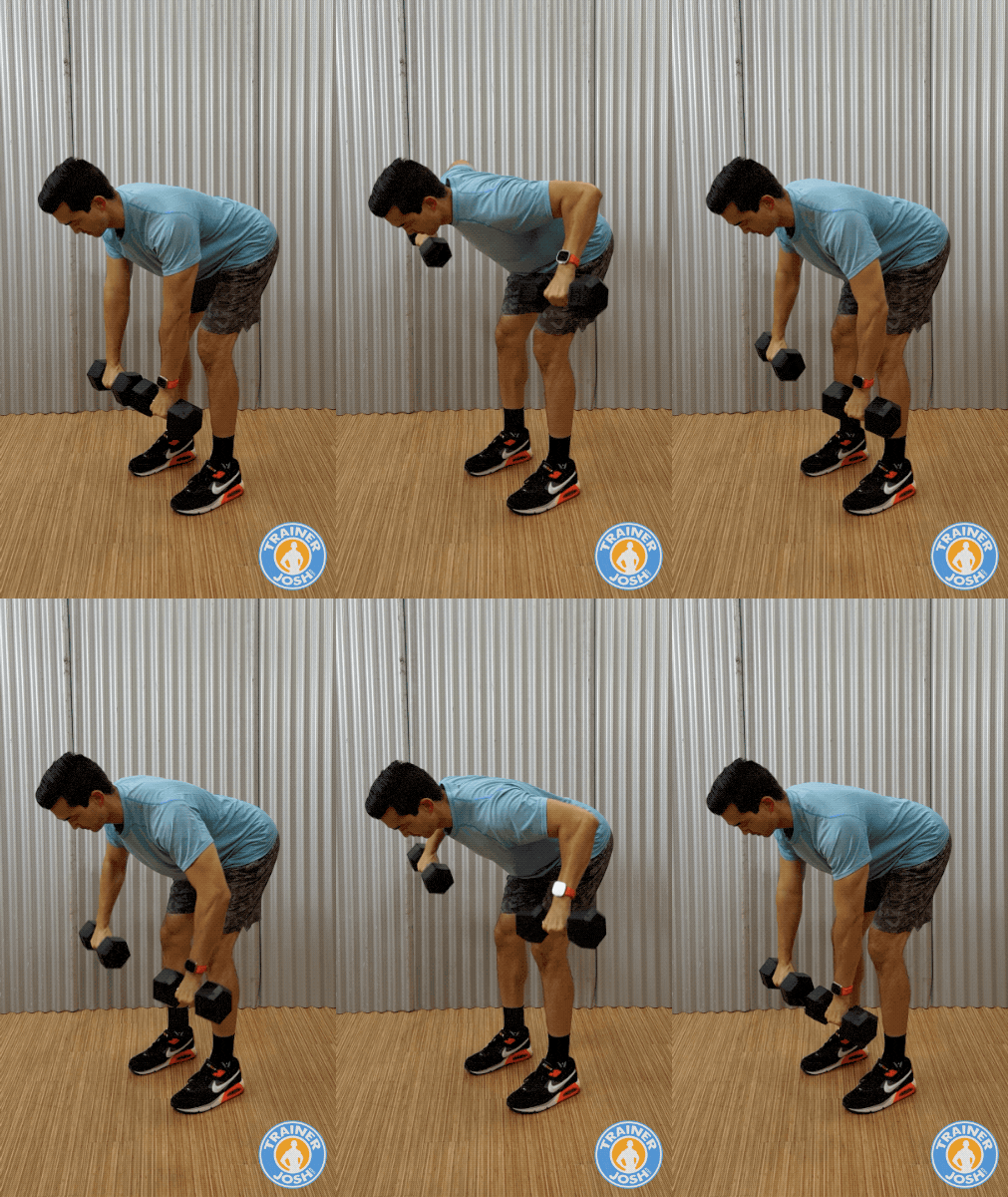
The dumbbell high row is a powerful variation of the one-arm row that focuses on the upper back muscles. Especially the rear delts, rhomboids, and mid traps.
The high row’s out-to-the-side pull creates more scapular retraction and upper-back activation. It’s ideal for creating that “3D” back look, improving posture, and balancing out overdeveloped front shoulders.
- Support yourself by holding a rack, pole, or bench with one hand. Keep your torso flat and parallel to the floor. Your back should stay straight, not rounded.
- Engage your core and lock your spine in a neutral position. Think “tight torso” from head to hips.
- With your free hand holding the dumbbell, drive your elbow out to the side (not toward your ribs) and pull until your elbow travels slightly behind your body. Lead with the elbow and not your hand.
- At the top, squeeze your shoulder blades together for one second. Feel the contraction across your upper back.
- Slowly lower the dumbbell, letting your arm fully extend. Allow your shoulder blade to protract naturally without letting your spine round.
Trainer Tip: Keep your chest facing down and avoid rotating your torso. The movement comes from your shoulder blade and not your hips. Pull in a high arc to the side of your rib cage to isolate the upper back and not your lats.
Think “elbow to ceiling, not to waist.”
Dumbbell Reverse Fly
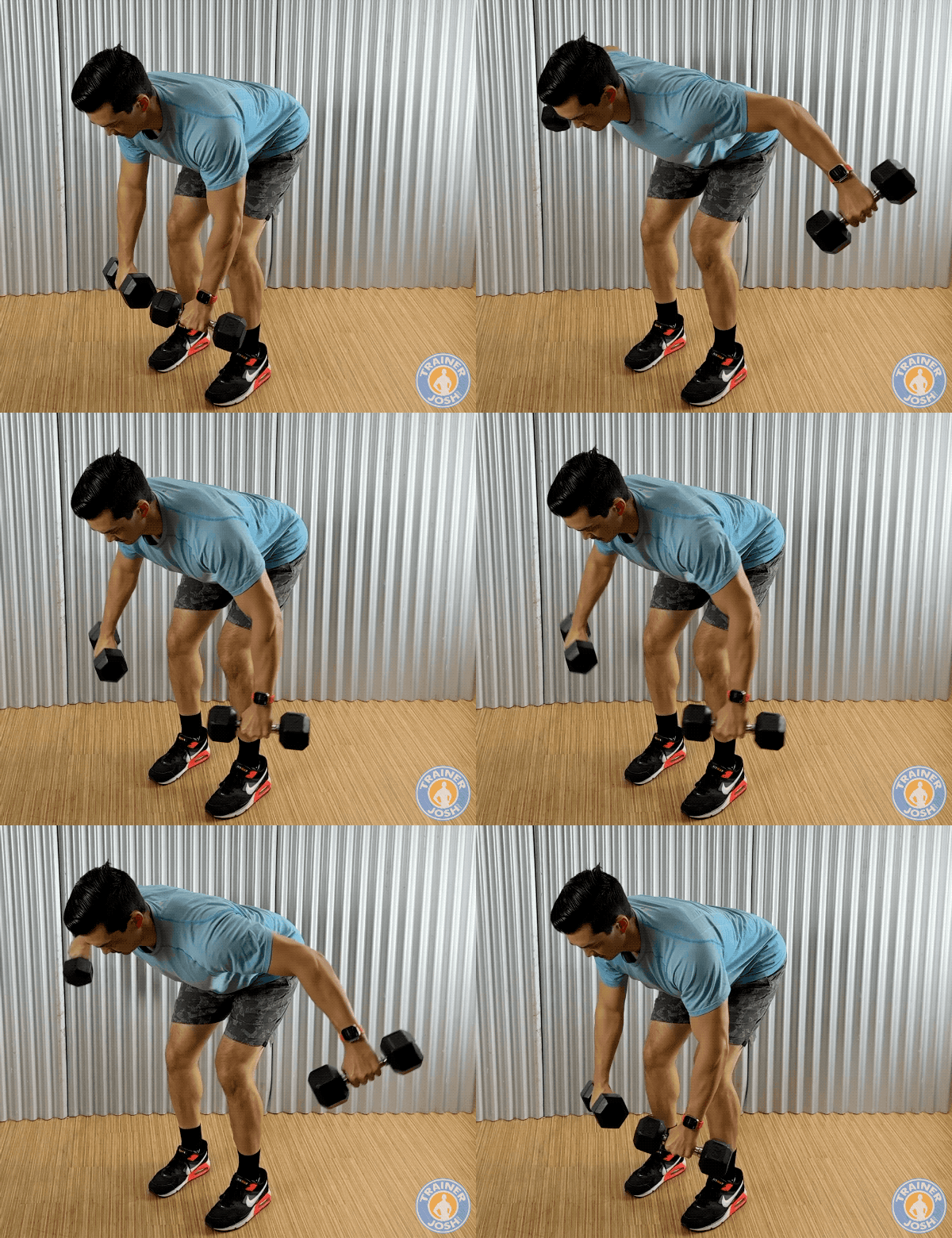
The bent over dumbbell reverse fly is one of the most effective exercises for sculpting the back of your shoulders and upper back. It strengthens the rear deltoids, trapezius and rhomboids.
This helps balance your physique and improve posture by counteracting the forward shoulder slump from sitting or pressing too much. Strengthening these muscles enhances shoulder stability, builds a broader-looking upper body, and gives you that back-defined, athletic “3D” look from every angle.
- Grab two dumbbells and stand with your feet shoulder width apart. Then slightly at your knees and hinge forward at your hips until your torso is nearly parallel to the floor. Keep your spine flat and core tight.
- Let the dumbbells hang below your shoulders with a neutral grip (palms facing each other). Keep a slight, soft bend in your elbows.
- Raise both arms out to your sides in a wide arc, leading with your elbows until your arms form a “T”-shape at shoulder height.
- At the top, pinch your shoulder blades together and pause briefly to feel the contraction in your upper back and rear delts.
- Lower the dumbbells back under control to the starting position. Do not let gravity drop them.
Trainer Tip: Think of your shoulder blades doing the lifting, not your arms. Keep your elbows slightly bent and fixed through out. This is a fly, not a row.
Keep your chest up and back flat. Imagine holding a glass of water on your spine to stay stable. You can use a small swing on the way up for eccentric overload, but always lower under control.
Dumbbell Shrug
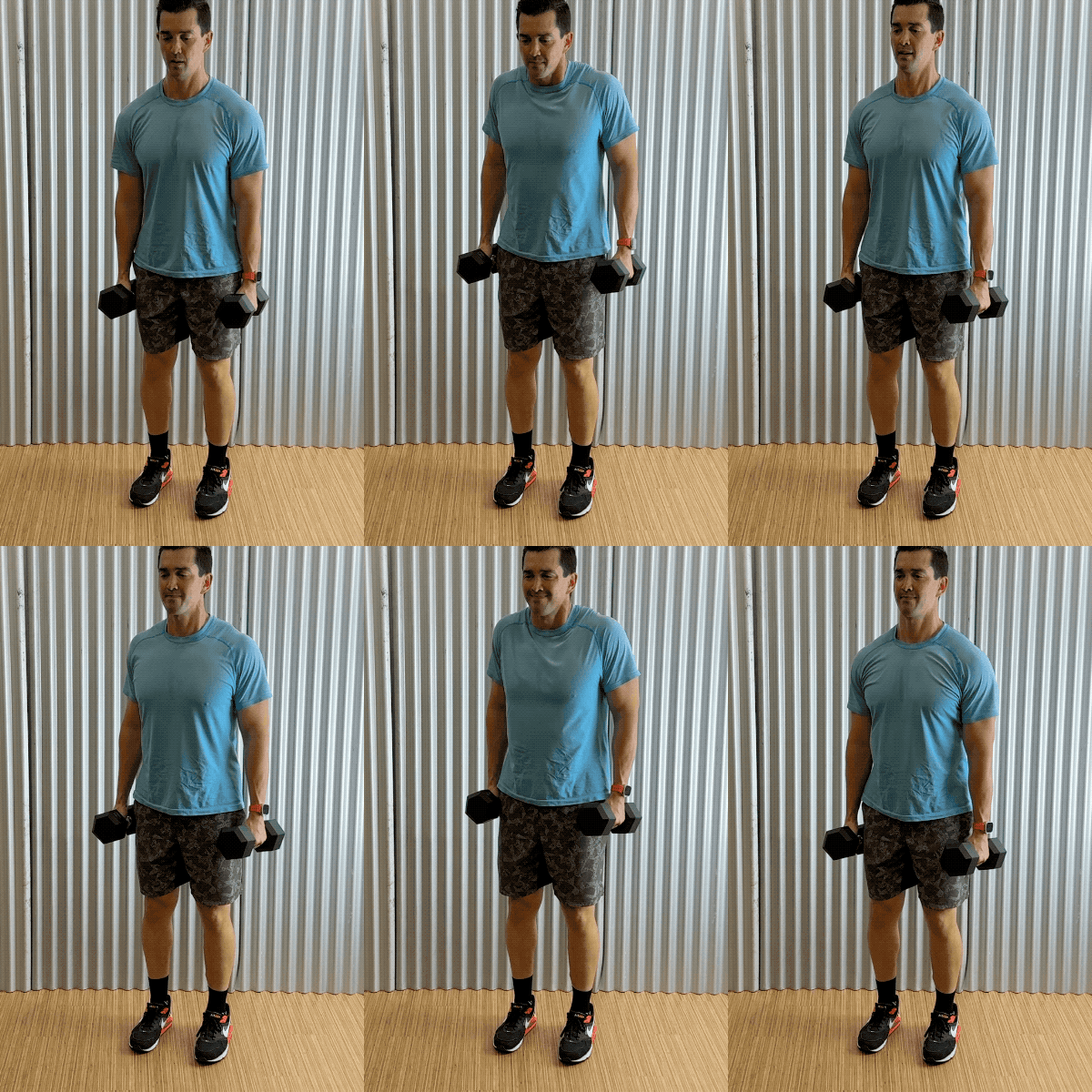
Standing dumbbell shrugs are the best exercise to target your upper trapezius. This is the muscle that gives your upper back and neck that strong athletic look.
When performed correctly, it will develop your upper back’s density and stability, translating to stronger lifts and better posture.
- Stand tall with your feet hip-width apart, holding a dumbbell in each hand at your sides with your arms straight and your palms facing your thighs.
- Shrug your shoulders upward toward your ears as high as possible and then lower them down in one smooth motion.
- Exhale as you lift and lift your shoulders. Inhale as you return to the start position.
- Perform the motion slowly and deliberately, keeping tension on your traps the whole time.
Trainer Tip: Keep your neck slightly tucked, look slightly down to keep your traps fully engaged and protect the neck. Focus on a slow tempo, especially on the lowering phase. That’s where traps do most of the work.
If your grip fatigue limits you before your traps, use lifting straps so you can focus on contracting the muscles.
Dumbbell Y-Raise
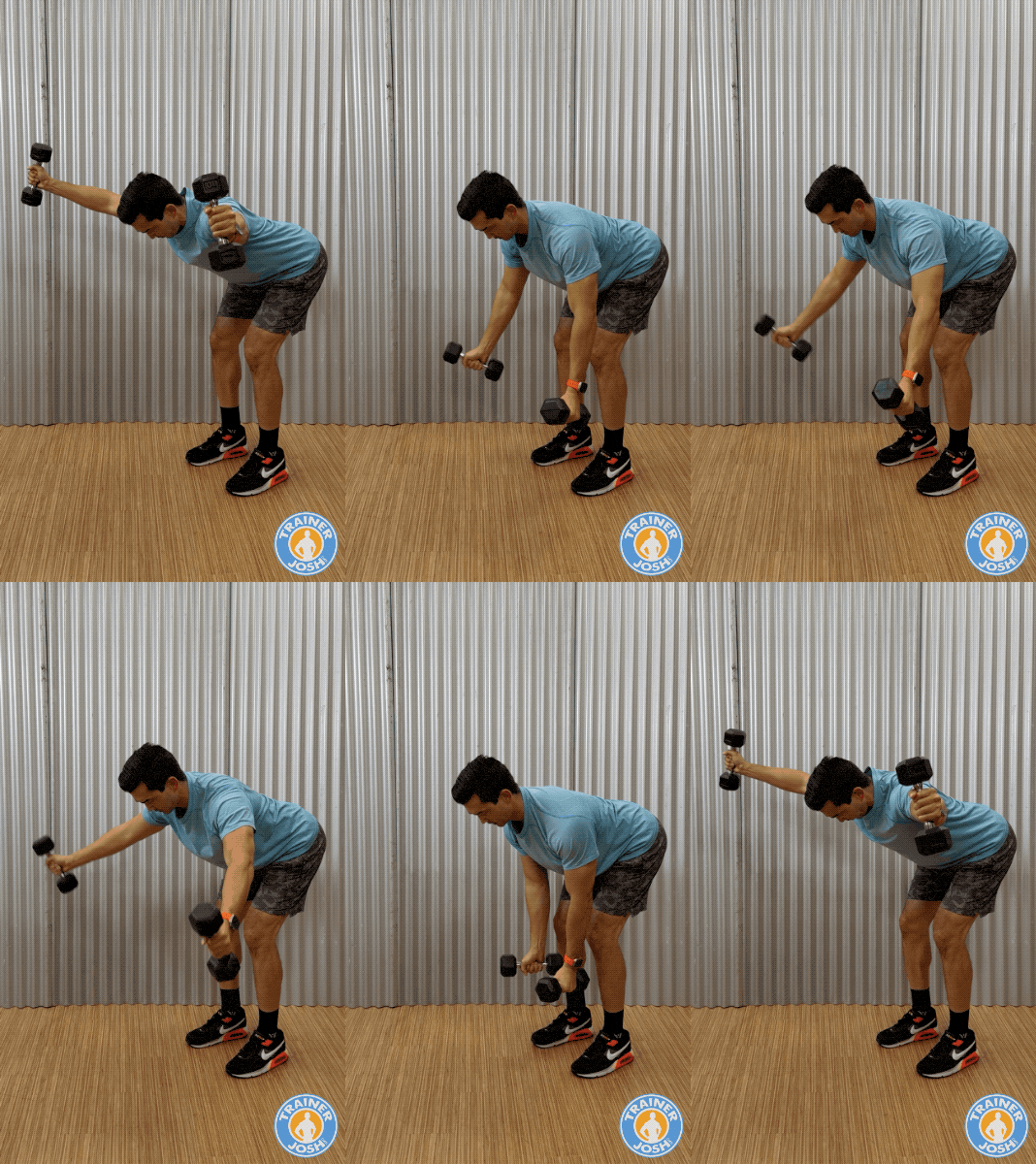
The dumbbell Y-raise is a corrective strength exercise that targets your lower and middle trapezius, rotator cuff, and rear deltoids. These are the muscles most often neglected but critical for shoulder health, posture, and scapular stability.
This is a go-to move for strengthening the postural muscles that hold your shoulders back and make your upper back look more defined and athletic.
- Stand with your feet hip-width apart and hold a dumbbell in each hand, with your palms facing in and thumbs up. Bend your knees slightly and hinge at your hips until your torso is nearly parallel to the floor.
- Keep your spine neutral and chest lifted. Your back should be flat like a tabletop.
- With a slight bend in your elbows, raise your arms up and outward at a 45-degree angle until they form a “Y” shape with your torso.
- On top, pinch your shoulder blades together and hold for one second to fully contract your traps and rear delts.
- Slowly lower the weights back down with control, keep your torso steady and avoid momentum.
Trainer Tip: Read with your thumbs, think thumbs up to the sky to externally rotate your shoulders and engage the traps fully.
Use light weights, 5-10 lbs. and focus on control, not load. This exercise is about activation. Pause briefly at the top to build strong mind-muscle connection in the lower traps and rear delts.
Farmer’s Carry
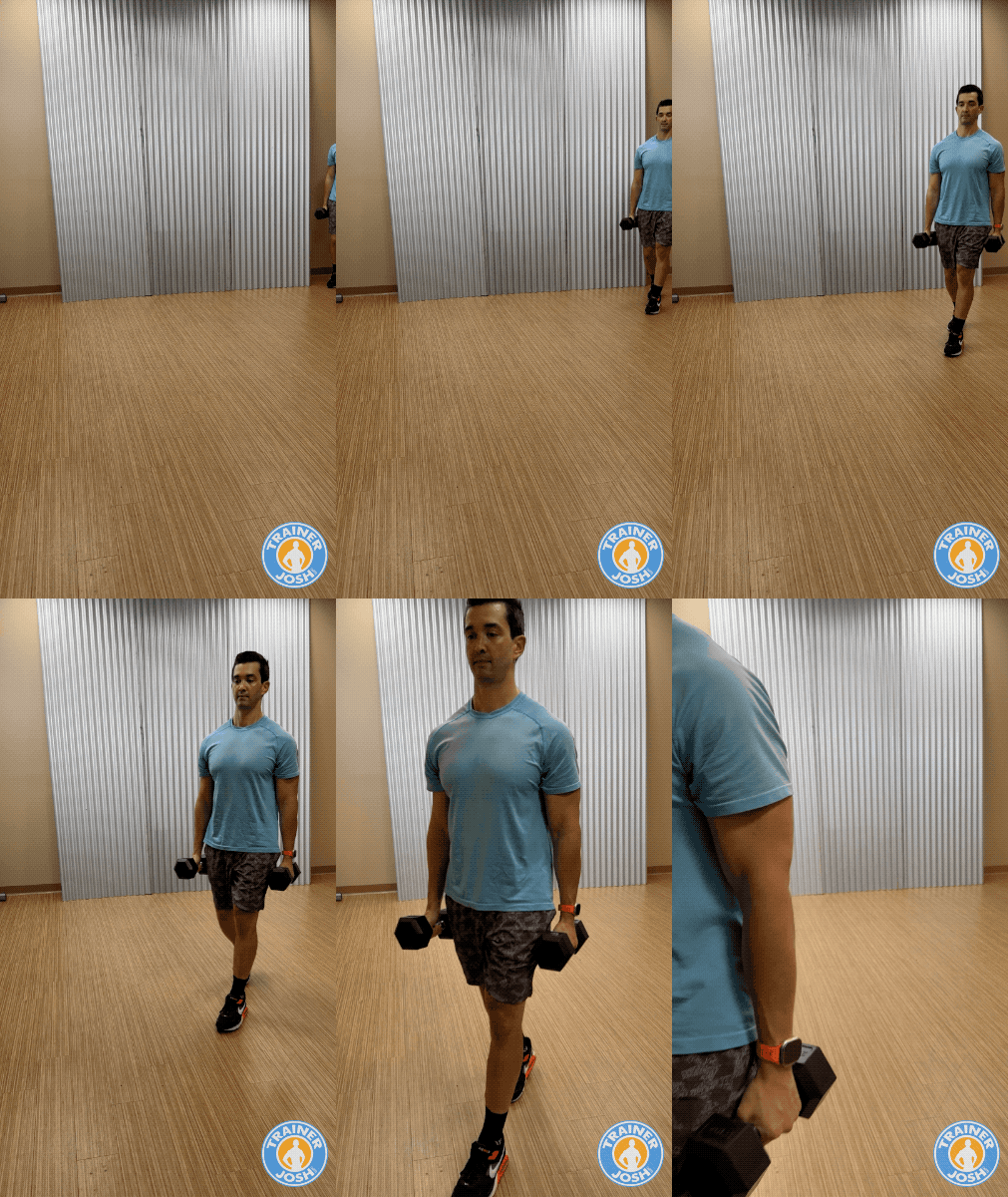
The farmer’s carry is one of the most functional and effectie full-body exercises you can do. It strengthens your grip, traps, core and stabilizing muscles. This helps you build real-world strength that carries over to everyday life.
This movement also improves your posture, shoulder stability and trunk stiffness. The makes it one of the best “bang for your buck” exercises for athletic performance and injury prevention.
- Stand tall with your feet hip width apart and hold a heavy dumbbell in each hand at your sides with your palms facing in. Engage your core and keep your shoulders pulled back.
- Lift the weight safely by hinging at the hips and keeping your spine neutral. Stand upright with a proud chest.
- Take steady, controlled steps for a set distance (20-30 yards) or time (30-60 seconds), keeping your core tight and posture tall.
- Breathe deeply through your nose and brace your abs. Think of locking your rib cage down while walking.
- Stop, maintain your posture, and carefully lower the dumbbells to the ground without rounding your back.
Trainer Tip: Keep your shoulders packed down and back to engage your traps and protect your neck. Focus on smooth, quiet steps (no heavy stomping).
Chest-Supported Dumbbell Row
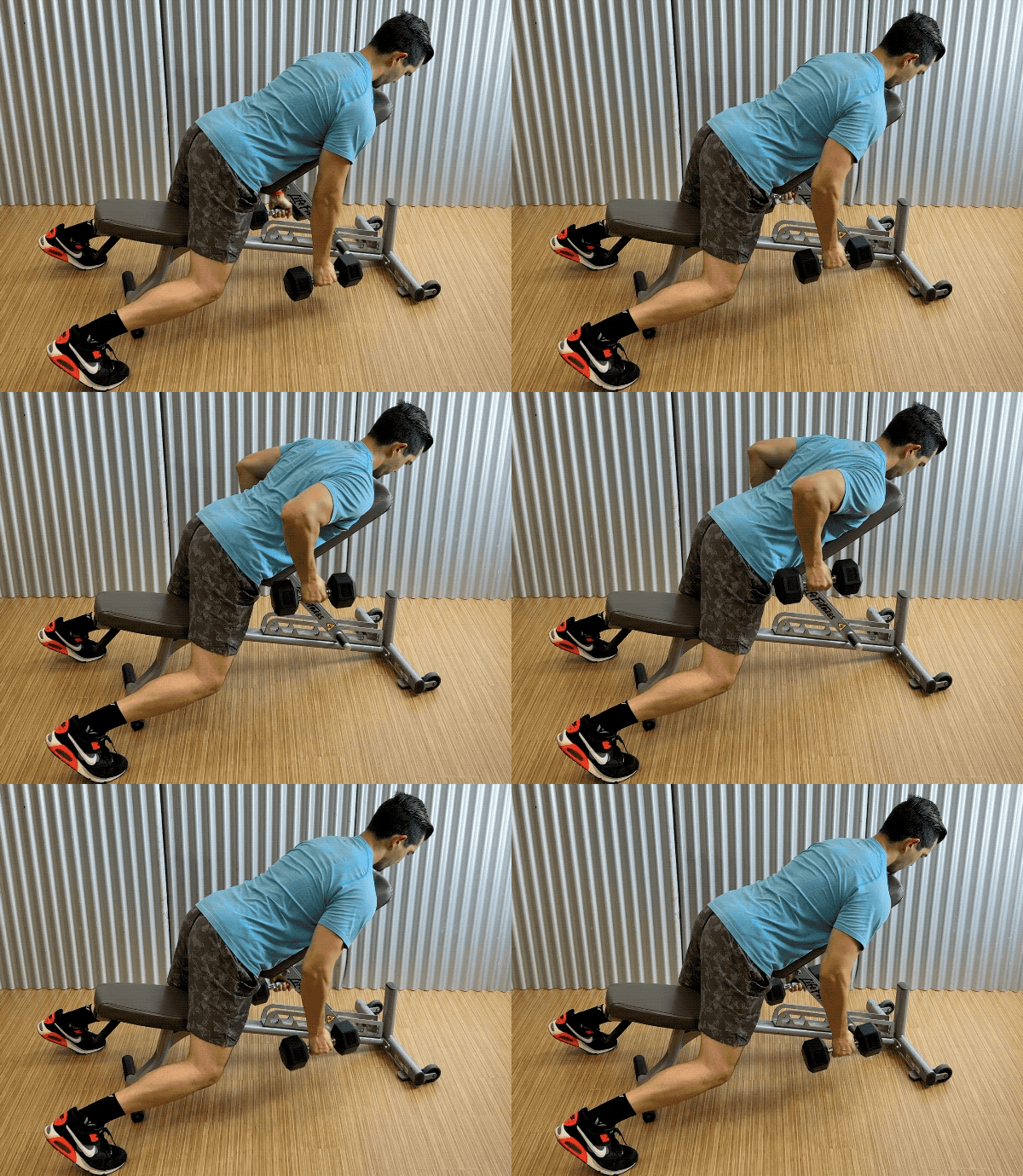
The chest supported dumbbell row is one of the best exercises for building a thick, strong upper and mid-back. By resting your torso on the incline bench, you eliminate momentum and spinal strain, forcing your lats, rhomboids, and mid-traps to do all the work.
This exercise helps improve posture, strengthens the stabilizing muscles around the shoulders, and enhances pulling power for bigger lifts.
- Adjust an incline bench to about 30-45 degrees. Lay face down (prone) with your chest supported and feet planted firmly on the floor. Hold a dumbbell in each hand, arms hanging straight down.
- Keep your chest slightly pressed against the pad, spine neutral, and core engaged.
- Drive your elbows straight back toward your hips, keeping them close to your body (not flared out).
- At the top, bring your shoulder blades together and hold for one second to fully contract your back muscles.
- Slowly lower the weights until your arms are straight again, maintaining tension in your back.
Trainer Tip: Think elbows drive, hands follow to engage your lats and rhomboids rather than your biceps. Keep your chest in contact with the bench, don’t lift it to cheap the weight up. Adjust the bench slightly higher for mid-trap emphasis.
This is one of my favorite dumbbell back exercises I use with my clients. Using the bench takes tension off the lower back and reduces momentum.
You can also do Inverted Rows if you have something to pull yourself up on. They’re one of the best bodyweight back exercises you can do.
Dumbbell Pullover
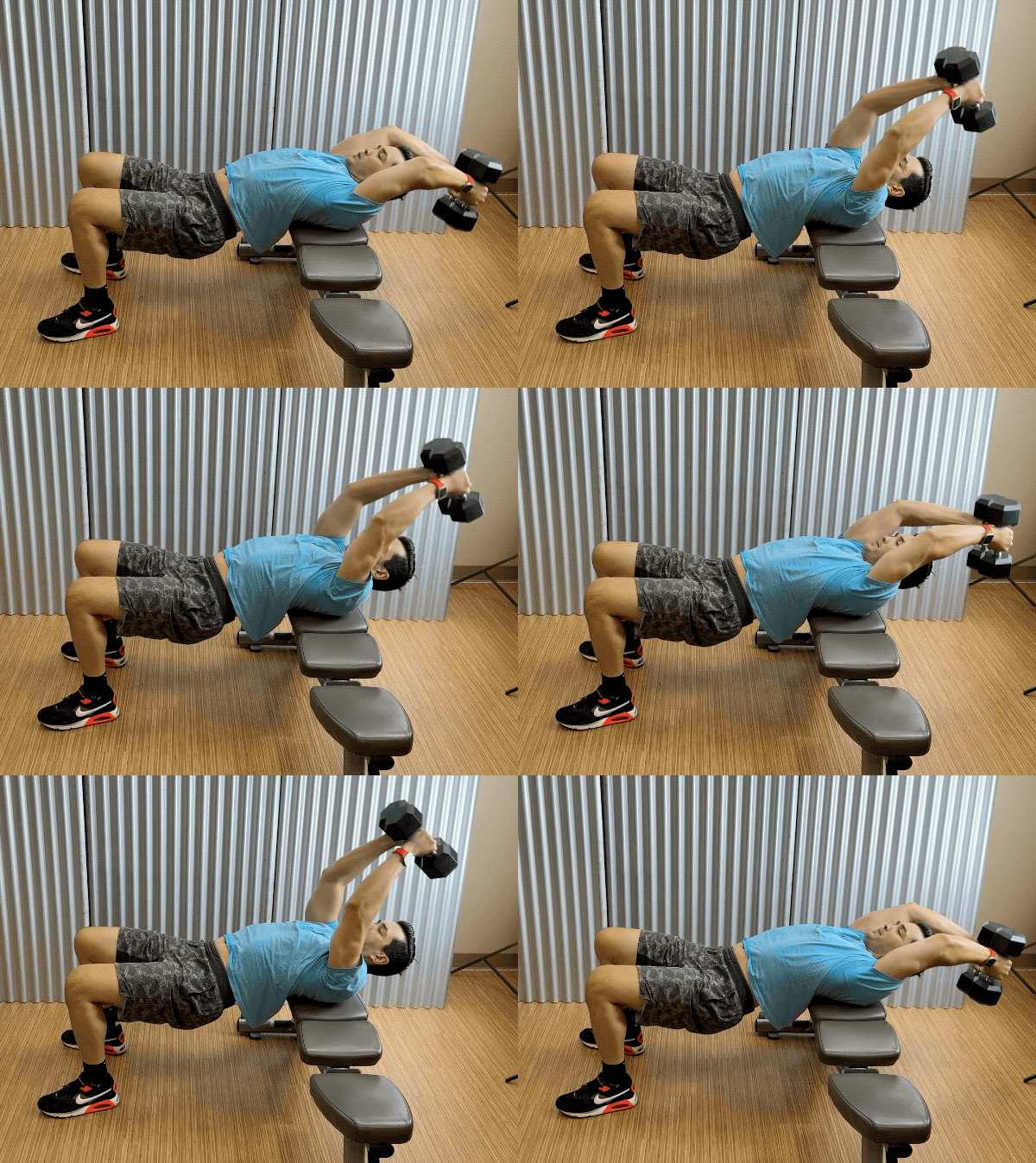
The dumbbell pullover is a classic old-school exercise that builds the latissimus dorsi, serratus anterior, and upper back stabilizers. This creates width, mobility, and functional strength across your ribcage and shoulders.
- Lie face up on a flat bench with your head supported, hold a single dumbbell with both hands, palms pressing against the inner plate, and extend it above your chest with a slight bend in your elbows.
- Engage your core, keep your feet flat on the ground, and maintain a neutral spine throughout.
- Slowly lower the dumbbell in an arc behind your head until you feel a deep stretch in your lats and chest. Stop before shoulder discomfort.
- Reverse the motion by pulling the dumbbell back over your chest using your lats and upper back, not your arms.
- Perform each rep under control, keeping constant tension and smooth motion throughout the arc.
Trainer Tip: Focus on the stretch, that’s where the pullover delivers its magic for muscle growth. Keep a slight bend in the elbows and avoid turning it into a triceps movement. Exhale on the way up to improve rib cage expansion and lat engagement.
Renegade Row
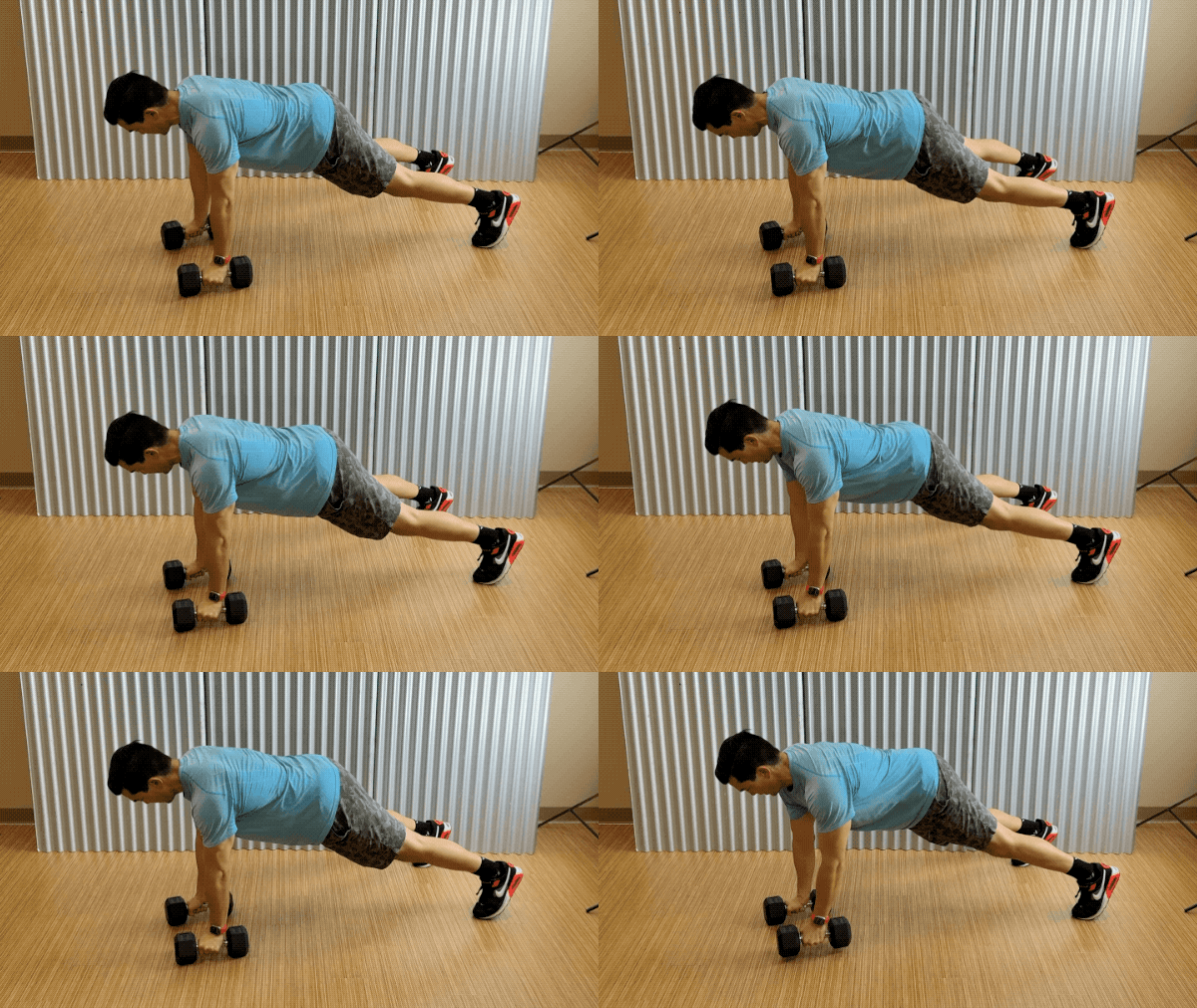
The Dumbbell Renegade Row is a powerhouse compound movement that develops upper back strength, core stability, and anti-rotational control. By combining a plank hold with a single arm row, it forces your abs, obliques, and lower back to stabilize while your upper back and lats work dynamically.
- Get into a push-up position with a dumbbell in each hand, directly under your shoulders. Your feet should be shoulder width apart for stability and your body should form a straight line from head to heels.
- Tighten your abs and glutes to stabilize your core. Imagine your torso as a solid plank.
- Pull one dumbbell toward your ribs while keeping your torso completely still. Focus on leading with your elbow and squeezing with your shoulder blade at the top.
- Slowly lower the dumbbell back to the floor under control, resisting any hip rotation.
- Switch sides and repeat, keeping your hips level and body aligned throughout.
Trainer Tip: Widen your stance slightly to make stabilization easier without sacrificing core engagement. Keep your hips square to the floor. The less rotation, the harder your core works. Use hex dumbbells to prevent rolling and enhance stability.
Upright Row
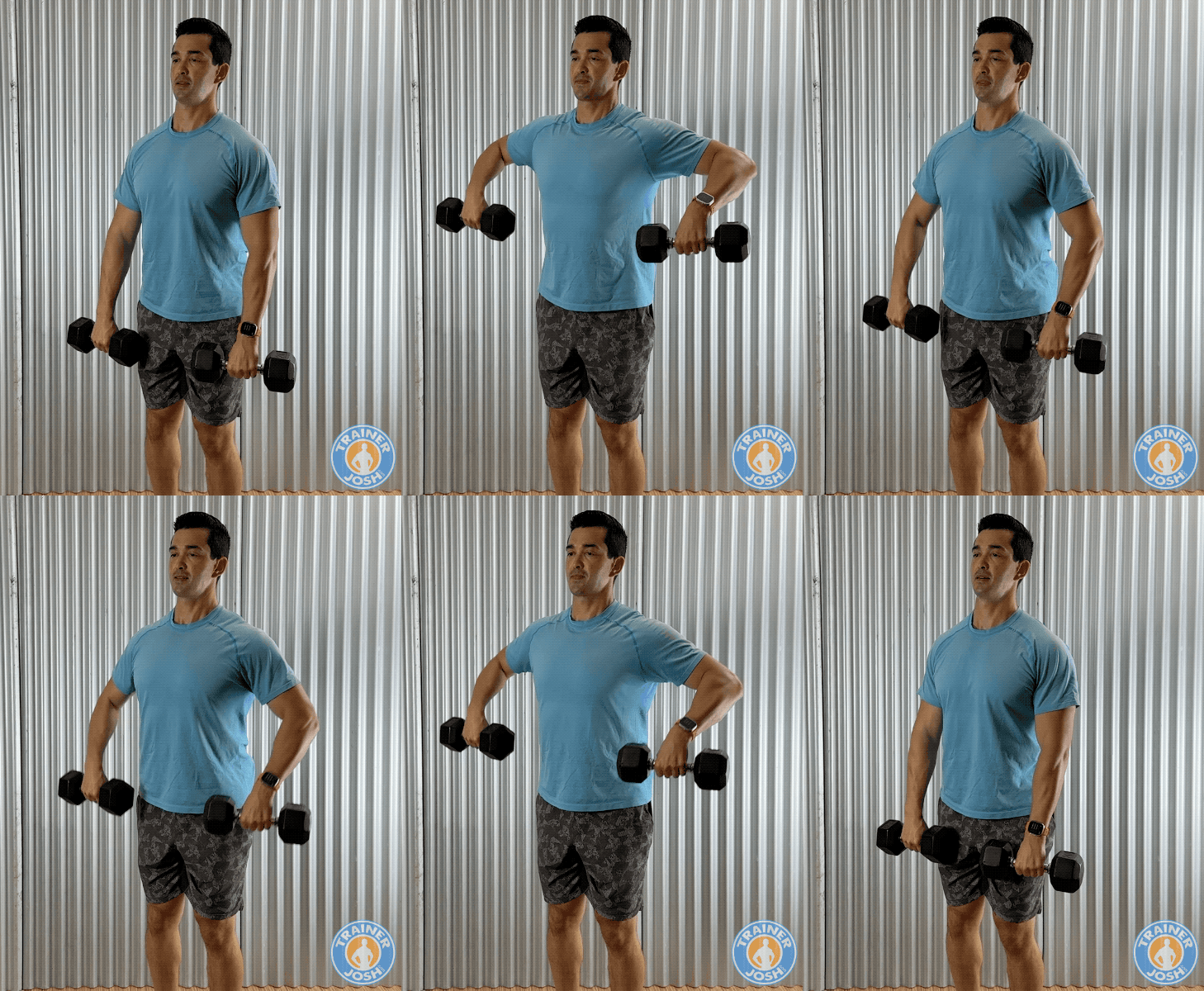
The dumbbell upright row is a classic shoulder and upper trap builder that helps develop a broader, more defined upper body. It primarily strengthens the lateral deltoids and upper trapezius. This movement builds shoulder width, posture, and pulling strength.
- Stand tall with feet shoulder width apart, holding a dumbbell in each hand resting against your thighs. Keep your chest up and knees slightly bent.
- Hold the dumbbells with palms facing your thighs. Engage your core and keep your shoulders back.
- Pull the dumbbells up and out along your sides, leading with your elbows until they reach shoulder height. Keep the dumbbells close to your body and your elbows higher than your wrists.
- Briefly hold at the top and squeeze your traps and shoulders.
- Slowly return to the start position under control. Avoid dropping or swinging the weights.
Trainer Tip: Use a wide grip path (elbows moving slightly outward) to protect the shoulders and increase delt activation. Keep the elbows no higher than shoulder level to reduce joint stress.
Kelso Shrug
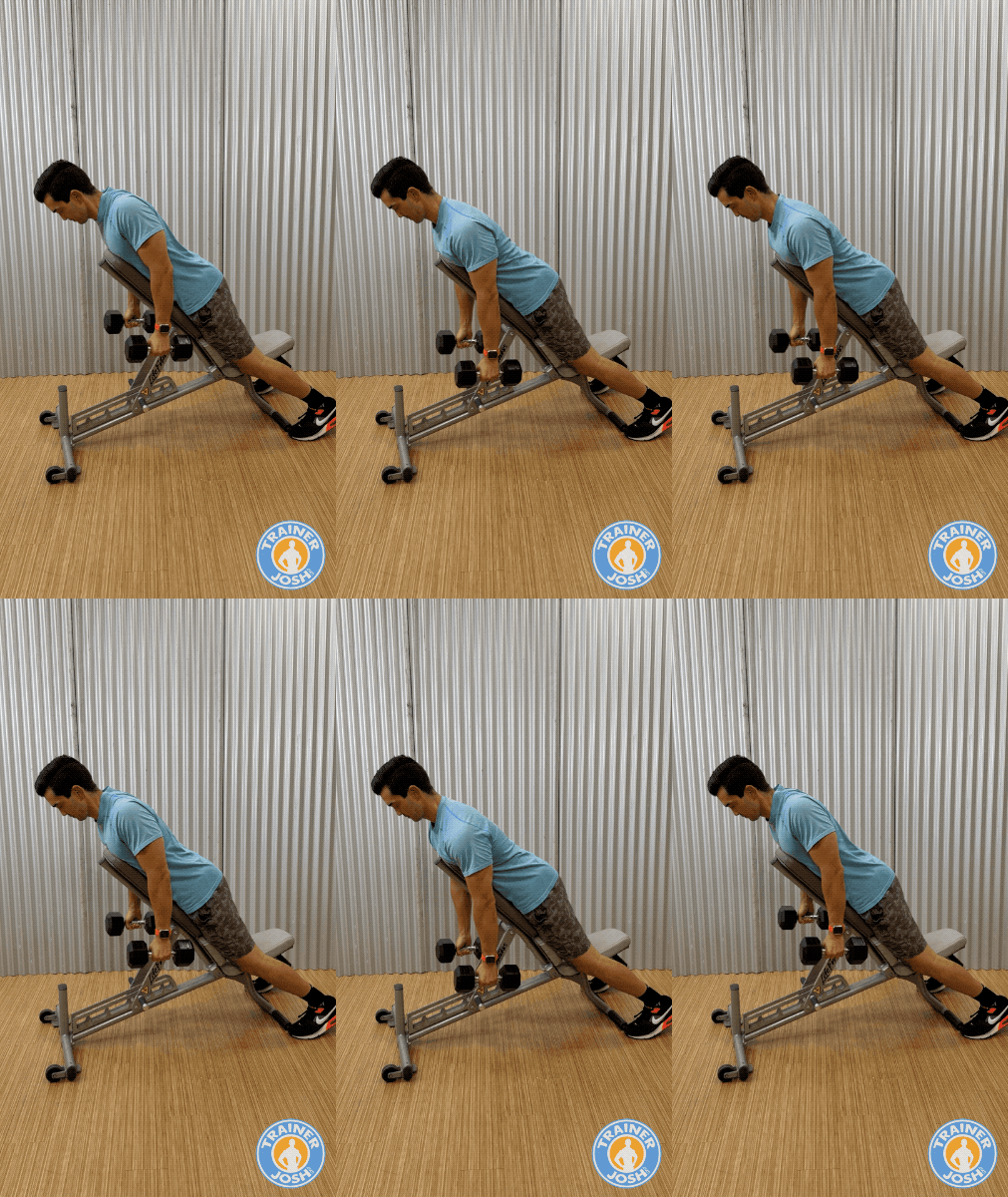
The Kelso Shrug is an underrated yet powerful trap builder that emphasizes upper and mid trapezius thickness. By performing the movement on an incline bench with dumbbells, you isolate the traps through a shorter, controlled range of motion that eliminates momentum and minimizes arm involvement.
This makes Kelso Shrugs ideal for those struggling to feel their traps working during traditional shrugs.
- Position an incline bench at 30 to 45 degrees. Grab a pair of dumbbells and lie chest down on the bench with your arms hanging straight down towards the floor. Keep your feet planted firmly on the ground.
- Hold the dumbbells with a neutral or slightly angled grip (palms facing each other or slightly forward). Keep your arms straight but relaxed.
- Without bending your elbows, lift your shoulders upward and slightly back as if you’re trying to touch your shoulder blades together. Focus on moving only at the shoulders.
- At the top of the motion, pause for 1-2 seconds and squeeze your traps hard.
- Slowly lower your shoulders back to the starting position, feeling a deep stretch at the bottom.
Trainer Tip: Try a neutral or 45 degree grip to hit different trap fibers. Use a slow tempo, 2-3 seconds during the lowering phase and strong hold at the top for better mind-muscle connection. Keep your arms long and passive and do not bend your elbows.
Common Mistakes When Training Upper Back (And How to Fix Them)
Most don’t realize that small mistakes can make a big difference in how effective your upper back workout is. The truth is, many home lifters often struggle with things like using their arms instead of their back, rounding their lower spine, or swinging the weights for momentum.
But these mistakes don’t just stall your progress, but they can lead to soreness, poor posture, or even injury. But once you understand what’s going wrong and how to fix it, you can finally start feeling your upper back muscles fire the way they should be.
Mistake #1: Relying on Arms Instead of Pulling with the Back
This is the #1 reason you can’t feel your back working. When rowing, your biceps will fatigue before your lats, rhomboids, and traps are fully worked. If your smaller elbow flexors become the limiting factor, then force production in your back muscles will be lower.
The Fix: Focus on pulling the weight back from your elbow, using your hands and fingers only as imaginary hooks.
For lat movements like pull-downs, cue yourself to drive your elbows down to your sides. Your lats attach to your upper arms, so focusing on them increases activation.
When doing bent-over lateral raises or reverse flyes, start by lifting with your upper back. Pull your arm up first, then let your elbow bend. Your elbow should be bent at roughly 90 degrees at the end of the concentric portion (bending it more makes the row biceps dominant).
If your grip gives out first during heavy pulls or shrugs, then you must use lifting straps. Or else the muscle activity in your back will be lower because your grip becomes your limiting factor.
Mistake #2: Arching or Rounding the Lower Back
Letting your back round or move too much out of its natural position is a big mistake that can lead to injuries. Lumbar spinal flexion under heavy load can exponentially increase shearing stress on your spine. This can significantly increase injury risk by placing extra stress on the lumbar area and discs.
The Fix: Maintain a neutral spine position or slight natural arch in your lower back.
For the bent-over position, hinge at your hips, keep your back straight, and knees slightly bent. Your abs need to be strong enough to prevent lumbar lordosis (swayback) and excessive anterior pelvic tilt. Your torso should stay rigidly in position throughout the whole set (flat or horizontal) so your back doesn’t round.
Do not swing the weight up by overextending at your lower back. If the only way to lift the weight is to round your back, then the weight is probably too heavy.
Mistake #3: Not Controlling the Eccentric (Lowering Phase)
Letting the weight free-fall during the lowering phase reduces the training impact. A free-fall on the descent will take away a big part of the eccentric muscle contraction. It also reduces muscle activity because you’re resisting gravity less.
The Fix: Control the descent throughout the entire lowering phase. The eccentric phase is maybe even more important to the growth response than concentric contractions. This is because it causes greater microtrauma and recruits fast-twitch fibers.
Aim for an eccentric cadence of 2-3 seconds. A slower eccentric action (4 seconds) creates superior increases in muscle growth compared to a 1-second eccentric.
Advanced technique: Use slight momentum to aid the concentric phase (cheating the weight up slightly). All while strictly controlling the eccentric (lowering) phase. This allows you to overload the eccentric contraction, which is typically 20% to 60% stronger than the concentric.
Mistake #4: Not Feeling the Upper Back Muscles Working
Relying on “feeling” the muscle isn’t always reliable. The mind-muscle connection is largely psychological. And it doesn’t correlate with maximal mechanical tension or muscle growth.
The Fix: Focus on performance (external cues) rather than feeling. Get the weight from weight from point A to point B. This maximizes force production, mechanical tension, and overall strength development.
Muscles can reach maximal activity levels without even feeling it. For example, many feel almost nothing in their glutes during squats, yet they’re producing maximal force.
That said, at the end of the concentric movement, pinch your shoulder blades together and hold a pause for 1 second when muscles are fully contracted. Stopping the rep at maximal contraction maximizes upper back recruitment.
Maintain strict form without cheating by using excess momentum. And don’t allow your shoulders to roll forward.
Mistake #5: Using Too Light/Heavy Dumbbells for the Wrong Goal
Using dumbbells that are too heavy causes poor technique. Either lifting or lowering too quickly, reducing range of motion, or creating a rocking motion in your torso. Using too light a weight fails to provide sufficient overload for strength gains.
The Fix: For muscle growth, loads at 67% to 85% your 1RM are best. For strength gains, loads should be no less than 70% of 1RM. If you can do more than 12 reps, the weight is too light for hypertrophy. If you can only complete 5 reps or fewer with poor form, it’s too heavy.
Prioritize technique over the amount of weight lifted. If the technique breaks down, pick lighter dumbbells and master the movement pattern first.
Dumbbell Upper Back Workout (Home Routine)
Upper Back Workout 1
Exercise Order:
- Do the exercises in order (A1, A2, then B1, B2, etc.)
- Each “A1–A2” or “B1–B2” pairing is a superset:
- Perform A1, rest the listed time.
- Then do A2, rest again before repeating.
- Complete all sets for the “A” pair before moving to “B.”
- This method saves time and boosts training density
Tempo (The 4 Digits):
Each tempo looks like this: 4010
- 1st number = lowering phase (eccentric)
- 2nd number = pause at the bottom
- 3rd number = lifting phase (concentric)
- 4th number = pause at the top
Example (tempo 4010 on a row): Don’t pause at the top (0), Lower the dumbbells for 4 seconds, Don’t pause at the bottom (0), Pull up in 1 second
Upper Back Workout 2
What to Do If You Only Have Light Weights
If you only have light dumbbells, then you can still get muscle growth by manipulating tempo, pauses, and time under tension.
Slow Eccentrics: When you lower the weight (called the eccentric phase), your muscles get the most micro tears that lead to growth. Eccentric strength is 20%-50% greater than concentric strength.
So, going slower during the lowering phase can overload the muscle even with light weights. Aiim for eccentric movements performed at 2-3 seconds.
Pause at Peak Contraction: At the top of the row, when your shoulder blades squeeze together. Hold that position for one second before letting the weight back down. This increases the intramuscular tension and can increase strength. You can also use isometric pauses during the eccentric phase to develop controlled strength at specific angles.
Increase Time Under Tension: For hypertrophy, the optimal duration for a set is between 20 and 70 seconds. A controlled tempo of 3021 (3 seconds eccentric, 0 seconds pause, 2 seconds concentric, 1 second pause) can extend time under tension without increasing load.
High Repetition Sets to Failure: To get full motor unit recruitment with light weights (30% 1RM), sets must be taken close to failure. This is needed to induce sufficient neuromuscular fatigue.
You can try myo-reps (where you do one hard set, rest a few seconds, then do short mini-sets) or drop sets, where you lower the weight and keep going. Both make your muscles burn and help them grow.
Progressive Overload with Dumbbells at Home
Progressive overload means you need to slowly increase how hard you train. Like lifting more weight or doing more reps, so your body keeps improving. When training at home with dumbbells, you can still progressively overload.
Load Progression: Once you can easily complete the number of repetitions in all sets, then increase the resistance by roughly 5%. So if you’re consistently doing 12 reps with ease, then it’s time to move up.
Rep Range Progression: If the next dumbbell is too heavy to do the same number of reps, just keep using your current weight. Try to do a few more reps each time until you reach your goal. Once the target is hit, jump to the next dumbbell weight. This resets the reps lower, and the cycle repeats.
Volume & Frequency Increases: If your progress slows down, you can do more total sets in each workout. Another option is to train your upper back on more days during the week.
Training more often is usually better because it lets you do more total work without getting as tired in each workout. This lets you do more work when your upper back muscles are fresh.
Exercise Progression: Make the exercise harder by switching to tougher versions. Like going from two-arm rows to one-arm dumbbell rows or plank rows. Single-arm work is a unique advantage when using dumbbells.
Make sure you’re also consuming enough protein daily to build the muscle back up after your workouts. You can use my protein calculator to quickly determine your protein needs.