
It’s 5:47 a.m. You’re sipping your coffee, scrolling through workout videos, and staring at those 10-pound dumbbells in the basement… wondering if they can really make any difference.
The scale hasn’t budged in three months. Your jeans feel tighter. Every fitness influencer says something different. Some make it sound like you’ll wake up looking like a bodybuilder if you lift anything heavier than a can of soup.
The problem is that most are doing the wrong dumbbell exercises (and not in the right sequence to get results). What really gets results is knowing which exercises to do, the right order to do them, and how to move up in weight.
In my 20 years of training over 1,000 women, I’ve seen beginners get stronger with just two pairs of dumbbells than gym members using fancy machines. You can get results doing this at home, and I’m about to show you exactly how.
Why Women Should Lift Dumbbells (Even at Home)
Let me guess… You’ve heard strength training is “good for you,” but you’re worried about accidentally waking up with bodybuilder arms.
I get it. That fear traps thousands of women in endless cardio. The scale won’t move, and their jeans just keep getting tighter.
Here’s what changes everything… Your body produces 10-20x less testosterone than men. You literally cannot “accidentally” get bulky. It takes years of training, perfect nutrition, great genetics, and even illegal steroids to look like that.
What dumbbells actually give you? That toned, defined look you’re chasing.
The “Toned” Truth Nobody Tells You
That firm, sculpted appearance comes from two things: building muscle and reducing body fat. Not high-rep, tiny-weight workouts. Not endless burpees.
Muscle tissue burns fat even while you sleep. Build more muscle, and your body becomes a 24/7 fat-burning machine.
A 2017 study published in the Diabetes & Metabolism Journal found that skeletal muscle is a major determinant of the basal metabolic rate, accounting for nearly 80% of insulin-stimulated glucose uptake. The researchers noted that even small increases in muscle energy demand can substantially elevate whole-body energy expenditure. Muscle tissue can raise energy use several-fold through activity, thermogenesis, and diet-induced heat production.1
Dumbbells are the most efficient tool for this because they force each side of your body to work independently. This prevents muscle imbalances and recruits more stabilizing muscles than machines.
What Happens After 30, 40, & 50
After the age of 30, women lose approximately 1.3% of their muscle mass each year. By 40, you’re fighting sarcopenia (age-related muscle loss) and a metabolism that’s dropped by up to 9%.2
If you’re also trying to lose body fat, protecting the muscle you’re building becomes even more important after 40. BioTRUST’s GLP-1 Companion Stack combines appetite support with ingredients designed to help support lean muscle and strength while eating fewer calories.
A 3-part daily stack designed to support people using GLP-1 medications or losing weight naturally. It combines muscle, protein, collagen, and appetite support to help you maintain a healthier body composition as you lose weight.
- Natural GLP-1 Support: Helps support healthy appetite signals, fullness & metabolic function
- Lean Muscle Support: Helps preserve muscle, strength & healthy body composition during weight loss
- High-Protein Collagen: Adds 20 g of protein with 5 collagen types to help support daily protein intake
- Skin, Joint & Hair Support: Provides collagen peptides to support skin elasticity, joints, hair & nails
- 3-Part Weight-Loss Support: Combines muscle, protein/collagen & appetite support in one simple daily stack

But here’s a benefit most people don’t talk about: strength training can boost your metabolism by up to 9%.3 This is enough to burn an extra 100 calories daily without making any changes to your diet.
The afterburn effect (EPOC) keeps your metabolism elevated after a single dumbbell session. Compared to a 30-minute walk, where calorie burning stops the moment you finish.
Bone density. Lifting dumbbells creates mechanical stress on your skeleton. This forces your body to lay down new bone tissue. I’ve watched clients reverse their osteoporosis risk from medium to low. One moved a piano by herself at 52 (something she couldn’t do at 35).
A 2015 meta-analysis published in Osteoporosis International found that resistance training significantly increased bone mineral density in postmenopausal women.4
Hormonal balance. Women who strength train consistently through their 40s often experience minimal menopause symptoms. Dumbbell workouts help balance your hormones. They can boost estrogen and growth hormone, improve insulin sensitivity, and lower blood sugar.
A 2025 study published in Sports compared 10 weeks of high-intensity interval training (HIIT) and traditional resistance training (TRT) in 72 young women and found that both significantly increased estrogen levels (HIIT +150%, TRT +72%) while decreasing testosterone (HIIT –58%, TRT –49%), FSH (HIIT –6%, TRT –7.7%), and prolactin (HIIT –5%, TRT –2%).5
The Mental Shift That Changes Everything
Beyond aesthetics, strength training helps you build confidence. When you progress from 10-pound dumbbells to 20s, when you carry all the groceries in one trip, when you say yes to activities you’ve avoided for years. That’s the fundamental transformation.
One of my clients told me, “I have noticeably more energy throughout the day. I’m stronger, not bigger. My arms are finally toned.”
Another: “I’m much curvier and stronger, 10 pounds heavier, but with lower body fat. My butt is curved now, legs tighter. I look better than when I was 10 pounds lighter.”
That’s not bulk. That’s strength showing.
Why Home Workouts Work
The weight room at the gym can intimidate most women. I’ve trained over 1,000 female clients, and those who succeed long-term tend to prefer training at home in a private, judgment-free space.
Dumbbells are perfect for this. Two pairs of dumbbells are all you need to get stronger, burn fat, and keep your body strong as you age. You’ll future-proof your body against falls, frailty, and loss of independence.
You don’t need fancy machines that lock you into unnatural movement patterns. You need weights heavy enough to challenge you for 5-10 reps and knowledge of which exercises actually work.
Real women say…
“I’m in the best shape of my life at 43. Thirty-minute workouts, three times a week. That’s it.”
“I started with 5-pound dumbbells. Four months later, I’m using 20s. I actually grew muscles I didn’t know I had.”
“People say you can’t accidentally get huge, but my arms are definitely bigger, and I love it. I’m stronger than I’ve ever been.”
How to Choose the Right Dumbbell Weight
Walk into any sporting goods store and you’ll face a wall of dumbbells ranging from 3 pounds to 50 pounds. You stand there, paralyzed, thinking, “What if I pick too light and waste my time? What if I pick too heavy and hurt myself?”
Here’s what nobody tells you: Most beginner women start with weights that are too light, not too heavy. You’re stronger than you think.
What Weight Should You Actually Start With?
Forget the charts. Your starting weight depends on the exercise, not your age or the number on the scale.
For absolute beginners, start with two pairs of dumbbells:
- 5 lbs and 8 lbs (lighter option)
- 8 lbs and 12 lbs (if you’ve done any physical activity recently)
Here’s the exercise-specific breakdown:
Notice how compound exercises like goblet squats use much heavier weights than isolation moves like lateral raises. Your legs are stronger than your shoulders. The weight should reflect that.
The Reps in Reserve Test (How to Know You’re Lifting Right)
Here’s the only weight-selection method you need:
At the end of your set, ask yourself: “How many more reps could I have done?”
- Five or more? Too light. Increase the weight in the next set.
- One to two? Perfect. That’s your target zone.
- Zero (form broke down)? Too heavy. Drop the weight immediately.
The last two or three reps of each set should feel challenging. Not impossible. Not easy. Challenging.
If you finish 10 reps and think, “I could’ve done 15,” then you should increase the weight.
One of my clients told me, “I started with 5 lbs since that’s all I had. After four months, I had to buy 20s. It’s crazy to think I could only do 5s and 10s back then.”
That’s progression.
Signs Your Dumbbells Are Too Light or Too Heavy
Too Light:
- All reps feel easy with perfect form
- No muscle fatigue or “burn” by the final rep
- You could hold a conversation throughout the set
Too Heavy:
- Form breaks down before completing the prescribed reps
- You’re using momentum or swinging the weights
- Sharp pain (not muscle burn) during the movement
Most women train at 70 to 80% of perfect form on their final reps. If you’re hitting 100% ideal form on rep 12, then you’re not challenging your muscles enough to grow.
Adjustable vs Fixed Dumbbells
Fixed Dumbbells:
- Simple, grab-and-go convenience
- Expensive and space-intensive for a complete set
- Cost: ~$1 per pound (a pair of 15s = $30)
Adjustable Dumbbells:
- Space efficient (one set replaces 10+ pairs)
- Slightly less convenient mid-workout
- Cost: $200-$400 for quality sets
For home gyms, adjustable dumbbells are a better option. You’ll need progressively heavier weights, and buying field pairs every month gets expensive fast. They’ll also take up less space overall.
I recommend this adjustable dumbbell set for women.
Your Simple Progression Plan
Every workout: If the last 2-3 reps felt easy, add 5-10 lbs next time
Every 4-6 weeks: Reassess your starting weights. What challenged you in week one should feel moderate by week six.
One beginner added 5 pounds to her goblet squats every two weeks for three months. She went from 15 pounds to 45 pounds and told me, “I’m stronger than I’ve ever been, and I actually grew muscles I didn’t know I had.”
Your At-Home Setup Checklist
You don’t need a fancy home gym. You need:
- Dumbbells (5-15 lbs to start)
- Yoga mat (cushioning and grip)
- Mirror or phone camera (to check form)
- Small towel (for sweat)
- Clear space (4×6 feet, clear of clutter)
Filming yourself from the side during your first few sessions is a good idea. Check: Are you hitting depth? Is your back flat? Is your neck aligned?
One woman told me, “I never knew I was rounding my back on rows until I recorded myself. Fixing that one thing made my lifts feel completely different.”
Warm-Up and Setup Before You Lift
You know that tight, anxious feeling when you’re about to start a workout? That voice whispering, “What if I pull something? What if I hurt my back?”
Here’s the truth: most workout injuries come from two things. Skipping your warm-up and using bad form with heavy weights.
A proper warm-up isn’t optional. It’s the difference between an intense, injury-free workout… and sitting on the couch with an ice pack, wondering what went wrong.
Why Your Body Needs 5 Minutes to Warm Up
Think of your muscles like rubber bands. A cold rubber band snaps under tension. A warm one stretches smoothly.
A dynamic warm-up does four critical things:
Increases tissue pliability. Warm muscles are elastic and resistant to tears. Cold muscles, tendons, and ligaments rip easily under load.
Activates your nervous system. Your brain needs to reconnect with your muscles before you ask them to lift heavy. The warm-up “grooves in” proper movement patterns, so when you add weight, your body knows what to do.
Improves joint stability. Women are at higher risk of knee and hip injuries. The warm-up primes stabilizer muscles, protecting your joints before stress hits them.
Prepares connective tissue. As you get stronger and lift heavier, your tendons and ligaments need time to adapt. Skipping the warm-up is a common way to develop tendonitis or worse.
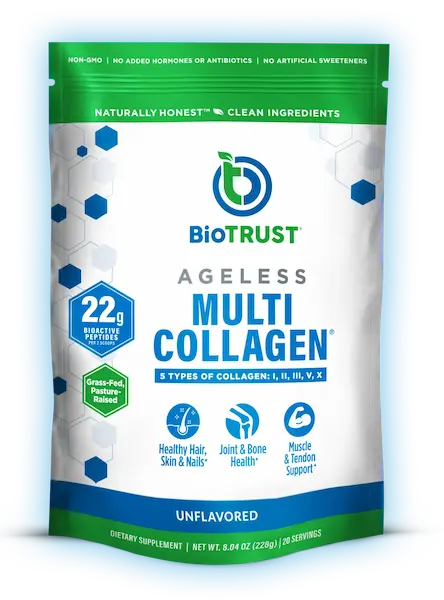
Warm-ups help prepare connective tissue, but tendons, ligaments, cartilage, and joints also need ongoing nutritional support as your training gets harder. BioTRUST Ageless Multi-Collagen gives you five collagen types designed to support those tissues and everyday mobility.
Powered by 5 Types of Bioactive Naturally Hydrolyzed Collagen Peptides for Full-Body Support (Odorless & Flavorless)
- Natural GLP-1 Support: Helps support healthy appetite signals, fullness & metabolic function
- Lean Muscle Support: Helps preserve muscle, strength & healthy body composition during weight loss
- High-Protein Collagen: Adds 20g of protein with 5 collagen types to help support daily protein intake
- Skin, Joint & Hair Support: Provides collagen peptides to support skin elasticity, joints, hair & nails
- 3-Part Weight-Loss Support: Combines muscle, protein/collagen & appetite support in one simple daily stack
One of my clients used to jump straight into goblet squats with 25 pounds. She couldn’t understand why her knees ached for days. But after adding a 5-minute warm-up? Pain gone. Lifts improved.
Your 5-Minute Dynamic Warm-Up (Follow Along)
Do each movement for 30-45 seconds. No rest between exercises.
- High-Knee March in Place (30 sec) Lift one knee while driving the opposite arm up. Alternate sides. Gets your heart rate up and blood flowing.
- Arm Circles (30 sec.) Extend arms to the sides. Start with small forward circles, progress to large ones. Reverse backward. Wake up your shoulders, chest, and arms.
- Bodyweight Hip Hinges (45 sec.) Stand tall, hands behind your head. Push your hips back like you’re reaching for a wall behind you. Keep chest up, spine long. This primes your posterior chain for deadlifts and rows.
- Bodyweight Squats (45 sec.) Touch your toes (with legs straight), lift your chest, and drop into a squat. Stand with your arms overhead. Repeat. Activates glutes, quads, and mobility through a full range of motion.
- Bodyweight Squats with Pause (45 seconds). Drop into a squat. Hold the bottom for 2 seconds. Stand. Repeat. Reinforces proper squat depth and positioning before you add weight.
That’s it. Five minutes. Your muscles are warm, your joints are lubricated, and your nervous system is primed.
Safe Form Reminders (Non-Negotiable Rules)
Core tight. Pull your belly button toward your spine. This helps stabilize your torso and protect your lower back. Especially during overhead presses and squats.
Neutral spine. Keep your back flat or maintain its natural slight arch. Never round your lower back under load. If your form breaks down, then the weight is too heavy.
Slow tempo. Lift for 1-2 seconds. Lower for 2-4 seconds. Control the eccentric (lowering) phase. Don’t let gravity crash the weight down. The last rep should look as controlled as the first.
10 Best Dumbbell Exercises for Women (Full-Body Routine)
Dumbbell Goblet Squats
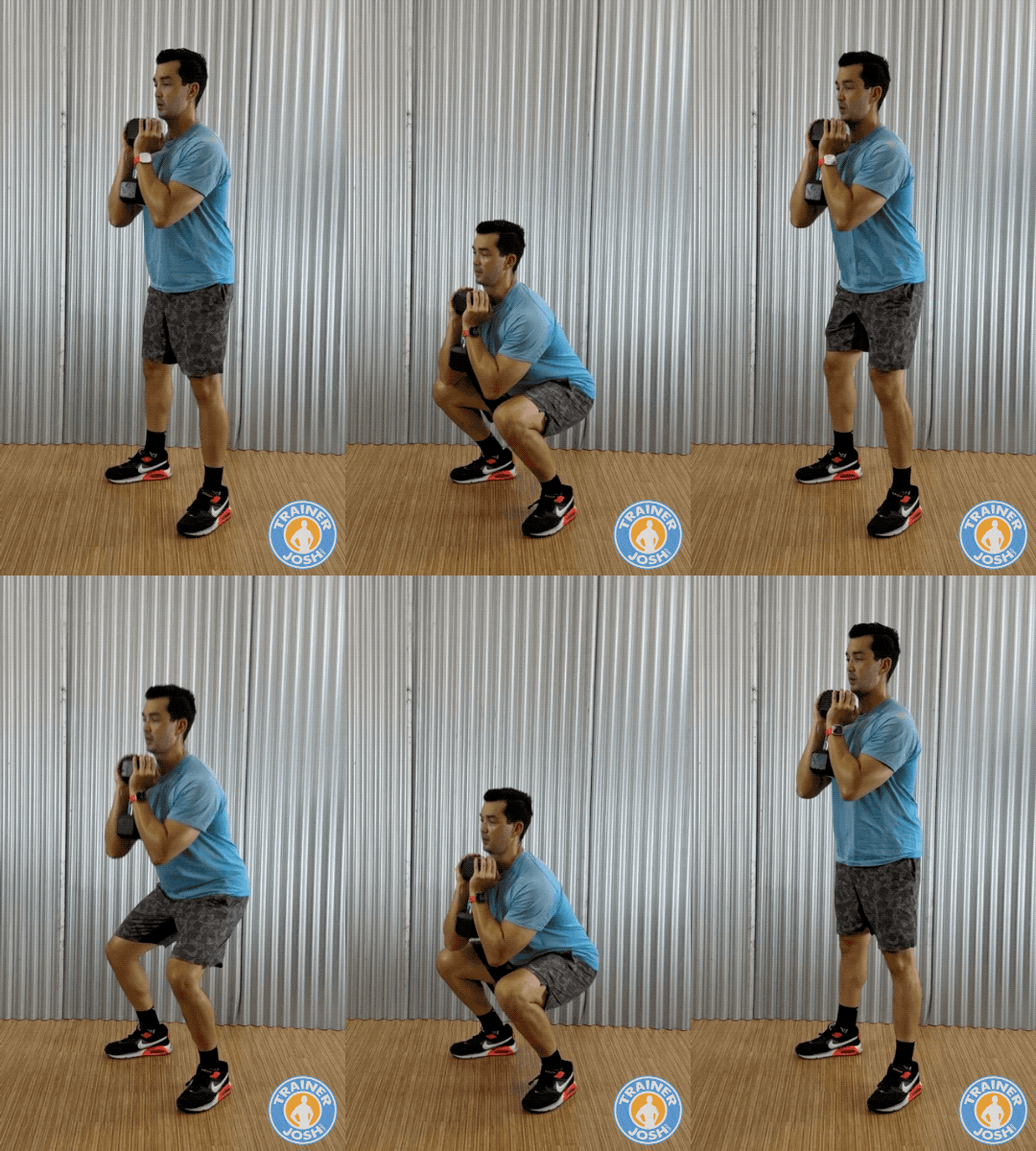
This is a beginner-friendly compound exercise that targets your quads by keeping your torso upright. It also makes it easier to squat deeper with good form, making them perfect for building lower-body strength while enhancing mobility and improving squat mechanics.
If you don’t have dumbbells yet you can start with these bodyweight leg exercises to build lower body strength before progressing to weighted movements.
- Hold one end of a dumbbell with both hands against your chest with your elbows clamped down on the bottom end. Stand with your feet slightly wider than shoulder-width apart, with your toes turned out 10 to 15 degrees.
- Engage your core, then bend at your knees and push your hips back to lower your body as low as comfortably as possible without losing the arch in your lower back or letting your heels lift up.
- Let your hips drop straight down between your heels until your thighs reach at least parallel, but preferably lower. Keep the dumbbell close to your body.
- Drive your body back up by pushing through your midfoot and heel. Focus on squeezing your quads.
Trainer Tip: Let your knees travel forward over your toes as long as your heels stay down to maximize quad activation. Keep your elbows inside your knees at the bottom to open your hips and maintain balance.
Avoid common mistakes like lifting your heels off the ground, knees caving in, leaning too far forward, holding the dumbbell too far away from your body, and collapsing at the bottom (“butt wink”).
Dumbbell Romanian Deadlift
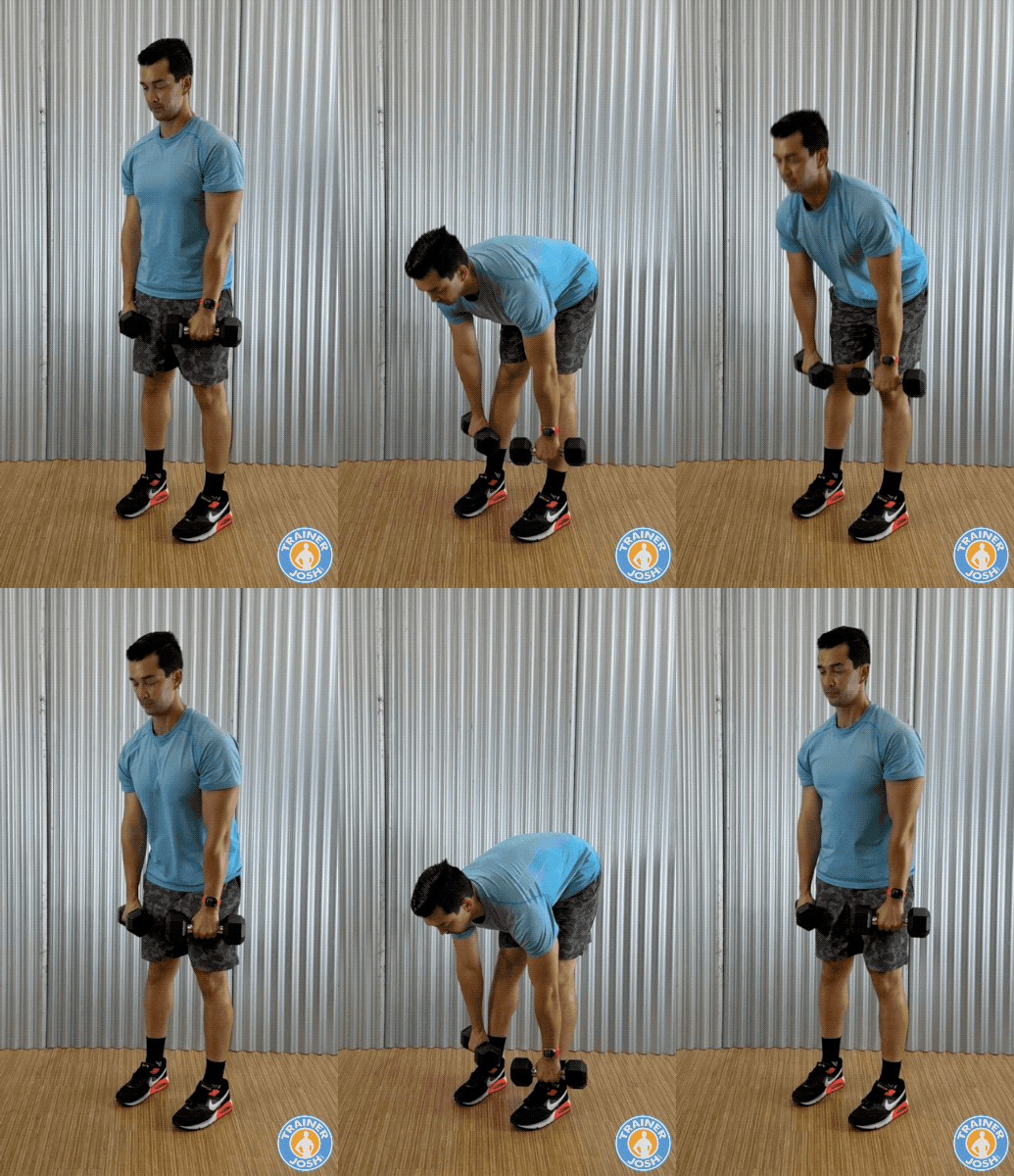
Dumbbell Romanian Deadlifts are one of the best dumbbell exercises for targeting and strengthening your hamstrings, glutes, and lower back. They’re also great for developing the posterior chain (the backside of your body), which is usually neglected but essential for athletic performance, injury prevention, and good posture.
- Stand with your feet hip-width apart. Hold a dumbbell in each hand in front of your thighs, palms facing your front thigh.
- Keep your knees soft and slightly bent, then hinge your torso forward by pushing your hips back and lowering the dumbbells down the front side of your legs, keeping your back flat in a straight line and your chest arched out.
- Lower until you feel a stretch in your hamstrings. Depending on your flexibility, the dumbbells should go just below your knees or mid-shin.
- Breathe out as you return to the starting position by pushing through your hips and squeezing your glutes as you drag your hips forward, back into standing.
Trainer Tip: Perform the lowering phase slow than the lifting phase (3-4 seconds down, 1-2 seconds up) for maximum hamstring and glute engagement.
Avoid common mistakes like locking or hyper-bending your knees (kills hamstring tension), letting the dumbbells drift away from your body, rounding your lower back instead of hinging at the hips, and don’t drop too low past your flexibility range.
Dumbbell Forward Lunges
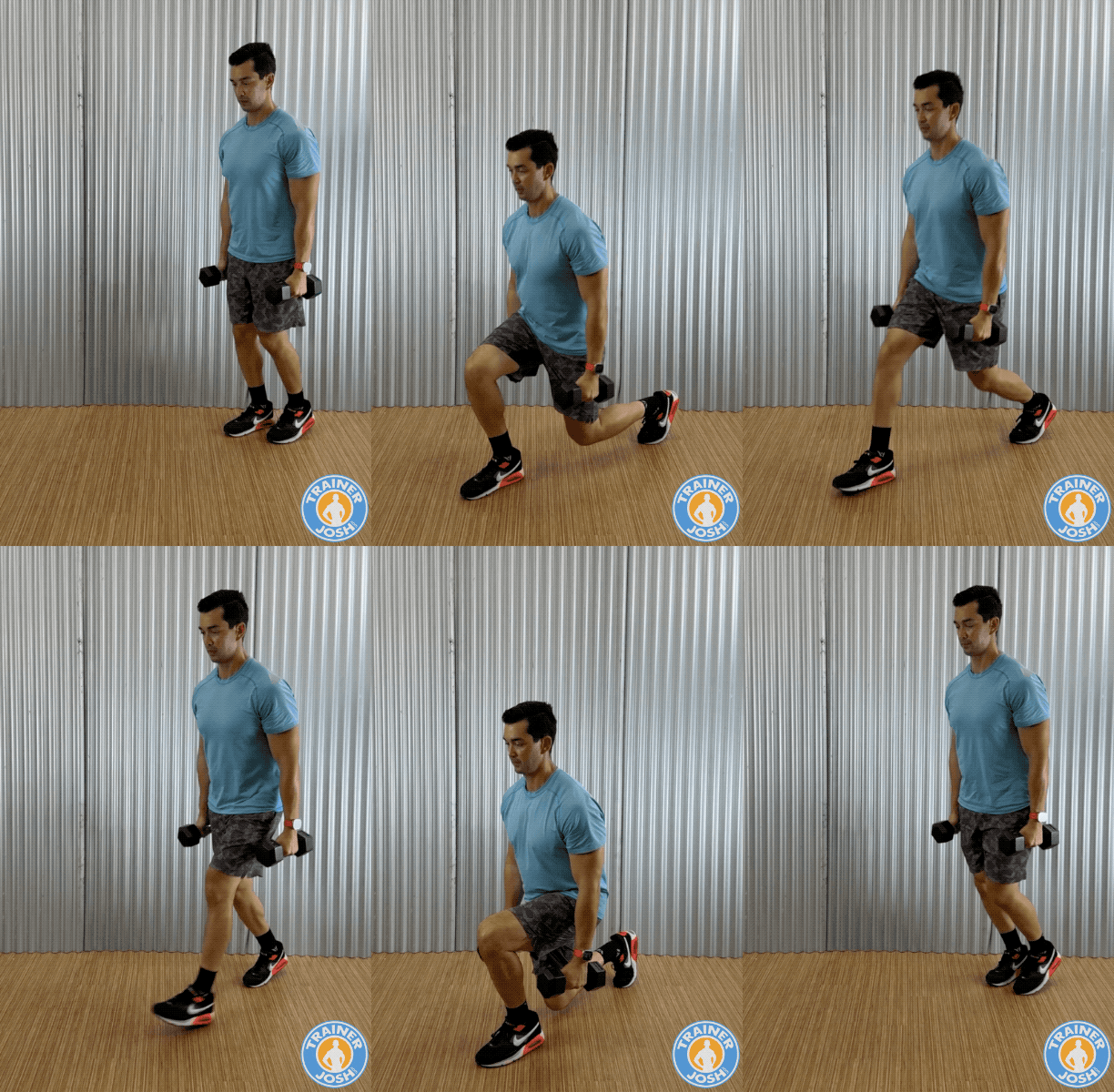
Dumbbell lunges are a dynamic yet functional exercise that’s great for building strength and muscle in your quads, glutes, and hamstrings. They also help to improve balance, coordination, and core stability. Dumbbell lunges train each leg independently, making them a great unilateral exercise.
- Stand tall and hold a dumbbell in each hand, palms facing your sides. Your arms should be straight, and your feet should be hip-width apart.
- Take a big step forward with one leg and lower your hips until both knees are bent at about 90 degrees.
- Keep your abs tight and your chest up as your back knee hovers just above the floor, about an inch or two, and your front thigh is parallel to the ground.
- Breathe out as you drive through your front heel to push yourself back up into the starting position.
- Repeat on the other leg, alternating sides for each rep.
Trainer Tip: To maximize your results, keep constant tension by stopping just short of locking out your knees at the top. If you have trouble balancing, then try reverse lunges and they can be easier on the knees but just as effective.
Avoid common mistakes like taking too short a step (causes knees to go too far past toes), leaning forward or arching the back, letting the front knee cave inward, and rushing through reps instead of lowering with control.
Dumbbell Step-ups
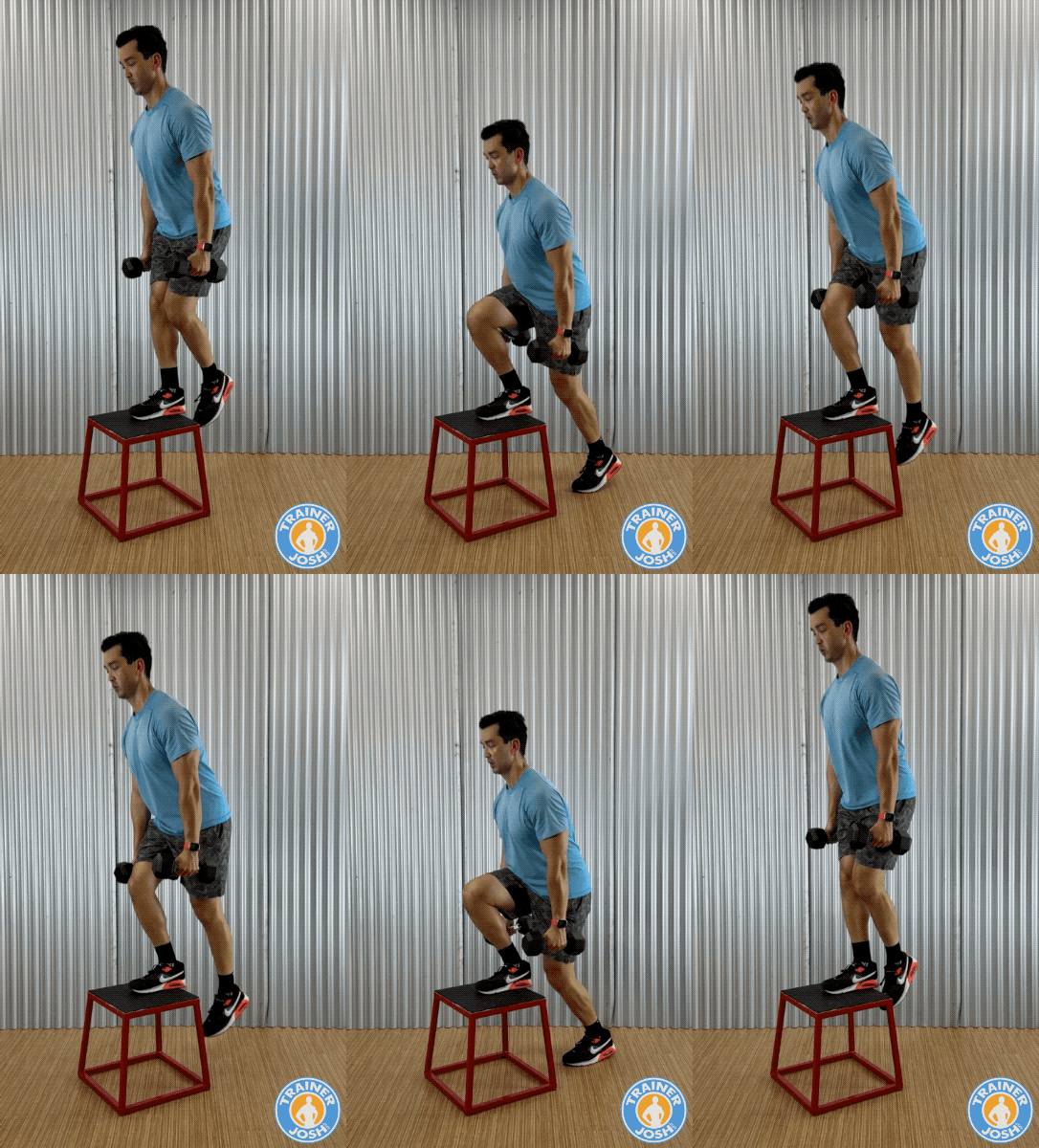
Dumbbell step-ups are a great unilateral and functional exercise that targets your quads, glutes, and hamstrings while improving single-leg strength, balance, and coordination.
You’ll need an exercise box for this one. But can also use a sturdy chair or another elevated platform that is about knee height. Just be careful and make sure it’s stable.
- Stand facing a sturdy box or bench that’s about knee height. Hold a dumbbell in each hand at your sides.
- Step up by placing one foot firmly on the bench so your whole foot is on it. Then press through your front heel to lift your body up until your leading leg is nearly straight. Keep a slight bend in the knee to keep muscle activation in your quads.
- Then, carefully step back down with the trailing foot, followed by the lead foot, to return to the starting position.
- Alternate and repeat on the other leg, alternating each leg with each rep.
Trainer Tip: Keep your torso upright and eyes forward for balance. Lean slightly forward for more glute emphasis, and focus on driving through the heel of your working leg.
Avoid common mistakes like letting the back leg push off too much (steals work from the front leg), only placing part of your foot on the bench, rounding your lower back, and dropping too fast instead of controlling the descent.
Dumbbell Shoulder Press
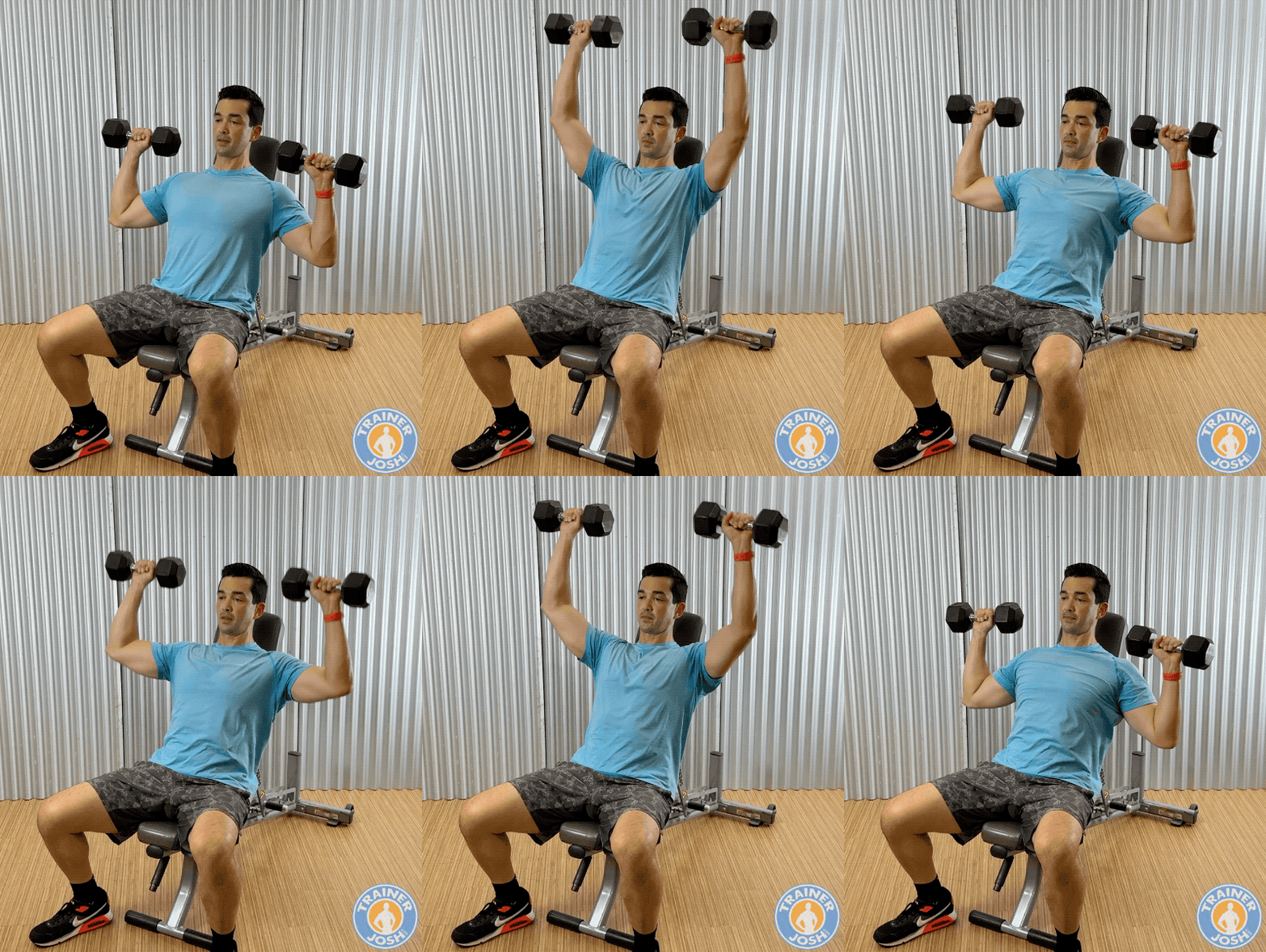
Dumbbell shoulder presses are one of the best exercises for building strong, defined shoulders. The advantage of using dumbbells for the shoulder press is that it’ll allow each arm to work independently, fix strength imbalances, and activate stabilizing muscles better than the barbell.
I prefer doing this exercise seated using an adjustable bench to reduce lower body involvement, back strain, and momentum.
- Set up an adjustable bench so it’s about 90 degrees vertical or slightly less. Sit on the bench and hold a dumbbell in each hand. Then bring the dumbbells up so they’re at shoulder height with your palms facing forward and your elbows bent about 90 degrees.
- Squeeze your shoulder blades together on your back. Arch up your chest and tighten your abs. Exhale and press the dumbbells straight overhead in a controlled manner until your arms are fully extended, but your elbows aren’t locked out completely.
- Keep your back pressed against the bench and your abs tight throughout the movement. Do not bring the dumbbells together and clink them, but instead press them directly over your shoulders.
- Breathe in as you slowly lower the dumbbells back down to shoulder height to repeat the movement.
Trainer Tip: Avoid clanking the dumbbells together at the top and stop just short of locking out your elbows comopletely. You can also do the shoulder press while standing which will challenge your balance and core more but can put more stress on your lower back.
Avoid common mistakes like include arching the lower back, flaring elbows directly out to the sides, shrugging shoulders up towards the ears, and using momentum instead of controlled pressing.
Dumbbell Bent-Over Row
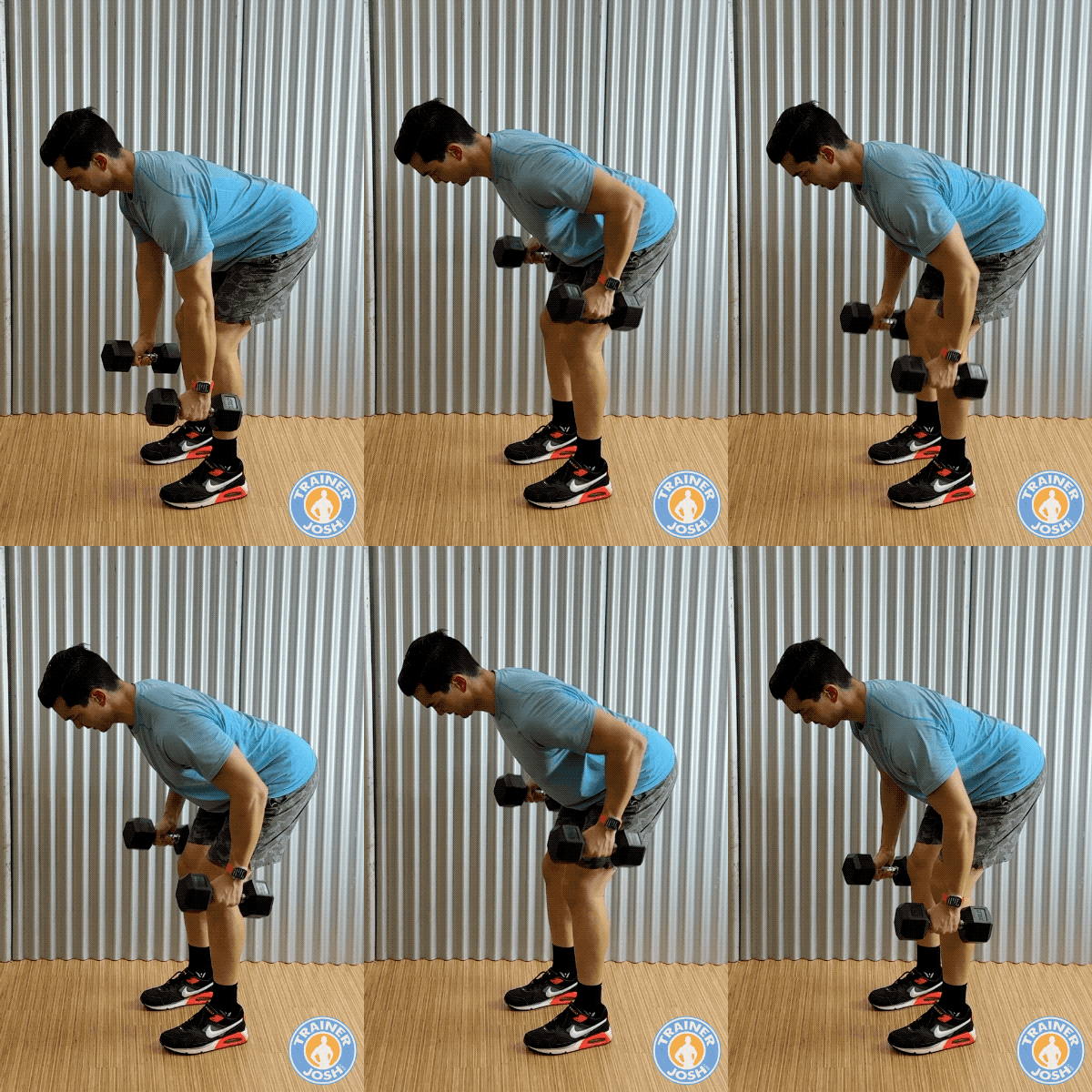
The dumbbell bent-over rows exercise is one of the best exercises for building a strong, muscular back while also improving your posture and pulling strength. It mostly targets your lats, rhomboids, and traps, but also engages your lower back, rear delts, and biceps.
- Hold a dumbbell in each hand, palms facing your body. Engage your core by tightening your abs, then hinge at your hips with a flat back until your torso is about 45 degrees forward. Keep your knees slightly bent.
- Let the dumbbells hang down by extending your arms fully towards the floor, and the dumbbells should be right in front of your shins.
- Pull the dumbbells upward towards your waist by driving your elbows back and keep them close to your body. At the top, squeeze your shoulder blades together.
- Pause and squeeze at the top by pausing briefly to maximize the contraction.
- Slowly lower the dumbbells back down to the starting position without rounding your lower back.
Trainer Tip: Perform rows with a slow eccentric (lowering phase) to build more muscle. Keep your abs tight to take stress off your lower back and instead place it on your core.
Avoid common mistakes like rounding your lower back or jerking the weights. Letting your elbows flare out instead of staying tucked. Using momentum instead of controlled pulling.
Dumbbell Chest Press
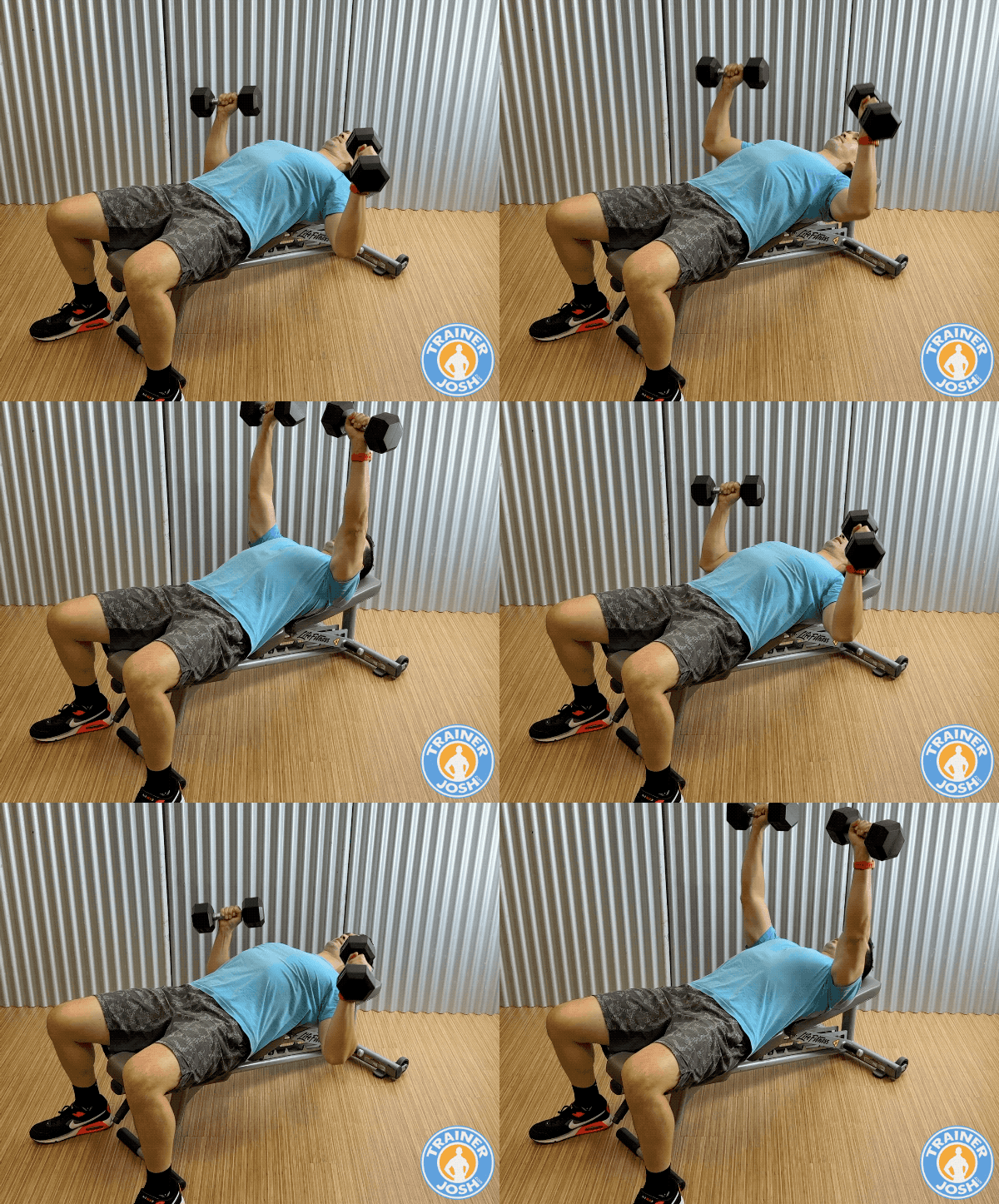
The dumbbell chest press builds a strong, defined chest by targeting your pec muscles (pectoralis major = the main chest muscle), front deltoids, and triceps. You can get a deeper stretch and longer contraction using dumbbells for this exercise than a barbell. This leads to greater muscle growth.
I’m using an adjustable bench for this exercise. It’s a great investment for your home gym and you can do a variety of exercises with it. You can also do this exercise laying on the floor, but you won’t get a deep stretch in your chest at the bottom.
- Sit on a bench with a dumbbell in each hand. Lie back with your feet flat on the floor.
- Hold the dumbbells at chest level and in line with your chest. Keep your elbows bent with palms facing forward.
- Breathe out as you press the dumbbells straight up by extending your arms. But stop short of your elbows fully locking out and don’t let your arms go completely straight. Keep your elbows slightly bent at the top.
- Breathe in and control the dumbbells as you slowly lower them back to the starting position.
Trainer Tip: Set your shoulder blades first by retracting and depressing your scapula (“pull your shoulders down and back”) before pressing. Keep a natural arch in your lower back with feet flat and glutes tight. Control the descent by lowering the dumbbells slowly.
Avoid common mistakes like flaring your elbows too wide (keep them at 45° angle to your torso). Bounching the dumbbells off the chest (don’t use momentum). Losing shoulder position mid-set from shoulders rolling forward (keep shoulder blades retracted and pinned to the bench).
Dumbbell Bicep Curls
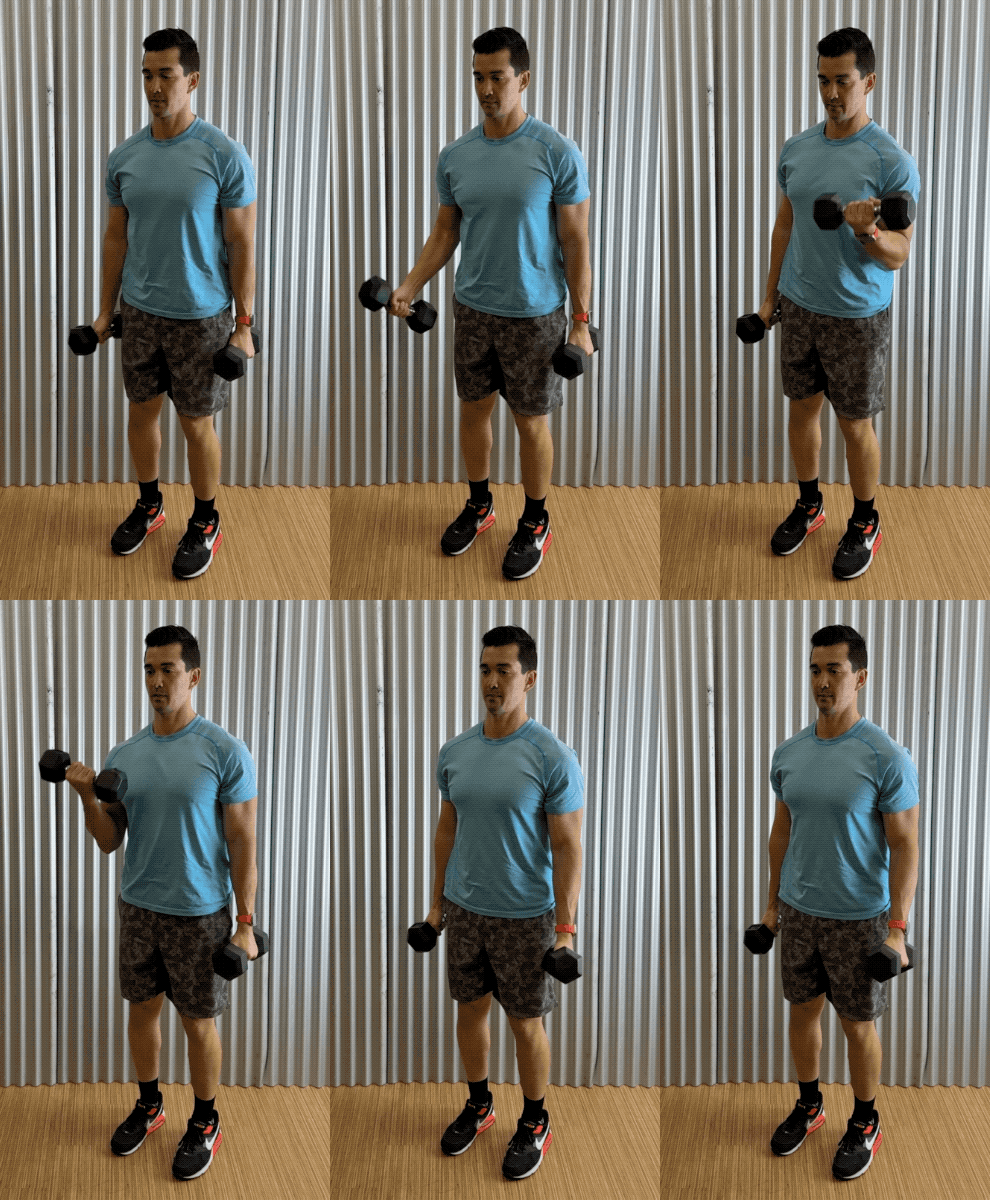
Dumbbell bicep curls are a classic arm-building and isolation exercise that works both heads of your biceps. It’ll help to fix muscle imbalances and enhance coordination since each arm is working independently. Stronger biceps will also help with doing pulling movements like pull-ups so doing this exercise is both aesthetic and functional for upper body development.
- Hold a pair of dumbbells at your sides while standing tall, your chest up, your shoulders back, and your elbows pinned to your sides.
- Start with your palms facing inward. As you curl up, turn your palms so they face up at the top of the movement. Keep your elbow at your side. Don’t let it move forward—your shoulder will try to help, but that takes work away from your biceps.
- When the dumbbell reaches the top, pause and squeeze your biceps hard to maximize muscle contraction. Keep focusing on keeping your elbows back and not letting them drift forward.
- Slowly lower the dumbbell back into the starting position for 2-3 seconds. This is the eccentric phase, which is key to building muscle.
Trainer Tip: Use a slow eccentric (3-4 seconds lowering) to create more mechanical tension for muscle growth. Focus on keeping your working shoulder back and locked in while lifting the dumbbell. Keep your elbow locked to your side and don’t let it drift upward.
Avoid common mistakes such as swinging the dumbbells or using your back for momentum. Letting your elbows drift forwards (turns it into a shoulder exercise. Curling the wirsts (reduces tension in your biceps). And rushing through reps instead of controlling the lowering phase.
Dumbbell Triceps Kickbacks
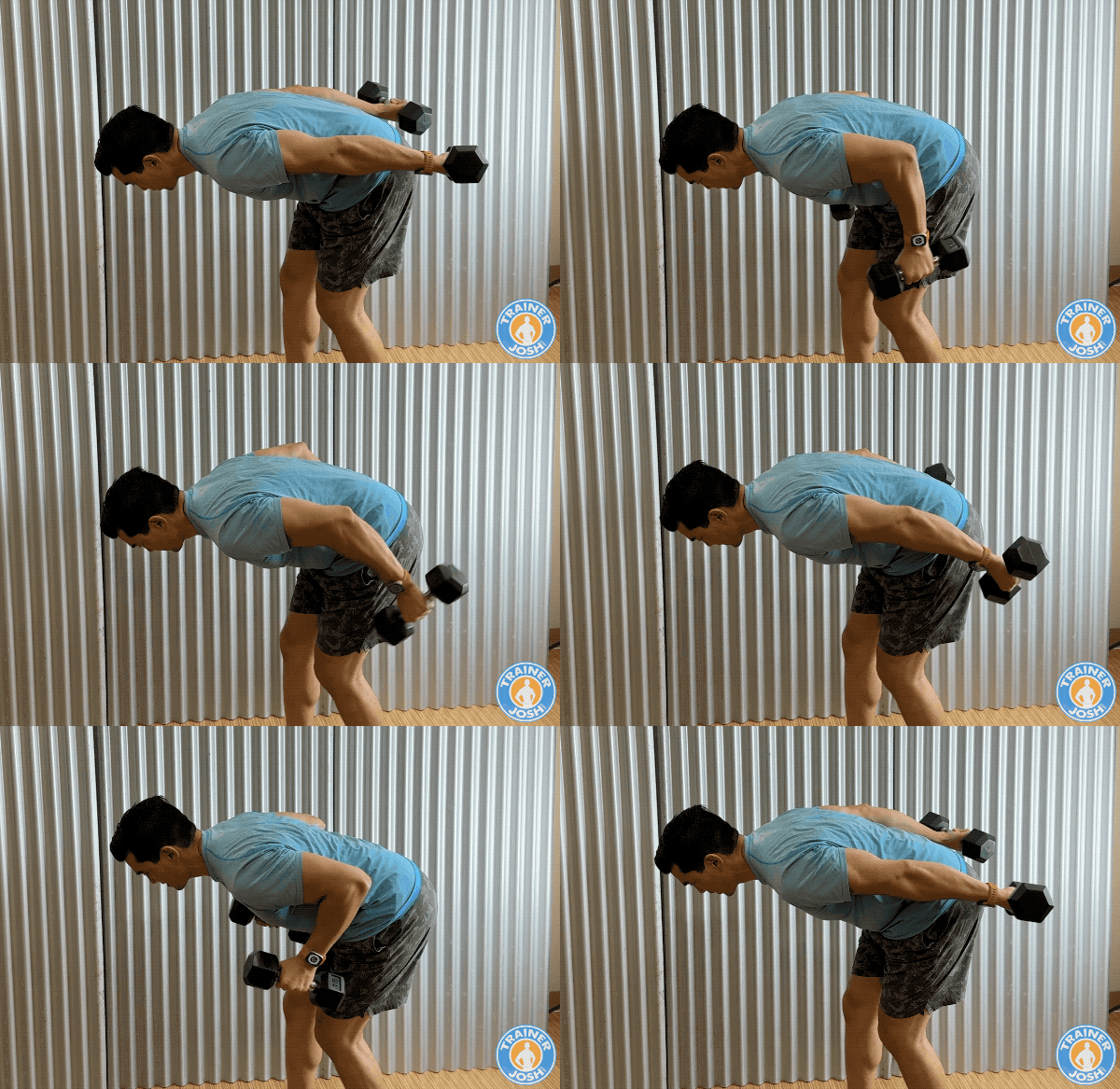
Dumbbell kickbacks are an excellent exercise for isolating the lateral head of your triceps, especially when your arm is fully extended in the lockout phase. When your arm is at full extension, your triceps will be under maximum mechanical tension, which improves muscle definition and toning.
- Stand and hold a pair of dumbbells at your sides with your palms facing your sides as well. Next, tighten your abs and hinge forward at your waist like you’re going to do a bent-over row. Keep your back flat with a neutral spine.
- Tuck your elbows by your sides and raise your upper arm until it’s parallel with your torso. Your upper arm shouldn’t move during the exercise and should be locked to your side.
- Then, extend your arm by straightening your elbow to drive the dumbbell back until your arm is fully extended. A big tip is to rotate your palms at the end so they’re now facing upward to maximize contraction in the triceps’ lateral head.
- Squeeze your triceps hard at the top, and after briefly pausing, slowly lower the dumbbells under control back down into the starting position until your arms are at a 90-degree bend.
- Focus on keeping the dumbbells under control and do your best to avoid swinging or allowing your elbows to drop or flare outward.
Trainer Tip: Keep your upper arm locked in place and it should stay parallel to the floor and stationary the entire time. Your torso should lean forward at a about a 45°–60° angle with a flat back. Extend your arms until they’re straight and triceps fully flexed.
Avoid common mistakes like swinging or jerking the weight. Most people turn this exercise into a mini row by dropping their elbow during the lowering pyhase or jerking it up during the lift. Keep your elbow glued to your side.
Dumbbell Crunches
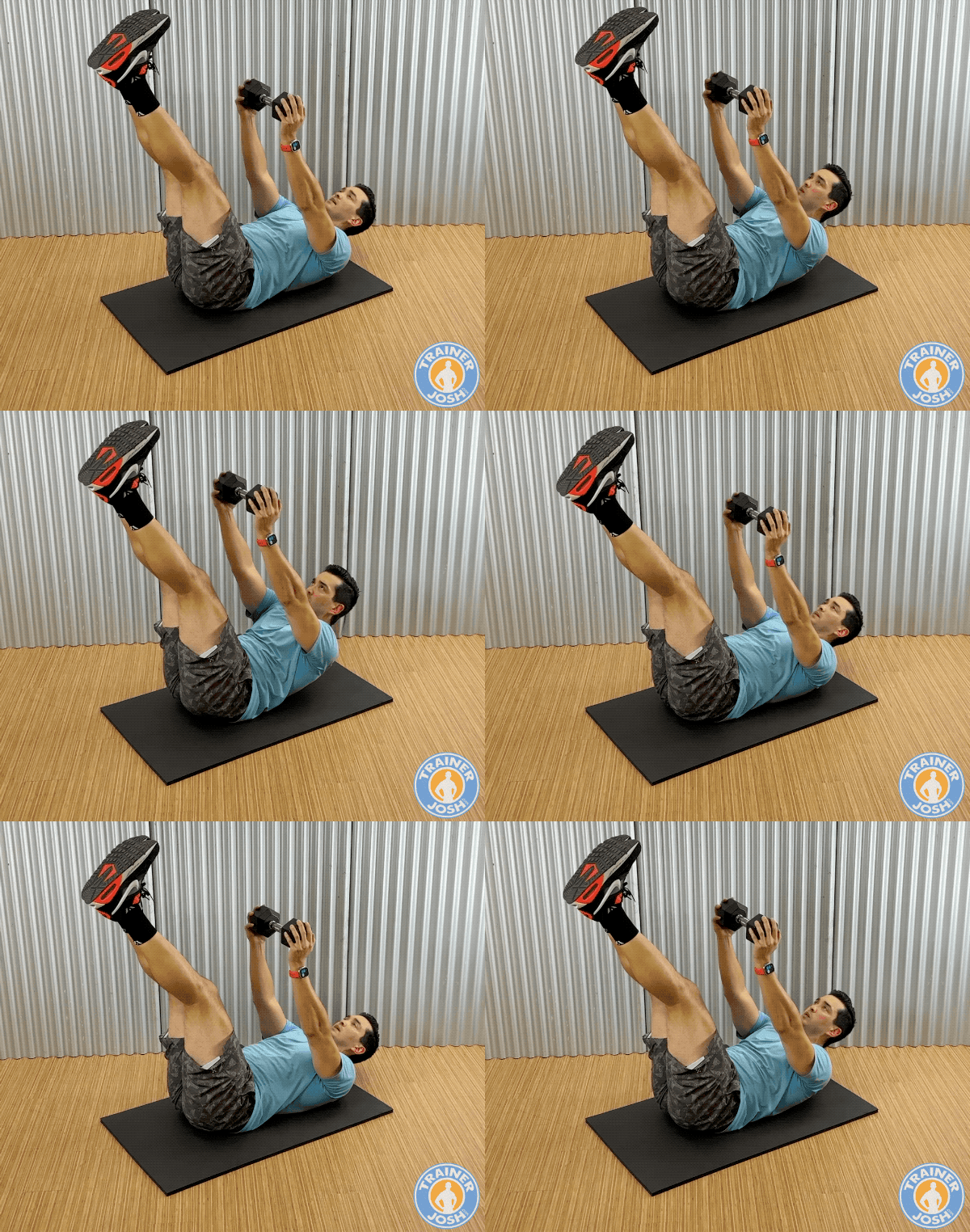
Using a dumbbell when doing crunches helps build stronger, more defined abdominal muscles because the weight increases resistance. The added weight forces your abs to work harder during the crunch, elevating mechanical tension.
I like to put my legs up when doing crunches to help reduce hip flexor involvement. This allows me to isolate the rectus abdominis better. It also helps flatten my lower back against the floor into a posterior pelvic tilt. This keeps the movement more focused on my abs instead of straining my lower back.
- Lie on your back and raise your legs up in the air so they’re vertical, with a slight knee bend. Hold a dumbbell with both hands directly above your chest, arms extended.
- Engage your core by tightening your abs and drawing your belly button down towards your spine. Focus on flattening your lower back against the floor.
- Crunch upward, lifting your head, shoulders, and upper back off the ground while keeping the dumbbell above your chest, not over your face.
- Squeeze your abs at the top with a 1-2 second pause, breathing out as you crunch up. Keep your chin tucked in and do not pull with your neck.
- Slowly lower yourself back into the starting position, keeping tension in your abs throughout.
Trainer Tip: Keep your elbows slightly bent and in a fixed position to prevent using your arms. Focus on curling up, not just forward. This enhances spinal flexion for better ab activation. Don’t let your legs move. Keep them as stable as you can throughout the movement.
Avoid common mistakes like using your neck to lift instead of your abs, lifting your entire back off the floor, swinging the dumbbell, going too fast, and letting your lower back arch.
Sample 30-Minute Dumbbell Workout Plan (At Home)
Strength training three days a week, using full-body workouts, is ideal for beginners. If you have three days available for training, performing full-body workouts each day is best.
You should train on non-consecutive days to allow for recovery, like Monday, Wednesday, and Friday.
Those rest days only work if your body can actually recover between sessions. BioTRUST Ageless Multi Magnesium combines seven forms of magnesium with L-theanine to help support muscle relaxation, cellular energy, and a better nighttime wind-down.
A 7-form magnesium complex designed for adults 40+ to support restful sleep, relaxation, muscle recovery, and whole-body health. Each serving provides 350mg of magnesium plus L-theanine and vitamin B6 for added nervous-system support.
- 7-Form Magnesium Blend: Combines glycinate, taurate, malate, citrate, Sucrosomial® magnesium & complementary forms
- Sleep & Relaxation Support: Magnesium glycinate plus L-theanine help support calm, relaxation & restful sleep
- Muscle Recovery & Comfort: Supports normal muscle relaxation, recovery & energy production
- Enhanced Absorption: Includes clinically studied Sucrosomial® Magnesium for high absorption & gentle digestion
- Heart, Bone & Nervous System Support: Provides 350mg of magnesium plus vitamin B6 for essential body functions

The lettering and numbering system (A1, A2, B1, B2, etc.) tells you which exercises are paired together and the order you’ll perform them. Each letter represents a “block” of exercises that you’ll complete all sets before moving on to the B group.
Numbers represent the order within that group. You’ll perform A1 first, then immediately follow with A2, and repeat until all sets for that block are done.
For example:
- Perform A1 first (e.g., dumbbell goblet squats).
- Go straight into A2 (e.g., dumbbell romanian deadlifts)
- Rest for the prescribed time (60-90 sec.)
- Repeat back to A1, then A2, until all sets are complete. Then move to B1/B2.
Common Mistakes Beginners Make (How to Fix Them)
You’ve been lifting dumbbells three times a week for two months. The scale hasn’t moved. Your arms don’t look any different. And you’re starting to wonder if this whole “strength training at home” thing is just another fitness industry lie.
Here’s the hard truth: You’re probably making one of these five mistakes that sabotage 80% of beginners. The good news is that they’re all fixable…
Mistake #1: Lifting Too Light for Too Long
Remember those 5-lb dumbbells that felt challenging in week one?
If they still feel the same in week 8, then you’ve hit a training plateau. You’re building endurance, not muscle. And endurance won’t give you that defined, sculpted look you’re chasing.
If all 10 reps feel easy, then the weight is too light. Your body adapts to stress, but if the stress never increases, then neither does your muscle.
Women often stay stuck here because of the bulky myth. They think, “If I lift heavier, I’ll accidentally wake up looking like Arnold”. So they lift the same 8-pound dumbbells for 6 months straight, wondering why nothing changes.
One woman told me, “I was doing 10 reps with 5-pound dumbbells for months. When I finally jumped to 12 pounds, I couldn’t believe the difference. My arms actually started looking toned.”
The Fix: If you can complete all prescribed reps with perfect form and can still do 3 plus more, then increase the weight next workout.
Mistake #2: Poor Posture or Arching Your Back
Your lower back hurts after rows. Your shoulders ache after overhead presses. You assume this is “normal.” But it’s not. It’s a form problem.
Two Deadly Posture Mistakes:
- Rounding your back (especially during rows or deadlifts) puts a lot of stress on your spine and can lead to injury. Do not increase the weight if your form is terrible. Return to lighter weights and focus on the execution until you master it.
- Overarching your back (especially during overhead presses) takes the strain off your shoulders and puts it on your lower back. Your lower back shouldn’t do the heavy lifting; your core should.
The Fix: Stack your ribs over your hips. Pull your belly button toward your spine. Keep your chest lifted. Film yourself from the side. If your form breaks down, then the weight is too heavy. Technique trumps everything. Never sacrifice form for a heavier load.
Mistake #3: Skipping the Warm-Up
“I only have 30 minutes. I can’t waste 5 on a warm-up.”
This mindset is how you tear a muscle reaching for a dumbbell. Cold muscles, tendons, and ligaments are more prone to injury. They rip under tension.
A quick five-minute warm-up loosens your muscles, wakes up your stabilizers, and prepares your body for safe lifting.
The Fix: Do the 5-minute dynamic warm-up from the previous section. Every single time, no shortcuts.
Mistake #4: No Tracking or Progressive Overload
If you can’t remember what weight you used last week, then you’re probably guessing. And guessing doesn’t build muscle.
Progressive overload means slowly adding more challenge to your muscles. It’s the key that makes your body adapt and get stronger. Without it, you plateau after the first month.
The Fix: Use a notebook, your phone’s notes app, or a simple spreadsheet. Ideally, aim to do slightly more than you did the last time. One extra rep, five more pounds, or one additional set.
Track:
- Exercise name
- Weight used
- Reps completed
- How it felt (easy, moderate, hard)
One woman shared with me, “I started lifting, tracking my lifts, seeing the numbers go up every week from 10 pounds to 15 pounds to 20 pounds. It was more motivating than any scale could ever be.”
Mistake #5: Obsessing Over the Scale (Ignoring Non-Scale Victories)
The scale says you gained two pounds, so you panic and quit. But your jeans fit looser, your arms look firmer. You carried all the groceries in one trip without breaking a sweat.
Here’s what the scale doesn’t tell you: Muscle is denser than fat. You can lose inches while gaining pounds. Women have dropped two clothing sizes while only losing four pounds on the scale in their first 12 weeks.
The scale for women can fluctuate a lot, leading up to and during menstruation. Due to water retention, women can experience fluctuations of up to 6 pounds a day in their weight. Hormonal fluctuations, such as a drop in estrogen levels during menopause, can also cause water retention.
Non-Scale Victories (NSV) that actually matter:
- Clothes fitting better
- Lifting heavier weights than last month
- Feeling energized instead of exhausted
- Moving a piece of furniture by yourself
- Seeing muscle definition in your arms for the first time
One beginner lady I worked with said it perfectly, “I’m 10 pounds heavier than I was five years ago, but I’m stronger, curvier, and have more visible muscle. The scale went up, but I look better than I did 10 pounds lighter.”
Your body is an instrument and not an ornament. Judge your progress by what you can do and not what you weigh.
You will experience improvements in physical changes, but something deeper shifts as well. You’ll become stronger and more confident in all aspects of your life. The physical strength makes
Progression & Next Steps (What Happens After Week 8)
Your body adapts fast. The beginner phase, during which any new movement triggers gains, lasts about 4-6 weeks (or up to 12 weeks if training less frequently). After that, you need to systematically increase the demands on your muscles, or you’ll hit a plateau hard.
Three progression strategies that don’t require buying heavier weights:
Split Routines (Upper/Lower)
Beginners typically thrive on full-body workouts three times a week. However, after eight weeks, your muscles require more volume per session to continue growing.
Switch to a 4-day upper/lower split:
- Monday: Upper body (chest, back, shoulders, arms)
- Tuesday: Lower body (quads, glutes, hamstrings)
- Thursday: Upper body
- Friday: Lower body
This doubles the training volume per muscle group each week, forcing new adaptation.
Tempo Work (Time Under Tension)
Slowing down the eccentric (lowering) phase increases time under tension without adding weight.
Try a 3-0-1-1 tempo:
- 3 seconds lowering
- 0 seconds pause at the bottom
- 1 second lifting
- 1 second squeeze at the top
A goblet squat with 15 pounds at a slow tempo feels harder than one with 20 pounds at normal speed. This technique also lets you work around joint discomfort while still building muscle.
One woman told me, ‘I couldn’t jump up to the next weight without my form breaking down.’ Slowing my tempo made the lighter weight feel impossible, in a good way.”