
Confused and overwhelmed with what exercises to start with for beginners using dumbbells? Here you’ll get my step-by-step dumbbell exercises designed to make your first workouts simple, safe, and effective.
Imagine starting your first workout and instead of feeling confused, you feel confident, strong, and ready. That’s exactly what these beginner dumbbell exercises and workout plan will give you.
You’ll start building muscle, burning fat, and feeling stronger in as little as 4 weeks. You don’t need fancy machines or a crowded gym. All you need are dumbbells, a little space at home, and this step-by-step plan.
By the end of this exercise list you’ll know the best dumbbell moves, the right form, and a workout routine designed to transform your body, without the guesswork.
Dumbbell Basics for Beginners
You’re not the only one who walks into a gym and feels like everyone’s watching them. Plenty of beginners have told me that they “don’t like how they feel in the gym”… wandering around, unsure which machine to use, and afraid of doing something wrong while strangers watch them.
That’s why I’m all for those who prefer working out at home and only have access to dumbbells. It’s a confidence building shortcut that can still get some impressive results fast, especially if you’re a beginner.
Working out at home in your own space removes the pressure, lets you focus on form, and means you can take your time doing these dumbbell exercises until you’re 100% comfortable. You’re building habits on your terms with no commute, no judgement, and no waiting for equipment.
And you can build muscle with dumbbells only. You don’t need a rack of barbells or fancy machines to get serious results.
Research and countless success stories show that you can build strength, muscle, and tone up with dumbbells alone. The key is choosing the right weight, doing the right exercises, and gradually making your workouts more challenging (a principle called progressive overload).
A 2023 study found six weeks of dumbbell training significantly increased arm muscle strength by up to 21% and arm power by as much as 35% compared to the control group.1
A 2023 randomized trial published in the Journal of Strength and Performance found that 12 weeks of dumbbell or barbell bench press training produced nearly identical gains in upper-body strength and power. This study concluded that dumbbell bench press is just as effective as barbell bench press for developing maximal strength and explosive power.2
Choosing the Right Dumbbell Weight
Key Takeaways:
The right weight dumbbells a beginner should start with should be heavy enough to challenge you in the 8-15 rep range, but light enough to maintain perfect form.
Men: 10-25 lbs (about 4-11 kg) for upper body moves. Up to 35 lbs for the lower body
Women: 5-15 lbs (about 2-7 kg) for upper body moves. Up to 20 lbs for the lower body
I always recommend investing in a set of adjustable dumbbells. It’ll save you from having to buy multiple sets of dumbbells, future-proof the weight you need later as you get stronger, and take up less space.
But you can also use hex dumbbells. They’re durable, stable, and ready to use without adjustments. But they can take up more space, and get costly if you need multiple weights. They’re great if you want simplicity over space-saving or frequent weight changes.
It may take 2-3 workouts to find your ideal dumbbell weight for these exercises. By then, you’ll be able to determine the maximum weight (load) you can handle with proper form within that target range (e.g., 8-15 reps).
Light weights aren’t a waste of time as long as you’re keeping proper form and using methods to challenge your muscles. Starting light can be smarter for learning form, preventing injury, and building the mind-muscle connection.
The Golden Rule: Form Over Everything
Key Takeaways:
For beginners just starting weight training, proper exercise technique is way more important than the amount of weight being lifted. Prioritizing your form will make sure you’re maximizing the workout benefits, staying safe, and laying a foundation for long-term progress.
Doing these resistance training exercises with proper technique in a controlled manner is essential to maximize gains and minimize your risk of injury. It makes sure that the intended muscles are correctly engaged so that you optimize the desired training effects and adaptations.
The mind-muscle connection can significantly upgrade these exercises to enhance the training stimulus for muscle growth (hypertrophy). Deliberately focusing on the working muscles during these exercises creates greater metabolic stress and targets metabolic growth… giving you better results.3
Beginners especially need to focus on getting the needed motor skills and control so they can do these exercises right. When you’re new, it’s important to train your body to move the right way so your movements feel smoother and more controlled (developing neuromuscular control and efficiency).
Proper form makes sure you’re working through a full range of motion (ROM). This works the strengthening muscles across the entire available movement and enhances joint integrity and flexibility. Training only partial ROM leaves part of the muscle untrained and can lead to imbalances. Full ROM maximizes your potential for muscle growth during these strength training exercises.4
Proper form maintains constant tension on the target muscle you’re working. “Locking out” joints at the ends of a lift can take tension off the muscle, reducing your results. Proper form makes sure you keep the tension on the muscles, forcing them to get stronger.
The speed at which you move the dumbbells (tempo) during the exercise can play a significant role in your results. For example, going slower during the lower phase (eccentric) is highly effective for muscle growth (hypertrophy) since it increases mechanical tension and muscle damage.
A 2021 review in Sports Medicine found that the most effective tempo for muscle growth is a slower eccentric phase combined with a faster concentric phase. This is due to the higher time under tension and muscle activation while recruiting high-threshold motor units.5
13 Best Dumbbell Exercises for Beginners
As you read through these exercises, you’ll notice how natural it feels to picture yourself doing them. And you may already feel the motivation to grab your dumbbells now and get started.
Dumbbell Goblet Squat
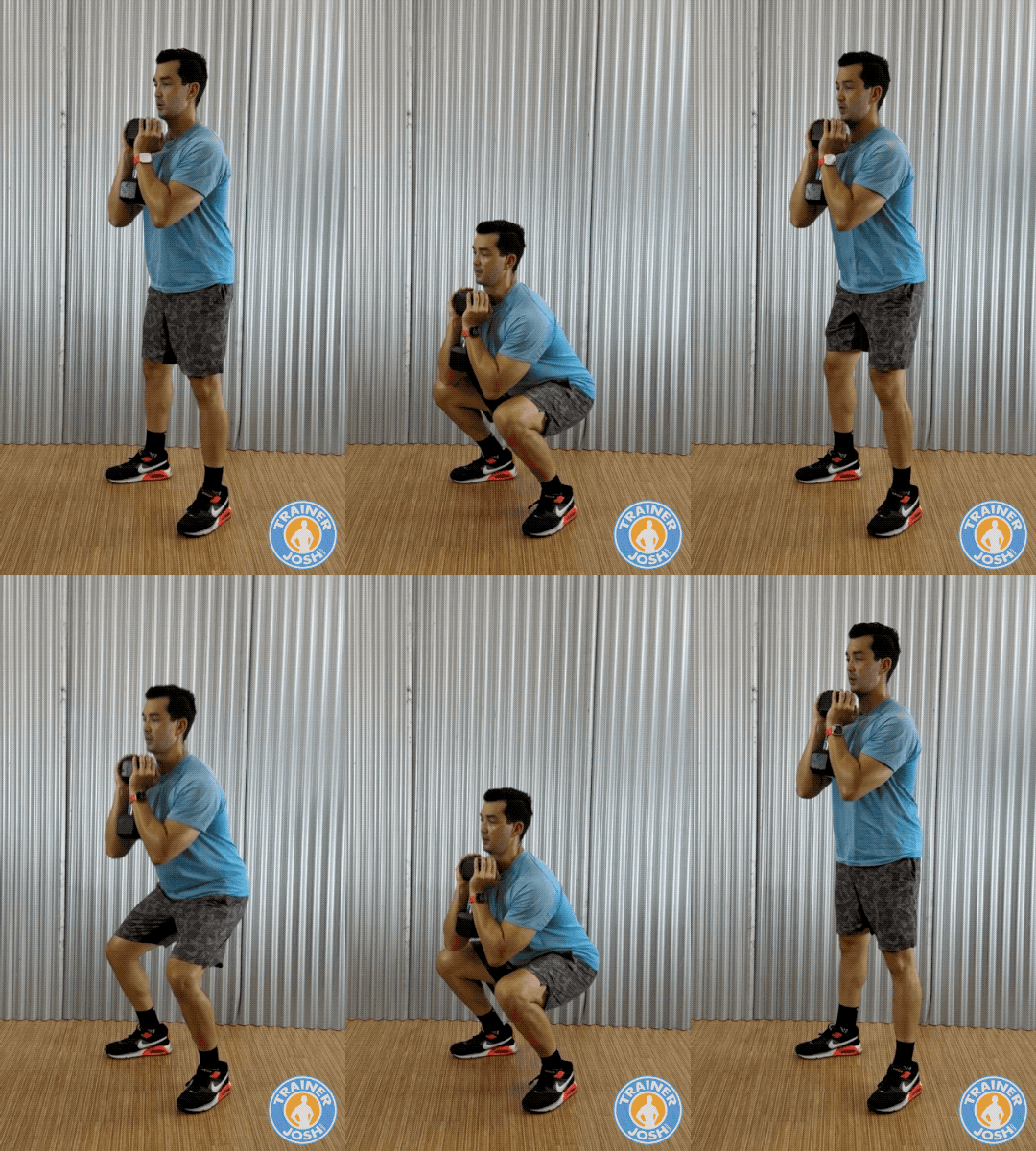
This is a beginner-friendly compound exercise that targets your quads by keeping your torso upright. It also makes it easier to squat deeper with good form, making them perfect for building lower-body strength while enhancing mobility and improving squat mechanics.
- Hold one end of a dumbbell with both hands against your chest with your elbows clamped down on the bottom end. Stand with your feet slightly wider than shoulder-width apart, with your toes turned out 10 to 15 degrees.
- Engage your core, then bend at your knees and push your hips back to lower your body down as low as comfortable without losing the arch in your lower back or letting your heels lift up.
- Let your hips drop straight down between your heels until your thighs reach at least parallel, but preferably lower. Keep the dumbbell close to your body.
- Drive your body back up by pushing through your midfoot and heel. Focus on squeezing your quads.
Trainer Tip: Let your knees travel forward over your toes as long as your heels stay down to maximize quad activation. Keep your elbows inside your knees at the bottom to open your hips and maintain balance.
Dumbbell Goblet Squats are a lot like Dumbbell Front Squats. Goblet squats are more beginner-friendly, while the front squat challenges your stability and upper back/core more. I don’t program them into the same session but alternate them across different workouts.
Dumbbell Deadlift
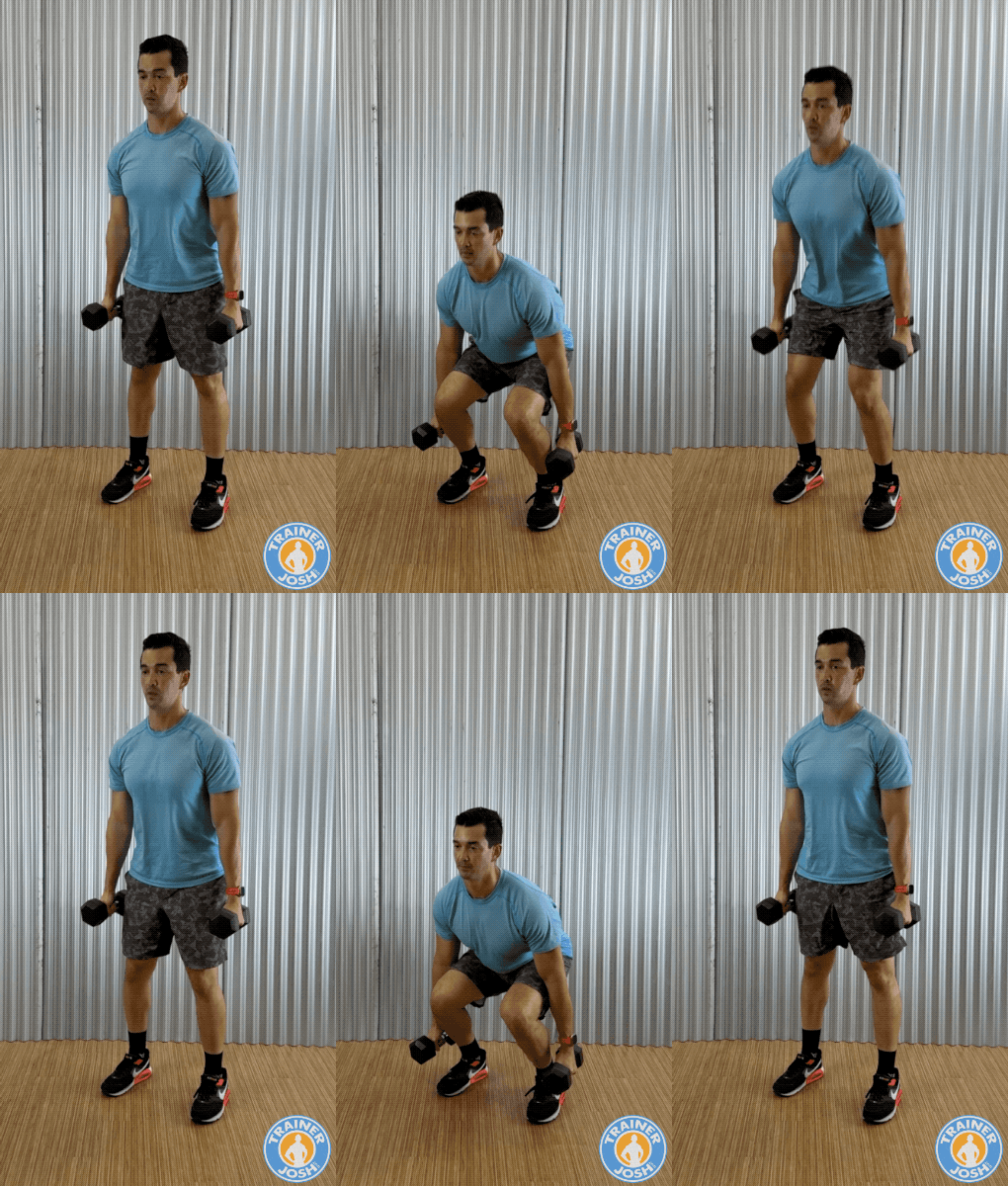
Dumbbell deadlifts are a powerful compound exercise for building lower body strength, especially in the glutes, hamstrings, and lower back. Dumbbells give you a greater range of motion than the barbell deadlift. They can be easier on the joints (especially your lower back if you’re taller).
- Stand with your feet hip-width apart. Hold a dumbbell in each hand with your palms facing your thighs.
- Brace your core by tightening your abs, and keep your back straight.
- Breathe in as you lower your hips by bending your knees and lowering your hips until your thighs are parallel or slightly below parallel to the ground.
- Then breathe out as you stand back up into the starting position. Keep your chest and back straight, squeezing your shoulder blades together on your upper back.
Trainer Tip: Focus on quality over quantity. Slow and controlled lowers build strength and prevent injury better than heavy sloppy reps. Prevent rounding your back (keep spine neutral), don’t let the dumbbells drift away from your body, and imagine there’s a chair right behind you that you’re trying to sit down on.
Dumbbell RDLs (Romanian Deadlift)
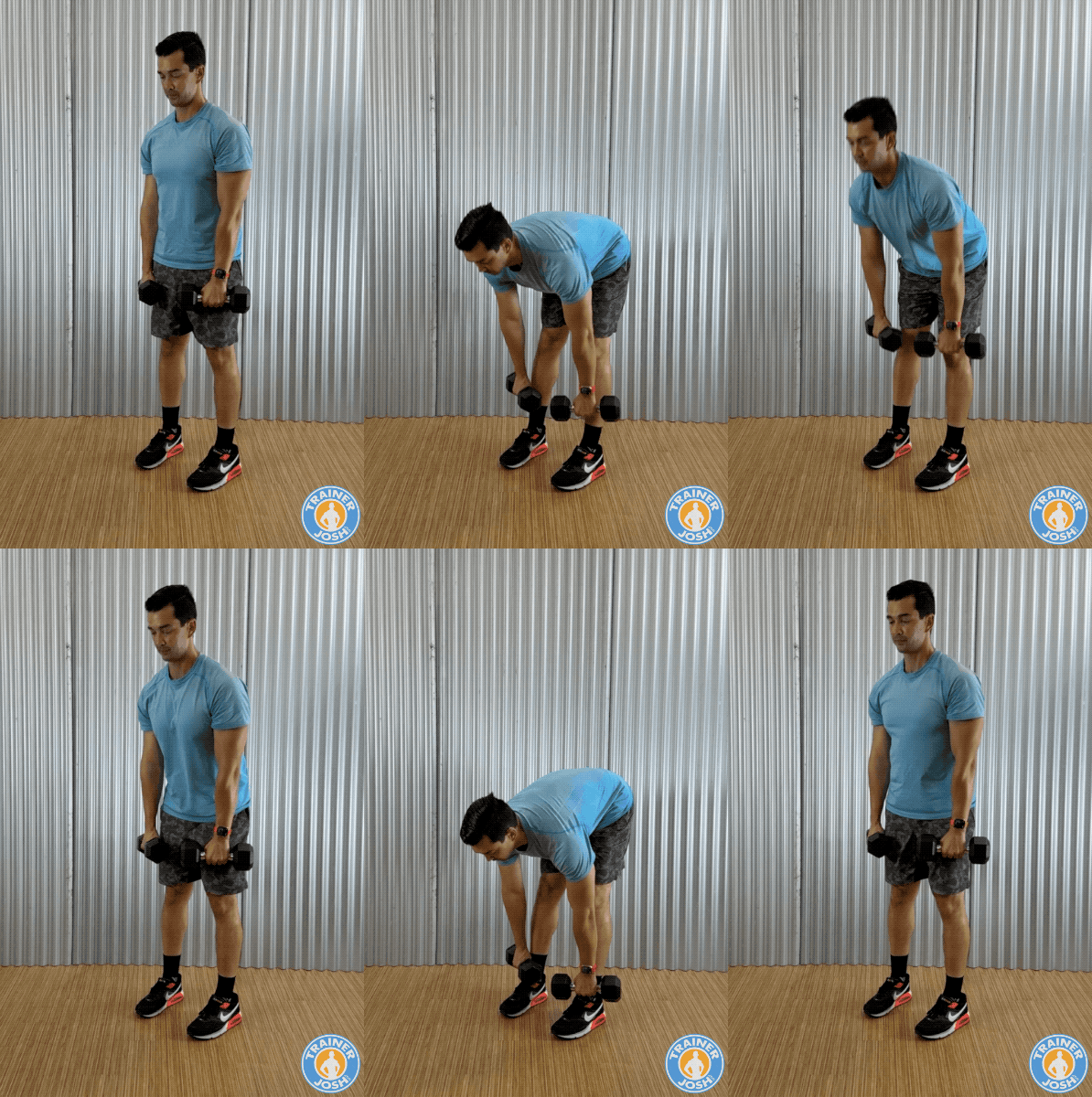
Dumbbell RDLs are one of the best dumbbell exercises for targeting and strengthening your hamstrings, glutes, and lower back. They’re also great for developing the posterior chain (the backside of your body), which is usually neglected but essential for athletic performance, injury prevention, and good posture.
- Stand with your feet hip-width apart. Hold a dumbbell in each hand in front of your thighs, palms facing your front thigh.
- Keep your knees soft and slightly bent, then hinge your torso forward by pushing your hips back and lowering the dumbbells down the front side of your legs, keeping your back flat in a straight line and your chest arched out.
- Lower until you feel a stretch in your hamstrings. Depending on your flexibility, the dumbbells should go just below your knees or mid-shin.
- Breathe out as you return to the starting position by pushing through your hips and squeezing your glutes as you drag your hips forward, back into standing.
Trainer Tip: Perform the lowering phase slow than the lifting phase (3-4 seconds down, 1-2 seconds up) for maximum hamstring and glute engagement. Avoid common mistakes like locking or hyper-bending your knees (kills hamstring tension), letting the dumbbells drift away from your body, rounding your lower back instead of hinging at the hips, and don’t drop too low past your flexibility range.
Dumbbell Lunges
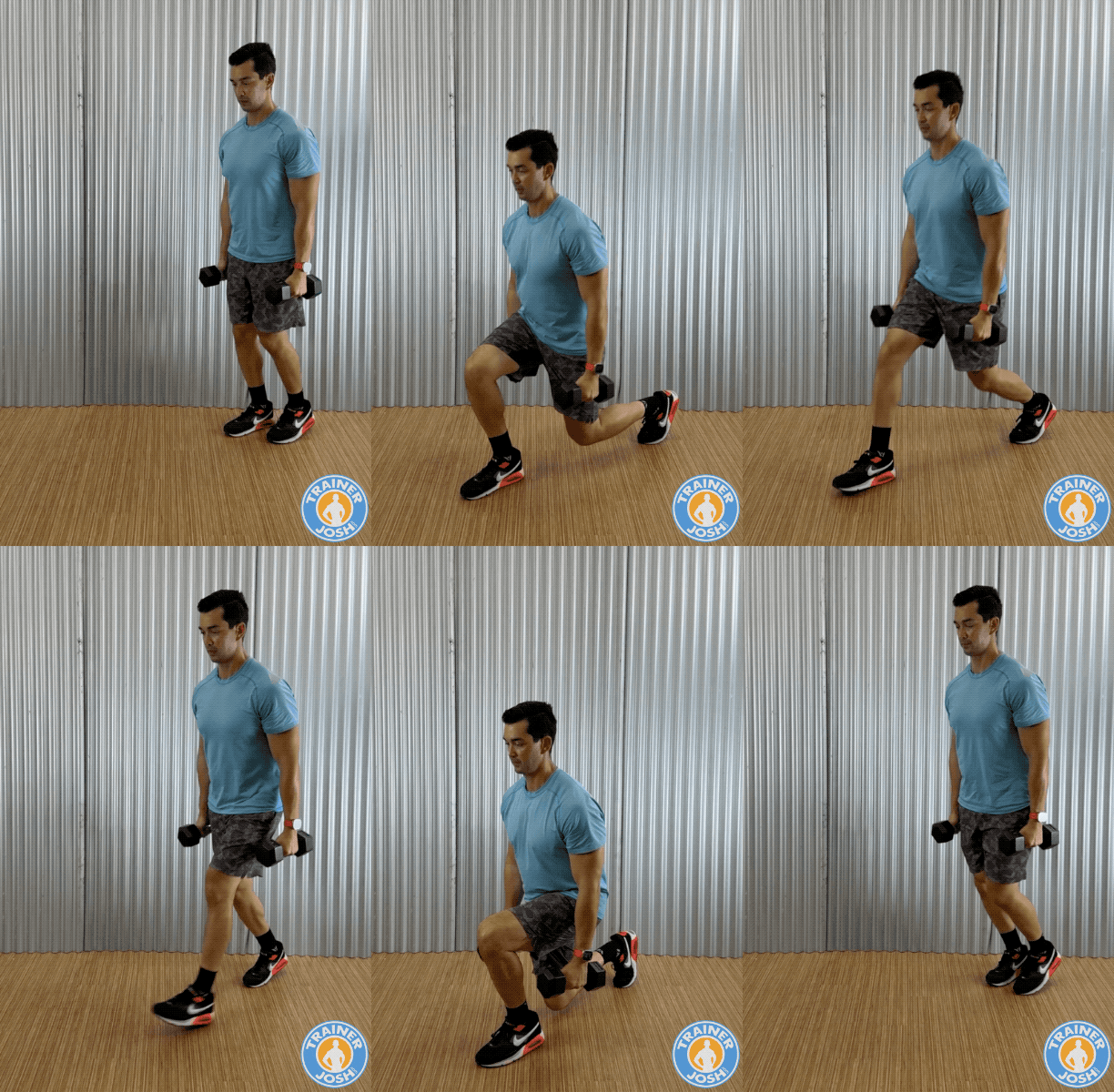
Dumbbell lunges are a dynamic yet functional exercise that’s great for building strength and muscle in your quads, glutes, and hamstrings. They also help to improve balance, coordination, and core stability. Dumbbell lunges train each leg independently, making them a great unilateral exercise.
- Stand tall and hold a dumbbell in each hand, palms facing your sides. Your arms should be straight, and your feet should be hip-width apart.
- Take a big step forward with one leg and lower your hips until both knees are bent at about 90 degrees.
- Keep your abs tight and your chest up as your back knee hovers just above the floor, about an inch or two, and your front thigh is parallel to the ground.
- Breathe out as you drive through your front heel to push yourself back up into the starting position.
- Repeat on the other leg, alternating sides for each rep.
Trainer Tip: To maximize your results, keep constant tension by stopping just short of locking out your knees at the top. If you have trouble balancing, then try reverse lunges and they can be easier on the knees but just as effective.
Avoid common mistakes like taking too short a step (causes knees to go too far past toes), leaning forward or arching the back, letting the front knee cave inward, and rushing through reps instead of lowering with control.
Dumbbell Step-ups
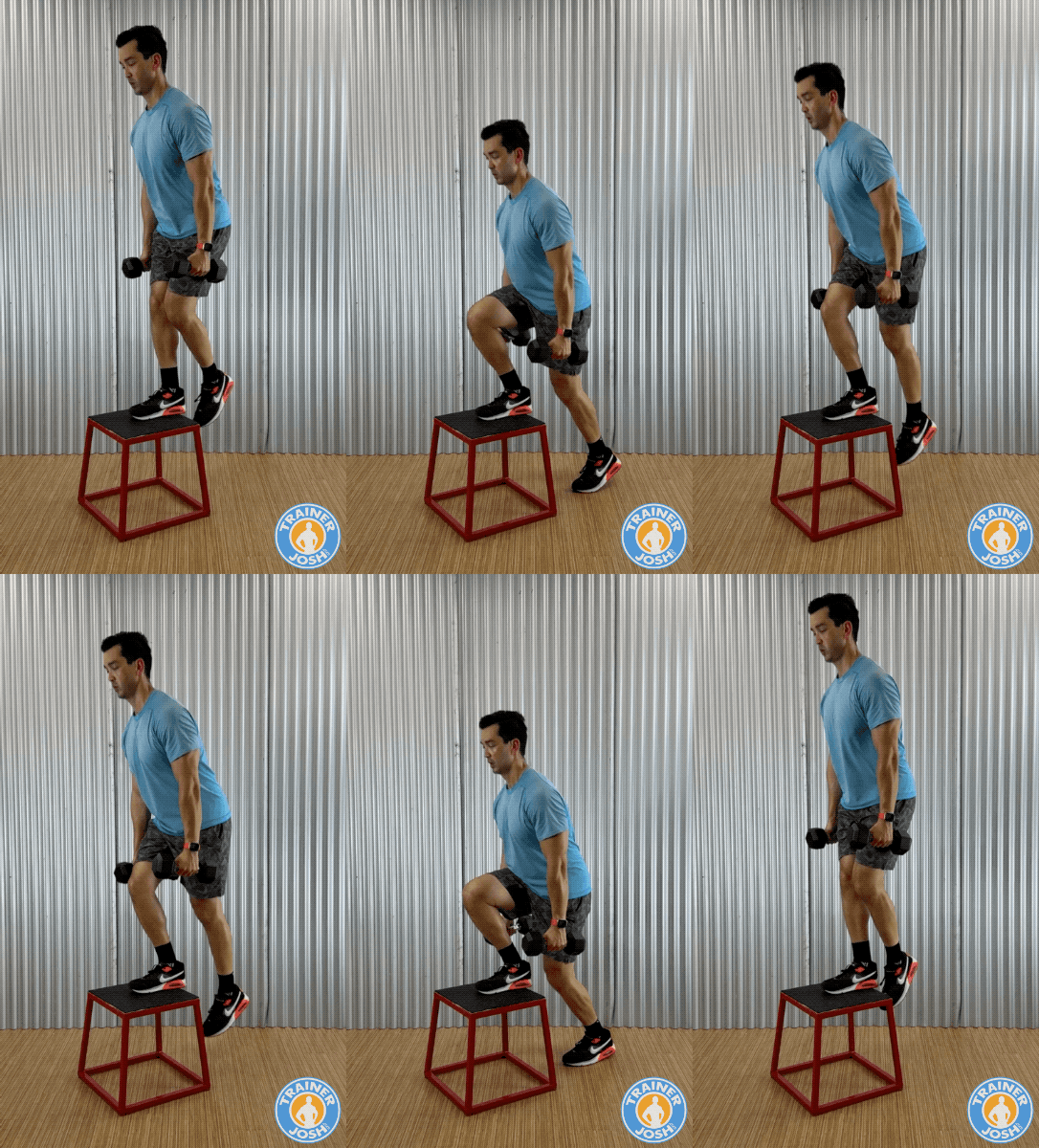
Dumbbell step-ups are a great unilateral and functional exercise that targets your quads, glutes, and hamstrings while improving single-leg strength, balance, and coordination. Step-ups can really hit your gluteus maximus hard and get your heart rate cranking for an extra calorie burn.
You’ll need an exercise box for this one. But can also use a sturdy chair or another elevated platform that is about knee height. Just be careful and make sure it’s stable.
- Stand facing a sturdy box or bench that’s about knee height. Hold a dumbbell in each hand at your sides.
- Step up by placing one foot firmly on the bench so your whole foot is on it. Then press through your front heel to lift your body up until your leading leg is nearly straight. Keep a slight bend in the knee to keep muscle activation in your quads.
- Then, carefully step back down with the trailing foot, followed by the lead foot, to return to the starting position.
- Alternate and repeat on the other leg, alternating each leg with each rep.
Trainer Tip: Keep your torso upright and eyes forward for balance. Lean slightly forward for more glute emphasis, and focus on driving through the heel of your working leg.
Common mistakes to avoid include letting the back leg push off too much (steals work from the front leg), only placing part of your foot on the bench, rounding your lower back, and dropping too fast instead of controlling the descent.
Dumbbell Bent-Over Rows
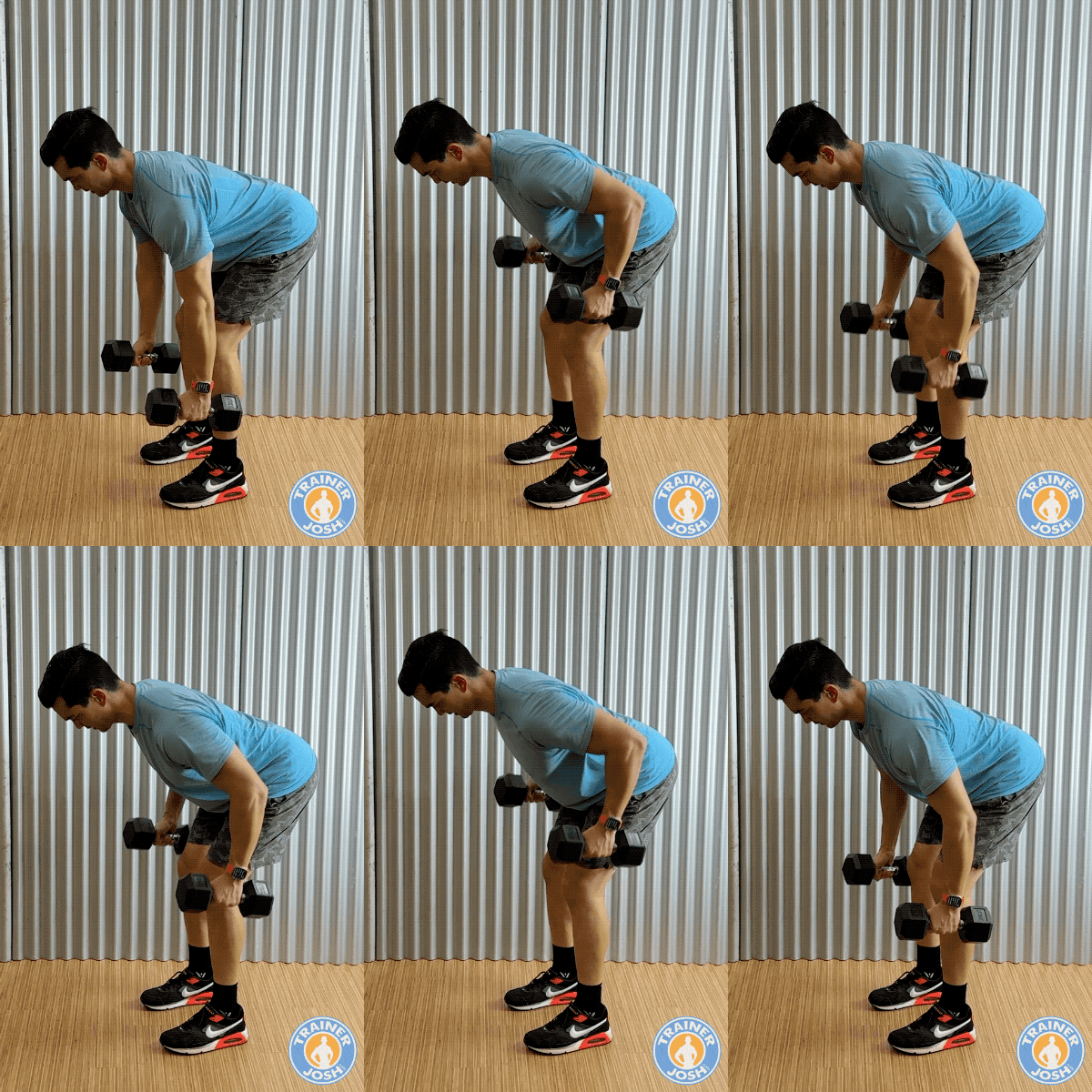
The dumbbell bent-over rows exercise is one of the best exercises for building a strong, muscular back while also improving your posture and pulling strength. It mostly targets your lats, rhomboids, and traps, but also engages your lower back, rear delts, and biceps. It’s a great exercise for fixing chest muscle imbalance while reducing the risk of shoulder injuries.
- Hold a dumbbell in each hand, palms facing your body. Engage your core by tightening your abs, then hinge at your hips with a flat back until your torso is about 45 degrees forward. Keep your knees slightly bent.
- Let the dumbbells hang down by extending your arms fully towards the floor, and the dumbbells should be right in front of your shins.
- Pull the dumbbells upward towards your waist by driving your elbows back and keep them close to your body. At the top, squeeze your shoulder blades together.
- Pause and squeeze at the top by pausing briefly to maximize the contraction.
- Slowly lower the dumbbells back down to the starting position without rounding your lower back.
Trainer Tip: Perform rows with a slow eccentric (lowering phase) to build more muscle. Keep your abs tight to take stress off your lower back and instead place it on your core.
Common mistakes to avoid include roudning your lower back or jerking the weights. Letting your elbows flare out instead of staying tucked. Using momentum instead of controlled pulling.
Dumbbell Bench Press
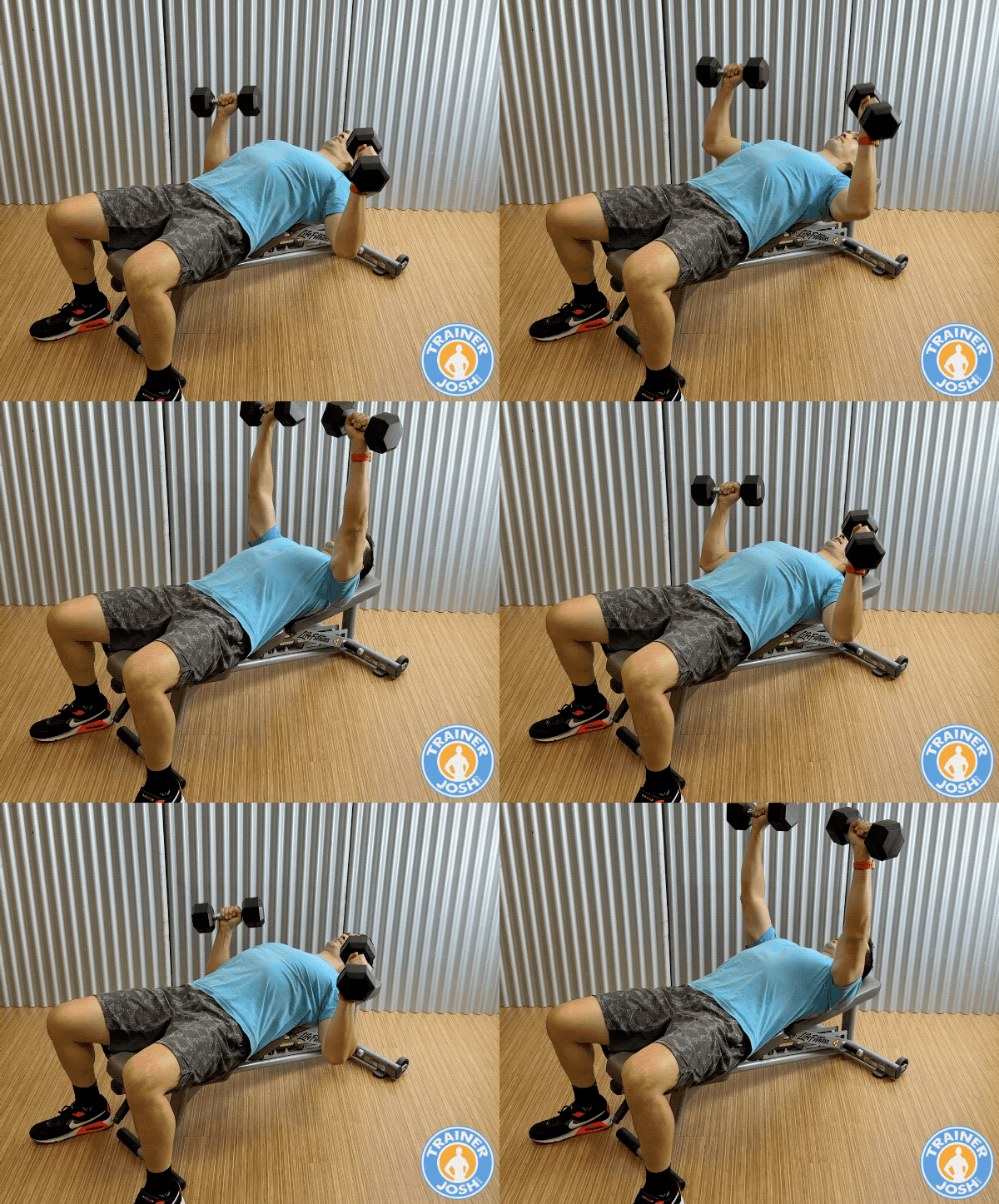
The dumbbell bench press is a staple upper body exercise that is great for building strength and size in your chest, shoulders, and triceps. Dumbbells are recommended for beginners instead of the barbell because they engage more stabilizing muscles and enhance symmetry between body sides. Dumbbells allow a greater range of motion, improve muscle activation, balance, and joint health.
This exercise requires a bench. I recommend getting an adjustable bench at home since it’s more versatile. You can train at different angles to target your muscles from multiple positions. Variety in your at-home workouts helps keep them effective and engaging.
- Sit on a bench with a dumbbell in each hand. Lie back with your feet flat on the floor. Keep your feet flat and planted firmly on the ground for stability.
- Hold the dumbbells at chest level and in line with your chest. Keep your elbows bent with palms facing forward. Elbows should be bent at about 75-90 degrees.
- Breathe out as you press the dumbbells straight up by extending your arms. But stop short of your elbows fully locking out, and don’t let your arms go completely straight. Keep your elbows slightly bent at the top.
- Breathe in and control the dumbbells as you slowly lower them back to the starting position.
Trainer Tip: Pause briefly at the bottom before pressing back up to maximize the stretch at the bottom and increase mechanical tension. Avoid clanking the dumbbells together at the top.
Common mistakes to avoid include flaring your elbows too wide (strains shoulders). Letting your lower back arch excessively. Dropping the dumbbells too quickly instead of controlling on the way down. Allowing your wrists to bend backwards instead of staying neutral.
Alternate Version: If you don’t have access to a bench, then you can do the Floor Press version instead. You just lie on your back on the floor, but it won’t be as effective because you won’t get the full range of motion, as the ground will stop your elbows.
Dumbbell Overhead Shoulder Press
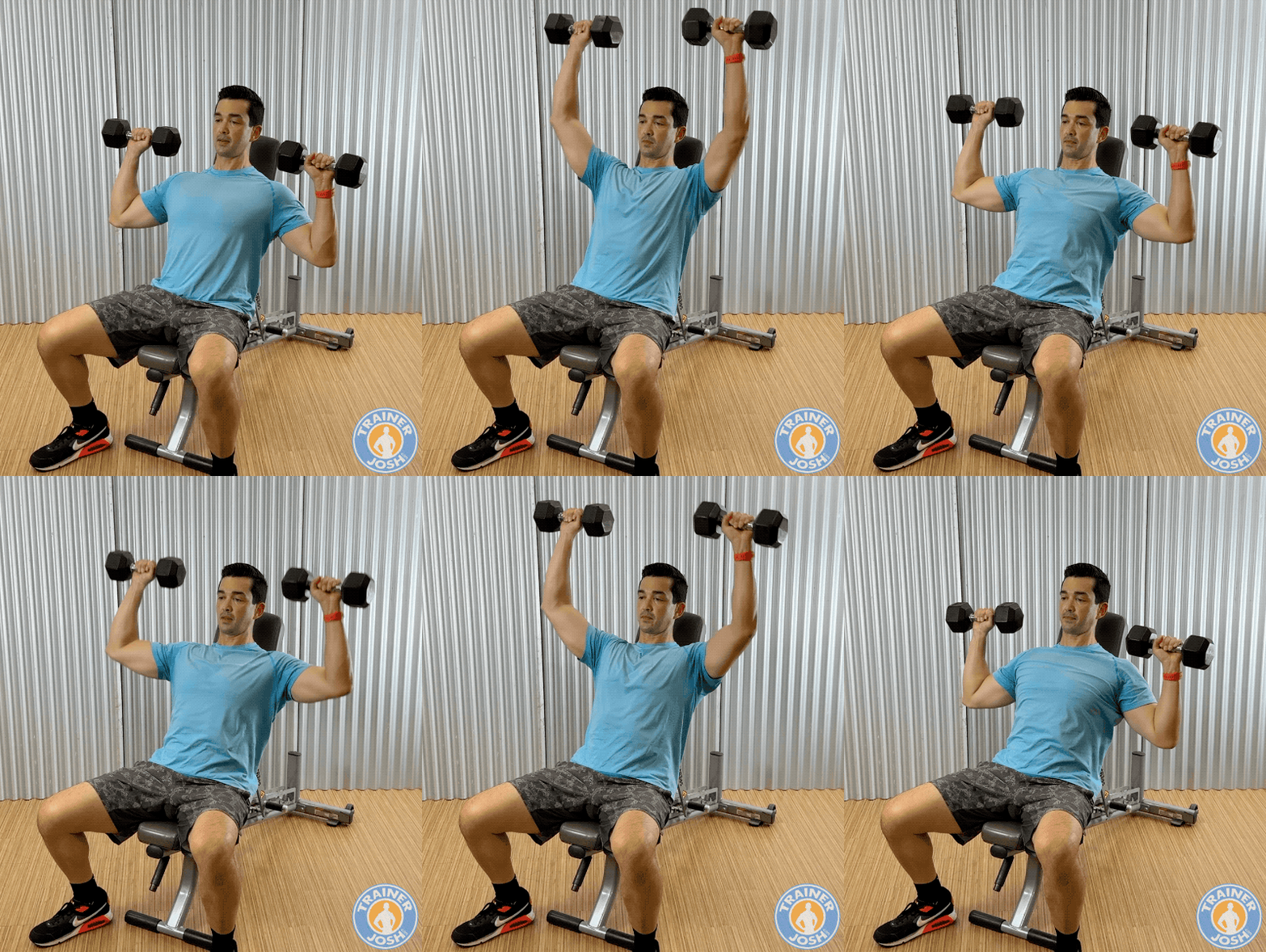
Dumbbell shoulder presses are one of the best exercises for building strong, defined shoulders. The advantage of using dumbbells for the shoulder press is that it’ll allow each arm to work independently, fix strength imbalances, and activate stabilizing muscles better than the barbell.
I prefer doing this exercise seated using an adjustable bench to reduce lower body involvement, back strain, and momentum.
- Set up an adjustable bench so it’s about 90 degrees vertical or slightly less. Sit on the bench and hold a dumbbell in each hand. Then bring the dumbbells up so they’re at shoulder height with your palms facing forward and your elbows bent about 90 degrees.
- Squeeze your shoulder blades together on your back. Arch up your chest and tighten your abs. Exhale and press the dumbbells straight overhead in a controlled manner until your arms are fully extended, but your elbows aren’t locked out completely.
- Keep your back pressed against the bench and your abs tight throughout the movement. Do not bring the dumbbells together and clink them, but instead press them directly over your shoulders.
- Breathe in as you slowly lower the dumbbells back down to shoulder height to repeat the movement.
Trainer Tip: Avoid clanking the dumbbells together at the top and stop just short of locking out your elbows comopletely. You can also do the shoulder press while standing which will challenge your balance and core more but can put more stress on your lower back.
Common mistakes to avoid include arching the lower back, flaring elbows directly out to the sides, shrugging shoulders up towards the ears, and using momentum instead of controlled pressing.
Dumbbell Side Raises
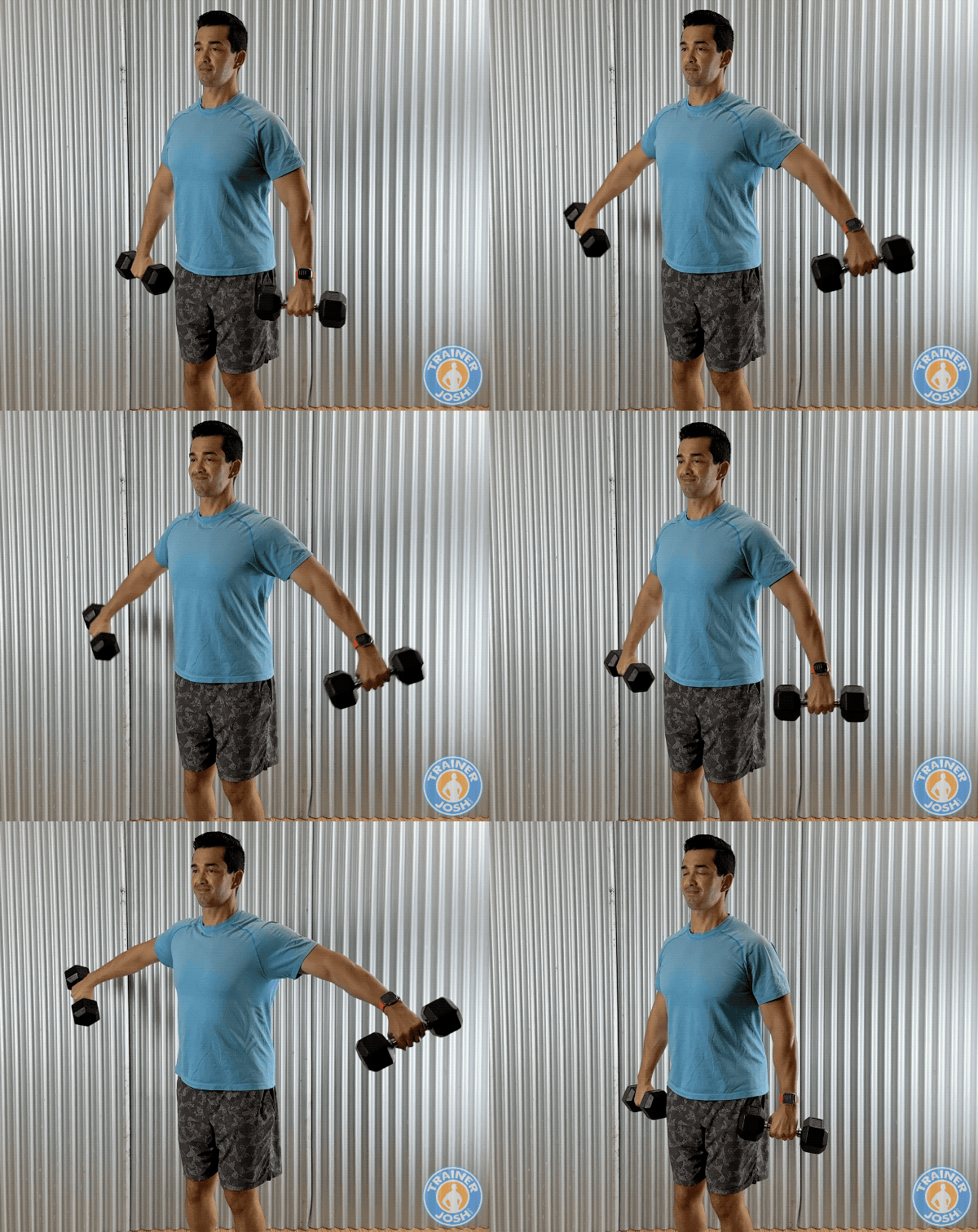
Dumbbell side raises exercise is terrific for isolating and targeting your side lateral deltoids. It will enhance shoulder definition and aesthetics by giving you that wide, rounded shoulder look. It also improves shoulder symmetry by balancing out the front and the back.
- Get in the starting position by standing tall with a dumbbell in each hand at your sides, your palms facing inward towards your body, and keeping a slight bend in your elbows. Squeeze your shoulder blades on your back together, arch up your chest, and tighten your abs.
- Breathe out as you raise the dumbbells out to your sides until they reach shoulder height. Focus on leading with your elbows, not your hands. Don’t allow your arms to drift out in front of your body, since you’ll be compensating by using more of your traps.
- Pause briefly at the top and squeeze your side delts.
- Breathe in as you slowly lower the dumbbells back down in a controlled motion. Don’t just let them drop. Avoid swinging or using momentum to maximize the exercise.
Trainer Tip: Use a lighter weight dumbbell and use strict control to keep tension on your side delts. Tilt your pinky slightly upward at the top like pouring water from a jug to increase lateral delt activation. Keep your wrist neutral and avoid shrugging with your traps to keep it isolated on your side delts.
Common mistakes to avoid include swing the dumbbells for momentum (reduces effetiveness). Lifting too high above shoulder height that will shift stress to your traps and is harder on your shoulder joint. Locking out arms completely (keep a slight bend to them). Shrugging shoulders instead of isolating the delts.
Dumbbell Reverse Flyes
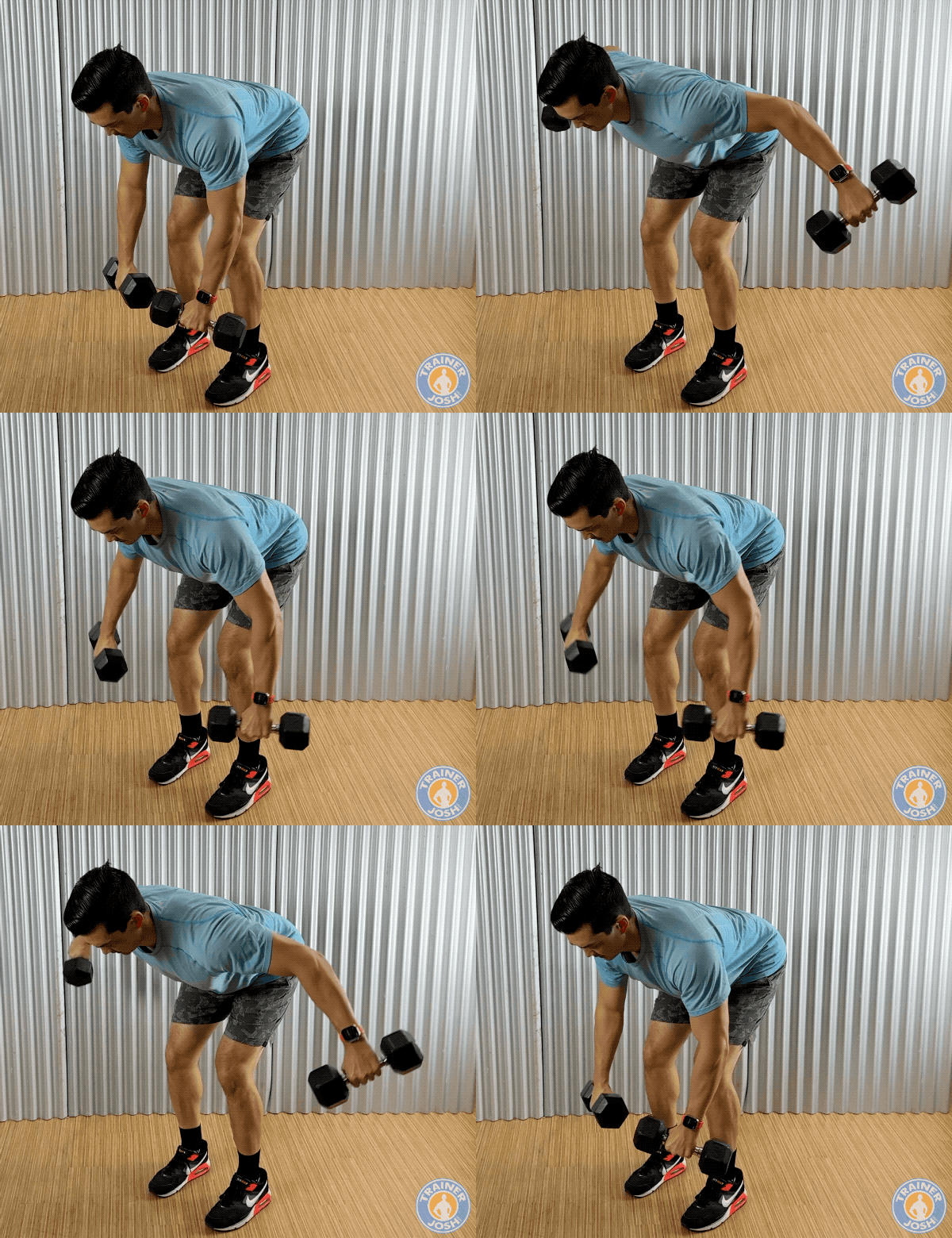
The dumbbell reverse flye exercise isolates and targets your rear posterior delts. This is a very commonly under-trained shoulder head. It’ll help improve your posture by strengthening your upper back and reversing rounded shoulders from too much pressing. It’s a great exercise for enhancing aesthetics and overall upper body health.
- Get in the starting position by hinging forward at your hips with a flat back and your knees bent. The dumbbells should be hanging below your chest with your palms facing towards your legs.
- Tighten your abs to engage your core and take stress off your lower back. Squeeze your shoulder blades together and arch out your chest.
- Breathe out as you raise the dumbbells out to the sides in a wide arc. Keep a slight elbow bend and your arms in a fixed position throughout the movement.
- Pause briefly at the top and hold for a second to fully contract your rear delts. Then, breathe in as you slowly lower the dumbbells back down to the starting position in a controlled fashion.
Trainer Tip: Go lighter with this exercise to keep strict form and controlled tempo. If you have trouble stabilizing your body then sit on a bench to do this exercise.
Common mistakes to avoid include using momentum or swinging the torso. Rounding the back instead of hinging at the hips. Straighting the arms too much (stresses elbow joint). Shrugging shoulders which shifts work to the traps instead of rear delts.
Dumbbell Bicep Curls
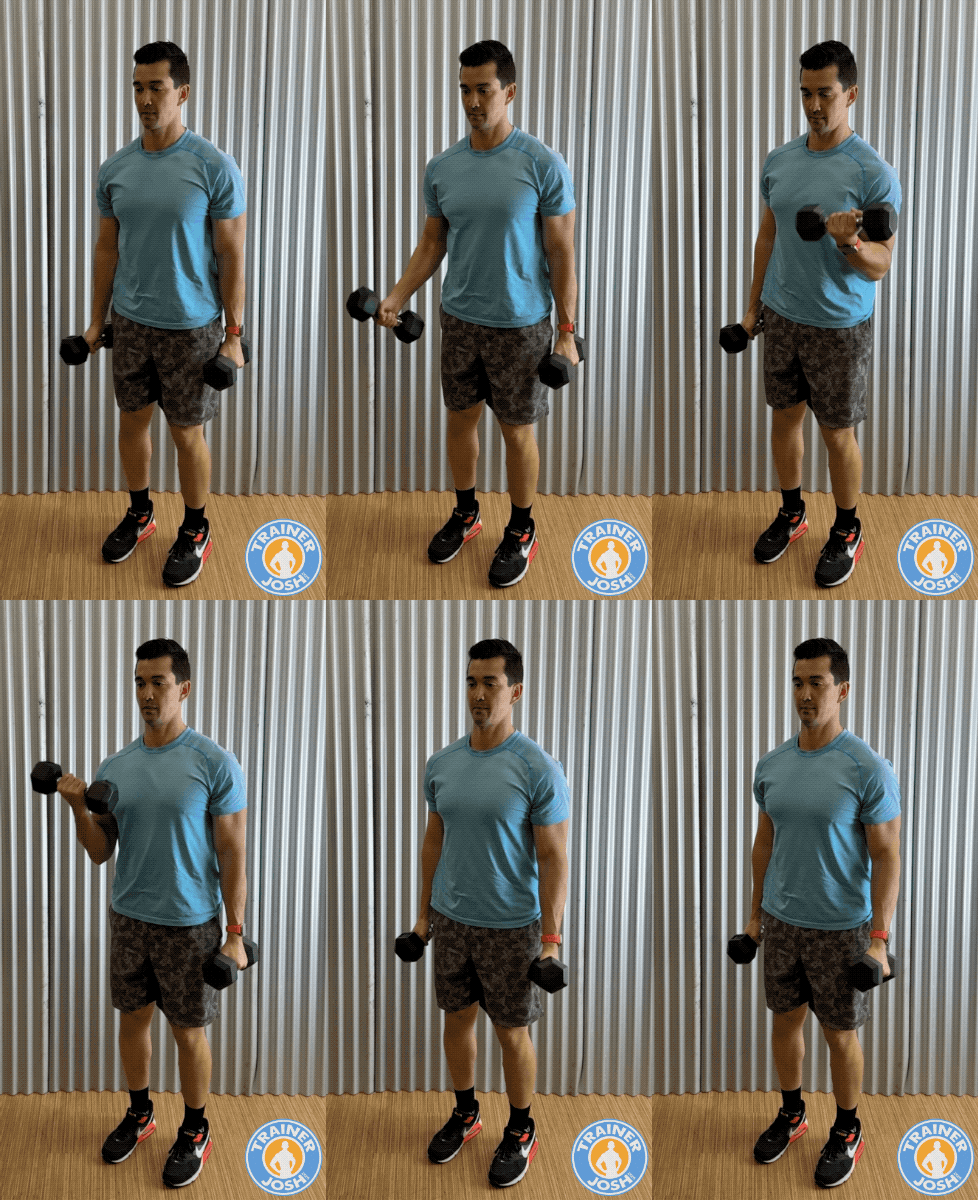
Dumbbell bicep curls are a classic arm-building and isolation exercise that works both heads of your biceps. It’ll help to fix muscle imbalances and enhance coordination since each arm is working independently. Stronger biceps will also help with doing pulling movements like pull-ups so doing this exercise is both aesthetic and functional for upper body development.
- Hold a pair of dumbbells at your sides while standing tall, your chest up, your shoulders back, and your elbows pinned to your sides.
- Start with your palms facing inward. As you curl up, turn your palms so they face up at the top of the movement. Keep your elbow at your side. Don’t let it move forward—your shoulder will try to help, but that takes work away from your biceps.
- When the dumbbell reaches the top, pause and squeeze your biceps hard to maximize muscle contraction. Keep focusing on keeping your elbows back and not letting them drift forward.
- Slowly lower the dumbbell back into the starting position for 2-3 seconds. This is the eccentric phase, which is key to building muscle.
Trainer Tip: Use a slow eccentric (3-4 seconds lowering) to create more mechanical tension for muscle growth. Focus on keeping your working shoulder back and locked in while lifting the dumbbell. Keep your elbow locked to your side and don’t let it drift upward.
Common mistakes to avoid include swinging the dumbbells or using your back for momentum. Letting your elbows drift forwards (turns it into a shoulder exercise. Curling the wirsts (reduces tension in your biceps). And rushing through reps instead of controlling the lowering phase.
Dumbbell Lying Tricep Extensions
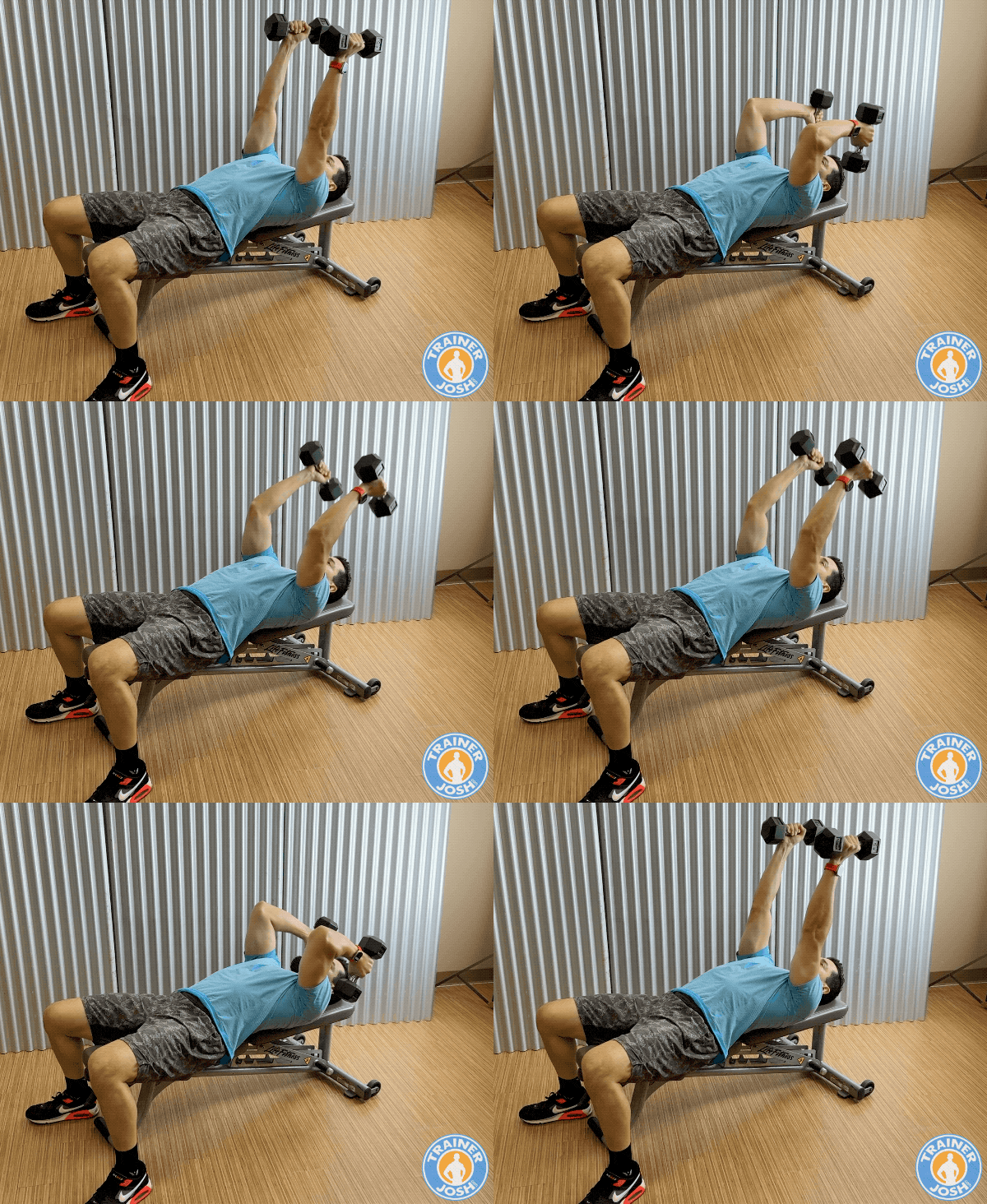
Dumbbell triceps extension (aka “skull crushers”) is one of the most effective isolation exercises for strengthening and sculpting the triceps (back of your upper arm). Strong triceps improve both arm definition and boost power for bigger compound exercises like the chest bench press. This exercise gives you a full stretch and contraction of the triceps, making it one of the best movements for muscle growth.
- Lie flat on a bench while holding a dumbbell in each hand. Then, extend your arms straight above your shoulders with a neutral grip (palms facing each other).
- Keep your elbows locked in position and in line with your shoulders. Don’t let your elbows flare out. This will keep tension off your shoulders and on your tricep muscles.
- Bend your elbows to slowly lower the dumbbells just outside the top of your head or even slightly behind it.
- Pause and feel the stretch in your triceps at the bottom before extending your elbows back to the top and straightening your arms. At the top, squeeze your tricep muscle to maximize the contraction, but don’t lock out too hard.
Trainer Tip: Angle the dumbbells so they’re slightly behind your head instead of directly over your face. This keeps tension on the triceps muscle throughout the entire range of motion. Pause briefly at the bottom to maximize the stretch and muscle activation.
Common mistakes to avoid include flaring elbows outward (shifts tension off triceps). Dropping the dumbbells too low and straining the elbows or shoulders. Moving the upper arms instead of keeping them locked in position.
Dumbbell Plank Row
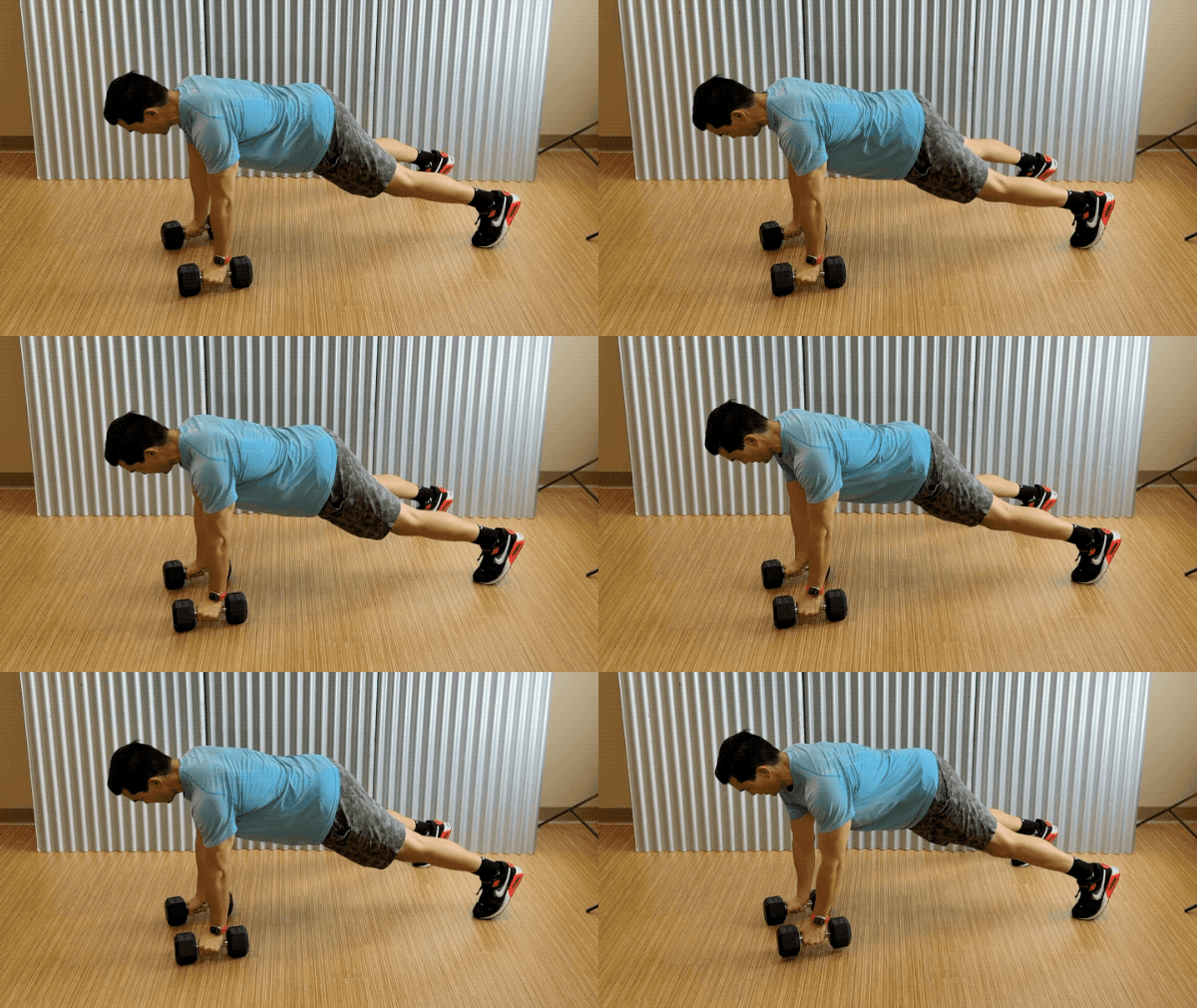
Dumbbell plank rows (also called “renegade rows”) are a highly effective core movement that also strengthens your back, shoulders, and arms. You’ll be heavily engaging your core for stability, too. It’ll challenge your balance and anti-roational strength, so it’s a great exercise for building functional fitness. This exercise is great for anyone looking to become more athletic.
- Get into a high plank position with a dumbbell in each hand with your palms facing each other. It’s recommended to use hex dumbbells in this one for easier stability. Your feet shoulder slightly wider than shoulder width apart.
- Keep your wrists stacked under your shoulders. Engage your abs and glutes to keep a straight line from your head to your heels.
- Row one dumbbell up by pulling one up towards your waist by driving the elbow back. Keep your hips square to the floor.
- Lower the dumbbell slowly under control to the ground without twisting your torso.
- Alternate sides and perform the row with the other arm. Keep the strong plank position throughout the movement.
Trainer Tip: Pause briefly at the top of each row for maximum core activation. Focus on keep your body as straight as you can and body square facing the ground.
Commong mistakes to avoid including letting your hips rotate or sag. Widening the row into a bicep curl insead of pulling back straight. Holding your feet too close toegther which will reduces stability.
Beginner DB Workout Routines
How many times a week should a beginner lift?
2-3 full-body dumbbell workouts per week is ideal for beginners. This gives you enough to build up your lifting skills, recovery, and steady strength gains, but without burning out and overwhelming your nervous system.
Beginners need to frequently practice exercise movement patterns to build neuromuscular coordination. Your recovery capacity is lower when starting out, so rest days in between workout sessions are needed.
Strength training 2-3x a week fosters healthy habit formation and long-term adherence while minimizing the pitfalls that can cause you to drop out. A common mistake for beginners is doing too much too soon. This can result in extreme delayed onset muscle soreness (DOMS).6
Muscle protein synthesis (MPS) is also elevated for 48-72 hours post-workout in beginners.7 MPS is a natural metabolic process that creates new muscle proteins from amino acids. It’s a key process you’ll need to rebuild damaged muscle tissue from working out and grow new, stronger muscles.
You can use my protein calculator to instantly determine your daily protein intake needs. I recommend a low-carb protein powder that’s naturally sweetened, cold-processed, and free of fillers and additives.
Right after a workout is when your muscles are working hardest to rebuild, and that process depends on getting enough protein and the right nutrients to support it. The BioTrust GLP-1 Companion Stack combines muscle support ingredients with an easy protein boost, which can be useful if your diet leaves that recovery window a little short.
A 3-part daily stack designed to support people using GLP-1 medications or losing weight naturally. It combines muscle, protein, collagen, and appetite support to help you maintain a healthier body composition as you lose weight.
- Natural GLP-1 Support: Helps support healthy appetite signals, fullness & metabolic function
- Lean Muscle Support: Helps preserve muscle, strength & healthy body composition during weight loss
- High-Protein Collagen: Adds 20 g of protein with 5 collagen types to help support daily protein intake
- Skin, Joint & Hair Support: Provides collagen peptides to support skin elasticity, joints, hair & nails
- 3-Part Weight-Loss Support: Combines muscle, protein/collagen & appetite support in one simple daily stack

4-Week Dumbbell Workout Plan
Fast forward 4 weeks, you’re standing taller, your jeans fit better, and lifting groceries feels effortless. That’s the future these dumbbell workouts build.
This training plan uses an A/B total body workout split structure that alternates between two different workouts. Each workout focuses on different exercises rather than repeating the same ones.
The benefits of using an A/B workout structure:
- Balanced muscle development – hits all major groups across the week.
- Time-efficient – great for 2-3 sessions/week schedules
- Recovery built in – you’re not hammering the same muscles and exercises back to back.
- Progression-friendly – you can use progressive overload with each workout by tracking and adding weight, reps, and sets over time.
Progressive overload means you need to keep making your workouts harder over time to get stronger and build muscle. It’s one of the most fundamental concepts of continuously getting stronger and building muscle.8
Your muscles only grow when you challenge them to do more than you’re used to. So if you’re always lifting the same weight, reps, and sets, then your body adapts and stops improving.
Dumbbell Workout 1:
Think of the A1, A2, etc. as a circuit with mini-pairs. You do A1 exercise first for the reps, then immediately do A2, the second exercise, after following the rest time. Then finish this mini circuit with A3, and follow the rest time after. Repeat the mini-circuit for the total number of sets. Once you’ve finished all A rounds, move on to the B series, and so on.
The tempo says how fast to perform each phase of the rep (e.g., 2111). This helps control speed, build more time under tension, and avoid rushing through reps.
- First number = how many seconds to lower the weight (eccentric phase).
- Second number = how long to pause at the bottom.
- Third number = how many seconds to lift the weight (concentric phase).
- Fourth number = how long to pause at the top.
Dumbbell Workout 2:
Warming Up
Warming up before lifting weights is super important for staying safe and getting better results from your workouts.
Types of Warm-ups:
General Warm-Up (5-10 minutes): This gets your whole body ready. Do light activities like walking, jogging, or jumping jacks until your core temperature rises and you break a light sweat. But you shouldn’t overdo it, and you can tell if you can talk normally.
Specific Warm-Up: Practice the actual exercises you’re about to do, but with lighter weights. If you’re going to do Goblet Squats with 30 pounds, then use 10-15 pounds for the warm-up. Stop before you get tired, since you don’t want to wear yourself out before you get to the actual workout.
Static vs Dynamic Stretching: It’s generally better to use dynamic stretching (movements through a full ROM) before working out. Static stretching (holding the stretch) is better after your workout when your muscles are warm. Static stretching before your workout can decrease muscle strength and power.
Cool-Down
Having a proper cool-down gives you physiological and psychological benefits:
- Cardiovascular regulation – allows your heart rate to slow down in a controlled way.
- Temperature regulation – helps to gradually decrease body temperature.
- Waste Removal & Recovery – helps clear metabolic by-products (e.g., lactic acid) from your muscles. Sends them back into the blood for processing and waste removal. This helps your muscles recover faster.
- Tissue repair & adaptation – kickstarts the recovery process where damaged muscle is repaired and glycogen stores are refilled. Prepares the body for the next workout.
- Mental Transition – gives you a ritualistic period for transiting your mind and body from a state of high arousal to a calmer state.
A cool-down period after your workout is essential since it helps your body gradually return from the higher demands of training to its normal resting state. Think of it as a “free way off-ramp” that lets your body adjust back towards normal resting levels.
A cool-down should be a minimum of 5-10 minutes of low to moderate level activity. The intensity should gradually lower towards resting levels.
Static stretching is recommended at the end of your workout during the cool-down period. The increased blood flow to your muscles from the workout makes them easier to stretch further. This helps with increasing flexibility and becoming “stiff and tight.”
Hold static stretches for 30 seconds, and it’s best to stretch the entire body. Emphasize stretching major joints and muscle groups used in the workout.
Beginner Timeline for Results
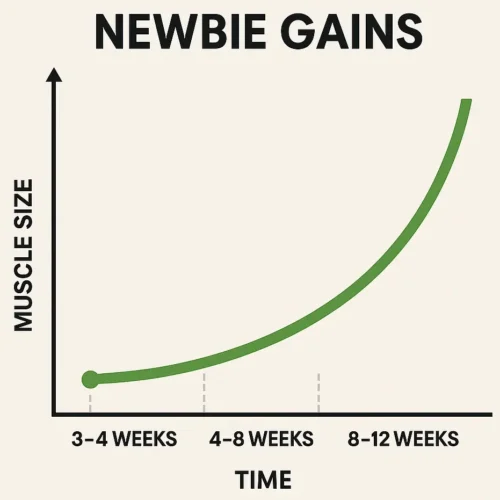
“Newbie gains” are one of the best parts for a beginner starting to lift weights. This makes it easier to have large increases in muscle size, with some gaining 15 pounds or more of lean muscle over 6 months.
First 3-4 weeks: Beginners will first start seeing noticeable changes in the first 3-4 weeks. Research has found that changes in muscle size can be found within the first 3-4 weeks of resistance training. This time is crucial for maintaining proper exercise technique and building your foundation.
At 4-8 weeks: Noticeable differences will start to show in the first 4-8 weeks with increased muscle size. You’ll experience significant changes to your body after 4-8 weeks when you’re consistently following this strength training program.
At 8-12 weeks: Beginners usually see a much faster rate of strength improvement. This rapid increase in strength, up to 40%, is due to neural adaptations (your brain learning to recruit muscle fibers more effectively) with increased neural drive, coordination, and motor-unit synchronization.
A 2025 systematic review and meta-analysis published in Frontiers in Sports and Active Living found that beginners have early strength gains from resistance training are primarily due to neural adaptations. This includes increased motor unit recruitment, firing rates, and synchronization rather than muscle hypertrophy.8
Celebrate your “beginner gains” to stay motivated. Research has found that getting early results and success helps you stay motivated for longer. Feel competant during your strength training workouts and exercises makes it more likely you stick with it long term.
Women don’t have to fear “getting bulky” since significant increases in muscle mass are incredibly difficult for females. Women have way less testosterone than men (10-20x less), which is the primary anabolic (muscle-building) hormone in men. Women also have a greater proportion of smaller muscle fibers (type I) that are harder to build muscle with.
The “toned” look women want can be achieved with regular resistance training such as with these dumbbell beginner exercises. They improve strength, bone desnity, body composition, and metabolic health with a low chance of actually “bulking up.”
At what age can you no longer build muscle?
There is no age at which you can not build muscle. Research consistently shows that all age ranges can adapt to strength training by increasing muscle mass and strength. Even adults in advanced age have been shown to significantly improve muscle strength after only 8 weeks of resistance training.
But building muscle (and maintaining it) can become harder after 40 due to physiological changes that come with aging. Age-related muscle loss (sarcopenia) typically begins around age 40 and accelerates after age 65.
The hypertrophic potential is blunted with age. Older adults can have anabolic insensitivity or anabolic resistance in intracellular signaling and muscle protein synthesis in response to strength training. This means your body’s machinery for building muscle becomes less responsive to the stimuli that would usually trigger growth in younger people.
Is it harder to build muscle after 40?
Yes for many building muscle and strength after 40 can be harder because of:
Hormonal Changes: Muscle strength and power decline due to age are linked to reduced levels of anabolic hormones like testosterone, growth hormone (GH), and insulin-like growth factor-1 (IGF-1). These hormones are crucial for muscle growth, but naturally decrease with age.
Harder to Recover: It usually takes older adults longer to recover from exercise sessions compared to younger people. This is because of greater muscle damage from the exercise or a higher fatigue response.
Higher Protein Needs: Older adults need significantly more protein per meal and per day compared to younger people. You’ll need more protein to stimulate muscle protein synthesis and promote hypertrophy.
This is because older adults are less efficient at using the amino acids from protein to build muscle. You’ll need higher doses to reach the “leucine threshold” for maximal muscle protein synthesis.
After 40, your body doesn’t rebuild muscle as easily and needs more protein to make it happen. Hitting those higher protein targets every single day can be a lot to manage on food alone. The BioTrust GLP-1 Companion Stack was built around that gap, pairing muscle support nutrients with a convenient collagen protein boost so getting older doesn’t have to mean losing the muscle you’ve worked for.
A 3-part daily stack designed to support people using GLP-1 medications or losing weight naturally. It combines muscle, protein, collagen, and appetite support to help you maintain a healthier body composition as you lose weight.
- Natural GLP-1 Support: Helps support healthy appetite signals, fullness & metabolic function
- Lean Muscle Support: Helps preserve muscle, strength & healthy body composition during weight loss
- High-Protein Collagen: Adds 20 g of protein with 5 collagen types to help support daily protein intake
- Skin, Joint & Hair Support: Provides collagen peptides to support skin elasticity, joints, hair & nails
- 3-Part Weight-Loss Support: Combines muscle, protein/collagen & appetite support in one simple daily stack
Your First Few Weeks: A Beginner’s Survival Guide
You’ll be facing make-or-break challenges at the start of the dumbbell training routine that causes most beginners to quit.
Doing Too Much Too Soon
It’s a common mistake for beginners to jump into an advanced, high-intensity, or high-volume training program. They mistakenly think this will give them better results, but it ultimately leads to over-exertion at an unsustainable pace.
If you ask if you’re supposed to be this incredibly sore all the time, then you’re probably doing too much. Excessive muscle soreness (DOMS) can be discouraging and overwhelm your body’s recovery process. This can lead to overtraining syndrome, resulting in decreased performance, long-term fatigue, mood swings, and higher injury risk.
DOMS is the achy, sore feeling you’ll get in muscles you’ve worked out that usually comes 24-48 hours after an intense workout. It’s caused by microscopic tears or damage to the muscle tissue in the contractile proteins and surface membrane (sarcolemma) of the working muscles. This microtrauma triggers your body’s immune system to clear damaged tissue, leading to inflammation and swelling (causing the soreness, stiffness, and pain in the area).
But just because you’re not sore after a workout doesn’t mean the workout was ineffective. Soreness is a sign that you put unfamiliar stress or challenged your muscles past what they’re used to. Soreness is not a prerequisite for growth and is not needed for muscle development.
Start low and go slow. Beginners should start with light to moderate intensity (around 60-70% of 1RM) weight and focus on lower volume (1-2 sets). The first weeks should focus on gradually increasing your body’s tolerance to stress and minimizing soreness.
It’s better to under-train at the start and progressively increase, than overdo it and burn out.
Unrealistic Expectations of Results
It’s a common mistake to expect instant results and gratification while seeing visible changes right away. Online ads promising rapid transformations and social media marketing can make it seem like it doesn’t take time and consistent commitment to get results.
Then it’s easy to become disheartened and lose motivation when you don’t see immediate aesthetic and strength gains. Feeling sore and muscle aches in the early weeks without seeing visible results can cause many to give up.
This is why it’s essential to set realistic training goals in the beginning. Much of your early beginner results are mainly because of neural adaptations and not immediate hypertrophy. Muscle size changes are small in the first few weeks, but keep tracking your progress since small improvements can be used for motivation.
Bad Exercise Technique & Injury Worries
Many beginners try lifting weights that are too heavy instead of learning proper form. Or their lifts use a lot of momentum and a short range of motion.
Poor form can significantly increase the likelihood of getting injured. Getting injured from bad form can derail your training for weeks or months. It also reduces the training effectiveness, and the target muscles likely do not get stimulated enough.
Mastering proper form is of the utmost importance before going heavy. Start with lighter weights that let you focus on technique and muscle awareness. Do not do an exercise if it causes pain, especially if you feel a sharp pain in your joint.
Tracking Your Progress
Don’t use your weight alone to track your progress. Strength training can help you burn fat and gain muscle at the same time.
A pound of muscle obviously weighs the same as a pound of fat, so you could see no change on the scale despite transforming your body shape, muscle, and strength. But muscle is 18% denser than fat, so those with excess body fat will start losing inches with up to 20% less space than fat despite being the same weight.
Strength training routines can increase intracellular hydration (water inside muscle cells) and glycogen storage as your body adapts to fuel future workouts. This fluid shift can cause the scale to look like you weigh more than you actually do.
Instead of just weighing yourself, also track:
- Bodyfat levels
- Girth measurements (inches lost/gained)
- Changes in how clothes fit & sizes
- Energy levels
For body fat, you can hire a skilled exercise physiologist or personal trainer to do a skin caliper test. Or you can use a smart scale that will measure it for you.
For girth measurements, use a flexible non-stretch measuring tape. Measure directly on your skin, keep the tape snug but not tight, and continuously measure on the same spot.
Key measurement sites for girth measurements include: neck, chest/shoulders, waist, hips, thigh, calf, upper arm (bicep), and forearm.