

Hip fat can be so frustrating if you’re working hard to lose weight, but it stubbornly won’t budge. For many, the hips are the last place to slim down, no matter how much they diet or work out. And they hate that it’s ruining their figure.
The good news is you can slim down stubborn hip fat using this clear, no-nonsense plan. You’ll finally know why hip fat can be so hard to lose and how to build toned and slimmer hips.
But the truth is that more advice on getting rid of hip fat is generic and unhelpful. Just doing some squats and cutting calories isn’t going to work most of the time. It can be frustrating and feel so unfair that hip fat is the last to go.
This guide will show you exactly how to get rid of hip fat. We’ll cover the real causes of hip fat, the best exercises to tone and reshape, diet tweaks that actually make a difference, and give you faster results.
What Causes Hip Fat?
Key Takeaways:
Hip fat is caused by 3 main factors:
- Genetics and body type (hips naturally store fat early and lose it later)
- Hormonal influences like estrogen that make hip fat resistant to burning
- A lack of calorie deficit or high-intensity exercise targeting that area
Genetics and Body Shape
Genetics strongly determine where you store fat on your body. Studies have found that up to 60% of fat distribution patterns are genetically inherited.
A “pear shape” body type (gynoid fat distribution) is likely due to the inheritance of specific genes, such as FAM13A, TBX15, and RSPO3. These genes control whether you develop a “pear shape” body, being more likely to store fat in the hips and thighs.1,2
These genetic effects are typically stronger in women due to interactions with female hormones and tissue types. This is why women, in particular, tend to store and retain fat in the hips and thighs compared to the upper body.
Women’s bodies are genetically programmed to store more pre-adipocytes (precursor cells that develop into fat cells) in their lower body areas. Estrogen and progesterone then stimulate them to become fully formed fat cells.
Hip and thigh fat in women serves an essential biological purpose by storing energy for pregnancy and breastfeeding. This fat distribution pattern also evolved as a signal of fertility and health, with the curvy hip-to-waist ratio being naturally attractive because it shows reproductive fitness.
And this is why it’s usually the last to go. Genetic fat distribution patterns and hormonal influences favor fat storage in the hips. This makes you slower to respond to fat loss, even when you diet and exercise consistently.
A 2014 review published in Diabetologia reported that the waist-to-hip ratio (a key marker of fat distribution) shows genetic inheritability estimates up to 60%, even after adjusting for BMI. This shows that genetics (not just lifestyle) plays a major role in where fat is stored on the hips, thighs, or abdominal region.3
Hormonal Influences
Hormones, especially estrogen, play a significant role in determining where fat is stored. Estrogen pushes fat storage towards the hips, thighs, and buttocks.4 This is why many women naturally have a pear shape.
Estrogen works like a key that fits into special locks on fat cells (adipocytes). It tells them to grow and determines whether to store or burn fat by controlling the genes that manage fat.
Hormonal changes, such as pregnancy and menopause, can shift estrogen levels. This can change hip size with time. Menopausal women with declining estrogen levels are more likely to store fat in the abdominal area (menopausal belly).5
Hip and thigh fat cells have lower blood flow and fewer fat-mobilizing receptors. This makes them more resistant to shrinking fat once it’s stored there. Research shows fat stored in the lower body has strong alpha-adrenergic activity. This restricts blood vessels and further blunts fat release.6
A 1986 study in the European Journal of Clinical Investigation found that women’s gluteal fat cells had 73% higher alpha-2 adrenergic receptor binding compared to those of men. Because alpha-2 receptors inhibit fat breakdown, this explains why women’s hips and thighs are biologically more resistant to fat loss.7
Lifestyle Factors
Energy balance is the primary driver of fat loss. To lose fat, you must burn more calories than you consume.8
You won’t burn stubborn fat without a calorie deficit, even if you’re exercising the target area. Poor diet quality (excess processed foods, high sugar, etc.) makes it harder to keep a calorie deficit and worsens overall fat storage.
Targeted exercises and high-intensity exercise do help to enhance fat release near the working muscles, but only if you’re active enough overall to be in a fat-burning state. Sedentary individuals won’t see any spot reduction effects because there’s no overall energy deficit to burn off those mobilized fatty acids.
Poor sleep disrupts hormones like leptin, ghrelin, and cortisol. All of these can indirectly contribute to the accumulation of stubborn fat by increasing appetite, cravings, and stress.9
Cravings like these can make it that much harder to stick to a calorie deficit, no matter how disciplined you try to be. This is one area where the BioTRUST GLP-1 Companion Stack can help. It pairs ingredients that support healthy ghrelin signaling and satiety with Ageless Muscle, which helps protect your lean mass while you’re eating less.
A 3-part daily stack designed to support people using GLP-1 medications or losing weight naturally. It combines muscle, protein, collagen, and appetite support to help you maintain a healthier body composition as you lose weight.
- Natural GLP-1 Support: Helps support healthy appetite signals, fullness & metabolic function
- Lean Muscle Support: Helps preserve muscle, strength & healthy body composition during weight loss
- High-Protein Collagen: Adds 20 g of protein with 5 collagen types to help support daily protein intake
- Skin, Joint & Hair Support: Provides collagen peptides to support skin elasticity, joints, hair & nails
- 3-Part Weight-Loss Support: Combines muscle, protein/collagen & appetite support in one simple daily stack

Why Is Hip Fat So Difficult to Lose?
Key Takeaways:
- Genetics loads the dice against you — inherited pear-shaped fat distribution makes hip fat the last to go
- Hormones work against fat loss — estrogen promotes hip storage while alpha-2 receptors block breakdown
- Poor blood flow – limits the delivery of fat-burning hormones to the hip areas
- You need a calorie deficit – targeted exercises alone won’t overcome biology without overall fat loss
Hip fat is the hardest area for women to lose because of the perfect storm of biology working against them. Women, in particular, tend to inherit a pear-shaped fat distribution that prioritizes storage in the hips and thighs. This fat usually comes on first, and comes off last.
Estrogen drives fat towards these areas for reproductive purposes in women. And the fat cells themselves contain more alpha-2 receptors that actively block fat breakdown compared to beta-2 receptors that promote it.10
Poor blood flow to the hip and thigh fat also means fat-mobilizing hormones struggle to reach these stubborn areas.11 Intense training can trigger some localized fat release, but it only works when you’re burning enough calories overall. Otherwise, the freed fat is stored again.
Women with hip dips are usually nothing more than their bone structure. These are the inward curves on the sides of the hips just below the hip bone and above the thighs. Hip fat and saddlebag fat are due to excess fat storage in the area, while hip dips are normal and caused by pelvic bone structure.
These are all reasons why hip fat is typically the last area to lose, even with a good diet and regular training.
Can You Spot Reduce Hip Fat?
Key Takeaways:
Use high-intensity, targeted exercises in combination with whole-body cardio and a calorie deficit to reduce hip fat. Fat loss comes from an energy deficit, but these exercises and workout plan have a supporting effect.
Traditional research has shown that it is not possible to target fat loss in specific areas, such as the hips. Most studies have found that doing endless sit-ups alone is unlikely to cause you to lose belly fat.
The key is overall fat loss, followed by targeted exercises to tone and tighten the area by building lean muscle. Studies have found that abdominal exercises reduce waist size by tightening and toning the area when combined with calorie deficit and strength training.12
A natural GLP-1 booster can help curb hunger and reduce cravings.
So, spot reduction isn’t entirely a total myth. And when you intensely train a muscle, such as your hips, the temperature, blood flow, and local hormonal environment increase.
This can stimulate fat cells nearby (such as those in the hips) to release more fatty acids. This process is called spot lipolysis.
The catch is that these released fatty acids must still be burned for energy. Suppose you’re not in a calorie deficit or engaging in enough whole-body activity. In that case, your body will restore them.
While exercising, your hips can encourage a bit more local fat release; the effect will only be noticeable if you’re also increasing overall fat-burning conditions (energy deficit plus activity).
10 Best Exercises To Reduce Hip Fat
These hip fat exercises work the glutes, quads, and hamstrings to increase blood flow, temperature, and hormonal activity in the area. This encourages fat release from nearby stubborn stores in the hips (but only if you’re in a deficit, so those fatty acids are actually burned).
Heavy lifting or high-intensity training is the most effective. Low-effort or light isolation moves (like endless leg lifts) don’t create the same environment for spot lipolysis.
Mobilized fatty acids must be burned to reduce hip fat. So pair lower-body strength sessions with cardio or total-body training (running, cycling, HIIT). This burns the fat released from stubborn hip stores instead of being re-stored.
Equipment Used:
I’m using a set of hex dumbbells. But I recommend investing in a set of adjustable dumbbells if you’re working out at home.
Adjustable dumbbells allow you to quickly change weights, which is needed for progression. It’ll also save you from having to buy heavier weights in the future. They also take up less space
Adjustable Dumbbell Set of Women
Adjustable Dumbbell Set for Men
I’m also using Hip Bands in some exercises that target your outer hips.
Jump Squats
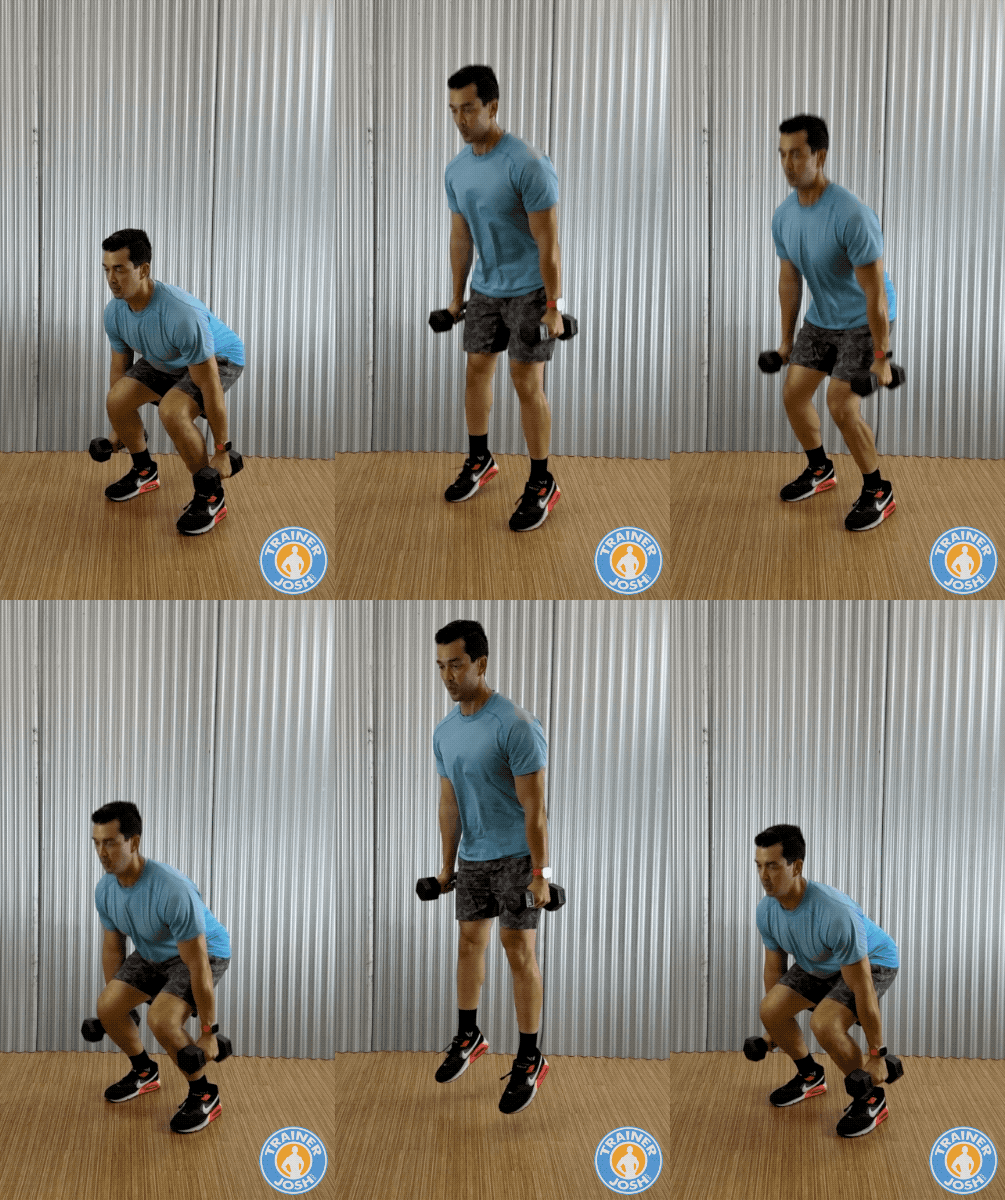
Dumbbell jump squats are a powerful plyometric leg exercise that builds explosive leg strength, muscle power, and athleticism. They’re also great for elevating calorie and fat burn, improving speed and vertical jump, and being highly functional movements for athletes.
- Stand with your feet shoulder-width apart, holding a dumbbell in each hand at your sides. For this exercise, it’s best to use a lighter dumbbell (quality over quantity).
- Squat down by bending your knees and pushing your hips back. Keep your chest arched up, back straight, and your core tight.
- As your thighs reach parallel to the ground or slightly below, explode back up by driving through your heels and jumping high up. Extend and straighten your hips, knees, and ankles.
- As you land back on the ground, do so softly, absorbing the impact with your knees slightly bent and lowering your body into the next squat with the momentum.
- Repeat reps in a controlled, fluid, and rhythmic manner.
Trainer Tip: Don’t let your knees cave in on landing. Keep them in a straight line and track them over your toes. Make sure you have eno
Bulgarian Split Squats
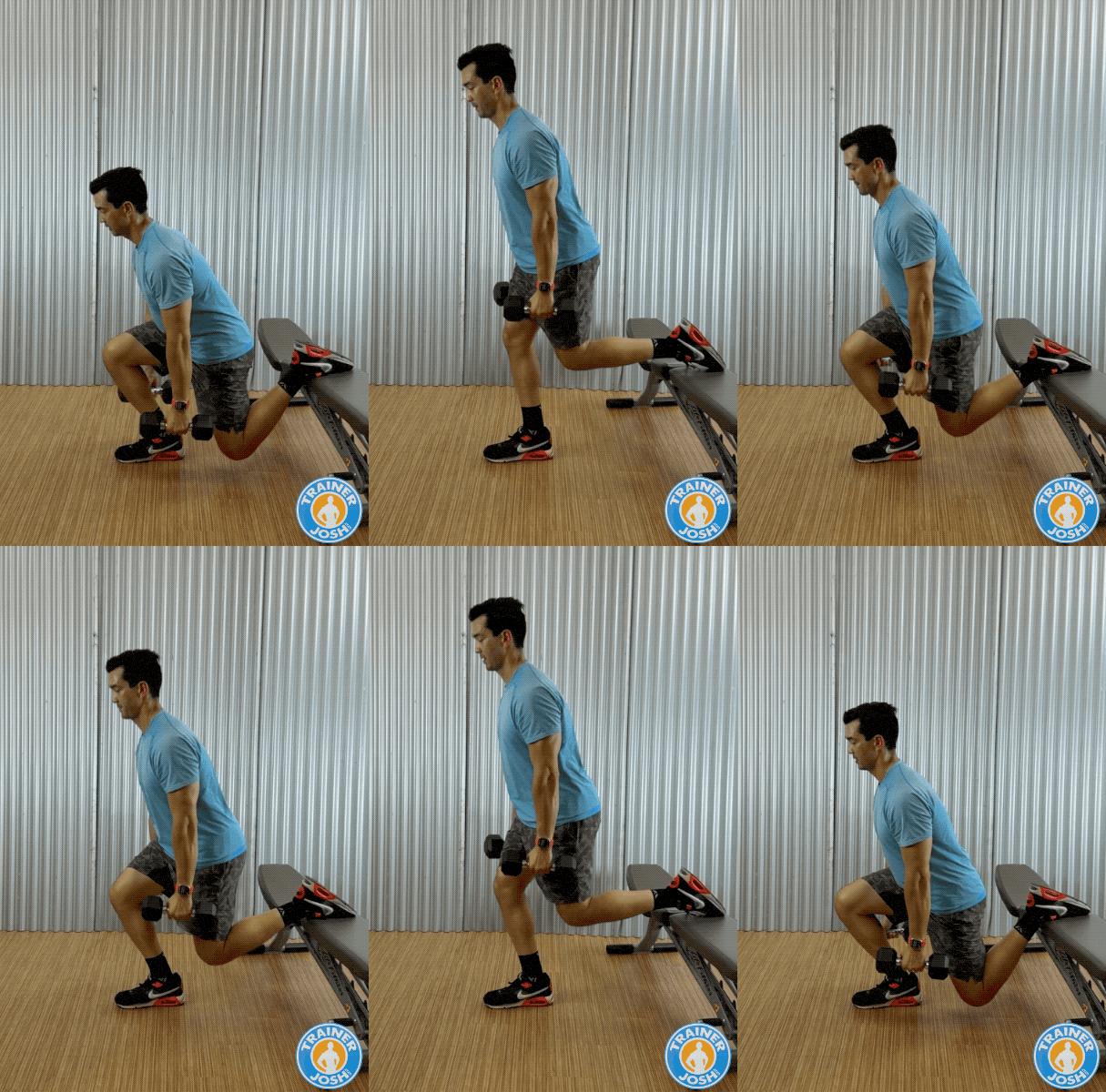
This unilateral leg exercise targets your quads, glutes, and hamstrings while improving balance, stability, and coordination. Elevating your rear foot increases the front working leg’s range of motion and intensity.
- Get a bench or a box about mid-shin to knee height. Stand a couple of feet in front of the bench, holding a dumbbell in each hand at your sides. Then, place one foot back on the bench behind you.
- Keep your chest arched up, shoulders back, and core tight.
- Bend your front knee to lower your hips towards the ground, keeping your front foot flat and your knee aligned with your toes. Stop when your front thigh reaches about parallel to the floor (or as far as your mobility allows).
- Drive up by pressing through your front heel to return to the starting position. Try to keep a smooth and controlled movement throughout.
- Complete all reps on one side before switching to the other foot.
Trainer Tip: Keep your torso upright to maximize tension on the quads. But if your goal is to work more of the glutes, then use a slight forward lean with your torso.
Romanian Deadlifts
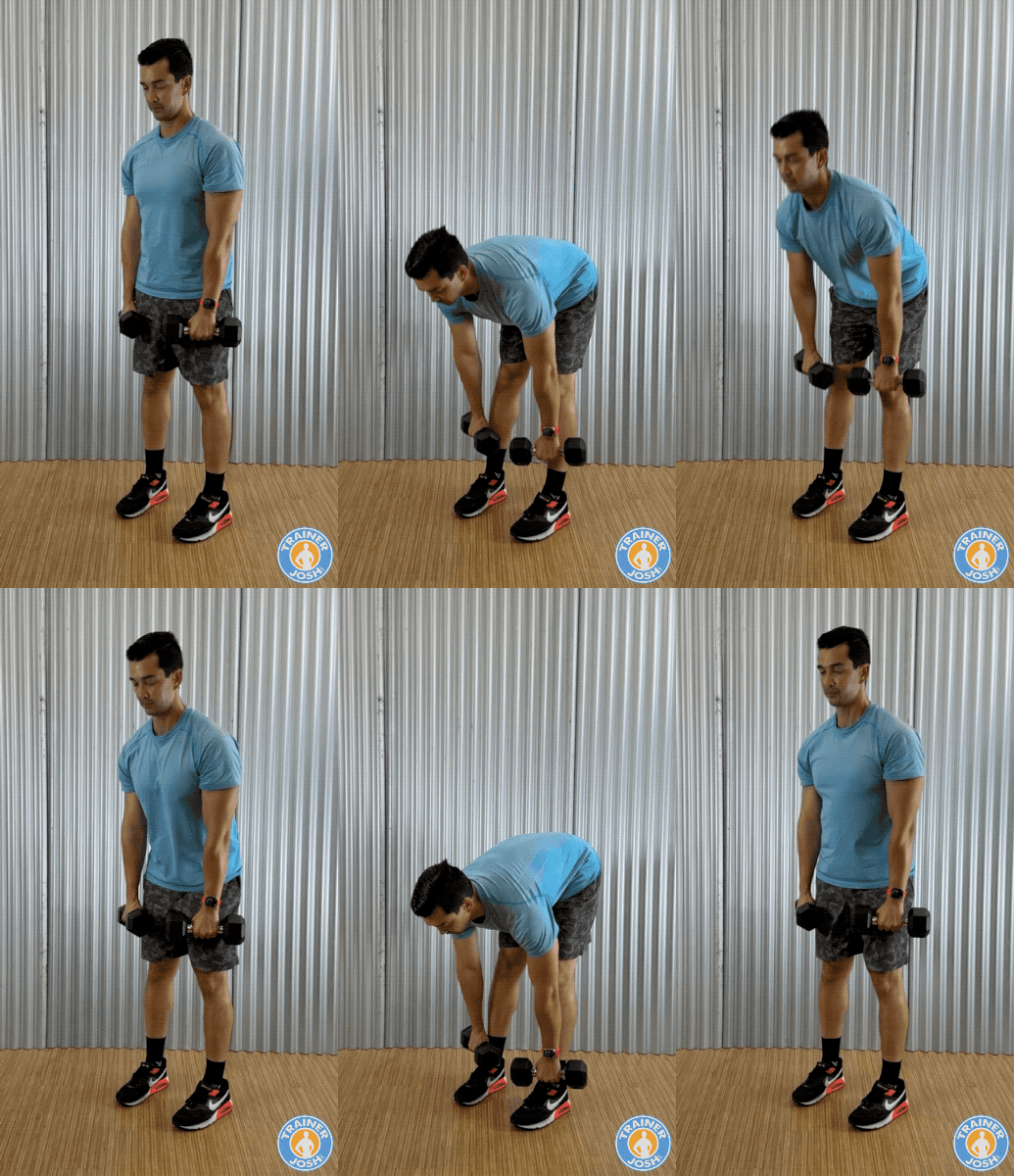
Dumbbell RDLs are one of the best dumbbell exercises for targeting and strengthening your hamstrings, glutes, and lower back. They’re also great for developing the posterior chain (the backside of your body), which is usually neglected but essential for athletic performance, injury prevention, and good posture.
- Stand with your feet hip-width apart. Hold a dumbbell in each hand in front of your thighs, palms facing your front thigh.
- Keep your knees soft and slightly bent, then hinge your torso forward by pushing your hips back and lowering the dumbbells down the front side of your legs, keeping your back flat in a straight line and your chest arched out.
- Lower until you feel a stretch in your hamstrings. Depending on your flexibility, the dumbbells should go just below your knees or mid-shin.
- Breathe out as you return to the starting position by pushing through your hips and squeezing your glutes as you drag your hips forward, back into standing.
Step-ups
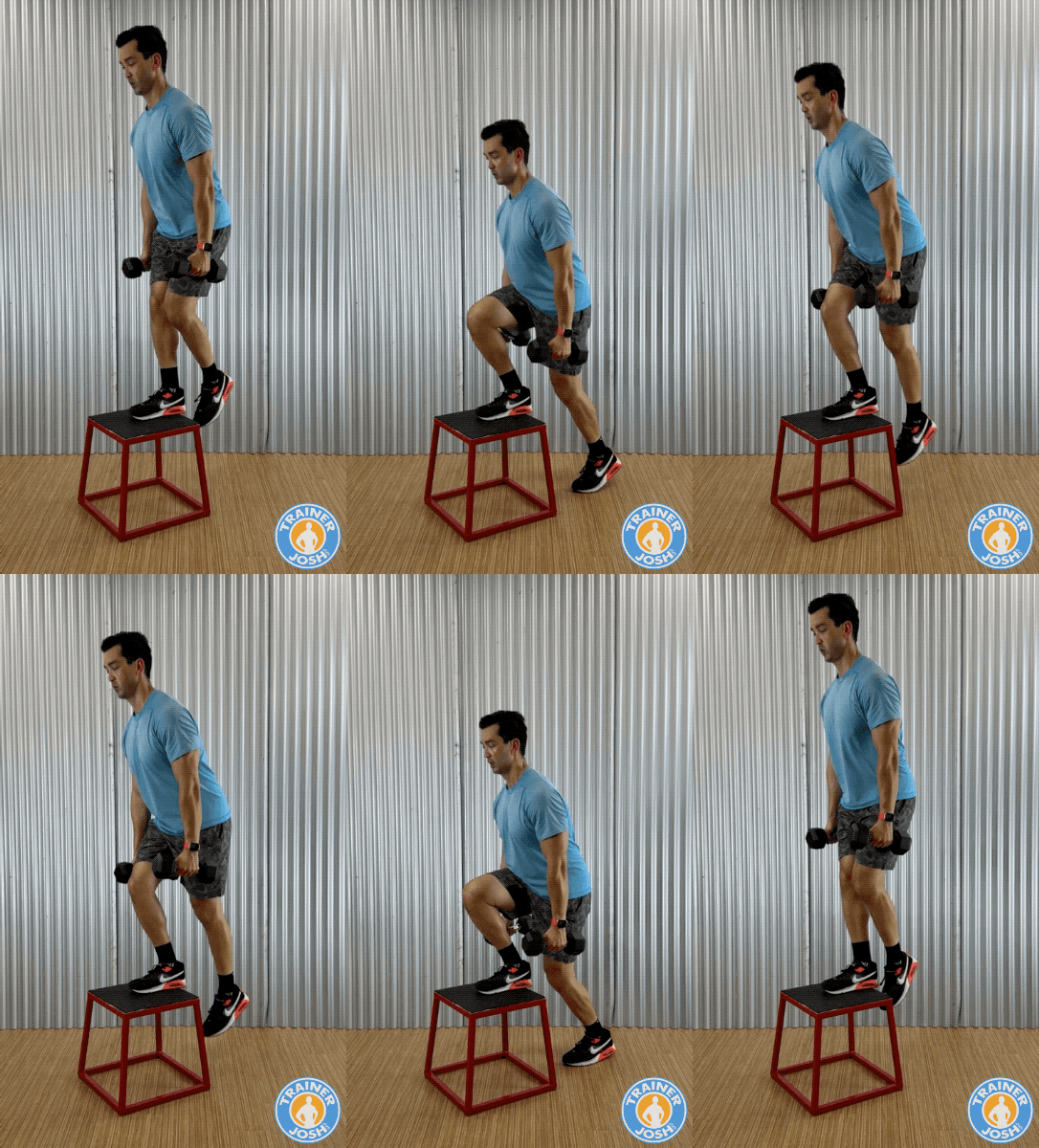
Dumbbell step-ups are a great unilateral and functional exercise that targets your quads, glutes, and hamstrings while improving single-leg strength, balance, and coordination. They’re great for mimicking real-life activities like climbing stairs, so they’ll improve overall athletic coordination and correct imbalances between legs.
- Stand facing a sturdy boxing bench that’s about knee height. Hold a dumbbell in each hand at your sides.
- Step up by placing one foot firmly on the bench so your whole foot is on it. Then press through your front heel to lift your body up until your leading leg is nearly straight. Keep a slight bend in the knee to keep muscle activation in your quads.
- Then, carefully step back down with the trailing foot, followed by the lead foot, to return to the starting position.
- Alternate and repeat on the other leg, alternating each leg with each rep.
Trainer Tip: You want to use a box about knee height so your thigh is parallel or slightly above parallel in the starting position. Focus on pushing through your front heel, not the toes, to maximize glute and quad activation.
Hip Thrusts
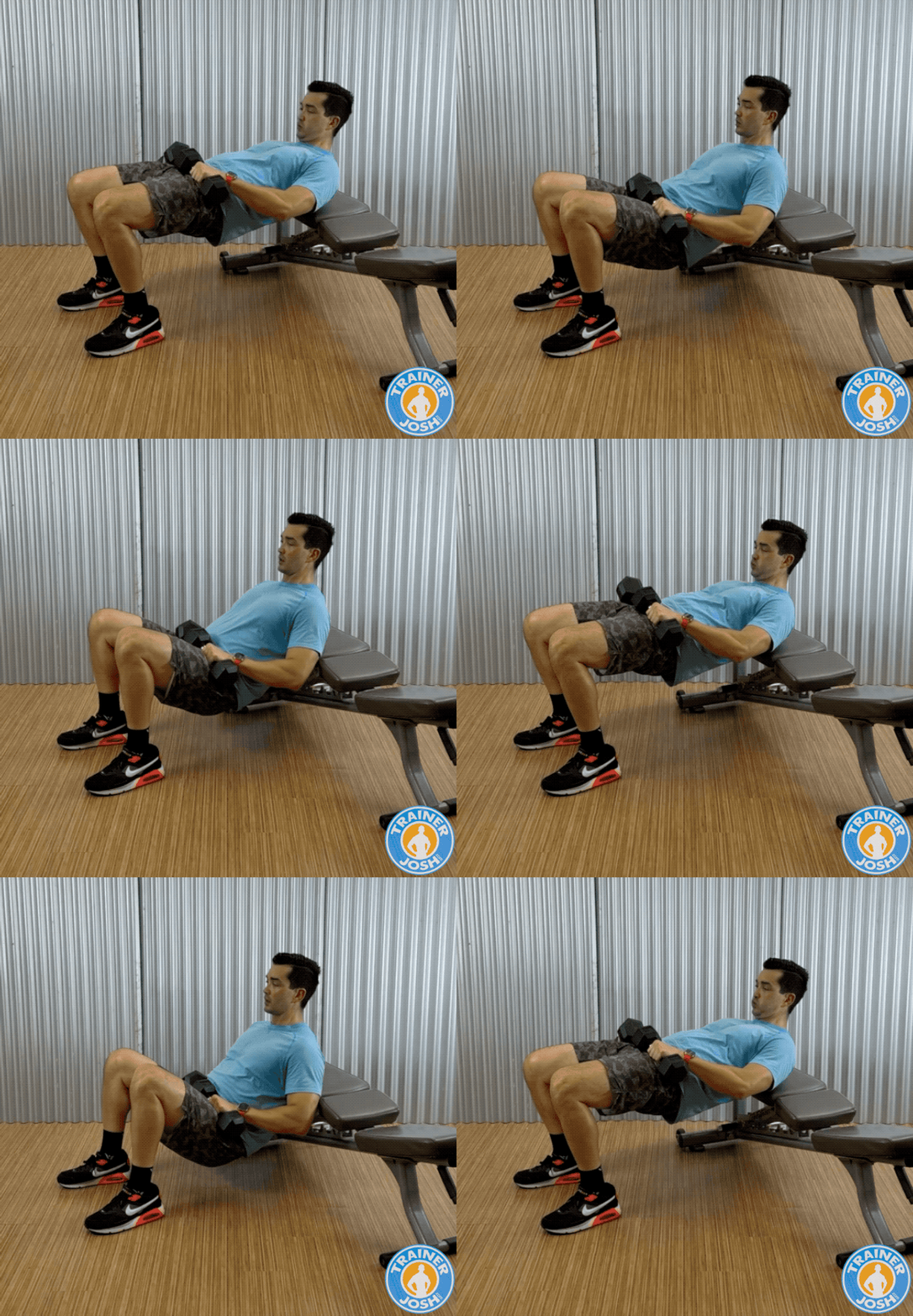
If you’re looking to build stronger bigger glutes then dumbbell hip thrusts are right up your alley. It’s at the top of the best dumbbell glute exercises. This exercise maximizes glute activation more than just about every other lower body movement. It’s a joint friendly exercise that improves athletic performance and posture.
- Sit on the floor with your upper back against a bench, knees bent, and feet flat on the floor. Hold a dumbbell in each hand and place them on top of your hips.
- Engage your core by tightening your abs, keep your chin tucked, and set your feet shoulder-width apart.
- Thrust up by pressing through your heels to lift your hips up towards the ceiling, pausing and squeezing your glutes hard at the top.
- Hold this top position for 1-2 seconds, forming a straight line from your shoulder to your knees.
- Slowly lower your hips back down with control. Don’t allow your hips to touch or rest on the floor.
Trainer Tip: Keep your chin tucked and ribs down to maximize glute activation. Drive through with your hips and avoid arching your lower back.
Lunge Hops
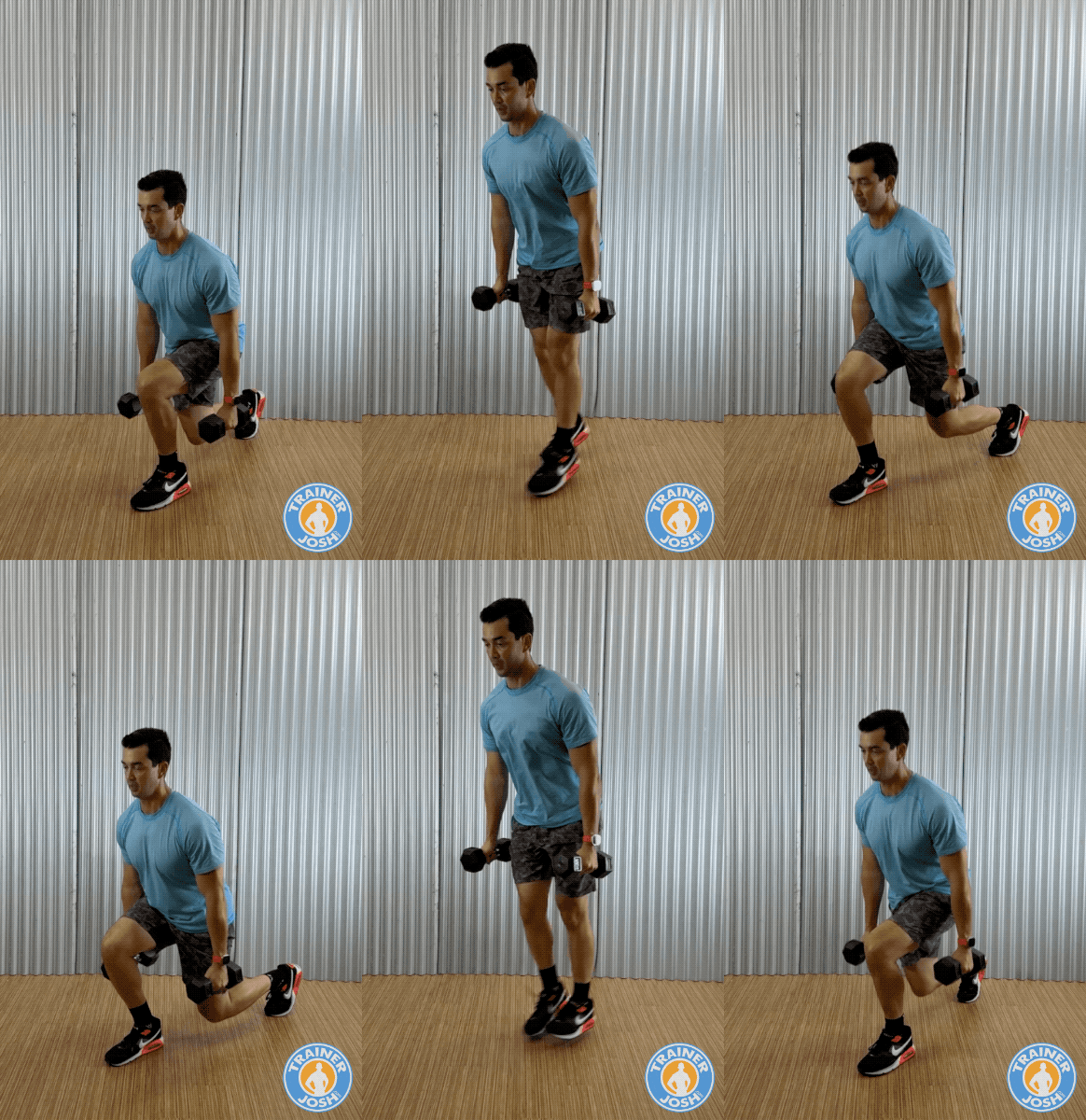
Dumbbell lunge hops are a powerful plyometric exercise. It combines strength training plus explosive conditioning for your lower body. They primarily target your hips and glutes, thighs, hamstrings, and calves. It’ll also improve your balance, coordination, and cardiovascular endurance.
- Hold a dumbbell in each hand at your sides with a neutral grip. Step one foot forward into a lunge stance (front knee bent about 90 degrees with the back knee lowered but not touching the ground).
- Keep your chest upright, core braced and shoulders back. Lower yourself until your back knee hovers just above the floor.
- Drive through the front heel and explode upward into a small jump, lifting both feet off the ground. Switch legs mid-air so you land in a lunge with the opposite leg forward.
- Land softly with knees slightly bent to absorb impact. Immediately descend into the next lunge and repeat.
Trainer Tip: Begin with lighter dumbbells or even using bodyweight to get the form down before adding load. Focus on quality controlled hops instead of rushing through sloppy jumps.
Front Squats
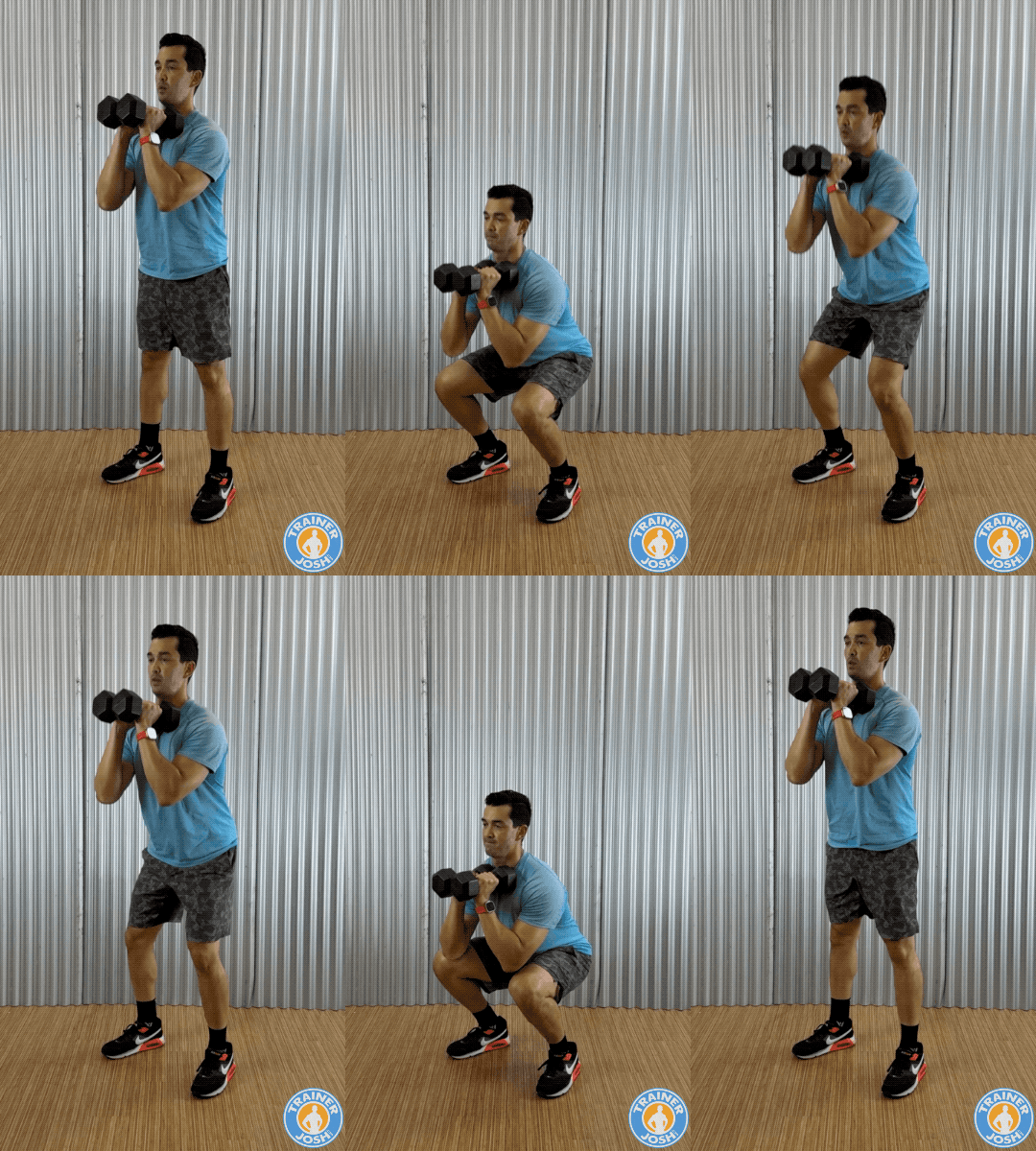
With front squats, holding the dumbbells in the front rack position in front of your chest and shoulders forces your torso to stay upright, works your abs more, and also has less lower back strain.
- Stand with your feet shoulder-width apart. Hold a dumbbell in each hand at your shoulders in the front rack position, elbows in and pointing forward.
- Keep your chest up, core tight, and elbows high throughout the movement. Don’t let your elbows flare outward.
- Squat down by pushing your hips back and bending your knees to lower your body. Keep your torso upright and your heels flat on the ground.
- As your thighs reach parallel or slightly below parallel, pause to maximize the mechanical tension.
- Drive back up by pushing through your heels to return to standing. Straighten your legs at the top and squeeze your glutes.
Trainer Tip: Go as low as your mobility comfortably allows. If you have trouble keeping your heels on the ground, place something slightly elevated under them, like a small weight plate. This will also emphasize your quads and make it easier to keep your torso upright.
Lateral Side Lunges
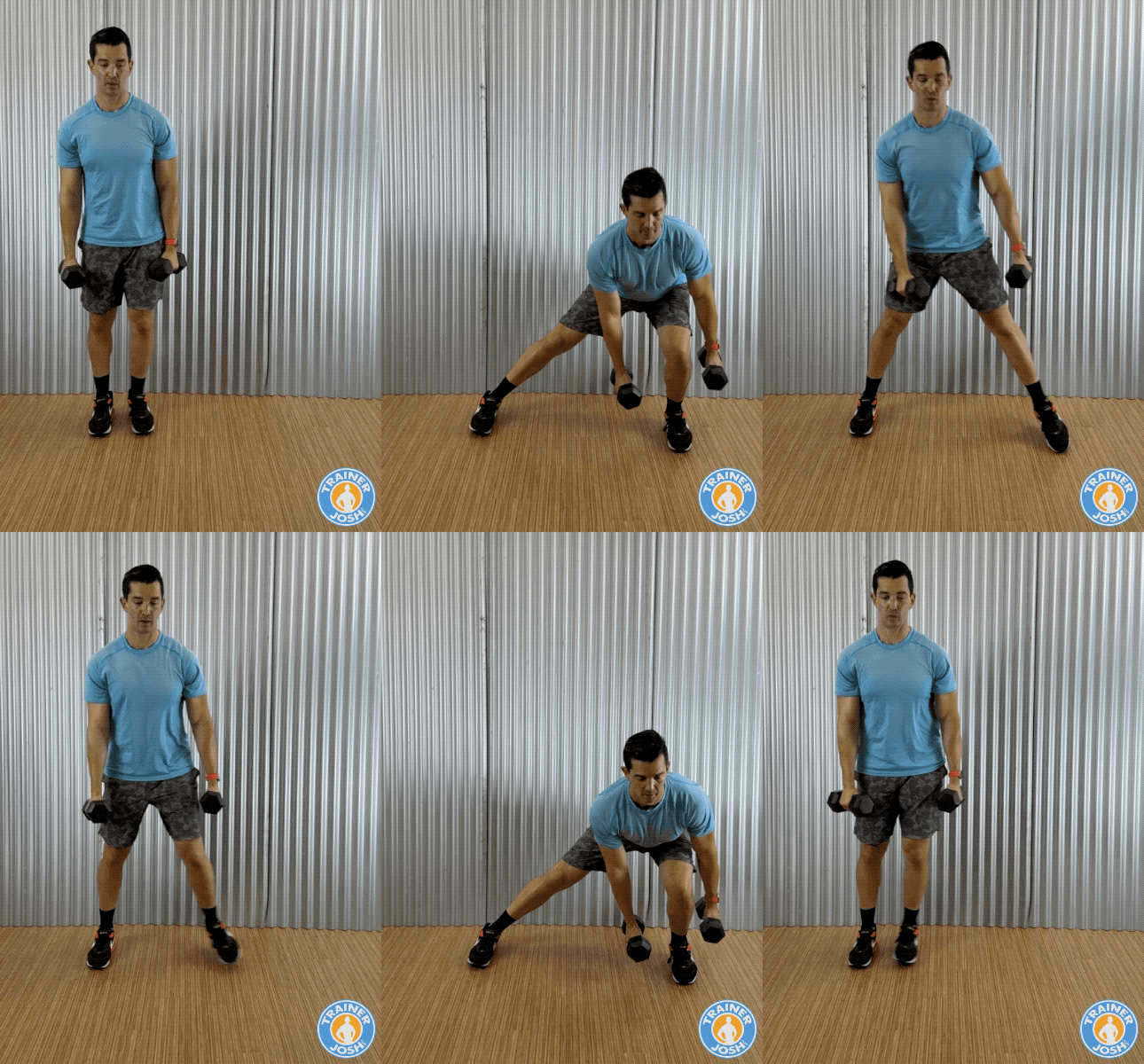
Dumbbell side lunges (also called lateral lunges) are a great leg exercise for your outer and inner thighs. They also strengthen your glutes and quads. This frontal plane exercise can target leg muscles usually missed by standard front-to-back leg exercises.
- Stand tall and hold a dumbbell in each hand at your sides with your feet hip-width apart.
- With your right leg, take a big step out to one side with your right foot. Keep your toes pointed forward.
- Bend your right knee and push your hips back to lower your body over your right leg while keeping your left leg straight. Keep both heels flat on the floor.
- Lower your thigh until it’s parallel to the ground. Then, push yourself back up into the starting position by driving through your right heel.
- Alternate and repeat on the other side by alternating legs with each rep.
Glute Bridges
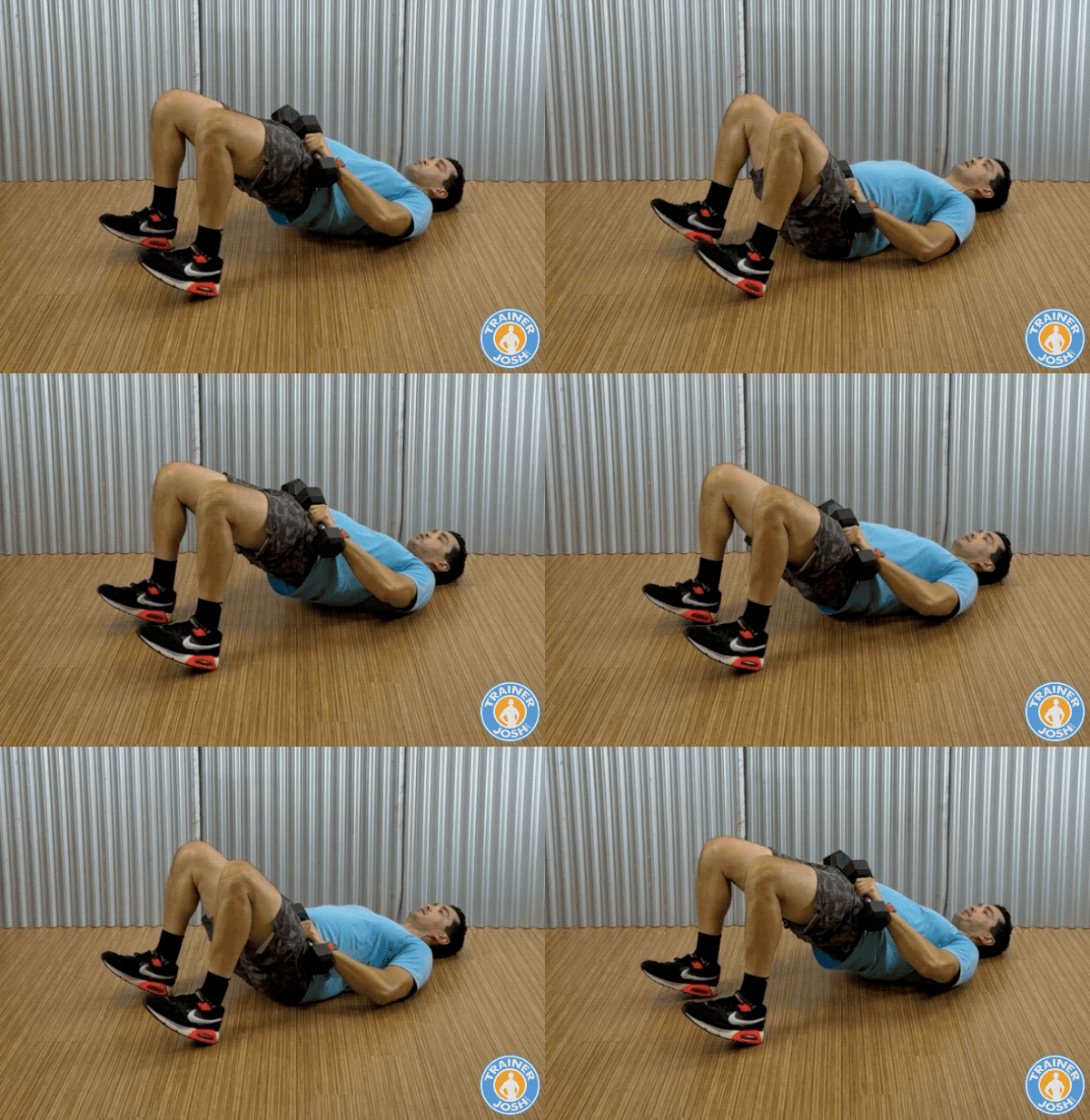
Doing dumbbell glute bridges (also called hip bridges) will strengthen your glutes, hamstrings, and lower back while improving hip stability. This exercise directly targets your glutes, and adding dumbbells increases muscle growth and strength resistance.
- Lie on your back with your knees bent and feet flat on the floor hip-width apart. Place a dumbbell on each hip and keep holding it with your hands.
- Point your toes up and keep your heels down on the ground for better glute activation. Tilt your pelvis up to keep your lower back flat on the floor.
- Press through your heels to lift your hips up towards the ceiling. Squeeze your glutes at the top as your body makes a straight line from your knees to your shoulders.
- Pause and hold the top position for 1-2 seconds to maximize glute activation.
- Then, slowly lower your hips back down into the starting position and repeat. Don’t let your hips rest on the ground for too long, so you keep a high level of mechanical tension in the glutes.
Donkey Kicks

Donkey Kicks are a great exercise for toning the hips since they isolate and directly target the gluteus maximus, the largest muscle on the butt. And this exercise is completely bodyweight so it can be done by anybody, anywhere.
Place the resistance hip band underneath your bottom knee, with the other end wrapped around your thigh.
- Begin on all fours on the ground. You may want to do this exercise with a mat or pad underneath your knee for comfort, instead of the hard ground.
- Have your hands underneath your shoulders, and then raise one leg up into the air behind you while keeping it bent at 90 degrees.
- Try to keep your back in a straight line throughout the movement. Tighten your abs to help keep your spine in a neutral position.
- When your thigh reaches a height that it’s now in a straight line with your upper body, pause at the top for a second, then slowly lower your leg back to the starting position.
- Don’t allow your knee to come all the down to the point it rests on the ground. Stop right before it touches the ground and raise it back up. This will help to keep the glute muscle activated throughout the movement.
Lateral Walks with Band

Lateral Band Walks are very effective for building the outer side glutes. This exercise targets the gluteus medius and gluteus minimus, which are the smaller glute muscles on the sides.8
This exercise will help shape and round out the glutes since these side hip muscles are usually undertrained.
- Place a hip band around your thighs just about your knees.
- Stand with your feet hip-width apart and knees slightly bent. Tighten your abs to engage your core.
- The band should already be a little tight and taut, if not then take a wider stance because your feet are too close together.
- Take a small, controlled step sideways with one foot, keeping your foot pointed straight ahead forward.
- Follow with the other foot to return back to your starting position. Be sure not to bring your feet too close together; otherwise, you’ll lose tension from the band on your side hips.
Make sure you’re also consuming enough protein daily to build lean muscle from your workouts. Studies say you should be consuming 1.8 grams per kg of body weight daily. You can use my protein calculator to quickly find your daily protein needs.
If you have trouble meeting your daily protein intake then consider using a low-carb protein powder. It’s a convenient and fast way to get a lot of protein in, especially on the go.
Best Cardio for Burning Overall Body Fat
Key Takeaways:
The best cardio for reducing hip fat is high-intensity interval training (HIIT), as it’s time-efficient and effective in mobilizing stubborn fat by spiking catecholamines (adrenaline/noradrenaline) that break down stored fat. HIIT also increases blood flow and temperature in working muscles.
For optimal results, combine lower-body HIIT exercises with slow, steady-state cardio. First, mobilize catecholamines through high-intensity intervals, and then oxidize the fatty acids with steady-state cardio.
Here’s an example:
- Do a short lower-body HIIT session (5-10 minutes of sprints/intervals).
- Follow immediately with 30-40 minutes of steady-state cardio.
The best steady-state cardio for this is any type that burns the most calories and is sustainable for you to maintain. Walking, running, cycling, swimming, rowing, etc. Cardio for stubborn fat loss is all about accessibility and effectiveness for creating a calorie deficit.
But cardio itself won’t directly burn fat off the hips. Fat loss occurs when your body is in an energy deficit, and it then determines where to draw fat from. Hips and thighs are hormonally and genetically stubborn areas (high α2-receptor density, low blood flow), so cardio itself won’t override biology.
Ideally, this will be done in a fasted state (low insulin) for maximum effect. Insulin blunts fat breakdown. Catecholamines have a more pronounced effect when insulin levels are low in a fasted state.
Weekly Hip Fat Workout Plan
Here’s the 3-step workout plan for getting rid of hip fat:
- Intense strength work in your hips/thighs (targeted strength training exercises)
- HIIT (or mixed into your strength training)
- Energy-expending slow-go cardio afterwards to burn off mobilized fat
Order Instructions:
- A1 → A2 = a pair of exercises you do back-to-back. (Example: A1 Squat, A2 Row).
- After finishing A1 and A2, you rest briefly, then repeat for the prescribed sets.
- When you’re done with all the A-rounds, you move on to the B series (B1, B2), which is your next pair or circuit.
Tempo Instructions:
- You’ll see a 4-digit code like 2111. Each number tells you how many seconds to spend in each part of the rep:
- First number = how long to lower the weight (eccentric).
- Second number = pause at the bottom.
- Third number = how long to lift the weight (concentric).
- Fourth number = pause at the top.
- Example: 2111 = 2 seconds down, 1 second pause, 1 second up, 1 second pause.
With time, you’ll want to use progressive overload to continue getting results. It’s one of the most critical drivers of muscle growth and strength.
Your body will eventually adapt to the workload, and you’ll stop making progress. So, you’ll want to keep increasing your weight, reps, and sets, and change up the exercise order.
You can also use massage, foam rolling, or lymphatic drainage to reduce the appearance of cellulite.
Progressive overload builds the muscle that reshapes your hips, but the longer you stay in a calorie deficit, the harder your body fights to hold onto that muscle. This is a second spot where the BioTRUST GLP-1 Companion Stack can help, since Ageless Muscle is built with HMB and creatine to support muscle protein balance and strength as you keep training through a fat loss phase.
A 3-part daily stack designed to support people using GLP-1 medications or losing weight naturally. It combines muscle, protein, collagen, and appetite support to help you maintain a healthier body composition as you lose weight.
- Natural GLP-1 Support: Helps support healthy appetite signals, fullness & metabolic function
- Lean Muscle Support: Helps preserve muscle, strength & healthy body composition during weight loss
- High-Protein Collagen: Adds 20 g of protein with 5 collagen types to help support daily protein intake
- Skin, Joint & Hair Support: Provides collagen peptides to support skin elasticity, joints, hair & nails
- 3-Part Weight-Loss Support: Combines muscle, protein/collagen & appetite support in one simple daily stack
How Long Does It Take To Lose Hip Fat?
Key Takeaways:
How long it takes to lose hip fat will depend on the rate at which you lose fat overall. Rapid, targeted fat loss is not possible within a short timeframe. A realistic rate of fat loss is approximately 0.5-1% of body weight per week.
Hips and thighs are typically the last areas to shrink if you have stubborn fat. It’s hormonally and genetically programmed to be resistant. Even if you’re losing fat steadily, the hips may not show noticeable results quickly.
Your starting body fat percentage determines everything.
If you’re a woman with a moderate amount of body fat (19-24% body fat), you can expect to see the hip fat disappear in several weeks or a short month. Provided your diet and training are dialed in.
However, suppose you’re a woman with a higher body fat percentage (30% or more). In that case, overall fat loss should be your primary goal. Stubborn hip fat is just regular stored fat. You must lower your body fat before targeting hip fat.
Here’s a practical timeline for getting rid of hip fat:
- Short-term (2-4 weeks): You may notice slight weight changes, but your hips will likely appear almost the same.
- Medium-term (8-12 weeks): Noticeable changes in hip circumference if you’re consistent
- Long-term (3=6+ months): Significant reduction in hip fat (depending on starting point)
Realistically, you won’t be able to eliminate hip fat in just two weeks. Losing a significant amount of hip fat can take several weeks or even months.
But don’t rely just on the weight scale to check your progress. You should focus on body composition, not just body weight.
The scale doesn’t tell you if you’re losing fat or muscle or if water weight fluctuations are masking your progress. Use a smart scale to measure your body fat percentage along with your weight.
Measure inches on your waist, hips, and thighs to get a clearer picture.
Highlight your small, measurable wins:
- Inches lost around the hips, thighs, and waist
- Clothes fitting better, especially jeans or leggings that used to feel tight
- Strength improvements in your hip-focused lifts. This shows you’re building lean muscle that will shape the area
- Photos over time, since visual progress often shows up before the numbers do.