
Ever look down at your forearms and think, “Why do my forearms look like sticks?” You can be doing a lot of curls and pulling heavy weights, but the forearms will still lag behind if they’re the weakest link.
You want bigger forearms that stretch your sleeves but also have the strength to grip the bar, carry groceries, or hang from a pull-up. And if we’re being real, then you’re probably sick of your hands and grip giving out before your muscles do.
The problem most lifters get wrong is relying on deadlifts and pull-ups, thinking it’s enough. Or adding in some half-rep wrist curls without any real plan. The issue isn’t just your effort, but the approach.
Here you’ll find the best proven, pain-free exercises to train your forearms. Most programs completely ignore forearms, but here you’ll get the 10 best dumbbell-only exercises and routines for forearm size, strength, vascularity, and pain-free grip gains.
Forearm Muscles & Benefits of Strengthening Them
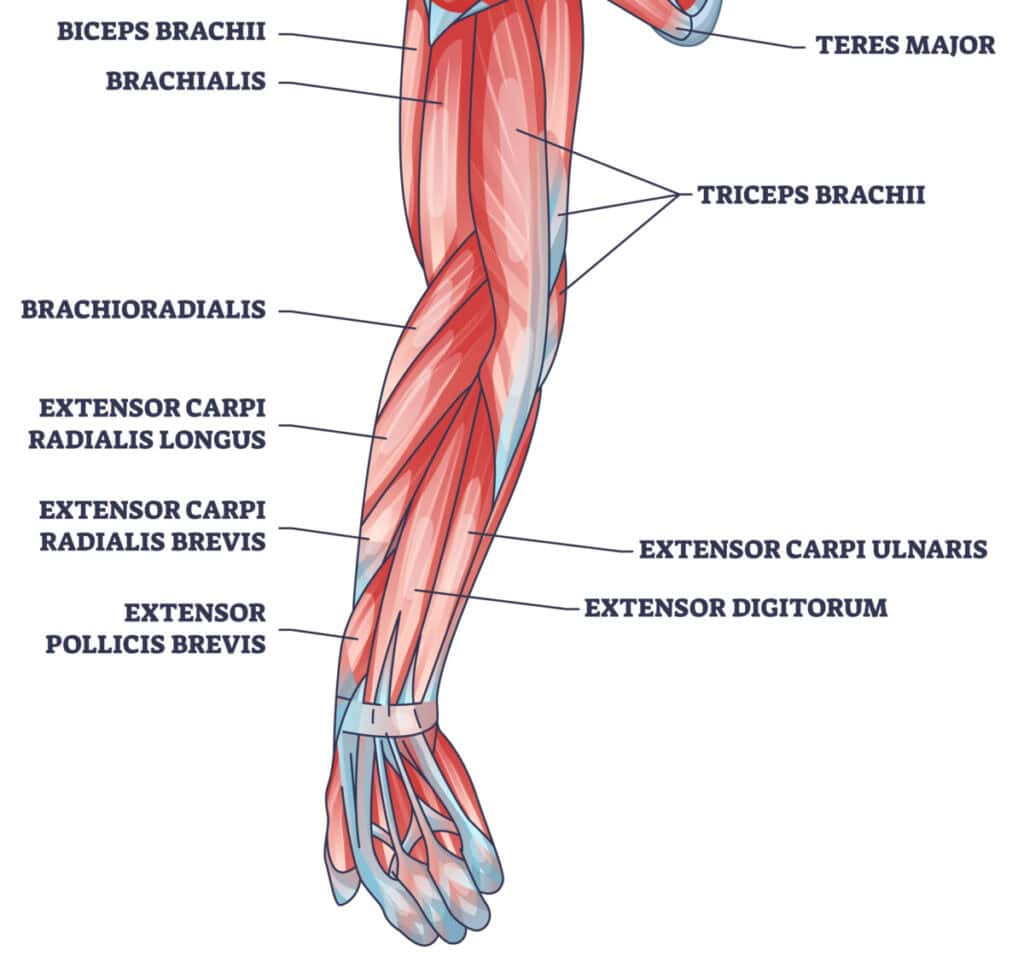
The forearm muscles are made up of two main compartments:
Anterior compartment (flexors):
- Flexor carpi radialis
- Flexor carpi ulnaris
- Palmaris longus
- Flexor digitorum superficialis/profundus
- Flexor pollicis longus
- Pronator teres
- Pronator quadratus
Posterior compartment (extensors):
- Extensor carpi radialis longus and brevis
- Extensor carpi ulnaris
- Extensor digitorum
- Extensor pollicis longus and brevis
- Supinator
- Brachioradialis
These muscles control wrist and finger flexion, extension, pronation, supination, and grip strength.
It’s more important than you think to build your forearm size and strength. You’ll not only get better overall arm development, but you’ll also get stronger in other lifts, prevent injuries, and build a more balanced, well-rounded physique.1,2
Forearms are massively underappreciated and are much needed for maximizing arm size and strength…
Grip Strength: Strong forearms delay grip fatigue and let you use heavier weight loads in elbow flexion exercises like curls and compound lifts like deadlifts and rows. This creates more tension and causes more muscle growth in the upper arms.
Injury Prevention: You’ll reduce the risk of elbow flexor tendonitis by strengthening your forearms. Tennis elbow, golfer’s elbow, and carpal tunnel are all common overuse injuries that can be prevented by training your forearms.3
Aesthetic Balance: You’ll have better aesthetics and symmetry once you develop your forearms. They’ll help to prevent the common problem of having large upper arms and small forearms. It’ll look weird having unbalanced 18″arms over a small 13″ forearm.
Strong forearms will enhance functional strength. Real-life scenarios and sports that demand a powerful grip, hand dexterity, and endurance. This includes grappling sports, climbing, baseball, or restraining people.
Why Your Forearms Aren’t Growing (And How to Fix It)
Key Takeaways:
Most lifters don’t train forearms directly enough—compound lifts fatigue them before they get sufficient volume or range of motion. To grow, forearms need higher reps, longer time under tension, full wrist movement, and varied grip-focused overload beyond genetics.
There are several key reasons why your forearms aren’t growing by using traditional strength training…
Lack of Direct Volume: Just relying on compound lifts (e.g., deadlifts, rows) without enough dedicated isolated forearm training often isn’t enough to stimulate all the muscles in the forearm effectively. Your forearms will fatigue first doing compound lifts, so this limits the load and the volume you can do before they have enough stimulus to grow.4
Genetics: Forearm development can be highly influenced by genetics. Some people are just born with naturally large and strong forearms, while others have to work hard to grow theirs. Thinner wrists and smaller bone structure usually go hand-in-hand with smaller forearm muscle cross-sectional potential. But genetics are not destiny.5
Low Time Under Tension (TUT): Forums are like your calf muscles, and they’re used to performing high-frequency and low-load activities, such as gripping all day. Because of this, they will need a longer time under tension and higher reps for hypertrophy. Just doing quick, short sets with minimal focus isn’t going to be enough to grow them.6
Not Enough Range of Motion: Usually, most lifts and movements in the gym will just have you holding a bar and a steady, static isometric hold. You really need wrist flexion, extension, and rotation to grow your forearms. Poor form will sabotage your results.7
Neglecting Eccentrics & Variability: You need to use training principles like eccentric overload, minimal variation, and using different grip styles so your body doesn’t adapt. Your forearm muscles need progressive overload to keep growing.8
Now here’s how to fix it so your forearms finally grow…
Key Takeaways:
Train forearms 2-3x per week with dedicated isolation exercises like dumbbell wrist curls and reverse curls using slow 3-5 second negatives and training to complete failure.
Challenge your grip with fat grips, thick bars, and avoid using straps on upper body exercises to force your forearms to work harder. Treat them like calves – high frequency, high reps, and direct targeted work until exhaustion.
Add Direct Forearm Work: Include wrist curls, extensions, reverse curls, hammer curls, farmer carries, wrist roller, and grip trainers. You have to treat it like calf training with high reps and high frequency. Don’t neglect your extensors.9
Train Them More Frequently: Your forearms can and should be trained more often than other body parts, especially if they’re lagging behind. Ideally, train them two to three times a week, as they’re used frequently and recover quickly. I like adding forearm work at the end of an arm, chest, or back workout.10
Slow Down the Tempo: Emphasize the eccentric part of the contraction during the lowering phase with 3-5 second negatives to maximize time under tension while also better stimulating hypertrophy.11
Add Variety, Angles & Grip: Use fat grips, rope handles, offset loads, and thick handle bars (extra-thick dumbbells at 2 to 2.5 inches and barbells at 3 inches) to challenge your forearms in different ways. This will recruit more motor units in your forearms. I try to avoid using straps when doing upper body exercises, so you grow your grip strength to match your upper body strength.12
Train to Failure (or Near Failure): Beginners don’t necessarily need to train to failure, but should focus more on tempo and good form. But advanced lifters can start performing these forearm exercises until the forearm muscles are at failure (or near failure). Use drop sets or extended sets (e.g., wrist curls to failure and then doing static carry holds) to fully exhaust your forearms.13
Add Forearm-Dominant Compound Variations: Use exercises and movements that shift the load towards your hands and grip. Consider adding towel pull-ups, thick bar rows, or reverse curls with slow tempo.
The Best Dumbbell Forearm Exercises
Equipment Used:
These are the dumbbells that I’m using to demonstrate these forearm exercises. I prefer them because they’re easy to grip, their hex shape doesn’t roll on the ground, and the hard rubber won’t scratch flooring. For forearm exercises, most should be using 10-20 pound dumbbells.
I recommend picking up a set of adjustable dumbbells. Adjustable dumbbells save space and will save you money in the long run by not having to keep buying heavier dumbbells. This makes it easier to keep progressing with your lifts, so you keep getting results.
I’d also recommend Fat Gripz. These are thick grips that you can wrap around dumbbell handles or other lifting bars to increase their diameter. Using thicker diameter bars increases muscle activation, leading to better forearm and arm gains.
Dumbbell Wrist Curls
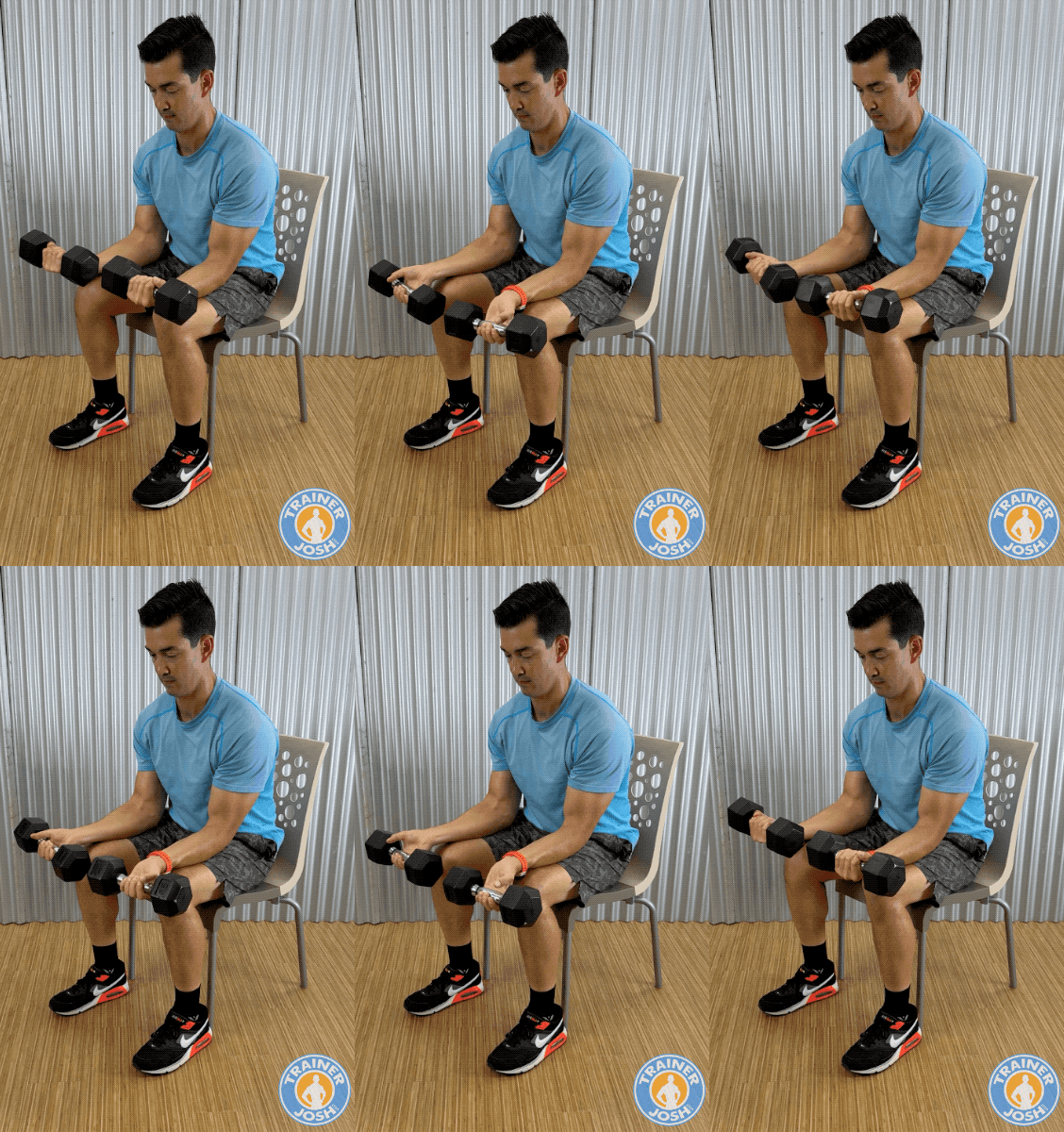
Wrist curls are the fundamental exercise and secret weapon for building bigger forearms and grip strength. You’re working the forearm muscles that wrap around your lower arm, called the wrist flexors. When your forearm flexor muscles get stronger, then your deadlifts, pull-ups, and even opening stubborn pickle jars will become a breeze.
- Sit on a bench with your forearms resting on your thighs, palms facing up. Let your wrists hang just past your knees while holding a dumbbell in each hand.
- Keep your wrist straight, with your elbows tucked in, resting on your thighs, and your hands about shoulder-width apart. Then let the dumbbells roll slightly forward and toward your fingers to pre-stretch your forearm flexor muscles.
- Then, flex your wrists to curl the dumbbells up as high as possible without your forearms lifting off your thighs.
- At the top, pause for a second and squeeze your forearm flexor muscles to maximize the contraction.
- Slowly lower the dumbbells back under control and make sure you get a full range of motion at the bottom.
Trainer Tip: Use slower eccentric contractions during the lowering phase of the exercise. Take 3-4 seconds to go down, maximizing time under tension. Use higher reps (12-20+), but don’t go too heavy because your forearms will be more important than the load when training forearms. Try to achieve the muscle pump (critical for forearm growth).
Reverse Dumbbell Wrist Curls
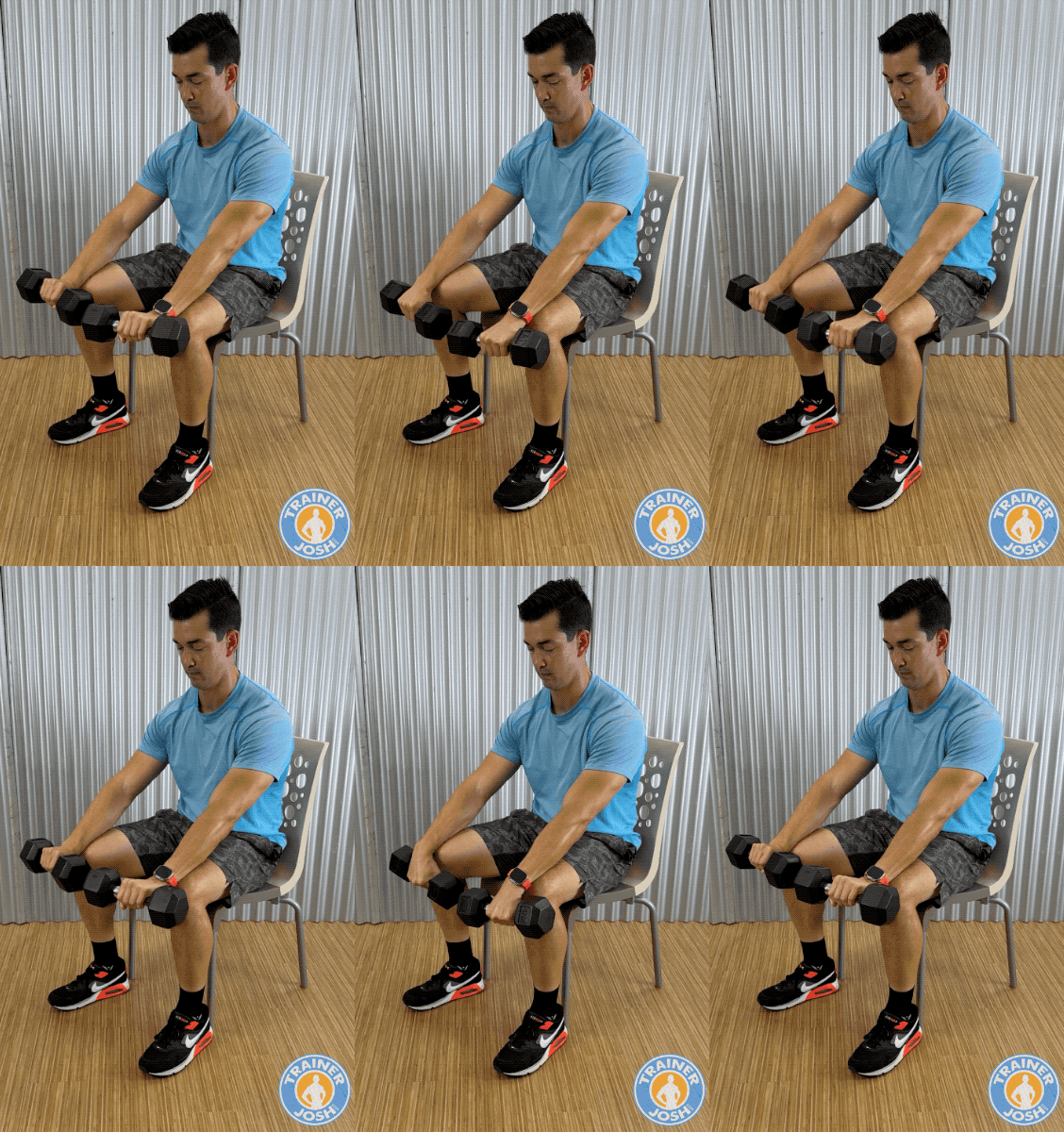
Reverse wrist curls will target the muscles on top of your forearms, specifically the wrist extensors. Most people completely ignore training the top of their forearms, and you only see them doing wrist curls for their bottom forearms. But having an imbalance of strong wrist flexors but weak wrist extensors can lead to muscle imbalances that lead to tennis elbow and other nagging injuries.
- Hold the dumbbell in each hand, then sit on a bench with your forearms resting on top of your thighs and your palms facing down. Have your wrists hanging just past your knees.
- Keep a neutral grip and keep your fingers relaxed. Your wrists should be straight and in line with your forearms. Try to keep your elbows close to your body.
- Extend your wrists by lifting your hands up so the dumbbells go as high as possible, but focus on only moving your wrists and keeping your forearms steady.
- At the top, pause and squeeze your top forearm extensor muscles without letting your wrists bend inward.
- Slowly lower the weights back down under control. Feel a gentle stretch in the top of your forearms at the bottom.
Trainer Tip: You should use lighter weights when doing reverse wrist curls than when doing standard wrist curls. That’s because your extensors will be naturally weaker. Focus on using perfect form and maintaining a full range of motion, keeping your elbows and form locked in to isolate your forearm extensor muscles.
Wenning Wrist Flicks (Handshake Curls)
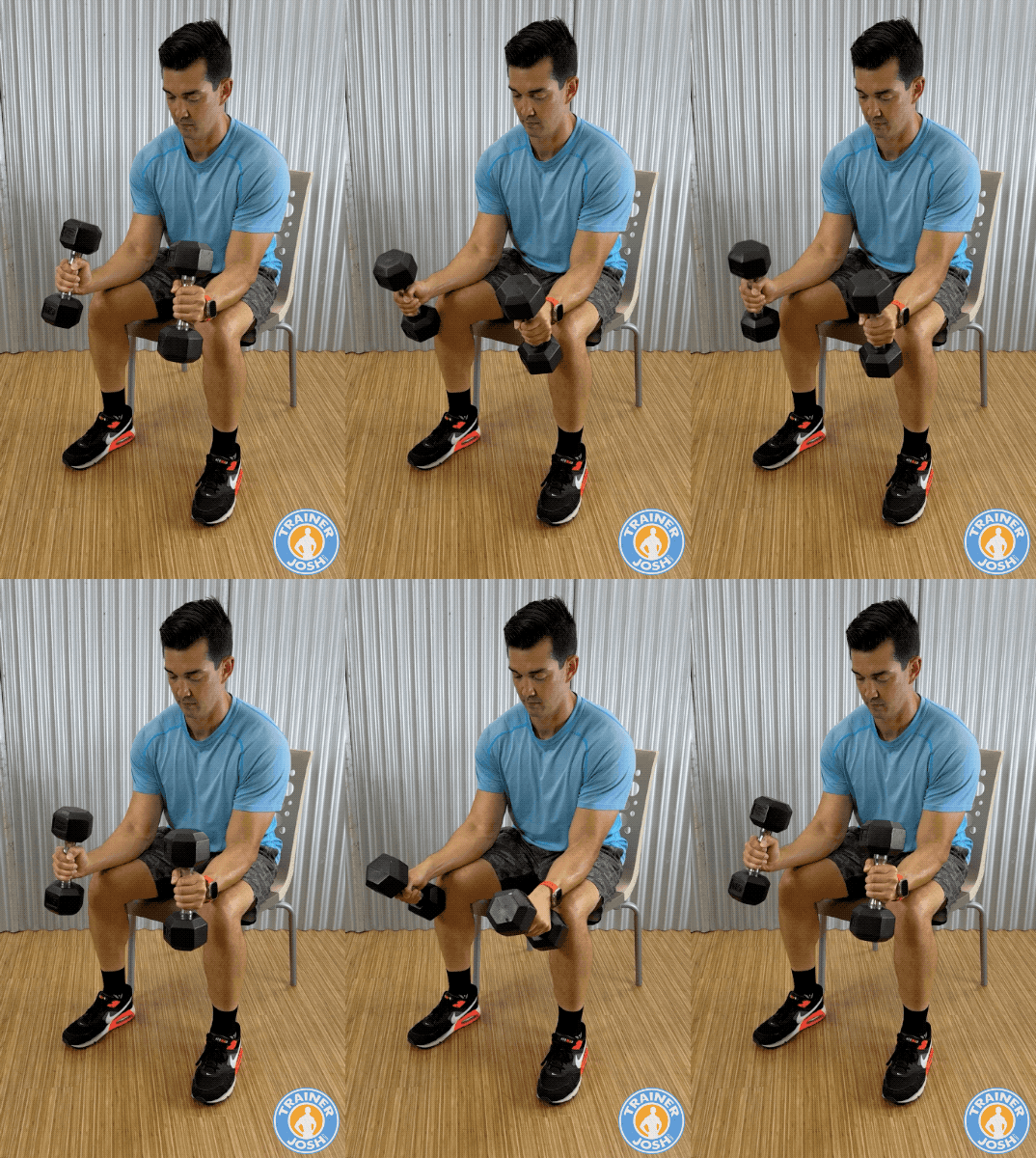
Dumbbell Wenning wrist flicks, also known as handshake curls, is an exercise that’s literally just like shaking someone’s hand, only with a dumbbell. This is a radial deviation exercise that targets the inside of your forearm and builds the brachioradialis muscle. This one will really give your forearms a 3D pop.
- Hold the dumbbell in each hand and sit on a bench. Hold the dumbbells with a neutral grip with your palms facing each other like you’re shaking hands. You can let the dumbbells hang straight down or rest your forearms on top of your thighs.
- Flex your wrists up and flick them up in a hammer-like motion. Make sure only that your wrists move and not your forearms, elbows, or shoulders.
- At the top of the flick, try squeezing your brachoradialis muscle as well as your other forearm muscles. Maximize that peak contraction.
- Then slowly lower your dumbbells back down into the starting position. Keep a slow control during the descent.
- Repeat and keep constant tension on your forearms while minimizing rest between sets.
Trainer Tip: Think “flick up fast and slow lowering down”. This helps to build explosive wrist strength and muscle control. Use lighter weights. Focus on the quality of the exercise, rather than just using a heavy load. Keep your elbows pinned to your sides to prevent cheating with momentum.
Behind-the-Back Dumbbell Wrist Curls
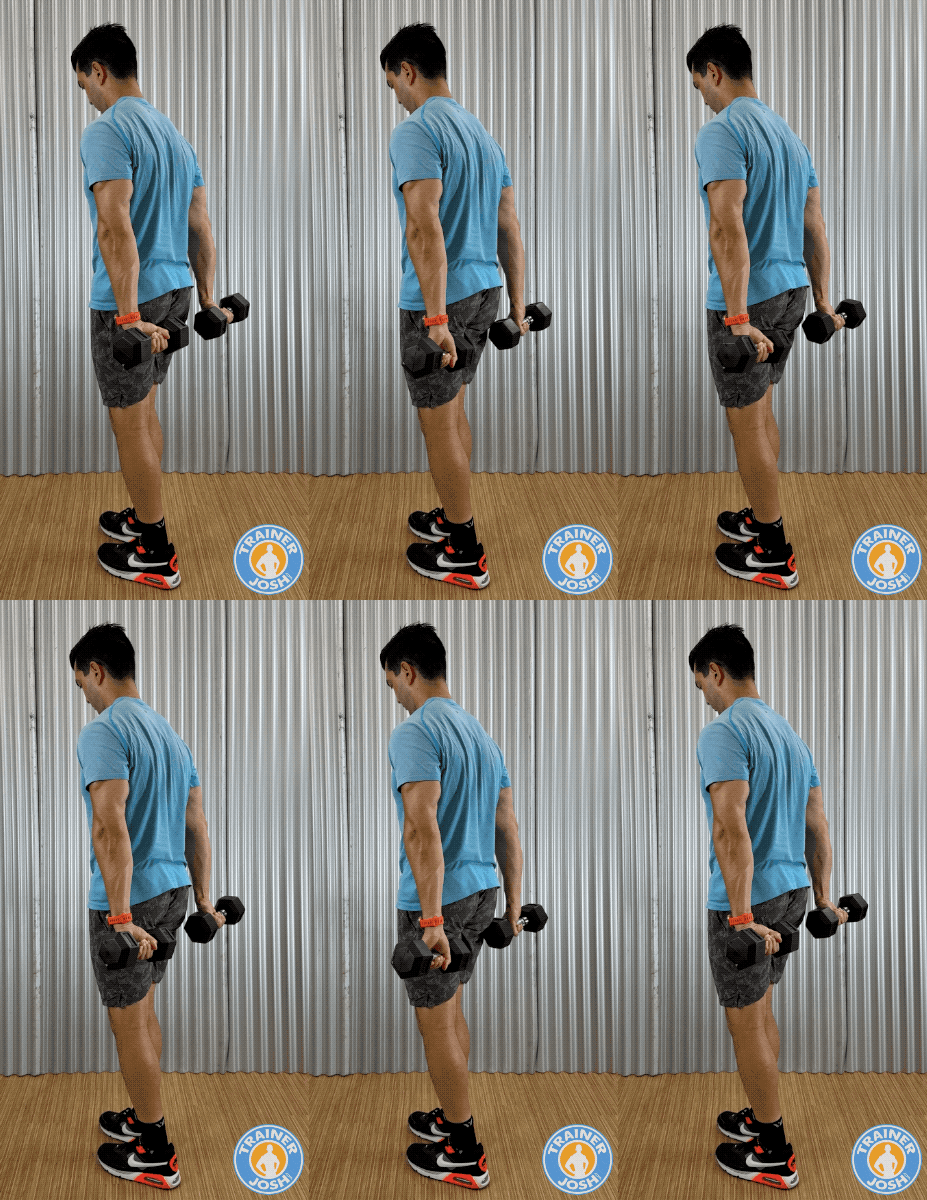
This exercise is a variation of the standard wrist curl that will really target your forearm flexors. You’ll get a deeper stretch at the bottom and a higher range of motion when doing behind-the-back dumbbell wrist curls.
- Hold a dumbbell in each hand and stand tall with your arms straight and hanging behind your back with your palms facing away from your body.
- Keep your chest up, shoulders back, and your feet hip-width apart. Let the dumbbells rest against or just behind your glutes. Let the dumbbells roll slightly down towards your fingers for a full stretch in your forearms.
- Then, curl the dumbbells up by flexing your wrists upwards. Try to lift only with your hands and keep your arms straight throughout the movement.
- Hold at the top for a second and squeeze your forearm flexor muscles for peak contraction.
- Slowly lower the dumbbells back under control into the starting position. Try to get a deep stretch again at the bottom.
Trainer Tip: Lean slightly forward at your hips to get more range of motion and less shoulder strain. You don’t need to go very heavy, so use lighter weights and focus on the stretch and contraction. Keep your reps slow and under control, especially during the eccentric lowering phase.
Dumbbell Wrist Rotations
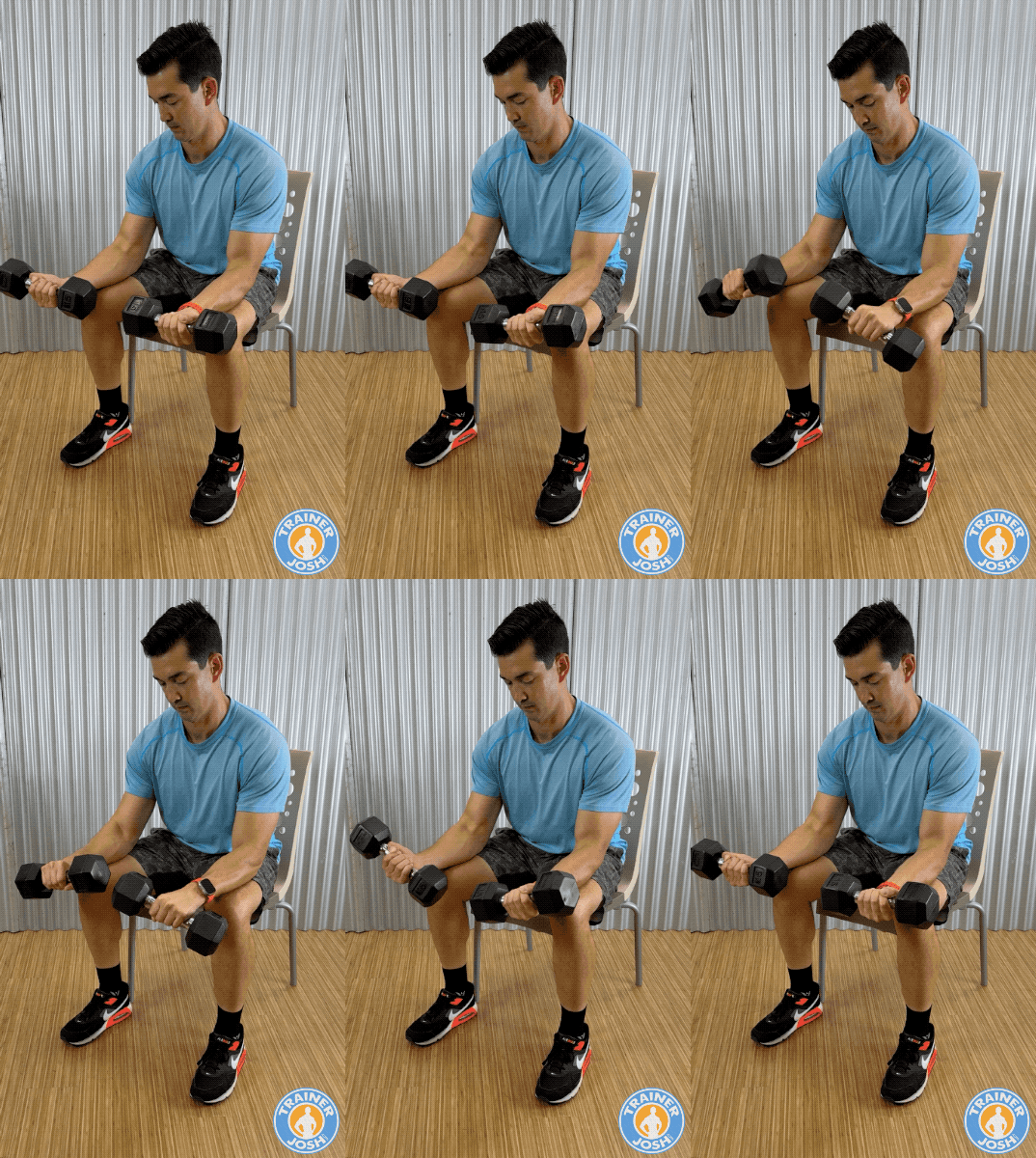
This is a dynamic exercise that will strengthen your pronators and supinators. These are the muscles used for rotating your forearm and wrist from side to side. You’ll develop forearm rotational strength and stability with this exercise, which benefits sports performance, injury prevention, and tasks that require twisting motions, such as opening jars.
- Hold a dumbbell in each hand and then sit on a bench with your forearms resting on your thighs, as if you’re about to do a wrist curl. Start with your palms facing down.
- Make sure you’re using a lighter dumbbell and keep your elbows fixed in line with your thighs, with your wrists slightly hanging off the edge of your knees.
- Then rotate your wrists inward so your palms are now facing down.
- Next, rotate your wrist back up by reversing the motion until your palms are facing upward.
- Repeat using slow and controlled reps with a full range of motion.
Trainer Tip: Use lighter weights because this is more of a finesse movement for your forearms and not a power lift. It’s easy to use momentum during this exercise, so control is key to strengthening those small stabilizing muscles.
Dumbbell Ulnar Deviation
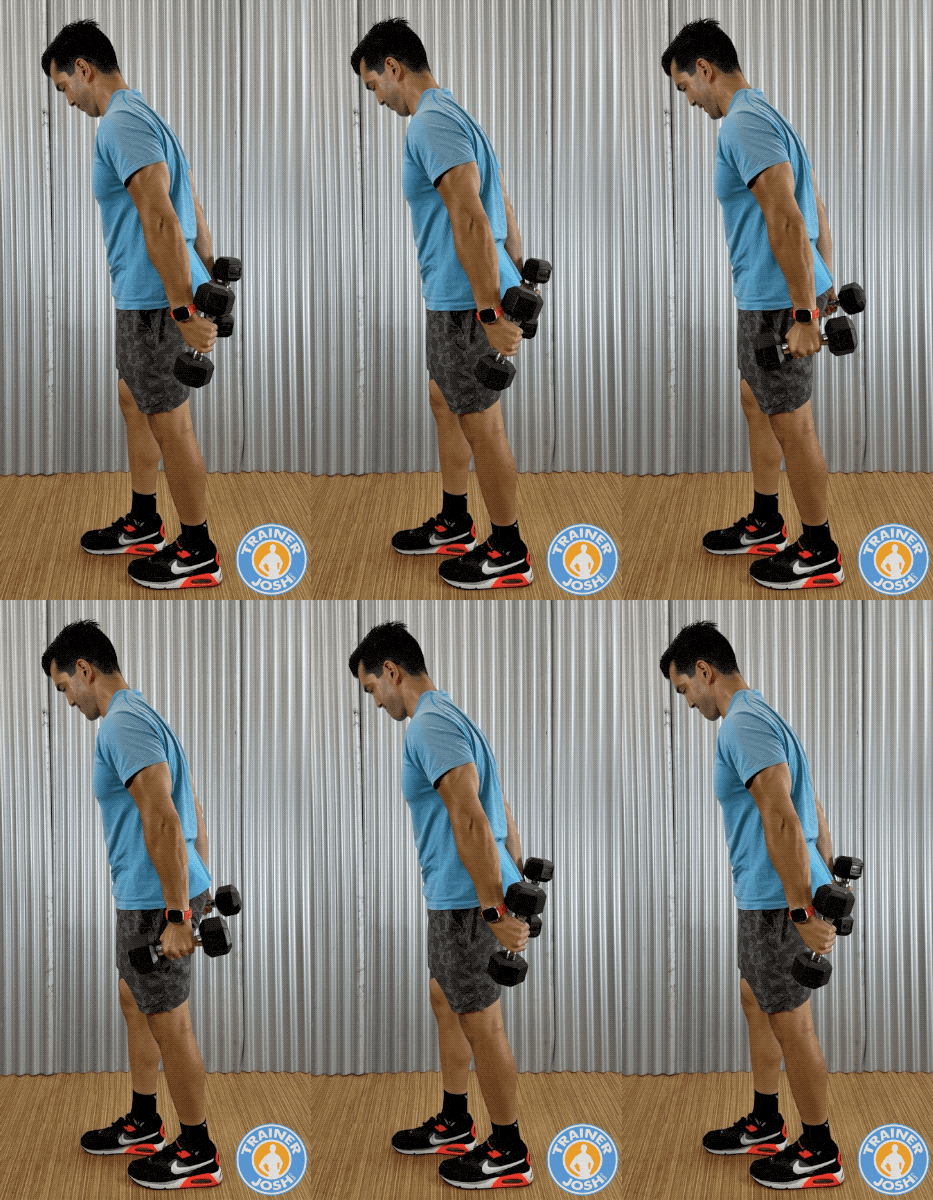
Dumbbell ulnar deviation exercise targets your ulnar deviators. These are primarily your extensor carpi ulnaris, which helps control side-to-side wrist motion. You’ll get better wrist stability and reduce the risk of overuse injuries, such as those in golf, baseball, and tennis, by strengthening these muscles.
- Hold a pair of dumbbells at your side while standing tall with your feet hip-width apart, your chest out, and your shoulders back.
- Keep your arms and forearms at your sides. Do your best to keep your arms from swinging or your shoulders from rotating.
- Move your wrists backwards by lifting your pinky up and moving your thumb down.
- Pause the top and squeeze to maximize the contraction.
- Slowly lower the dumbbell back into the neutral position under control.
Trainer Tip: Use very light weights for this exercise, as it’s a slight, specialized movement. Focus on your form and isolating the muscle by keeping a strict and minimal motion.
Concentration Hammer Curls
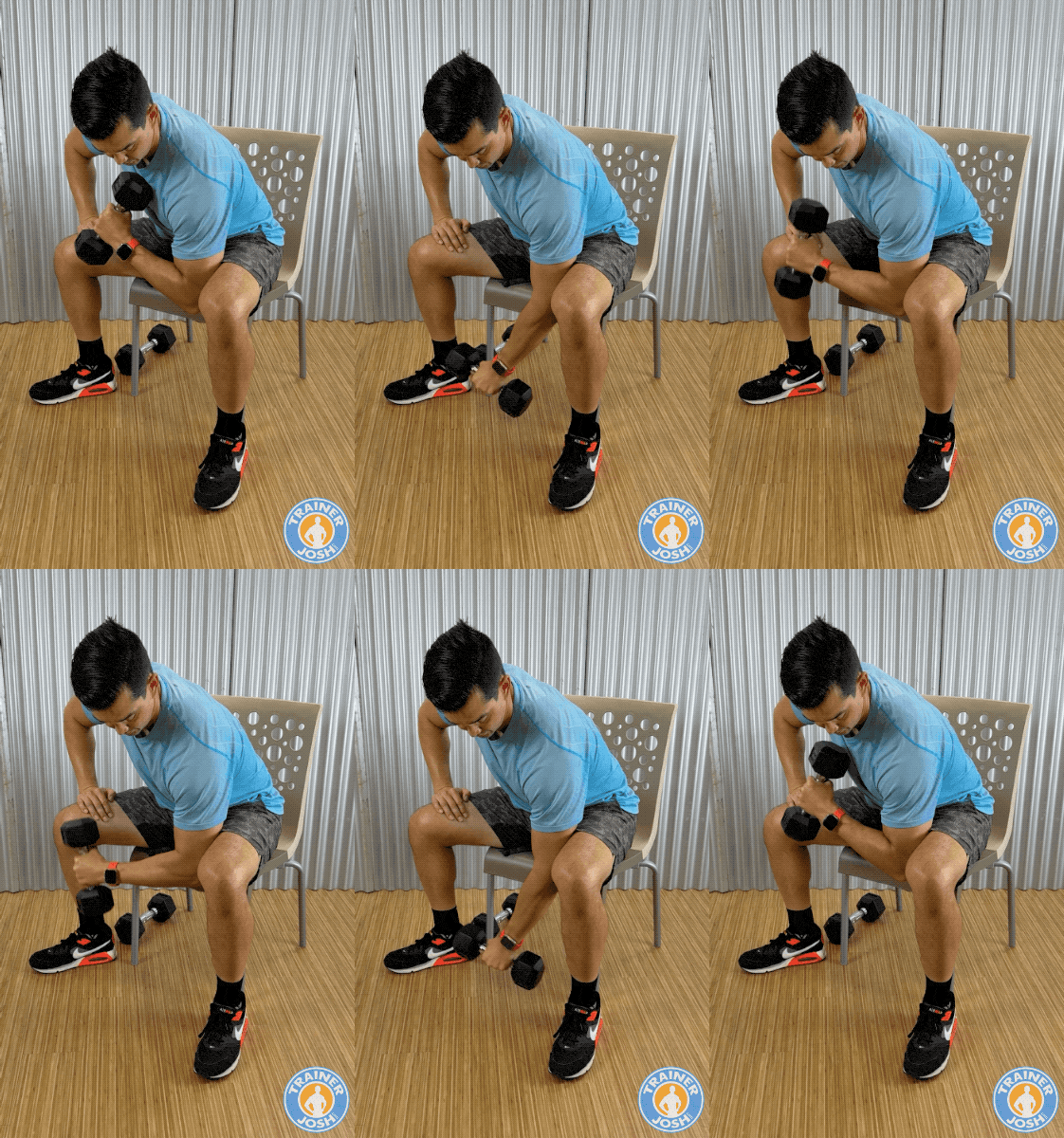
Concentration hammer curls. Isolate your brachialis and brachioradialis. These are two key forearm muscles for building muscle thickness and upper arm density.
- Sit on a bench with your knees apart and hold a dumbbell in one hand using a neutral grip with your thumb facing up.
- Lean slightly forward with your torso and rest your working arms, elbow, and lower tricep against the inside of your thigh. Let the dumbbell hang straight down, keeping your back straight.
- Don’t allow your upper arm to move as you curl the dumbbell upward towards your shoulder in a controlled motion.
- Pause and squeeze your forearm and upper arm muscles as hard as you can at the top for peak contraction.
- Slowly lower the dumbbell back to the starting position under complete control, allowing for a stretch at the bottom.
Trainer Tip: Use strict form and don’t swing the dumbbell, because the goal here is to maximize isolation. Keep your elbow firmly planted against your inside thigh throughout the entire rep. Try to perform slower eccentric contractions during the lowering phase to increase time under tension.
Zottman Curls
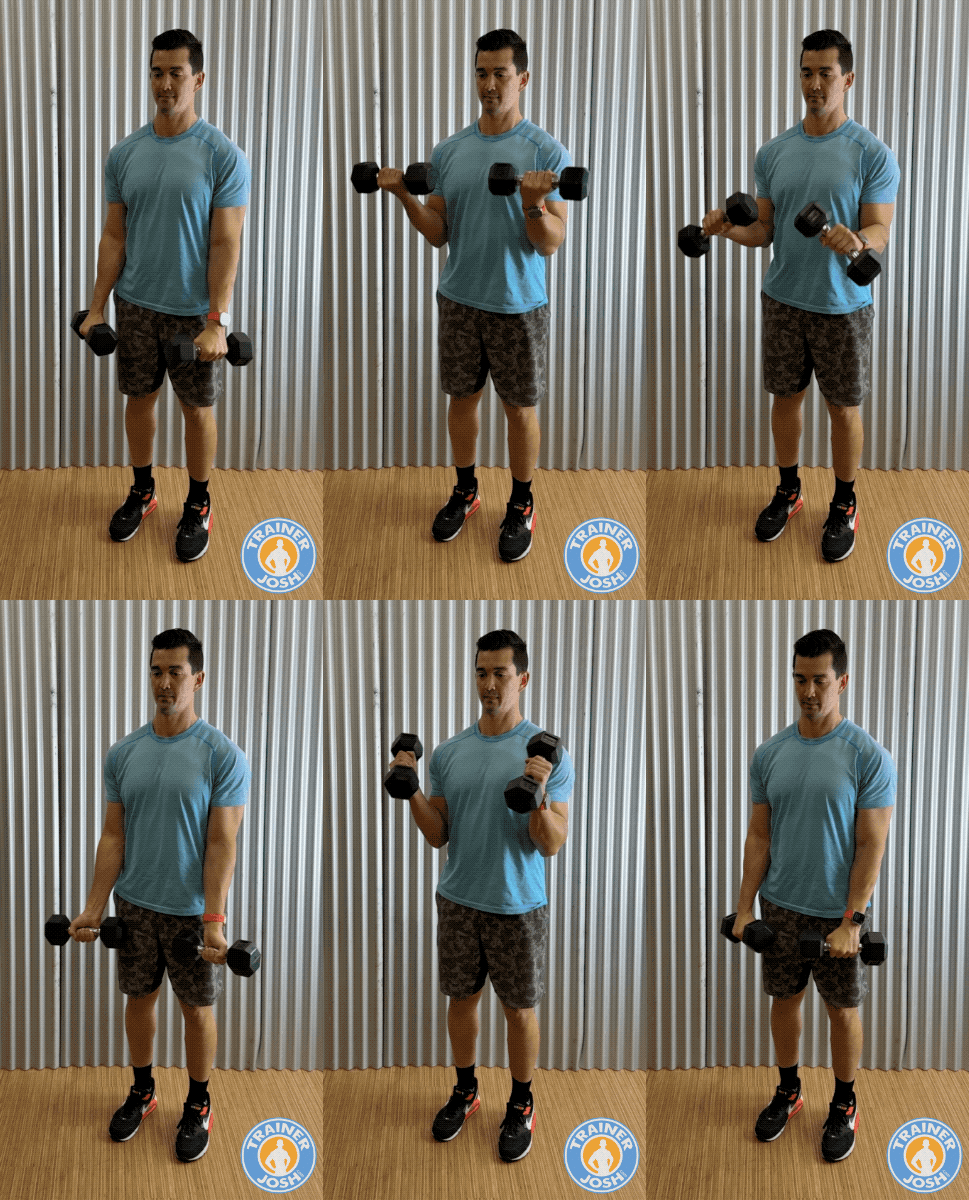
Zottman Curls are a hybrid movement that combines a standard curl with a reverse curl into one fluid motion. This exercise targets both your biceps and forearms, particularly the brachioradialis and forearm extensors. This is also one of my favorite dumbbell arm exercises.
- Hold the dumbbell in each hand and stand with your palms facing up, using a supinated grip, and your arms at your sides.
- Curl the dumbbells up like you’re doing a standard dumbbell curl. Keeping your elbows close to your sides, bring the dumbbells up towards your shoulders.
- At the top of the movement, rotate your wrists so your palms are now facing downward in a pronated grip.
- Slowly lower the dumbbells back down with your palms facing down. This is the part that really works your form extensors under an eccentric reverse curl load.
- At the bottom, reset by rotating your palms back up into the starting position.
Trainer Tip: Go heavier than you would for standard reverse curls, as you’ll be able to use your stronger biceps to lift them up. But slowly lower the dumbbells down, emphasizing the eccentric contraction with your palms facing down. This is where the forearm magic happens.
Reverse Curls
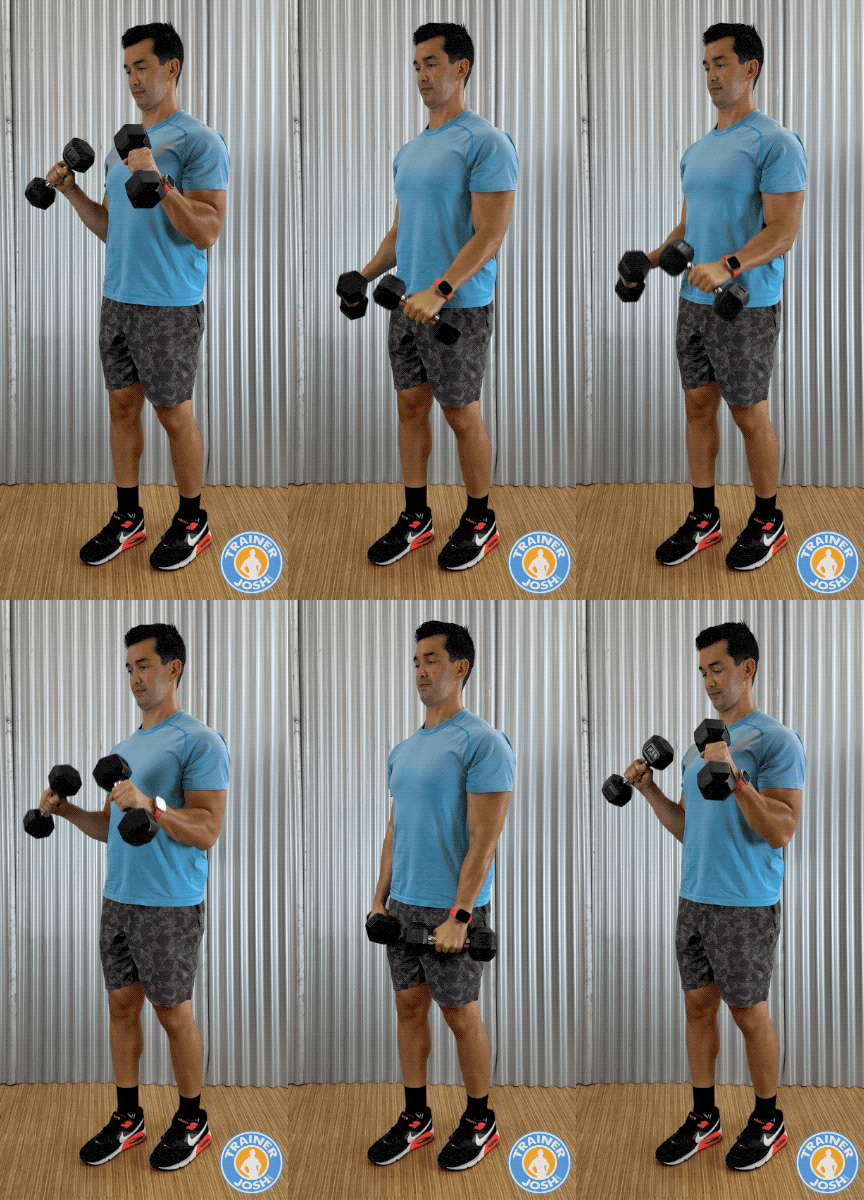
Dumbbell reverse curls target the brachioradialis, brachialis, and forearm extensors. When using the overhand pronated grip, reverse curls will shift tension from the biceps to the top of your forearms. This will help build size and strength in your forearms, giving them a more rugged, complete look.
- Hold the dumbbell in each hand and stand with your palms facing down in a pronated grip with your arms locked at your sides.
- Keep your elbows close to your body and your wrists in a neutral position. Don’t let your wrists bend or sag.
- Curl the dumbbells up by lifting them towards your shoulders, using only your forearms. Keep the overhand grip the whole time and keep your elbows locked at your sides.
- At the top, pause and squeeze your forearms and brachialis muscles.
- Slowly lower the dumbbells back under control into the starting position, maintaining tension on your forearms the entire time.
Trainer Tip: Use light to moderate-weighted dumbbells, as your forearms will be more important than the load. Don’t let your wrist collapse, and keep it straight to isolate your forearms. Use slower tempos, especially during the eccentric phase, to maximize forearm recruitment.
Dumbbell Static Holds
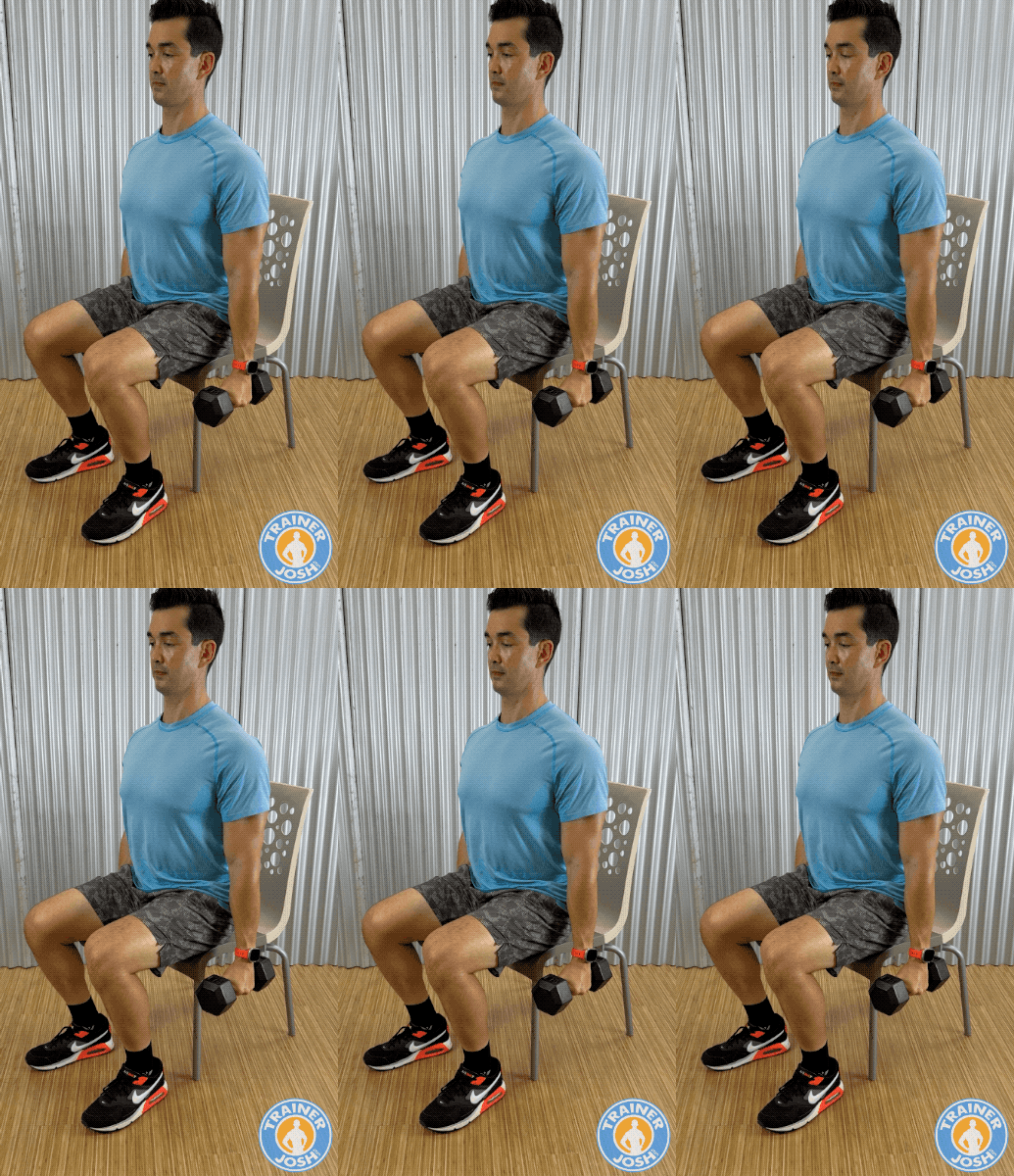
Dumbbell static holds are a very simple yet powerful isometric exercise that builds grip strength and forearm endurance. Holding the dumbbells without movement forces your body to engage nearly every muscle in your hand, wrist, and forearms, especially the flexors and brachioradialis.
- Grab a pair of heavy dumbbells, heavier than you’d normally curl, but light enough to keep good posture.
- You can stand, but I prefer to sit to take the lower body out of the equation and prevent compensation.
- Hold the dumbbells at your sides with your palms facing in and a neutral grip, and your chest up, shoulders back, and your core engaged.
- Squeeze the dumbbell handles hard and hold the position. Focus on keeping a tight grip and a strong posture.
- Hold it for 20 to 60 seconds or until your grip begins to give out, whichever comes first.
Trainer Tip: Add this to the end of your forearm workout as a finishing exercise. Focus on maximizing your grip tension and don’t just hold the dumbbells, but crush them with your grip. You can try using fat grips or towels around the handles to increase the grip’s effectiveness.
Farmer carries are another variation when you hold heavy dumbbells and walk back and forth.
Programming Forearms the Smart Way: More Gains, Less Burnout
So, how often should you train your forearms?
Forearms are a unique muscle group, similar to your calves, and they’re constantly active in everyday life. They’re built for high-frequency and high-endurance work.
Most people lifting are undertraining their forearms (not overtraining). A good starting point for training forearms is:
- Beginners: 2x/week direct isolation
- Intermediates: 3-4x/week direct or indirect work. Alternating volume and intensity.
This is enough volume to stimulate hypertrophy while also giving you enough time for recovery. Try to have 1-2 days of rest in between directly training your forearms.
Perform isolation forearm exercises at least once a week. This is needed to target hypertrophy and muscle balance. You have to treat the isolation work just as any other hypertrophy-focused muscle. Use progressive overload to continually challenge your forearm muscles so they strengthen and grow.14
You can do grip work daily in short bursts without causing overtraining. Add in fat grips, carries, or towel pull-ups. This is ideal for neurological adaptation and strengthening forearms.
The best days to train forearms depend on your weekly workout structure and total workload. Add in forearm training:
- After Pull Days
- After Upper Body or Total Body Days
- On-Off Days
- As Finishers
Use high reps (15-20+) to create a deep burn and force hypertrophy. Many old-school bodybuilders believed that the forearm muscle pump was critical. Use short rest periods and strict form to chase the burn.
Your forearms are built for high work capacity, but your elbow and wrist joints will need recovery. Connective tissues (like the brachioradialis and extensor tendons) can be more at risk when doing heavy rows, curls, grip work, etc.
Avoid hitting the same motion pattern (e.g., wrist flexion) on consecutive days. Keep your direct forearm work at the end of your workouts, especially if you’re progressing up with big lifts.
How long does it take to see forearm gains?
Forearms are notoriously slow responders, just like the calves. But most lifters will notice these gains…
- 2-3 weeks for initial grip strength improvements
- 6-8 weeks for visible muscle size increases
However, if you’re genetically disadvantaged with forearm structure (long tendons, short muscle bellies), then it could take 16 weeks or more before you see the visual improvements. Consistency will be key.
Make sure you’re getting enough protein daily. Your body needs protein to rebuild your muscles (forearms included) so they can become stronger and bigger.15 Use my protein calculator to determine your daily protein needs.
If you’re building your forearms while also trying to look leaner, getting enough protein matters even more because you want to lose fat without sacrificing muscle. The BioTRUST GLP-1 Companion Stack is one option I like because it combines convenient protein with targeted lean-muscle support for a body-composition plan.
A 3-part daily stack designed to support people using GLP-1 medications or losing weight naturally. It combines muscle, protein, collagen, and appetite support to help you maintain a healthier body composition as you lose weight.
- Natural GLP-1 Support: Helps support healthy appetite signals, fullness & metabolic function
- Lean Muscle Support: Helps preserve muscle, strength & healthy body composition during weight loss
- High-Protein Collagen: Adds 20 g of protein with 5 collagen types to help support daily protein intake
- Skin, Joint & Hair Support: Provides collagen peptides to support skin elasticity, joints, hair & nails
- 3-Part Weight-Loss Support: Combines muscle, protein/collagen & appetite support in one simple daily stack

Dumbbell Forearm Workout Routines
5-Minute Forearm Finisher
A finisher to your workout should be simple, fast, but also painful (in a good way). This is my favorite superset finisher, which targets both your wrists, flexors, and extensors with just dumbbells.
Superset doing each exercise back-to-back (x2–3 rounds):
- Dumbbell Wrist Curls – 15–20 reps
- Reverse Dumbbell Wrist Curls – 15–20 reps
Rest: 30 seconds between rounds.
3-Day Add-On for Growth
DAY 1 – Strength & Density (Heavier Loads, Lower Reps)
Goal: Recruit more motor units, build dense muscle
Tempo uses four numbers to control every rep: e.g., 2120 means lower the weight in 2 seconds, pause 1 second at the bottom, lift in 2 seconds, and no pause at the top.
DAY 2 – Hypertrophy & Pump (Moderate Load, High Tension)
Goal: Maximize time under tension and metabolic stress
DAY 3 – Endurance & Stability (Light Load, High Volume, Short Rest)
Goal: Build tendon durability, endurance, and burn
Progression Plan:
Week 1–2: Focus on clean execution and moderate load
Week 3–4: Increase weight or time under tension by 5–10%
Week 5: Deload or reduce volume to recover tendons
Week 6+: Rotate new variations or intensify with supersets and slower eccentrics
Grip Strength Focused Routine
These lifts improve crush grip, support grip, and wrist stability:
- Farmer’s Carry with Dumbbells – 3 sets x 40–60 seconds
- Hammer Curls – 3×10–12 reps
- Static Holds at Top of DB Shrugs – 2 sets x 30 seconds
- Towel Grip Reverse Curls – 2×12 reps (wrap towel through dumbbell handle)
- Fat Grip Dead Hangs or Dumbbell Holds – to failure
How to Train Forearms Without Wrist Pain
If you have any trouble with wrist curls giving you carpal tunnel, then this is a very common complaint.
Wrist curls are a classic exercise to build your forearms, but they can also possibly aggravate nerves, tendons, and joint structures. This is especially true when they’re done with poor technique, excessive load, or limited mobility.
Here’s how you can still build strong, thick forearms without sacrificing your wrists and joints at the same time.
Use Neutral Grip Movements
Neutral grip exercises, where your palms face each other or inward, will reduce the rotational stress on your wrist joint. This makes it a better option for those who feel tingling or wrist pain when doing forearm exercises.
Some options include…
- Hammer curls
- Thick-grip carries
- Towel pull-ups
- Wrist rollers (neutral grip attachment)
Modify Loading and Positioning
Use lighter weights and higher reps (12-20): This will reduce the strain on your connective tissues while also maintaining high time under tension, which is needed for hypertrophy.
Support your forearms on a bench or your thighs: This will help limit awkward joint angles and reduce compensating when doing curls and extensions.
Use dumbbells: You’ll have a more natural wrist movement when using dumbbells instead of a barbell. This will also reduce compression on the carpal tunnel.
Adding a hydrolyzed collagen peptide supplement (about 10–30 g) daily can enhance recovery and support the connective tissues around wrists, forearms, and elbows.16
Powered by 5 Types of Bioactive Naturally Hydrolyzed Collagen Peptides for Full-Body Support (Odorless & Flavorless)
- Natural GLP-1 Support: Helps support healthy appetite signals, fullness & metabolic function
- Lean Muscle Support: Helps preserve muscle, strength & healthy body composition during weight loss
- High-Protein Collagen: Adds 20g of protein with 5 collagen types to help support daily protein intake
- Skin, Joint & Hair Support: Provides collagen peptides to support skin elasticity, joints, hair & nails
- 3-Part Weight-Loss Support: Combines muscle, protein/collagen & appetite support in one simple daily stack