
Looking for the best quad exercises you can do at home with dumbbells? You don’t need barbells or expensive gym machines to develop your quads.
You’ve probably heard of squats and lunges, but I’ll show you how to get the most out of these quad moves (and others) using just dumbbells. This way, you can strengthen, tone, and even grow your quads even if your gym setup is limited.
Many find it hard to keep getting results by working out their quads with just dumbbells. “Just squat more” isn’t great advice when you have light dumbbells to work out with. The last thing you want to do is waste your time working out your quads because you were missing these essential dumbbell exercises.
Here, I’m breaking down the best dumbbell quad exercises and how to do them effectively to maximize your results. You’ll discover the smartest ways to beat plateaus, get rid of knee pain, and build strong, impressive quads.
How to Grow Your Quads With Just Dumbbells
Progressive overload and mechanical tension will be key to keep getting stronger and growing your quads when limited to just dumbbells. Make every rep count by really working your muscles, then keep pushing your quads harder over time.
Progressive Overload
Progressive overload is a fundamental principle in strength training and muscle building. It means you must continually challenge your muscles by gradually increasing the stress you place on them over time.
This forces your muscles to adapt by strengthening and growing (hypertrophy). Your muscles respond quickly when you first start working out as a beginner because they’re not used to the stress. But your body will start to adapt if you keep doing the same thing week after week, and then you’ll plateau.
So you need to keep increasing the challenge; otherwise, your progress will stall. You may be limited to only a pair of dumbbells, but you can use other methods to do this, such as:
- Add more weight (get a pair of adjustable dumbbells)
- Increase reps or sets
- Slow down your reps to increase time under tension
- Reduce rest time between sets
- Use more challenging variations of the exercise
- Add supersets, drop sets, and circuits
Mechanical Tension
Mechanical tension is the amount of force that your muscles are generating when they contract under load (like when lifting a dumbbell). It’s not just about lifting heavy. But about how your muscles are stretched, contracted, and challenged throughout the full range of motion.
High mechanical tension is the primary driver of muscle growth. It’s the main stimulus for muscle hypertrophy (growth).
When your muscles are under high tension, it signals your body to repair and rebuild its muscle fibers to handle the stress. This high tension recruits more muscle fibers (especially fast-twitch fibers) that have the most growth potential.
Your muscles will become bigger and stronger over time because your body recognizes this mechanical tension as a reason to adapt. The higher the mechanical tension in an exercise, the more your body will respond by increasing protein synthesis and muscle growth.
It’s all about quality over quantity. You can do a ton of reps with light weights until you get tired, but you won’t see much muscle growth without a lot of mechanical tension. Focusing on the tension (use proper form, control the weight, and make sure your quad muscles are working hard) is more effective than just doing more and more reps with lighter weights.
Here’s how to increase mechanical tension:
- Lift heavier weights (the load should be challenging)
- Slow down the eccentric (lowering) phase of the exercise.
- Use the full range of motion.
- Pause at the bottom to maximize the muscle stretch.
- Pause at the top to maximize muscle contraction.
- Focus on the mind-muscle connection to really feel the muscle working.
Maximize These Dumbbell Quad Exercises
Your body will need more stabilization using dumbbells for quads since you’re controlling two different weights. This increases the demands on your stabilizing muscles especially those around your joints.
Here’s how to manage this instability and balance so you get results:
Use Proper Form: Your exercise technique should take priority over intensity. Suppose you’re using dumbbells that are too heavy. In that case, it can lead to improper technique, such as lifting or lowering too quickly, improper body position, and reduced range of motion.
Control Movement: Performing the movements in each exercise too quickly will reduce the amount of time the muscles are under tension, which will decrease your results. Avoid rocking your body or use momentum to assist in lifting the dumbbells since this will decrease the workload on the quad muscles.
Mind-Muscle Connection: Actively visualizing and consciously contracting your quad muscles with an internal focus of attention can help you achieve greater muscle activation. Focus on squeezing your quad muscles to move the weight.
Now let’s dig into how to maximize your quad growth with these dumbbell exercises…
Controlled Eccentric Phase: The eccentric (lowering) phase is a highly effective stimulus that promotes greater adaptation and claw muscle hypertrophy. It causes micro tears and can lead to greater strength and better fast-twitch muscle fiber recruitment. A 2-3 second eccentric phase is enough to cause enough muscle stimulation during the lengthening part of the repetition.
Time Under Tension: Increasing the time under tension is crucial for quad muscular hypertrophy. So the longer you can keep your quad muscles working under load, then the better the results will be. So try not to stop too soon as long as you’re able to keep proper form.
Training to Failure: Use a challenging weight that allows you to keep proper form while reaching the number of repetitions you want until your quads about reach muscular failure. I usually recommend stopping 1-4 reps short of complete muscle failure for optimal results and recovery. Volume is more important than just effort intensity.
When you train your quads this hard, your knee joints and surrounding connective tissues have to recover too. BioTRUST Ageless Multi-Collagen is one option I like because its five collagen types are designed to support cartilage, tendons, ligaments, and joint mobility.
Powered by 5 Types of Bioactive Naturally Hydrolyzed Collagen Peptides for Full-Body Support (Odorless & Flavorless)
- Natural GLP-1 Support: Helps support healthy appetite signals, fullness & metabolic function
- Lean Muscle Support: Helps preserve muscle, strength & healthy body composition during weight loss
- High-Protein Collagen: Adds 20g of protein with 5 collagen types to help support daily protein intake
- Skin, Joint & Hair Support: Provides collagen peptides to support skin elasticity, joints, hair & nails
- 3-Part Weight-Loss Support: Combines muscle, protein/collagen & appetite support in one simple daily stack
Science & Biomechanics of Quad Activation
When using dumbbells, you’re going to want to use these exercise biomechanical principles to emphasize quad activation:
Upright Torso and Forward Knee Travel: When doing exercises like dumbbell squats and lunges, you’re going to want to keep your torso relatively upright while also allowing your knees to travel forward over your toes without your heels lifting. This will increase emphasis on your quadriceps muscles.
Minimizing Hip Hinge (relative to knee flexion): You’ll want to limit the degree of hip hinging relative to knee flexion when doing these exercises. For example, taking a wider squat stance tends to involve more of your hips and hamstrings. In comparison, a closer stance will recruit more of the quadriceps muscles.
Proper form is crucial for not only maximizing quad muscle activation but also preventing injury. For hip hinging exercises check out my best dumbbell hamstring exercises.
Technique is Top Priority: Your exercise technique should always take top priority over the amount of weight you’re using. You don’t want to do these exercises carelessly or too fast, especially during the lowering phase because this can increase strain on your tendons and ligaments, which will increase your injury risk.
Spinal Alignment: Keep a straight back, neutral spine, or a slightly lordotic inward curve throughout these dumbbell quad exercises. Brace your core and avoid rounding your back during these exercises.
Knee Tracking: Keep your knees in line and on track in the same direction as your toes. Don’t let your knees drop inwards towards the middle of your body.
Full Range of Motion: Use a complete range of motion when doing these dumbbell exercises for quads to maximize their training effects.
Equipment used:
These are the dumbbells that I’m using to demonstrate these quad exercises. For beginners, I’d recommend picking up 8-15 pound dumbbells, but if you’re a more advanced lifter then go with 20-25 pound dumbbells.
You can also pick up a set of adjustable dumbbells. Adjustable dumbbells save space and can save you money in the long run by not having to keep buying heavier dumbbells. It allows you to easily change the weight for progression.
Dumbbell Front Squats
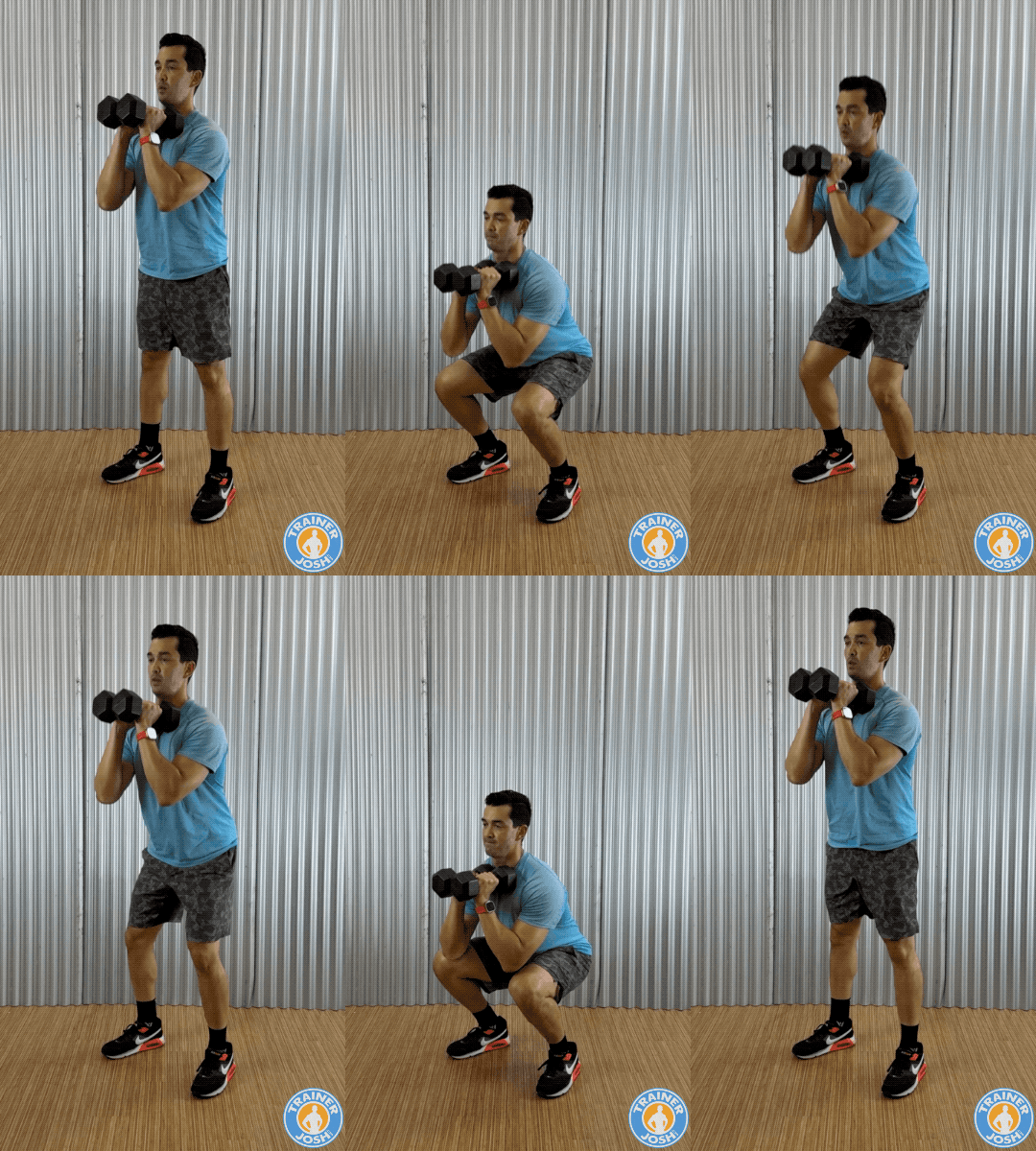
The dumbbell front squat exercise is a powerhouse movement for building strong, defined quads. You’ll force your torso upright by holding the dumbbells in the front rack position. This puts extra emphasis on your quads and improves posture. It’s also a lot more joint-friendly and easier on the lower back compared to barbell squats.
- Hold the dumbbells in each hand, raising them to about shoulder level so that the back rests on top of your chest. Keep your elbows high (this helps prevent your back from rounding) so the dumbbells are level, and hold them together with your palms facing each other.
- Take about a shoulder-width stance with your feet, tighten your abs, and arch your back while keeping your head up.
- Lower your hips down into the squatting position until your thighs are at least parallel to the floor. Do your best to keep your torso upright and your back straight, and don’t lean forward by hinging it forward at your hips.
- I’m going to go grab my white. Squat back up by driving through your heels back up to the starting position. Keep a slight bend in your knees at the top to maintain activation in your quadriceps muscles.
Trainer Tip: You can place a small 1″ weight plate or block underneath your heels to further increase quad muscle activation (increases the degree of knee flexion relative to hip flexion). This is particularly useful for individuals with long legs or femurs who have limited ankle mobility (dorsiflexion) and struggle with achieving a full range of motion.
Dumbbell Front Foot Elevated Split Squats
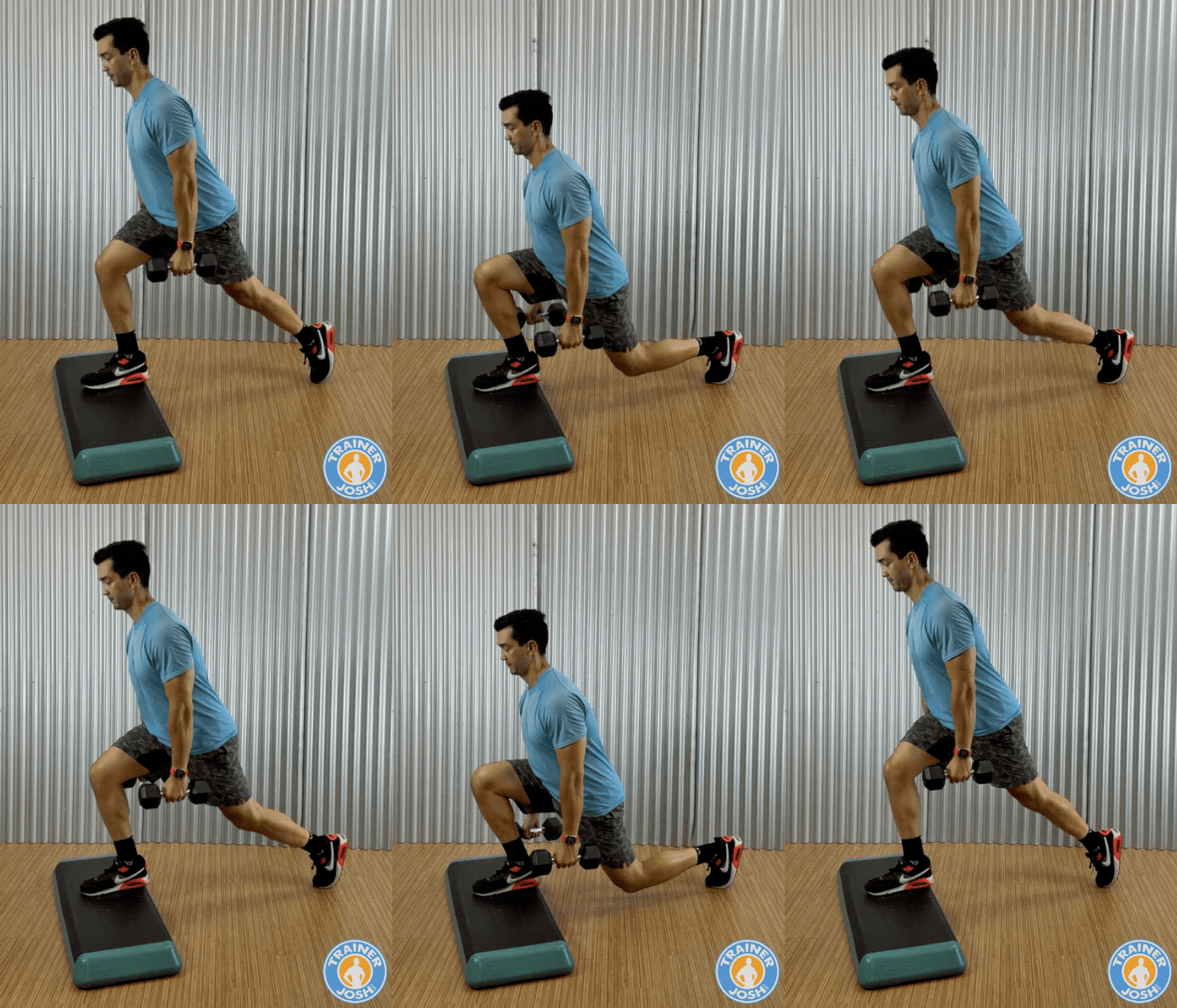
Elevating your front foot with this split squat variation increases the range of motion and places more emphasis on your quads. This makes it a terrific exercise for strengthening the quads, even if you only have dumbbells at home.
- Place your front foot on a 2-4″ sturdy riser (small box, weight plate, step, etc.) Keep your torso upright throughout the movement to place emphasis on your quads.
- Hold a pair of dumbbells at your sides and take a step back with your rear foot. Brace your core and lower your back knee straight down towards the floor with your front knee tracking over your toes.
- Lower until your front thigh is parallel to the floor (or slightly below) and your back knee nearly touches the ground. Feel the deep stretch in your hips and quads.
- Push back up through your front heel to bring your body back up. Keep your chest upright and the dumbbells at your sides.
Trainer Tip: Use a shorter stride length, which will cause a slightly forward front shin angle at the bottom. If you have trouble balancing, you can use your arms as a counterbalance. Move your arms forward as you lower into the squat to shift your center of gravity back.
Dumbbell Step-Ups
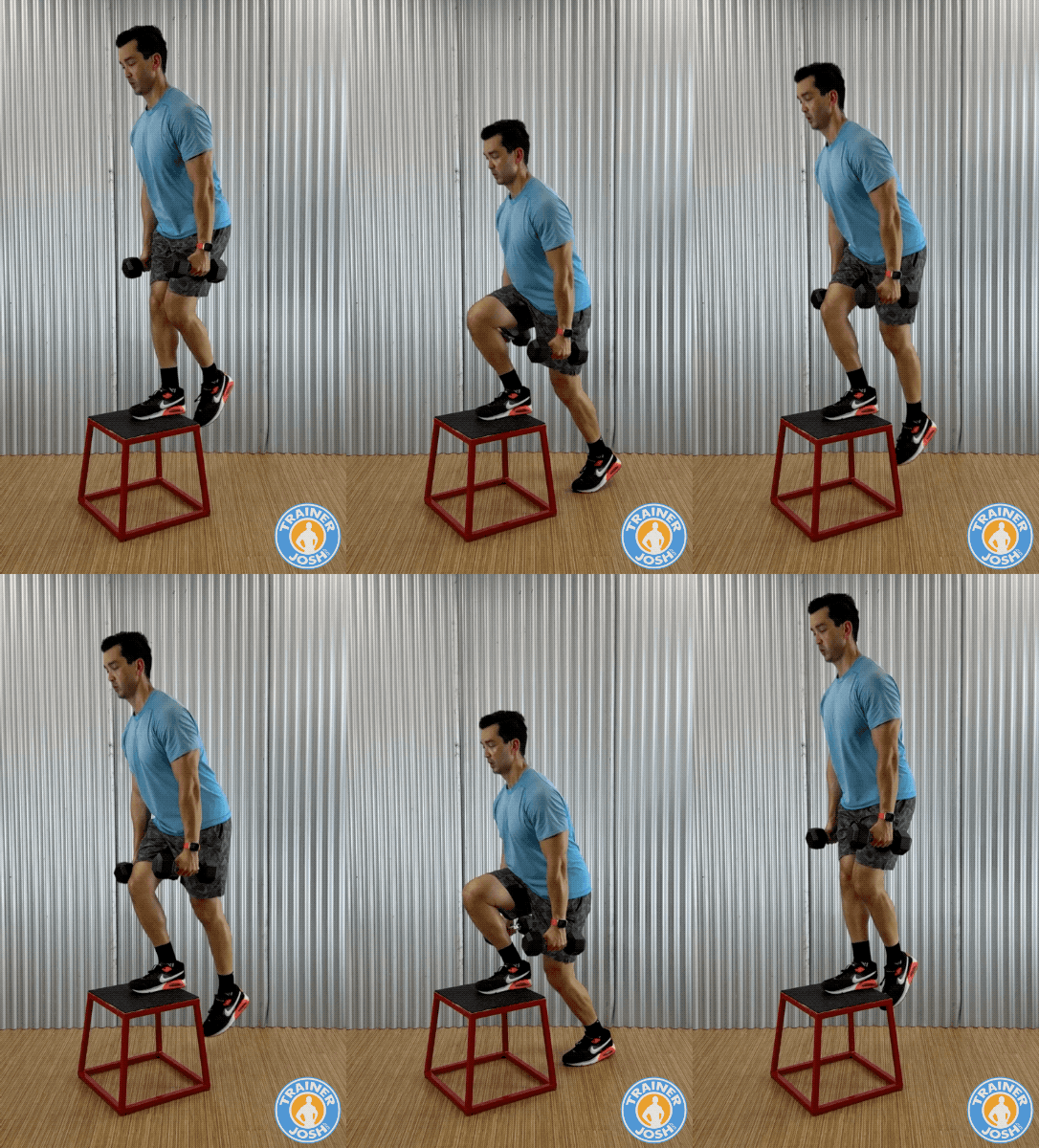
Dumbbell step-ups are a very effective yet joint-friendly exercise to build strong and defined quads. They also help to increase single-leg strength, balance, and coordination. Stepping up onto a platform forces your quads to do most of the lifting work, so it’s great for targeting the front of your thighs.
- Stand facing a sturdy bench or chair, or step about knee height or slightly lower. Hold a dumbbell on each hand at your sides with your arms relaxed.
- Place your entire right foot firmly on the platform. Try to keep your torso upright throughout the movement, and don’t lean forward by hinging at your hips to engage your quads more.
- Press through your right heel and midfoot to lift your body up onto the platform. Bring your left foot up to stand tall at the top with a slight bend in your right knee.
- Slowly lower your left foot back down to the ground and keep tension in your right leg. Repeat all reps on one side before switching.
Trainer Tip: Avoid using a box that’s too high, as it can increase glute activation. Avoid pushing off your trailing leg and let your front quad do the work.
Dumbbell Leg Extensions
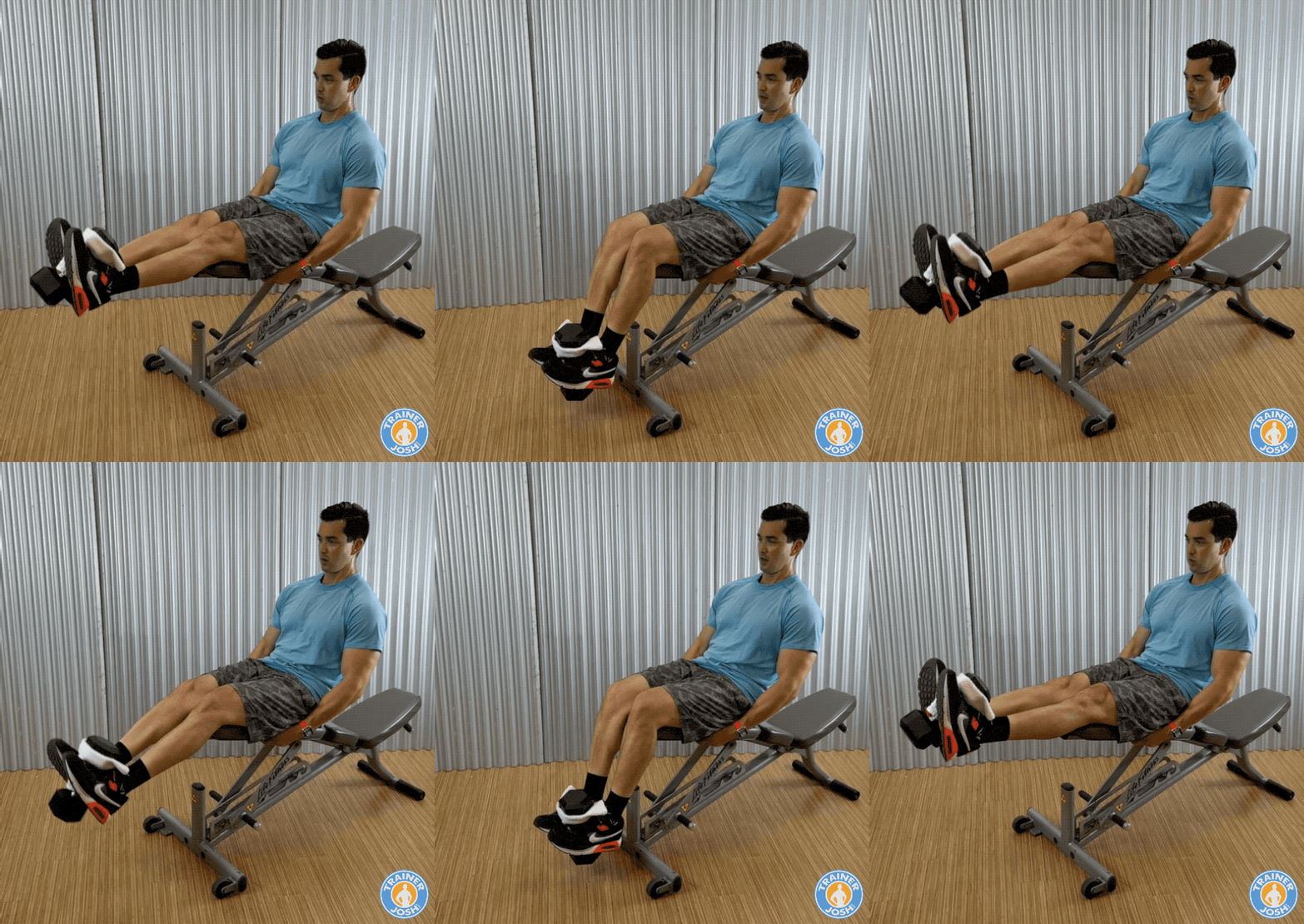
This is a straightforward yet effective exercise to isolate and target your quadriceps. And the best part is you don’t even need a leg extension machine. You can create direct tension on your quad muscles throughout the full range of motion. It makes a great exercise to finish off a leg workout.
- Sit on the edge of a sturdy chair or bench with your back straight and a towel placed around the handle of the dumbbell. Hold the towel and dumbbell grip underneath between your feet to hold on to the weight.
- Lean back with your upper body and let your legs hang so your knees are bent at about 90 degrees with your feet off the floor and the dumbbell not touching the floor. You can hold the sides of the bench or chair for support.
- Slowly extend your legs out in front of you by straightening them until your knees fully lock out and squeeze your quad muscles at the top.
- Then, slowly lower the dumbbell back down under control, keeping tension in your quads, so don’t let your feet drop too fast.
Trainer Tip: Don’t swing the dumbbell, but use a slow tempo for both the lifting and lowering parts. Point your toes up (dorsiflexion) to further isolate your quads. Pause and squeeze the top for 1-2 seconds for an extra quad burn.
Dumbbell Goblet Squat
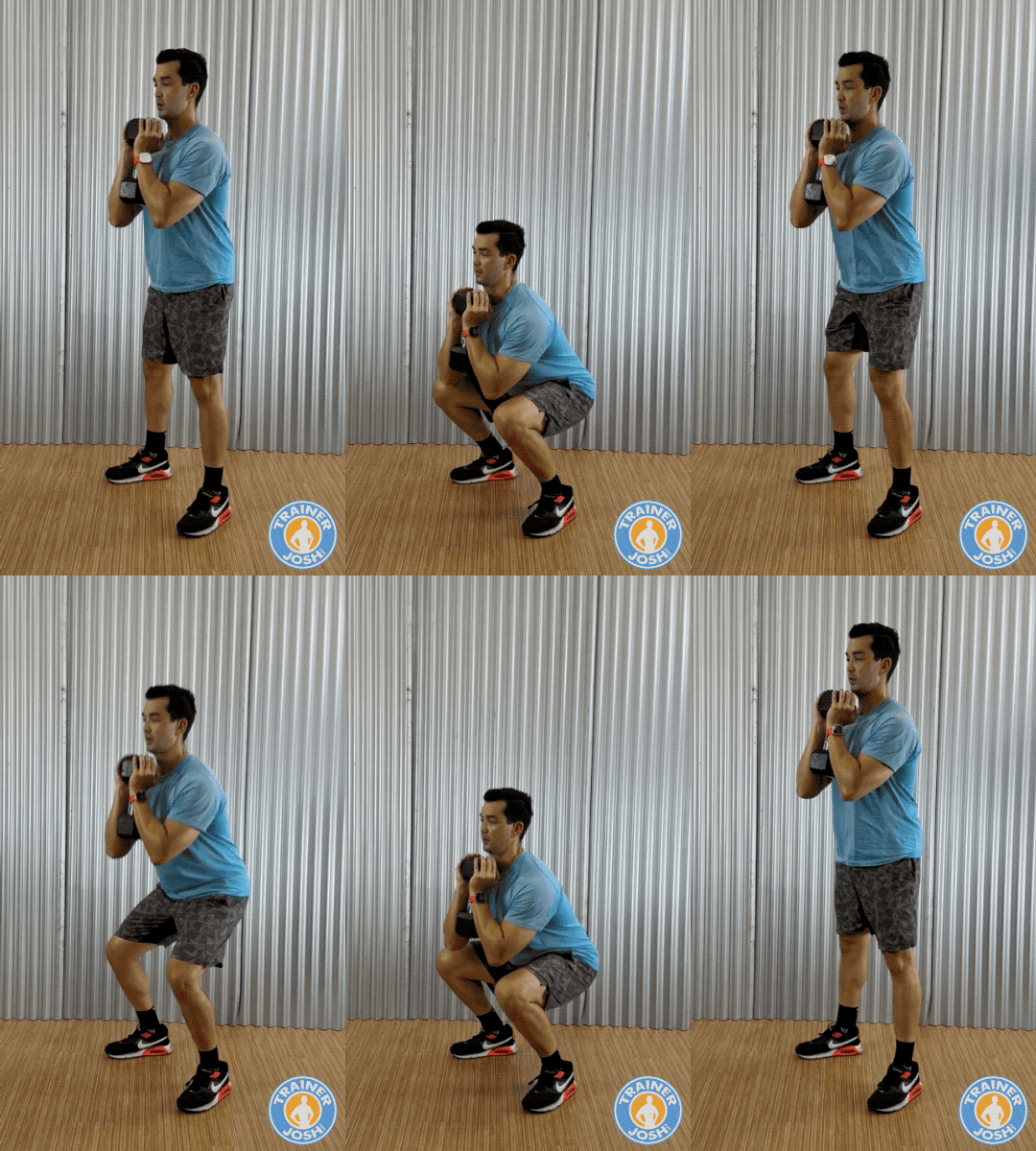
This is a beginner-friendly exercise that targets your quads by keeping your torso upright. It also makes it easier to squat deeper with good form, making them perfect for building lower body strength while enhancing mobility and improving squat mechanics.
- Hold one end of a dumbbell with both hands against your chest with your elbows clamped down on the bottom end. Stand with your feet slightly wider than shoulder-width apart, with your toes turned out 10 to 15 degrees.
- Engage your core, then bend at your knees and push your hips back to lower your body down as low as comfortable without losing the arch in your lower back or letting your heels lift up.
- Let your hips drop straight down between your heels until your thighs reach at least parallel, but preferably lower. Keep the dumbbell close to your body.
- Drive your body back up by pushing through your midfoot and heel. Focus on squeezing your quads.
Trainer Tip: Let your knees travel forward over your toes as long as your heels stay down to maximize quad activation. Keep your elbows inside your knees at the bottom to open your hips and maintain balance.
Dumbbell Goblet Squats are a lot like Dumbbell Front Squats. Goblet squats are more beginner-friendly, while the front squat challenges your stability and upper back/core more. I don’t program them into the same session but alternate them across different workouts.
Dumbbell Split Squats
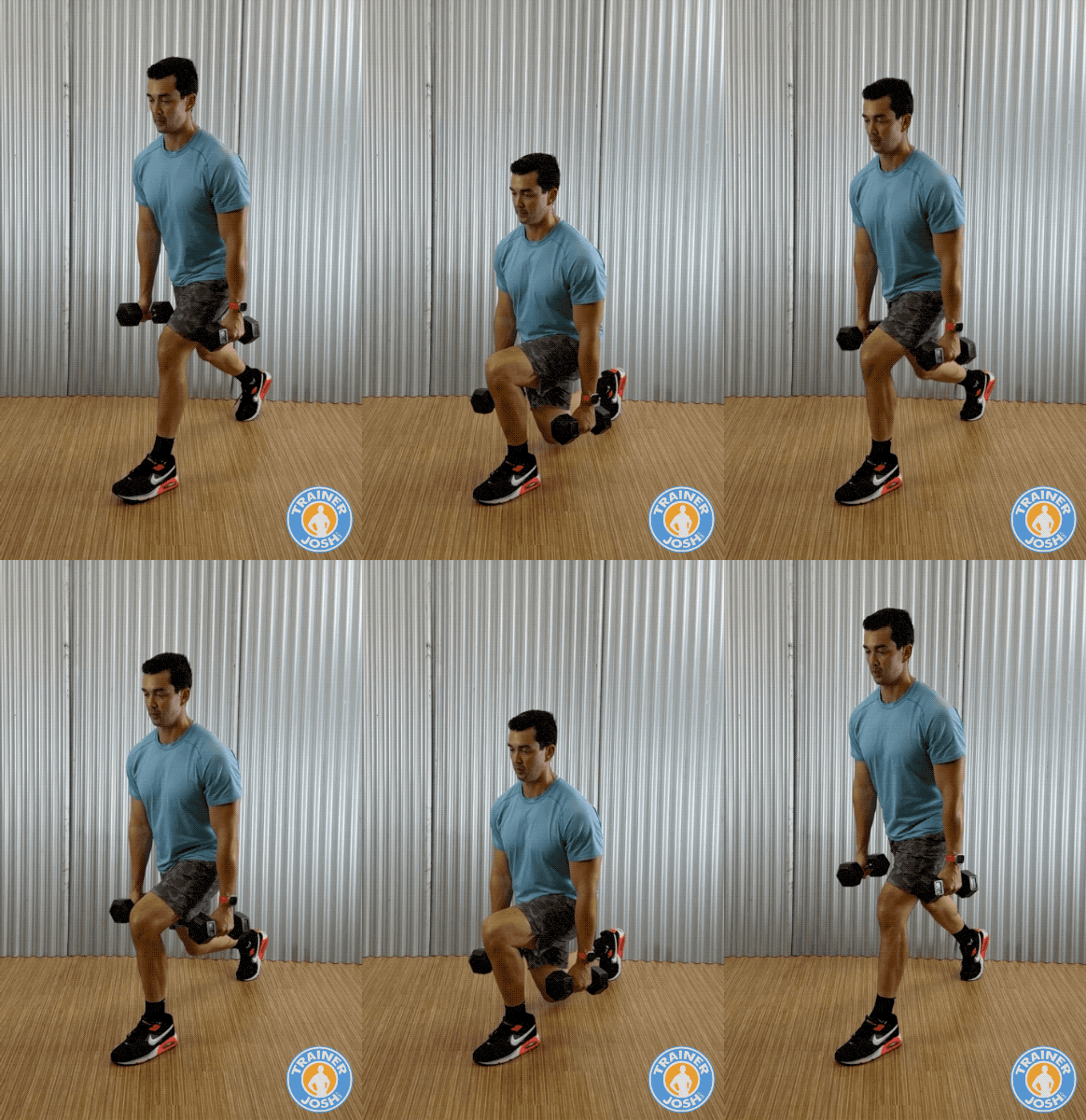
Standard split squats (sometimes called stationary lunges) with dumbbells create excellent quad stimulation. They allow a deep range of motion, which is key for more quad-fiber activation (especially vastus medialis). Unilaterally, training each leg lets you correct imbalances and make sure both quads are working.
- Stand in a staggered stance with one foot forward and the other one back. Hold a dumbbell in each hand at your sides with your arms relaxed.
- Maintain an upright torso throughout the movement (helps to emphasize quads over glutes/hamstrings). Keep your feet in a split stance (don’t move them between reps).
- Lower yourself until the back knee nearly touches the floor. The front knee should not go past your toes but should travel forward enough to have proper knee flexion.
- Pause at the bottom, then push off your front foot to bring yourself back up into the starting position. Make sure to keep your torso upright.
Trainer Tip: Move with a slower eccentric (lowering) phase and a controlled tempo to maximize muscle fiber recruitment, increase time under tension, and stimulate greater strength and hypertrophy gains.
Dumbbell Lunges
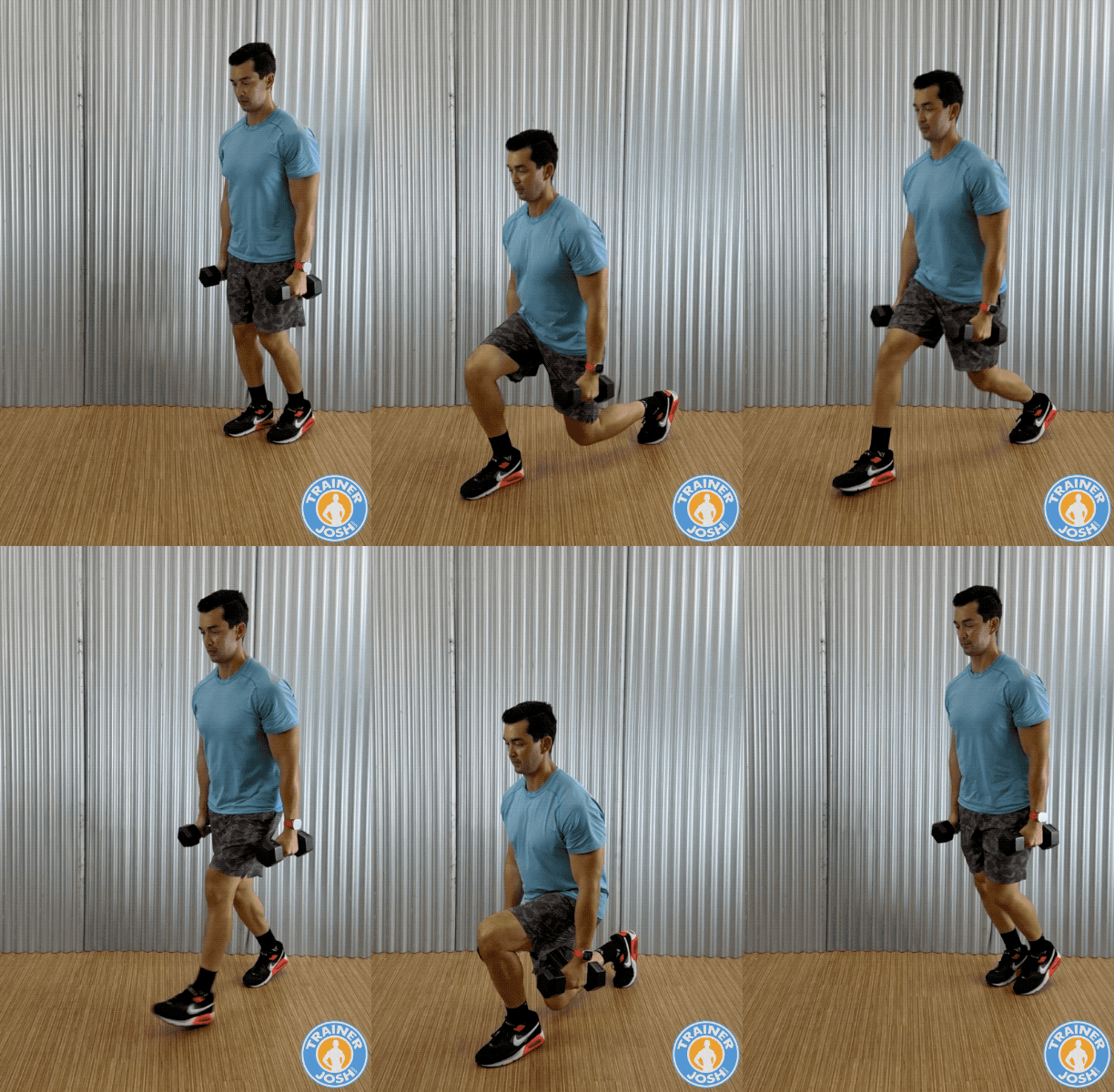
Lunges are one of the most effective dumbbell leg exercises you can do to develop strong, athletic quads. You’ll train each leg independently, which corrects imbalances and demands greater stability, forcing your quads to work harder. Lunges are also great for improving functional strength, balance, and proprioception (the body’s ability to sense position, movement, and equilibrium in space).
- Start standing upright, holding a pair of dumbbells in your hands at your sides with your feet hip-width apart and abs braced.
- Step forward with one leg, landing flat on your heel, and lower your body until your front thigh is parallel to the floor. Keep your torso vertical and your knee tracking over your toes.
- Pause briefly at the bottom, keeping tension in your quads and glutes.
- Drive through your front heel to push back up into the starting position. Focus on squeezing your quad.
- Repeat all reps on one leg or alternate legs. Always control the tempo, especially going slower on the way down.
Trainer Tip: Don’t overstride… a moderate-sized step will maximize knee flexion and quad activation. Try to use a slow 3-4 second lowering phase for every rep to fully stimulate your quad muscle fibers and ignite growth.
Dumbbell Quad Workout
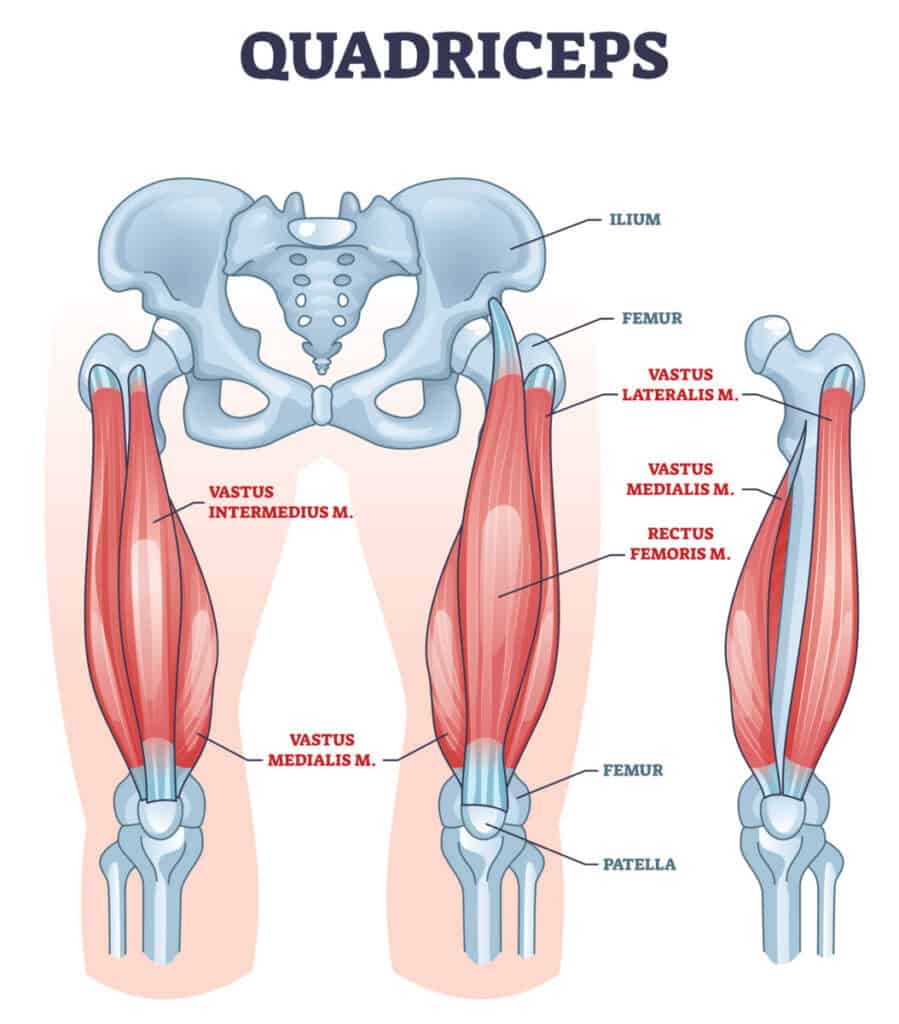
The quadricep muscles respond well to a variety of different rep ranges and frequencies. This is because of their mixed muscle fiber composition with both Type 1 (slow-twitch), which are fatigue-resistant and endurance fibers, and Type II (fast-twitch), which are powerful, explosive fibers for strength and speed.
- Vastus lateralis: ~40-50% Type I, ~50-60% Type II
- Vastus medialis: ~50-60% Type I, ~40-50% Type II
- Rectus femoris: ~40-50% Type I, ~50-60% Type II
You’ll get better results by using exercises that challenge your quads across different strength ranges. Your quads aren’t designed for all endurance or all explosiveness, but they’re for both force and endurance.
This is why they respond well to both high-repetition and low-repetition training schemes. Submaximal strength (3-6 reps), traditional hypertrophy (6-12 reps), and strength endurance (15+) reps are the ranges you should consider rotating through.
Here’s an example quad workout with dumbbells:
How Tempo Works (e.g., 4010): Each number represents the number of seconds for a specific part of the rep…
(1) First Digit: Eccentric (lowering) phase
(2) Second Digit: Pause at the bottom
(3) Third Digit: Concentric (lifting) phase
(4) Fourth Digit: Pause at the top
So, for 4010:
- 4 = Lower the weight in 4 seconds (eccentric)
- 0 = No pause at the bottom
- 1 = Lift the weight in 1 second (concentric)
- 0 = No pause at the top
Make sure you’re consuming enough protein to fuel recovery and muscle growth. You can use my protein calculator to instantly determine your daily needs. If you have trouble getting enough protein every day then consider using a low-carb protein powder.
If you’re using this workout to look leaner, getting enough protein becomes even more important when you’re also eating fewer calories. The BioTRUST GLP-1 Companion Stack is one option I like because it pairs convenient protein with targeted lean-muscle support, helping you support the muscle you’re working to build while losing fat.
A 3-part daily stack designed to support people using GLP-1 medications or losing weight naturally. It combines muscle, protein, collagen, and appetite support to help you maintain a healthier body composition as you lose weight.
- Natural GLP-1 Support: Helps support healthy appetite signals, fullness & metabolic function
- Lean Muscle Support: Helps preserve muscle, strength & healthy body composition during weight loss
- High-Protein Collagen: Adds 20 g of protein with 5 collagen types to help support daily protein intake
- Skin, Joint & Hair Support: Provides collagen peptides to support skin elasticity, joints, hair & nails
- 3-Part Weight-Loss Support: Combines muscle, protein/collagen & appetite support in one simple daily stack

Progressively Overload Quads Using Only Dumbbells
The biggest problem if you’re working out at home is keeping the progressive overload going once you’ve already maxed out your dumbbell weight. If you don’t have heavier weights or dumbbells, then you can still progressively overload using a few different techniques.
When the weight you have becomes easy, make it harder with creativity and intent rather than just adding more reps.
Tempo Manipulation:
Increasing the time under tension by manipulating the tempo of your repetitions is the most common way. You can make your lighter-weight dumbbells feel heavier by slowing down the tempo, especially on the eccentric, which can stimulate hypertrophy.
Example: Slow down the descent with these exercises for 3-4 seconds. You can pause at the bottom and then take 2-4 seconds coming back up on the ascent.
Paused Reps:
Add a pause at the bottom of the lift (e.g., the bottom of a squat) to stop the momentum, which forces your quad muscles to work harder.
Dropsets:
With drop sets, you perform your initial set to failure, then immediately reduce the weight and continue doing reps until failure is reached again. If you only have one set of dumbbells, then you can do body weight as a drop set. (e.g., do a set of dumbbell squats to failure, then drop the weights and keep doing bodyweight squats to failure)
Increasing Range of Motion:
A simple but also very effective way to increase the difficulty of an exercise is to put it through a greater range of motion. You can do this by creating more depth to the movement.
For instance, with goblet squats, you can place your heels on a small, one-inch block. Alternatively, for split squats, use a front foot elevated split squat stance, which allows for greater depth and targets your quads more effectively.
Unilateral (single-leg) variations:
Use single-leg movements to increase the load demands per limb. Examples of these quad exercises with dumbbells are split squats, front foot elevated split squats, and lunges.
Pre-Exhaust and Post-Exhaust Techniques:
Pair a compound exercise (like goblet squats or front squats) with an isolation-type exercise (like leg extensions) or a bodyweight exercise (like bodyweight squats). You can also use isometric holds before/after each set to burn out the remaining fibers.
Tri-Sets:
This is combining three exercises back-to-back for the same muscle group with minimal rest…
E.g., Front foot elevated split squats, goblet squats, step-ups
(repeat with as little rest as possible for high fatigue and stimulus)
Use Extended Sets:
If reps get too easy, you can use “1½ reps” (go all the way down, halfway up, back down, then up = 1 rep) to extend sets without heavier weights.
Increase Frequency or Volume:
Train your legs/quads more frequently. You can work out your legs 2-3 times a week with varied rep ranges and exercise order. You can also add an extra set or increase the total weekly sets.
