
If you’re looking for the best exercises to lose belly fat, then you’ve come to the right place. Belly fat can be the most frustrating area to lose stubborn fat, and it seems like it’s always the last to go.
It’s frustrating to figure out what exercises really work for losing belly fat. Sit-ups and crunches only add muscle to your abdominals, but they won’t burn off your belly fat since spot reduction doesn’t work very well.
Doing more cardio, like walking and jogging around the neighborhood, isn’t going to get you the fast results you want. If you want to lose belly fat fast, then you’ll need to “level up” with the exercises below.
In my 20 years as a personal trainer, I’ve compiled this list of the most effective exercises for losing belly fat. So keep going to discover the top 10 best exercises you can do today to burn your belly fat the fastest.
How to Lose Belly Fat With Exercise
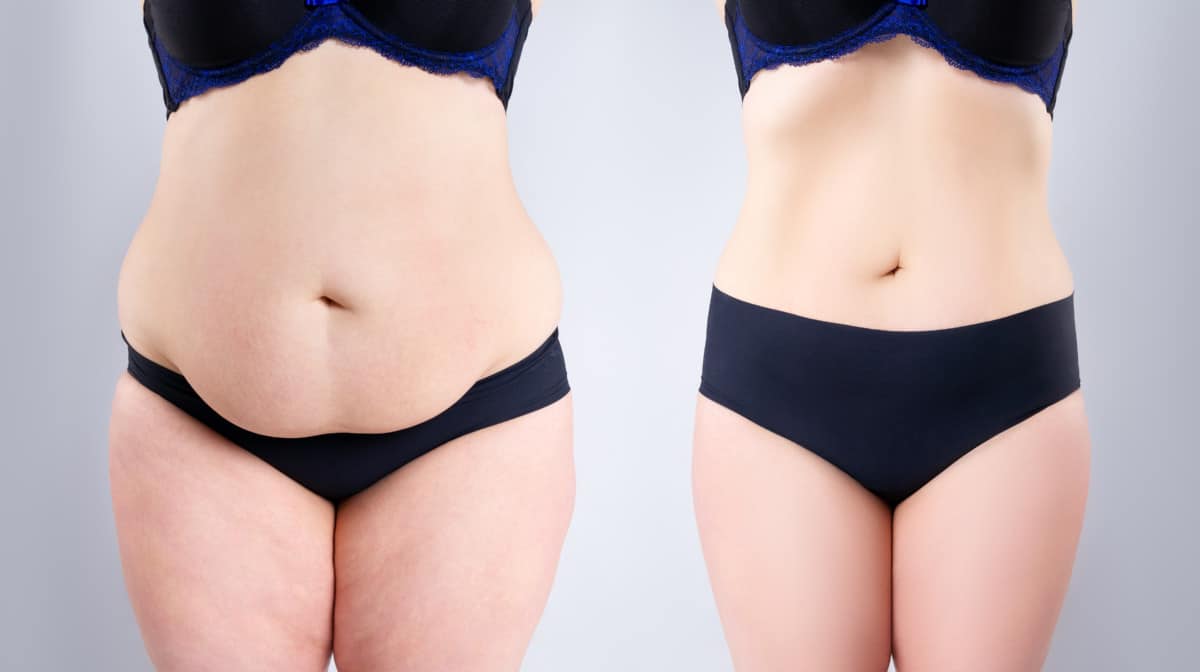
Can exercises actually burn belly fat? (The truth you need to hear)
Belly fat can not only make anyone feel self-conscious, but it’s also linked to serious chronic diseases like diabetes, heart disease, and even some cancers.1,2,3 So getting rid of it isn’t just for looks and vanity, but it’s also critical for your health too.
Targeting belly fat, aka spot reduction training, is trying to lose fat in specific areas of your body by exercising those areas. For example, if you want to lose belly fat, most try to just do more sit-ups and crunches. But this method doesn’t work very well at all.
Your body stores excess energy in the form of triglycerides in fat cells throughout your entire body. When your body needs energy (such as during exercise), it breaks down these triglycerides and releases them into the bloodstream as fatty acids, ready to be burned for fuel.
Fat loss happens throughout your body, not just in stubborn areas like the belly. Genetics determines the order of fat loss. In general, you’ll lose body fat in reverse order that you gain it. This is why some stomachs hold fat the longest.
So just doing sit-ups every day isn’t going to get you the quick results you want. You can still do ab workouts to help tone your stomach, but you shouldn’t expect the excess fat to come off your abs by doing them alone.
Crazy enough, heavy ab training can thicken your waist. This is because muscle hypertrophy (growth) increases the size of muscle tissue. So if you just build more muscle under the fat… then it’ll end up making your waist bigger.
This is why you can have been doing crunches for months, and nothing has changed.
A 2011 study in the Journal of Strength and Conditioning Research found that six weeks of abdominal training had no effect on waist circumference or the amount of fat in the participants’ abs.4
You’ll need to use more effective methods to burn the fat off your belly. You’ll get the best and fastest results by using a combination of higher-intensity exercises with abdominal area focused strength training.
To burn stubborn belly fat, you’re going to have to do three things:
- Put your body into an energy (calorie) deficit
- Increase total body fat-burning
- Use specific & effective exercises to tone up the area
A 2022 study by Obesity Reviews found that regular cardio exercise produced the most reductions in stomach fat, but higher intensity exercise offered superior results.5
Why It’s So Hard to Lose Belly Fat
There are two types of belly fat: subcutaneous and visceral. You’ll usually lose the visceral fat before the subcutaneous fat.
- Subcutaneous fat is fat right underneath your skin that you can pinch with your fingers. This is the fat you can see, and most are trying to get rid of for looks.
- Visceral belly fat is the deep fat that builds up around your stomach and organs. This is the dangerous kind linked to heart disease, diabetes, and some cancers. It’s what can make one’s stomach look like a protruding “basketball”.
If you can pinch your belly fat between your fingers and “roll it”, then that’s the less dangerous subcutaneous fat. But if you have a more rounded protruding belly that can’t be pinched with your fingers, then this is a sign of deep visceral fat.
Men tend to have more deep visceral belly fat (the beer belly) than women. So their bodies naturally prioritize centralized fat storage around the abdomen.
Women tend to have a pear-shaped body fat distribution. So their bodies naturally prioritized storing fat in the lower body due to estrogen.
But women 40+ can start getting more belly fat even if they’ve never had it. This is due to the menopausal belly, caused by hormonal changes with a crash in estrogen from 350 pg/mL to below 10 pg/mL.6 This redirects fat storage from the lower body straight to the abdomen.
After 40, losing belly fat isn’t inevitable but it’s the result of compounding physiological shifts. Sarcopenia (age-related muscle loss driven by inactivity) strips away metabolically active tissue and tanks your resting energy expenditure.
Men also face the aromatase trap. This is excess body fat converting testosterone into estrogen. This creates the muscle-preserving hormones while quickening fat build-up.
Insulin sensitivity deteriorates with age and rising body fat in both sexes. This drives the storage of visceral fat around your internal organs. The fix isn’t crunches. But to rebuild lost muscle, through progressive overload resistance training to restore your metabolic rate. Then keep a consistent caloric deficit to mobilize the stubborn abdominal fat.
But with either sex, you’ll lose fat in the very last place because your body will pull energy from it last. This depends on where your genetics prefer to store fat first. It’s like draining a pool… the first place the water goes is also the last to drain.
“Why do I lose fat everywhere except my belly?”
Most people aren’t able to burn stomach fat because they’re just focused on weight loss (and not fat loss).
If you just “lose weight”, then you’ll also lose a lot of muscle mass, which changes your body fat composition (muscle-to-fat ratio).7 This results in you losing some weight, but you’ll still be stuck with the stubborn stomach fat.
This is why some people can appear to be skinny, but they still have a pot belly (skinny fat syndrome).8 You want to lose excess fat while maintaining and/or building some muscle too, especially in your stomach area.
If you’re chronically stressed and have high levels of the stress hormone cortisol, then you’ll tend to store more fat in your stomach. This specifically applies to the more dangerous visceral fat. Your psychological lifestyle can physically change where your body stores fat.9
Sleep deprivation, like stress, can negatively impact your body and body fat distribution. Research has found that your body tends to store more belly fat during periods of sleep restriction. It’s best to make sure you’re getting adequate sleep quality and quantity.10
What Actually Shrinks Belly Fat
Improving your body composition by reducing total body fat percentage is the key.
This will prevent “skinny fat syndrome” while reducing belly fat and toning your whole body (including your stomach). The lower your overall body fat then the more visible your muscle tone will become… especially in stubborn areas like the stomach.
Weight loss will only get you part of the way, but it’s not going to be the solution to losing those last stubborn pounds of fat. You need to lose excess fat while strengthening your body and abdominal area with the best exercises.
Your body decides where fat comes off based on genetics, cellular receptors, hormones, and lifestyle factors.
For most people, the stomach is the last place it goes. Many of us store fat in our midsection due to stress (cortisol), insulin resistance, or just genetics. The places where your body stores fat first (often belly and hips) are usually the last places it lets go of it.
Your fat cells are regulated by different receptors that respond to fat-burning hormones such as noradrenaline. Belly fat tends to have a higher density of alpha-2 receptors. These specific receptors make it harder to mobilize and burn fat than other areas… which is why it earned the nickname stubborn fat.
So your best bet to reduce belly fat is to focus on exercises that burn the most fat, preserve lean muscle mass, and target your core so you tone and tighten your midsection.
Why HIIT is the Best Exercise for Losing Belly Fat
The number one exercise for losing belly fat fastest is High-Intensity Interval Training (HIIT).
A 2018 meta-analysis in Sports Medicine found HIIT is especially effective for fat burning around the abdominal area.11 This makes HIIT workouts a powerful tool for trimming your waistline and boosting overall fat burn with an elevated heart rate and increased metabolic demand.
A 2020 meta-analysis of 38 studies found HIIT significantly reduces weight, total fat mass, and abdominal fat in women.12 In 2015, a study in Kinesiology found 12 weeks of HIIT reduced both visceral and subcutaneous fat in women compared to steady moderate-paced exercise like jogging.13
One study found greater localized belly fat loss when combining high-intensity abdominal exercise with cardio.14 A 2023 randomized controlled trial in Physiological Reports, high-volume abdominal aerobic endurance exercise reduced central fat by 7%, and 3% more than the control group.15
Doing specific ab exercises does mobilize fat in that area (a process called lipolysis), but it doesn’t create the energy demand to actually burn (oxidize) that fat. Fat has to be burned for energy by your body. If it isn’t used, it simply goes back into storage.
The high-intensity exercises you’ll find below are great at burning stomach fat because they create an Afterburn Effect in your body. This is when your body continues to burn fat well after you finish the workout, allowing you to burn more fat, not only from your belly but also from the rest of your body.
It’s known as EPOC or Excess Post-Exercise Oxygen Consumption. Intense exercise boosts your metabolism as your body uses more oxygen to return to its pre-exercise state. EPOC is greater after HIIT for longer periods and enhances abdominal fat loss.16
Why HIIT Beats Traditional Cardio for Belly Fat
Slow-and-steady traditional cardio isn’t the best way to burn belly fat.
While walking is better than sitting all day, it’s hardly the most effective way to get fast results. You’d have to walk for hours per day for many weeks to really see your waistline slimming down.
A study in the Journal of Functional Morphology and Kinesiology found that HIIT is more effective for loss of subcutaneous and visceral abdominal fat than steady-state cardio.17 A 2025 systemic review from the Institute of Sport Sciences found HIIT is most effective at reducing abdominal fat.18
If you only have 20 or 30 minutes to work out, then go with HIIT exercises that involve your abdominals/core.
They’ll give you the biggest bang for your buck in the shortest amount of time by combining fat-burning and lean muscle-building. Plus, they’ll create an Afterburn Effect so your body can keep burning fat for hours after you’ve finished working out.
Make sure you stay consistent with the exercises below to keep your belly fat off. This 2010 study in Obesity found that those who kept exercising were less likely to regain the belly fat they had lost.19 Consistency is key!
The exercises below combine strength training with HIIT cardio and incorporate the abdominals.
You’ll challenge multiple muscle groups while elevating your heart rate. You’ll create the needed fat-burning by adding cardio to abdominal work. This creates optimal conditions for belly fat burning.
10 Best Exercises to Lose Belly Fat
The belly fat-burning exercises below use a combination of:
- Strength Training
- HIIT cardiovascular work
- Targeted ab exercises
HIIT combines strength training and cardio for maximum fat burning, but the real “secret sauce” is to incorporate exercises that also target your abs directly. This creates the ideal combination for not only fat burning but also toning the abdominal core.
Equipment Used:
I’m using minimal equipment with these exercises and some are totally bodyweight. Get yourself a pair of hex dumbbells. This shape is best since they won’t roll on the ground like circular dumbbells. 8-12 pounds is a good starting point for most beginners.
I also recommend getting a kettlebell (20-30 lbs. for a beginner). A treadmill with an incline is also a great addition. But if you don’t have a treadmill, then you can do incline sprint on a steep hill or long staircase.
Dumbbell Burpee Press
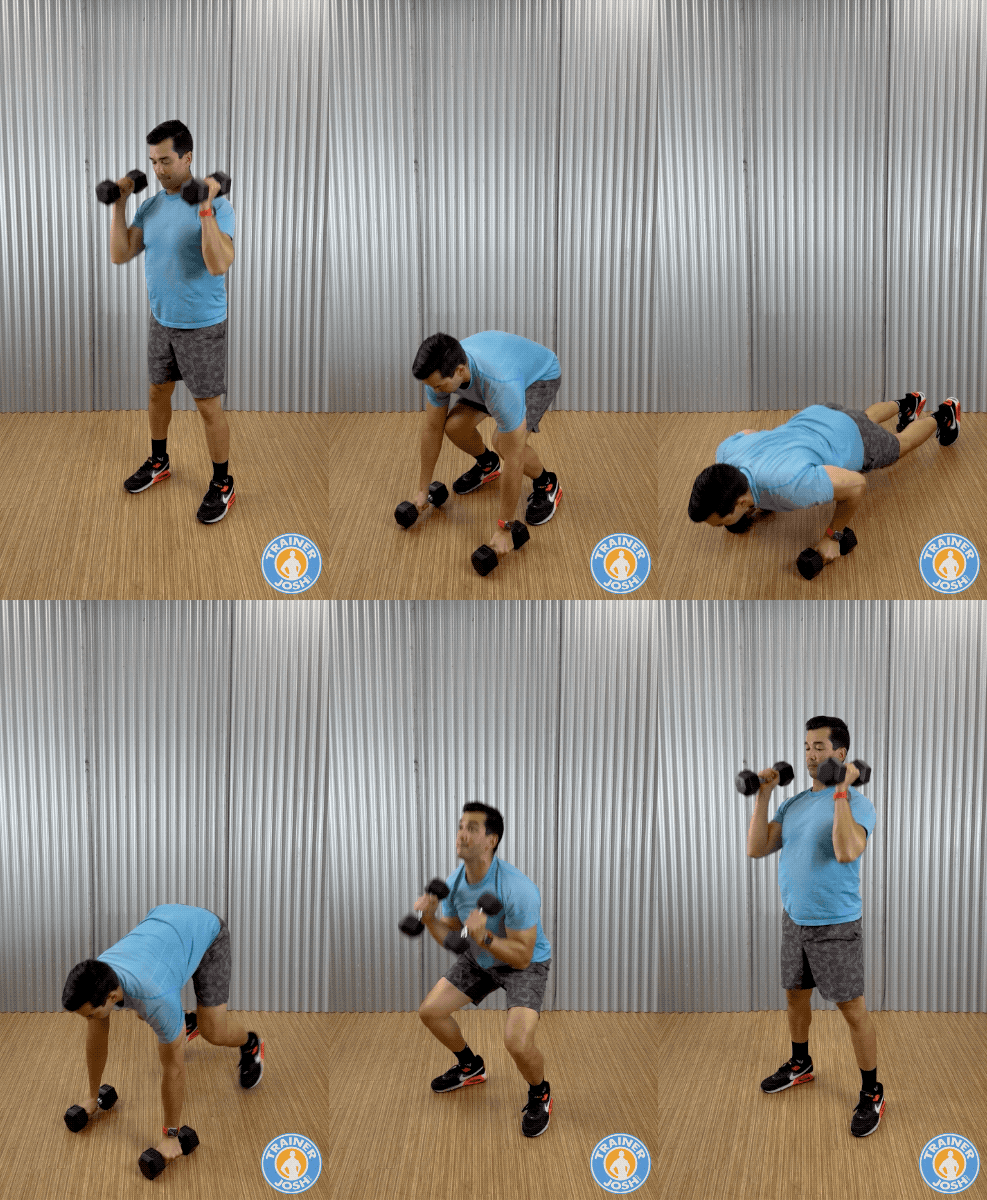
The dumbbell burpee press is a killer, high-intensity conditioning exercise that combines the total-body agility of a burpee with the strength and power development of the overhead press.
You’ll be integrating multiple major muscle groups into one fluid motion, including your core, quadriceps, glutes, chest, shoulders, and triceps. This exercise causes your heart rate to skyrocket while at the same time building explosive power and muscular endurance.
How to Perform the Dumbbell Burpee Press:
- Squat and Plant: Stand tall holding a dumbbell in each hand. Bend your knees, hinge forward at your hips, and squat down to place the dumbbells on the floor directly under your shoulders.
- Jump to Plank: Keeping your hands securely on the dumbbells, jump your legs backward so you land in a push-up (plank) position. Your body should form one straight line from your head to your heels.
- Jump to Squat: Explosively jump your feet back forward to the outside of your hands. Make sure to drop your hips down into a true squat position.
- Stand and Rack: Push through your feet to stand up forcefully. Use your lower-body momentum to simultaneously lift the dumbbells to shoulder level.
- Overhead Press: Without breaking your rhythm, press the dumbbells directly overhead until your arms are fully extended, then smoothly lower them back to your sides to begin the next repetition.
Pro Trainer Tips:
- Coordinate Your Power: The energy for the pressing movement should travel from the floor, through your legs and hips, and up into your arms. Use your legs to blast out of the squat, allowing your momentum to help drive the dumbbells overhead.
- Keep the Weights Close: Stand up with the dumbbells close to your body to reduce unnecessary stress on your lower back.
- Establish Your Base: When jumping, land your entire foot flat on the ground before attempting to stand up and press.
Common Mistakes to Avoid:
- Sagging hips: Do not let your hips sag toward the floor during the plank/push-up phase. This hyperextends the lower back and can cause injury. Keep your core tightly braced.
- Rounding the back: Avoid excessive spinal flexion (rounding your back) at the bottom of the squat position.
- The “stiff-legged” stand: A very common error is leaving the hips high in the air when jumping the feet forward. You must actively drop your hips back into a squat before standing up so your leg muscles do the lifting and not your lower back.
- Bending the wrists: Do not allow your wrists to bend backward at any point during the overhead press; keep them straight and stacked directly under the dumbbells.
Kettlebell Swings
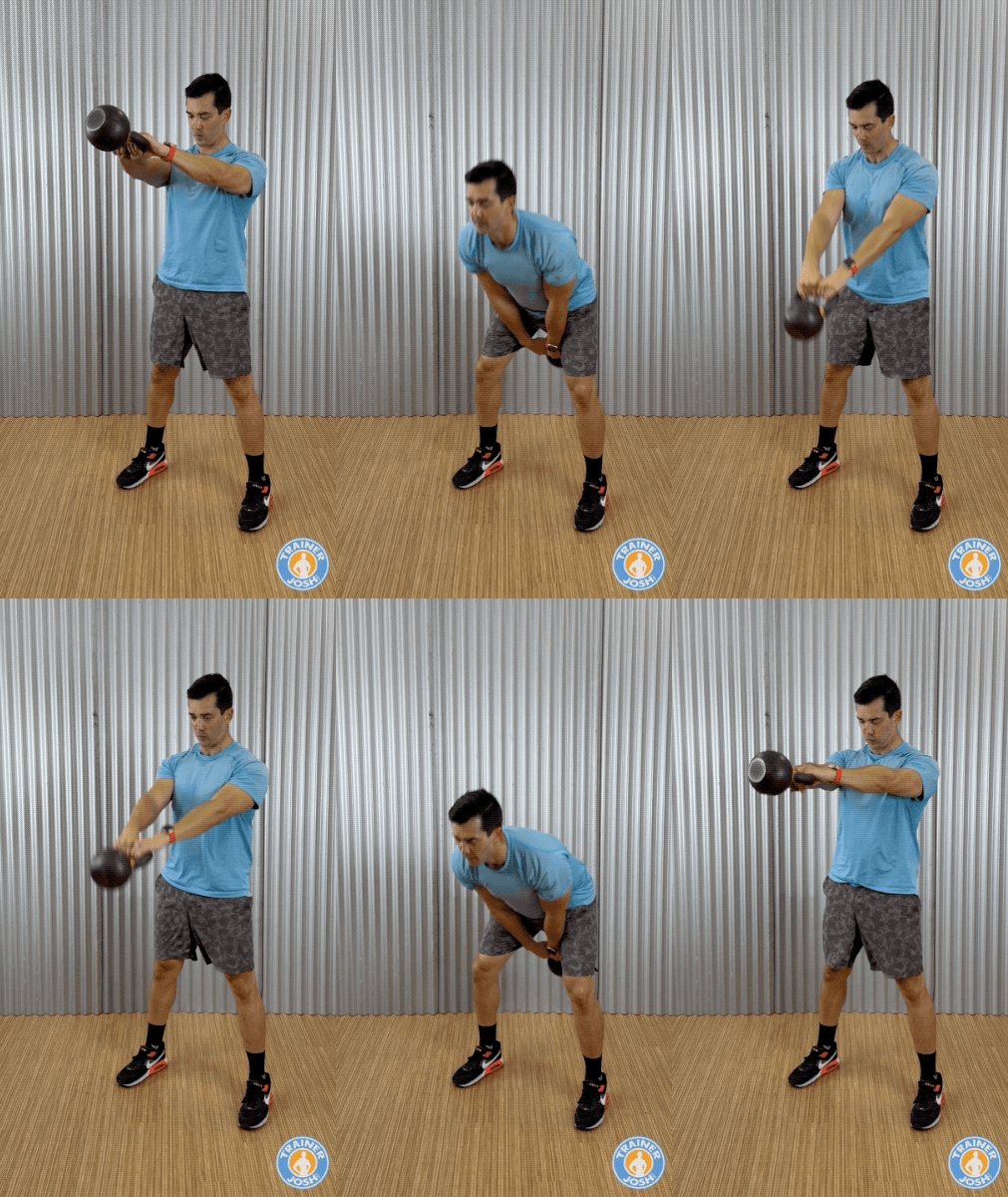
The kettlebell swing is an explosive, total-body exercise that develops muscular strength, power, and cardiovascular conditioning all at the same time. It heavily targets the posterior chain (glutes, hamstrings, and lower back) along with your core and shoulders.
This all makes kettlebell swings a highly energy expensive movement that’s great for metabolic conditioning and fat burning. The swing requires a dynamic and forceful hip hinge to propel the weight. This makes it a top level exercise for building athletic explosive power, priming the nervous system, and teaching the horizontal application of force.
How to Perform the Kettlebell Swing:
- Setup: Stand with your feet roughly hip-to-shoulder-width apart, holding the kettlebell with both hands in front of your body, with straight arms.
- The Hinge (Downward Phase): Keeping your back perfectly straight, hinge forward at your hips and bend your knees slightly (about a 15- to 20-degree angle). Drive the kettlebell backward between your legs as if hiking a football, allowing your forearms to make contact with your inner thighs.
- The Drive (Upward Phase): Explosively reverse the downward motion by forcefully driving your hips forward and extending your knees and hips.
- The Swing: Allow the momentum generated by your lower body to propel the kettlebell upward to roughly chest or eye level. Keep your arms straight and squeeze your glutes tightly at the top of the swing.
- The Return: As gravity pulls the kettlebell back down, smoothly absorb the weight by hinging at your hips and slightly bending your knees to actively pull the bell back between your legs for the next repetition.
Pro Trainer Tips:
- Create a fast eccentric: Actively pull the kettlebell down under your tailbone during the descent rather than just letting it fall. The faster you pull it down, the more elastic energy you create to forcefully thrust it back up.
- Weight placement: Keep your body weight shifted toward your heels throughout the entire movement to maximize posterior chain engagement.
- The back is a lever: Think of your back as a rigid lever during the movement; all the explosive energy must come from your hips and legs acting like rubber bands snapping forward.
Common Mistakes to Avoid:
- Squatting instead of hinging: The swing is a forward-and-backward hip hinge, not an up-and-down squat. Your lower legs should remain relatively vertical, with your knees remaining static after the initial slight bend.
- Using your arms to lift: Your arms should merely act as ropes connecting you to the kettlebell. The upward flight of the bell must be generated by the power of your hips and not by doing a front shoulder raise.
- Rounding the back: Never let your lower back to round out at the bottom of the swing. You must keep a braced core and a neutral spine during the entire exercise so to protect your lower back.
Squat Thrusts
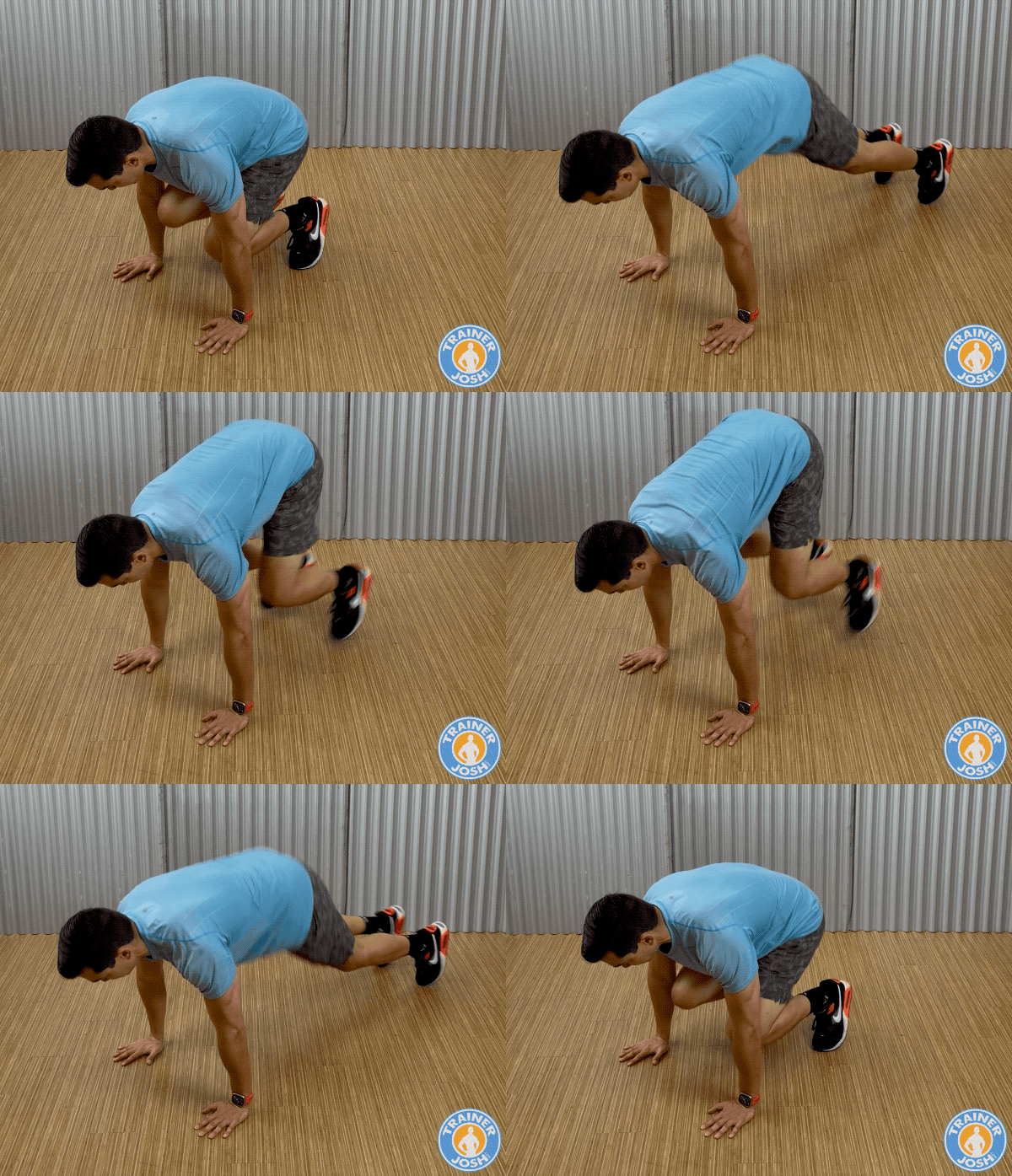
The squat thrust is a highly demanding conditioning exercise that rapidly elevates your heart rate and develops mobility. You’ll decrease the strength workload on the upper body by eliminating the push-up and jump parts of the traditional burpee. This allows you to do the movement at a much faster pace for higher fat-burning.
How to Perform the Squat Thrust:
- Crouch down and place your hands flat on the floor in front of you (this will serve as your start and finish position).
- Brace your core, jump your feet into the air, and shoot your legs straight backward.
- Land softly in the top of a push-up (plank) position, make sure your body forms a perfectly straight line from the back of your head to your heels.
- Jump your feet back into the air and return them under your body to the starting crouched position.
Pro Trainer Tips:
- Pace yourself initially: If you are new to the movement, move carefully and methodically through each phase. Only increase your speed and intensity once your form and body alignment improve.
- Race the clock: To maximize the conditioning and fat-burning benefits, try to perform sets as fast as you safely can. A great benchmark is to see how many repetitions you can successfully achieve in 60-second intervals.
Common Mistakes to Avoid:
- Sagging at the hips: When you kick your legs back into the push-up position, you must brace your core to protect your spine. Do not allow your hips to sag toward the floor (lumbar hyperextension).
- Excessive lower back rounding: Try to spare the spine by avoiding excessive lumbar flexion (rounding of the lower back) when you are gathered in the bottom crouched position.
Dumbbell High Cross Punches
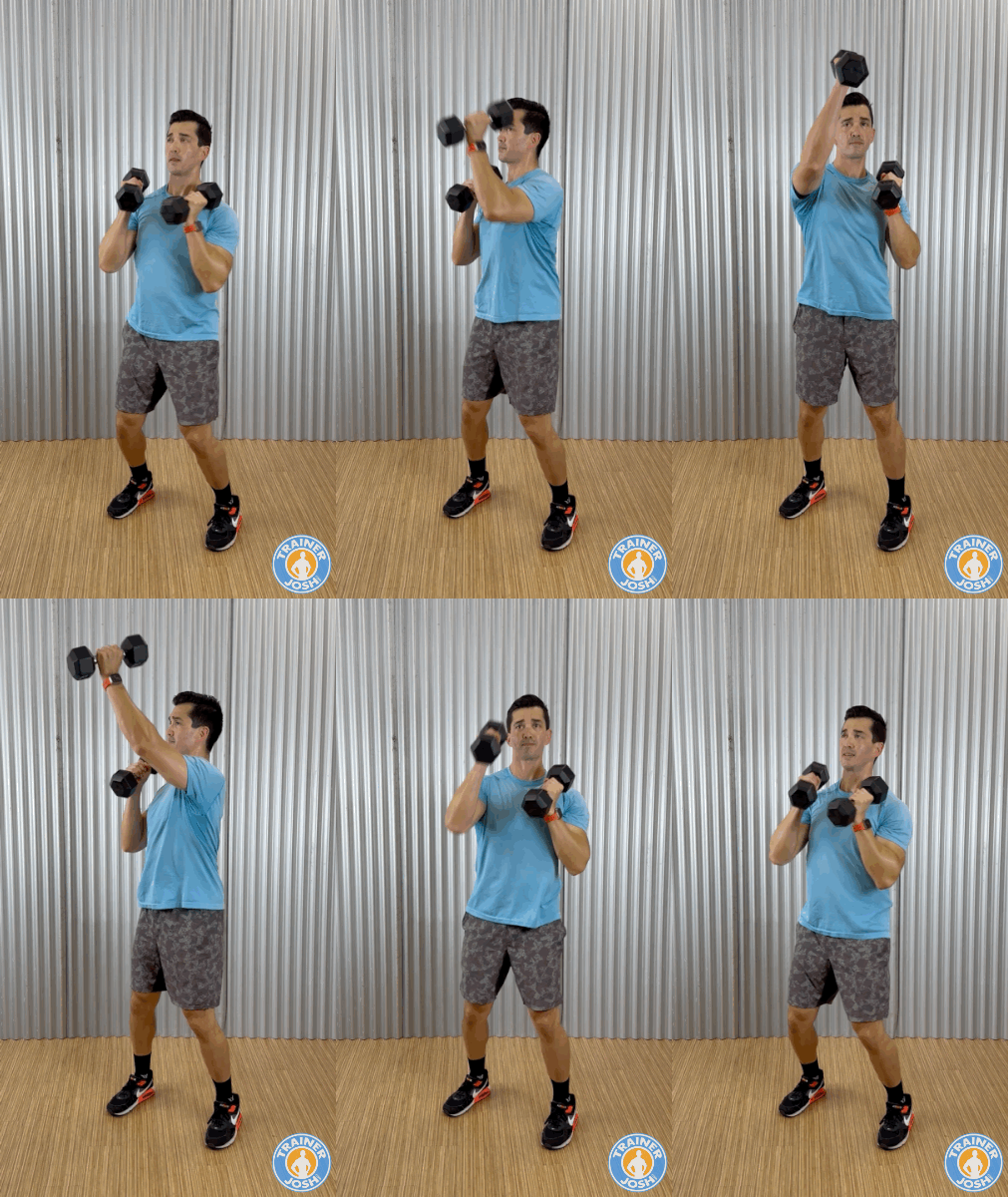
Dumbbell high cross punches is a functional upper body exercise that’s very popular with combat athletes for developing shoulder strength and intense core stiffness.
This exercise trains your core to resist twisting forces, as you have to dynamically push the weight across your body while keeping your lower half rigid. This also improves total body stability, shoulder health, and muscular coordination.
How to Perform the Dumbbell High Cross Punch:
- Stand up tall with your feet pointing straight forward and spread about shoulder-width apart.
- Hold a dumbbell in each hand at shoulder height, keeping your palms facing toward each other.
- Powerfully stiffen your core and lock your lower body in place.
- Punch your right hand across your body and upward so that the dumbbell finishes high and just to the outside of your left shoulder.
- Bring your right hand back to the starting position at your shoulder, and immediately perform the exact same high cross punch with your left hand.
Pro Trainer Tips:
- Do Not Pivot: Unlike many other rotational pressing exercises, this specific punching movement is performed without a pivot. Your feet must stay firmly planted facing forward to force your core to do the strenuous stabilizing work.
- Ontrol the Tempo: Keep the punching movement explosive but strictly controlled. You should actively pull the dumbbell back to the starting position rather than just letting gravity drop it back to your shoulder.
Common Mistakes to Avoid:
- Using Uncontrolled Momentum: Avoid throwing the weights with jerky, uncontrolled movements, as this drastically increases the risk of injuring your shoulder joint or lower back.
- Using Weights That Are Too Heavy: Selecting dumbbells that are too heavy will force you to use momentum or improper body positioning to heave the weight up. Start light to master the stabilization aspect of the exercise.
Incline Sprints
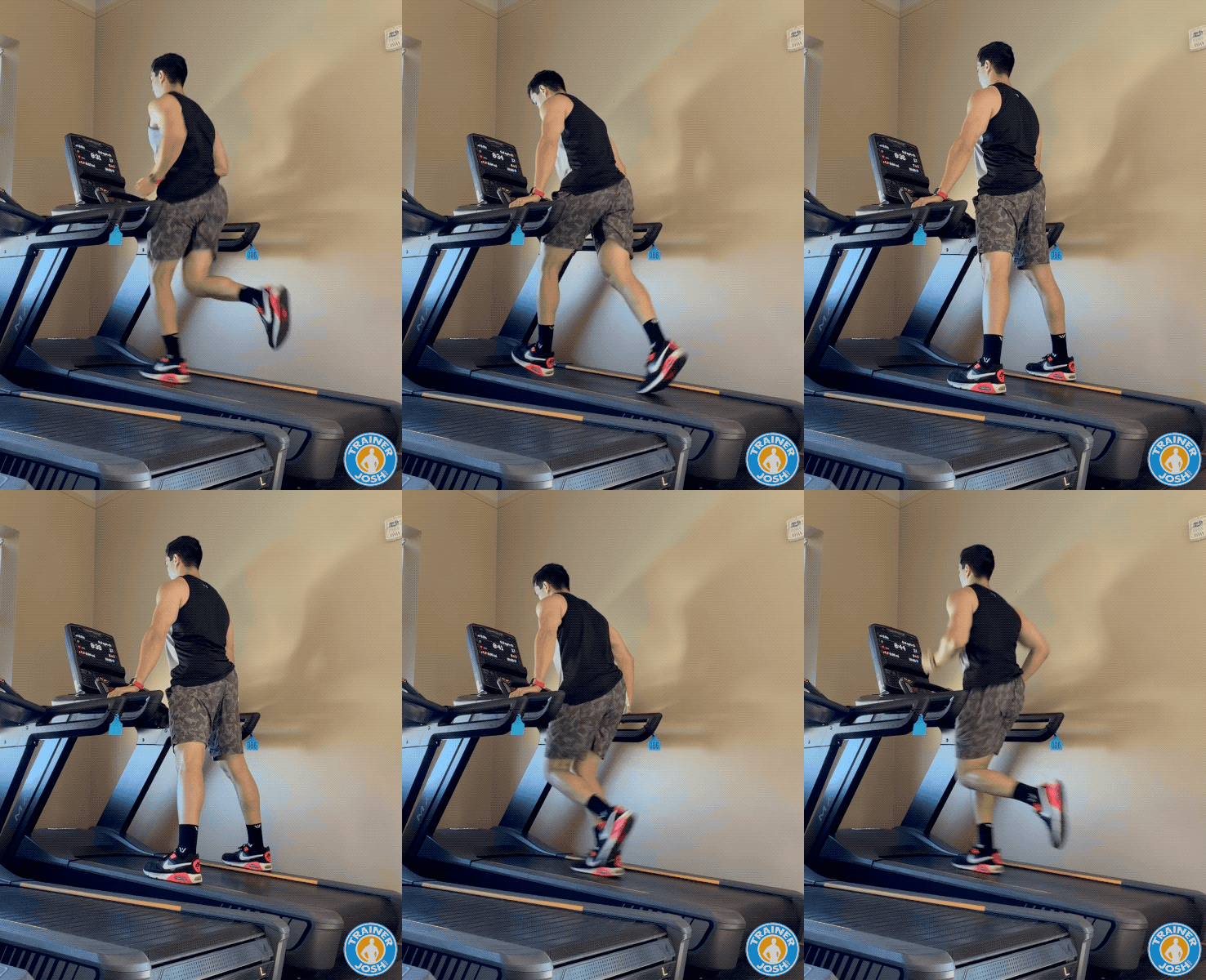
Treadmill incline sprints are a very effective form of resisted sprint training that also directly overloads your body’s acceleration phase. Your body is naturally forced into optimal acceleration biomechanics (a lowered torso, hip, and shin angle) by running up a slope.
This inclined positioning forces you to generate higher propulsive ground reaction forces with each step. This improves your overall rate of force development and can ultimately translate to increasing your maximum unassisted sprinting speed.
How to Perform the Treadmill Incline Sprint:
- Set up a treadmill to an incline at about a 20-30 degree angle and find a speed that will force you to run hard but let you keep proper sprinting form.
- With the treadmill already running at your target speed, also support your body weight using the side handrails. Then carefully drop your feet onto the moving belt to start the sprint.
- Lean your entire body forward by shifting your weight to the front. Be sure to establish an aggressive acceleration angle while staying centered on the track.
- Drive your legs and arms to sprint as fast as you can for 10-40 seconds. Aggressively push down and through the moving belt when sprinting.
- When you’re transitioning into your rest period, first grab the side handles and lift your body off the track. Safely place your feet onto the side stationary rails. Rest fully for 30 to 90 seconds before starting your next interval.
Pro Trainer Tips:
- Coordinate Your Arm Drive: Your arm action should be aggressive and synchronous with your legs. Drive your elbows down and back to maximize power.
- Low Heel Recovery: To optimize your acceleration mechanics, focus on keeping the heel of your rear/swing leg low to the ground as it recovers for the next stride.
- Keep a Neutral Head: Your head should remain in a neutral position (in line with your spine). Let your torso and head naturally rise together at the same rate as your hips as you drive forward.
Common Mistakes to Avoid:
- Taking Short, Choppy Steps: Do not stutter-step. You have to let your legs take full, powerful strides to properly transmit force.
- Breaking at the Waist: Avoid simply bending forward at the waist. Your entire body should lean forward as a single, stable, aligned unit.
- Using Too Much Incline: Sprinting against a slope that is too steep can ruin your natural sprinting biomechanics. If the incline alters your natural gait, you will rehearse improper technique, which limits the transfer of your training to actual flat-ground sprinting speed.
Cross-Body Mountain Climbers
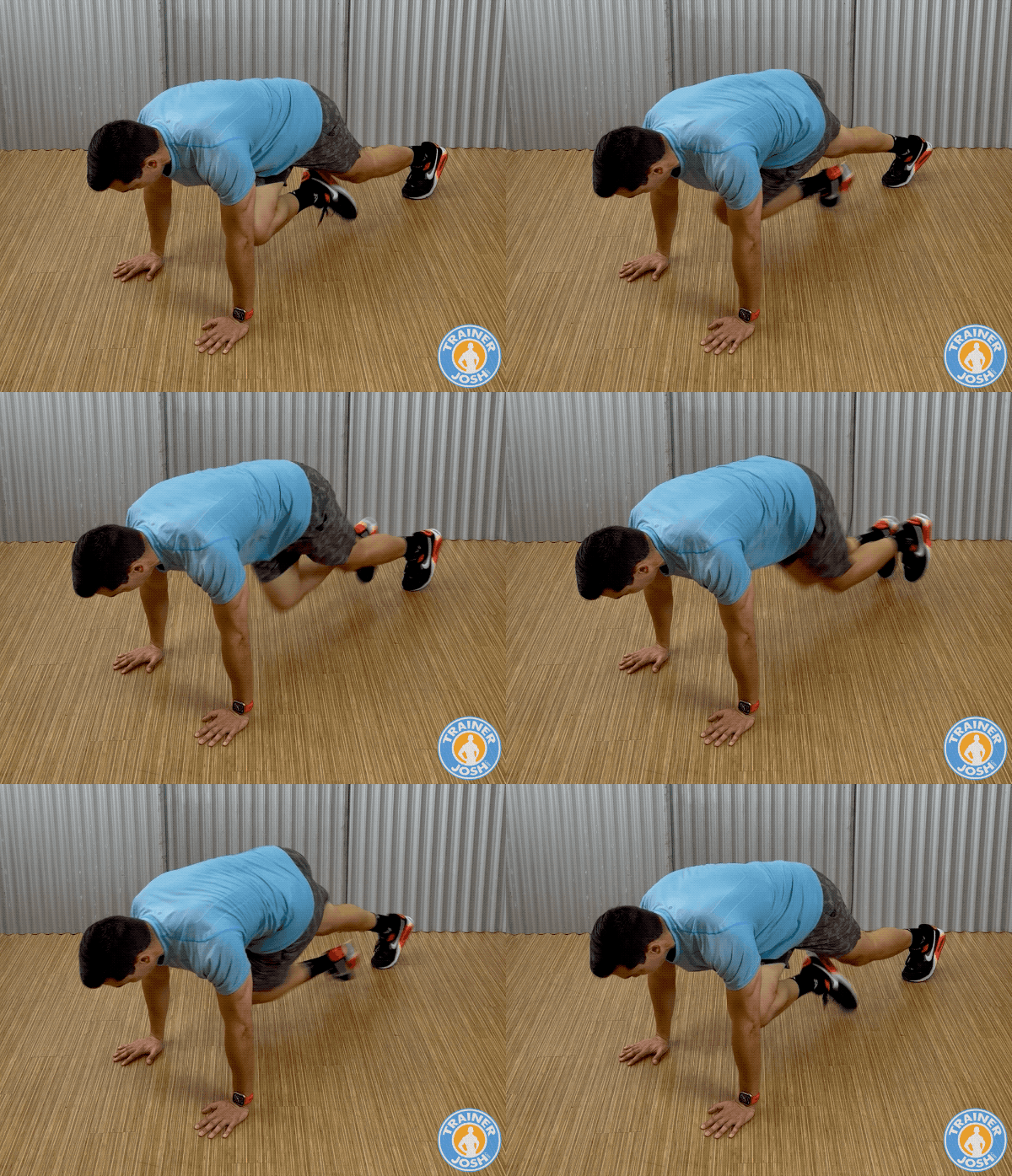
The Cross-Body Mountain Climber (also known as the Diagonal Mountain Climber) is an effective cardiovascular and full-body conditioning exercise. It mimics the motion of climbing while intensely working your core, hip flexors, quads, and shoulders.
Standard mountain climbers build tremendous athletic power and stamina, but by crossing your knee to the opposite side, you’ll change the angle of the movement, significantly increasing activation of the oblique muscles. Supporting your body weight throughout the rapid leg movement acts as a dynamic plank.
How to Perform Cross-Body Mountain Climbers:
- Start in a standard push-up position with your arms completely straight, your hands under your shoulders, and your body forming a perfectly straight line from your head to your heels.
- Brace your core, lift your right foot off the floor, and pull your right knee toward your left opposite elbow, bringing it diagonally across your chest.
- Straighten your right leg back out to return to the starting push-up position.
- Immediately repeat the motion with your left leg, pulling your left knee across your body toward your right elbow.
- Continue alternating legs at a controlled or rapid pace for the desired number of reps or time.
Pro Trainer Tips:
- Control Over Speed: If you are new to the exercise, start with a slow, methodical pace to get proper form and mind-muscle connection. Once you master the movement, you can increase your speed to boost the cardiovascular and fat-burning benefits.
- Full Range of Motion: Do not skimp on the movement. Make sure you kick your feet all the way forward and all the way back on every single repetition.
- Head Alignment: Look slightly forward or down to keep your head and neck in a neutral, safe position throughout the exercise.
- Adjust the Difficulty: If you struggle to sustain the horizontal plank position, you can make the exercise easier by elevating your hands on a stable prop (e.g., a bench or sturdy chair). This shifts more of your weight into your lower body.
Common Mistakes to Avoid:
- Hiking or Sagging the Hips: The most frequent way people cheat this exercise is by hiking their hips high up into the air to make the movement easier. Conversely, you must also avoid letting your lower back sag toward the floor. Squeeze your core and glutes to lock your spine into a straight line.
- Contorting the Upper Body: Be careful not to rock your upper body backward or artificially tuck your pelvis underneath you just to force your knee to touch your arm.
- Bending the Arms: Do not allow your elbows to bend. You must keep your arms straight and your shoulders directly stacked over your wrists to properly isolate the core and legs.
Dumbbell Clean and Press
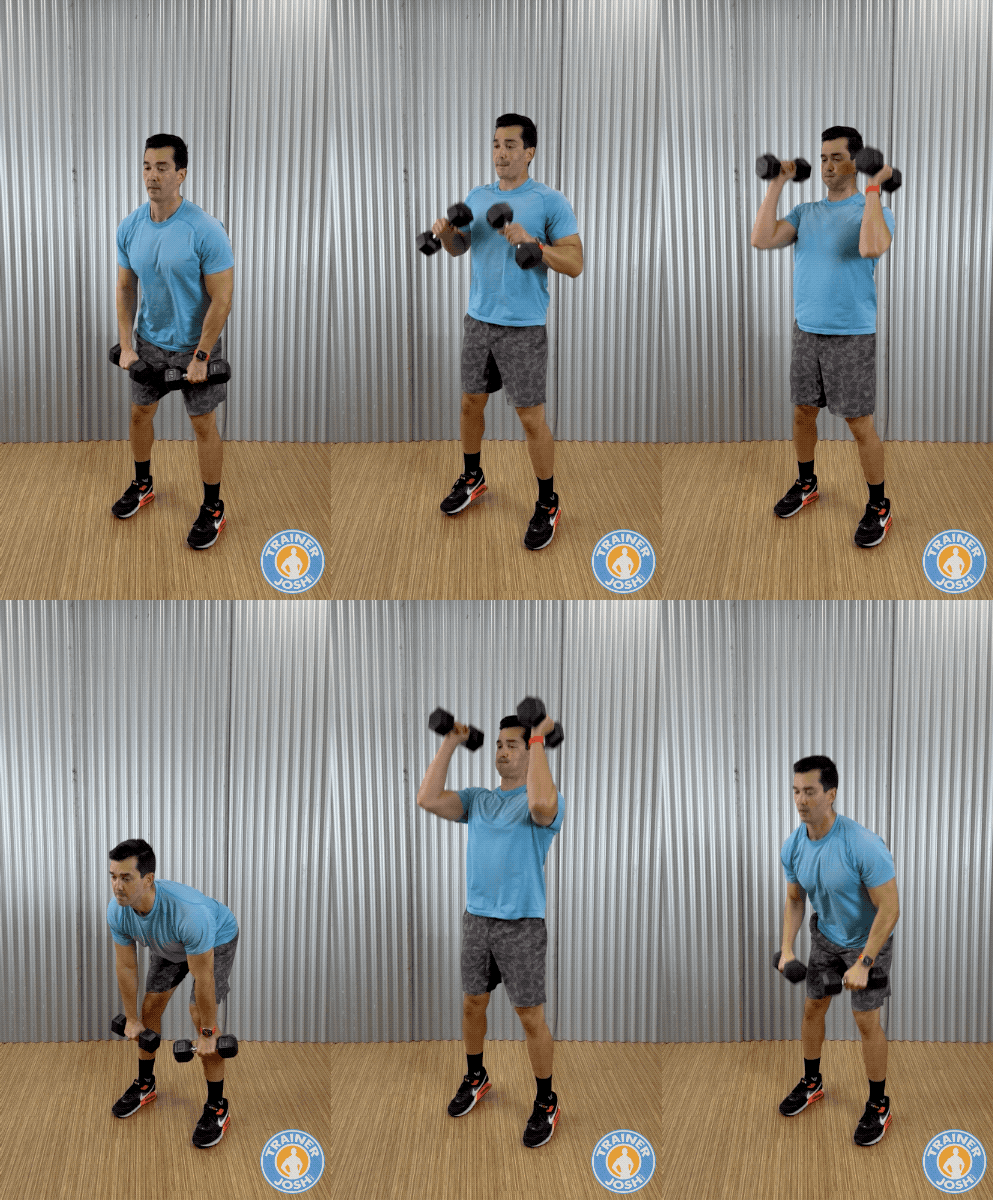
The dumbbell clean and press is a highly effective total-body weightlifting exercise that builds explosive power, muscle mass, and metabolic conditioning. Because it requires you to aggressively accelerate the weight using your lower body (hips, knees, and ankles) and then transfer that force through your core to your upper body for the overhead press… it trains multiple muscle groups at the same time.
Using dumbbells instead of a barbell requires each arm to move independently. This enhances joint stability and demands greater core recruitment to balance the two independent dumbbells.
How to Perform the Dumbbell Clean and Press:
- Stand with your feet about shoulder-width apart, hold a pair of dumbbells at your sides. Keep your back arched and your head up, sit back on your hips, and slightly bend your knees to lower the dumbbells until they are positioned at knee or mid-shin height.
- Forcefully push against the floor to extend your hips, knees, and ankles. Once you achieve full lower-body extension, aggressively shrug your shoulders to elevate the dumbbells, pulling them straight up along your rib cage.
- As the dumbbells rise towards your armpits, quickly pull your body under the weights by flexing your hips to drop into a quarter squat position. Aggressively flip your elbows around and under the weights to “rack” the back half of the dumbbell securely on your shoulders.
- From the quarter squat catch position, extend your knees and hips to stand fully upright. Without leaning backwards, then press the dumbbells directly overhead until your elbows are fully extended. (Note: you can also use a slight knee dip before pressing to transfer lower body momentum into a push press)
- Pause for a second at the top to demonstrate control, then smoothly lower the dumbbells back to your shoulders and finally return them to the starting hang position at your sides.
Pro Trainer Tips:
- The “Catch”: Think of catching the dumbbells as bringing them to a complete stop under control and in a highly stable position on your shoulders.
- Rack Posture: When the dumbbells are racked on your shoulders in the quarter-squat, strictly maintain an arched back, keep your head up, hold your elbows high, and keep your knees behind your toes.
- Use Your Legs, Not Your Arms: The upward flight of the dumbbells should be generated entirely by the explosive power of your lower body; your arms simply guide the weight up to your shoulders.
Common Mistakes to Avoid:
- Curling the Weight: Do not bring the dumbbells to your shoulders in a wide, arced movement (like a reverse biceps curl). They must travel straight up, close to the body.
- Pulling Too Early: Avoid bending your elbows to lift the weight before your ankles, knees, and hips have fully extended at the top of the shrug.
- Dropping the Elbows: When you catch the weight, do not let your elbows point toward the floor. Keep them pointed forward or toward the wall to create a proper “shelf” for the dumbbells.
- Rounding the Back: Failing to maintain a flat, neutral spine during the initial downward hinge phase places unnecessary stress on the lower back and leaks power.
Goblet Squats
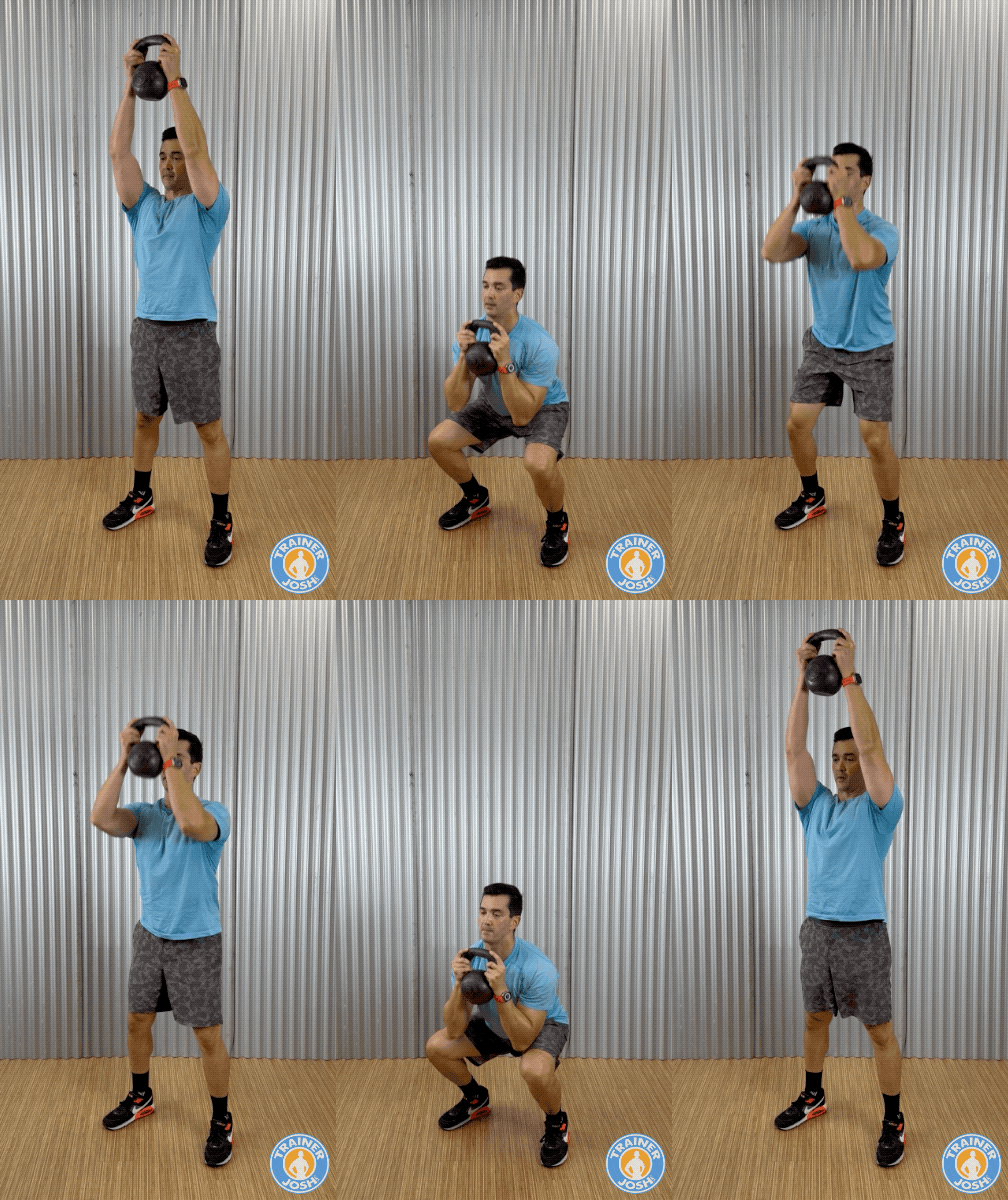
The goblet squat is a very effective lower-body exercise that builds the quadriceps, glutes, and erector spinae while also working the hamstrings and adductors. Because the weight is in front of your body, it forces your deep core muscles to engage heavily to maintain your posture and spinal stability.
This is a good move for teaching to master the fundamental squat pattern. It really ramps up calorie burn because so many muscle groups are involved.
How to Perform the Goblet Squat:
- Stand with your feet about shoulder-width apart (or slightly wider). Flare your toes out about 30-45 degrees.
- Grip a kettlebell (or dumbbell) with both hands on the sides of the handle (the horns) or hold it so the bottom faces the ceiling. Keep the weight pressed tightly against your chest with your elbows pointing down and tucked close to your ribcage.
- Take a deep breath, brace your core, and initiate the movement by pushing your hips back as if sitting in a chair.
- Lower your body in a controlled way, actively push your knees out so they track over your toes until your hip crease is in line with your knee joint or lower (or as deep as you can go while keeping a neutral spine). Your elbows should stay between your knees at the bottom.
- Push with force through your heels to stand back up. Exhale on the ascent and squeeze your glutes at the top to complete the repetition.
Pro Trainer Tips:
- Pacing: For maximum tension, lower yourself slowly for 3 to 5 seconds, then stand up explosively in 1 to 2 seconds.
- Push the Floor Away: When standing up from the bottom of the squat, imagine pressing both feet into the floor as if you were pushing it away. This cue maximally activates the muscles of the upper thighs and hips.
- Keep the Chest Lifted: Maintain a proud chest and a long spine throughout both phases of the squat to ensure your hips do the majority of the work.
Common Mistakes to Avoid:
- Moving the Knees Forward First: You must initiate the squat by pushing your hips back first. Moving your knees forward before your hips move back can be a mechanism for knee injury.
- Letting the Heels Lift: Your weight must remain evenly distributed, with your heels firmly planted on the floor at all times. Do not let your heels rise.
- Allowing the Knees to Cave In: Failing to actively push your knees outward so they track in the same plane as your toes reduces stability and places bad stress on the joints.
- Flaring the Elbows: Keep your elbows pointing straight down to the floor, rather than flared out to the sides.
- Sacrificing Your Spine for Depth: Do not round your lower back just to get lower to the ground. Only descend as deeply as you comfortably can while keeping your spine neutral and slightly arched.
Renegade Row with Push-up
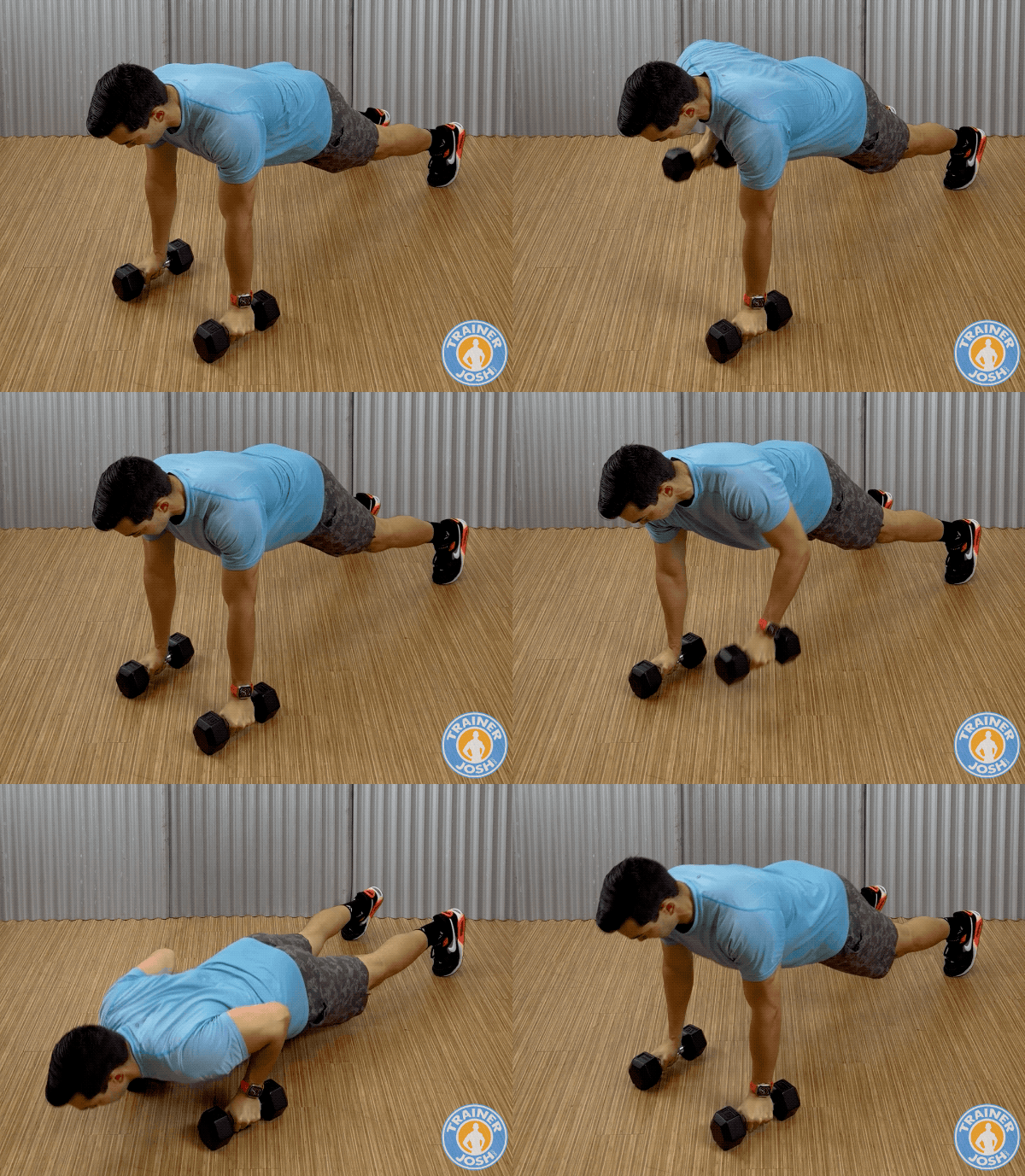
The dumbbell renegade row combined with a push-up is a highly demanding, multi-purpose neuromotor exercise. It develops both upper-body pushing and pulling strength while demanding intense core stability.
Because you have to balance on the dumbbells while lifting a heavy weight, your deep abdominal muscles and hips work overtime to stabilize the spine and resist rotational forces. This results in improved total-body coordination and foundational core stiffness.
How to Perform the Dumbbell Renegade Row with Push-up:
- Get in a push-up position, holding a dumbbell in each hand. Place your wrists directly underneath your shoulders and spread your feet about shoulder-width apart (or slightly wider) to establish a strong base of support.
- Keeping your body in a straight line, bend your elbows to lower your chest down toward the floor until you reach the limits of your range of motion.
- Push your body back up until your arms are fully extended, then return to the starting top of the push-up position.
- While holding the body perfectly still in the plank position, lift the dumbbell in your left hand off the floor and row it upward into the side of your body.
- Slowly lower the dumbbell back to the floor under control. Repeat the entire sequence (push-up, then row), alternating to lift the right dumbbell on the next repetition.
Pro Trainer Tips:
- Stack Your Joints: To ensure that the dumbbells do not roll out from under you, always purposefully place your hands and the dumbbells directly underneath your shoulders before you begin.
- Control the Descent: Do not simply let gravity drop the weight back to the floor. Perform the row in a controlled manner by slowly lowering the dumbbell on each repetition to maximize muscle tension and core engagement.
Common Mistakes to Avoid:
- Rotating the Hips: This is a very common error. You must not allow your hips to rotate or twist toward the ceiling as you pull the dumbbell upward; your pelvis should remain parallel to the floor.
- Shifting Your Weight: Avoid allowing your entire body to shift heavily from side to side to compensate for the lifted weight as you perform the row.
- Sagging Hips or Head: Never let your head or your hips sag toward the floor during the push-up or the rowing phases, as this breaks proper spinal alignment.
Reverse Lunges with Front Rack Hold
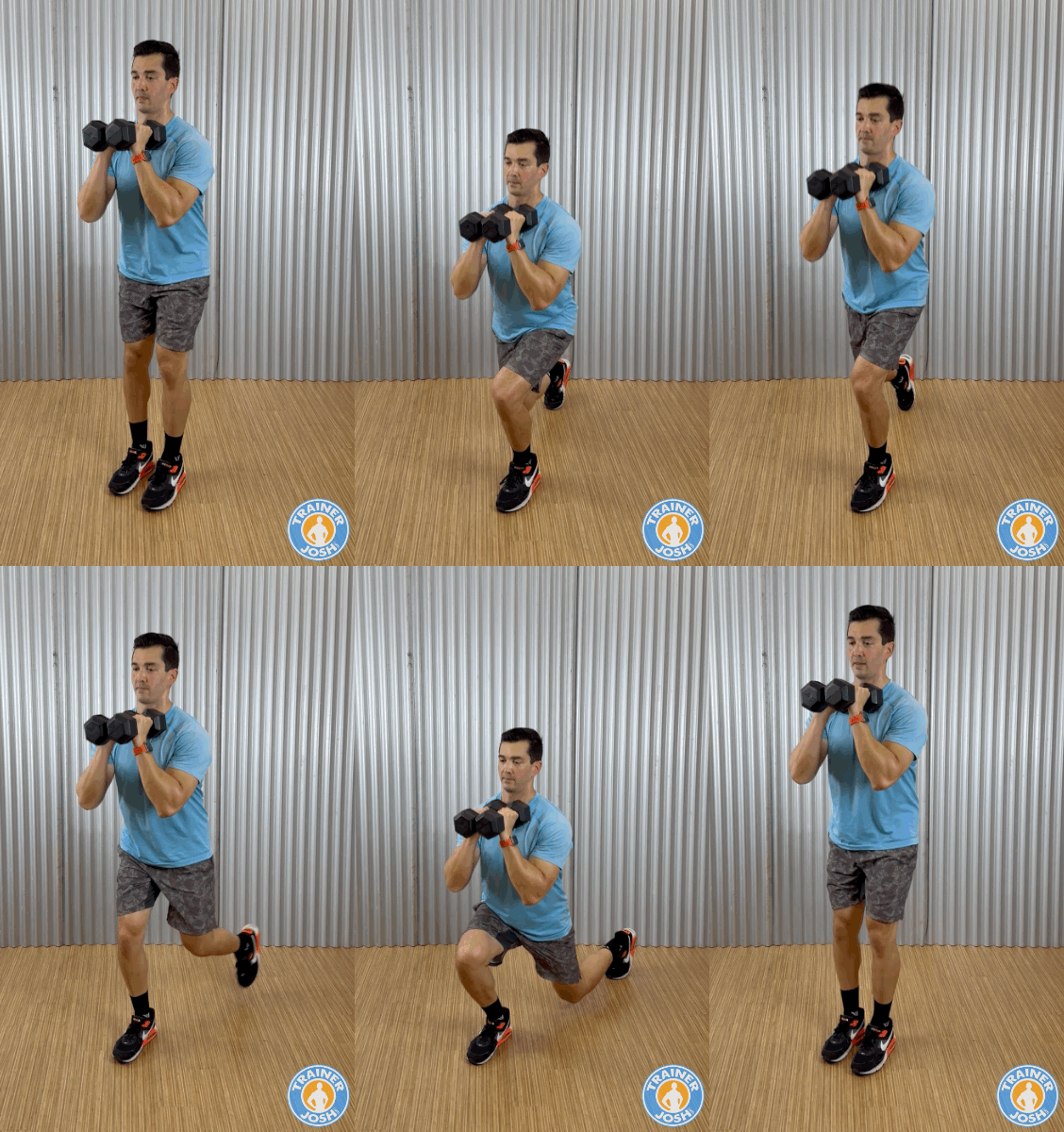
The reverse lunge, when performed with a rack hold using a barbell, dumbbells, or racked kettlebells, is a highly dynamic exercise that builds lower-body strength while also enhancing athletic performance. By holding the weight in a front rack position, you’re forced to keep an upright torso, which will significantly increase the recruitment and strengthening of your anterior core muscles to stabilize the spine.
How to Perform the Reverse Lunge (Rack Hold):
- Stand tall with your feet hip-width apart and brace your abdominals. Secure the weight in a front rack position: if using a barbell, rest it across your chest/shoulders using a clean grip or with arms crossed; if using a kettlebell or dumbbell, hold it so your knuckles rest against your collarbone with your elbow tucked tight into your rib cage.
- Keep your front foot firmly pressed into the ground and take a controlled step backward with your opposite leg.
- Lower your body down until your legs form 90-degree angles (a 90/90 position). Your front shin should remain vertical, and your back knee should hover just about 1 inch (2.5 cm) above the floor.
- Pause briefly at the bottom, then forcefully push through your planted front foot to pull your body forward and return to the tall standing position.
- Complete all repetitions on one leg before switching sides, or alternate legs depending on your program.
Pro Trainer Tips:
- Use a Depth Marker: Place a foam pad on the floor underneath your back knee to serve as a physical reference point for your depth.
- Create Asymmetrical Core Demand: Holding a single kettlebell or dumbbell in a unilateral rack hold (only on one side) forces the deep core muscles to work even harder to prevent your torso from twisting or leaning sideways.
Common Mistakes to Avoid:
- Banging the Knee: Do not allow your back knee to forcefully hit or rest on the ground at the bottom of the movement; you must control the descent so it simply hovers or lightly taps.
- Excessive Forward Knee Tracking: Make sure you are stepping far enough backward so your front shin stays relatively vertical, preventing the front knee from traveling too far past the toes and stressing the joint.
- Letting the Chest Collapse: The front-loaded weight will naturally want to pull you forward. Do not allow your upper back to round; you must keep your chest lifted and your elbows high (if using a barbell) to support the weight safely.
Belly Fat Burning Workout Plan (Weekly Schedule)
Metabolic Resistance Training is the most effective exercise method for maximizing fat loss. This workout method uses circuits (a continuous series of exercises) to combine these muscle-building strength training (with an ab focus) exercises with the cardiovascular demands of HIIT.
The core idea is simple: lift heavy weights in a way that keeps your heart rate high, works your whole body (including your core), and creates a massive demand on your system so your body burns extra calories to recover (Afterburn Effect).
What makes Metabolic Resistance Training different from regular weight training:
Instead of sitting on machines and isolating one muscle at a time… you’ll be using these big, full-body exercises chained together with little to no rest.
I prefer to pair an upper-body exercise immediately with a lower-body one. So while your legs recover, your upper body is still working. This lets you keep the intensity high without completely gassing out.
Metabolic Resistance Training uses HIIT cardio. The difference is that HIIT only uses cardio movements (like sprinting or cycling) to burn calories, while Metabolic Resistance Training also uses heavy weights in a circuit-style format.
So you get the same fat-burning HIIT effect while preserving or building muscle.
The Key Variables:
- Heavy enough weight (typically 8-12 rep range)
- Sets lasting 30-60 seconds to keep muscles under tension
- Short rest periods to keep heart rate elevated
- Total-body movements rather than isolated ones
The result is you’ll get the muscle-building benefits of strength training AND the calorie-burning effects of high-intense cardio… at the same time. And since you’ll be preserving (and building) muscle, your metabolism stays elevated even at rest.
This makes it very effective for fat loss compared to just doing cardio alone.
Below are the same workouts I’d use with my clients to lose belly fat at home. They use the above belly fat-burning exercises in a Metabolic Resistance Training format to maximize results in the shortest time.
You don’t have to do cardio every day, but ideally, add 20-40 minutes of Zone 2 cardio exercise after these workouts if possible. Fatty acids have been mobilized from the HIIT workout, so you’ll get faster results by burning them up with cardio exercise.
Use my fat-burning heart rate calculator to find your ideal heart rate zone.
Beginner Workout to Lose Belly Fat at Home
Here is a simple 15-minute workout I would do with a beginner. If you don’t have a kettlebell then you can just use a heavy dumbbell instead. Or hold the dumbbells at your sides while doing the swinging motion.
*A1, A2, B1, etc. format means you do each group of exercises back-to-back (like A1 then A2), rest, then repeat for all sets before moving to the next group (B1, B2, etc.). It’s a way to organize mini-circuits or supersets, making workouts more efficient and effective.
Workout 2
Workout 3
The #1 Reason Belly Fat Won’t Go Away
“I workout but my belly won’t go away.”
I hear this all the time. And honestly, it’s one of the most frustrating places to be. You’re putting in a lot of hard effort but seeing zero results around your midsection.
If you’re doing the above exercises during workouts but your belly fat refuses to budge, the problem is likely outside your workout routine. Belly fat, especially the deep visceral fat that wraps around your organs, is very sensitive to hormonal imbalances, inflammation, and lifestyle factors.
You cannot spot-reduce fat from your stomach. No exercise—not crunches, not planks, not leg raises— selectively burns belly fat. Fat loss is dictated by a sustained total daily energy deficit.
So if you’re asking, “Why can’t I lose stomach fat?”… even after doing these workouts, then it’s almost always because one (or more) of these four physiological and lifestyle factors.
Here are the main causes that erase your deficit or actively signal your body to store fat in your midsection.
You’re Doing the Wrong Kind of Exercise
If your workout routine is mostly the long, steady-state cardio (like jogging or using the elliptical for an hour) then you could be working against your goals.
Intense, long cardio can trigger the “starvation signal” in your body. This spikes the hunger hormone ghrelin and signals your body to hold onto fat while breaking down muscle for energy.20
Make sure you’re using the HIIT ab-targeting exercises above in the Metabolic Resistance Training workout format. Only then add 20-40 minutes of long steady state cardio like jogging afterwards since you’ve mobilized stored fats and they’re ready to be burned off.
These type of exercises and workouts produces massive surges in catecholamines (adrenaline and noradrenaline). These are hormones needed to mobilize and release fat from stubborn belly fat cells.
If you aren’t doing these exercises, then you’ll be missing out on building metabolically active muscle tissue. This is essential for maintaining a high metabolic resting rate. So you’ll burn more calories even at rest, which will further help reduce belly fat.21
Sedentary Lifestyle & Constrained Energy Expenditure
Here’s something most people never think about… that 45 minute gym session you crushed? Your body is already working to cancel it out.
Research on constrained energy expenditure shows that you burn calories during structured exercise. But then your body subconsciously compensates by reducing spontaneous movement. So you’ll do less fidgeting, less pacing, fewer micro-movements during the day.22
The result? Only about 72% of the calories burned during exercise actually translate into a net daily deficit. You burned 400 calories in the gym but your body clawed back roughly 112 of them without you knowing.
On top of that, NEAT (Non-Exercise Activity Thermogenesis) is the biggest hidden lever in your metabolism. NEAT accounts for all calorie burn outside of structured workouts like walking to your car, doing dishes, standing at your desk.
A highly active person can burn 300-500 more calories daily through NEAT alone compared to someone who sits at a desk from 9 to 5. If you work out hard for an hour and then sti for the next 10 then your total energy expenditure is still low.
The Dangers of Prolonged Sitting
Sitting for extended periods does more than just shrink your NEAT. Prolonged inactivity decreases insulin sensitivity, triggers low-grade systemic inflammation, and essentially flips a metabolic swith that stops fat oxidation.
Your body stops burning fat as fuel… full stop.
Experts recommend breaking up sitting every 45-90 miutes with short walks or movement breaks to keep your metabolic rate from bottoming out. Even a 5-mintue walk around the block reactivates fat-burning pathways.
Trainer Tip: Hit 7,000-10,000 steps daily. A 2024 study in the British Journal of Sports Medicine found that, among highly sedentary adults, accumulating about 9,000–10,000 steps per day was associated with a 39% lower risk of premature death compared with around 2,200 steps per day.23
And for fat loss specifically… those extra steps can add 300-500 extra daily calories burned without a single extra minute in the gym.
Stress Hormones (Cortisol Overload)
If you’re under constant psychological or physical stress, then your body will stay in a “fight-or-flight” state. This causes your body to secrete high levels of the stress hormone cortisol.
It directs fat straight to your belly. High cortisol levels will directly alter your nutrient partitioning and fat storage patterns. Cortisol actively sabotages your waistline by directing your body to store extra calories as visceral fat deep in the abdomen to “protect” your vital organs.24
It drives hunger through the roof. Cortisol also stimulates your appetite and makes you crave calorie-dense sugary foods. It triggers strong cravings for calorie-dense “comfort foods,” making it very hard to stick to a calorie deficit.25
It tanks your metabolism in the moment. Acute psychological stress has been shown to decrease the thermic effect of food. So your body burns fewer calories digesting the same meal when you’re strssed versus relaxed.
Researchers at Ohio State published a 2014 study in Biological Psychiatry showing that stressed women burned 104 fewer calories after a high-fat meal than their non-stressed counterparts, translating to roughly 11 pounds of extra fat per year.26
If you’re struggling with stress, then take a look at my guide on how to get rid of the stress belly.
Sleep Deprivation
Most of us know sleep matters… but almost nobody takes it seriously enough.
Sleeping fewer than 7.5 hours per night fundamentally changes how your body stores and burns fat… especially around your midsection.
A landmark 2010 randomized crossover trial published in the Annals of Internal Medicine found that sleep-deprived dieters (5.5 hours/night) lost 55% less fat and 60% more fat-free mass than those sleeping 8.5 hours/night, despite identical calorie restriction (~90% of resting metabolic rate).27
Your body is running on fumes so it shifts to preservation mode. It holds onto belly fat and cannibilazes muscle instead. The appetite disruption alone can wreck a week’s worth of gym work:
- Ghrelin (hunger hormone) spikes by up to 28% with just two nights of poor sleep
- Leptin (the fullness hormone) drops by up to 18%, blunting your satiety signals28
The belly fat connection is direct…
A 2022 randomized controlled trial in the Journal of the American College of Cardiology reported that 14 days of sleep restriction (4 hours of time in bed) versus normal sleep (9 hours) caused significantly greater weight gain and a ~9% increase in total abdominal fat area.29
Poor sleep also elevates resting cortisol levels. This brings you right back to the hormonal fat-storage loop covered above.
Alcohol Consumption
Alcohol is highly calorically dense at about 7 calories per gram. This is almost as much as pure dietary fat at 9 calories per gram. A single night out with 3-4 drinks can add 400-600 calories before you’ve touched the late-night food that almost always comes after.
So, consuming alcohol can easily push you out of an energy deficit. This will keep you from losing fat despite how hard you’re working out.
But the calorie count is actually the least damaging part…
When your liver detects alcohol it treats it as a toxin. So it immediately stops fat oxidation to prioritize clearing acetaldehyde and acetate from your system. Fat burning doesn’t just slow down… it stops completely.
A 1994 randomized crossover study in the American Journal of Clinical Nutrition showed alcohol suppresses fat oxidation for at least 6 hours after consumption—while ethanol is actively metabolized—even after you feel sober, with fat balance only reestablishing later (6–20 hours).30
At the same time, a third alcohol byproduct (acetyl-CoA) gets shunted directly into fat synthesis. Your body isn’t just pausing fat burning, but it’s actively building new fat while you sleep.
Alcohol fragments sleep architecture by suppressing REM cycles. This causes micro-arousals and blunts deep sleep quality even when total sleep hours look normal on paper.
Poor sleep quality triggers the same ghrelin-and-leptin hormonal cascade described above. Wrecked hunger signaling, cortisol elevation, and preferential fat storage in the abdominal region.
If you don’t want to give up alcohol, then check out my list of the best alcohols for weight loss.
How Long Does It Take to Lose Belly Fat?
Key Takeaways: How Long to Lose Belly Fat
- Days 1–3: Dietary cleanup triggers rapid water and bloat loss (2–5 lbs) creating immediate visual improvement before fat loss begins
- Weeks 1–2: Combined water, glycogen, and fat loss totals 8–15 lbs in intensive programs. Pure fat loss tops out at 2–3 lbs/week safely
- Week 6: The research sweet spot… interval training alone reduces waist circumference by an average of 1.4 inches; combined approaches average 4.5–6 inches
- Weeks 10–14+: Traditional steady-state cardio requires 14+ weeks and 70+ sessions to achieve results that 6 weeks of intervals produce
- Visceral fat responds in 8–12 weeks of consistent lifestyle change; subcutaneous lower belly fat takes 4–6 months. Both are normal, neither is a failure
“How long before I see results?”
“How fast can belly fat go away?”
These are questions I get asked a lot as a personal trainer. And the honest answer is… it depends. But the good news? Belly fat is actually one of the easier fat stores to lose once you get the right variables dialed in.
Visceral abdominal fat has a denser blood supply and a higher concentration of beta-adrenergic receptors than subcutaneous fat (the fat you can pinch under your skin).
This means it’s far more sensitive to fat-mobilizing hormones like catecholamines. These are the compounds released during exercise and caloric restriction that signal your body to release stored fat as fuel.
So when conditions are right… your belly responds faster than your hips, thighs or love handles.
The time it takes to lose belly fat depends a lot on how dedicated you are in following these exercises, diet, genetic fat distribution, and your starting body fat composition.
You have to reduce your overall body fat to the point where the “pudge” covering your abdominal muscles disappears.
- For men, getting a flat stomach or six-pack abs, you’ll need to drop to around 10-15% body fat.
- For women, you’ll naturally carry ~10% more essential fat than men for reproductive health. So at 18-20% body fat you’ll get a comparably lean midsection.
You can use a smart scale to measure your body fat percentage at home. Also use a tape measure to track your waist circumference.
Calculate Your Optimal Rate of Fat Loss
Most people just crash diet their way to a smaller number on the scale. But then wonder why they look softer and not leaner.
Lose weight too fast and your body cannibalizes muscle tissue along with fat. This leaves you with loose skin afterward. It also tanks your basal metabolic rate and sets you up to regain the belly fat all over again.
Your maximum safe rate of fat loss scales directly with your current body fat percentage:
- Overweight (21-26% body fat for men, 33-39% for women): You can safely lose up to 1.5% of total bodyweight per week without significant muscle loss.
- Average (15-21% for men, 24-33% for women): Cap fat loss at 1.0% of bodyweight per week. Push harder, and lean tissue starts breaking down.
- Athletic (8-15% for men, 14-24% for women): Slow down to a maximum of 0.7% of bodyweight per week. The leaner you are then the harder your body fights to hold onto fat… and the easier it is to burn muscle.
How fast you lose the belly fat is governed by the non-negotiable law of thermodynamics.
To lose one kilogram (2.2 pounds) of pure adipose (fat) tissue, you have to create a net energy deficit of about 8,260 calories. That’s fat-only loss. So no water and no lean mass.
The popular 3,500-calorie-per-pound rule measures total weight loss. This also includes water retention and lean tissue. It consistently overestimates actual fat loss by 15-20%.
Run the real numbers. A 500-calorie daily deficit burns roughly 0.43 kg (0.95 lbs) of pure fat per week. Not a full pound that most calculators promise.
Realistic Timelines to Lose Belly Fat
Here’s a realistic timeline for losing belly fat based exactly on what the research says…
Days 1-3: The Initial Reset
Before you lose a single pound of actual belly fat, your body starts clearing out the metabolic clutter that’s been making your waistline look worse than it is.
Cleaning up your diet by cutting out processed foods, refined sugar, excess sodium will rapidly rebalance your sodium to potassium ratio. This will result in a sharp drop in water retention and systemic bloating. This can account for 2-5 pounds in the first 72 hours alone.
Improving digestive quality also clears trapped waste matter from your gastrointestinal tract, reducing intestinal inflammation and visibly flattening the lower abdomen within days.
Of course, this isn’t “real” fat loss yet but for many people it’s the first time in months they feel and look noticeably leaner. It sets the hormonal stage for subsequent fat mobilization.
Weeks 1-2: Fast Initial Drops
You can see and feel results in as little as 5-14 days. But the part most people miss is… those early numbers aren’t all fat.
Intense programs can make you lose 8-15 pounds and 1-3.5 inches off the waist in the first two weeks. That weight comes from three different sources:
- Pure fat loss: 2-3 pounds per week. This is the real permanent change.
- Water & glycogen: each gram of stored glycogen holds about 3 grams of water. So as you reduce carbohydrate intake and increase exercise, then glycogen stores drop. This will pull several pounds of water weight with them out of your body.
- Digestive clearing: improving fiber intake, hydration and food quality cleans out waste matter that was adding volume to your midsection without showing up on a body composition test.
Combined, intensive programs can help you lose 8-15 lbs and 1-3.5 inches off your waist within the first 14 days. The higher end of this range includes significant water and waste but that flatter less bloated belly is real, and it’s immediate.
Week 6: The Scientific Sweet Spot
Six weeks is consistently the milestone at which research starts showing significant, measurable reductions in belly fat. Not just water or glycogen but actual adipose tissue.
- Interval sprinting alone: Just 6 weeks of sprint interval training (totaling roughly 6 hours of actual exercise) produced an average 1.4-inch (3.5 cm) reduction in waist circumference in published research, with no dietary changes required.
- Strength + intervals + nutrition combined: Men following an aggressive combined protocol averaged 29 pounds of fat loss and 6 inches off the waist in 6 weeks. Motivated women in similar programs averaged 17 pounds of fat loss and 4.5 inches off the waist in the same timeframe.
- Gene-expression nutritional programs targeting fat-storage gene regulation have shown results of up to 24 pounds lost and 7 inches off the waist in six weeks in high-compliance participants.
Six weeks is enough time for your body to deplete a meaningful portion of visceral fat reserves. This is provided you’ve addressed the cortisol, sleep and deficit variables covered in the previous section.
Weeks 10–14+: Traditional Cardio & Long-Term Results
If steady-state aerobic exercise like moderate walking, light jogging, elliptical is your primary tool, then the timeline stretches considerably.
- 10–12 weeks: A 10-week HIIT program has been shown to improve body composition and reduce belly fat in adults over 50. Separately, 12 weeks of interval sprinting reduced deep visceral belly fat in men by 17%.
- 14 weeks: To achieve an 18% reduction in belly fat using traditional aerobic exercise alone, research shows you need to commit to 45–60 minutes of moderate cardio, 5 days per week, for a minimum of 14 weeks. That’s 70+ workout sessions to get the result that 6 weeks of intervals produces in roughly a third of the time.
- 20 weeks: Following standard guidelines of 1 pound of fat loss per week, losing 20 pounds of fat takes approximately 20 weeks… roughly 5 months of consistent effort.
The method matters enormously. Traditional cardio works. But it just takes 2–3 times longer than higher-intensity approaches for the same belly fat reduction.
What “Safe and Realistic” Actually Looks Like
Most medical guidelines recommend targeting 1-2 lbs of fat loss per week. Or roughly 0.5-1% of total body weight weekly for heavier individuals.
At that rate, here’s a realistic roadmap:
- Weeks 1–2: 2–5 lbs of total weight, visible reduction in bloating, waistband noticeably looser
- Weeks 4–6: 4–10 lbs of actual fat, measurable inch loss, belt moves a notch
- Months 3–4: 12–20 lbs of fat loss, visible belly reduction, significant waist circumference change
- Months 5–6+: 20–30+ lbs, dramatic visual transformation, visceral fat levels approaching healthier range
But there’s one critical distinction: Abdominal subcutaneous fat (the soft pinchable layer) responds more slowly than visceral fat.
Studies have consistently shown that visceral fat responds within 8-12 weeks of sustained lifestyle change.31 But subcutaneous belly fat, especially the lower pooch, is the last to go and can take 4-6 months of consistent effort at a meaningful deficit.
Josh’s Reality Check: “How fast can belly fat go away” depends entirely on whether you’re just doing cardio or attacking all the variables at the same time.
In my 20+ years of training clients, the ones who see 4-6 inches off the waist in 6 weeks aren’t just working harder. But they’re just undermining their deficit every night snacking, three glasses of wine, and only 5 hours of sleep.
Nutrition Tips That Accelerate Belly Fat Loss
One of the most frustrating parts of exercising is not seeing the results you want. If you’ve been exercising but haven’t lost any belly fat, this is likely why.
Your diet will also play a major role in losing abdominal fat. There’s a saying amongst us trainers that “you can’t out-train a bad diet.”
To lose excess belly fat, you’re going to have to put your body into an energy deficit.32 The 2022 study in The New England Journal of Medicine found that most women lose weight on 1,200-1,500 calories per day, while men lose weight on 1,500-1,800 calories per day.33
Calories are energy, so to lose excess weight and fat, you’ll have to have fewer calories coming in (and burned off) than you’re consuming. It’ll be impossible to get rid of belly fat without also losing total body fat, and you should be putting your body into a calorie (energy) deficit to do so.
Once you put your body into an overall energy deficit, you’ll start seeing real results with these belly fat-burning exercises and workouts. These exercises will mobilize fatty acids (spot lipolysis) from the abdominal region, but those fats won’t just go away unless they’re burned off in a calorie deficit.
High protein diets when combined with calorie restriction will create a higher total fat and abdominal fat loss while preserving lean muscle.34 You’ll also have more satiety (feelings of fullness), reduced hunger, and higher calorie burning due to the thermic effect of protein.35
Use my protein calculator to determine your recommended daily protein intake.
Multiply that number by 4 (amount of calories per gram of protein) and then subtract that from your daily calorie intake goal. You’ll be left with how many calories are available for the rest of the day.
Intermittent Fasting to Lose Belly Fat
The best diet method I’ve found for burning stubborn abdominal fat is to combine intermittent fasting and eating low carb.36
According to research from the University of Valencia’s Department of Preventive Medicine & Public Health, published in Nutrients in 2021, intermittent fasting was more effective at reducing waist circumference and abdominal fat than just calorie restriction.37
This combination of intermittent fasting and low carb puts your body into a fat-burning state since it doesn’t have any incoming calories, sugars, or carbs to use for fuel. So by fasting and eating low-carb, your body is forced to start burning fat stores for fuel… your belly fat!
For an effective drink to burn belly fat, take C8-MCTs with your coffee in the morning while fasting. C8-MCTs are the most efficient form of MCTs that your body converts into ketones.38
Ketones are a fuel source your body makes from fat stores when it runs out of sugars or carbs. So, by taking C8-MCTs, you can kickstart this ketone production and thus increase fat loss.
A 2022 study from Chonnam National University, published in Nutrients, found that combining intermittent fasting with MCT led to greater reductions in body weight, body fat percentage, and waist circumference.39
Delivers 5g of pure C8-MCTs (the most ketogenic MCT) to naturally elevate ketone levels. Supports enhanced energy, mental clarity & appetite control — get the benefits of keto... without having to eat keto!
- Boosts Ketone Production: Supports elevated ketone levels without the need for carb restriction
- Enhances Energy & Focus: Provides quick, clean energy & promotes mental clarity
- Manages Appetite: Helps control cravings & supports healthy weight management

Your Action Plan to Lose Belly Fat
You now know exactly what works to lose the belly fat. The gap between knowing and doing comes down to one thing: building a system that doesn’t rely on willpower.
Step 1: Fix your Diet First
No exercise program will overcome a poor diet. Start by calculating your calorie target (1,200-1,500 for women, 1,500-1,800 for men) and hitting your daily protein goal.
Fill the rest of your calories with high-volume, satiating foods like non-starchy vegetables, lean proteins, and fibrous fruits. These keep hunger in check so your primitive brain doesn’t override your goals.
Remember: Hunger is the #1 reason why diets fail. Remove the hunger and remove the willpower.
Avoid these foods that spike insulin and cause inflammation:
- Processed foods
- Refined sugars & sweeteners
- Refined grains
- Industrial seed oils & trans fats
- Packaged & fast foods
- Processed meats
You can get my list of the best flat belly foods below. These foods are Trainer Josh-approved to burn more belly fat, reduce hunger, are high in protein, and are anti-inflammatory.
CLICK HERE: Get the Food List Cheat Sheet ➔Step 2: Start the Metabolic Resistance Training Workouts
Pick one of the three workouts above and commit to it 3 days a week. Use the HIIT targeted ab exercises in these workouts. Add each session with 20-40 minutes of Zone 2 cardio immediately after to burn fatty acids that have been mobilized.
Don’t overcomplicate it. Consistency matters more than perfection.
Step 3: Build an “If-Then” Plan for Your Weak Points
Think about when you typically fall off track… Stress at work, social events, late-night ravings. Then create a specific plan for each scenario.
“If someone offers me dessert at dinner, then I’ll eat the protein rich option I already planned.”
Written-out implementation intentions like these remove the need to make hard decisions when you’re tired or emotionally drained. That’s when willpower fails everyone.
Step 4: Ditch the All-or-Nothing Mindset
One bad meal won’t ruin your progress, but quitting does. Think of your calories like a budget. Overspending one day just means being mindful of the next. So don’t crash diet and don’t punish yourself. Flexible control consistently outperforms rigid discipline in the long run.
Step 5: Protect Your Sleep & Manage Stress
Aim for 7-9 hours per night. Sleep deprivation directly increases abdominal fat storage and spikes the hunger hormone ghrelin. This makes your diet feel twice as hard. Chronic stress floods your body with cortisol that actively directs fat storage to your visceral abdomen. Protect your sleep like it’s part of your training program… because it is.
Step 6: Track Process, Not Just the Scale
Your goal isn’t a number on a scale. It’s becoming someone who trains consistently, eats intentionally, and manages stress well. So focus on the process.
The Bottom Line:
Losing belly fat isn’t about suffering through a crash diet or grinding out hours of cardio. It’s about building a sustainable system, the right exercise stimulus, a diet that keeps hunger in control, and habits that hold up when motivation fades. Because it will fade for everyone.
The people who finally get rid of their belly fat aren’t the ones with the most willpower. They’re the ones who stopped relying on it.
You can use my Flat Belly Formula for complete belly fat burning exercises, workouts, and a nutrition plan. It uses the same Metabolic Resistance Training and HIIT-style format, with ab-targeting exercises. Plus total nutrition program for getting rid of belly fat.
FAQ
What exercise burns the most belly fat?
The best exercise approach to target belly fat is to use HIIT exercises that train the abs intensely. Use a Metabolic Resistance Training workout format with cardio intervals. This will cause the most fat loss while toning your stomach.
Can walking reduce belly fat?
Yes, walking can reduce belly fat by increasing total daily energy expenditure and helping create a caloric deficit. This is the main driver of fat loss. It also minimizes muscle-damaging interference if you strength train. For best results, aim for a brisk pace where you can still hold a conversation.
Are crunches good for losing belly fat?
Crunches are not effective for losing belly fat. Spot reduction is a myth. And worse, heavy ab training can actually thicken your waist by building muscle beneath existing fat. To flatten your stomach, you’ll need to lower your overall body fat percentage through a caloric deficit. Abs are made in the kitchen.
Do planks burn belly fat?
Planks do not burn belly fat. Likes crunches, heavy core training can actually thicken your waist by growing muscle beneath existing fat. A visible and flat midsection requires lowering your overall body fat percentage. Core exercises build strength but not leanness.
Why is belly fat the hardest to lose?
Belly fat is the hardest to lose because abdominal fat cells contain a high density of alpha-2 receptors that actively block fat-burning hormones. Cortisol, poor sleep, and insulin resistance make it worse. It’s typically the last fat your body burns… requiring a sustained calorie deficit over weeks or months.
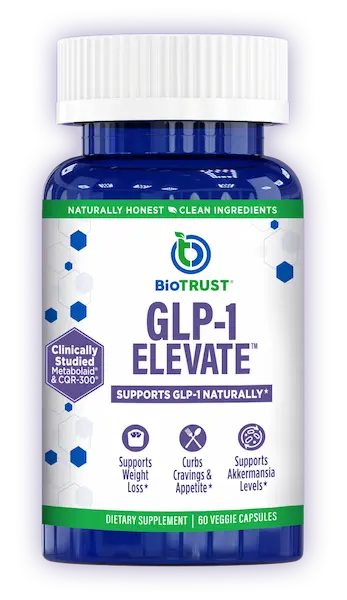
If you’re having trouble cutting calories because of hunger or cravings, then try using a natural GLP-1booster. It works by helping you feel fuller for longer so you naturally eat less without constantly battling willpower.
Drug‑free, natural plant-based GLP‑1 support for lasting appetite control & metabolic balance.
- Boosts GLP‑1 by 50%+ for enhanced satiety and fullness
- Slows GLP‑1 breakdown to extend appetite management
- Regulates ghrelin & leptin to curb cravings and stay satisfied
- Activates AMPK—your master fat‑burning switch
- Inhibits fat & carb enzymes to reduce calorie absorption
- Supports healthy blood sugar for steady energy and metabolic wellness