
You’ve got the pull-up bar. You’ve been cranking out chin-ups three times a week. Your back is starting to look like a manta ray… but your biceps? Still looking like popsicle sticks.
You’re not the only one. Bodyweight training has a dirty little secret when it comes to bicep growth. Most exercises (even the “best” ones) prioritize your lats, rhomboids, and rear delts. While your biceps feel like they’re just along for the ride.
But what if I told you that you can isolate your biceps using nothing but your bodyweight, a doorframe, and maybe a towel? You can build bigger, stronger biceps with bodyweight training alone.
In my 20+ years as a personal trainer and strength coach, I’ve worked with many guys in their 40s and 50s with bodyweight training. What you need is the right leverage, the right angles, and the right progressions.
Here I’ll show you the 10 best bodyweight bicep exercises, an at-home workout plan, and how to start getting results fast.
Can You Actually Build Biceps With Bodyweight? (The Truth)
Quick Answer:
Yes, your biceps will grow with bodyweight training. But you need to train smarter, not harder.
- Your muscles only recognize tension—they can’t tell if it’s a dumbbell or your own bodyweight creating the resistance
- Progressive overload is non-negotiable—manipulate leverage, body angles, and foot elevation to increase difficulty over time (not just “more reps”)
- The challenge: You need something to pull against—a bar, table edge, suspension straps, or sturdy door (you can’t grip the floor like push-ups)
- Chin-ups build biceps as effectively as curls—research shows heavy compound pulling movements create equal arm growth to isolation exercises
- Expect “gymnast arms”—dense, defined, and proportional development (think Olympic rings athletes who’ve never done a traditional curl)
Your Muscles Don’t Care What You’re Lifting
Here’s what most guys don’t realize:
Your biceps can’t tell the difference between a 30-pound dumbbell and 30 pounds of your own bodyweight. You can use my best dumbbell bicep exercises but all you really need is your bodyweight.
All your muscles recognize is mechanical tension.
Mechanical tension is the force generated by your muscle fibers when they contract or are stretched against resistance. It’s the primary driver of muscle growth.
If you apply enough tension and progressively overload the muscle, it will grow. To recruit your “high-threshold motor units” (large muscle fibers that have the most potential for growth), you need to generate high mechanical tension.
A 2019 systematic review in Sports Medicine concluded that progressive mechanical tension overload is one of the major factors driving muscle growth and architectural adaptations during resistance training.1
The muscle fibers don’t have eyes. They don’t know if you’re at Gold’s Gym or hanging from your bedroom doorframe.
How Progressive Overload Works Without Equipment
You must apply progressive overload to bodyweight training, just as you would with weightlifting. Your muscles respond to mechanical tension, so the goal is to increase the tension on the muscle fibers over time.
A 2019 paper in Frontiers in Physiology on “complexity” as a load progression strategy reported that, in line with biological training principles and position stands from major strength and conditioning bodies, progressively increasing or varying external training loads over time is necessary to continually stimulate adaptations, with progressive overload identified as a fundamental requirement for ongoing gains in muscle size and strength during resistance training.2
With dumbbells, you add 5 pounds when things get easy. With bodyweight? You manipulate leverage and body angles.
You need to change the external moment arm or the percentage of your bodyweight being lifted to increase resistance.
Alter your body position to change the leverage and torque needed to move your body. An example would be elevating your feet during push-ups to increase the load on your upper body.
You can shift from bilateral (two limbs) to unilateral (one limb) exercises such as doing chin-ups to Archer chin-ups (pull-up to one side). This will significantly increase the load on the working muscle… your biceps!
For hypertrophy (muscle growth), aim for 6-15 reps with maximal effort. Not low-rep “practice” sets. Not 30-rep endurance work. True muscular fatigue.
That’s where the magic happens.
The “Floor Problem” (Why Biceps Are Tricky)
Here’s the catch:
You can push against the floor all day. That’s why bodyweight chest and tricep training is easy—push-ups, dips, and decline push-ups. But biceps? You can’t grip the ground and pull yourself.
To train pulling muscles, you need something to hang from or pull against, like a bar, a table edge, suspension straps, or even a sturdy door.
But most bodyweight bicep exercises are compound movements. Chin-ups hammer your lats just as hard as your biceps.
Is that a problem? Not necessarily.
Research comparing vertical pulling (e.g., lat pulldowns) with isolation curls found that both produced equal biceps growth.
A 2015 study in the Journal of Sports Medicine and Physical Fitness found that, over 10 weeks of training in untrained young men, performing only lat pulldowns (multi‑joint vertical pulling) or only barbell biceps curls (single‑joint isolation) produced similar increases in elbow flexor muscle thickness and strength.3
Translation: Heavy chin-ups build arms just as effectively as curls. And they let you overload your biceps with your full bodyweight, creating massive tension.
What to Expect vs. Weighted Training
Bodyweight training builds what I call “gymnast arms”—dense, defined, and proportional.
Male gymnasts possess some of the most impressive biceps in athletics, yet many have never done a traditional curl in their lives.
Their secret?
Straight-arm calisthenic strength work—Iron Cross holds, planches, front levers. These movements place enormous isometric tension on the biceps and connective tissues.
The limitation? Microloading.
With dumbbells, you add 2.5 pounds. With bodyweight, jumping from regular chin-ups to one-arm chin-ups is nearly impossible for most people.
Eventually, you’ll need to add external weight—a backpack loaded with books, a dip belt—or progress to advanced variations.
The 10 Best Bodyweight Bicep Exercises
Chin-Ups (The Gold Standard)
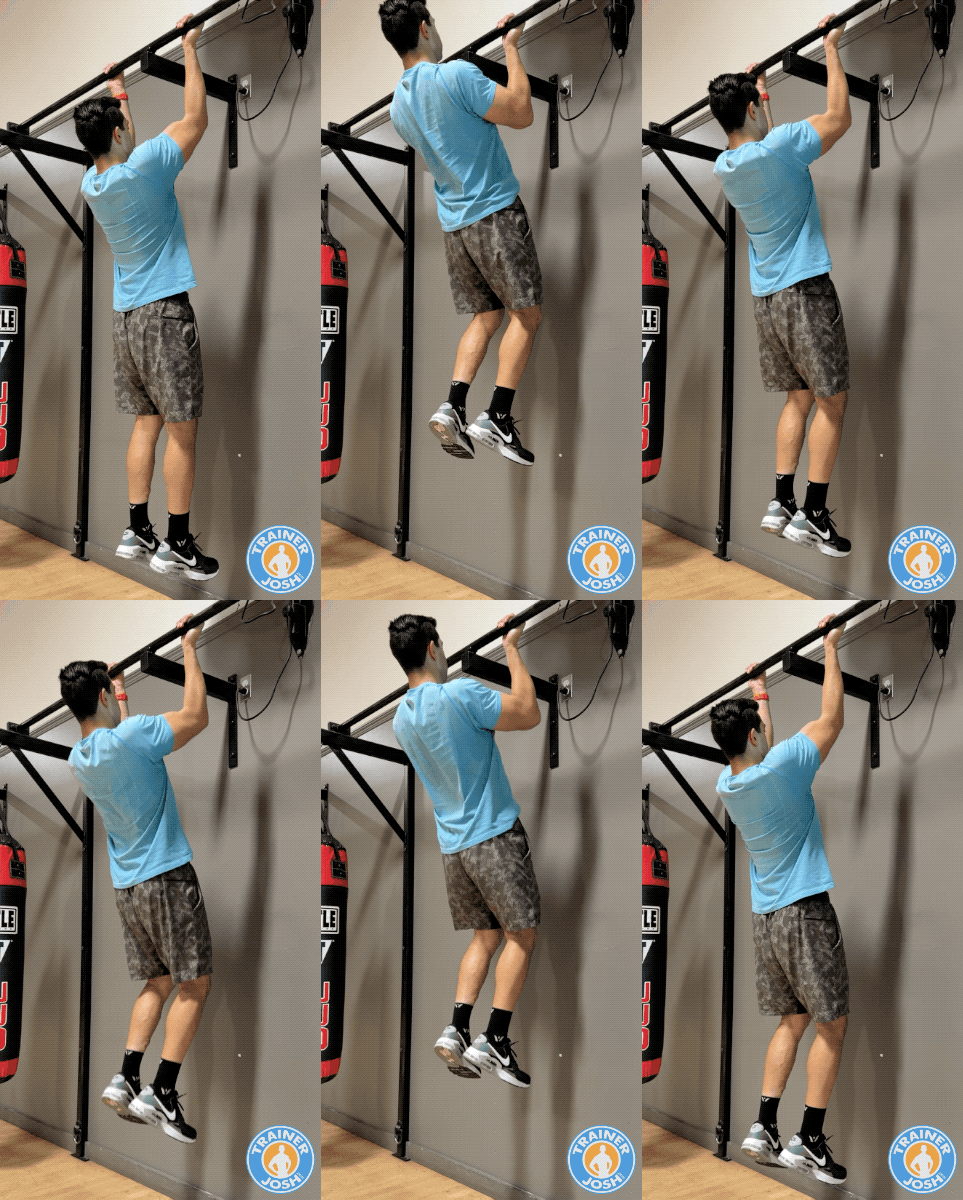
The chin-up is widely regarded as the single best bicep exercise because it’s a compound, closed kinetic chain movement that allows for significantly higher mechanical tension than isolation exercises like curls. The underhand grip places the biceps in their most mechanically advantageous position to generate force.
A 2023 study in the Journal of Strength and Conditioning Research reported that during bilateral biceps curls, biceps brachii and brachioradialis excitation were highest with a supinated handgrip in the ascending phase compared with neutral and pronated grips.4
Chin-ups also use your massive back muscles (lats) to assist the lift. This allows you to overload the biceps with your entire body weight. This “Chain Training” effect (muscles working as a cohesive unit) creates greater total tension that flows into your biceps.
How to Perform a Chin-Up for Biceps
1. Hand Position (Grip): Use a supinated grip (palms facing you) with hands spaced shoulder-width apart or slightly closer. This grip fully engages the biceps brachii.
2. The Hang: Start with hanging from the bar with a slight micro-bend in your elbows to keep tension on your biceps. Keep a slight arch in your back (stick the chest out) to help drive your elbows back and down. This creates a stronger biceps contraction.
3. Shoulder Engagement: Before bending your elbows, perform a “scapular shrug” by pulling your shoulders down and back away from your ears. This protects the rotator cuff and engages the back.
4. The Pull: Drive your elbows down and back, pulling your body upward until your chin clears the bar. Try to get your upper chest and clavicle to touch the bar. Keep your core tight and legs slightly in front of you (hollow body) to prevent swinging.
5. Range of Motion: Lower yourself under control all the way down. Avoiding the bottom range of motion (half-reps) cheats the muscle of growth potential, while failing to clear the bar cheats the peak contraction.
Pro Trainer Tips
- Shoulder-Width or Narrower: While a wide grip targets the lats, a narrow grip (shoulder-width or slightly closer) increases the range of motion for the elbow flexors and emphasizes the biceps.
- Tuck the Elbows: Throughout the movement, keep your elbows close to your ribs. Do not let them flare outward. Keeping them tucked helps engage the back and arms while protecting the shoulder joint.
- “No Lockout” Rule: If you’re doing chin-ups specifically for bicep hypertrophy or have elbow sensitivity, do not fully lock out (straighten) your elbows at the bottom. Keeping a micro-bend maintains constant tension on the biceps (creating a “pump”) and prevents unnatural twisting forces on the joint that occur during full extension with a supinated grip.
Common Mistakes to Avoid
- Using Momentum (Kipping): Swinging or kicking the legs generates momentum that bypasses the muscles. Doing this reduces tension on the biceps and lats. Bend your knees if needed to keep a narrower center of gravity to prevent swinging.
- Partial Range of Motion: Failing to extend your arms at the bottom eliminates the stretch. This is crucial for hypertrophy. You also want to get your chin over the bar for peak contraction.
- Internal Rotation: Allowing your shoulders to roll forward and the chest to cave in places stress on the joints instead of the muscles. Keep your chest “proud” and shoulders back.
- Grip Width: Using a grip that’s too wide will reduce the range of motion and place stress on the wrists and shoulders. This reduces your biceps recruitment.
Beginner Chin-Up Progression Path:
If you can’t perform a full chin-up, then follow this linear path to build the strength:
Phase 1: Negative Chin-Ups (Eccentrics)
- Jump or step up to the top position with your chin over the bar.
- Lower yourself as slowly as possible, taking 3-5 seconds to reach a dead hang.
- This builds strength quickly because muscles are 100-150% stronger during the lengthening phase.
Phase 2: Assisted Chin-Ups
- Use a resistance band looped around the bar and your foot. Or place a chair underneath the bar to use your legs for assistance.
- Use your legs only as much as needed to complete the rep. Gradually reduce assistance over time.
Phase 3: Full Chin-Ups
- Perform the movement with full bodyweight from a dead hang to chin over the bar. Focus on quality reps without swinging.
Phase 4: Weighted Chin-Ups
- Once you can perform high reps (12-15+) easily, then add external resistance using a dip belt or weighted vest to continue progressive overload.
Inverted Curls
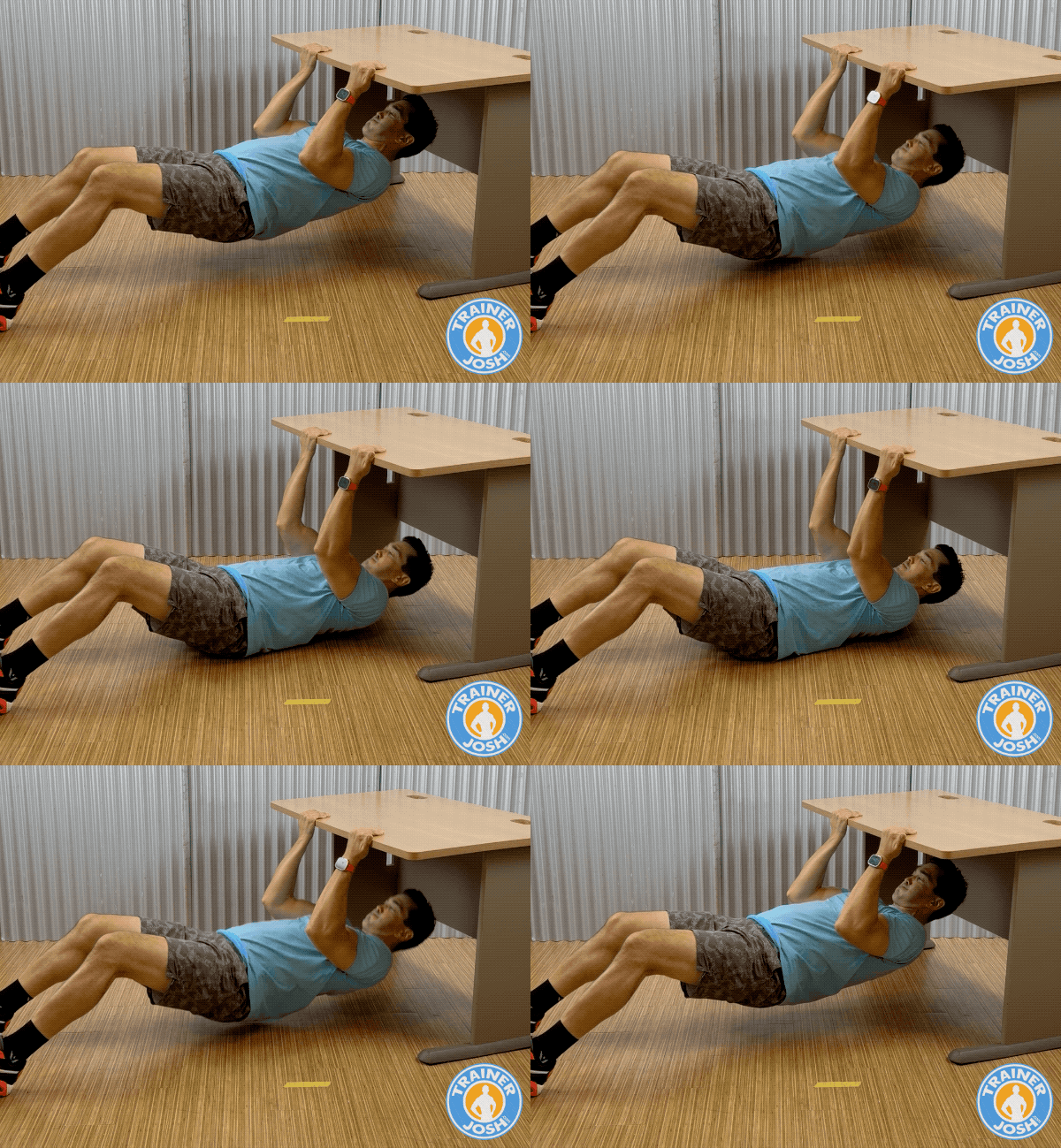
The short levered inverted curl is one of the few “pure” bodyweight bicep exercises you can do at home without a pull-up bar. The inverted curls (unlike rows or pull-ups) fix the shoulder joint in place, forcing your body to move almost exclusively around the elbow joint.
This isolation mechancs mimic the machine preacher curl or barbell curl. It places maximum tension on the biceps rather than sharing the load with the large back muscles (lats). It also lets you use scalable resistance that’s easier than having to lift your entire bodyweight over a bar.
Setup Options:
- Study Table: Lie underneath a sturdy table. Grab the outer edge with your hands. Make sure the table is heavy enough that it won’t tip over when you pull against it.
- Broomstick & Chairs: Place a sturdy broomstick or dowel across two chairs of equal height. Make sure it’s secure and won’t roll.
- Playground Bars/Low Bar: Look for waist-height bars at parks. These are usually used for dips or push-ups.
How to Perform Inverted Curls for Biceps:
- Grip: Use a supinated (underhand) grip with palms facing you. This places the biceps brachii in the strongest mechanical position to work.
- Elbow Path: Unlike a row where your elbows travel back past your ribs… in a curl your elbows should stay high and fixed in space. You’re trying to curl your forehead to the bar/table (not pull your chest to it).
- The Fulcrum: Imagine your elbow is a hinge. Your upper arm should remain relatively stationary while your forearm moves your body upward.
- Grip Width: Keep your hands about shoulder-width apart or slightly narrower to maximize bicep recruitment and reduce stress on the wrists.
Foot Position Variations:
Leverage is the primary way to adjust difficulty in calisthenics.
- Bent Knees (Easier): Called the “Short-Lever” variation. Bend your knees to 90 degrees and plant your feet flat on the floor. This reduces the total amount of body weight you’re lifting.
- Straight Legs (Intermediate): Extend your legs fully so your weight rests on your heels. This increases the lever length and the weight your biceps must lift.
- Elevated Feet (Harder): Place your heels on a chair or box so they are the same height as your shoulders. This “Long-Lever” variation forces you to lift a higher percentage of your body weight.
How to Progress:
Once you master the basic form, then start using these strategies for progressive overload:
- Body Angle: The more horizontal your body is (parallel to the floor), the harder the exercise becomes due to gravity. To make it easier, stand more upright (e.g., using higher suspension straps or a doorframe).
- Single-Arm Work: Shift your weight toward one arm. You can extend the non-working arm out to the side for assistance or use only a few fingers of the non-working hand to assist with the pull.
- Tempo: Slow down the repetition. Use a tempo of 3-5 seconds on the way down (eccentric phase) to tear more muscle fibers. Or you can pause for 2 seconds at the peak contraction (top) of the movement.
Pro Trainer Tips:
- Mind-Muscle Connection: Focus on squeezing the biceps hard at the top. You’re lifting your own body weight, so try visualizing the muscle contracting; it’ll be essential for recruitment.
- Glute Squeeze: Keep your hips locked and body straight (if legs are straight) by squeezing your glutes and abs. Don’t let your hips sag.
Common Mistakes to Avoid:
- Rowing instead of Curling: Do not pull your elbows back behind your torso. If your elbows move behind your ribs, then you’ll engage the lats (back) and remove tension from the biceps.
- Wrist Curling: Keep your wrists neutral. Do not curl your wrists excessively to complete the movement. The power should come from the elbow flexion.
- Locking Out: Do not fully lock out your elbows at the bottom if you have joint issues. Maintaining a micro-bend keeps muscle tension and protects the joint.
“Let Me Ins” (Door Jamb Curls)
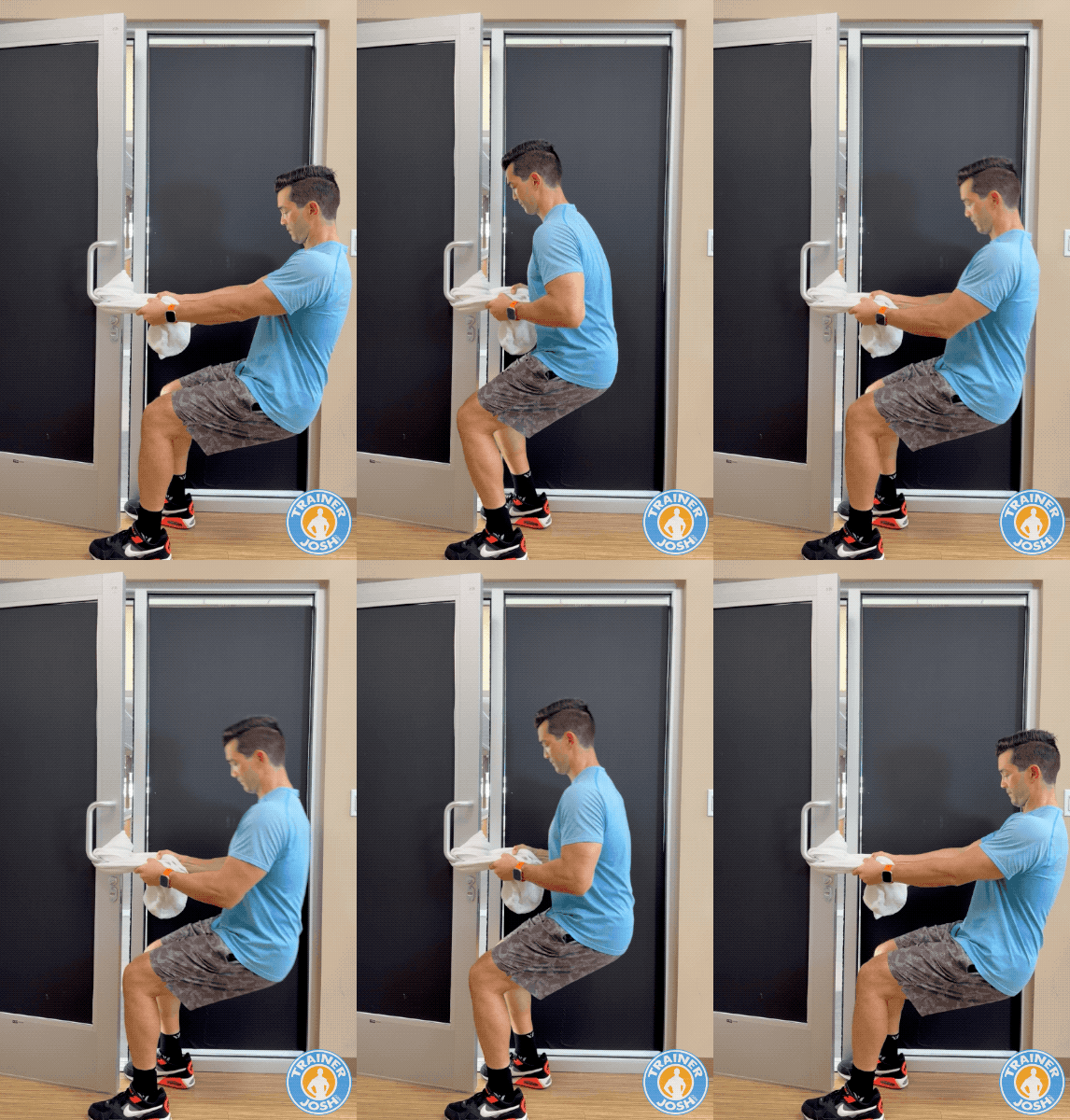
Here’s how you can do bicep curls with your bodyweight using only a door frame to create leverage. This is often referred to as a “Let Me In” exercise.
This is a closed-chain exercise where your body moves rather than the object. It recruits more muscle fibers and stabilizers than machine exercises do.
Setup: Find a sturdy doorway. Stand facing the door jamb (the vertical frame)
How to Perform the “Let Me In” Exercise:
- Setup: Open a sturdy door and face the outer edge. Place a towel around both doorknobs if you want. Grab the knobs (or towel ends) and straddle the door edge with your feet directly below the handles.
- Alignment: Lean back until your arms are fully extended. Then bend your knees and stick your butt out to create a 90-degree angle between your thighs and your straight spine.
- The Pull: Keep your feet flat and torso tight as you pull your body forward until your chest touches the edge of the door. Squeeze your shoulder blades together.
- The Return: Lower yourself back to the starting position in a slow, controlled motion. Allow your arms and shoulder blades to fully stretch out at the bottom.
Pro Trainer Tips:
- Grip Variations: Use an underhand grip to emphasize the biceps and inner forearms. Use an overhand or side grip to better target the outer forearms (extensors).
- Adjusting Difficulty: The further you move your feet forward in relation to your hands, the more difficult the exercise becomes. While moving your feet back makes it easier.
- Mind-Muscle Connection: At the bottom of each rep, get a good stretch around your shoulder blades and then start the pull by squeezing them together.
Common Mistakes to Avoid:
- Rounding the Back: Don’t let your spine curl. Instead, keep a straight line from your head to your hips by keeping your core tight and your butt sticking out slightly.
- Poor Foot Placement: Make sure you have good floor traction to avoid slipping. Wear shoes that provide a solid base and footing.
- Unsafe Anchor: Always make sure the door is stable, and that pulling in the direction does not damage the hinges or latch. Always verify the setup is secure before leaning back with your full weight.
Towel Resistance Curls
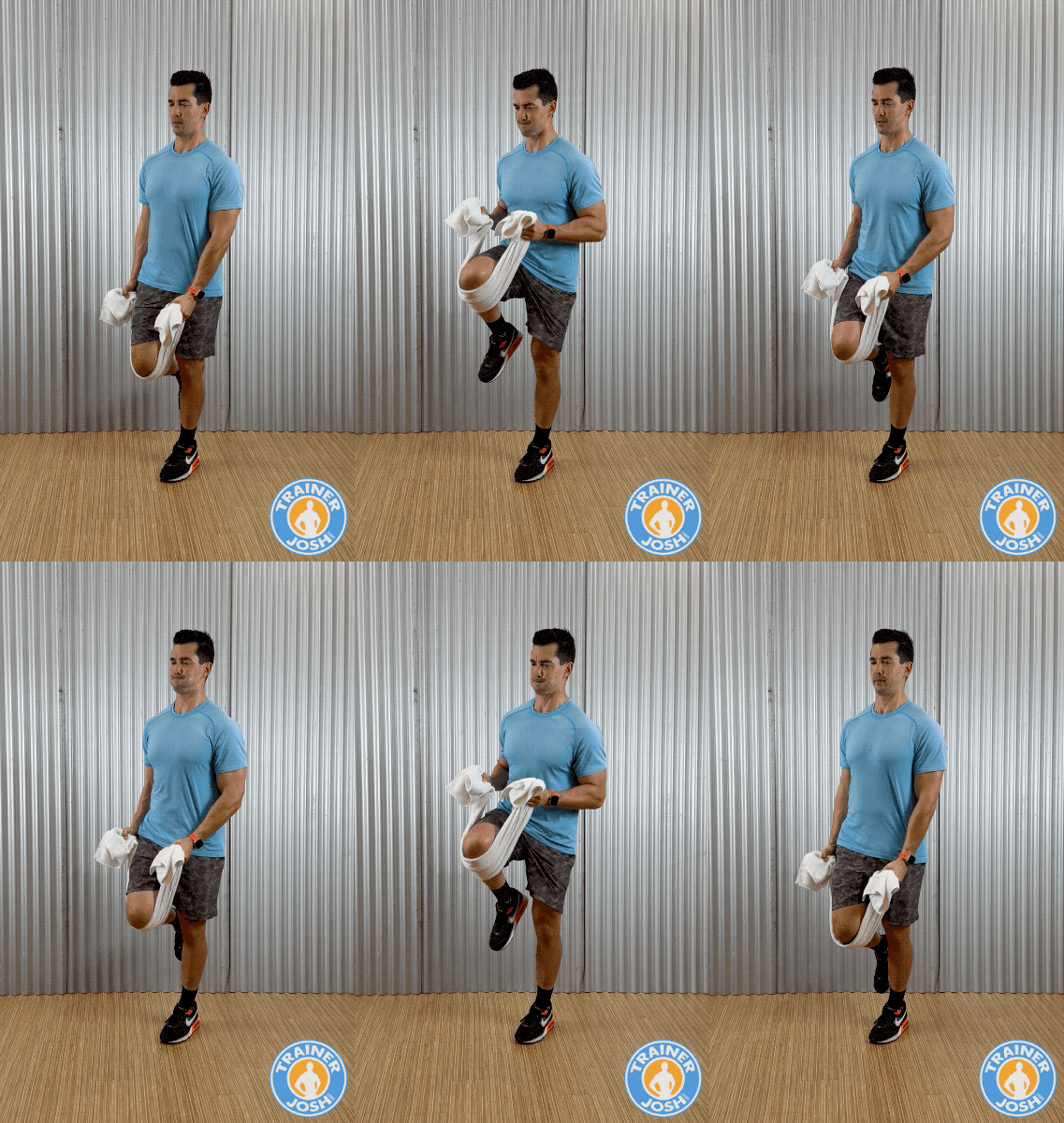
Towel Resistance Curls are a simple yet highly effective exercise that targets and isolates your biceps and forearms without dumbbells or machines.
This exercise uses your leg strength to fight your arm strength. It creates variable dynamic resistance without weights. Your legs are naturally stronger than your arms, creating continuous tension. This forces your biceps to work at full capacity during both the lifting and lowering phases.
Setup: You need a regular-sized bath or beach towel. Stand with your back against a wall for balance.
How to Perform Towel Resistance Curls:
- Setup: Stand with your back resting against the wall for balance and hold one end of a regular-sized bath or beach towel in each hand.
- Anchor: Lift one leg slightly and loop the center of the towel securely under the middle of your foot (or your knee depending on length of the towel).
- The Curl (concentric): Pull upward on the tail with your arms as hard as possible while at the same time pushing down with your foot to create heavy resistance.
- Range of Motion: Continue curling until your forearms form a 30-degree angle with your upper arms. Be sure to take a full 5 seconds to complete this upward movement.
- The Return (eccentric): Force your hands back down by pressing harder with your leg while your arms fight the descent. Take another 5 seconds to return to the starting position.
Pro Trainer Tips:
- Time Under Tension: Do not rush the movement. Stick to a strict count of 5 seconds up and 5 seconds down to make sure maximum muscle fatigue.
- Intensity Visualization: To get the most out of the exercise, be sure to pull up on the towel as if you’re literally trying to tear it in half.
- Volume: Performing just 5 reps is often enough to blast the biceps since the intensity is self-regulated and maximal.
Common Mistakes To Avoid:
- Moving the Elbows: Only your forearms should move. Keep your elbows fixed at your sides and your upper arms perpendicular to the floor throughout the exercise.
- Insufficient Resistance: Your biceps are no match for your leg strength. So you must consciously regulate the pressure. If the movement feels like it’s too easy, then you’re not pushing down hard enough with your foot.
- Poor Posture: Avoid pulling your back off the wall. Keep in contact to make sure you’re isolating your arms and not using momentum.
Self-Resistance Curls
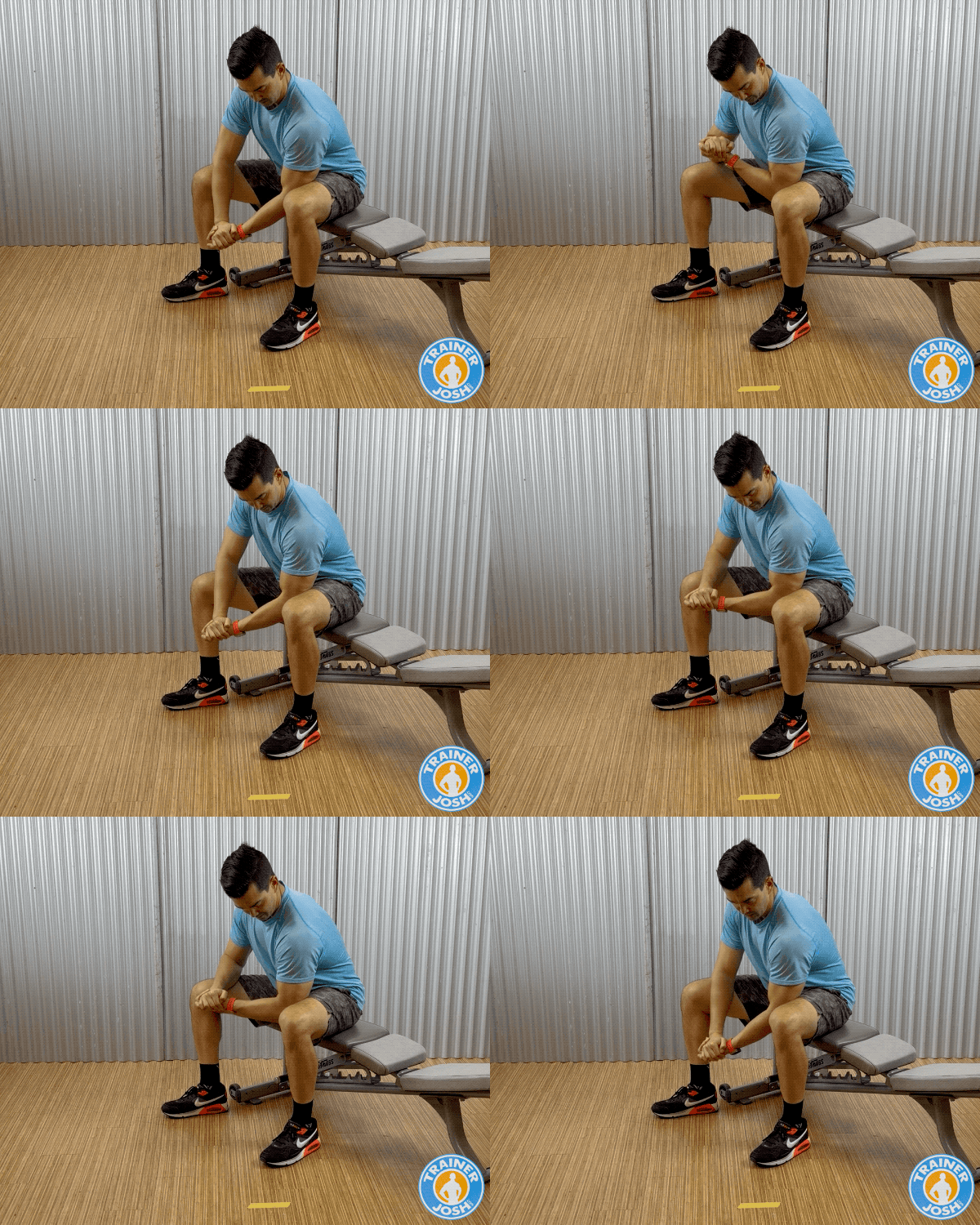
Self-Resistance Curls (also known as isometric curls) are a very effective bicep exercise that’s equipment-free. It lets you build bicep strength and definition by pitting your own muscles against each other.
With this exercise, you’ll use the triceps of one arm to create dynamic resistance against the biceps of the other. This allows you to manually control intensity and make sure the muscles are working at their absolute limit throughout the full range of motion. You can find my favorite dumbbell tricep exercises here.
How to Perform Self-Resistance Curls:
- Setup: Stand or sit with good posture. Bend your working arm at the elbow with the palm facing up. Firmly grasp that wrist with your non-working hand with the palm facing down.
- Create Tension: Push down with force with your top hand while simultaneously trying to curl your bottom hand upward toward your shoulder.
- The Curl: Slowly raise your working arm by fighting the downward pressure of your non-working hand. You should be able to barely raise your arm.
- The Return: When you reach the top, reverse the motion by pushing your arm back down with your top hand while the bottom arm resists the descent.
- Switch: Finish the desired number of reps or time, and then switch arms to work the opposite side.
Pro Trainer Tips:
- Triceps vs. Biceps: you’re basically using the triceps of the top arm to exhaust the biceps of the bottom arm so make sure both arms are contracting maximally.
- Variable Resistance: adjust the pressure instantly. If part of the movement feels too easy, then just push harder with the top hand to keep maximum difficulty.
- Time Under Tension: Don’t rush. You want to control the speed. Aim for a slow tempo (e.g., 5 seconds up, 5 seconds down) to maximize muscle fiber recruitment.
Common Mistakes to Avoid:
- Insufficient Resistance: A common mistake is allowing the biceps to win too easily. You must apply enough pressure so the movement is a struggle.
- Holding Your Breath: High-tension exercises can cause people to hold their breath, so remember to breathe rhythmically throughout the entire movement.
- Poor Posture: Keep your torso upright and avoid hunching or twisting your body to force your arm up. The goal is to isolate elbow movement.
Isometric Curl Holds
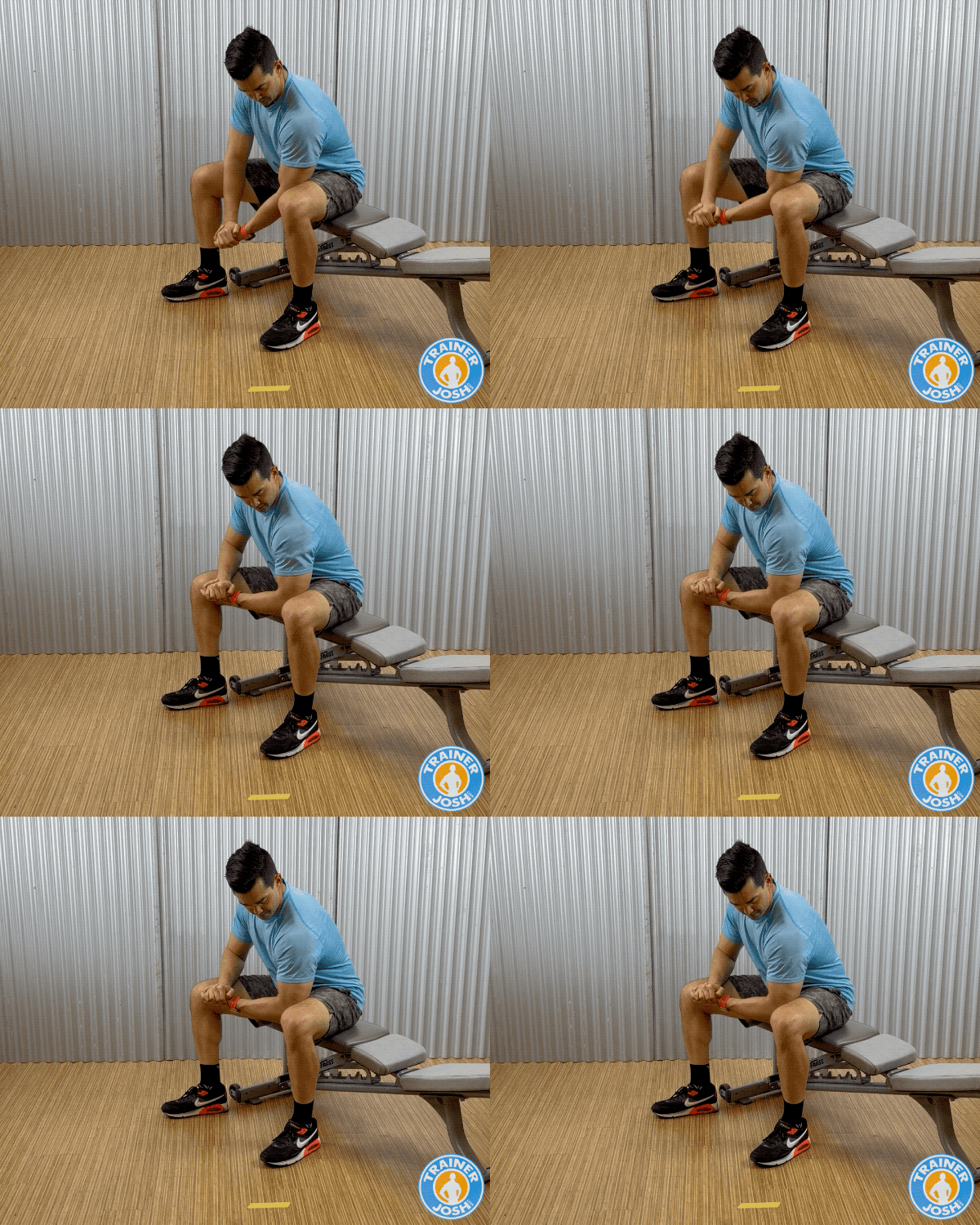
Isometric curl holds are a powerful exercise for overcoming sticking points. It stimulates muscle growth by recruiting high-threshold motor units (HTMUs) almost immediately.
Isometric contractions are where the muscle tenses without changing length. They produce greater maximal force than concentric contractions at the same joint angle. This allows you to create higher levels of tension than you could by moving weight.
This technique induces metabolic stress and hypoxia (occluded blood flow) within the muscle. These are primary drivers of hypertrophy. All while also strengthening the connective tissues at specific joint angles.
How to Perform Isometric Curl Holds:
- Setup: Stand or sit with good posture. Bend your elbow of the working arm to 90 degrees or any angle you wish to target with your palm facing up.
- Apply Resistance: Firmly grasp the wrists of your working arm with your non-working hand.
- Create Tension: Attempt to curl your working arm upward with near maximal effort while at the same time pressing down with your non-working hand to prevent any actual movement.
- The Hold: Maintain this stalemate of maximal tension for 6 to 12 seconds.
- Release: Slowly ramp down the tension over 2-3 seconds rather than releasing instantly, then switch arms.
Pro Trainer Tips:
- Vary the Angles: Isometric strength gains are specific to the joint angle being worked at, roughly within 30 degrees. To build full-range strength, perform your holds at three positions. Near the bottom (almost straight), at the mid-range (90 degrees), and at the top (maximum contraction).
- Irradiation Principle: Make a white-knuckle fist with your working hand and squeeze your glutes and abs to instantly amplify the strength of your bicep contraction. This “irradiates” neural drive from neighboring muscles into the biceps.
- Ramping: Don’t jump from 0% to 100% effort instantly. Take 2-3 seconds to smoothly ramp up to maximal tension so your tendons and joints are prepared for the load.
Common Mistakes to Avoid:
- Holding Your Breath: High-tension isometrics can spike blood pressure. Do not hold your breath. Instead, take shallow breaths or “hiss” air out through your teeth to maintain safe core pressure.
- Shrugging Shoulders: Keep your shoulder blades pulled down and back. If your shoulder rises toward your ear, then shift tension away from the biceps and into the traps.
- Insufficient Intensity: You have to self-regulate the difficulty since there is nothing moving. If you’re not pushing against your own hand with near maximal effort, then you’ll fail to stimulate the high threshold muscle fibers needed for growth.
TRX/Suspension Bicep Curls
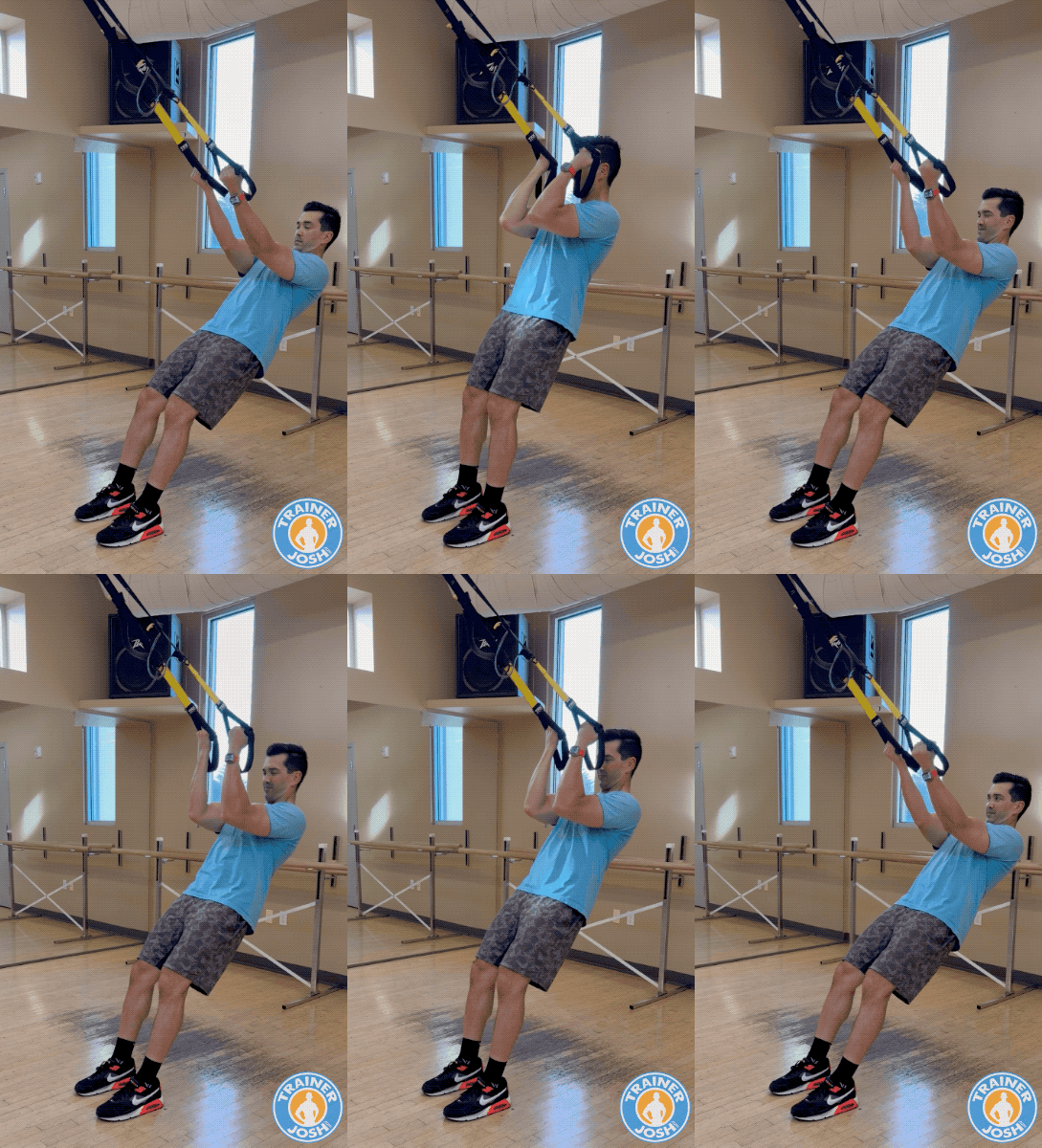
Suspended bicep curls are a terrific supplemental exercise that isolates the biceps while forcing the core, glutes, and back stabilizers to keep a rigid plank position. This creates a greater total-body demand than traditional dumbbell curls.
This exercise also lets you instantly adjust the resistance by changing your body’s angle relative to gravity. Just move your feet forward or backward. This makes it suitable for all strength levels.
How to Perform TRX/Suspension Bicep Curls:
- Setup: Stand facing the anchor point and grasp the handles with your palms facing up (supinated grip).
- Lean Back: Walk your feet forward and lean back until your arms are fully extended in front of you at shoulder height. Stiffen your torso into a straight plank from head to heels.
- The Curl: Keep your elbows fixed in space, high at shoulder level, then curl your hands toward your ears or forehead by bending only at the elbows.
- The Squeeze: Squeeze your biceps hard at the top of the movement without letting the straps go slack.
- The Return: Slowly lower yourself back down to the starting position with control. Fully extend your arms before the next rep.
Pro Trainer Tips:
- Elbow Isolation: The most critical cue is to keep your elbows frozen in space. This isn’t like a row where your elbows pull back against the ribs. With this curl, your elbows should remain high and stationary, and only the hands move towards your face.
- Adjusting Difficulty: To progress this exercise (make it harder), walk your feet closer to the anchor point to increase your body angle against gravity. To make it easier, just step backward to stand more upright.
- Pinkies Up: To maximize bicep recruitment, think about driving your pinky fingers toward your temples as you curl. This maintains supination and peak contraction.
- No Slack: Stop the movement just before your hands touch your face or the straps go slack. You want to keep tension on the straps to make sure the muscles are working through the entire range of motion.
Common Mistakes to Avoid:
- Dropping the Elbows: If you lower your elbows toward your ribcage as you pull, then you’ll turn the movement into a row. This engages your lats instead of isolating your biceps.
- Sagging Hips: Your hips will sag if you fail to engage your glutes and core. This breaks the plank alignment and reduces the exercise’s effectiveness. Keep your body like a rigid board.
- Leading with the Hips: Do not thrust your hips forward to generate momentum to help you lift up. The movement should be driven strictly by your arms.
- Curling the Wrists: Keep your wrist neutral. Do not aggressively curl your wrist toward you. This will shift the tension to your forearms rather than your biceps.
Towel Face Pulls
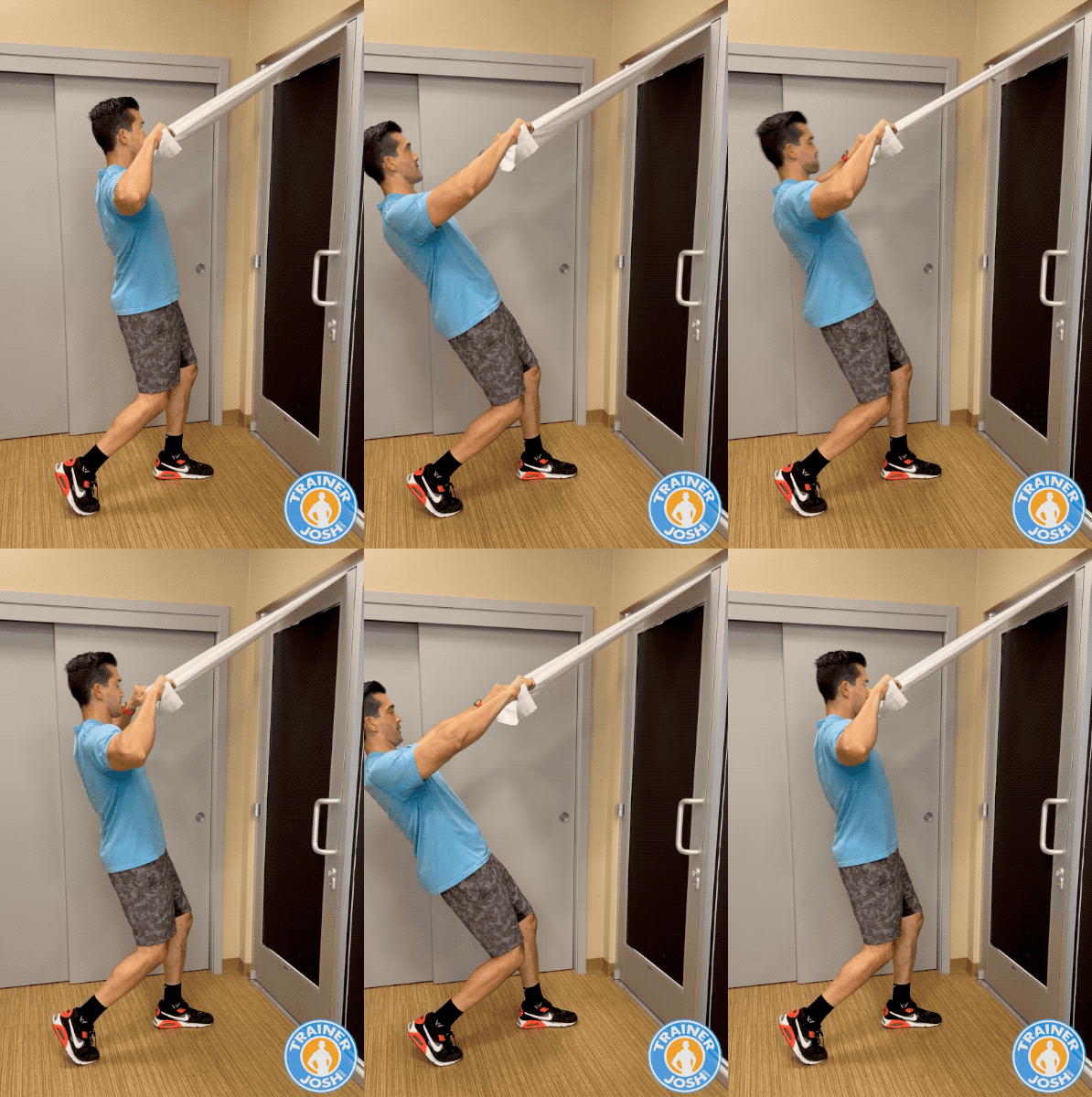
Towel Face Pulls are an excellent structural balance exercise that targets the upper back muscles while also recruiting the biceps brachii and brachialis as secondary movers.
This movement is crucial for scapular stability and shoulder health. This is because it works the scapular muscles differently from the standard rowing motion. This helps counteract the internal rotation often caused by too many pushing exercises.
How to Perform Towel Face Pulls:
- Setup: Loop a towel around a sturdy vertical pole (or knot a towel and secure it over the top of a closed door) and grasp the ends.
- Lean Back: Lean back with your arms fully extended, keeping your chest up, core tight, and body in a straight rigid line.
- The Pull: Pull your body forward by driving your hands toward your ears (rather than your chest), initiating the movement by squeezing your shoulder blades together.
- The Squeeze: At the peak of the movement, when your hands are near your face, forcefully contract your upper back muscles.
- The Return: Lower yourself back to the starting position with control, maintaining body alignment.
Pro Trainer Tips:
- Adjust Your Angle: You will naturally be weaker in this movement pattern than in a standard row; therefore, you must stand more upright (use a steeper body angle) to perform the reps correctly.
- Targeting: Focus on pulling your hands to your ears to maximize engagement of the rear deltoids and upper back. Pulling lower turns the movement into a standard row.
Common Mistakes to Avoid:
- Too Horizontal: A common error is attempting to perform face pulls at the same low angle used for inverted rows; this often leads to form breakdown because the smaller muscle groups cannot handle the same load.
- Loss of Posture: Do not allow your hips to sag or your chest to cave in; maintain a straight line from head to heels throughout the set.
Close-Grip Pull-ups
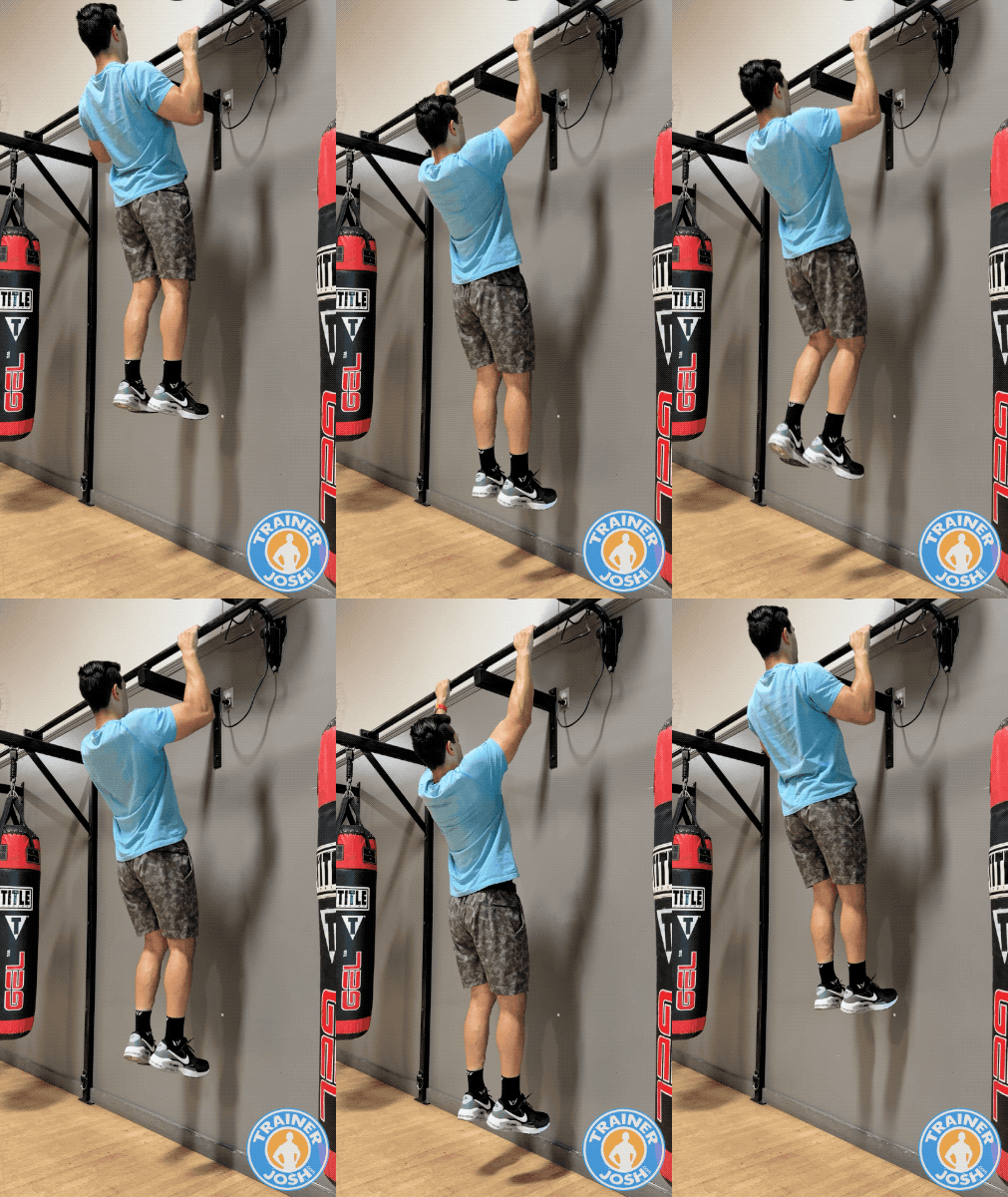
Doing pull-ups with a close grip will significantly change the mechanics of the pull-up. It’ll shift a larger portion of the load from the back muscles to the arms.
The standard pull-up primarily targets the latissimus dorsi and is the best bodyweight back exercise. But bringing your hands closer together recruits the biceps brachii more intensely. This makes this variation an excellent compound mass builder for your arms.
Close-grip pull-ups also require greater mobility and stability at the top and bottom of the range of motion. This forces the biceps to work harder over a greater range of tension than wider versions.
How to Perform Close-Grip Pull-Ups:
- Grip the Bar: Grasp a pull-up bar with an overhand (pronated) grip, positioning your hands closer together than shoulder-width, ideally until they are touching.
- Dead Hang: Hang freely with your arms completely straight (dead hang); do not start with your elbows slightly bent.
- Engage Shoulders: Before bending your elbows, initiate the movement by shrugging your shoulders down to engage your scapula and protect the joints.
- The Pull: Pull your body upward, keeping your legs straight and avoiding any swinging or kicking, until your chin is well above the bar.
- The Return: Lower yourself back down under control until you return to the fully extended start position.
Pro Trainer Tips:
- Squeeze the Ribs: As you pull, try to squeeze your arms in close to your sides; this helps engage the back muscles more effectively while relieving stress on the elbow joints.
- Grip Variation: While the “Close Grip Pull-Up” is technically overhand, you can switch to an underhand (supinated) grip with hands close together for even greater biceps emphasis, often referred to as a close-grip chin-up.
- Mobility Check: Be patient if your wrists or hands feel tight; close-grip work requires significant mobility, so you may need to gradually move your hands closer over several sessions rather than forcing them to touch immediately.
Common Mistakes to Avoid:
- Starting with Bent Elbows: Avoid starting the rep with your elbows slightly bent. Instead, fully extend at the bottom to maximize strength gains and avoid hindering your progress.
- Using Momentum: Do not kick your legs or swing your body to generate upward force. This momentum reduces tension in the biceps and diminishes the exercise’s effectiveness.
- Incomplete Range of Motion: Failing to clear the bar with your chin or failing to lower all the way down constitutes a “half-rep,” which cheats the muscles of the full growth stimulus.
Archer Pull-Ups
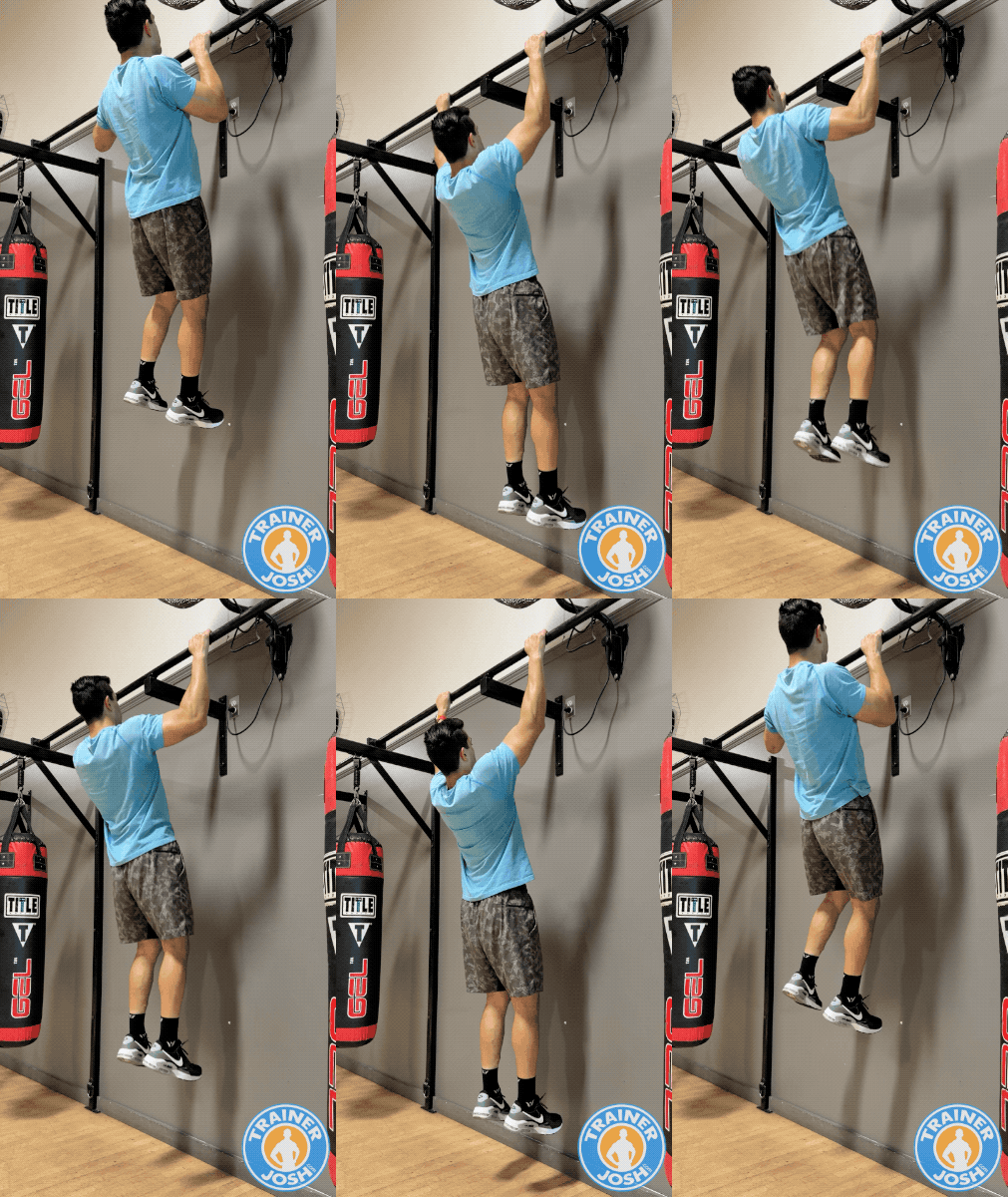
Archer pull-ups are a powerful intermediate exercise that bridges the gap between standard pull-ups and elite one-arm pull-ups.
This movement functions as a “pseudo on-arm pull-up” by shifting most of your body weight to one side. This places a significant unilateral load on the working bicep, lat, and shoulder.
How to Perform Archer Pull-Ups:
- Grip: Grasp the bar with an overhand grip (palms facing away) that is significantly wider than your shoulders.
- Hang: Hang with straight arms, centering your body between your hands, and engage your core to prevent swinging.
- The Pull: Pull your body upward toward one hand (e.g., the left), tucking that elbow tight to your chest while simultaneously straightening the opposite arm across the bar.
- Top Position: Continue pulling until your chin reaches the bar near your working hand; the non-working arm should be fully extended, providing negligible support.
- The Return: Lower yourself slowly with control, returning to the centered dead-hang position before alternating to the other side.
Pro Trainer Tips:
- Visual Cue: Visualize the motion of drawing a bow and arrow to shoot; your pulling arm draws the string while the stabilizing arm holds the bow steady.
- Eccentric Focus: Pay particular attention to the deceleration (lowering) phase; slowing it to a count of four builds significant strength and power.
- Modifications: If you cannot perform the full movement, use a resistance band or place one foot on a chair to reduce load while maintaining proper mechanics.
Common Mistakes to Avoid:
- Using Momentum: Avoid swinging or kicking to generate force; the movement must be strict to effectively target the muscles.
- Bending the Assist Arm: A common error is relying too heavily on the non-working arm. It should gently straighten over the bar and offer minimal assistance, rather than pulling you up.
- Training While Fatigued: Because this exercise places high stress on the rotator cuff in a wide position, avoid placing it at the very end of a workout when your stabilizing muscles are exhausted, as this increases injury risk.
Best Bodyweight Bicep Exercises for Beginners (Start Here)
The “Beginner Big 3” Routine
This is your entire arm program. Three exercises. Three days a week.
Monday, Wednesday, Friday. That’s it.
Exercise #1: Inverted Rows (Underhand Grip)
Why this first? Horizontal pulling builds shoulder health and lets you rack up reps while your vertical pulling catches up.
Week 1: 3 sets of 8-10 reps.
Exercise #2: Eccentric or Assisted Chin-Ups
The king of arm mass. Nothing else comes close.
Week 1: 3 sets of 3-5 negatives (5-second descent) OR 3 sets of 5-8 assisted reps.
Exercise #3: “Let Me In” Curls
Grab a door jamb or wrap a towel around a doorknob. Lean back and curl your body toward the door using only your biceps.
This isolates the arms more than the compound movements.
Week 1: 2-3 sets of 10-12 reps.
How to Progress Each Week
Add one rep to every set each workout.
- Week 1: 3×8
- Week 2: 3×9
- Week 3: 3×10
Once you hit 12 reps on rows or 8 on chin-ups, make the exercise harder. Lower the angle, slow the tempo, and drop back to the lower rep range.
Timeline for Results
Strength gains? 3-4 weeks.
Visible muscle definition? 6-12 weeks.
Common Beginner Mistakes (And How to Avoid Them)
Mistake #1: Thinking Push-Ups Work Your Biceps
They don’t. Push-ups target your chest, shoulders, and triceps. They’re a pushing movement.
Biceps are pullers. If you’re not hanging from something or pulling your body toward something, your biceps aren’t working.
Mistake #2: Training Every Single Day
Muscles grow during recovery, not training.
Your body needs 24-48 hours (sometimes up to 72 for guys over 40) to rebuild stronger.
Three days a week is optimal. More isn’t better—it’s counterproductive.
Mistake #3: Doing the Same Thing Forever
If you do 3 sets of 8 reps every week for a year, your body has zero reason to change.
Track your workouts. Beat your previous numbers. Always.
Mistake #4: Sacrificing Form for Reps
Swinging, kipping, cutting your range of motion—these all cheat your biceps of tension.
Can You Build Biceps Without a Pull-Up Bar? (Absolutely Yes)
Let me guess…
Your landlord won’t let you install a pull-up bar. Your doorframes are old and sketchy. Or maybe your partner gave you “the look” when you suggested drilling holes in the wall.
I get it.
Here’s the truth: You don’t need a bar to build arms.
You need leverage and tension. And your house is full of both.
Household Alternatives to Pull-Up Bars (Get Creative)
Option 1: A Sturdy Table (Your New Best Friend)
Lie underneath a desk or dining table. Grab the edge with palms facing you. Pull your chest to the table, keeping your body rigid.
Safety check: Push on the table first. Hard. If it wobbles or tips, don’t use it. Place it against a wall to prevent sliding.
This is the inverted row—one of the most effective bicep builders in existence.
Option 2: Any Door in Your House
Open a door. Wrap a towel around both doorknobs. Grab the ends, lean back, and pull your chest to the door edge.
Pro tip: Wedge something under the door to keep it from swinging. Pull in the direction that closes the door, not opens it, or you’ll rip the latch off.
Option 3: Your Stair Railing
Stand in front of a waist-high railing. Grip it underhand. Walk your feet forward underneath and lean back.
Now curl your forehead toward the railing, bending only at the elbows. The further you walk your feet forward, the harder it gets.
Option 4: Go Outside
Parks have monkey bars. Trees have branches. Swing sets have support beams.
If the branch is thick, drape a towel over it for a better grip.
Option 5: Use Your Own Body
Loop a towel under one foot. Hold both ends. Curl your hands up while pushing down with your leg.
You’re creating your own resistance.
Or grip your working wrist with your opposite hand. Push down while curling up. Pitting your triceps against your biceps.
The “No Bar, No Problem” Full Bicep Workout
20 minutes. Three times a week. That’s all you need.
Warm-up: 2-3 minutes of arm circles.
Exercise 1: Doorway Rows or Table Rows 3 sets x 8-12 reps. Squeeze hard at the top.
Exercise 2: Ledge Curls or Towel/Leg Curls 3 sets x 5 reps. Use a 5-second curl up, 5-second lower down tempo. Time under tension is your growth stimulus here.
Exercise 3: Isometric Self-Resistance Holds 2 sets x 10-15 seconds per arm. Lock at 90 degrees, maximum effort.
How to Progress Without Adding Weight
Change your body angle. Move your feet further forward on rows—the more horizontal you are, the harder it gets.
Go single-arm once you’re strong enough. One-arm rows double the resistance on each bicep.
Add pauses. Hold for 2-3 seconds at the hardest part of each rep.
Slow everything down. Make the lowering phase last 4-5 seconds to maximize muscle damage and growth.
How to Train Biceps With Just Bodyweight (Programming Science)
Training Frequency: Daily vs. 2-3x Per Week (What’s Optimal?)
Here’s what nobody tells you about training frequency: You can train hard, or you can train often. You can’t do both.
The Recovery Reality
When you hammer your biceps with high-intensity pulling, you create micro-tears in the muscle fibers. Your body needs 48-72 hours to repair that damage and rebuild stronger.
This is called protein synthesis. It’s the biological process your body builds new muscle tissue to repair damage caused by exercise and to grow larger muscles.
Train again before that process finishes? You’re just breaking down muscle without giving it time to grow back.
That’s not training. That’s spinning your wheels.
Recovery is where the real growth happens, but it only works if your body actually settles into it. If sleep or muscle tension keeps you tossing and turning after a hard pulling session, that repair window gets cut short. Ageless Multi Magnesium combines seven forms of magnesium to help support muscle relaxation, restful sleep, and workout recovery, which matters even more once you’re past 40.
A 7-form magnesium complex designed for adults 40+ to support restful sleep, relaxation, muscle recovery, and whole-body health. Each serving provides 350mg of magnesium plus L-theanine and vitamin B6 for added nervous-system support.
- 7-Form Magnesium Blend: Combines glycinate, taurate, malate, citrate, Sucrosomial® magnesium & complementary forms
- Sleep & Relaxation Support: Magnesium glycinate plus L-theanine help support calm, relaxation & restful sleep
- Muscle Recovery & Comfort: Supports normal muscle relaxation, recovery & energy production
- Enhanced Absorption: Includes clinically studied Sucrosomial® Magnesium for high absorption & gentle digestion
- Heart, Bone & Nervous System Support: Provides 350mg of magnesium plus vitamin B6 for essential body functions

When Daily Training Actually Works
There’s one exception: “Greasing the Groove.”
This is skill practice, not muscle building. You perform an exercise daily at 50-80% of your max—never to failure.
Example: If you can do 10 chin-ups, you do sets of 5-6 throughout the day.
This trains your nervous system to recruit muscle fibers more efficiently. You get stronger without adding size.
It’s great for neural adaptation. But terrible for hypertrophy.
Why 2-3x Per Week Dominates
Monday, Wednesday, Friday.
That’s the sweet spot for muscle growth.
You hit the biceps hard. They recover. You hit them again with more intensity or volume.
Over a year, that’s 150 growth stimuli compared to only 50-100 with a once-per-week “arm day.” Math doesn’t lie.
Volume Guidelines (How Many Sets Per Week?)
Beginners: 6-10 sets per week
If you’re new to bodyweight training, your biceps respond to minimal volume. Three sessions of 2-3 sets each is plenty.
Intermediate: 10-15 sets per week
As your body adapts, you need more volume to keep growing.
Advanced: 15-20+ sets per week
Elite athletes might push higher, but here’s the catch. Most guys overtrain long before they undertrain.
How to Count Volume
Every set of chin-ups counts. Every set of rows counts.
Three sets of chin-ups plus three sets of inverted rows? That’s 6 sets of bicep work, even without a single isolation curl.
Signs You’re Overdoing It
Your numbers go backward. Your elbows ache constantly. You can’t get a pump. You sleep poorly.
That’s not “toughness.” That’s overtraining.
Bodyweight Bicep Workout Plans
Beginner Plan (Zero Equipment, 3x Per Week)
Train these exercises 2-3 times per week (e.g., Mon/Wed/Fri or every 4-5 days). Beginners achieve greater growth at lower frequencies than advanced trainees.
For volume, aim for roughly 9-12 sets per week total for biceps. Going above 10 sets for beginners often leads to diminishing returns.
How to Read Tempo (e.g., 3010)
Tempo is written as 4 numbers. Each one is seconds spent in a phase of the rep:
- 3 → Lower for 3 seconds (eccentric)
- 0 → No pause at the bottom
- 1 → Lift in 1 second (or explosively)
- 0 → No pause at the top
Use Autoregulatory Volume Training (AVT) to manage fatigue and ensure progressive overload.
- Set a Rep Target for the first set only (Benchmark Set)
- Subsequent Sets: Perform as many reps as you can with the same form/difficulty. Don’t try to hit a specific number per se. Just go until you are close to failure.
Intermediate Plan
Advanced Workout Plan
Troubleshooting Your Bodyweight Bicep Training
“I Don’t Feel My Biceps Working” (Mind-Muscle Connection)
If you don’t feel the exertion in your biceps when doing bodyweight exercises, then the problem is usually from a lack of mind-muscle connection, improper mechanical leverage (form), or relying on the stronger back muscles to do the work.
As your trainer, here’s what I would tell you to correct the problem:
“You are moving the weight, but not contracting the muscle.”
With body weight training, you have to consciously contract the muscle instead of just focusing on getting your chin over the bar or your body to the door. This is known as the mind-muscle connection.
The Fix: visualize your bicep contracting to move the body. So instead of thinking about pulling your body up, instead think about curling the bar or door frame down toward your face.
Tactile Cue: for single arm movements, use your free hand to touch (palpate) the working bicep. Feel the muscle harden and provide sensory feedback that strengthens your neurological connection to make sure it’s firing.
“Adjust your grip to ‘Underhand’ and ‘Close’.”
The position of your hands will dictate which muscles are mechanically advantaged to do the work.
- Supinated Grip: Make sure your palms are facing toward you( supinated). This places the bicep bronchi in the strongest mechanical position to generate force.
- Narrow Width: Move your hands closer together (shoulder width or narrower). A wide grip targets the lats (back), but a narrow grip shifts emphasis much more toward your biceps.
“Change your target: Pull to the face, not the chest.”
When doing rows or “Let Me Ins”, the direction you’re pulling changes the muscle focus.
The Fix: Instead of pulling your chest to the bar/door (which is a back row), aim to curl your forehead or chin to the bar. Keep your elbows high and fixed in space, kind of like acting as a hinge. This converts the compound row into an inverted curl, one of the few pure bodyweight isolation exercises.
“Squeeze the Bar Less”
It might sound counterintuitive, but squeezing the bar (or door) handle too hard can radiate tension into your forearms and elbows instead of your biceps.
The Fix: Loosen your grip slightly. You want a grip just hard enough to support your weight and allow for the primary movers (the biceps) to take the load rather than your forearm flexors.
“Slow down and Pause.”
Momentum kills muscle activation. If you’re bouncing at the bottom or rushing to the top, then you’re bypassing the maximal tension point.
The Fix: Utilize Isometrics. Pause for two seconds at the very top of the movement (peak contraction), and squeeze the biceps as hard as possible.
Tempo: Slow down the lowering (eccentric) phase to a count of 3-5 seconds. This increases the time under tension (TUT), which is a primary driver of hypertrophy.
“My Progress Has Stalled” (Breaking Plateaus)
If your progress has stalled, first diagnose the cause of the plateau and then apply specific mechanical or programming adjustments.
Stalling can be a part of training, but a double plateau at the same strength level indicates that it is time to change your program. Your bicep muscles have likely adapted to the current stimulus, and you’re either undertraining (need more volume) or have hit a microloadability wall.
The Fix: Find a way to micro-load. Put books in a backpack, wear a weight vest, or wear a dip belt.
Watch out for Terminal Consistency violations when doing bodyweight exercises. Use a full range of motion. It’s common to “stall” during exercises because you subconsciously reduce the range of motion to make the reps easier when you get tired.
Use eccentric overloading with these bicep exercises since you can’t add weight. Your muscles are 20-60% stronger during the lengthening (downward) phase than the shortening (upward) phase.
“I Have Elbow or Wrist Pain” (Injury Prevention)
If you’re getting wrist or elbow pain during bodyweight bicep exercises (like chin-ups and rows), it’s often from connective tissue overuse, improper joint alignment, or muscle imbalances.
I would first stop aggravating the pain by stopping immediately stopping the exercise. Muscle fatigue and burning during exercise is natural but sharp, shooting pain or discomfort in the joints, bones, or tendons is “bad pain.”
Pushing through this pain can cause a minor issue into a chronic injury that lasts months.
Elbow tendonitis usually stems from the forearm flexors (gripping muscles) being too strong and the extensors (opening muscles) being too weak. To fix this, you should strengthen the antagonists.
Get a rice bucket, dig your hands into it, and open your fingers against the resistance. It’ll strengthen the extensors.
Wrist pain is often caused by overuse, limited flexibility, or excessive torque from fixed bars.
Switch to rings. Fixed bars lock your wrists into a specific path. Use gymnastic rings so your wrists and elbows rotate naturally during a rep. This will significantly reduce torque on your joints.
If you don’t have rings, then use a neutral grip (palms facing each other), parallel bars, or a towel. This position is generally friendlier on the wrists than fully supinated (underhand) or pronated (overhand) grips.
Stretches: Perform wrist stretches on the floor to improve mobility. Place palms down, palms up, and fingers facing your knees.
Your tendons and ligaments take a beating in this kind of training, and they don’t get the same attention as your muscles even though they’re doing a lot of the work. Ageless Multi Collagen provides five collagen types that support connective tissue, joints, and tendons, which can be useful if you’re pulling your bodyweight several times a week. It’s an easy scoop to add to your morning coffee or a post-workout shake.
Powered by 5 Types of Bioactive Naturally Hydrolyzed Collagen Peptides for Full-Body Support (Odorless & Flavorless)
- Natural GLP-1 Support: Helps support healthy appetite signals, fullness & metabolic function
- Lean Muscle Support: Helps preserve muscle, strength & healthy body composition during weight loss
- High-Protein Collagen: Adds 20g of protein with 5 collagen types to help support daily protein intake
- Skin, Joint & Hair Support: Provides collagen peptides to support skin elasticity, joints, hair & nails
- 3-Part Weight-Loss Support: Combines muscle, protein/collagen & appetite support in one simple daily stack