

If you’ve been searching for “bodyweight tricep exercises” because the back of your arms feel soft, “flabby”, or like they’ve got that stubborn batwing thing going on… you’re in the right place.
You don’t need fancy machines, a gym membership, or 45 minutes of endless reps. You just need the right exercises that actually hit your triceps hard using just your bodyweight.
The truth is, most “tricep workouts” you find online either turn into push-ups that mostly hit your chest, push you into chair dips that wreck your shoulders, or give you a random list of exercises with zero plan. You’re then left wondering, “Am I even doing this right? Why aren’t my arms changing?”
That’s why this guide is set up differently. You’re about to get the 10 best tricep exercises using bodyweight and no equipment. You’ll also get beginner-friendly versions if you can’t do “real” reps yet, form cues so you hit triceps (not just chest/shoulders), and progressions to keep building strength without weights.
So keep going, pick your first 3-4 moves, and you’ll feel your triceps light up the way they’re supposed to.
Bodyweight Tricep Exercises (No Equipment): Best Moves + Done-For-You Routines
Build stronger, firmer triceps at home using only your bodyweight. No gym needed… just the right exercises that actually target the back of your arms.
Quick pick your situation:
- No equipment → Diamond push-ups + floor tricep extensions
- Chair or bench → Close-grip push-ups + bench dips
- Pull-up bar or rings → Bodyweight tricep extensions (overhead variation)
Quick 3-round routine:
- Diamond push-ups – 8-12 reps
- Bodyweight tricep extensions (counter or floor) – 10-15 reps
- Bench dips – 10-12 reps
- Plank hold – 30 seconds
Here’s what most people miss: Your triceps have three heads, and the long head is the biggest part that creates that firm, defined look. But it gets under-stimulated during regular push-ups.
A 2023 study in the European Journal of Sport Science found that 12 weeks of cable triceps training performed in an overhead position (70% 1RM, 5×10, twice weekly) produced about 1.4–1.5 times greater increases in triceps muscle volume than the same training in a neutral arm position, despite using 34–39% lighter absolute loads.1
That’s why bodyweight tricep extensions (where you lower your head below your hands using a counter or table) are non-negotiable. They stretch the long head at both the shoulder and elbow, hitting the muscle in ways standard push-ups can’t.
One of my clients couldn’t figure out why his arms stayed soft despite doing 50 push-ups daily. We added just two sets of bodyweight extensions twice a week. Eight weeks later, he’d added visible size to the back of his arms.
Do Bodyweight Tricep Exercises Actually Work?
Quick Answer:
Yes, bodyweight tricep exercises are very effective. Your triceps make up about two-thirds of your upper arm mass. Their primary function is to push and extend the elbow against resistance. So bodyweight movements like push-ups and dips are mechanically ideal for targeting them.
A 2013 study in the Journal of Strength and Conditioning Research found that during standard push‑ups performed at bodyweight, triceps brachii muscle activity reached approximately 74% of maximal voluntary contraction, while pectoralis major activity reached about 64%. This indicates that both muscles are highly recruited and that triceps activation is at least comparable to, if not slightly greater than, chest activation in this movement.2
But you’ll probably need more than just standard push-ups. Bodyweight pushing exercises are effective, but relying on them alone may result in suboptimal triceps development compared with a routine that incorporates isolation exercises.
The triceps have three heads. The long head is bi-articulate (crosses the shoulder and elbow). During pushing movements, the long head acts as a stabilizer and is usually understimulated because its functions conflict. It extends the shoulder while you’re trying to flex it.
The solution to maximize growth is to incorporate isolation exercises. Specifically, those that place the arm overhead or stretch the long head.
“Do push-ups really work triceps?”
They work…if you bring your hands closer. Wide-grip push-ups kill tricep leverage because your hands sit outside your elbows. Narrow or diamond push-ups shift the load onto the triceps by increasing elbow extension demand.
A 2005 study in the Journal of Strength and Conditioning Research found that during a single‑rep push‑up test in 40 adults, both the pectoralis major and triceps brachii showed significantly higher EMG activity when the exercise was performed with a narrow hand position compared with a wide hand position, indicating that a close‑grip push‑up elicits greater muscle activation in these muscles than a wide‑grip variation.3
Studies confirm: close-grip push-ups generate higher EMG (muscle activation) in the triceps than wide-grip versions. Keep your elbows tucked at 0-45 degrees to your ribs (not flared out). That’s where the tricep burn is.
You can increase the difficulty and range of motion (ROM) by doing push-ups on your knuckles or using push-up handles (deficit push-ups).
“Are dips sufficient for building triceps?”
Dips are called the “squat of the upper body” because they’re a compound movement that builds massive strength and size in the triceps, chest, and shoulders.
You need to lift your entire body weight to do them. This is a significantly heavier load than most people use for isolation exercises like tricep kickbacks.
To make the dip hit your triceps harder, be sure to keep your torso upright and your elbows tucked in. Leaning forward shifts the emphasis to your chest.
But you have to be careful when doing dips…
Dips can place significant stress on the anterior shoulder. Only lower yourself until your shoulders are below your elbows (breaking 90 degrees) for a full range of motion, but only if your flexibility allows it without pain. Deep dips can lead to impingement or injury if you lack shoulder mobility.
Overhead extensions are better for triceps development. With dips, the long head is extended behind the body, so the long head enters a state of active insufficiency (it’s too shortened to generate maximum force).
“How do I build triceps without weights?”
You have to use biomechanical progressive overload since you can’t simply add weight to a bar. To do this, you’ll need to manipulate physics to keep building muscle.
Here are the best methods:
Bodyweight Skull-overs/Extensions: Use a low bar or a sturdy surface (e.g., a kitchen counter). Lean forward and bend your elbows to lower your head under the bar/counter, and then push back up. This mimics the “skull over” or tricep extension that has been shown to result in 40% more triceps growth than pushdowns.
Increase Range of Motion: Performing exercises with a greater range of motion increases difficulty and muscle recruitment. An example is doing close-grip push-ups on parallel bars or a stack of books to lower your chest below your hands, which increases the stretch on your triceps.
Leverage (Body Angle): For push-ups, start with your hands on the wall (easy), then move to a table/couch (medium), and finally to the floor (hard). And to make it even harder, elevate your feet on a chair (decline push-ups) to shift more weight onto your hands.
Tempo (Time Under Tension): Slowing down the movement forces your triceps to work harder for longer. Try taking 3-5 seconds to lower yourself into a push-up or dip. Then pause for 1 second at the bottom and push back up.
High Repetitions: You don’t need heavy weights to build muscle. You can do sets of up to 30 repetitions, taken to near failure, which will be just as effective for muscle growth as heavy sets.
Triceps 101 (Simple Anatomy That Helps You Train Smarter)
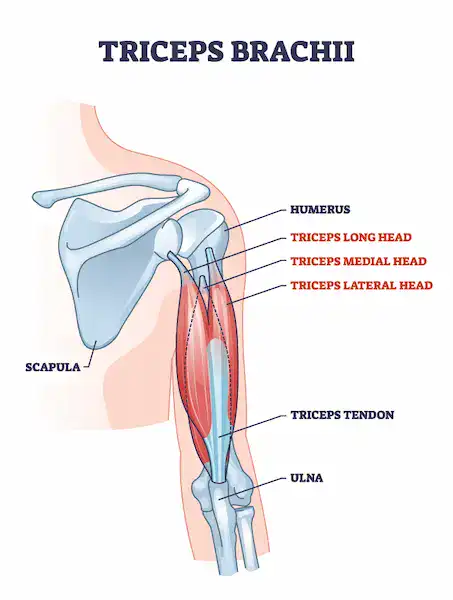
The triceps brachii gets its name from having three distinct heads: the long, lateral, and medial heads.
All three heads converge into a single tendon that inserts into the ulna (forearm bone), so they all share the same primary function of elbow flexion (straightening the arm).
The Lateral Head: Located on the outside of your arm, this head originates from the top of the humerus. When well developed, it creates the “horseshoe” appearance on the triceps.
The Medial Head: This head originates from the middle of the humerus and is mostly covered by the other two heads sitting beneath it.
The Long Head: Located on the back/inside of the arm, this is the largest and most complex head. Unlike the other two, it’s bi-articulate, meaning it crosses both the elbow and the shoulder joint (originating from the scapula). It straightens the elbow and also assists with shoulder extension (bringing the arm down/back).
All three heads share one tendon that works through the elbow and shoulder joint, so that connective tissue takes on real load every time you push or extend. If you want to keep training hard without nagging joint pain, Ageless Multi Collagen is one option I like because it’s built to support the tendons and cartilage doing that work.
Powered by 5 Types of Bioactive Naturally Hydrolyzed Collagen Peptides for Full-Body Support (Odorless & Flavorless)
- Natural GLP-1 Support: Helps support healthy appetite signals, fullness & metabolic function
- Lean Muscle Support: Helps preserve muscle, strength & healthy body composition during weight loss
- High-Protein Collagen: Adds 20g of protein with 5 collagen types to help support daily protein intake
- Skin, Joint & Hair Support: Provides collagen peptides to support skin elasticity, joints, hair & nails
- 3-Part Weight-Loss Support: Combines muscle, protein/collagen & appetite support in one simple daily stack

“How do I hit all three heads?”
You don’t need perfect isolation with an exercise to develop all the triceps. In fact, pure isolation is anatomically impossible, so instead a combination of heavy pressing and extension patterns covers the entire muscle group.
Pressing (Lateral & Medial): Compound pushing exercises can effectively stimulate the lateral and medial heads, but the long head is often under-stimulated during pressing because its function at the shoulder (extension) conflicts with the shoulder flexion needed to push the resistance up.
If you’re specifically looking to hit the deep medial head, then you’ll need exercises that make you struggle to reach full lockout. Heavy dips or one-arm push-ups with heavy loads are most effective.
Elbow Extension (Long Head): To target the long head, you need exercises where the arm is overhead or the long head is stretched. Bodyweight tricep extensions are best since the elbows are up and away from the torso. This places the muscle in a stretch position.
You should vary the angle of the extension. For example, use overhead variations to target the long head and press downs to target the lateral and medial heads.
“Are triceps 70–75% (or 2/3) of your arm?”
Yes, the triceps make up about two-thirds of your upper arm mass, with the biceps making up the remainder. Exact percentages can vary by individual, but the triceps definitely encompass the bulk of the upper arm.
If your goal is arm size and you want to make them bigger, you’ll want to prioritize the triceps, since it’s more mathematically efficient than prioritizing the biceps. To maximize the size of your triceps, you’ll need to include isolation work. Specifically, exercise that stresses the long head since it’s the biggest of the three heads.
The triceps are usually made up of fast-twitch fibers, so they’ll grow best with lower rep ranges (e.g., 4-8 reps). They’ll require sufficient rest intervals to recover and perform at high intensity.
The Best Bodyweight Tricep Exercises (Ranked + Grouped by Pattern)
Close Grip Push-Ups
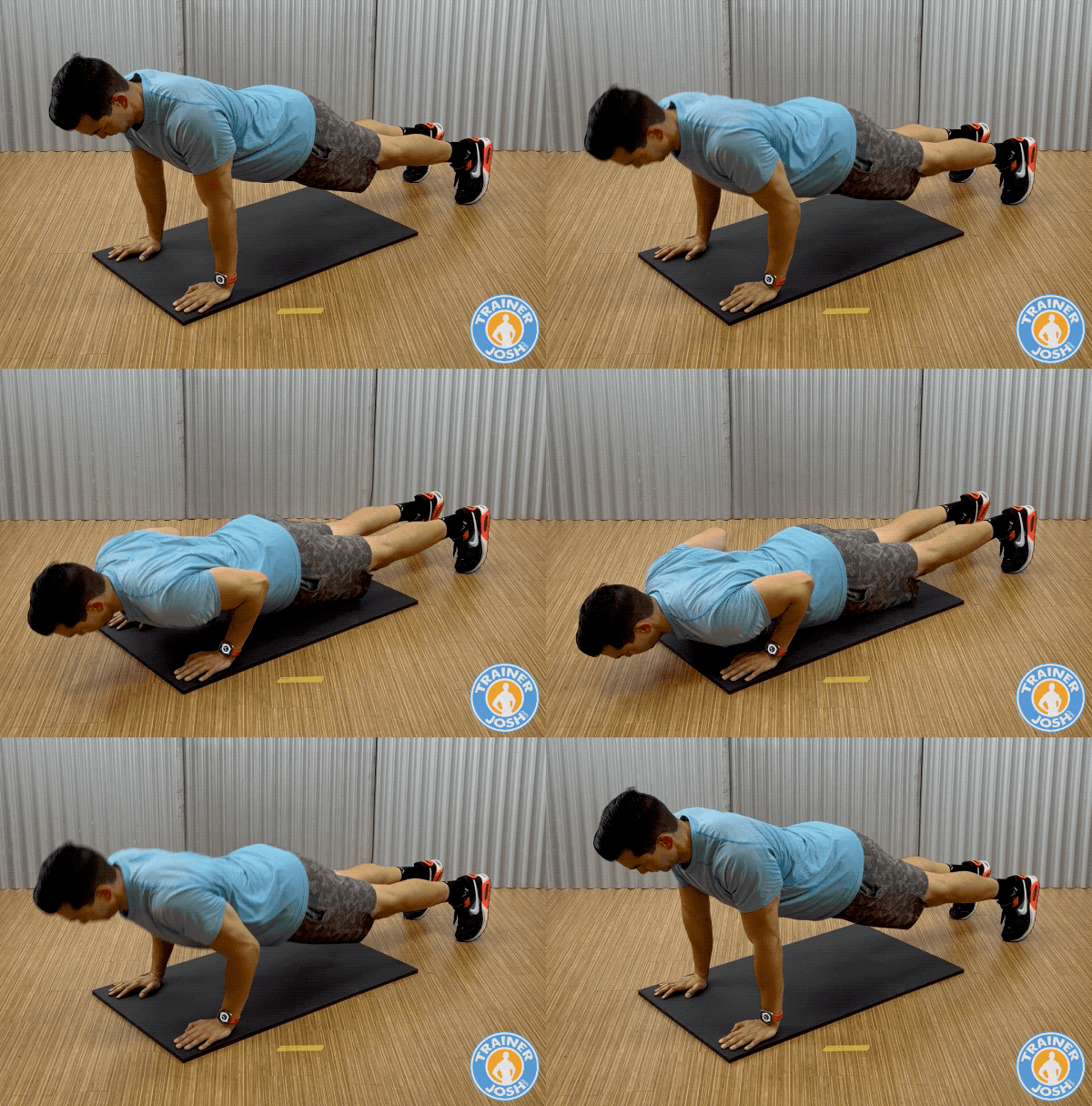
Close grip push-ups are the top tier bodyweight exercise that aggressively targets the triceps. It also hits the pectoralis major (chest) and anterior deltoids. Keeping your hands at a narrow placement for the base generates higher muscle activation in the triceps.
Bringing your hands towards your centerline forces you to tuck your elbows. This creates a more stable environment for the shoulder joint. It reduces the risk of injury that can come with flaring the elbows out.
How to Perform Close Grip Push-ups:
- Setup: Get into a standard plank position with your body straight, but place your hands narrower than shoulder-width apart. Ideally close enough that your thumbs can touch.
- Alignment: Brace your abdominals and squeeze your glutes to make sure your body forms a rigid, straight line from your head to your heels.
- The Descent: Lower your body under control until your chest touches or nearly touches your hands.
- Elbow Path: Crucially, keep your elbows tucked tight against your sides throughout the entire movement. They should brush your ribs instead of flaring outward.
- The Ascent: Push forcefully back up to the starting position until your arms are fully locked out.
Pro Trainer Tips
- Torque the Floor: Visualize “screwing” your hands into the floor to maximize stability and prevent wrist strain. Squeeze your elbows inward toward your centerline throughout the rep.
- Elbow Direction: Do not just bend your arms. Imagine bending your elbows back toward your hips. This subtle cue helps prevent the shoulders from shrugging forward and improves tension in the triceps.
- Scale Accordingly: If you can’t perform the movement with perform form, then regress by placing your hands on an elevated surface (incline) or dropping to your knees. And elevate your feet to increase difficulty.
Common Mistakes to Avoid
- Flaring Elbows: Allowing the elbows to point outward (creating a T-shape) places excessive stress on the shoulder joints. It also reduces the mechanical load on the triceps.
- Sagging Hips: Failing to engage the core causes the hips to drop. This breaks proper alignment and can lead to lower back pain.
- Hand Tenting: Placing too much weight on the outside of the palms can cause the inside of the hand to lift off the floor (tenting). Make sure you press firmly into the inside of the hands.
Diamond Push-Ups
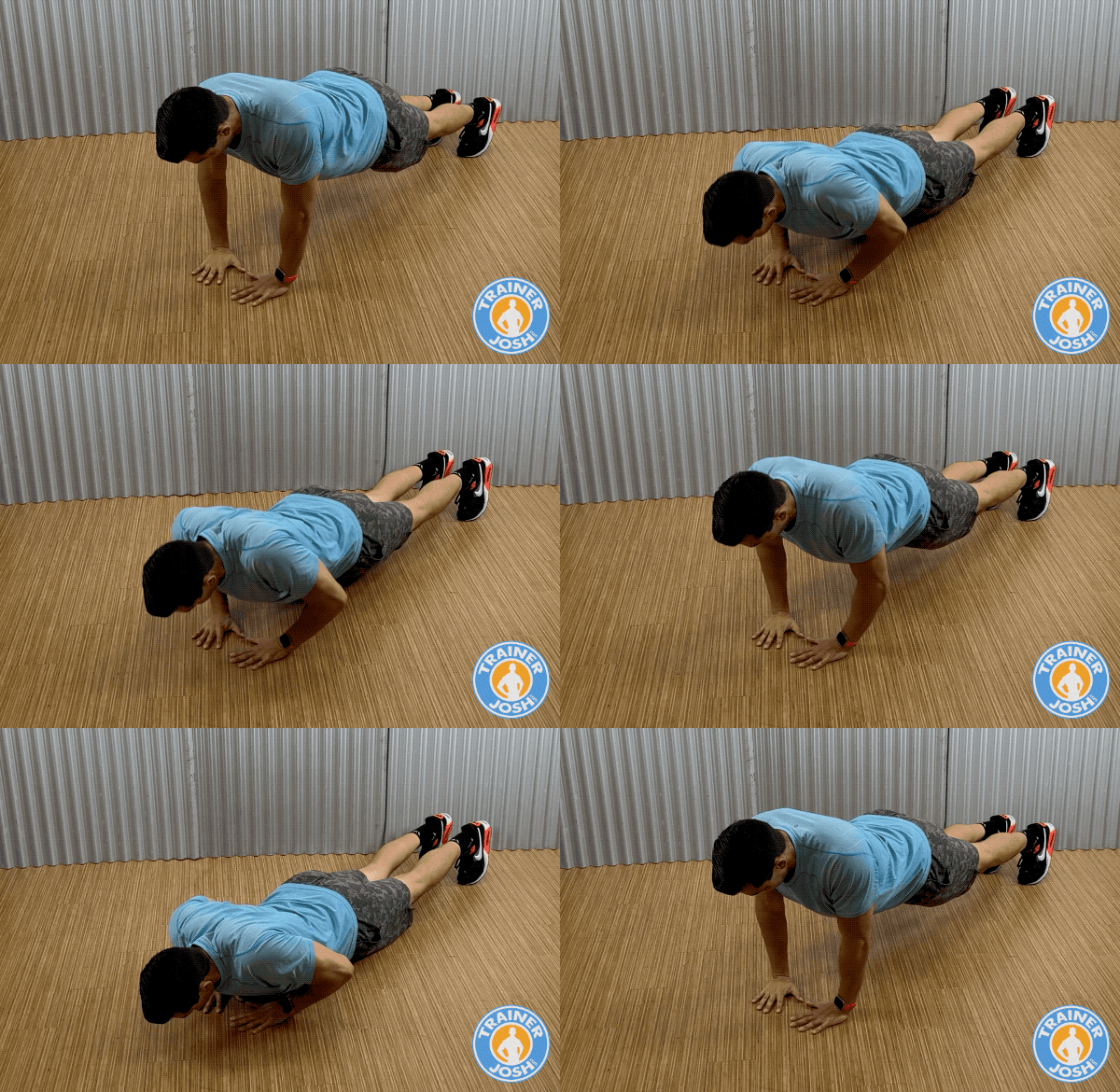
Diamond push-ups are an advanced bodyweight exercise that aggressively targets the tricep brachii by narrowing the base of support and shifting the mechanical load onto the back of the arms. By placing your hands together under the chest you’ll reduce stability and leverage. This forces the triceps and inner chest to work harder than in standard push-ups.
Using this “centerline” element requires greater muscle control and generates a higher range of tension. This makes it a gold standard for building upper arm mass and pushing strength workout without weights.
How to Perform Diamond Push-ups:
- Setup: Begin in a standard plank position, but place your hands together directly under your sternum so your thumbs and index fingers touch, forming a “diamond” or triangle shape.
- Alignment: Brace your abs and squeeze your glutes to ensure your body forms a rigid, straight line from your head to your heels/ankles.
- The Descent: Lower your chest toward the center of the diamond in a controlled manner, ensuring your elbows stay tucked close to your ribs rather than flaring out.
- Depth: Continue lowering until your chest lightly touches or nearly touches the backs of your hands.
- The Ascent: Push forcefully back up through your palms, maintaining a tight core, until your arms are fully extended and locked out.
Pro Trainer Tips
- Elbow Tuck: The most critical nuance is to keep your elbows tucked tight against your sides (between 0 and 45 degrees); allowing them to flare out shifts emphasis away from the triceps and can stress the shoulder joints.
- Targeting: To further hit the triceps, try aiming to touch your nose within the diamond formed by your fingers rather than just your chest.
- Create Tension: As you press up, visualize squeezing your elbows inward toward each other; this inward motion increases tension in the push chain.
- Scaling: If you cannot perform the full movement, regress by doing them on your knees or elevating your hands on a bench/surface while maintaining the diamond hand position.
Common Mistakes to Avoid
- Flaring Elbows: Avoid letting your elbows point outward (creating a T-shape) as you lower yourself; this reduces tricep activation and increases injury risk.
- Sagging Hips: Failing to engage the core causes the hips to drop or the back to arch, which breaks proper alignment and can lead to lower back pain.
- Hand Tenting: Do not place all your weight on the outside edges of your palms; press firmly into the inside of the hands to prevent them from “tenting” or lifting off the floor.
- Incomplete Range of Motion: Avoid “cheating” by stopping halfway down or failing to lock out at the top; full range of motion is required for maximum strength development.
Decline Close-Grip Pushups
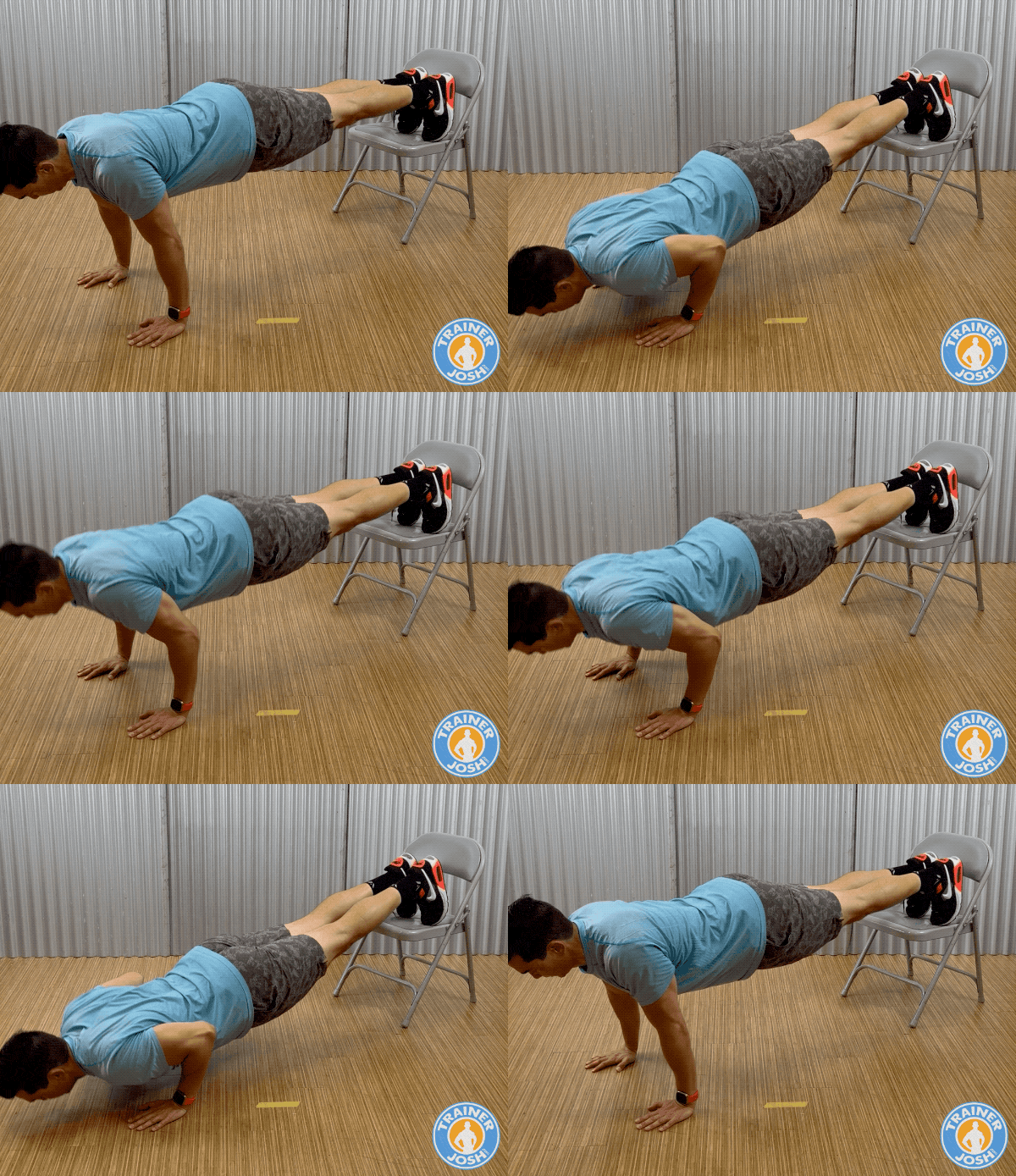
Decline push-ups (also called feet-elevated push-ups) significantly increase exercise intensity by shifting approximately 70% to 80% of your body weight onto your upper body and arms, compared with standard push-ups. To target the triceps specifically, this position increases the load they must extend against gravity, while demanding rigorous core stability to prevent the lower back from sagging
How to Perform Decline Push-Ups (Tricep Focus):
- Setup: Place your feet on a sturdy elevated surface (bench, box, or chair) and your hands on the floor directly under your shoulders or slightly narrower to emphasize the triceps.
- Alignment: Engage your core, squeeze your glutes, and tense your quads to form a rigid, straight line from your heels to the top of your head; do not let your hips sag.
- The Descent: Lower your body under control until your nose or upper chest nearly touches the floor, ensuring you inhale on the way down.
- Elbow Position: Crucially, keep your elbows tucked close to your ribs (between 0 and 45 degrees) throughout the movement to maximize tricep recruitment and protect the shoulders.
- The Ascent: Exhale and push forcefully through your palms until your arms are fully extended and locked out, maintaining your rigid plank position throughout.
Pro Trainer Tips
- Narrow the Base: To specifically target the triceps (and chest), use a narrow hand placement rather than a wide one. Research indicates that a narrow base leads to higher muscle activation values in the triceps brachii than a wide base.
- Adjusting Intensity: The height of your feet determines the difficulty. The higher the surface, the more weight is shifted to the arms and shoulders. To make it harder, elevate the feet higher; to make it easier, use a lower step or box.
- Create Tension: Before you start, “screw” your hands into the floor (right hand clockwise, left hand counter-clockwise) to generate external rotation torque; this stabilizes the shoulder joint and naturally tucks the elbows.
Common Mistakes to Avoid
- Sagging Hips: Failing to keep the core tight allows the hips to drop, which breaks the straight line and can cause lumbar spine pain due to the psoas muscles pulling on the lower back.
- Flaring Elbows: allowing the elbows to flare out to 90 degrees (looking like a “T”) places excessive stress on the shoulder joints and reduces the effectiveness of the exercise for the triceps.
- Craning the Neck: Do not look up or reach your chin forward to the ground; this shortens the range of motion and strains the neck. Aim to touch your chest or nose to the floor while keeping a neutral neck.
Bench/Chair Dips
Bench/Chair dips are a very effective exercise that mostly targets the tricep but also engages the chest and anterior deltoids. This is a great exercise if you’re trying to build up to doing full parallel bar dips.
You’ll strengthen the back of your arms with this movement as well as improve shoulder stability. And the best part is you can do this exercise using only furniture in your house.
How to Perform Bench/Chair Dips:
- Setup: Sit on the edge of a sturdy, stable chair or bench with your hands gripping the edge directly next to your hips and fingers pointing forward.
- Positioning: Slide your hips off the seat while supporting your weight with your arms. Keep your feet flat with knees bent to make it easier, or extend your legs straight out on the floor to increase the difficulty.
- The Descent: Lower your hips straight down toward the floor by bending your elbows, keeping your back close to the edge of the chair throughout the movement.
- The Depth: Stop lowering when your upper arms are parallel to the floor (creating a 90-degree angle at the elbow) or as soon as you feel a stretch in your shoulders.
- The Ascent: Push forcefully through your palms to straighten your arms and lift your body back to the starting position, squeezing the triceps at the top.
Pro Trainer Tips
- Keep it Tight: Your back should remain within an inch or two of the bench surface. It’ll put unnecessary strain on your shoulder joints by drifting forward.
- Elbow Orientation: Focus on pointing your elbows straight back behind you instead of letting them flare out to the sides.
- Progressive Overload: Once straight-leg dips become easy you can increase the intensity by elevating your feet on a second chair or placing a weight like a backpack on your lap.
- Shoulder Position: Keep your chest up and your shoulders pulled down and away from your ears. Don’t let them shrug upward as you lower yourself.
Common Mistakes to Avoid:
- Going Too Deep: Going lower past a 90-degree elbow angle can place dangerous stress on the anterior shoulder capsule. This can increase injury risk without any added training benefit.
- Unstable Furniture: Always make sure the chair or bench is heavy enough or braced against a wall. You don’t want it to tip over or slide backward during the movement.
- Using the Legs: Do not push with your legs to lift your body. Your legs should act only as a pivot point while the arms do the lifting work.
Parallel Bar Dips (Triceps Focus)
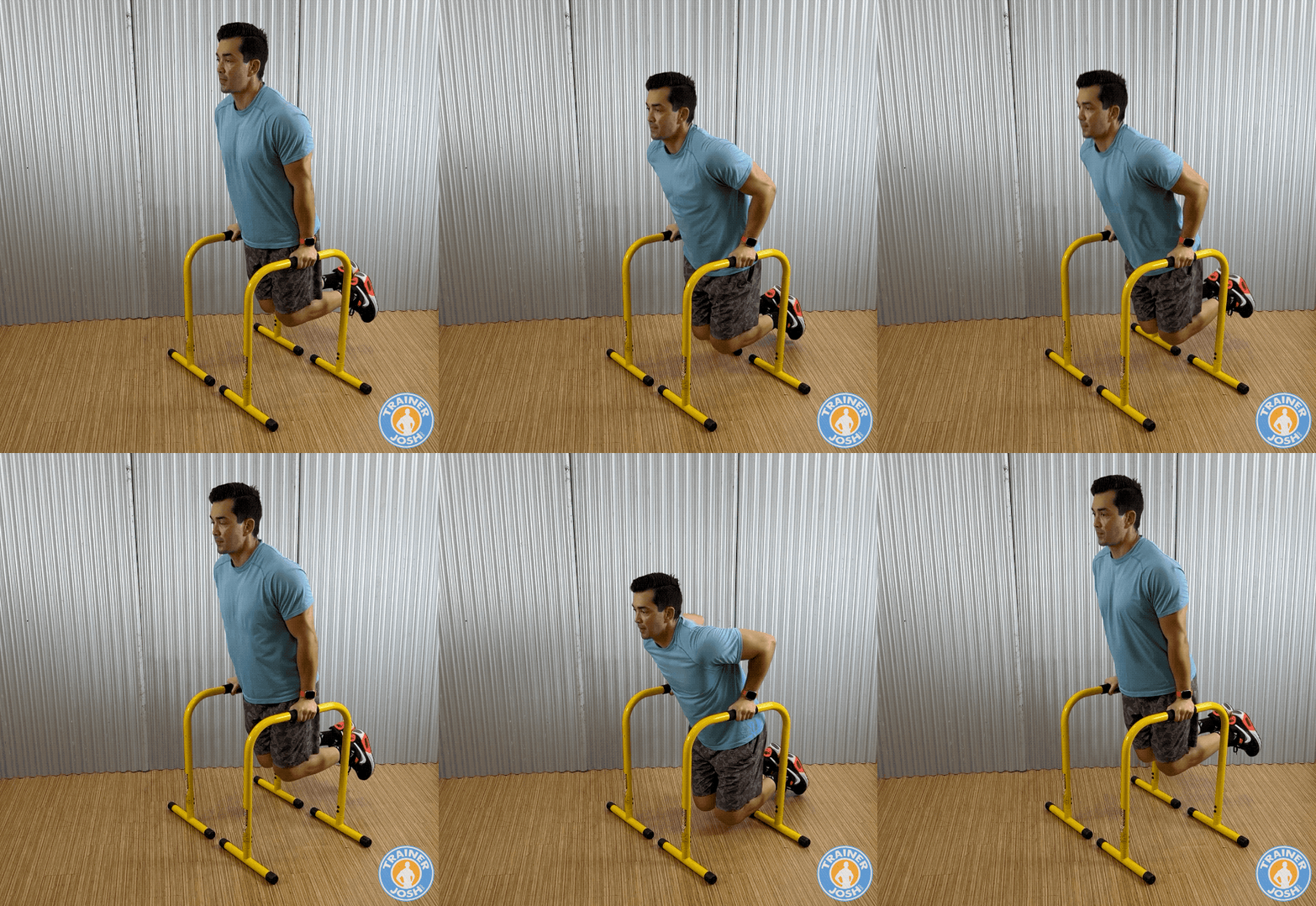
Parallel bar dips are known as the “squat of the upper body.” They’re the top level compound exercise for building brute strength and mass in the upper body.
The place a significant workload on the triceps (mostly medial and lateral heads) since this movement involves pushing the body away from the bars against gravity.
How to Perform Parallel Bar Dips (Tricep Focus):
- Setup: Hold the parallel bars with your palms facing inward and jump or press up to support the position with your arms fully locked out and shoulders pushed down away from your ears.
- Alignment: To target the triceps, keep your torso as upright and vertical as possible during the movement. So do not lean forward. Keep your leg straight down beneath you or slightly behind you.
- The Descent: Slowly lower your body by bending at the elbows. Be sure to tuck your elbows close to your sides instead of letting them flare out.
- Depth: lower yourself until your upper arms are parallel to the floor and create a 90-degree angle at the elbow. Or as deep as you can that shoulder flexibility will allow without pain.
- The Ascent: Push forcefully through your palms to straighten your arms and return to the fully locked-out starting position.
Pro Trainer Tips:
- Torso Angle: The angle of your body will dictate muscle recruitment. So to emphasize your triceps, you should stay upright as much as possible. Leaning forward shifts emphasis to your chest.
- Vertical Forearms: Try to keep your forearms perpendicular to the floor throughout this movement. This is because mechanical alignment places tension on the triceps and reduces stress on the elbows.
- Pack the Shoulders: before and during the dip, make sure you’re depressing your shoulder blades by pulling them down away from your ears. Do not let your head sink into your shoulders since this will stabilize the joint.
- Elbow Rotation: visualize pointing your elbows straight back behind you. If they flare out to the sides, you’ll lose mechanical advantage and it will stress your shoulder capsule.
Common Mistakes to Avoid:
- Flaring Elbows: Letting your elbows wing outward will put excessive stress on your shoulder joints and reduce the triceps load.
- Incomplete Range of Motion: Failing to lock out the elbows at the top will cheat your triceps of peak contraction. You’ll also be failing to go low enough to reduce the strength building stimulus.
- Going Too Deep: Full range of motion is good but dropping well below parallel before you have adequate flexibility can cause injury to your sternum and rotator cuff.
- Kipping/Swinging: Do not use momentum or swing your legs to help generate upward force. Instead, keep your lower body tight and controlled.
Bodyweight Tricep Extensions
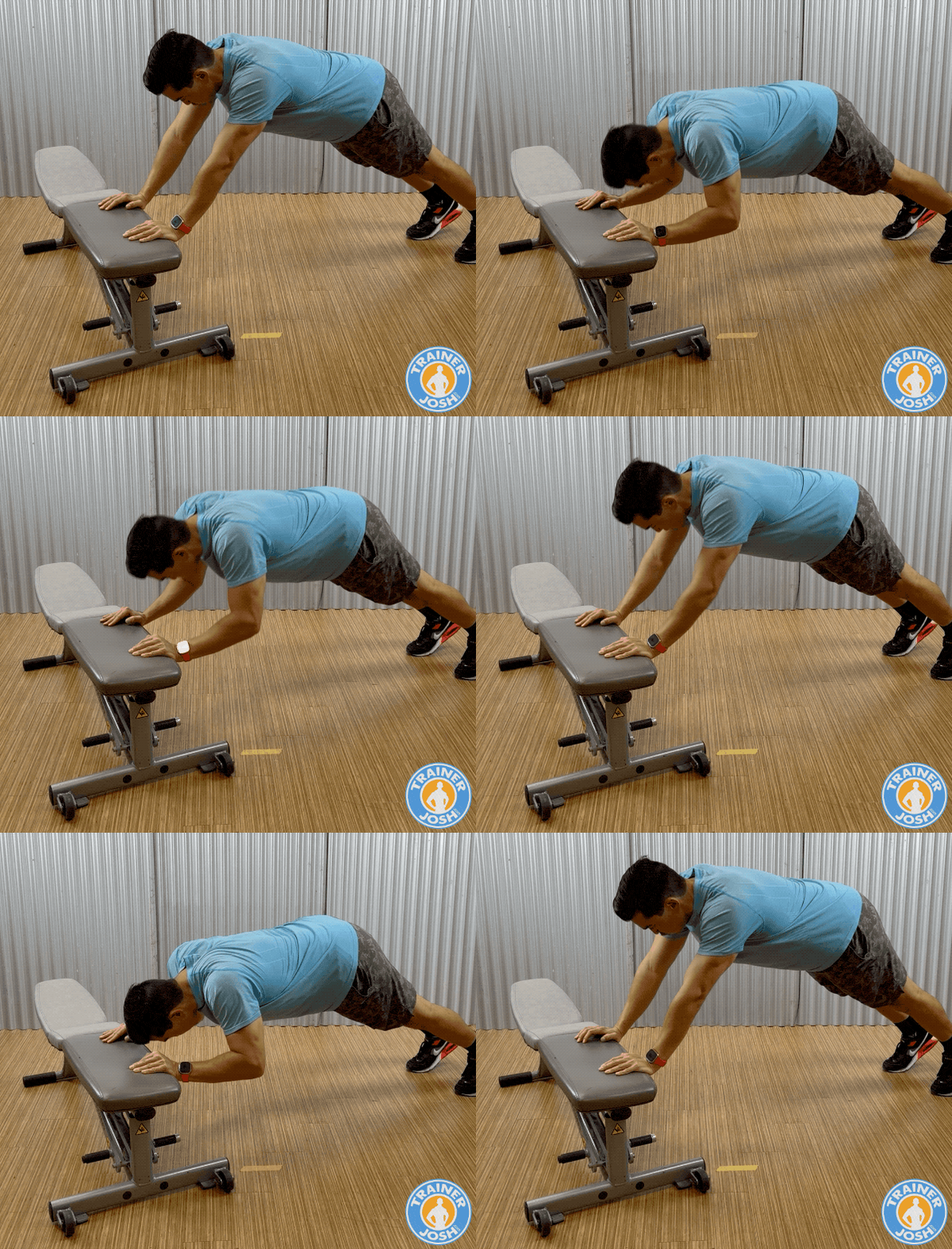
Bodyweight tricep extensions are a very unique calisthenics exercise because they are one of the rare ones that truly isolates your triceps musculature without the use of external weights. Compound pushing movements like dips or push-ups will share the load with your chest and shoulders. But with this exercise you’ll force the body to rotate almost exclusively around the elbow joint and this creates nearly pure elbow extension.
This exercise mimics the mechanics of the “skull crusher” or cable extension, letting you target development of the long head of the triceps.
How to Perform Bodyweight Tricep Extensions:
- Setup: find a stable waist height surface like a sturdy table, bench or bar. Grab the edge with an overhand grip with your hands spaced shoulder width apart.
- Alignment: walk your feet back and brace your abdominals and glutes to ensure your body forms a rigid straight line from head to toe with weight resting on your toes.
- The Descent: keep your body straight and elbows pointed down (not out). Bend your elbows to lower your body.
- Depth: continue lowering until your head ducks below the level of your hands so you’ll maximize the stretch in the triceps.
- The Ascent: press forcefully through your palms to extend your elbow and raise your body back to the starting position using your triceps.
Pro Trainer Tips:
- Adjust the Leverage: You can change the difficulty by changing the height of the surface. So use a taller table to make it easier, or a lower bench or even the floor to make it significantly harder.
- Fix the Shoulders: Try to keep your shoulder joints relatively still throughout the movement. The goal is to rotate your body around the elbows and not to perform a push-up.
- Head Clearance: Make sure your feet are positioned far enough back so that your head clears the edge of the surface. This will allow for a full range of motion.
Common Mistakes to Avoid:
- Sagging Hips: Failing to engage your glutes and abs leads to sagging hips. This will kill the effectiveness of the exercise, and you can possibly injure your lower back.
- Flaring Elbows: Allowing your elbows to point outward to the sides reduces tension on the triceps, so keep them pointed straight down and forward throughout the movement.
- Short Range of Motion: Stopping short and failing to duck the head below the hands reduces the stretch on the muscle. So be sure to go deep enough to fully engage the triceps.
Plank to Push-Ups
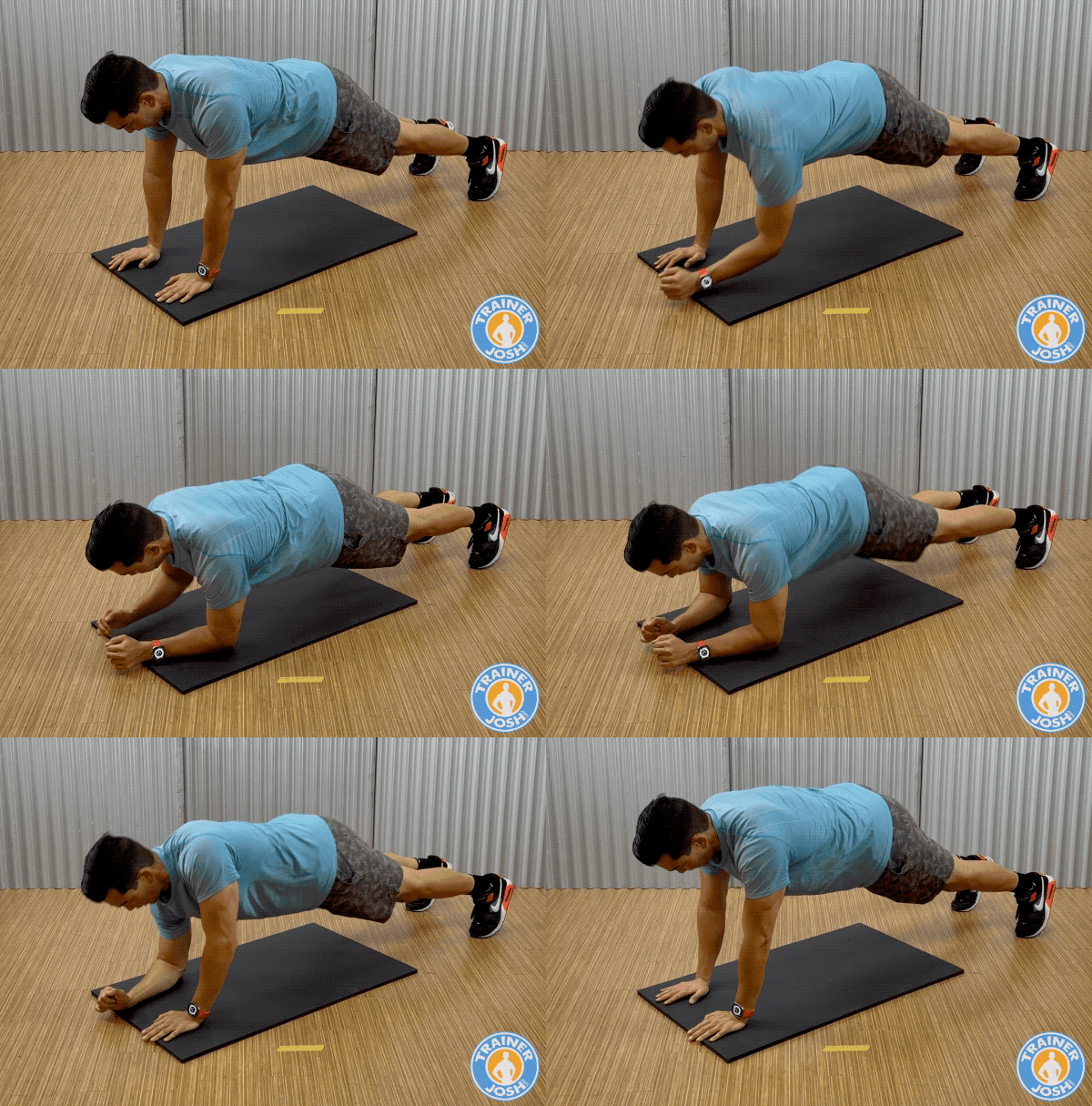
The plank to push-ups are also called “forearm push-ups”, and it’s a dynamic compound exercise that aggressively targets the triceps as well as your chest and shoulders. You’ll also need rigorous course ability to keep alignment during the transition from forearms to hands.
This movement builds explosive pushing power and strength in the triceps through a functional range of motion. You’ll create a high stimulus that’ll improve upper body pressing strength and abdominal endurance by forcing the triceps to lift the body’s weight from a dead end stop on the forearms.
How to Perform Plank to Push-Ups:
- Setup: Begin in a forearm plank position with your forearms on the floor, palms flat, and legs extended so your weight is balanced between your forearms and toes.
- Alignment: Tighten your core to make sure your body forms a straight rigid line from your head to your heels. Do not let your hips sag.
- The Push: Press down evenly and forcefully through the palms of your hands to lift your elbows off the floor. Straighten your arms fully until you reach the top push-up position.
- The Descent: Slowly lower yourself back down with control by bending your elbows until your forearms return to the starting position on the floor.
- Reps: Repeat this movement for the desired number of reps. Make sure to keep steady control throughout.
Pro Trainer Tips:
- Eccentric Focus: to maximize strength and power gains, be sure to perform this lowering phase slowly (e.g. a count of 4) instead of dropping quickly.
- Hand Position: keep your hands open with your palms flat on the floor to make sure you have a solid base for pushing.
- Scaling: if you’re finding the floor version is too difficult, you can do this movement with your hands against a wall to shift more weight to your legs while you learn the mechanics.
Common Mistakes to Avoid:
- Sagging Hips: Failing to engage your abs can cause the hip spine to sag. This will reduce the exercise effectiveness and risk back injury.
- Uneven Pushing: Avoid pushing up with one arm significantly before the other, unless you’re intentionally doing an alternating variation. Your goal is for a simultaneous even press to maximize tricep recruitment.
- Rushing: Moving too fast can use momentum instead of the muscle, so keep the tempo controlled to maintain tension.
Pike Push-Ups
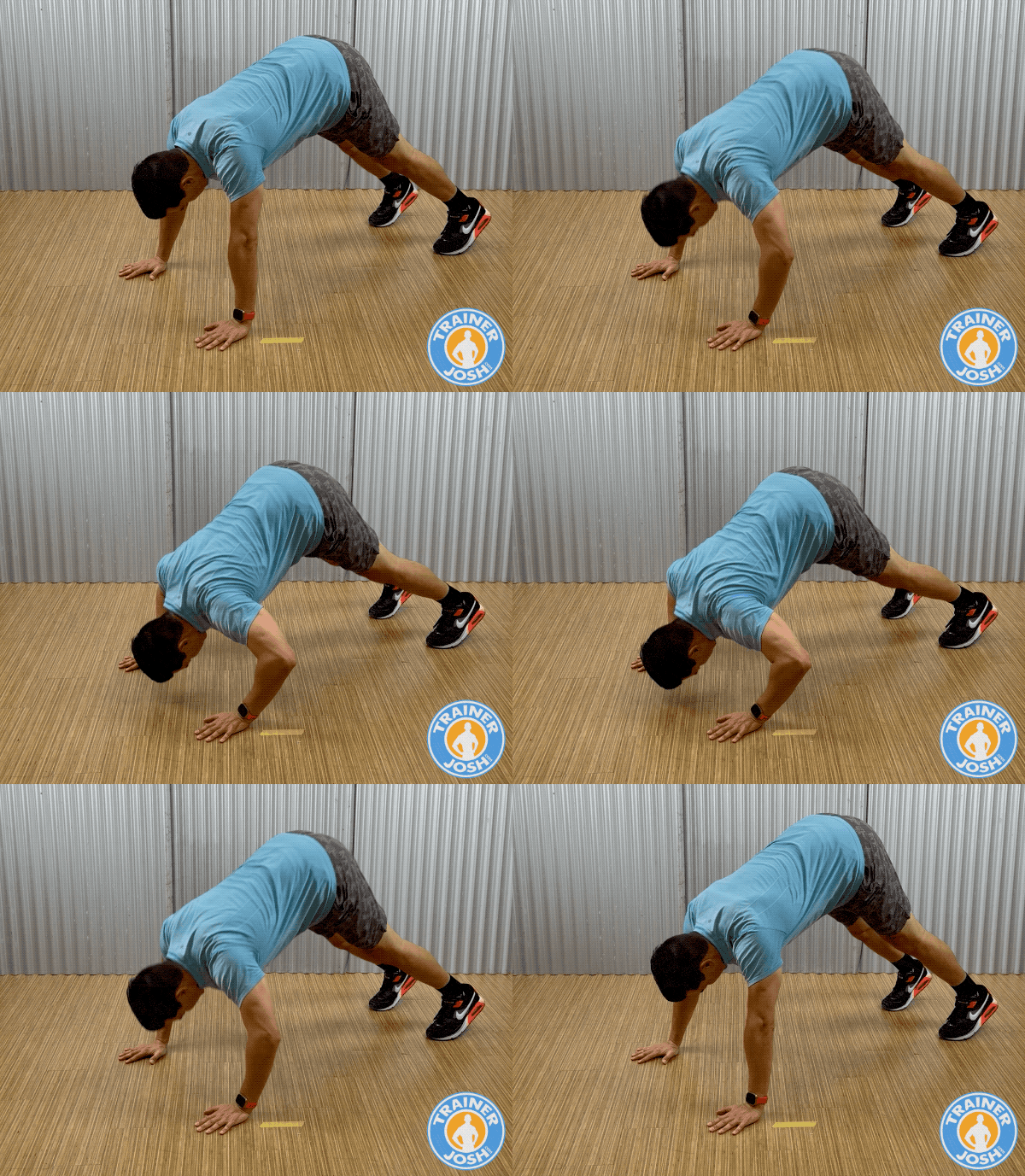
The pike push-up is a premier compound bodyweight exercise that improves upper-body pushing strength by targeting the triceps brachii and deltoids while also building core stability. You’ll invert your body into a “V” shape, shifting the press angle from horizontal to vertical. This places a greater load on the shoulders and arms compared to standard pushups.
How to Perform Pike Push-ups:
- Setup: Begin in a push-up position and walk your feet toward your hands, while lifting your hips high to form an inverted “V” or downward dog position.
- Alignment: Keep your legs and back as straight as possible. Position your hands shoulder-width apart or slightly wider.
- The Descent: Bend your elbows to lower the top of your head toward the floor in a controlled manner. Shift your weight onto your hands.
- Depth: Continue lowering until your head lightly touches or hovers just above the floor in front of your hands. You should form a triangle shape between your hands and your head.
- The Ascent: Push forcefully through your palms to extend your elbows and return to the starting V position.
Pro Trainer Tips:
- Tuck the Elbows: To protect the shoulders and maximize triceps engagement, be sure your elbows stay tucked in line with your body instead of flaring out to the sides.
- Adjusting Intensity: The closer your feet are to your hands, creating a more vertical torso, then the harder the exercise becomes and the more it isolates the shoulders and triceps. While walking your hands out further will recruit more chest and make it easier.
- Hamstring Modification: If tight hamstrings prevent you from keeping a flat back, then it’s acceptable to bend your knees slightly or perform the movement on your tiptoes to maintain proper upper body alignment.
Common Mistakes to Avoid:
- Flaring Elbows: Allowing your elbows to wing outward helps make the movement easier by engaging the chest/traps, but compromises stability and structural health.
- Craning the Neck: Avoid hyperextending your neck to look forward. Keep your head neutral and look back toward your feet or directly down to prevent strain.
- Reducing Range of Motion: Failing to bring your head all the way to the floor limits the strength benefits. Aim for full depth on every rep.
Chinese Push-ups
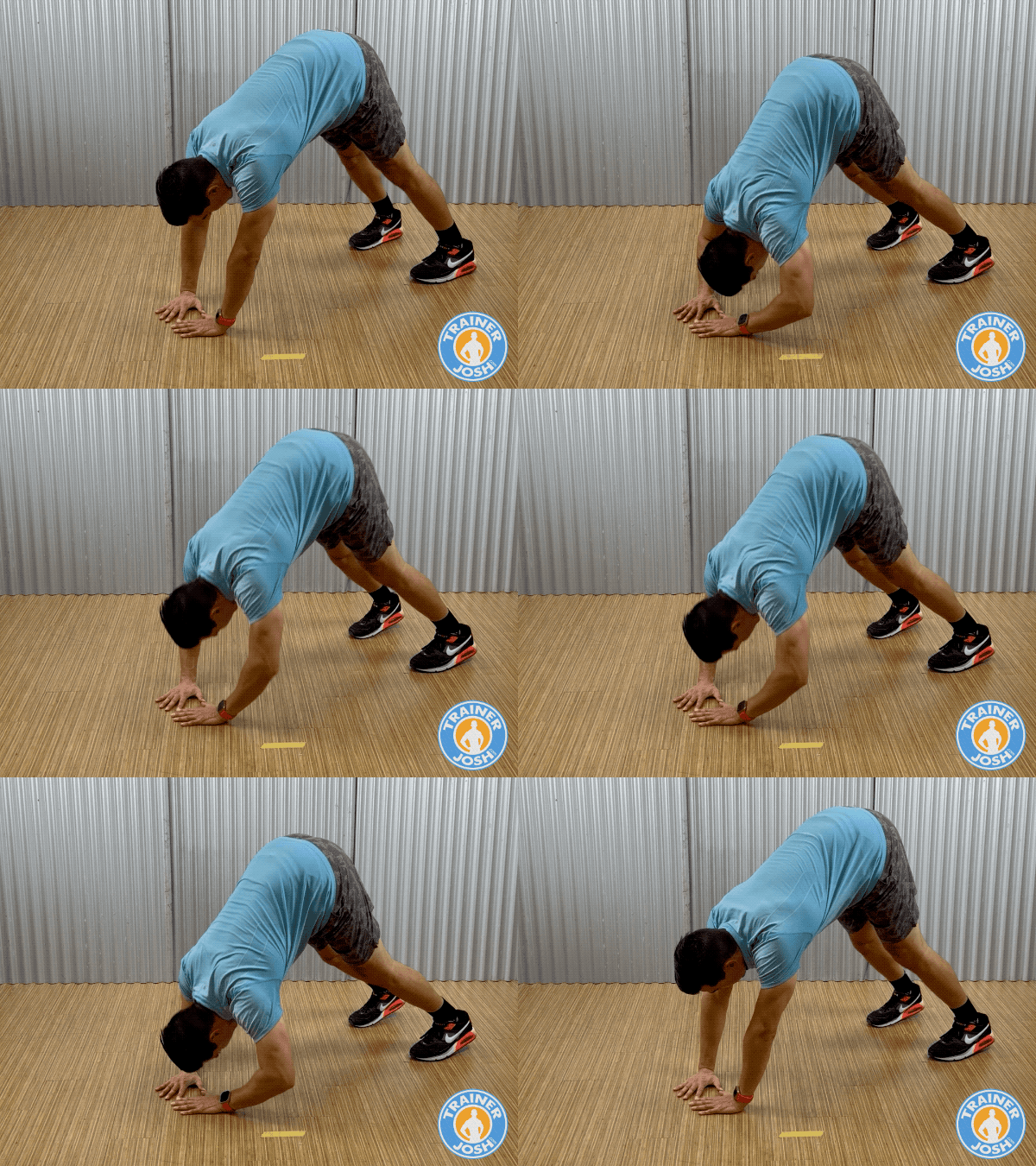
Chinese push-ups are a potent bodyweight exercise that’s designed to aggressively target your triceps and deltoids. You’ll be combining the mechanics of an overhead press with the narrow base of support. You’ll be inverting your body into a pike position while also using a diamond hand placement. This variation shifts the mechanical load away from your chest and heavily onto the back of your arms and shoulders.
How to Perform Chinese Push-ups:
- Setup: Stand with your heels together, bend over at the waist, and place your hands on the ground about five hand lengths away from your feet.
- The Grip: Bring your hands together so the tips of your index fingers and thumbs touch, forming a “diamond” shape on the floor.
- Alignment: Adjust your hips so your torso and legs form a 90-degree angle. Keep your back straight and your butt high in the air.
- The Descent: While keeping your legs as straight as comfortable and your body in a fixed position, bend your elbows to lower the top of your head until it almost touches the ground inside the diamond.
- The Ascent: Push forcefully back up to the starting position, keeping the pike angle throughout the movement.
Pro Trainer Tips:
- Maintain the Angle: The defining characteristic of this exercise is the 90 degree bend at the waist. Make sure you keep your butt way high in the air throughout the entire set.
- Scale the Difficulty: To make the exercise easier, you can place your hands on an elevated surface and to make it harder just place your feet on an elevated surface while maintaining the pike position.
- Fixed Body: Focus on keeping everything but your arms in a fixed rigid position during the rep.
Common Mistakes to Avoid:
- Flattening Out: Do not let your hips drop on, or your body straighten out. You must maintain the 90-degree angle to keep the load on your shoulders and triceps.
- Bending Knees: Avoid bending your knees excessively. Keep your legs as straight as you can comfortably to maintain the proper leverage.
TRX Tricep Extensions
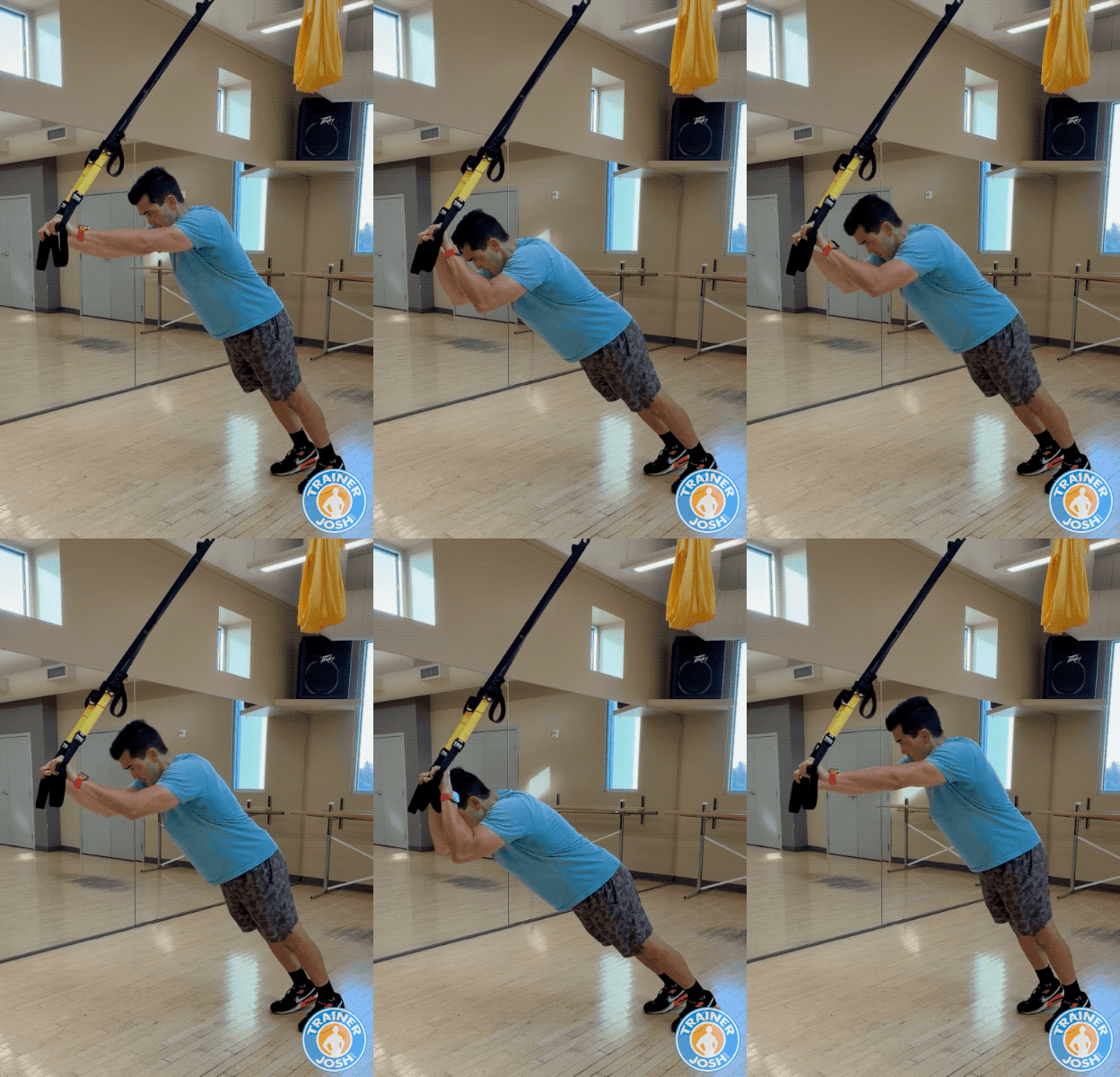
TRX tricep extensions are a very effective isolation exercise that targets the triceps musculature. This exercise targets the long head especially.
This suspension exercise lets you instantly allow scalability; you can quickly increase or decrease the resistance simply by adjusting the angle of gravity, aka stepping forward or backward. This makes it accessible to all fitness levels without requiring weight changes.
How to Perform TRX Tricep Extensions:
- Setup: Stand facing away from the anchor point. Hold the handles with your arms extended in front of you at shoulder height or overhead. Step your feet back so your body is leaning forward in a straight line.
- Alignment: Engage your core and glutes to keep a rigid plank position. Your body should form a straight line from your head to your heels throughout the movement.
- The Descent: Keep your elbows stationary and in line with your shoulders (pointing forward). Bend your elbows to lower your body until your hands are near your forehead or behind your head.
- The Extension: Press your hands firmly into the handles to straighten your arms. Extend your elbows to return to the starting position.
- Adjust Intensity: To make the exercise harder, walk your feet farther back (increase the strap angle). To make it easier, just step forward to stand more upright.
Pro Trainer Tips:
- Isolate the Joint: This movement should happen almost exclusively at the elbow. Keep your shoulders stable and fixed in space to force the triceps to do the work instead of turning the move into a chest press.
- Elbow Alignment: Keep your elbows pointing forward and in line with your shoulders throughout the movement. Don’t let them flare outward.
Common Mistakes to Avoid:
- Broken Plank: If you fail to keep your core tight, it will cause your hips to sag or your back to arch. This will reduce the effectiveness of the exercise and risk lower back pain.
- Flaring Elbows: Letting your elbows drift wide to the sides shifts tension away from the triceps and places stress on the shoulder joint.
- Rushing the Reps: Perform this exercise too quickly and it will use momentum instead of muscle tension. Slow down the lowering phase to maximize the strengthening benefits.
Beginner → Advanced Progressions (So You Always Know What to Do Next)
If you can’t do standard dips or diamond push-ups, then you should regress the movement to build the necessary connective tissue and muscular strength.
Regressions are essential for building a solid foundation. But don’t worry if you’re not able to do them yet. This is a common starting point for many beginners.
Bodyweight exercises require you to lift a significant percentage of your mass against gravity. And to build the necessary strength, you’ll have to manipulate leverage to reduce the load while maintaining the same movement pattern.
The Push-Up Progression Ladder:
To work up to a diamond push-up (hands touching), follow this path…
1. Wall Push-Ups: Stand about an arm’s length away from a wall. Place your hands at shoulder height and width. This significantly reduces weight, allowing you to focus on your form.
2. Incline Push-ups: Place your hands on an elevated surface like a sturdy chair, countertop, or bench. The higher the surface, the easier the exercise. As you get stronger, lower the height of the surface.
3. Knee Push-ups: Perform push-ups on the floor, resting on your knees. This reduces the load by approximately 20% compared to a full push-up.
4. Standard Push-ups: Hands on the floor, legs straight, bouncing on your toes. Make sure your body remains in a straight line.
5. Diamond Push-ups: Once you can do high reps of standard push-ups, move your hands together so thumbs and index fingers touch. This increases torque on your triceps.
The Dip Progression Ladder:
1. Bent-Knee Bench Dips: Place your hands behind you on a sturdy chair or bench. Keep feet flat on the floor with knees bent. Lower your hips until the floor and push back up.
2. Straight-Leg Bench Dips: Extend your legs fully with heels on the floor. This places more weight on your arms.
3. Assisted Dips: If available, you can use resistance bands or machines to offset your body weight on parallel bars.
4. Negative Dips: Jump to the top support position of a dip (arms straight), lower yourself as slowly as possible (3-5 seconds) until you hit the bottom. Then put your feet down and jump back up.
5. Full Dips: Perform the full movement on parallel bars without assistance.
How to Make Any Move Harder (Progressive Overload Without Weights)
Since you can’t simply add a 5-pound plate to your body, you’ll need to manipulate physics and biomechanics to continue building muscle. Here are the primary variables to adjust.
Reps (Increase Volume): This is the simplest method. If you can do 10 reps last time, aim for 11 or 12 this time. Once you can hit high rep ranges (e.g., 15-20), this exercise builds more endurance instead of strength. This is a sign it’s time to move to a harder variation.
Sets (Increase Work Capacity): Increase the volume by adding more sets. If you usually do 3 sets of an exercise, try 4 or 5 sets to fatigue the muscle even more. Total training volume (number of hard sets) is the primary driver of muscle growth.
Tempo: Slow down. Perform the movement with a tempo like 3-1-3 (3 seconds down, 1 second pause, 3 seconds up). Increasing time under tension forces the muscle to work harder without adding weight.
Always control the weight going down. Don’t let gravity do the work. Instead, control the descent. Slower eccentrics can be used for injury management or to make bodyweight feel heavier.
Range of Motion: Increase the distance you move. Full range of motion training is generally superior for growth, particularly stretch-mediated hypertrophy.
Leverage (Foot Elevation): Place your feet on a chair during close grip push-ups shifts more weight onto your upper body.
Rest Reduction (Density): Perform the same amount of work in less time. Gradually shortening rest intervals improves work capacity.
Myo-reps are a specific density technique where you perform a set to near failure, rest briefly (e.g., 5-10 deep breaths), and then perform a mini set of 3-5 reps. Repeat until you can no longer hit the rep target. This does an effective job at accumulating effective reps without spending hours working out.
At-Home Tricep Workout Plans (No Equipment + Minimal Equipment)
Beginner
Tempo = 2010 = 2 seconds down, 0 second pause at bottom, 1 second explosive up, 0 second pause at top
Intermediate
Advanced
Joint-Friendly Modifications (Wrists, Elbows, Shoulders)
Wrist: Incline variations, use push-up handles. Wrist pain often stems from the hyperextension required to place palms flat on the floor
Elbow irritation: Adjust angle on extensions, slow eccentric, reduce volume. The elbow joint is highly susceptible to tendinitis (overuse) from high-intensity pushing.
Modifications: Avoid fully locking out the elbows at the top of the movement if you’re experiencing pain. This is because it shifts the load from the muscle to the joint. Use slow eccentric (negative) training, which is highly effective for rehabilitating tendons. If irritation persists, reduce training volume or frequency immediately to allow connective tissue to recover.
Shoulder irritation: Dip depth + swap to extensions/push-up variations
Shoulder pain often results from excessive extension during dips or poor scapular control. Limit the depth of your dips or swap them for close grip push-ups or tricep extensions. This will place less strain on the shoulder capsule. Make sure you’re depressing your shoulder blades (keeping your shoulders down away from your ears) during all pushing movements to prevent impingement.
How Often to Train Triceps (and How to Recover)
You can train muscle groups, including the triceps, 2-3 times per week. Intermediates benefit most by training the triceps twice per week.
If you’re an advanced trainee, then higher frequencies are usually superior. This is because advanced muscles recover faster, and the anabolic window (period of muscle growth) shortens as you become more experienced.
If you’re using a full-body routine, you can train your triceps three times a week on nonconsecutive days. This schedule provides 48 hours of rest between sessions. This is the standard time that your muscles need to repair and supercompensate (grow stronger).
Reps & Sets Guidelines:
Perform 2-5 isolation tricep exercises per session (e.g., dips and diamond pushups) for 3 sets each. Over a year, this will result in significantly more muscle growth than training a body part only once a week.
For Strength: aim for 25-50 total repetitions per workout (e.g., 5 sets of 5 reps or 3 sets of 8) keep rep ranges lower (3-8 reps) and intensity high.
For Muscle Size (Hypertrophy): Aim for 40-75+ total repetitions per workout. Use moderate reps (6-12 reps) per set.
The “Rule of 10”: For pure hypertrophy, aim for about 10 total sets per muscle group per week.
I prefer pairing antagonists during your workouts. Pair agonist and antagonist muscle groups (e.g., triceps and biceps) to maximize recovery during the training session. You’ll also get a great pump in your arms from alternating between biceps and triceps using supersets.
You’ll have lower drop-off curves (fatigue) than traditional sets, even with complete rest intervals. A typical superset for biceps and triceps would be a chin-ups paired with a body-weight tricep extension with rest intervals in between.
How Best to Recover
Recovery isn’t just about resting, but it involves active management of lifestyle, nutrition, and training variables.
Make sure you’re following the 48-hour rule and never train your triceps hard two days in a row. If your triceps are still sore or fatigued, it’s better to take an extra rest day than force a subpar workout.
Aim for 7-9 hours of sleep per night. Sleep is the most anabolic (muscle-building) time of the day. It produces growth hormone and testosterone that’s essential for repair.
That anabolic window closes fast if you spend the night tossing and turning. Ageless Multi Magnesium is one option I like for winding down since it combines several forms of magnesium with L-theanine to support relaxation and a deeper night of sleep.
A 7-form magnesium complex designed for adults 40+ to support restful sleep, relaxation, muscle recovery, and whole-body health. Each serving provides 350mg of magnesium plus L-theanine and vitamin B6 for added nervous-system support.
- 7-Form Magnesium Blend: Combines glycinate, taurate, malate, citrate, Sucrosomial® magnesium & complementary forms
- Sleep & Relaxation Support: Magnesium glycinate plus L-theanine help support calm, relaxation & restful sleep
- Muscle Recovery & Comfort: Supports normal muscle relaxation, recovery & energy production
- Enhanced Absorption: Includes clinically studied Sucrosomial® Magnesium for high absorption & gentle digestion
- Heart, Bone & Nervous System Support: Provides 350mg of magnesium plus vitamin B6 for essential body functions

Make sure you’re getting enough protein to repair micro tears in your muscle fibers from the workout. A general guideline for active individuals is about 0.8 grams of protein per pound of body weight.
You can use my protein calculator here to instantly determine your protein needs. If you have trouble meeting your protein requirements, consider a low-carb protein shake that’s convenient, tasty, and easy to get a bountiful serving of protein.
On your rest days, it’s best not to remain completely sedentary. Active recovery uses low-intensity movement such as walking and light mobility work. This increases blood flow to the muscles, flushes out waste products, and speeds up nutrient delivery without stressing the fibers.
Use a deload week every 4-8 weeks. During this deload week, cut your training volume by 50% using fewer sets or easier exercises. This allows accumulated fatigue to dissipate and connective tissues (tendons and ligaments) to fully heal. This prevents long-term plateaus.