


“Wait… did I just ruin my fast?”
If you’ve ever added a splash of apple cider vinegar to your water during a fast and immediately wondered, “Does that count as a break? ” … then you’re not the only one.
It can be devastating to find out that you might have just broken your fast with vinegar water. You can think you’re doing so good, but then hear somebody say that you just broke your fast by drinking that.
The internet can make things even more confusing. Some say apple cider vinegar is fine, but others say that any calories break your fast.
Here, we’re giving you a guide for the faster who wants real science, clear answers, and zero BS. You’ll leave here knowing exactly what to do, how much to take (if any), when to take it, and if it aligns with your fasting goals.
What Actually Breaks a Fast? (And What Doesn’t)
Here’s what most people get wrong about fasting. They think it’s all about the clock. Hit your 16-hour mark, and you’re golden.
But fasting isn’t measured in hours. It’s measured in insulin response. Let me explain…
The One Hormone That Controls Everything
Your body has two modes: fat-burning and fat-storing. The switch between them? Insulin.
When insulin levels are high, your body stores energy. When insulin drops low, you start burning body fat for fuel.
That’s it. That’s the game.
Anything that spikes insulin (even slightly) flips the switch back to storage mode and pulls you out of your fast. This is why a “bulletproof coffee” with 300-400 calories of butter absolutely breaks your fast, despite what the gurus claim.
What Definitely Breaks Your Fast
Avoid these if you want to stay in a true fast:
- protein powder
- BCAAs (leucine triggers insulin)
- collagen supplements
- sweeteners
- cream or milk
- bone broth
- flavored coffee or tea
- alcohol (contains 7 calories per gram & triggers a strong metabolic response)
The Gray Zone (Test Carefully)
Apple cider vinegar (ACV), lemon juice, and dried spices like cinnamon or cayenne pepper live in the gray zone. Others allow diluted versions because their blood-sugar-lowering benefits may outweigh the minimal risk.
Your body will tell you. If you feel ravenously hungry, shaky, or nauseous within an hour of consuming something, then that’s your insulin speaking. You broke the fast.
The safe list is short:
- plain water (still or sparkling water)
- black coffee (unflavored)
- plain tea from actual tea leaves
- electrolytes or salt with no additives
Apple Cider Vinegar & Fasting (The Science)
Key Takeaways:
With only 3 calories, <1g of carbs, and powerful insulin-lowering effects, ACV doesn’t break a fast by any practical metabolic measure. It’s very unlikely to provoke an insulin response.
In fact, it actively supports the fat-burning, autophagy-promoting state you’re working to achieve.
Let’s cut through the noise and look at what the research actually says.
The Nutritional Reality: What’s Actually in ACV?
One tablespoon of apple cider vinegar contains 2 to 5 calories and only 0.022 to 0.103 grams of carbohydrates.
To put that into perspective: that’s less carbohydrate than what’s in your breath after walking past a bakery.
ACV has virtually no measurable vitamins, minerals, or protein. The magic isn’t in the ingredients… It’s the acetic acid. That makes up roughly 5% of ACV’s content (ranging from 3 to 9% depending on the brand).
Does Apple Cider Vinegar Raise Insulin?
Not only does ACV not raise insulin levels… it actually lowers them.
Four randomized crossover trials found that taking just 2 teaspoons of vinegar with a meal lowered blood sugar by about 20% compared to a placebo two hours later.1
Adults with well-controlled Type 2 diabetes who took 2 tablespoons of ACV at bedtime saw a 4 to 6% decrease in fasting blood sugar the next morning.2
The mechanism? Acetic acid delays gastric emptying and reduces starch digestion. This effectively slows the absorption of sugar into your bloodstream. Researchers believe inactivates intestinal enzymes that convert complex carbohydrates into glucose.
A 2004 study published in Diabetes Care found that consuming 20g of apple cider vinegar before a high-carbohydrate meal improved insulin sensitivity by 34% in insulin-resistant subjects and by 19% in those with type 2 diabetes. It also significantly lowered post-meal blood glucose and insulin levels.3
Here’s the twist most people miss: your brain can trigger insulin release before food even hits your stomach.
The sight, smell, or taste of something your brain perceives as food could cause a pre-emptive insulin spike. This is called cephalic phase insulin release (CPIR). And it’s why diet sodas, flavored waters, and even gum can possibly break your fast despite having zero calories.
One of my clients was confused about why she felt “so hungry and shaky” just an hour after her morning “fasting-friendly” flavored electrolyte drink.
That was CPIR in action. Her body released insulin in anticipation of food, which caused her blood sugar to crash and pulled her out of the fasted state.
Can ACV Kick You Out of Ketosis or Autophagy?
The short answer: probably not, but there’s a catch.
ACV supports the metabolic state you’re aiming for. It activates AMPK, your body’s fuel sensor that signals “start burning stored fat.”
It also upregulates PPAR-alpha, which initiates the gene expression needed for fatty acid oxidation. This is the process that keeps you in ketosis.4
Here’s the nuance most miss: raw, unfiltered ACV with “the Mother” contains trace proteins and bacterial residue.
While minimal, these proteins could inhibit autophagy during a strict fast. If autophagy is your primary goal, distilled ACV without the Mother is the safer choice during your fasting window.
The Appetite Suppression Effect
A 2005 randomized controlled trial published in the European Journal of Clinical Nutrition found that adding vinegar containing 18-28 mmol of acetic acid to a bread meal significiantly lowered post-meal blood glucose and insulin levels in a dose-dependent manner and increased feelings of fullness for up to two hours.5
The mechanism is twofold: stable blood sugar minimizes cravings, and the pectin (soluble fiber) in ACV forms a gel-like substance in your stomach that keeps you feeling full.
A 2025 meta-analysis in Nutrients links dailys ACV (≈30 mL) to short-term weight loss and suggests it curbs calories after high-GI meals. In an acute trial, vinegar with a meal cut next-meal intake by ~95-151 kcal and total-day intake by ~227-488 kcal.6
One of my clients used to struggle with hunger pangs around hour 14 of her 16:8 fast. She started taking a tablespoon of diluted ACV at hour 12… and suddenly she could sail through her eating window without the usual “ravenous and shaky” feeling she described.
That’s acetic acid keeping her blood sugar stable and her hunger hormones in check.
Metabolic vs Strict Fasting: Which Type Are You Doing?
Here’s the truth: whether ACV breaks your fast depends entirely on what kind of fast you’re doing and why.
Not all fasts are created equal. Your goal determines your rules.
The Three Fasting Categories
1) Intermittent Fasting for Weight Loss (Metabolic Fasting)
If you’re doing 16:8, OMAD, or alternate-day intermittent fasting primarily for fat loss and metabolic health, ACV is not only fine… It’s beneficial.
Your goal is to optimize fat burning and metabolic flexibility, not to reach absolute zero calories. With only 2 to 5 calories per tablespoon and powerful insulin-lowering effects, ACV actively supports your goals.
Fasting can help you eat less, but faster weight loss can also put lean muscle at risk if protein and strength training fall behind. The BioTRUST GLP-1 Companion Stack is one option I like because it supports appetite control while also helping support muscle and protein intake during weight loss.
A 3-part daily stack designed to support people using GLP-1 medications or losing weight naturally. It combines muscle, protein, collagen, and appetite support to help you maintain a healthier body composition as you lose weight.
- Natural GLP-1 Support: Helps support healthy appetite signals, fullness & metabolic function
- Lean Muscle Support: Helps preserve muscle, strength & healthy body composition during weight loss
- High-Protein Collagen: Adds 20 g of protein with 5 collagen types to help support daily protein intake
- Skin, Joint & Hair Support: Provides collagen peptides to support skin elasticity, joints, hair & nails
- 3-Part Weight-Loss Support: Combines muscle, protein/collagen & appetite support in one simple daily stack

ACV helps you:
- Trigger AMPK faster (accelerating fat burning)
- Improve insulin sensitivity by 19-34%
- Suppress appetite and reduce calorie intake by 200-275 calories daily
- Stabilize blood sugar to prevent energy crashes
Water with lemon, apple cider vinegar, and stevia is all fine if you’re fasting for weight loss.
Verdict: Green light. ACV enhances your metabolic fast.
2. Extended Fasting for Autophagy (Strict Fasting)
If your primary goals are maximum cellular cleanup and autophagy, then you need to be more careful.
Autophagy is your body’s self-cleaning mechanism that clears damaged cells. This process is highly sensitive to proteins and amino acids. These molecules are the primary negative regulators of autophagy.
Raw, unfiltered ACV with “the Mother” contains strand-like proteins and bacteria. While minimal, these proteins can technically inhibit autophagy during a fasted state.
But you can use filtered (distilled) ACV without the Mother during your fasting window. The distilled version promotes metabolic changes that support autophagy (such as AMPK activation) without protein interference.
Verdict: Yellow light. Use only distilled ACV, or stick to water for the purest results.
3. Spiritual/Religious Fasting
If you’re fasting for spiritual purification, religious observance, or prayer, then ACV is likely off the table. Traditional spiritual fasts in most religions have strict definitions:
- Absolute fasts: No food or water
- Complete fasts: Water only
The goal is spiritual cleansing and denial of the flesh, not metabolic optimization. Even though ACV is virtually non-caloric, it has a distinct sour taste and contains amino acids… It’s not plain water (it’s 94.1% water).
Historically, vinegar was used in Biblical times as an energizing drink and food. But suppose your fast requires absolute abstention from all food substances (even trace flavors). In that case, ACV violates the spirit and letter of the practice.
Verdict: Red light.
Does ACV break a water fast?
Technically, yes. A true water fast means water only. Nothing with flavor, acids, or any substance beyond plain water.
But here’s what matters: why are you doing the water fast? If it’s for maximum autophagy or spiritual reasons, skip the ACV.
If it’s for the metabolic benefits, you’re splitting hairs over 3 calories that actively support your goals.
Beyond the Rules: 4 Ways ACV Can Supercharge Your Intermittent Fast
You’ve got the green light so ACV won’t break your fast. But this is when things get interesting…
Because ACV doesn’t just preserve your fasted state, it activately enhances the metabolic processes you’re working so hard to trigger.
This is where ACV stops being a rule question and becomes a strategic advantage. The difference between checking the box on your 16-hour fast and actually optimizing fat burning, cellular repair and energy stability.
Let me show you the four mechanism that make experienced fasters swear by their morning ACV ritual.
Benefit 1: Deeper, More Efficient Fasting (The AMPK Advantage)
Making your fast more effective is the concept of the “deeper fast”, and it’s the reason seasoned fasters swear by their morning ACV ritual.
The real magic with fasting happens when your body undergoes metabolic switching. This is the shift from burning glucose to torching stored fat and producing ketones.
A “deeper fast” activates the metabolic pathways that deliver the profound anti-aging benefits:
Autophagy kicks in when cells sense a drop in blood sugar. This is your body’s cellular recycling program. It breaks down damaged proteins and dysfunctional organelles to maintain cellular health.
It’s suppressed by glucose, insulin, and amino acids. And autophagy typically ramps up after 24 to 48 hours of fasting.
Ketosis happens when your body switches to burning fat and ketones for fuel. This is usually between 12 and 36 hours after your last meal (depending on your glycogen stores).
The goal is metabolic flexibility. It’s about training your cells to switch effortlessly between burning sugar and burning fat.
The AMPK Activation Mechanism
AMPK (Adenosine Monophosphate-Activated Protein Kinase) is your body’s master energy regulator. Think of it as a low-fuel sensor.
When energy levels drop. AMPK activates and signals: “No food is coming. Time to burn stored energy.”
Acetic acid from ACV directly triggers hepatic AMPK in your liver. Research confirms this activation happens even with small amounts of vinegar.
A 2016 study in the European Journal of Nutrition found that vinegar lowered blood pressure in hypertensive rats by activating the body’s AMPK energy pathway, which in turn boosted PGC-1α and PPARγ (proteins that help relax blood vessels) and reduced the angiotensin II receptor (AT1R) that raises blood pressure. Researchers noted that acetic acid, the main component of vinegar, was responsible for these effects.7
Once AMPK is activated, two critical things happen:
First, it enhances autophagy. AMPK suppresses the mTORC1 pathway (the cellular growth switch).
When mTOR is suppressed, your body initiates a catabolic process to clean up cells and support self-repair. You’re literally optimizing your body at the cellular level.
Second, it accelerates fat utilization. AMPK signals the body to mobilize stored fat. But it goes deeper: ACV upregulates PPAR-alpha, often called “the key to fasting.” PPAR-alpha initiates the gene expression required for fatty acid oxidation and ketone production.
Translation? You shift into fat-burning mode faster.
One of my clients described it, “I feel like ACV helps me ‘get into’ the fast quicker. Less brain fog, more steady energy by hour 10 instead of hour 14.”
That’s AMPK doing its job. Turning on the fat-burning, cell-cleansing machinery before your body would naturally flip the switch.
Benefit 2: Master Your Hunger & Cravings
Let’s talk about the biggest obstacle to fasting success: hunger.
You hit hour 12, and suddenly your stomach feels like it’s eating itself. Your brain starts screaming for crabs. You get shaky, irritable, and start eyeing the break room donuts.
This is where most people break their fast early. Not because they lack willpower, but because their blood sugar is crashing and their hunger hormones are in revolt.
ACV changes this.
The Satiety Science
A 2005 randomized controlled trial published in the European Journal of Clinical Nutrition found that when participants ate white bread with vinegar (18–28 mmol of acetic acid), they reported feeling significantly fuller for two hours more than when they ate the bread alone. The researchers concluded that the greater the acetic acid content, the stronger the drop in glucose and insulin…and the greater the feeling of fullness.8
Translation: more acetic acid = more satiety.
The mechanism is elegant. Acetic acid delays gastric emptying, meaning food stays in your stomach longer. This keeps your digestive system engaged and sends continuous “I’m full” signals to your brain.
But here’s the deeper play: by slowing the digestion of starches and refined carbs… ACV prevents the blood sugar spike that would typically occur.
No spike means no subsequent crash. No crash means no ravenous hunger 90 minutes later.
Studies confirm that vinegar consumption reduces postprandial glucose and insulin responses. When your blood sugar stays steady, your body doesn’t trigger the hormonal panic that makes you feel like you’re starving.
The GLP-1 Connection
Here’s where it gets even more interesting…
ACV’s effects mirror those of GLP-1 (Glucagon-Like Peptide-1), one of your body’s primary satiety hormones. GLP-1 is secreted by your digestive tract after eating and plays a crucial role in making you feel full.
While direct studies linking acetic acid to GLP-1 production are limited, the physiological effects align perfectly. Delayed gastric emptying, increased fullness, and stable blood sugar — these are all hallmarks of elevated satiety hormone signaling.
By keeping blood sugar stable, ACV supports the hormonal environment your body needs for natural appetite control. Elevated blood sugar switches off satiety hormones and stimulates hunger hormones. This drives fat storage and fravings. ACV prevents this vicious cycle.
If controlling hunger is your main fasting challenge, supporting your body’s natural GLP-1 signaling can be useful. The BioTRUST GLP-1 Companion Stack pairs that appetite support with muscle and protein support, which matters when a smaller eating window makes it harder to eat enough.
A 3-part daily stack designed to support people using GLP-1 medications or losing weight naturally. It combines muscle, protein, collagen, and appetite support to help you maintain a healthier body composition as you lose weight.
- Natural GLP-1 Support: Helps support healthy appetite signals, fullness & metabolic function
- Lean Muscle Support: Helps preserve muscle, strength & healthy body composition during weight loss
- High-Protein Collagen: Adds 20 g of protein with 5 collagen types to help support daily protein intake
- Skin, Joint & Hair Support: Provides collagen peptides to support skin elasticity, joints, hair & nails
- 3-Part Weight-Loss Support: Combines muscle, protein/collagen & appetite support in one simple daily stack
Benefit 3: Stabilize Blood Sugar for Steady Energy
Here’s the pattern most fasters know too well:
You’re cruising through hour 10 feeling fine. Then suddenly… brain fog, shakiness, irritability. Your energy nosedives. You’re foggy-headed and anxious, wondering if you should just break the fast early.
That’s your blood sugar crashing. ACV interrupts this cycle.
The Insulin Sensitivity Breakthrough
A 2025 meta-analysis in Frontiers in Nutrition found that daily apple cider vinegar lowered fasting blood sugar by ~22 mg/dL and HbA1c by 1.5 points in people with type 2 diabetes, with the strongest effects at >10 mL/day for 8 weeks or longer.9
What does that actually mean for you?
When your cells absorb glucose more efficiently, the more insulin sensitive they are. Your body doesn’t need to pump out massive amounts of insulin to handle blood sugar.
The result? No dramatic spikes. No after crashes. Just steady, even energy throughout your fasting window.
The American Diabetes Association confirmed that vinegar can “significantly improve postprandial insulin sensitivity in insulin-resistant subjects.”
This isn’t fringe science… It’s mainstream metabolic research.
Blunting the Glucose Spike
Taking 1-2 teaspoons of ACV before meals dramatically reduces insulin and glucose spikes.
A 2010 randomized controlled trial published in Annals of Nutrition and Metabolism found that consuming just 2 teaspoons (10 g) of vinegar with a meal significantly reduced post-meal blood glucose by about 20% compared to a placebo. The effect was strongest when vinegar was taken during the meal, not hours before, and only when the meal contained complex carbs (not simple sugars).10
The mechanism is multi-pronged:
Acetic acid slows carb digestion by deactivating amylase, the enzyme that breaks down starches. This forces your pancreas to produce more amylase, which slowing the rate at which glucose enters your bloodstream.
Delayed gastric emptying gives your body more time to manage glucose, rather than flooding your system all at once.
Pectin (the soluble fiber in ACV) further slows sugar absorption in your intestines, keeping blood sugar steady.
One of my clients said, “ACV really helps suppress hunger and, more importantly for me, the glucose spike.” He credits it with helping him maintain stable readings throughout his fasting days.
Benefit 4: Support Digestion and Reduce Bloating
“I feel less bloated” is one of the most common wins fasters report with ACV. Not very glamorous, but you know how valuable this is if you’ve ever broken a fast and felt uncomfortable, distended, or sluggish.
ACV acts as a digestive prep agent. It optimizes your system before food hits your stomach.
The Stomach Acid Balance
Here’s something most people don’t know: many adults, especially over 40, suffer from low stomach acid (hypochlorhydria).
When your stomach doesn’t produce enough hydrochloric acid, proteins don’t break down properly. The result? Poor nutrient absorption, bloating, gas, and that heavy, uncomfortable feeling after meals.
ACV helps this by increasing stomach acidity. The acetic acid combines with your natural HCl to create an optimal environment for digestion. It’s a weaker acid than stomach acid. Still, it establishes the milder acidic environment your body needs to efficiently break down food.
ACV also relieves heartburn and reflux. Insufficient stomach acid can prevent the lower esophageal sphincter (LES) – a pH-sensitive valve – from closing properly.
By temporarily raising acid levels, ACV signals the valve to close, preventing regurgitation into the esophagus.
The Nutrient Absorption Advantage
By optimizing stomach acidity, ACV enhances your body’s ability to absorb essential minerals from food. This includes calcium, magnesium, phosphorus, and iron.
Increasing iron absorption is particularly important. Iron delivers oxygen to cells and boosts energy. After a fast, when your body is primed to absorb nutrients, it’s crucial to maximize this absorption window.
ACV’s organic acids (acetic and phenolic) also have antibacterial and antimicrobial properties that destroy pathogens in the digestive tract.
This helps control the growth of disease-promoting bacteria. And it supports a healthier microbiome by breaking down biofilms (colonies of bacteria).
When and How to Take Apple Cider Vinegar While Fasting

Now let’s get into the practical of when and how to take apple cider vinegar to maximize your fasting results.
The Three Strategic Timing Windows
Morning (During Your Fast)
Taking ACV first thing in the morning triggers AMPK, your body’s energy sensor that signals to start burning stored fat. This kickstarts the “metabolic switch” faster.
Many fasters use this as their daily ritual… mixing 1-2 tablespoons in water upon waking to suppress morning hunger and stabilize energy for the day ahead.
Can I drink ACV in the morning during a fast? Absolutely. It’s explicitly permitted during the fasting window and actively supports your fat-burning goals.
Before Bed
Taking 2 tablespoons of ACV before bed lowers fasting blood glucose by 4-6% overnight. This is particularly valuable if you experience dawn syndrome (abnormal morning blood sugar spikes).
I recommend to my clients who have trouble snacking and have nighttime hunger to use apple cider vinegar at bedtime to curb appetite and wake up with stable readings.
30 Minutes Before Breaking Your Fast (Most Important)
This is the secret timing most people miss. ACV taken about 30 minutes before your fasting window closes is ideal for breaking a fast. This is because it simulates digestion without releasing insulin.
It primes your stomach acid production, activates digestive enzymes, and helps blunt the post-meal blood sugar spike. You’re basically giving your system a 30-minute warning. “Food is coming. Get ready.”
The Standard Dosage
1 to 2 tablespoons of ACV mixed in a large glass (8 to 20 ounces) of filtered water.
Start with 1 tablespoon if you’re new to ACV. Work up to 2 tablespoons once your system adjusts.
Critical: Always dilute. Undiluted, ACV has a pH of 2.4, acidic enough to erode tooth enamel and irritate your throat.
Three Consumption Methods
Method 1: Water + ACV (The Basic Tonic)
This is the simplest way to take ACV. Mix 1-2 tablespoons of ACV in 8-12 ounces of water.
Drink the diluted ACV through a straw to protect your tooth enamel. Using a straw to avoid spitting on your teeth will help prevent enamel issues.
If fasting for autophagy, then use filtered distilled ACV without the Mother during your fasting window. Save the raw, unfiltered ACV for mealtime.
Method 2: ACV + Lemon + Salt “Cocktail”
This is the power users’ formula, especially popular for breaking an extended fast.
Recipe:
- 2 tablespoons raw ACV
- juice of half a lemon
- pinch of sea salt
- pinch of cinnamon
- hot water
Lemon citric acid promotes digestive enzyme production, cinnamon stabilizes blood sugar, and salt maintains electrolyte balance.
Experience extended fasters call this their 36-hour fast cocktail. It can really wake you up and help you power through the hunger pangs.
Some add a dash of cayenne pepper to stimulate metabolism. Others sometimes add stevia or monk fruit if they’re not worried about CPIR.
Method 3: ACV Capsules
Do ACV capsules break a fast? It’s complicated.
Capsules deliver approximately 1000 mg per dose, equivalent to 2 tablespoons of liquid. The problem is that they must be taken with a meal and not on an empty stomach.
If you’re in a strict fasting window, capsules designed to be taken with food will break your fast.
Additional concerns:
- Soft gel capsules often contain fat or oil that can break your fast.
- Inconsistent quality (FDA doesn’t regulate supplements).
- Risk of esophageal damage if capsules lodge in the throat.
- You lose the digestive stimulation benefit of liquid ACV.
Verdict: Stick with liquid ACV during fasting windows. Save capsules for your eating window if the taste is unbearable.
The Bottom Line:
Best timing: 30 minutes before breaking your fast, or first thing in the morning.
Best method: 1 to 2 tablespoons in 8 to 12 ounces of water, through a straw.
Best enhancement: Add lemon and salt for digestive prep and electrolyte support.
Simple, effective, and backed by both science and the collective wisdom of the fasting community.
Fasting ACV Drink Recipe

When fasting, many foods and beverages can negate the benefits of prolonged intermittent fasting. But then there are some things you can have that can enhance results and make it easier to get through your fasting window by suppressing hunger.
Maintaining a proper mineral balance is critical when intermittent fasting. Many people tend to deplete the body’s electrolytes, especially sodium when fasting for prolonged periods.
Longer fasts can make mineral intake and recovery easier to overlook, especially after 40. BioTRUST Ageless Multi Magnesium combines seven forms of magnesium to support muscle function, relaxation, and whole-body mineral support.
A 7-form magnesium complex designed for adults 40+ to support restful sleep, relaxation, muscle recovery, and whole-body health. Each serving provides 350mg of magnesium plus L-theanine and vitamin B6 for added nervous-system support.
- 7-Form Magnesium Blend: Combines glycinate, taurate, malate, citrate, Sucrosomial® magnesium & complementary forms
- Sleep & Relaxation Support: Magnesium glycinate plus L-theanine help support calm, relaxation & restful sleep
- Muscle Recovery & Comfort: Supports normal muscle relaxation, recovery & energy production
- Enhanced Absorption: Includes clinically studied Sucrosomial® Magnesium for high absorption & gentle digestion
- Heart, Bone & Nervous System Support: Provides 350mg of magnesium plus vitamin B6 for essential body functions

You can also have a better insulin response when you break your fast. And have better blood sugar control allowing you to get the most benefits out of your fast.
I recommend making a fasting drink with apple cider vinegar and other ingredients to replenish your mineral stores and keep hunger pangs away.
Ingredients:
- 10-12 oz. of filtered water
- 2 tbsp of apple cider vinegar
- 1/2 tsp of cream of tartar (high in potassium)
- 1/2 tsp of pink Himalayan salt
- Juice of one whole lime or lemon
Instructions:
Mix all the ingredients in a glass and stir until everything is well combined. Use a straw for drinking to prevent the acetic acid from the apple cider vinegar from getting on your teeth and wearing down tooth enamel.
I’d avoid using apple cider vinegar capsules since they contain added ingredients like sugars that can break your fast. It’s best to consume apple cider vinegar from a purer source that contains the mother. Apple juice should be avoided since it contains sugars and will break your fast.
What Kind of ACV Is Best for Fasting?
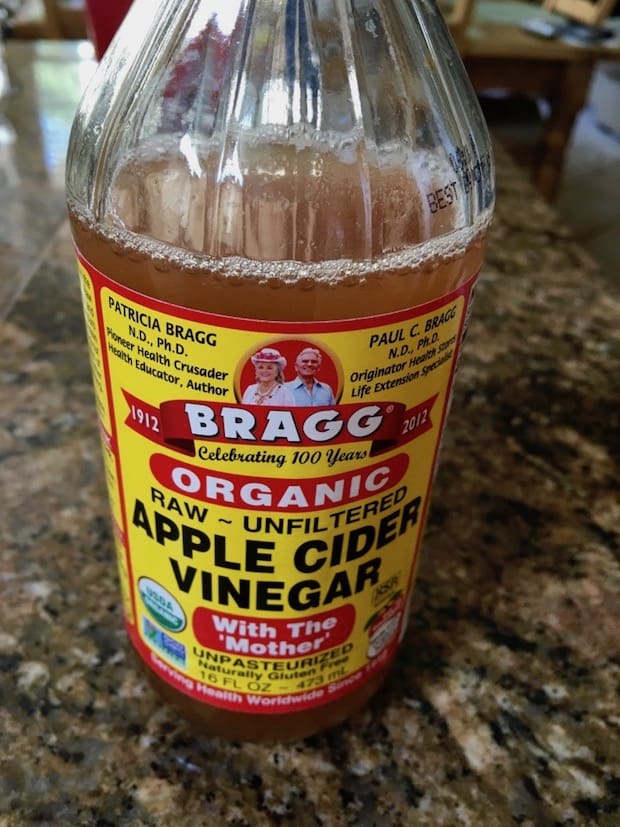
Walk into any grocery store and you’ll face a wall of ACV options: raw, filtered, capsules, gummies, fancy drinks with added flavors.
Which one keeps you in a fasted state?
The Gold Standard: Raw, Organic, with “the Mother”
Best apple cider vinegar for fasting: Raw, organic, unfiltered, unpasteurized ACV that contains “the Mother.”
The “Mother” is the cloud sediment made of protein, raw enzymes, and healthy bacteria. This is what gives ACV its therapeutic punch.
Pasteurized, filtered ACV looks clear and crisp, but the heating process kills the naturally occurring bacteria, enzymes, and nutrients. You’re left with glorified sour water.
Brand recommendation: Bragg Organic Apple Cider Vinegar is the gold standard. It’s unpasteurized, unheated, unfiltered, and contains the Mother enzyme.
Gummies do break a fast. Gummies contain sugar, corn syrup, or caloric sweeteners to maintain texture and flavor. They contain enough carbohydrates to spike insulin and break your fast immediately.
Avoid ACV drinks with sweeteners or juices. Most contain added sweeteners (even “natural” ones like honey or agave) and fruit juices that spike insulin and add significant calories. These absolutely break your fast.
Risks, Side Effects, and Who Should Avoid It
ACV is highly acidic (pH 2.4 undiluted—comparable to cola), so it can create a risk if you’re not careful. Here are the primary side effects:
Tooth Enamel Erosion
ACV’s acetic acid can wear away tooth enamel and sometimes turn teeth yellow. I know many of my clients have said they’re afraid it will damage their teeth.
The solution is to always use a straw and rinse your mouth with water immediately after drinking. Never brush your teeth right after consuming ACV. Acid temporarily softens enamel, and brushing can cause further damage.
Esophageal & Stomach Burning
Undiluted ACV can burn the tissues in your mouth, throat, and esophagus. There are documented cases of ACV capsules lodging in the throat and causing severe burns requiring medical treatment.
I’ve heard people say, “My stomach is already so acidic… feels like it would eat a hole through my stomach.” And “I’m afraid it’s going to cause burning.”
Solution: Never consume ACV undiluted. Mix 1 to 2 tablespoons in at least 8 ounces of water. If you experience stomach discomfort, discontinue use immediately.
Detox Symptoms
When starting ACV, some people experience temporary “healing crisis” symptoms: headaches, nausea, dizziness, irritability, and muscle soreness. These typically resolve as your body adjusts.
Dangerous Medication Interactions
Insulin & Diabetes Medications
ACV lowers blood sugar. Suppose you’re taking insulin, metformin, or other diabetes medications. In that case, combining them with ACV can drop your blood sugar to very low levels (hypoglycemia).
Diuretics & Potassium-Lowering Drugs
ACV can reduce potassium levels. Combined with diuretics or Digoxin (heart medication), this creates a risk of excessive potassium depletion and drug toxicity.
I’ve heard from a person with low blood pressure who says that they had “dizzy spells” after taking ACV. This is a warning sign of potentially dangerous interactions.
Blood Pressure Medications
The ACV lowers blood pressure. If you’re on hypertension medication, the combined effect could drop your blood pressure too low.
Thyroid Medications
ACV may interfere with the uptake and metabolism of thyroid medications.
Is it safe to drink ACV on an empty stomach?
Generally, yes, if diluted.
Many protocols recommend ACV first thing in the morning or 30 minutes before meals on an empty stomach. This timing maximizes metabolic benefits and digestive prep.
ACV capsules should never be taken on an empty stomach. They must be consumed with meals. The concentrated acid in capsules can cause severe esophageal damage if they are lodged in your throat.
If liquid ACV causes stomach discomfort even when diluted, then discontinue use.
Can ACV make you nauseous?
Yes, nausea is a documented side effect, especially when starting an ACV regimen. It can occur during the body’s detoxification process as toxins stored in fat tissue are released into the bloodstream.
ACV also stimulates liver function and bioflow. This can cause nausea or general discomfort in some people.
Suppose you feel shaky, nauseous, or ravenously hungry within an hour of consuming ACV. In that case, it’s a signal that your body triggered an insulin response and isn’t tolerating it very well.
Should I avoid ACV while on medication?
You must consult your doctor first. This is non-negotiable if you’re taking:
– Insulin or blood sugar-lowering drugs
– Diuretics
– Digoxin
– Blood pressure medications
– Thyroid medications
Fasting already alters your body’s metabolism. Adding ACV, which can affect blood sugar and blood pressure without medical supervision, can pose a serious risk.
Who should avoid ACV entirely?
– Pregnant or nursing women (insufficient safety data)
– People with stomach ulcers (ACV irritates them)
– Individuals with liver or kidney disease
– Severely underweight individuals or those with anorexia
– People over 70 (unless in excellent health)
– Athletes during competition or intense training
The Bottom Line: ACV is a Tool, Not a Magic Bullet
At the end of the day, apple cider vinegar is a tool, not a magic bullet. It’s not going to replace discipline, consistency, or the more profound benefits of fasting itself.
It will make your fasting a little easier by reducing hunger, stabilizing blood sugar, and helping your body stay in fat-burning mode longer.
Think of ACV as a metabolic ally and tool that supports your fasting goals. By enhancing insulin sensitivity, improving digestion, and making hunger more manageable. But it works best when paired with the fundamentals: a clean diet, movement, hydration, and restful sleep.
Support Your Discipline, Don’t Replace It
If fasting is the framework that transforms your body, then ACV is a small daily act that strengthens your mindset. Adding it to your morning or pre-meal routine becomes a micro-ritual. A moment of intention that says, “I’m staying committed to this lifestyle.”
It’s the ritual that rewires discipline into habit.
- Regulate: It helps balance blood sugar and keeps cravings in check, so you stay focused and not famished.
- Reinforce: Each glass of diluted ACV is a physical reminder of your commitment to better health.
- Reset: Over time, these small, consistent acts reshape your habits and identity into someone who follows through.
Personalize, Practice, Progress
Here’s how to integrate ACV mindfully into your fasting lifestyle, just as experienced fasters do.
Consult your doctor: Especially if you’re on medication or pregnant, fasting, and ACV can alter blood sugar and potassium levels.
Start small: Begin with one teaspoon in water. See how your body responds before increasing to one to two tablespoons.
Listen to your body: If you feel stomach burning or discomfort, then dial it back. If you feel stable energy and fewer cravings, then you’re on the right track.
Be consistent, not perfect: Missing a day isn’t failure, it’s feedback. The wind is back the next day.