
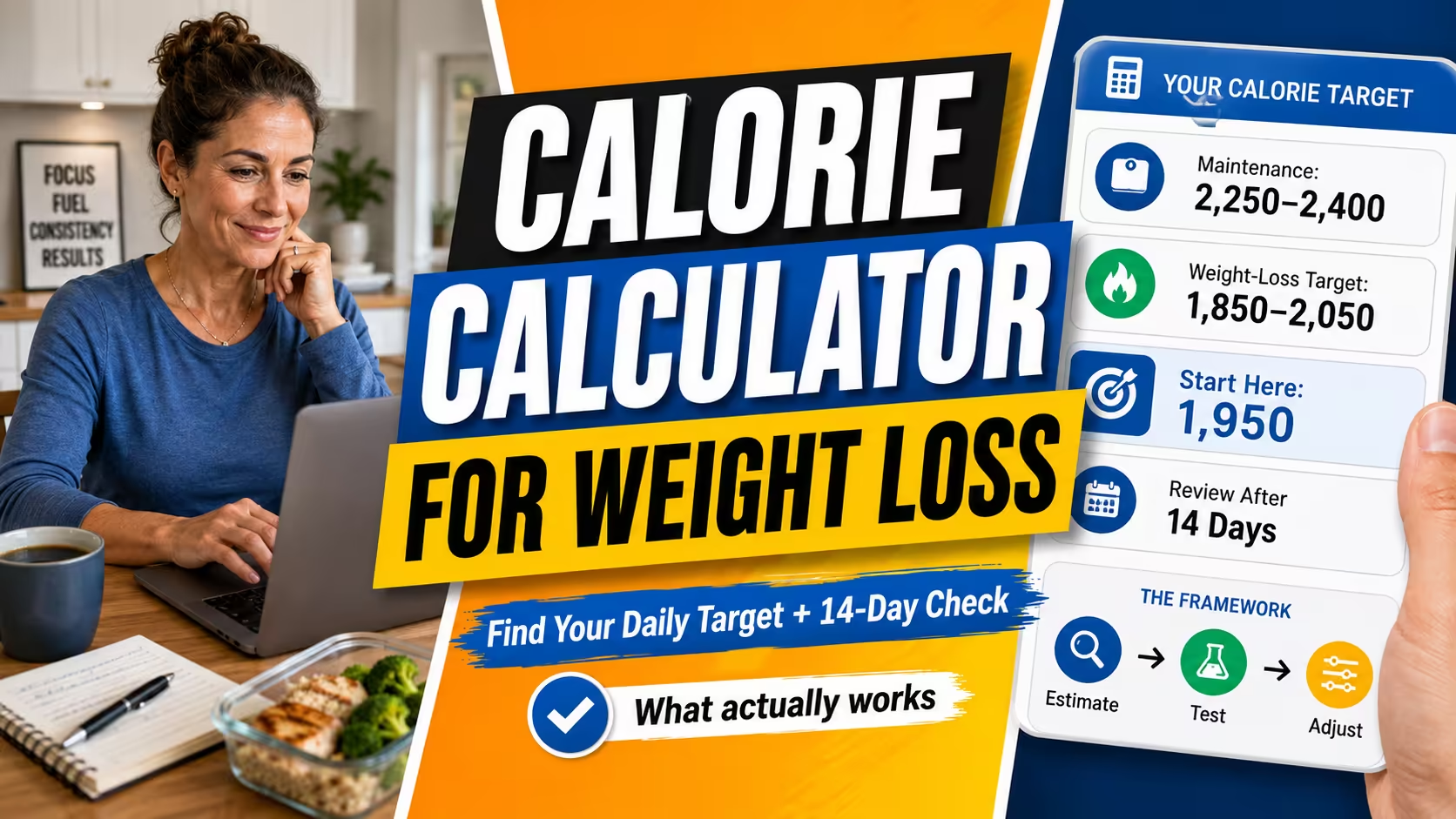

How many calories should you eat to lose weight? This calculator estimates your maintenance calories, applies a realistic and sustainable deficit, and gives you a starting calorie range… not one “perfect” number. Every calorie equation is based on population averages, so treat the result as an educated estimate rather than an absolute answer.
Trainer Josh · Calorie Calculator
Find your Daily Target
Estimate your maintenance calories, choose a sustainable rate of weight loss, and get a starting daily calorie target. Adjust it based on your real-world results.
Choose based on your average week, not your most active day.
Your estimated target: 1,830 calories/day
An educated estimate, not a prescription — adjust it as your body responds.
≈ projected loss of 1.3 lb/week
Your starting plan
- Maintenance
- 2,340 calories
- Daily deficit
- 508 calories
- Starting target
- 1,832 calories
- Expected rate
- about 1.3 lb/week
- Formula used ⓘ
- Mifflin–St Jeor
- Estimated BMR ⓘ
- –
- Maintenance (TDEE) ⓘ
- –
We capped this number.
The crucial rule: treat this as a starting point, not a fixed target. If your weight stops moving for two-plus weeks while you’re consistent, you’re no longer in a deficit — by definition — and it’s time to adjust intake or activity, not to assume the plan failed.
How this calculator works
Maintenance is estimated with the Katch–McArdle formula when you enter a body fat percentage (it uses lean body mass), and the Mifflin–St Jeor formula otherwise. Daily deficit is estimated at 847 kcal per kg of target weekly loss, accounting for the mix of fat and lean tissue in a realistic weight-loss composition. For a true, personalized maintenance number, the most reliable method is still tracking intake and average body weight for a few weeks and seeing where the scale holds steady.
TRAINER JOSH TAKE:
Stop chasing the “perfect” number
Calorie calculators aren’t wrong… they’re just estimates. Every formula is a rough average based on population data, not a precise readout of your body.
The human metabolism isn’t a closed system, so no equation can predict weight change down to the gram. And stressing over the “exact” number is wasted energy.
A calorie calculator estimates the calories you burn, and food labels estimate the calories you eat. Under FDA compliance rules, the analyzed calorie content of a packaged food can be up to 20% higher than the declared value before the label is considered out of compliance. That doesn’t mean every label is off by 20%, but it shows why calorie tracking can never be perfectly exact.1
Maintenance is a range, not a point
Research suggests maintenance is less of a fixed point and more of a dynamic range that can often fluctuate by 150-300 calories. Your body subconsciously regulates non-exercise activity thermogenesis (NEAT), things like fidgeting, posture, and pacing. All to help maintain energy balance.2
Adjustments are guaranteed
Assume you’ll need to tweak your calories and macros at least once, probably more. As you lose weight, metabolic adaptation kicks in… today’s deficit becomes tomorrow’s maintenance. Your target isn’t fixed, but it moves as your body changes.
Real-world results beat the calculator
The most reliable way to find your actual numbers: start with a reasonable estimate, track your food, watch your average weekly weight trend, then adjust based on what actually happens. If you’re eating at a calculated “deficit” and not losing weight, it isn’t a deficit. It doesn’t matter what the math says.
Why Your Calorie Calculator Gives You a Range (Not the One “Right” Number You’re Looking For)
Key Takeaways:
- Your range is a starting estimate, not a rulebook. NEAT alone swings by up to 2,000 calories between people, so one exact number is a myth.
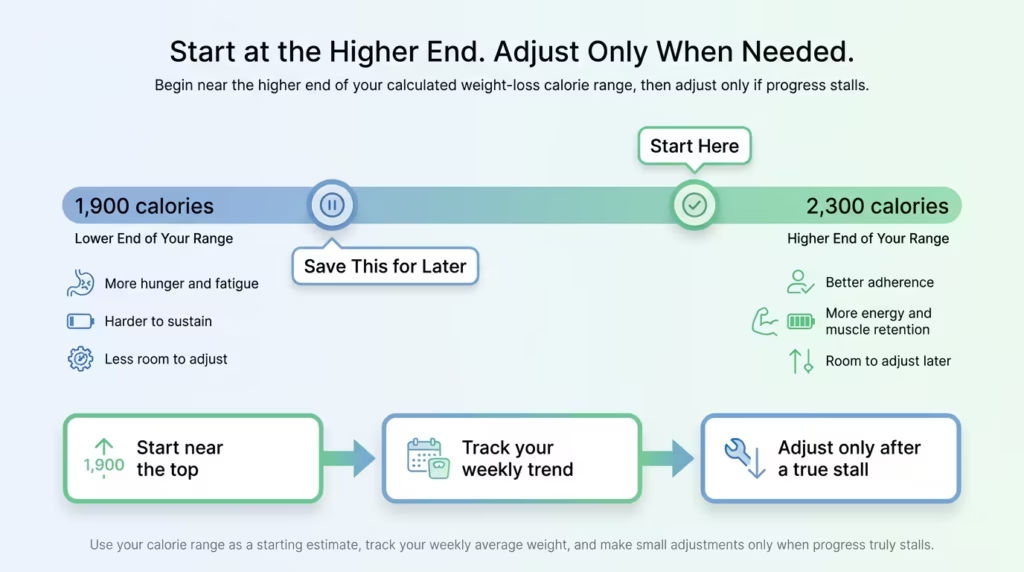
- Diet at the highest calories that still move the scale. That leaves you a lever to pull later, gives you more food to work with, and makes flexible, consistent eating easier than trying to follow a rock-bottom plan perfectly.
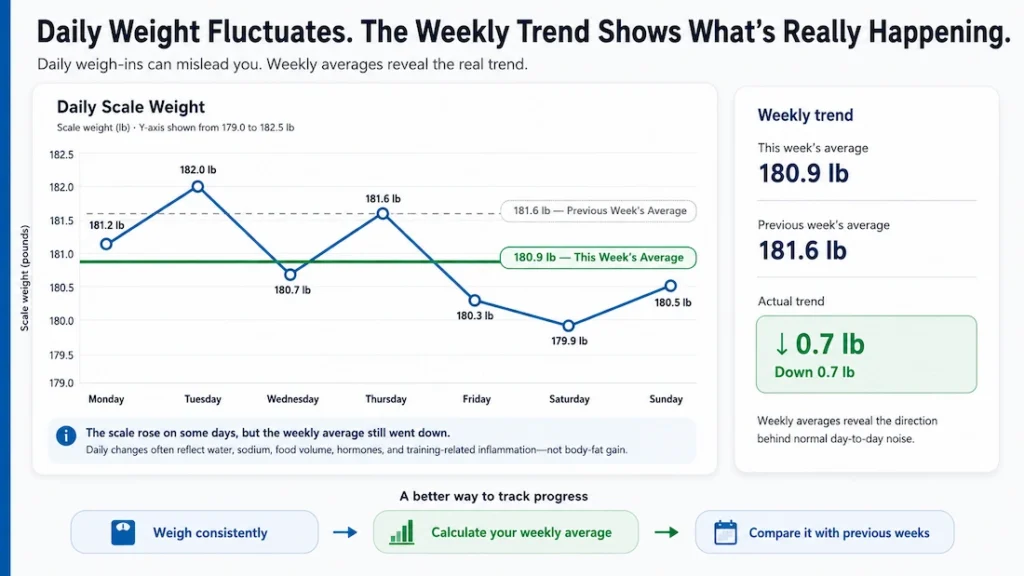
- Judge progress by your weekly average weight, not a single day. Water and food volume move the scale far more than fat does.
There’s no magical single fixed number that you have to hit every day. Calorie calculators give you a range built from your best estimate right now. And that range is a starting point you can adjust based on what actually happens to your body over the next few weeks.
Jumping straight to the bottom of that range doesn’t speed up your results. It usually backfires. The smart move is to start near the top, watch your weekly trend instead of your daily scale number, and adjust from there.
What Your Calorie Numbers Actually Mean
Your maintenance number is the estimated calories that keep your weight steady. Think of it more as a range or a “ballpark” number to start with. This is because your body isn’t a straightforward math equation, and it’s more of a moving target.
That range is your estimated maintenance, the calories that hold your weight steady right now. Your body burns that energy through your Basal Metabolic Rate (BMR), digestion (TEF), and NEAT, your non-exercise movement like fidgeting and pacing.
The range exists because NEAT alone can vary by up to 2,000 calories a day between two people of the same size. It all depends heavily on their occupation and daily lifestyle.3
A deficit just means eating below that number so your body pulls energy from fat stores instead. Start near the higher end of your range rather than the bottom.
Drastically slashing calories triggers ‘metabolic adaptation.’ While you may still lose weight at the start, your body responds by down-regulating daily energy expenditure and increasing hunger hormones. This can accelerate muscle loss and make long-term progress a lot harder to sustain.4
And don’t judge any of this off a single day on the scale. Water, food volume, and hormones move that number around way more than the fat does.
Flexible Dieting vs. Rigid Dieting
Starting higher also makes your diet easier to live with.
Researchers note the differences between flexible restraint and rigid restraint. Flexible restraint means following a calorie target without treating every food choice as a pass or fail.
You can adjust portions, enjoy favorite foods in moderation, and return to your normal plan after a higher-calorie meal. Rigid restraints relies more on strict rules, forbidden foods, and all-or-nothing thinking. Once you “break” the diet it’ll feel like the whole day is ruined.
STUDY SAYS:
A 2013 study published in Eating Behaviors found that practicing flexible dietary restraint among 106 women maintaining an average initial weight loss of 10.1 kg was associated with superior long-term weight maintenance. But rigid dieting correlated with higher attentional fixation on food and body shape (r = 0.43 to 0.49). Adopting a flexible mindset allows dieters to sustain their progress over time without triggering the cognitive fixation that frequently accompanies strict, binary eating rules.5
So this doesn’t mean that your diet shouldn’t have any structure. It means your calorie target should leave enough flexibility to follow it consistently without feeling like one imperfect meal erased all your progress.
Why You Shouldn’t Race to the Bottom of Your Range
What Is TDEE?
Total daily energy expenditure (TDEE) is the total number of calories your body burns throughout the day.
Researchers generally divide daily energy expenditure into resting metabolism, the thermic effect of food, and physical activity. For a practical calorie calculation, physical activity can be separated into planned exercise and everyday movement.
- Basal metabolic rate (BMR): The energy your body needs to keep you alive at rest, including breathing, circulation, temperature regulation, and organ function.
- Thermic effect of food (TEF): The energy used to digest, absorb, and process the food you eat.
- Exercise activity: Calories burned through deliberate workouts, sports, and structured training.
- Non-exercise activity thermogenesis (NEAT): Calories burned through movement outside formal exercise, including walking, standing, household tasks, and fidgeting.
In simple terms:
TDEE = BMR + TEF + exercise activity + NEAT
Your calorie calculator estimates these components, but none of them stays perfectly fixed. Your body weight, activity, food intake, and normal daily movement can all change how many calories you burn.
Going straight to the lowest calorie number feels right, but it usually isn’t. When you slash calories to the floor right out of the gate, your body reads that as more of a threat than a goal.
It then responds by slowing itself down, quietly cutting back on the energy it burns just moving through your day. And this is the complete opposite of what you want.
Starting too low leaves you nowhere to go later. Every diet hits a stall eventually. And that’s not a failure. It’s a normal part of the weight-loss process.
If you already started at rock bottom, then you’ll have no calories left to cut when that stall shows up. So start higher, and you’ll keep a lever to pull later.
From the Coaching Floor:
A lady wrote to me after she had put herself on a 1,400 calorie diet for 3 weeks, but the scale was frozen. She didn’t have any good options left. She tried cutting further, and it felt too extreme. But staying put meant nothing moved. This was the corner people paint themselves into when they start at the bottom instead of the top.
The rule of thumb: eat the most food you can while still moving in the right direction. More food, more adherence, more muscle retained, more room to adjust.5 Less food isn’t a faster shortcut, but it’s a trap you’re setting for your future self.
Staying near the higher end of your calorie range only works if hunger is manageable. Food quality, protein, fiber, and sleep should come first. But some people still find that appetite and cravings are the hardest part of following the plan.
When appetite is the hardest part of staying in a reasonable deficit, the BioTRUST GLP-1 Companion Stack is one option I like. It supports healthy fullness signals while also helping support strength and lean muscle as you lose weight.
A 3-part daily stack designed to support people using GLP-1 medications or losing weight naturally. It combines muscle, protein, collagen, and appetite support to help you maintain a healthier body composition as you lose weight.
- Natural GLP-1 Support: Helps support healthy appetite signals, fullness & metabolic function
- Lean Muscle Support: Helps preserve muscle, strength & healthy body composition during weight loss
- High-Protein Collagen: Adds 20 g of protein with 5 collagen types to help support daily protein intake
- Skin, Joint & Hair Support: Provides collagen peptides to support skin elasticity, joints, hair & nails
- 3-Part Weight-Loss Support: Combines muscle, protein/collagen & appetite support in one simple daily stack

Why the Math Won’t Match the Scale Exactly
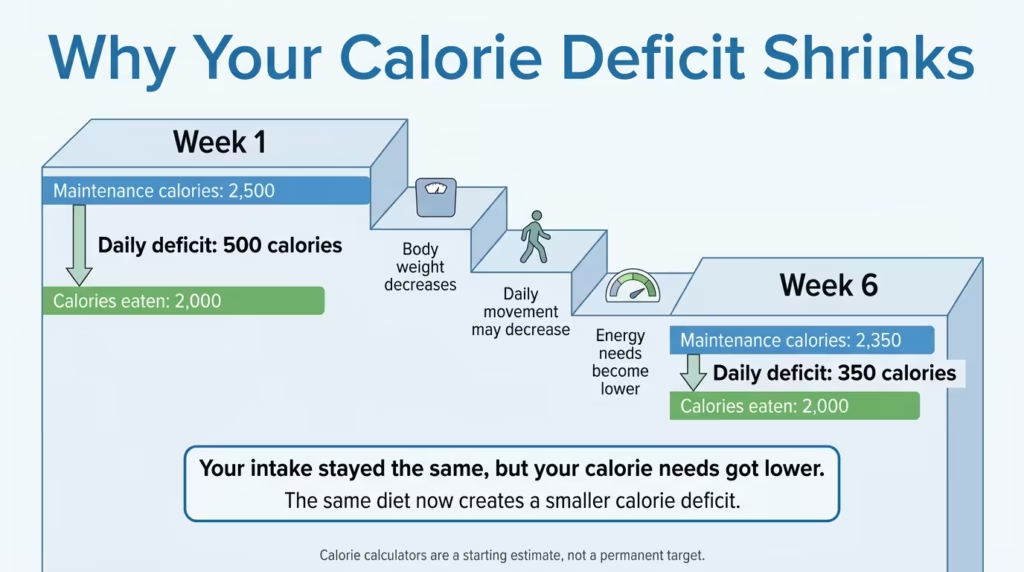
The “cut this many calories, lose this much weight” formula is more of a rough guide, and not a promise. It assumes your body stays exactly the same the whole time you’re dieting. But it doesn’t.
As you lose weight, you’ll need less energy to move a lighter body around. You may also eat less food, which lowers the thermic effect of food, and unconsciously move less throughout the day, reducing NEAT.
There can also be an additional change called adaptive thermogenesis, or metabolic adaptation. This is a drop in resting or non-resting energy expenditure beyond what researchers would predict from your smaller body size and changes in body composition alone. It can make your original calorie deficit smaller as your diet progresses.6
That doesn’t mean your metabolism is “broken,” and adaptive thermogenesis isn’t the only reason weight loss slows. Water retention, lower daily movement, inaccurate portions, food-label variation, and inconsistent tracking can also make the scale appear stalled.
Plan on adjusting your calories, because you’re going to have to. This is just what happens as your body adapts, and it’s a normal part of the weight loss process.
Treat a plateau as feedback, not failure. Review your weekly weight trend, food intake, steps, and training before making a small adjustment.
How to Read the Scale Without Losing Your Mind
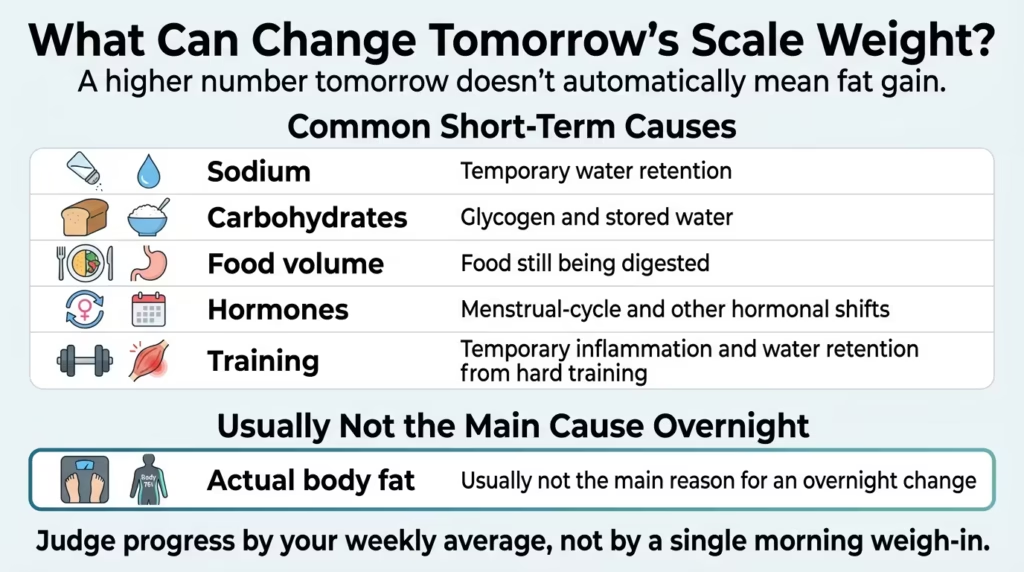
Most of what you see day to day on the scale isn’t just fat. Sodium, water, hormones, how much food is sitting in your gut… even a hard workout. All of it can shift the number on the scale by several pounds in either direction, but without an ounce of fat burning off.
You can drink a lot of water, and the scale can jump overnight for no reason at all. Even a carb-heavy meal can cause glycogen levels to increase. 1 gram of glycogen holds 3-4 grams of water, so that alone can make the scale jump overnight. But it’s just water weight.7
Judge your progress by the weekly average, and not any single morning. Weigh yourself the same way, same time, same conditions, and look at the trend over the week instead of reacting to just one number.
Try to limit your variables. I tell my clients to weigh themselves in the morning before they eat or drink anything and after they’ve gone to the bathroom. This way you won’t be weighing your breakfast too when you step on the scale.
Why Does Every Calorie Calculator for Weight Loss Give You a Different Number?
Key Takeaways:
- Different results come from different BMR equations, activity multipliers, deficit methods, and rounding rules
- NEAT varies by up to 2,000 calories daily, and no calculator can see it
- Averaging multiple tools gives you the average of several guesses, not your true maintenance
So you plug in the same age, height, and weight into two calculators and get 1,700 from one and 2,100 from the other. That 400-calorie gap feels like proof your body is broken. But it isn’t.
There’s no calculator that measures your metabolism. Each one runs a formula, then stacks assumptions on top of it.
They start with different math.
Older equations like Harris-Benedict estimate BMR from total scale weight, meaning they can’t differentiate between muscle and fat. Research shows this causes them to significantly underestimate the caloric needs of lean, muscular people.12
Instead, formulas like the Cunningham or Katch-McArdle formula (BMR = 370 + 21.6 x fat-free mass) anchor to lean body mass instead. More accurate for strength trainees, but only when your body fat estimate is solid.
They guess your activity level differently.
One tool will call a desk worker who lifts four days a week “Lightly Active.” Another calls that same person “Moderately Active.” That single dropdown can swing your maintenance estimate by several hundred calories.
Same Person. Different Activity Label.
Calorie calculators do not always define activity levels the same way.
Same person
- Desk job
- Strength trains 4 days per week
- Same age, height, weight, and routine
Nothing about the person changes between calculators.
Calculator A
Activity label
Lightly Active
The desk job keeps this routine in a lower activity category.
Lower maintenance estimate
Calculator B
Activity label
Moderately Active
Four weekly workouts move the same routine into a higher activity category.
Higher maintenance estimate
Some calculators bake workouts into the multiplier. Others add exercise calories separately. If you pick the wrong one, then you’ll count the same gym session twice.
Activity is the real wildcard, not your metabolism.
An individual’s resting metabolic rate varies by only about 3–6% day-to-day.13 Translation: Your personal metabolism is far more consistent and predictable than you’d think. Even if metabolic needs vary across the population based on body size.
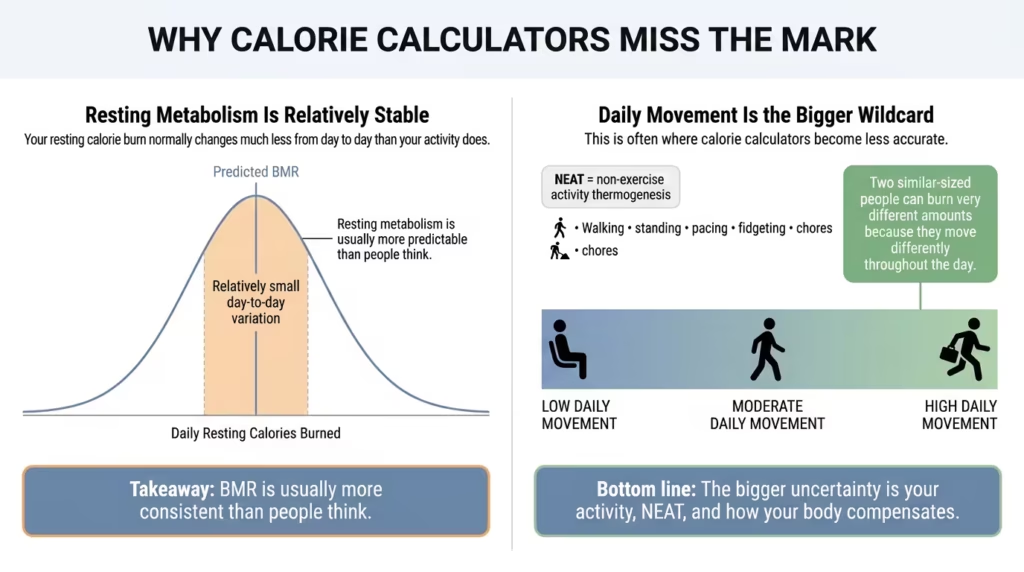
NEAT is where things get wild. Non-exercise activity thermogenesis covers fidgeting, posture, pacing, and walking to your car. It can vary up to 2,000 calories per day between two people of identical size and body composition.
About 60% of people overestimate their physical activity. A mentally draining workday feels demanding but all without producing actual movement. One of my clients swore she was “moderately active,” but after wearing a step counter for a week, she only averaged 3,100 steps a day.
From the Coaching Floor:
One of my clients came to my first session with her and was already stressed out by all the calculators, and she hadn’t tracked a single calorie yet. She told me she plugged her stats into a calculator and got a maintenance number of 2200, even though her activity level was set to sedentary. That number seemed way too high, so she ran a second tool, and it gave her 1790. That’s a big over 400-calorie gap. She also tried MyFitnessPal, and that gave her 1510 calories.
She asked me: “I just got wildly different results from multiple calculators. What am I supposed to do?”
I told her none of those numbers were wrong. They were different guesses built on four different assumptions, and no calculator on earth can see her real activity level, her past dieting history, or her actual metabolism. We picked one reasonable number, tracked her intake with a food scale for two weeks, and let her seven-day rolling weight average tell us which guess was closest. That’s the only test that matters.
STUDY SAYS:
A 2014 study published in BMC Public Health found that among 453 middle-aged UK adults (average age 47), 57% were objectively inactive based on accelerometer and heart rate monitoring, yet half of those inactive participants believed they were meeting physical activity guidelines. Overestimators also tended to have a lower BMI and higher activity levels than realistically inactive peers, but reported less intention to increase their activity. This suggests that feeling “active enough” can be a bigger barrier to change than actually being inactive.14
And then your body pushes back. This is partly explained by constrained energy expenditure. As you increase exercise, your total daily calorie burn may not rise by the full number shown on your watch or cardio machine.
Your body is surprisingly smart at conserving energy: up to 70% of the calories burned during cardio can be offset by a combination of metabolic slowdown and reduced non-exercise activity throughout the day.15
Dieting can create a related response called metabolic adaptation, where your body burns slightly fewer calories than expected for its new size.
Why Exercise Calories Don’t Add Up Perfectly
Exercise increases calorie burn, but your total daily expenditure may rise by less than your tracker predicts.
STEP 1
Exercise Adds Calorie Burn
Walking, cardio, and strength training use energy during the activity.
Your watch or cardio machine estimates how many calories the activity used.
But the body may compensate elsewhere
STEP 2
Energy Compensation
NEAT may decrease during the rest of the day.
Repeated activity may require slightly less energy over time.
Weight loss can reduce calorie expenditure beyond what body-size changes alone predict.
So the net increase can be smaller
STEP 3
Your Actual Daily Burn
Total daily energy expenditure may rise by less than the exercise estimate.
Exercise still counts. It just may not add to your daily burn calorie for calorie.
‘10,000 steps equals 400 calories’ might be basic arithmetic, but your nervous system never signed off on that deal.
Averaging six calculators just averages six guesses.
None of these tools can see your NEAT, your hormonal status, or how your metabolism adapted to past diets. Piling estimates on estimates doesn’t create accuracy. Instead, it’ll create false confidence.
Calculator shopping is the other trap. Some people hunt for a higher number to justify eating more. Others chase 1,200 calories because restriction feels like progress. But this then triggers exhaustion, and NEAT shuts down, which creates the slow metabolism they all fear.
Which Activity Level Should You Choose?
QUICK ANSWER:
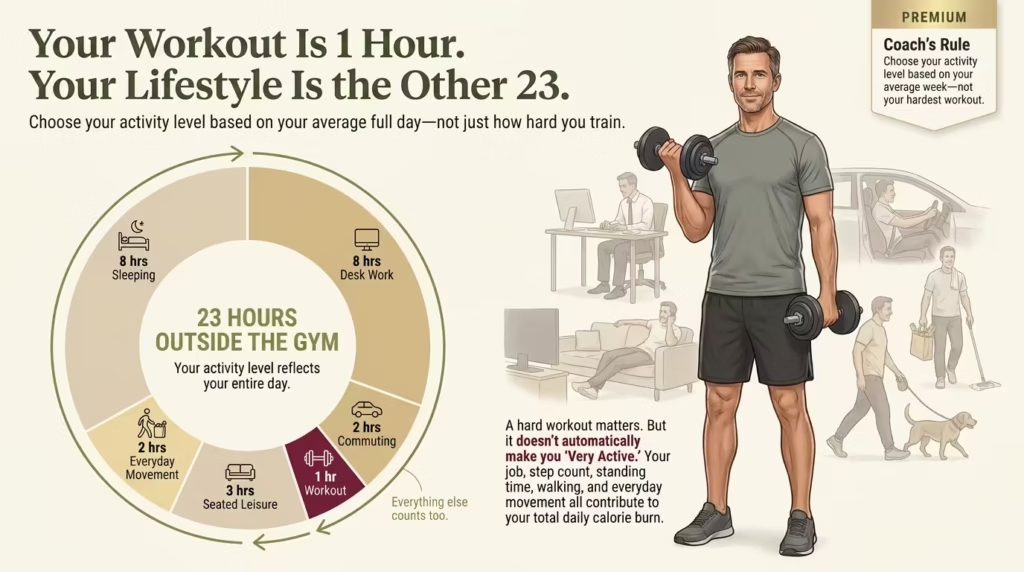
It’s best to pick the honest answer for your activity level and not the more flattering one. Most people pick a default too high because they’re grading themselves on how hard they train… not how much they actually move the other 23 hours of the day. The fix is easy: just separate your daily lifestyle from your workout. Be conservative when you’re not sure, and let your real results correct the number over time.
How Does This Calorie Calculator Estimate Your TDEE?
Most calorie calculators estimate how many calories you burn at rest, then adjust that number for your activity level.
Step 1: Estimate Your Resting Metabolic Rate
This calculator uses the Mifflin-St Jeor equation to estimate your resting metabolic rate, or RMR. This is the energy your body uses for essential functions such as breathing, circulation, organ function, and temperature regulation.
The equation uses your weight, height, age, and sex:
Men:
RMR = (10 × weight in kg) + (6.25 × height in cm) − (5 × age) + 5
Women:
RMR = (10 × weight in kg) + (6.25 × height in cm) − (5 × age) − 161
The Mifflin-St Jeor equation was developed from measured resting energy expenditure in healthy adults. A later systematic review found it predicted resting metabolic rate within 10% of the measured result more often than several other commonly used equations. But no prediction formula is accurate for everyone.
When a reasonably accurate body-fat estimate is available, the calculator may use the Katch-McArdle equation instead. This formula estimates resting energy expenditure from lean body mass:
RMR = 370 + (21.6 × lean body mass in kg)
Unlike Mifflin-St Jeor, it directly accounts for estimated lean mass. But the result is only as reliable as the body-fat percentage entered. An inaccurate body-fat estimate can make the final calorie result less accurate, not more.
Step 2: Apply an Activity Multiplier
Your resting estimate is then multiplied by an activity factor to estimate your total daily energy expenditure, or TDEE:
Estimated TDEE = estimated RMR × activity multiplier
The equation estimates what you burn at rest. The multiplier tries to account for the additional energy you use through exercise, work, walking, household tasks, and normal daily movement.
This calculator then multiplies your BMR by a Physical Activity Level (PAL) factor between 1.2 and 1.9. This is a standard clinical framework used to account for daily energy expenditure.8
- Deliberate exercise, such as lifting, running, and cycling
- Non-exercise movement, such as walking, standing, and fidgeting
- Occupational activity, such as teaching, nursing, or construction work
Choosing the correct category matters because people often overestimate how active they are. Base your selection on your average full week, not your hardest workout day.
Here is how to choose the category that fits you best.
Activity Level Multipliers at a Glance
Use your average full week, including your job, daily movement, and structured exercise. Do not choose a category based only on your hardest workout.
| Activity Level | Multiplier | Daily Lifestyle | Typical Exercise | Best Fit Example |
|---|---|---|---|---|
| Sedentary | 1.2 | Mostly seated with low daily movement | Little or no structured exercise | Desk job with no regular workouts |
| Lightly Active | 1.375 | Some standing or walking during the day | Light exercise 1–3 days per week | Desk worker with light workouts, or an on-your-feet worker who rarely trains |
| Moderately Active Common fit for desk workers who train | 1.55 | Mostly seated or moderately active outside the gym | Consistent moderate-to-hard training 3–5 days per week | Desk worker who trains hard and consistently |
| Very Active | 1.725 | On your feet and moving for much of the day | Hard training most days | Personal trainer, nurse, or delivery worker who also trains regularly |
| Extra Active | 1.9 | Highly physical occupation with substantial daily movement | Intense training in addition to physical work | Construction worker or manual laborer who also trains several days per week |
Choose sedentary when you:
- Work a seated desk job
- Spend most of the day sitting
- Do not perform regular structured exercise
Normal daily chores do not automatically make you active. Grocery shopping, cooking dinner, and walking through a parking lot are already part of a typical sedentary lifestyle.
For this calculator, do not choose sedentary if you exercise regularly.
You may live a sedentary lifestyle outside the gym, but your workouts still increase your total daily energy expenditure.
Choose light activity when you:
- Work a desk job and perform some regular exercise
- Exercise lightly without training hard most days
- Rarely exercise but work on your feet for much of the day
A teacher, nurse, or retail worker may fit here even without a demanding gym routine. Their standing and walking raise their NEAT throughout the day.
A desk worker who completes lighter workouts may also fit this category.
Choose moderate activity when you:
- Work a desk job but train hard and consistently
- Train moderately while standing or walking throughout the workday
- Perform little structured exercise but work a demanding physical job
This category fits more people than you might expect.
Even many competitive physique athletes belong around Moderate. They may train with high intensity, but the rest of their day can still involve coaching, driving, eating, and sitting.
COACHING TIP:
Training hard does not automatically make you “Very Active.” A brutal 60-minute workout still leaves 23 hours in the day.
Choose very active when you:
- Train hard most days of the week
- Spend much of your workday standing or walking
- Combine structured training with consistently high daily movement
This could include a personal trainer who coaches clients on the gym floor, a delivery worker who walks throughout the day, or a nurse who trains hard after long shifts.
Gym frequency alone does not qualify you for this category. You need both hard workouts and an active daily lifestyle.
Choose extra active when you combine:
- Intense training
- A highly physical occupation
- Large amounts of daily movement
Think of a roofer, construction worker, or manual laborer who also trains five days per week.
The Extra Active multiplier is not for someone who sits at a desk and completes hard gym sessions. It is reserved for people whose workday and workouts both demand substantial energy.
You can train hard and still be sedentary.
Yes, you can be sedentary for most of the day while still exercising five days per week. You might lift weights for one hour, then spend the rest of the day:
- Sitting at a desk
- Driving to and from work
- Watching television at night
Then that is a low-movement lifestyle outside the gym.
But here is the important difference: being sedentary outside the gym does not always mean you should select the Sedentary calculator setting.
The Sedentary multiplier assumes you do not exercise. If you work a desk job but train hard and consistently, you may fit closer to Moderate Activity.
Your workouts count. They just do not make you as active as someone who does the same workouts while also walking, standing, or doing physical labor all day.
Desk workers almost always guess too high.
Research shows that people routinely overestimate their physical activity levels by as much as 50% while underestimating their daily caloric intake.9
Desk workers make this mistake because hard workouts feel like a major part of their day. The workout may be intense, but it still represents a small slice of their total weekly schedule.
Mental fatigue can also create confusion. You may feel exhausted after eight hours of meetings, emails, and deadlines.
While mental stress and intense concentration drain your focus, cognitive tasks consume negligible extra calories compared to baseline metabolism. Your brain remains active, but your body spent those hours sitting, resulting in minimal physical calorie burn.10
This is why a desk worker who trains hard often fits Moderate Activity, not Very Active or Extra Active.
Choosing too high an activity level inflates your estimated maintenance calories. That can shrink your planned calorie deficit or erase it completely.
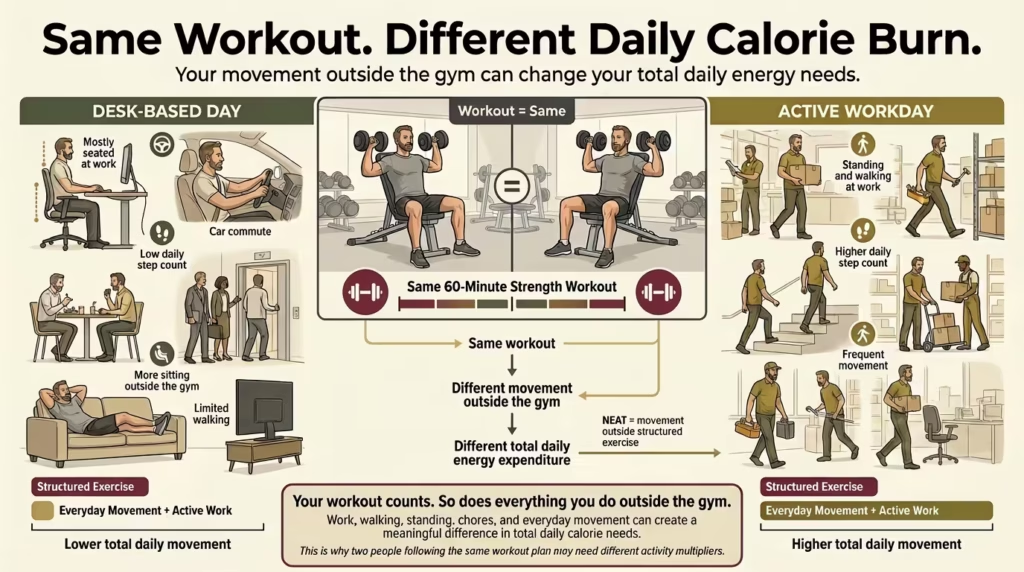
Absolutely. Your daily calorie burn includes both Exercise Activity and Non-Exercise Activity Thermogenesis (NEAT).
Exercise Activity covers deliberate workouts, including:
- Strength training
- Running
- Group cycling
NEAT covers the movement you perform outside formal exercise. All this background movement can create a big difference in your calorie needs.10 NEAT includes:
- Walking
- Standing
- Fidgeting
- Posture
- Household chores
- Moving around work
Consider two people who complete the same five weekly workouts… The first person works at a computer and averages a low daily step count. The second person works in construction and stays on their feet for most of the day.
They may follow the same gym program, but they should not select the same activity level. The construction worker burns more energy through walking, lifting, and physical labor.
Your job and step count can matter as much as your workouts when estimating TDEE.
Should You Add Your Workout Calories Back?
No. Not when this calculator’s activity multiplier already includes your workouts. This is one of the most common calorie-counting mistakes.
Suppose you choose the Moderate Activity multiplier because you work at a desk and train hard. The calculator has already increased your estimated calorie needs to account for that training.
If you add back the 500 calories your fitness watch claims you burned, then you risk double-counting the exercise already built into your activity multiplier. And studies show wearables frequently overestimate exercise calorie burn by 25% to 50% or more.11
This double-counting can turn a planned calorie deficit into maintenance or even a calorie surplus.
Do not:
- Choose a higher activity multiplier because you exercise.
- Log the same workout in your calorie app.
- Eat back every estimated workout calorie.
For this calculator, your selected activity category already reflects your typical training schedule. Use one consistent calculation method. Do not mix two systems and expect an accurate result.
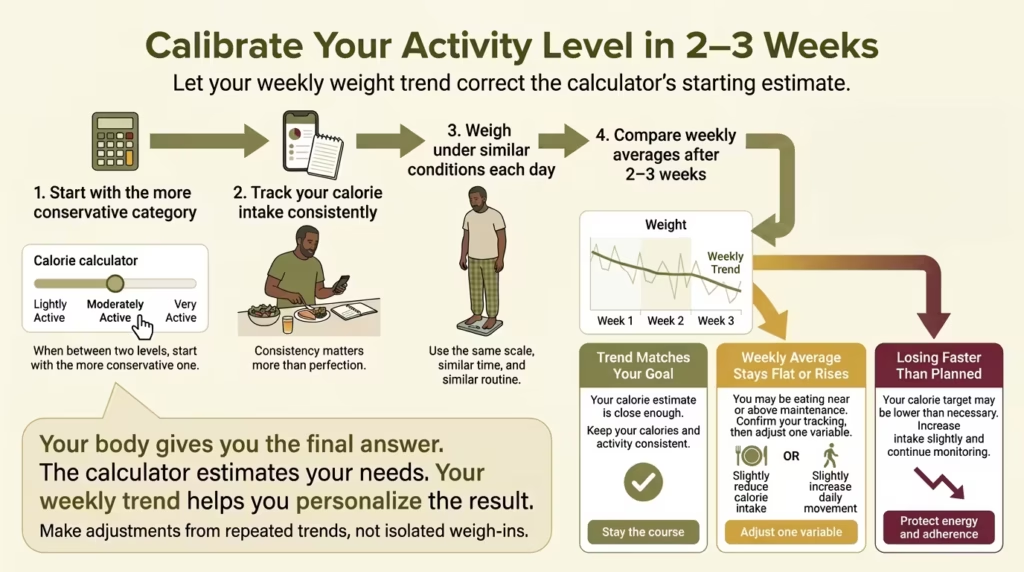
Choose the more conservative category.
For example, if you are stuck between Moderate Activity and Very Active, then I’d start with Moderate Activity.
Calorie equations use population averages. They cannot perfectly measure your genetics, NEAT, workout intensity, or metabolic adaptation. Your selected activity level is only a starting estimate.
Use this process to calibrate it:
- Choose a reasonable activity category.
- Track your daily calorie intake consistently.
- Weigh yourself under the same conditions each day.
- Calculate your weekly average weight.
- Monitor the trend over several weeks.
- Adjust your calorie intake based on the result.
Your body gives you the final answer. If the calculator says you are in a deficit, but your average weight stays the same, you are not in a true deficit.
Your maintenance calories are lower than the estimate, your intake is higher than recorded, or your activity was overestimated. The equation does not override the outcome.
COACHING TIP:
Wait for at least two weekly averages before changing your calorie target. One salty meal, hard workout, or high-carbohydrate day can temporarily raise scale weight.
Use your weekly average weight—not one weigh-in—to match the pattern below.
| What you observe | Possible explanation | What to do |
|---|---|---|
| Your weekly average stays the same | Your target may be close to maintenance. Your activity level may have been overestimated, or your actual intake may be higher than recorded. | Confirm your food tracking first. Then reduce calories slightly or reassess your activity multiplier. |
| Your weekly average rises | Your calorie target may be above your current maintenance needs. | Recalculate with a lower activity category or reduce your calorie intake slightly. |
| You lose weight while trying to maintain | Your estimated calorie needs may be too low. | Increase your intake slightly and continue monitoring your weekly average. |
| Weight loss was slow from the beginning | Your activity level may have been overestimated, or your actual intake may be higher than recorded. | Recheck your tracking and reassess the activity multiplier you selected. |
| Weight loss worked at first, then slowed | A smaller body burns fewer calories. Reduced NEAT or metabolic adaptation may also have narrowed your deficit. | Confirm the trend has stalled for at least two weeks, then recalculate using your current weight. |
Should You Eat Back the Calories You Burn Exercising? (Why Your Watch Keeps Erasing Your Deficit)
Key Takeaways:
- Your activity multiplier already includes your workouts. Adding your watch’s number on top counts the same session twice.
- Trackers overestimate calorie burn by 28% to 93%, and a 30-minute lifting session only burns 150 to 200 calories.
- Eat your target on training days and rest days, then let 2-3 weeks of weekly averages tell you whether it needs to move.
No. For most people, eating back exercise calories is the fastest way to erase the deficit your calculator just built.
Three things go wrong. You count the workout twice, you trust a number your device guessed at, and the burn is smaller than it feels.
This isn’t about eating less around training. That part comes later.
Your activity setting already includes your usual exercise.
An activity multiplier estimates your total normal activity, including your job, daily movement, steps, and regular workouts. The mistake is choosing a level based only on how often you train.
A desk worker who lifts four days a week may still fall near the lower activity levels if the rest of the day is sedentary. Someone who spends eight hours on their feet may need a higher setting even with fewer formal workouts.
Your Watch Is Estimating, Not Measuring
Consumer fitness trackers can overestimate exercise calorie burn by 28% to over 90%, while a typical 30-minute lifting session burns a modest 150 to 200 net calories.32
STUDY SAYS:
A 1992 study published in the New England Journal of Medicine found that obese individuals struggling to lose weight significantly miscalculated their daily habits, underreporting their actual food intake by an average of 47% and overestimating their physical activity by 51%. Food intake and calorie expenditure are both difficult to estimate accurately, which is why your real weight trend matters more than either number.33
After lifting or intervals, heart rate often stays elevated for several minutes, so calorie estimates based on HR can read high if measured too soon.34
Caffeine can change heart rate, fat oxidation, or work output depending on dose and workout, but it does not always increase total calories burned at a fixed workload.35
Trust your tracker for step counts and trends. A number that can miss by hundreds of calories can’t set your food budget.
The Burn Is Smaller Than It Feels
The calorie number on your watch is usually a gross estimate, not the additional or net calories the workout added to your day.
A tracker may show 400 gross exercise calories, but that is not the same as adding 400 calories to your food budget.
Gross energy expenditure is the total number of calories burned during the workout period. Net energy expenditure subtracts the calories you would have burned during that same time even if you had been resting.
For example, if your watch reports 400 gross calories and you would have burned about 60 calories at rest, the workout’s net burn is closer to 340 calories. Even that is only an estimate, and your activity setting may already account for it.
If a tracker shows 400 gross calories, the net exercise calories are lower because part of that total is what you would have burned anyway at rest.36
Energy compensation research suggests that some calories burned during cardio are offset by reductions in other energy expenditures. On average, this compensation is about 28%, but in some people it can exceed 50%, potentially including less spontaneous movement such as pacing, standing, and fidgeting.37
One untracked scoop of peanut butter outweighs the net burn of an entire session.
From the Coaching Floor:
One client selected an activity setting that already accounted for her regular lifting. She then began eating back the calories shown on her watch, unknowingly counting the same workouts twice.
We chose one activity setting, stopped adding exercise calories, and kept her target the same on training and rest days. Within three weeks, her weight trend started moving again.
Later, as she became leaner, her strength and recovery declined. Instead of cutting harder, we raised her calories by 10%. Her energy returned while fat loss continued.
No, Eating After Your Workout Doesn’t Undo It
Eating after training does not cancel the workout. Fat loss depends on your calorie intake over days and weeks, while a protein-rich post-workout meal supports muscle repair.
In older adults, skeletal muscle shows anabolic resistance, so smaller protein doses after exercise stimulate muscle protein synthesis less effectively. Older adults generally need a larger protein dose to maximize the muscle-building response.
A larger post-exercise protein dose of about 0.4 g/kg or roughly 30–40 g often produces a stronger response, especially when the protein provides enough to meet the leucine threshold.
In adults around 60 and older, post-exercise muscle protein synthesis is less responsive to under ~20 g of protein, while ~30–40 g or about 0.4 g/kg per meal appears more effective.39
Skip the “earned it” math. Food is fuel for recovery, not payment for effort.
How to Test Your Calorie Calculator Number (Before You Decide It’s Wrong)
Key Takeaways:
- Your calculator number is a hypothesis. Fourteen days of honest tracking is the test.
- Weigh daily, judge weekly. Compare your Week 1 average to your Week 2 average.
- Only lower calories after two flat weeks, and pull the cut from carbs and fats.
You don’t know if your number is right. Nobody does, not until you eat at it.
Formulas are estimates built on estimates. They can’t see your metabolism, your NEAT, or how your body responds to a deficit.
The 14-day calorie test fixes that. You stop arguing with a formula and start reading your own data.
Track consistently, not perfectly.
Chasing a perfect macro split down to the gram wastes energy. Get protein and total calories right, and the rest is fine-tuning.
“Not perfect” doesn’t mean sloppy. Underreporting is the single most common reason people stop losing weight.
Researchers often test the accuracy of self-reported food intake using doubly labeled water, or DLW. It is considered the gold-standard method for measuring total energy expenditure while people live their normal lives.
DLW does not directly measure food intake. Researchers compare objectively measured energy expenditure with reported calorie intake. A consistent gap can reveal calories that were missed, underestimated, or altered during the tracking period.
STUDY SAYS:
A 2018 study published in the American Journal of Clinical Nutrition compared self-reported dietary intakes against objective biomarkers in 1,075 adults aged 50–74, finding that 24-hour dietary recalls underestimated energy intake by 15–17%, while food-frequency questionnaires underestimated energy intake by 29–34%. Four-day food records fell in between, underestimating energy by 18–21%, and underreporting was even more pronounced among obese participants across all three methods.16
Research shows that 25% to over 50% of people underreport their daily food intake (sometimes by hundreds of calories) while systematically overestimating their physical activity levels.17
This doesn’t mean people are lying. Portion sizes are hard to estimate, small extras are easy to forget (cooking oil, for example), and recording food can temporarily change how someone eats.
Weigh your food on a digital scale for these two weeks. Count everything: cooking oil, sauces, bites off your kid’s plate, gum, alcohol. Nothing escapes the food journal.
From the Coaching Floor:
A client tracked religiously at 1,350 calories, maintenance around 1,700. Some weeks the scale sat flat. After one high-calorie weekend, five pounds of progress vanished overnight. “This makes no sense,” she said. “If I cut more I’ll gain, if I stay here I’m stuck.”
We audited her tracking instead of her calories. Her morning coffee, logged as zero, was actually 60 calories a cup, twice a day. A “serving” of fries she’d been eyeballing was three times the real 160-calorie portion.
Once she weighed food instead of guessing, her weight leveled out. No cut needed.
Coaching Example
Before Blaming the Calculator, Check the Tracking.
Easy-to-miss logging errors can make a calorie target look broken when the real problem is incomplete tracking.
Two morning coffees
Two cups at approximately 60 calories each.
Fries
The portion was approximately 3 servings, not 1.
Combined daily total
Weigh daily. Ignore the daily number.
Same time each morning, after the bathroom, before food or water.
Scale weight can fluctuate because of short-term changes in sodium intake, gastrointestinal contents, glycogen-bound water, and inflammation from exercise or poor sleep.18
One day tells you nothing. The week tells you everything.
ILLUSTRATIVE 14-DAY EXAMPLE
Daily Weight Is Noise. Weekly Average Is the Signal.
Your weight can jump for a day even while your weekly average moves down.
Scale shown from 179–181 lb to make daily fluctuations visible.
Daily weight is data. Your weekly average is the trend.
Illustrative example. Your personal weight pattern will vary.
| Day | Body weight |
|---|---|
| Day 1 | 180.8 lb |
| Day 2 | 180.2 lb |
| Day 3 | 180.6 lb |
| Day 4 | 179.9 lb |
| Day 5 | 180.4 lb |
| Day 6 | 179.8 lb |
| Day 7 | 180.0 lb |
| Day 8 | 179.7 lb |
| Day 9 | 180.4 lb |
| Day 10 | 179.5 lb |
| Day 11 | 179.8 lb |
| Day 12 | 179.2 lb |
| Day 13 | 179.6 lb |
| Day 14 | 179.1 lb |
Compare Week 1 to Week 2.
Average all seven days of each, then look at the gap. Week 1 usually includes a big water and glycogen drop, so Week 2 will look slower. That’s expected, not a failure.
A Note for Women on Cycle Timing
A 14 day calorie test can be harder to interpret when the two weeks fall in different phases of your menstrual cycle.
Hormonal fluctuations across the menstrual cycle can cause modest, highly individualized water retention shifts. This can make week-to-week scale comparisons within the same month unreliable for tracking true fat loss.19
Changes in estradiol and progesterone can temporarily shift fluid balance and scale weight without reflecting a change in body fat. In one study, body weight was about 1 pound higher during menstruation than during the first week of the cycle. And this was primarily because it increased extracellular water.20
For a cleaner comparison, record your cycle day and compare like with like. Your mid follicular phase can provide a useful baseline. This is the window after the heaviest menstrual bleeding has passed before ovulation when progesterone remains low and estradiol is beginning to rise.
Then compare your mid-follicular weekly average this month with the same phase during the next cycle. Avoid comparing a mid-follicular average with your late luteal or premenstrual phase. This is when estradiol and progesterone are changing rapidly, and bloating or water retention can become more noticeable.
What Your 14-Day Results Actually Mean
What Should You Do After Your 14-Day Test?
Use your weekly weight average, waist measurement, tracking accuracy, and recovery signals to choose the next step.
Decision 1 · Start here
After 14 days, did your Week 2 weight average or waist measurement decrease?
Compare your average from Days 1–7 with Days 8–14. Also review your waist measurement, clothing fit, and strength.
Progress is occurring
Which result best matches your progress?
Weight average decreased
Keep your calories the same
Your calorie target is producing a measurable downward trend. Continue for another 14 days before reconsidering it.
A daily weigh-in may still rise even when the weekly average is moving down.
No calorie cut needed.
Scale flat, but waist decreased or strength improved
Keep your calories the same
Your body composition may be improving even though total body weight has not changed much.
A shrinking waist, better-fitting clothes, or rising strength can matter more than one flat scale average.
No calorie cut needed.
No clear decrease yet—check your tracking
Decision 2
Were all foods and drinks weighed or measured and logged consistently?
Include oils, sauces, coffee add-ins, alcohol, bites, tastes, restaurant meals, and weekend portions.
Audit your tracking before lowering calories
Use a digital food scale and track every calorie source consistently for another 14 days.
- Cooking oils and butter
- Sauces and dressings
- Coffee creamers and add-ins
- Alcohol and caloric drinks
- Bites, tastes, and leftovers
- Restaurant and weekend portions
The problem may be the recorded intake, not the calorie calculator.
Continue to Decision 3
Your intake record appears consistent. Now check whether a temporary change in fluid balance could be hiding progress.
Decision 3
Could temporary water retention be masking fat loss?
Scale weight can remain elevated even while body fat is decreasing.
- Menstrual-cycle timing
- Higher sodium or carbohydrate intake
- Unusually hard training, soreness, or inflammation
- Poor sleep
- Constipation or slower digestion
Keep calories steady and collect more data
Wait until the likely fluid-retention factor settles, then compare another weekly average.
When relevant, compare the same menstrual phase across cycles rather than comparing two hormonally different weeks.
Temporary water weight is not a confirmed fat-loss plateau.
Continue to Decision 4
No clear temporary fluid-retention factor stands out. Confirm that the lack of progress has lasted for two comparable weeks.
Decision 4
Have weight, waist, and other measurements remained flat for two consecutive weeks?
A confirmed plateau means no meaningful change across at least two honest weeks of consistent tracking.
Keep collecting data
One flat week is not enough evidence to lower your calories.
Run the test until you have two comparable weeks.
Reduce calories by approximately 10%
For most people, this means lowering intake by roughly 100 to 200 calories per day.
Take most of the reduction from carbohydrates and added fats. Keep protein and high-volume vegetables in place.
Aim for approximately 1.6 to 2.2 grams of protein per kilogram of body weight per day, or about 0.7 to 1.0 gram per pound.
Use the lower end for a moderate deficit. Move toward the higher end if you are leaner, lift regularly, or are using a more aggressive deficit.
Run another 14-day test after the adjustment.
Aiming to lose 0.5–1.0% of body weight per week is a research-supported target for preserving lean mass during dieting in trained athletes. It’s the evidence-based sweet spot for maximizing fat loss while preserving lean muscle mass.21
Scale Stable, but Your Waist Is Shrinking?
Remember that total body mass is not the same as fat mass. The scale combines body fat, muscle, glycogen, water, food in your digestive system and other tissues into that one number. So you can lose abdominal fat while also gaining or retaining lean mass, which can cause little change in total body weight on the scale.
A smaller waist, better fit clothes, and rising strength can show improving body composition even when the scale is temporarily plateaued.
Poor sleep and unusually hard training can alter cortisol or aldosterone signaling, increase inflammation, and temporarily shift fluid balance.22 This is sometimes casually called cortisol-mediated water retention, but cortisol is unlikely to be the only factor involved.
Usually it’s sodium intake, aldosterone signaling, muscle inflammation, glycogen storage, and gastrointestinal contents that can all change scale weight independent of body fat.
When and How to Lower Your Calories
When calories do need to come down, take the reduction from starches, grains, and added fats. Keep protein and vegetables in place. Protein helps preserve lean mass in an energy deficit by sustaining muscle protein synthesis and reducing net catabolism.23
The faster calories come down, the more attention you should pay to keeping the muscle that supports strength and metabolism. The BioTRUST GLP-1 Companion Stack pairs lean-muscle support with convenient protein and collagen, which can be useful when a tighter calorie budget makes adequate intake harder.
A 3-part daily stack designed to support people using GLP-1 medications or losing weight naturally. It combines muscle, protein, collagen, and appetite support to help you maintain a healthier body composition as you lose weight.
- Natural GLP-1 Support: Helps support healthy appetite signals, fullness & metabolic function
- Lean Muscle Support: Helps preserve muscle, strength & healthy body composition during weight loss
- High-Protein Collagen: Adds 20 g of protein with 5 collagen types to help support daily protein intake
- Skin, Joint & Hair Support: Provides collagen peptides to support skin elasticity, joints, hair & nails
- 3-Part Weight-Loss Support: Combines muscle, protein/collagen & appetite support in one simple daily stack
As you lose weight, there is less total mass to maintain and move. Your body may also respond through energy compensation, the behavioral and physiological changes that make a planned deficit smaller. You may unconsciously move less through non-exercise activity thermogenesis (NEAT), reduce resting energy expenditure, or feel hungrier.
This does not mean your metabolism is broken. A calorie target that worked at the start may eventually need recalibration as body weight and metabolically active tissue decrease.
During weight loss, aim for approximately 1.6 to 2.2 grams of protein per kilogram of body weight per day or about 0.7 to 1.0 grams per pound. You can use my free protein calculator to instantly find your protein number.
The lower end of this protein goal is a solid target for most people following a moderate calorie deficit. But you will want to move toward the higher end if you are already lean, lift weights regularly, or are using a more aggressive deficit.
Your body burns fewer calories as you get leaner. Dieting can also reduce daily movement energy expenditure beyond what body-size changes alone would predict. All due to the phenomenon called adaptive thermogenesis.24
What Should Drive a Calorie Change
Give any target two to three weeks. Daily swings of 1% to 2% come from sodium, stress, and hormones.
Judge weekly averages and your waist, not one weigh-in. Hunger and soreness matter, but they should not override the weight and waist trend by themselves.
Losing 1 to 1.5 pounds a week, change nothing. Stalled across two check-ins with the waist stuck, cut 5% to 10% from carbs and fats. Losing faster than two pounds a week, raise calories 10%.
Then pick one method and stay with it.
THE BOTTOM LINE:
Eat your target on training days and rest days alike, leave the watch out of it, and let two to three weeks of real numbers decide the next move.
Why Isn’t the Scale Moving at Your Calorie Target? 5 Things to Check Before Cutting Again
Key Takeaways:
- A flat scale for a few days isn’t a plateau. Hold any target two to three consistent weeks before judging it.
- Inaccurately tracking intake is one of the most common reasons weight loss stalls. In fact, research shows that even registered dietitians underreport their daily intake by over 200 calories on average (proving just how tricky self-reporting can be).25
- Work the list in order (timeframe, tracking, double-counting, maintenance, lifestyle), then make one small change.
You did the math. You picked the number. The scale hasn’t budged in two weeks, and it makes no sense.
Your calculator isn’t broken, and neither is your metabolism.
A calorie calculator estimates your needs. It can’t measure your metabolism or your daily burn. When the scale sits still, one of two things is usually happening: your actual deficit is smaller than the math predicted, or water is hiding progress that’s already happening.
Your job isn’t to force the calculator to be right. It’s to find the calorie range that works for you.
So don’t cut food or add cardio yet. Work through these five in order.
Before You Cut Calories Again
Work through these checks in order before lowering calories or adding more cardio.
-
Have you followed the same calorie target consistently for 2–3 weeks?
No · Stop here and reassess Keep testing.Compare 7-day average weights under consistent conditions. Reassess after 2–3 weeks.
Yes · Continue to Step 2 Move to the next check. -
Are your waist, clothes, or progress photos improving?
Yes · Stop here and keep going Keep going.Water weight may be hiding fat loss on the scale.
No · Continue to Step 3 Complete a tracking audit. -
Have you completed a 10–14 day tracking audit?
Include oils, sauces, drinks, bites, weekends, restaurant meals, and accurate portions.
No · Stop here and audit Audit your intake before cutting calories.Yes · Continue to Step 4 Check exercise calories next. -
Are you eating back calories from your watch or cardio machine?
Yes · Stop here and correct it Stop counting the same workout twice.Hold the corrected target for 2 weeks and reassess.
No · Continue to Step 5 Check whether your needs changed. -
Have your calorie needs or lifestyle changed?
Consider weight loss, fewer steps, lower activity, schedule changes, poor sleep, medications, or health factors.
Yes · Then continue to final action Recalculate your needs and address what changed.No or already checked · Continue to final action Make one measured change.
Make One Small Adjustment
Choose one:
- Keep protein consistent
- Change one variable at a time
- Hold the change for 2 weeks, then reassess
Troubleshoot first. Adjust deliberately. Don’t slash calories in a panic.
1. You Haven’t Tested It Long Enough
Daily body weight reflects a lot more than body fat.
Sodium, carbohydrate intake, glycogen, food sitting in your gut, constipation, cycle timing, muscle soreness, illness, and inconsistent weigh-in conditions all move the number without touching an ounce of fat.
New or harder workouts can cause temporary scale spikes because exercise-induced muscle damage triggers localized swelling and fluid retention during recovery.26 One salty restaurant meal can mask several days of real progress.
Weigh the same way every time. Same scale, same spot on the floor, in the morning, after using the bathroom, before eating or drinking, in similar clothing or none.
Then average seven days and compare that to your previous weekly average.
Weighing once a week is riskier than weighing daily. That single morning might land on a water spike and wipe out a week of progress on paper.
Hold the same target for two to three weeks before judging it. If you menstruate, compare similar points in your cycle instead of back-to-back weeks.
Look past the scale. Check your waist measurement, progress photos, how your clothes fit, and your gym performance. A shrinking waist with a flat scale means fat loss is happening.
2. Your Real Intake Is Higher Than Your Logged Intake
This isn’t dishonesty or weak willpower. Portion estimating is genuinely hard, and small extras vanish from memory.
Self-reported calorie tracking is notoriously unreliable: validation studies show widespread underreporting across populations, with some individuals struggling with weight loss underestimating their daily intake by as much as 47%.27
The usual suspects:
- Cooking oils
- Butter
- Sprays
- Salad dressings
- Sauces
- Cream & sugar in coffee
- Alcohol
- Juice
- Soda
- Bites & tastes while cooking
- Finishing food off a kid’s plate
- Nuts, nut butter, cheese & avocado
- Restaurant meals & takeout
- Shared family dishes
- Weekend meals nobody logs
One tablespoon of oil is 125 calories. A “tablespoon” of peanut butter should weigh 16 grams. Eyeballed, it easily hits 24.
Match raw to raw, cooked to cooked. Rice and pasta gain water during cooking and get less dense. Meat loses water and gets more dense. Mixing cooked weights with raw database entries can create a substantial tracking error.
Healthy food still has calories. Olive oil, granola, smoothies, and a big restaurant salad are calorie-dense regardless of how clean they look. The question isn’t good food or bad food. It’s whether the amount made it into your weekly average.
TRAINER JOSH TAKE:
The most frequent missed calorie sources I see with clients are unlogged “licks, bites, and snacks” that people mindlessly consume without tracking.
Sugar-free chewing gum is a surprising culprit. It’s labeled as “sugar-free” but chewing a full pack of sugar-free gum can contribute 20g of carbohydrates and 50-80 calories to your daily total.
A “handful” of nuts easily adds 200 calories. An untracked scoop of peanut butter adds 250 calories. A stolen bite of a donut adds 70 calories. Cooking oils add hundreds of high-density calories without visibly changing the appearance of the dish.
These individual omissions might seem tiny, but they easily add up to several hundred (and sometimes over a thousand) unlogged calories a day. This can be the sole reason why your weight loss stalls.
Run a 10- to 14-day tracking audit with a digital food scale. Include weekends. Use consistent database entries. Treat it as a short experiment, not a permanent requirement.
3. You’re Counting Your Workouts Twice
Your selected activity level already accounts for regular training. The multiplier built your lifting sessions, cardio, and active job into the estimate.
Add your watch’s number on top, and you count the same workout twice.
Smartwatches and cardio machines estimate movement rather than measuring actual metabolic expenditure. Clinical studies show these devices can overestimate exercise burn by anywhere from 28% to over 90% depending on the activity and device.28
If your target already assumes you train four days a week and your watch says 500 calories burned today, adding those 500 back can erase most of the deficit you planned.
Activity multiplier already includes workouts + eating back watch calories = the same exercise counted twice.
Pick one consistent system. Don’t use a multiplier and then automatically eat back the same calories.
The exception: high-volume endurance athletes and people doing unusually long sessions may need extra fueling. That’s an individual decision, not a case for trusting a wearable.
4. Your Maintenance Calories Have Changed
Maintenance isn’t a permanent number.
A smaller body needs less energy at rest and in motion. You perform the same walk at a lower cost. When you’re in a calorie deficit, your body often compensates by dialing down your daily steps, standing time, and fidgeting… frequently without you even realizing it.29
The calorie target that created a deficit at your starting weight can become close to maintenance after meaningful weight loss.
Recalculate after significant loss, a real lifestyle change, or a confirmed plateau.
Your metabolism is probably not broken. Your calorie needs are lower than when you started, and your body is moving less in ways the calculator can’t see.
5. Sleep, Stress, Medications, and Health Factors
These affect hunger, cravings, energy, daily movement, water retention, training quality, and how consistently you can follow the plan.
Poor sleep increases hunger and snack cravings while reducing energy expenditure during a diet. Meanwhile, stress alters eating habits and triggers cortisol-driven shifts in fluid balance that can temporarily mask fat loss on the scale.30
STUDY SAYS:
A 2010 study published in Annals of Internal Medicine found that among 10 overweight adults following a 14-day calorie-restricted diet, cutting nighttime sleep from 8.5 to 5.5 hours reduced the proportion of weight lost as fat by 55%, dropping fat loss from 1.4 kg to just 0.6 kg. The sleep-restricted group also lost 60% more lean body mass and reported greater hunger. This suggests that inadequate sleep can undercut a calorie deficit even when diet stays the same.
Water retention also shifts across the menstrual cycle. A temporary jump isn’t fat gain.
Certain medications and medical conditions can change appetite, energy expenditure, fluid balance, and movement. The CDC lists medications, medical conditions, stress, genes, hormones, environment, and age among factors affecting weight management.31
Talk to a healthcare professional if weight changes are sudden or unexplained, you have concerning symptoms, you suspect a medication is affecting your appetite, or you’ve tracked carefully for an extended stretch with no result.
Is My Metabolism Broken?
Probably not.
A calculator can be wrong for you as an individual. Weight loss reduces expenditure through a smaller body, less spontaneous movement, and some metabolic adaptation. Those changes make your original target less effective. They don’t make your body incapable of losing fat.
“Starvation mode” doesn’t create fat out of nothing. Aggressive dieting does reduce energy, movement, training performance, and adherence, which makes the plan harder to sustain.
The answer isn’t always to cut harder. It’s to work the list above.
What to Do When Your Weight Has Truly Stalled
Once you’ve ruled out normal fluctuations, tracking errors, double-counted exercise, and changes in your maintenance needs… make one small adjustment.
Reduce calories modestly or add a manageable amount of daily walking. Keep protein consistent, change only one variable, and hold the adjustment for another two weeks before reassessing.
THE BOTTOM LINE:
Find the reason your predicted deficit isn’t showing up before you cut a single calorie, because your results aren’t proof you failed. They’re feedback you can use.
The Most Common Calorie Calculator Mistakes (And Why Yours Says You Should Be Losing)
Key Takeaways:
- Two mistakes cause most of the damage: untracked food and overstated activity. Together they can erase any deficit a calculator builds.
- Pick your activity setting from your job and daily movement, not your training schedule. Objective tracking and self-report often disagree, and adults frequently overestimate their physical activity
- Your calculator number is a starting estimate. Two weeks of honest tracking is what tells you whether it’s right.
The calculator usually isn’t the problem. How you set it up and track against it is.
These mistakes are common, and most can be identified within two weeks of honest tracking.
Setup Mistakes That Inflate Your Number
1. You Picked Your Activity Level From Your Workouts
Activity settings describe your daily life and your job. A desk worker stays sedentary through the other 23 hours. Dog walks, groceries, and light chores don’t bump you up a tier. Err lower than feels right.
2. You Ate Back Your Workout Calories on Top of an Active Setting
Choosing “moderately active” because you train means those calories are already inside the number. Pick a setting, eat that number, don’t add to it.
3. You Chose the Fastest Loss Rate Offered
Losing weight faster generally increases the risk of losing lean tissue, while a more conservative rate makes it easier to preserve muscle, training performance, and recovery. Aim to lose roughly 0.4% to 0.8% of your body weight per week, with leaner people generally staying toward the slower end.67
4. You Defaulted to 1,200 Because Everyone Repeats It
That number ignores your body size, lean mass, and activity. It also leaves you nowhere to go when progress slows.
5. You Trusted Your Watch or the Treadmill Readout
Wearables estimate calorie burn from movement, heart rate, and proprietary algorithms. They do not directly measure how much energy your body uses.
In a Stanford validation study, 60 adults wore seven popular fitness trackers while researchers measured their energy expenditure with indirect calorimetry. No device achieved a median error below 20%. Even the most accurate tracker was off by an average of 27%.68
Exercise economy may also improve as you repeat the same activity, allowing your body to perform the same submaximal workload using slightly less energy.69
Use your tracker for step counts and activity trends, not to decide how much food to eat back.
Tracking Mistakes That Erase the Deficit
6. You Didn’t Log Oils, Sauces, Drinks, and Weekend Meals
One tablespoon of oil is 125 calories. An overpacked spoon of peanut butter can add another 100 calories beyond what you logged. A large weekend meal can erase several days of a modest deficit and, in some cases, the entire week.
Weigh everything for two weeks, weekends included. It’s an audit, not a life sentence.
7. You Read Three Days on the Scale as Fat Gain or Fat Loss
Daily scale weight is not the same thing as body fat. It also reflects water, glycogen, sodium, food in your digestive system, and other temporary changes in body mass.
Your muscles and liver store carbohydrate as glycogen. Each gram of muscle glycogen stored is typically accompanied by roughly 3 to 4 grams of additional water. That is why a higher-carbohydrate meal or weekend can push your weight up quickly without representing an equivalent increase in body fat.70
Menstrual-cycle-related fluid shifts can also temporarily change scale weight, although the amount varies substantially between individuals.
Fat loss may still be occurring while scale weight remains flat or temporarily rises. Compare weekly averages over at least two weeks instead of reacting to individual mornings.
8. You Never Updated the Target
A smaller body needs less fuel. Recalculate every 10 pounds lost, and cut modestly rather than dramatically.
9. You Treated the Goal Date as a Promise
The timeline assumes a static metabolism and a straight line. Because expenditure adapts as you lose, it takes longer than predicted. Build in extra weeks from the start.
10. You Ignored What Your Body Was Telling You
A persistent decline across several benchmark lifts does not automatically prove that you are losing muscle, but it can signal that your deficit, recovery, or training setup is too aggressive.
Look for a pattern that lasts more than one or two workouts, especially when it appears alongside deep fatigue, poor recovery, declining motivation, or menstrual-cycle changes.
If performance and recovery continue to deteriorate, consider raising calories by about 10%, reducing training fatigue, or slowing your intended rate of loss. Consult a qualified healthcare professional about symptoms such as a missing menstrual cycle.
The Two That Cost the Most
Untracked food and overstated activity. One hides calories going in, the other invents calories going out. Both stack in the same direction.
The mistake with the highest emotional cost is reacting to normal scale noise. A temporary increase can hide ongoing fat loss, or even body recomposition, and convince you to cut calories harder than necessary. That is when a harmless fluctuation can become a real problem for performance, recovery, and muscle retention.
THE BOTTOM LINE:
Your calorie target is only a starting estimate. Track everything for two honest weeks, judge progress by your weekly average weight, and check the two mistakes that erase most deficits: untracked food and overstated activity. Then adjust from your real results, not what the calculator, your watch, or one morning on the scale says should be happening.
When Your Calorie Target May Need to Be Higher
Three exceptions:
- Endurance sessions lasting more than 90 minutes or two training sessions in one day
- Manual labor or spending most of the workday on your feet
- Consistently high daily movement that your selected activity level does not reflect
Build that activity into your regular calorie target rather than adding whatever your watch reports after each workout.
Losing more than two pounds a week, fading gym strength, deep fatigue, or cycle changes call for about 10% more food, not more effort. A large calorie deficit makes it harder to preserve or gain muscle during weight loss, even with resistance training.38
In sports medicine, these may be warning signs of low energy availability (LEA), where too little dietary energy remains after exercise to support health and performance. Prolonged or severe LEA can contribute to Relative Energy Deficiency in Sport (REDs).
These symptoms do not diagnose REDs by themselves. Raise calories about 10% instead of training harder, and discuss persistent symptoms with a qualified healthcare professional or sports dietitian.
Raise calories about 10% instead of training harder. Persistent fatigue, recurring injuries, or menstrual changes deserve evaluation by a qualified healthcare professional or sports dietitian.
When calories are too low, performance and recovery often slide before the scale tells you anything useful. Raising food, keeping protein high, and reducing training fatigue are the first moves.
Is Your Calorie Target Too Low? (The Number Isn’t the Problem, the Gap Is)
Key Takeaways:
- Judge a calorie target by how far it sits below your maintenance, not by the number alone.
- A 10% to 20% deficit is a reasonable starting range for many people. Those who are already lean should generally stay toward the conservative end.
- Numbers such as 1,200 or 1,800 calories are practical nutrition constraints, not universal metabolic floors.
No calorie number is universally too low. What matters is how far it sits below your maintenance and whether the target leaves enough room for protein, essential fats, fiber, and micronutrients.
Aim for a deficit that produces roughly 0.5% to 1.0% body-weight loss per week.40 That often begins around 10% to 20% below maintenance. People carrying more body fat can generally tolerate the upper end, while leaner individuals should stay more conservative.
Your size and muscle mass, sex, current level of leanness, and distance below maintenance all affect whether the target is appropriate.
Why the Number Alone Tells You Nothing
Same Target. Completely Different Deficit.
Your deficit percentage is the gap between maintenance and your target, divided by maintenance.
Moderate Deficit
- Maintenance
- 1,600 calories
- Target
- 1,300 calories
- Daily gap
- 300 calories
- Deficit
- 19%
(1,600 − 1,300) ÷ 1,600 = 19%
Within the usual 10%–20% starting range
Aggressive Deficit
- Maintenance
- 2,400 calories
- Target
- 1,300 calories
- Daily gap
- 1,100 calories
- Deficit
- 46%
(2,400 − 1,300) ÷ 2,400 = 46%
Far too aggressive for most people
1,300 calories is not automatically too low. A 46% deficit is.
Lean mass sets your baseline. Muscle and organ tissue burn most of your calories at rest. Two people at the same scale weight can have different needs if one carries more muscle.
Sex and leanness shift the math. On average, women have a lower resting metabolic rate than men of similar body weight, largely because they carry less fat-free mass and body cell mass; the residual sex difference after adjustment is smaller than 10%.41
Leanness matters more than sex does. A body carrying plenty of fat tolerates a steep deficit. Leaner individuals derive a larger share of weight-loss energy from lean tissue during caloric restriction, especially as deficits become more aggressive.42
Age moves it less than you’d think. Intrinsic metabolic rate remains remarkably stable between ages 20 and 60; apparent slowdowns during these years are driven mainly by loss of fat-free mass and lower daily physical activity, with clearer intrinsic declines emerging after about age 60.43
Is 1,200 Calories Too Low?
1,200 isn’t a physiological floor. It’s a practical line, aimed mostly at women, where a normal food-based diet stops covering protein, essential fats, fiber, and micronutrients.
For a small, sedentary woman it can be a moderate, workable deficit. For a larger or more muscular person, it may create an unnecessarily aggressive deficit and increase the risk of muscle loss.
Starting there leaves you nothing to cut later. Structured protocols below that exist, but they’re medically supervised.
Is 1,500 Calories Too Low?
For many active women, 1,500 calories may leave enough room to hit protein targets and eat a varied diet. It is a steep cut for most men, and many active men will struggle to fit adequate protein, essential fats, fiber, and training fuel into 1,800 calories.
If your weight trend suggests that 1,500 calories is currently maintaining your weight, verify your tracking, daily activity, and true maintenance before cutting lower.
Why Lower Calories Don’t Always Mean Faster Weight Loss
In response to a steep energy deficit, the body can show adaptive thermogenesis: total and resting energy expenditure fall more than expected from weight loss alone. Leptin, T3, sympathetic activity, and often non-exercise activity may also decline, further reducing the effective calorie gap.44
In one group of athletes, the steep-deficit group lost 1.74 kg of lean mass. The moderate group gained 0.52 kg of muscle.
Signs Your Calorie Target Is Too Low
- Fatigue, fewer daily steps, feeling cold
- Constant hunger with food on your mind all day
- Strength sliding backward, slower recovery, a shorter fuse
Stop lowering calories and talk with your doctor if you experience a missed or absent menstrual cycle, loss of libido or sexual function, frequent illness, slow healing, hair thinning, or repeated restriction followed by out-of-control eating. Those signs call for more food and a proper medical evaluation, not more discipline.
From the Coaching Floor:
A client of mine set an aggressive target on her own and it caught up with her fast. Fatigue, constant hunger, then a weekend where she couldn’t stop eating. Five pounds of progress, gone in two days.
We backed the target off. The hunger and the binges stopped with it. The scale started moving again, slower, and stayed moved.
Can You Fit Real Food Into Your Calorie Target?
Protein needs climb as calories fall. With advancing age, anabolic resistance reduces muscle sensitivity to amino acids, so roughly 30–40 g of high-quality protein per meal can be needed to maximally stimulate muscle protein synthesis, partly by exceeding a higher leucine threshold.45
In men, very low-fat diets appear to reduce circulating androgen levels, including testosterone, although the evidence for a strict 20% of calories threshold is mixed.46 Standard public health guidelines recommend an adequate daily fiber intake of approximately 25 grams for women and 38 grams for men.47
Stack those, and little room is left below 1,200 for a woman or 1,800 for a training man. Eating clean doesn’t create nutrients that aren’t there.
THE BOTTOM LINE:
A calorie target is not too low because it falls below a universal number. It is too low when the gap from your maintenance is too aggressive or leaves too little room for protein, essential fats, fiber, micronutrients, training, and recovery. Judge it by your rate of weight loss, strength, hunger, energy, and ability to stay consistent… not by a number you saw online.
How to Stay Within Your Calorie Target (When Your Willpower Is Gone by 8 PM)
Key Takeaways:
- Structure beats willpower. Anchor each meal with protein, fill the plate with volume, and measure only the fats.
- Increasing daily fiber intake by about 14 grams has been associated with a roughly 10% reduction in spontaneous energy intake in studies with ad libitum eating.48
- Your body runs on the weekly total, so one big meal changes nothing you can’t absorb over the next four days.
Hitting your target is usually a strategy problem, not a character flaw. Five levers do most of the work: protein, food volume, measuring calorie-dense extras, planning by the week, and lifting.
Start Every Meal With Protein
Protein delays gastric emptying and stimulates satiety hormones such as GLP-1, CCK, and PYY, which help signal fullness to the brain.49
Aim for roughly 0.7 to 1 gram per pound of body weight. (Find your number through the protein calculator here.)
Once you are consistently meeting your protein target, adding even more protein may provide diminishing returns for fullness. At that point, vegetables, fruit, soup, or another high-volume food may make the meal more satisfying.
In older adults, a higher leucine threshold appears to shift the meal dose needed to stimulate muscle protein synthesis, making larger leucine-rich protein servings more effective than small ones.50 So older adults often need about 0.4 g/kg of high-quality protein per meal (roughly 30–40+ g for many people) to maximally stimulate muscle protein synthesis.51
Splitting 1,500 calories across six eating occasions can leave each one too small to feel satisfying. For many people, three solid meals and one planned snack feel more substantial on the same calorie budget.
Getting enough protein can be harder than knowing your target, especially when calories are tight and you do not want to cook another meal. Whole foods should still do most of the work, but a shake can make the daily number easier to reach.
Fill the Rest of the Plate With Volume
Your stomach responds partly to food volume and physical stretch, not just the number of calories you ate. Two meals with identical calories can leave you feeling completely different levels of fullness.
200 grams of cooked chicken runs over 250 calories. For those same calories, you could eat close to three pounds of zucchini.
Whole potatoes have less than half the energy density of rice or wheat. 100 calories of air-popped popcorn beats 150 calories of chips for fullness.
Whole fruit works because the fiber and water come with the sugar. Dried fruit packs the same calories into a fraction of the volume, and juice strips out the bulk entirely.
Aim for standard daily guidelines of roughly 25 grams of fiber for women and 38 grams for men, adjusted for overall energy intake.52 Prioritize non-starchy vegetables, berries, beans, and other foods that provide fiber along with substantial food volume. Oatmeal and whole-grain foods can also contribute fiber, but vegetables and berries generally provide more volume for the calories.
Ramp up a few grams at a time. Going from 15 to 40 overnight buys you bloating and gas, not results.
Getting fiber from whole foods should come first, but a lower-calorie diet can make the daily target harder to reach. BioTRUST Ageless Multi-Fiber combines six complementary fiber sources to support fullness, digestive regularity, and a healthier gut without relying on just one type.
A 6-fiber daily blend designed for adults 40+ to support regularity, gut health, and a healthier microbiome. Each serving provides 6g of fiber, including clinically studied resistant starch, in a gentle formula made for everyday use.
- 6-Fiber Blend: Combines soluble, insoluble, fermentable fiber & resistant starch for more complete digestive support
- Gut Microbiome Support: Helps feed beneficial gut bacteria and supports healthy microbial balance
- Regularity & Digestive Comfort: Supports healthy stool consistency and everyday digestive regularity
- Clinically Studied Resistant Starch: Provides 3.5g of Solnul® resistant potato starch to support gut barrier & metabolic health
- Gentle Daily Formula: Uses slow-fermenting, well-tolerated fibers designed to minimize gas & bloating

Measure the Few Things That Wreck a Day
Fat carries 9 calories per gram, so small errors here are big errors.
Small Portions, Big Calorie Cost
| What looks small | Typical calorie cost |
|---|---|
| 1 tablespoon cooking oil | 125 calories |
| Generous scoop of peanut butter | About 250 calories |
| Casual handful of nuts | About 200 calories |
| 5 tablespoons restaurant dressing | About 500 calories |
| 1 shot of liquor | 64–80 calories before mixers |
Measure calorie-dense extras. Estimate low-calorie vegetables more loosely.
Use a spoon or scale for oils, nut butters, nuts, dressings, and other calorie-dense additions. Weigh them for one week as a teaching tool, then decide which ones still need regular measuring.
Where alcohol fits: Alcohol is calorie-dense, so budget it in advance and plan the food around it before late-night hunger hits.
Think in Weeks, Not Days
Set aside a modest part of your weekly calorie budget before an event rather than trying to “earn” the meal by skipping food. The weekly total matters, but the adjustment should not leave you excessively hungry.
Skipping meals to bank calories does the opposite. You show up starving and eat past whatever you saved.
A 500-calorie deficit from Monday through Friday creates a 2,500-calorie weekly gap. A high-calorie, untracked weekend can erase much or all of it.
Data from the National Weight Control Registry show that people who maintain a consistent eating pattern across weekdays and weekends are about 1.5 times more likely to maintain their weight loss over the following year.53
Overshoot by 1,000 calories? You can spread a modest adjustment across the next few days, but avoid crash restriction. Returning to your normal routine is often enough.
TRAINER JOSH TAKE:
I tell my clients that the biggest change they can make for calorie control is to not always think in a strict, black-and-white “good vs. bad” view of foods. The problem with a rigid dieting mindset is that eating a single “off-plan” food like a slice of pizza or cookie triggers a psychological phenomenon called the disinhibition reflex.
This causes clients to feel guilty and believe they have already “ruined” their diet. They then go into a full “screw it mode,” leading to a massive, untracked binge. By treating daily calories like a financial budget (allowing “fun foods” as long as protein and fiber targets are met first), you completely take the guilt out of eating.
This flexible approach dramatically improves long-term adherence and prevents post-diet fat rebounds.
Keep Lifting
The calorie deficit drives weight loss. Lifting and sufficient protein help determine how much lean mass you keep.
Caloric restriction without resistance exercise often results in 25% or more of total weight loss coming from lean tissue. Combining a deficit with lifting and sufficient protein shifts weight loss predominantly toward fat while helping preserve, and sometimes even increase, lean mass.54
Age isn’t the obstacle. Clinical trials show that adults over 60 can gain lean muscle mass during 12 to 20 weeks of structured resistance training, with average gains around 1 to 2 kilograms depending on program volume and population.55
Change Your Kitchen, Not Your Willpower
Observational research suggests that keeping snack foods visible on kitchen counters is associated with higher body weight, whereas keeping only fruit visible is associated with lower BMI.56 Move them into a closed cupboard.
Repeat your breakfast and lunch. Build from a template: protein, then a high-volume vegetable, then measured carbs and fats. Eat at consistent times so hunger shows up when food does.
Use a smaller plate. Weigh daily, judge weekly. And fit foods you like into the budget, because rigid plans fall apart at the first slip.
You can check out my list of my favorite belly fat burning foods.
THE BOTTOM LINE:
When your willpower is gone by 8 PM, the answer is not more discipline. Build meals that keep you full, measure the calorie-dense extras, and plan around your weekly calorie budget. The easier your routine makes the target to hit, the less you have to rely on willpower.
How Many Calories Should a Woman Over 40 Eat to Lose Weight?
Why nobody can give you one number without knowing your body composition, activity, and dieting history.
Key Takeaways:
- Age lowers calorie needs mostly through losses in muscle and daily movement, not a suddenly broken metabolism. After accounting for body composition, metabolism remains largely stable from early to middle adulthood.57
- Set your deficit relative to maintenance rather than subtracting a universal number. A loss of approximately 0.5% to 1.0% of body weight per week can help preserve lean tissue.58
- Two women at the same weight may need anywhere from 1,800 to more than 3,000 calories depending on lean mass and daily movement.
Nobody can give you one number without asking a lot of questions first. Your body size, your lean mass, your daily movement, and your dieting history all decide it.
Why Flat Numbers Fail
A fixed calorie reduction can represent a very different deficit depending on where you start.
Why “Cut 500 Calories” Is Not a Universal Prescription
| Starting maintenance Maintenance scenario | Relative deficit What a 500-calorie cut means |
|---|---|
| 1,700 calories 1,700 → 1,200 calories | 29% 29% deficit |
| 3,500 calories 3,500 → 3,000 calories | 14% 14% deficit |
The correct deficit depends on what percentage of maintenance it removes, not just the raw number of calories.
Years of on-and-off dieting can also leave someone maintaining well below what a calculator predicts. That’s not a broken metabolism. It means the estimate needs testing.
Why 1,200 Calories Can Be Too Low
There is no universal calorie floor that works for every woman. But 1,200 calories can be far too little for someone who carries substantial lean mass and trains regularly.
Sports nutrition researchers call the underlying problem Low Energy Availability (LEA). It occurs when the calories left after exercise are not enough to support normal recovery, health, and performance.
Researchers calculate it as:
(Calories eaten − exercise calories) ÷ kilograms of fat-free mass
Around 30 calories per kilogram of fat-free mass per day has historically been considered a higher-risk range in women, although it is not a universal cutoff. The duration of the deficit, training load, body composition, and individual response all matter.
The practical lesson is not that every woman must stay above 1,200 calories. It is that an active woman may need considerably more to preserve muscle, recover from training, protect bone health, and still fit enough protein, fats, fiber, and micronutrients into her day.
What Actually Changes After 40
In sedentary populations, muscle mass declines by roughly 3% to 8% per decade after age 30 to 40. In masters athletes aged 40 to 81, chronic training largely preserves muscle area and much of strength, suggesting that physical disuse accounts for a substantial share of midlife muscle loss.59
Your daily movement drifts down too, with age, fatigue, and achy joints. During a caloric deficit, the body often downregulates NEAT (spontaneous daily movement), which can reduce energy expenditure and erode the planned deficit.60
Restricting sleep to six hours or fewer tends to increase hunger and energy intake, and during caloric restriction it shifts weight loss away from fat mass and toward fat-free mass.61
What Menopause Adds
Estrogen slightly supports daily energy burn, so when it falls, resting needs come down a bit. Observational data suggest that energy expenditure declines with age in both sexes, but the size and timing of decline depend on whether values are adjusted for body composition.62
The menopause transition also tends to shift body composition toward more abdominal and visceral fat. Data from the Study of Women’s Health Across the Nation (SWAN), a large, multiethnic longitudinal cohort, found that the rate of fat gain doubled and lean mass began to decline about two years before the final menstrual period.
Those changes continued until approximately two years afterward. A separate SWAN Heart analysis found that visceral abdominal fat also began accumulating more rapidly about two years before the final menstrual period.
That helps explain why a woman’s waist can change even when her rate of weight gain does not suddenly accelerate. It is a hormonal shift in body composition and fat distribution, not proof that she has suddenly started eating badly.63
Changes in estrogen may also affect appetite regulation, although sleep, stress, activity, and the size of the caloric deficit can have a greater immediate effect on hunger and cravings. Before and after menopause, women respond to structured resistance training with the same gains in muscle, strength, and fat loss.
One practical upside is that cycle-related water fluctuations eventually disappear, which can make the weight trend easier to interpret. Sodium, carbohydrates, digestion, stress, and training can still move the scale from day to day.
Lifting and Protein Carry the Load
Weight loss through caloric restriction alone often results in roughly 20% to 30% of total weight loss coming from lean tissue. Combining a deficit with progressive resistance training and adequate protein better preserves lean mass and shifts weight loss predominantly toward fat mass.64
Lift heavy enough to create a meaningful training stimulus. For preserving muscle, much of your training can fall within roughly 6 to 12 challenging repetitions. Building bone may require a more targeted approach.
What the LIFTMOR Trial Actually Used
In the LIFTMOR trial, postmenopausal women with osteopenia or osteoporosis completed two supervised 30-minute sessions per week for eight months. After an initial period devoted to learning technique with body weight and lighter loads, the women performed:
- Deadlifts
- Back squats
- Overhead presses
- Jumping chin-ups followed by controlled drop landings
The three strength exercises were performed for five sets of five repetitions at more than approximately 80% to 85% of one-repetition maximum. Compared with women assigned to a low-intensity home program, the high-intensity group increased lumbar-spine bone mineral density by an average of 2.9% and better maintained bone density at the femoral neck.65
That does not mean every woman over 40 should immediately begin lifting at 85% of her maximum. Participants were screened, gradually progressed, and closely supervised. Women with osteoporosis, previous fractures, significant joint problems, or little lifting experience should learn the movements and progress their loading with guidance from a qualified professional.
Spread Protein Across the Day
Spacing protein into 3 to 4 substantial meals per day tends to stimulate muscle protein synthesis more effectively than frequent small feedings. This is because each meal is more likely to reach the per-meal amino acid threshold. However, the size of this effect depends on age, protein quality, exercise, and total daily intake.66
THE BOTTOM LINE:
Turning 40 does not automatically mean you need a very low-calorie diet. Your best target still depends on your body size, lean mass, daily movement, and training.
Start with an individualized estimate, test it against your average weight trend for at least two weeks, and use resistance training and adequate protein to protect the muscle that helps keep your calorie needs higher.
