

Here’s the quick answer if you’re asking what’s better for weight loss… potatoes or rice:
Potatoes usually have the edge.
Not because rice is a “bad” food or somehow stops fat loss. Potatoes just give you a lot more food for the calories. And for a lot of people, that makes it way easier to stay full while in a calorie deficit.
But there’s a catch…
How you prepare them can totally erase that advantage.
A big plate of plain boiled or baked potatoes is one thing. Crispy potatoes covered in oil, butter, cheese, or sour cream are another.
And I’ve noticed something else after years of coaching people through fat loss: most people who are asking “rice or potatoes?” aren’t even really worried about the carbs.
They’re hungry.
They’re tired of measuring out a little scoop of food that looks like a baby’s portion. They don’t want to fight the hunger and pretend it’s going to hold them over until bedtime.
So in this article, I’ll show you exactly how potatoes and rice compare for calories, portions, and fullness. Also, when rice can actually be a better choice and how to eat either one without sabotaging your weight loss.
Potatoes vs. Rice for Weight Loss: Which One Wins?
If you’re picking between potatoes and rice for weight loss… then plain potatoes usually have the edge.
Not because rice is bad. And not because potatoes have some magical fat-burning property.
The advantage is a lot simpler: potatoes in general give you more food for your calories. That makes it easier to stay full when you’re eating less.
Here’s how plain cooked potatoes and white rice compare side by side:
| Per 100 g cooked | Plain Baked Potato | Cooked White Rice |
|---|---|---|
| Calories | ~92 | ~130 |
| Carbs | ~21 g | ~28 g |
| Water/food volume | Higher | Lower |
| Fullness per calorie | Usually higher | Usually lower |
| Best weight-loss advantage | More food for your calories | Compact and easy to portion |
Nutrition data: USDA FoodData Central.
But the numbers don’t look a whole lot different until you put the food on a plate.
Potatoes Give You More Food for the Same Calories
Now this is what’s going to matter the most when you’re trying to lose fat.
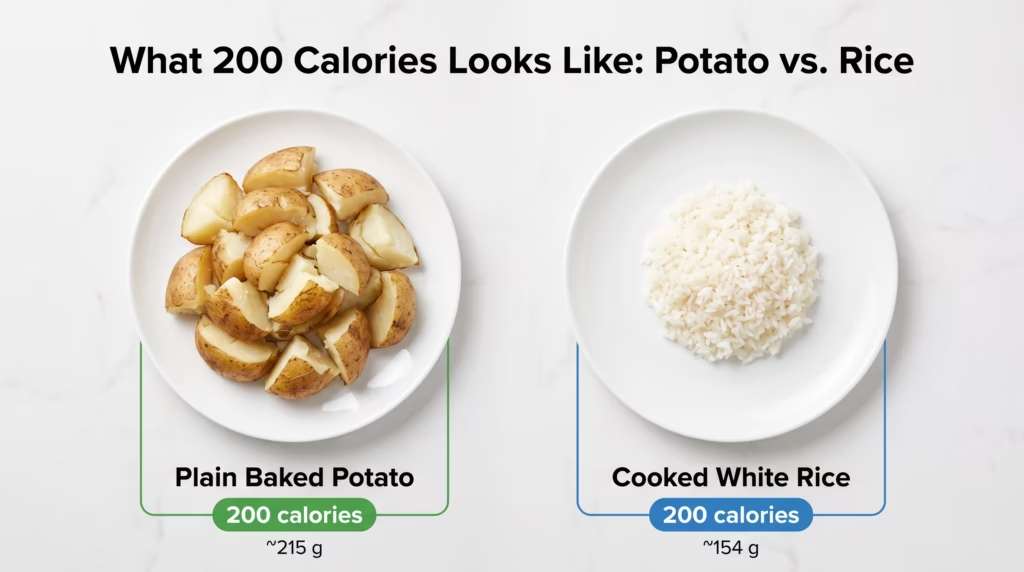
For about 200 calories, you can eat about 215 grams of plain baked potato compared to only 154 grams of cooked white rice.
That extra food volume might not sound very exciting on a nutrition label. But it’ll feel a lot more exciting when you’re hungry at 7 p.m.
And after more than 20 years of coaching people through fat loss, this is usually how I look at foods like these:
When calories are equal, I’ll generally prefer the food that lets you eat more and feel fuller.
And that’s usually the potato.
Especially when someone tells me, “I’m hitting my calories, but I’m starving by the end of the day.”
At that point, I’m not looking for some secret fat-burning food. I’m looking for ways to make their calorie deficit feel like less of a hard diet.
Potatoes Tend to Be More Filling Than Rice
Potatoes also have another advantage: they tend ot be harder to eat in large amounts when they’re prepared simply.
Potatoes contain more water and have lower energy density. So you’ll get more food volume for the same calories. Cooked rice is more energy dense, so it packs more calories and carbohydrates into a smaller portion.1
There’s also an older study that helps explain why potatoes have such a strong reputation for keeping people full.
In the original 1995 Satiety Index study published in the European Journal of Clinical Nutrition, boiled potatoes ranked highest among the 38 foods tested, scoring 323% compared with 138% for white rice. Both foods were tested in equal-calorie portions, with white bread used as the 100% reference point.
In plain English, the potato portion produced a much stronger feeling of fullness than the same calories from white rice.2
Researchers have seen this difference show up in actual meals…
STUDY SAYS:
A 2018 randomized crossover study published in Nutrients had 14 healthy adults eat mixed meals containing the same 45 grams of carbohydrate from potatoes, rice, or pasta. That required 337 grams of potato versus 142 grams of rice, and the potato meal left participants less hungry, fuller, more satisfied, and wanting to eat less over the next three hours.3
A 2024 randomized crossover study published in The Journal of Nutrition found that 26 healthy adults ate 23–25% fewer calories during meals built around potatoes instead of rice.
Their total calorie intake was also 13–16% lower across the potato meal and a later test meal, suggesting potatoes may make it easier to naturally eat less in the short term.4
That doesn’t prove you’ll automatically lose more weight eating potatoes. But it helps explain why potatoes can be a useful tool when hunger is what makes your diet hard to stick to.
Filling foods are a smart first step, but some people still struggle with hunger while cutting calories. BioTRUST’s GLP-1 Companion Stack is one option I like because it supports healthy appetite and fullness signals while also helping support lean muscle during weight loss.
A 3-part daily stack designed to support people using GLP-1 medications or losing weight naturally. It combines muscle, protein, collagen, and appetite support to help you maintain a healthier body composition as you lose weight.
- Natural GLP-1 Support: Helps support healthy appetite signals, fullness & metabolic function
- Lean Muscle Support: Helps preserve muscle, strength & healthy body composition during weight loss
- High-Protein Collagen: Adds 20 g of protein with 5 collagen types to help support daily protein intake
- Skin, Joint & Hair Support: Provides collagen peptides to support skin elasticity, joints, hair & nails
- 3-Part Weight-Loss Support: Combines muscle, protein/collagen & appetite support in one simple daily stack

So Is Rice Bad for Weight Loss?
Nope. Not at all.
You can still lose plenty of weight while eating rice. And if you prefer rice, measure portions well and aren’t walking around hungry all day… then there’s no reason you have to replace it.
The difference is that rice gives you less physical food for the same calorie budget.
And that’s why I’d usually start with potatoes for somebody who’s struggling with hugner or tiny-looking portions.
But there’s one big condition here:
We’re comparing plain potatoes with plain rice.
Once you start frying the potatoes, roasting them in a bunch of oil, or piling on butter, cheese, and sour cream… then their weight-loss advantage goes away.
STUDY SAYS:
In a 2008 randomized study published in the European Journal of Clinical Nutrition, boiled potatoes were more filling than French fries even when both meals provided the same calories. That’s a good example of how frying can reduce the satiety advantage you get from eating potatoes in a simpler form.5
And that’s where this comparison gets a whole lot more interesting.
How to Cook Potatoes and Rice for Weight loss (Most Ruin Both)
When it comes to potatoes vs. Rice for weight loss, how you prepare them can matter more than which one you pick.
A plain potato has a great calorie density advantage. You’ll get a lot of food for relatively fewer calories.
But once you turn that potato into a french fry and cover it with oil, butter, cheese, and sour cream, then the math will change really fast.
Adding fat, salt, and highly palatable toppings can also make potatoes much easier to overeat. Researchers sometimes call foods with certain combinations of fat, sugar, carbohydrates and sodium hyperpalatable because those combinations can encourage higher intake.6
Rice works the same way.
Plain steamed rice is one thing, but fried rice, buttery pilaf, or an oversized restaurant scoop will give you a completely different calorie load.
Added Fat Can Erase the Potato Advantage Fast
If fat loss is your goal, then the best potato preparations are to keep it simple:
- boiled
- baked
- microwaved
- air-fried with a little added oil
- mashed without a lot of butter or cream
For rice stick I’d mostly stick with steamed, boiled, plain, or lightly seasoned versions.
I cook mine in a rice cooker. It keeps portions consistent without babysitting a pot on the stove.
Now the reason isn’t that these cooking methods somehow make the starch magically fat burning; they just keep extra calories from sneaking in.
One tablespoon of cooking oil adds roughly 120 calories, and a tablespoon of butter adds about 100 calories. Compare that with 100 grams of plain baked potato, which has only about 90 calories.7
Then pour a tablespoon of oil over the potato, and you’ve already more than doubled the calories without making the serving any bigger.
Add butter too. And what originally started as a very low-calorie, high-volume food has now suddenly pushed closer to 300 calories.
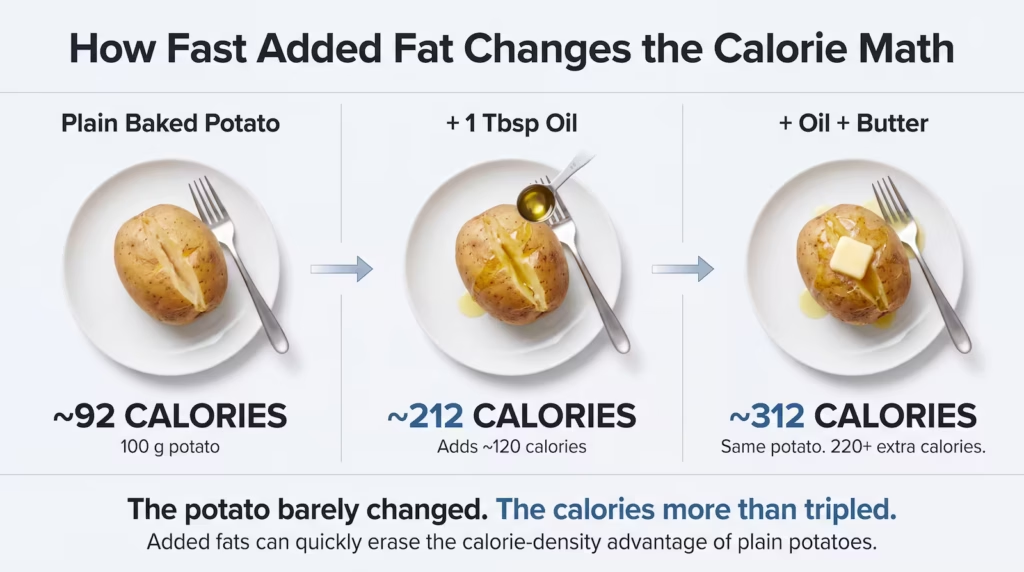
That’s one of the easiest ways to accidentally erase the potato’s biggest weight-loss advantage.
Frying Takes It to Another Level
French fries are still potatoes, but nutritionally they’re a totally different food from a plain boiled or baked potato.
During deep frying, potatoes lose water and absorb oil, which packs far more calories into each gram. A 2023 review published in Potato Research found that fried potato products become considerably more energy-dense as their water content falls and added oil increases.8
High-heat frying can also increase oxidation of cooking oils, which I break down in my guide to seed oils.
That’s a good example why I wouldn’t love potatoes in one category…
A plain baked potato can be hard to overeat.
But a basket of crispy fries? Now that’s a totally different story.
Rice can run into the same problem…
A measured serving of steamed white rice can fit into a fat loss diet just fine, but fried rice, buttered rice, and pilaf made with added oil pack way more calories into what basically looks like the same side dish.
So when you’re comparing potatoes and rice, make sure that you’re actually comparing…
plain potato vs plain rice
and not:
plain potato vs restaurant fried rice
Those are completely different comparisons.
Best Way to Cook Potatoes for Dieting
The healthiest way to cook potatoes is in their whole, single-ingredient form. So plain baked, boiled, or microwaved potato.
This will preserve their natural water and fiber content. And that’s what is going to be very beneficial for increasing satiety and helping you stay feeling fuller on fewer calories.
Avoid adding heavy fats to them. You may have seen on social media to add the “good butter” to baked potatoes. But adding heavy fats like butter, cooking oils, sour cream, or high-fat cheese will heavily concentrate the meal’s calories.
Be sure to eat the skin for fiber and physical bulk. The skin contains most of the fiber, which physically stretches the stomach to trigger natural fullness signals and keep your appetite in check.
Potato skins help, but eating fewer calories can still leave a fiber gap across the rest of your day. BioTRUST Ageless Multi-Fiber combines six different fiber sources to support fullness, digestion, and regularity without relying on just one type.
A 6-fiber daily blend designed for adults 40+ to support regularity, gut health, and a healthier microbiome. Each serving provides 6g of fiber, including clinically studied resistant starch, in a gentle formula made for everyday use.
- 6-Fiber Blend: Combines soluble, insoluble, fermentable fiber & resistant starch for more complete digestive support
- Gut Microbiome Support: Helps feed beneficial gut bacteria and supports healthy microbial balance
- Regularity & Digestive Comfort: Supports healthy stool consistency and everyday digestive regularity
- Clinically Studied Resistant Starch: Provides 3.5g of Solnul® resistant potato starch to support gut barrier & metabolic health
- Gentle Daily Formula: Uses slow-fermenting, well-tolerated fibers designed to minimize gas & bloating

You can easily top the potato with low-calorie options like ketchup or salsa. Here’s a simple way I usually cook potatoes…
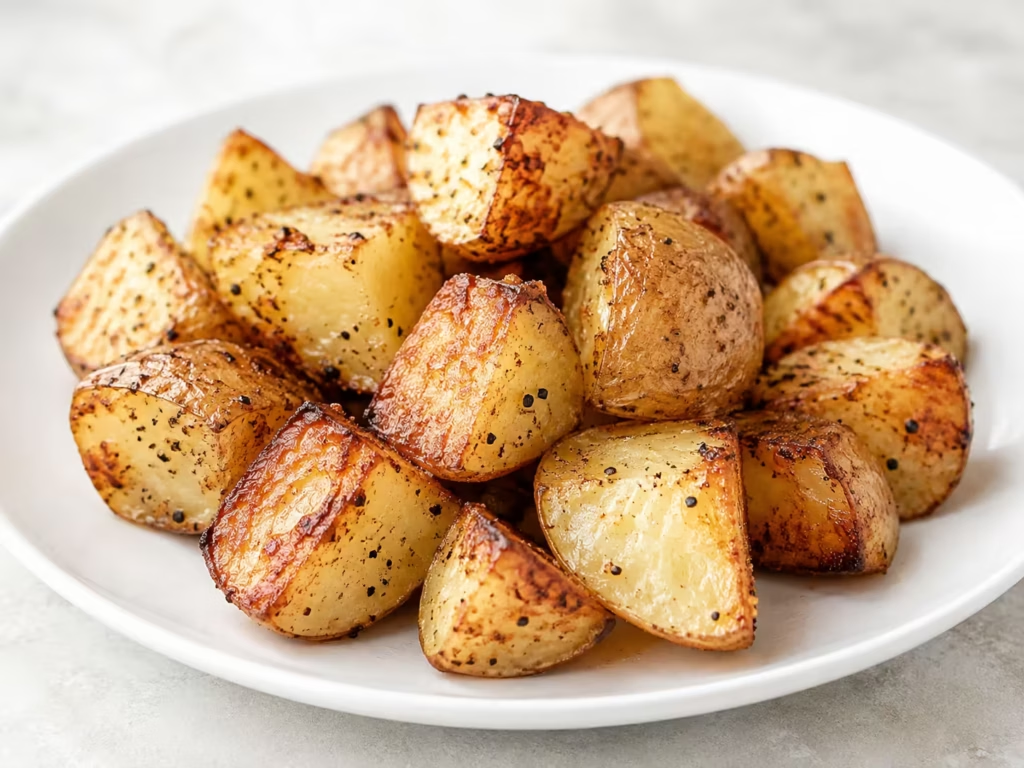
Air-Fryer Potatoes
Ingredients
- ~450 g potatoes, cut into evenly sized chunks
- Avocado oil or extra virgin olive oil spray
- Salt
- Black pepper
Instructions
- Preheat your air fryer to 400°F.
- Wash the potatoes and cut them into roughly 1-inch chunks so they cook evenly. Pat them dry well with a clean towel or paper towel.
- Add the potatoes to a large bowl. Spray with just enough avocado oil to lightly coat the pieces, then season with salt and black pepper. Toss well.
- Arrange the potatoes in the air fryer basket in a single layer with a little space between them. Avoid overcrowding.
- Air fry at 400°F for about 18–22 minutes.
- Shake the basket or flip the potatoes halfway through cooking, around the 10-minute mark.
- Remove when they’re golden and crisp on the outside and easily pierced with a fork inside.
Note: Cooking time will vary based on the potato variety, piece size, air fryer model, and how full the basket is. Start checking around 18 minutes and add a few more minutes if needed.
A basket-style air fryer works best for this recipe. I like one with at least a 5 to 6 quart capacity, since that fits enough potatoes for two people without crowding the basket.
Trainer Josh Tip: You don’t need to soak these in oil to get them crispy. A light spray is enough, which lets you keep most of the potato’s calorie-density advantage while still getting that roasted, crispy texture.
Don’t Let the Glycemic Index Pick Your Carb for You
Potatoes can get a bad rap because they score pretty high on the glycemic index. And that’s totally true, but the glycemic index is not a score for how fattening a food is.
It actually measures the blood sugar response to a set amount of carbohydrates from food under controlled conditions, but that response can change a lot depending on the potato or rice variety, how it’s cooked, portion size, and what else you eat with it.
And that last part matters a lot more than you think…
Most people aren’t sitting down eating a bowl of plain potatoes on an empty stomach as their entire meal; you’re probably eating them with chicken, steak, fish, vegetables, and other foods.
And mixed meals don’t necessarily behave the same way as an isolated carbohydrate on a glycemic index chart.
That same 2024 crossover trial shows why I wouldn’t choose a carb based on glycemic index alone. When potatoes and rice were eaten as part of meals containing protein, post-meal glucose after instant mashed potatoes was similar to rice during the main testing period, while glucose after the later meal was lower following the potato meals.4
When researchers served potatoes or rice as part of meals containing protein, potato meals did not behave the way you’d expect if you simply measured “higher GI = worse choice.”
Instant mashed potato meals produce favorable post-meal glucose responses compared with rice in important measurements, all while participants who ate fewer total calories with potato meals.
But that’s not to say blood sugar doesn’t matter.
It means glycemic index by itself is a lousy shortcut for deciding which food is better for fat loss.
So if someone throws a GI chart at me and says I should pick rice over potatoes because of one number, then that’s just not enough to change my recommendation.
For weight loss, I’m much more interested in:
- How many calories are you eating?
- How filling is the meal?
- And can you actually stick with it?
Glycemic load is a little more useful than glycemic index because it also considers how much carbohydrate you actually eat, but neither number will tell you exactly how a mixed meal will affect your blood sugar.
THE BOTTOM LINE:
Potatoes and rice work both perfectly well for fat loss, but the trick is keeping the preparation simple enough. That added calories don’t overwhelm the food you originally started with.
If you’re choosing potatoes… boiled, baked, microwaved, or lightly air-fried are your best bets. And if you’re using rice, then plain steamed or boiled rice will make portion tracking a lot easier.
Potatoes usually keep their advantage when they’re plain, and rice can stay competitive when it’s measured and not swimming with added fats.
Want more foods that make fat loss easier? I put my go-to picks in the free cheat sheet below.
How Much Potato or Rice Should You Eat for Weight Loss? (A Simple Plate Formula)
Don’t start by asking “how much rice am I allowed to eat?” if you’re trying to lose weight. Instead, build the meal in order.
Protein first. Vegetable second. Then use rice or potatoes to fill the calorie budget with what you have left to work with.
That’s the simplest way I know to make a meal work without turning your entire dinner into a math problem.
Start With Protein and Vegetables
For most meals, I’ll usually start with about 5-6 ounces of lean protein like chicken, fish, turkey, or lean beef.
Then I’ll add a large serving of vegetables.
This is what gives you a solid base of protein, fiber, and food volume before you even start adding the starch.
Then rice and potatoes become the adjustable part. Starch is a piece you’ll move up or down depending on your calorie target, hunger, and activity level.
If you’re not sure what your daily calorie target should be, use my calorie calculator to estimate how many calories you need for weight loss.
Add About 150-250 Calories of Rice or Potatoes
150 to 250 calories of rice or potatoes is a reasonable place to start for a typical calorie-controlled dinner. Not a rule but a starting point.
But you’ll probably stay closer to the lower end if your daily budget is smaller or if you eat starch at several other meals. If you’re larger, more active, or have more calories to work with, then you may have room for more.
The important thing is that the serving fits your total calorie target instead of trying to force everything into the same “correct” portion.
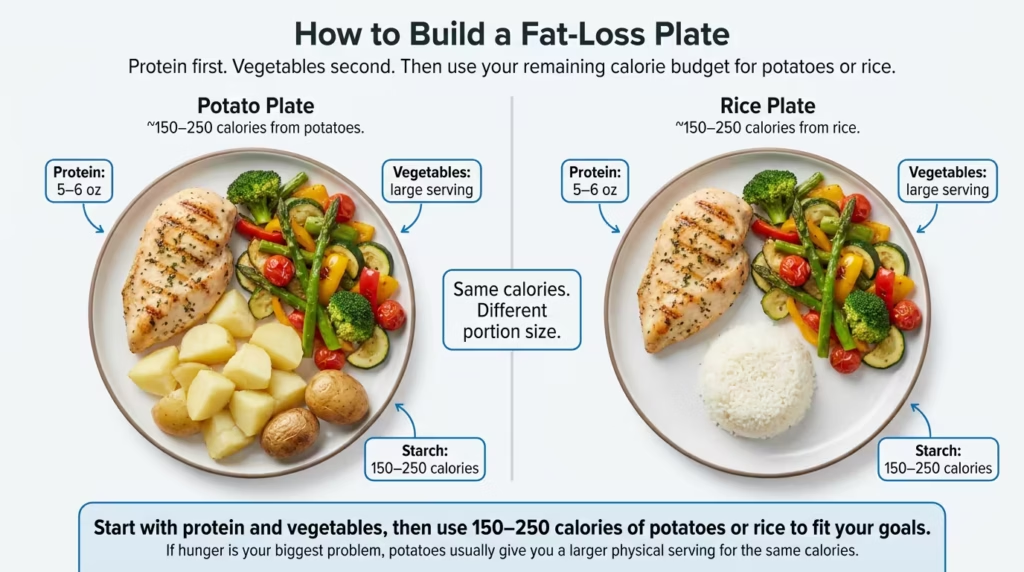
And use the plain preparations we already covered. Otherwise, added oils, butter, cheese, and sauces can jack up the calories fast.
Compare Equal Calories, Not Equal Grams
Now this is where potatoes and rice start to look very different…
If you’re trying to decide which one works better for a calorie deficit, then comparing 150 grams of rice with 150 grams of quahitos won’t tell you very much. This is because they don’t have the same calorie density.
Instead, compare the same calorie budget with what it actually buys you. Here’s what the same calorie budget looks like using cooked white rice9 and plain baked potato.10
| Calorie Budget | Cooked White Rice | Plain Baked Potato |
|---|---|---|
| 150 calories | ~115 g | ~160 g |
| 200 calories | ~154 g | ~215 g |
| 250 calories | ~192 g | ~270 g |
Amounts are approximate. Cooked rice weight can vary depending on the variety and how much water it absorbs during cooking. Nutrition values are based on USDA FoodData Central cooked-weight references.
For example, at 200 calories, you’ll be looking at about 154 grams of cooked white rice against about 215 grams of a baked potato.
This is the same idea behind Volumetrics. Lower-calorie-density foods let you put more food on your plate for the same calories. That’s exactly what you’re seeing here with potatoes versus rice.11
That’s going to be a noticeably larger serving of potatoes for the same number of calories. And that’ll be the comparison that really matters when you’re standing in the kitchen trying to make dinner fit your diet. Especially when you’re really hungry.
Potatoes or Rice: Which Should You Pick?
Now, this time I would stop just looking at the nutrition charts and start looking at the person…
If hunger is what’s making one of my clients struggle with their diet, then I’ll usually start them with potatoes.
This bigger serving can make the meal feel more substantial without pushing their calories higher. But if they love rice, already control their portions well, and aren’t walking around hungry all day, then I’m not going to make them switch to potatoes just because they win on calorie-density.
Rice can fit perfectly well. If it sits better with your stomach or is easier for you to prepare consistently, that’s a good reason to keep it.
But if you’re tracking calories, make sure you measure your rice instead of eyeballing it. Rice packs more calories into a smaller amount of food, so a slightly bigger scoop can add calories faster than the same amount of potato.
The key is just to be consistent about whether you’re weighing it cooked or dry. And make sure that the nutrition entry you’re logging matches.
I weigh servings on a kitchen scale instead of trusting measuring cups. It matches the gram amounts in the table above and removes the guesswork.
When Should You Change the Portion?
Your starch serving isn’t supposed to stay exactly the same forever.
A few things can change how much makes sense for you:
- Your calorie target: A larger calorie budget gives you more room for rice or potatoes.
- Your activity and training: Harder or higher-volume training days may give you a reason to put more of your calories toward carbs.12
- Your meal frequency: If you eat three meals a day, each meal can usually handle a larger starch serving than if you eat five or six.
- Your hunger: If you’re constantly hungry between meals, try shifting more of your starch calories toward potatoes before automatically cutting the serving smaller.
You don’t need a perfect serving size, but you do need a serving that fits your calories and leaves you satisfied enough to stick with the plan long term.
THE BOTTOM LINE:
Start with protein and vegetables, then use rice and potatoes to fill your calorie budget with what you have left.
For most people, 150 to 250 calories of starch is a practical starting range, but that’s not a hard-and-fast rule.
If hunger is your biggest problem, potatoes will usually give you more food for those calories. If you love rice and control portions easily, keep eating rice.
The best choice is the one that fits your calories and makes a diet easier to stick to.
Once your portions are dialed in, remember that weight loss is not only about making the scale drop. The GLP-1 Companion Stack also includes creatine, HMB, and protein support to help maintain strength and lean muscle while calories are lower.
A 3-part daily stack designed to support people using GLP-1 medications or losing weight naturally. It combines muscle, protein, collagen, and appetite support to help you maintain a healthier body composition as you lose weight.
- Natural GLP-1 Support: Helps support healthy appetite signals, fullness & metabolic function
- Lean Muscle Support: Helps preserve muscle, strength & healthy body composition during weight loss
- High-Protein Collagen: Adds 20 g of protein with 5 collagen types to help support daily protein intake
- Skin, Joint & Hair Support: Provides collagen peptides to support skin elasticity, joints, hair & nails
- 3-Part Weight-Loss Support: Combines muscle, protein/collagen & appetite support in one simple daily stack
Potatoes vs. Rice for Weight Loss: Which Should You Actually Pick?
I’d start with potatoes for most people who are trying to lose weight.
Not because rice is bad. Potatoes just give you more food for your calories. And that can make hunger a lot easier to manage when you’re trying to stay in a calorie deficit.
Because potatoes belong to the nightshade family, their natural glycoalkaloids may irritate the gut or worsen increased intestinal permeability in people with inflammatory bowel conditions or self-reported nightshade sensitivity.13
Some individuals report bloating or digestive discomfort after eating nightshades, but evidence on specific nightshade intolerance is limited.14 If this applies to you, then consider swapping them for non-nightshade starches like sweet potatoes or yams.
White rice is a staple low-FODMAP carbohydrate that’s recommended for those with Irritable Bowel Syndrome (IBS) or sensitive systems.
Choose potatoes more often if:
- Hunger is what keeps breaking your diet
- You like eating larger portions
- You want the most food volume for your calorie budget
- You enjoy potatoes without loading them with butter, oil, cheese, or other calorie-dense toppings
Choose rice if:
- You strongly prefer it
- You already control your portions well
- It fits the meals you eat regularly
- Rice simply sits better with your stomach
- You want a more compact carb source around longer or higher-volume training
And that last point is important because the “better” carb isn’t always the one with the lowest calorie density.
Sometimes the better choice is going to be the one that fits your appetite, training, digestion, and routine without making the diet harder to follow.
And remember, this whole comparison is just about plain potatoes vs plain rice. Once you start deep-frying potatoes or adding lots of butter, oil, cheese, or sauces… then the calorie differences change really fast.
THE BOTTOM LINE:
My pick for most people trying to lose weight is potatoes.
They’ll give you more portion size and more fullness for the same calories. And that can be a big advantage if hunger is the thing making your diet hard to stick to.
But if you love rice, can control your portions easily, and it fits your meals better… then keep eating rice.
Neither one of them is going to burn fat on its own. The better choice is the one that helps you stay within your calories without making the diet harder than it needs to be.
References
- Robinson E, et al. “Calorie Reformulation: A Systematic Review and Meta-Analysis Examining the Effect of Manipulating Food Energy Density on Daily Energy Intake.” International Journal of Behavioral Nutrition and Physical Activity. 2022.
- Holt SHA, et al. “A Satiety Index of Common Foods.” European Journal of Clinical Nutrition. 1995.
- Zhang Z, et al. “Subjective Satiety Following Meals Incorporating Rice, Pasta and Potato.” Nutrients. 2018.
- Amr AM, et al. “Potatoes Compared with Rice in Meals with Either Animal or Plant Protein Reduce Postprandial Glycemia and Increase Satiety in Healthy Adults: A Randomized Crossover Study.” The Journal of Nutrition. 2024.
- Leeman M, et al. “Glycaemic and Satiating Properties of Potato Products.” European Journal of Clinical Nutrition. 2008.
- Fazzino TL, et al. “Hyper-Palatable Foods: Development of a Quantitative Definition and Application to the US Food System Database.” Obesity. 2019.
- USDA Agricultural Research Service. “FoodData Central.”
- Haverkort AJ, et al. “On Processing Potato. 4. Survey of the Nutritional and Sensory Value of Products and Dishes.” Potato Research. 2023.
- USDA Agricultural Research Service. “Rice, White, Long-Grain, Regular, Enriched, Cooked.” FoodData Central.
- USDA Agricultural Research Service. “Potatoes, White, Flesh and Skin, Baked.” FoodData Central.
- Rolls BJ. “Dietary Energy Density: Applying Behavioural Science to Weight Management.” Nutrition Bulletin. 2017.
- Thomas DT, et al. “Nutrition and Athletic Performance.” Medicine & Science in Sports & Exercise. 2016.
- Kuang R, et al. “Nightshade Vegetables: A Dietary Trigger for Worsening Inflammatory Bowel Disease and Irritable Bowel Syndrome?” Digestive Diseases and Sciences. 2023.
- Lacy BE, et al. “Management of Chronic Abdominal Distension and Bloating.” Clinical Gastroenterology and Hepatology. 2021.