
Your arms got leaner. Your face changed. Your legs finally look right in jeans. But your sides are stubbornly still there.
If you’ve been looking for how to get rid of side fat, then you’re probably not just looking for how to lose weight. You’ve already done that part, but you want to know why side fat has frustratingly hung on.
So I’ll tell you right now that you can’t reliably tell your body where to pull fat from. But what you can do is lower your overall body fat while building the muscle underneath and around the waist. For a lot of people, size can be one of the slower places to visibly change.
And the part that stings is when everything else shrinks first. The sides don’t just stay the same. They can start to look bigger by comparison. And you’re not imagining it, and that alone doesn’t mean your plan is broken. But that contrast can make it stand out even more.
I’ve watched clients drop two pant sizes and still stand in front of the mirror pinching the same spot and convinced they have wasted six months. But the progress they made so far has put them so much closer to finally slimming down the side fat.
So here’s the breakdown: why your sides are still there, whether it’s even fat you’re looking at, which exercises actually work, and what to do if that stubborn area still won’t budge.
How to Get Rid of Side Fat: The Quick Answer
Here’s the most important thing to know: there isn’t one magical exercise that burns the fat directly off your sides.
Side bends, Russian twists, side planks, and other oblique exercises strengthen the muscles underneath that area, but they don’t reliably cause your body to lose more fat from the tissue sitting on top. And if your goal is a smaller-looking waist, piling on lots of heavy oblique work isn’t always the best strategy either.
STUDY SAYS:
A 2022 systematic review and meta-analysis published in Human Movement analyzed 13 controlled studies with 1,158 men and women ages 14–71 and found no meaningful spot-reduction effect from training a specific body part (pooled effect size −0.03; 95% CI −0.10 to 0.05). In other words, exercising one area can strengthen the muscles there, but it doesn’t reliably make your body burn more fat from the tissue covering that area.1
If what you’re seeing is actually body fat, the main way to reduce it is to lower your overall body fat with a sustainable calorie deficit while strength training to protect your muscle. The exercises in this guide help by strengthening your core and the muscles around your waist while adding activity to your overall fat-loss plan.
For many people, the sides can be one of the slower areas to visibly lean out. That’s why you can be losing weight everywhere else and still feel like this one spot hasn’t budged.
You can also make your waist look narrower by building your shoulders, lats, glutes, and legs to create more contrast around the midsection even before every last bit of side fat is gone.
So here’s the plan: start with the workout below, then use the fat-loss strategy further down to make sure the results actually show up on your sides.
The 10-Minute Side Fat Workout: Target → Burn → Lose Overall
The best way to structure a side-fat workout is to train the muscles around your waist first, then immediately follow that work with exercises that burn more energy. This 10-minute protocol does that without turning into a giant oblique circuit.
Targeted exercise may temporarily increase local blood flow, temperature, and fat mobilization. That may improve the conditions for a small regional effect, but mobilized fat is not lost fat.
Released fatty acids still need to be oxidized for energy. An overall calorie deficit remains the main requirement for reducing body fat.
Train the muscles around the sides of your waist.
Immediately follow with higher-output exercise.
Maintain a calorie deficit so stored body fat decreases over time.
That order gives the exercises a purpose: train the target area first, increase your energy expenditure afterward, and let your overall fat-loss plan do the rest.
10-Minute Side Fat Workout
Phase 1: Target the Sides
4 minutesStart by creating a strong muscular demand through your obliques and surrounding core muscles. Keep the reps controlled and focus on feeling the sides of your waist working.
Phase 2: Burn
6 minutesNow move directly into more dynamic exercises that raise your heart rate and increase overall energy expenditure. The goal is continuous, controlled movement, not exhausting yourself with sloppy reps.
Have More Than 10 Minutes?
Follow the same structure with 5–10 minutes of targeted core work, then 20–30 minutes of cardio. Moderate intensity is a practical choice because the goal is to increase subsequent energy expenditure, not destroy yourself.
How Often Should You Do This Side Fat Workout?
Perform this workout 2–4 times per week.
Use it as a standalone 10-minute workout or as a finisher after a regular strength workout. More sessions do not automatically produce faster side-fat loss.
Key Takeaways
- Train the waist and core first, then immediately move into higher-output exercise.
- Any possible spot-reduction effect is small and secondary to overall fat loss.
- Perform the 10-minute workout 2–4 times per week while maintaining an overall calorie deficit.
The Bottom Line
Target your waist first, burn more energy afterward, and let your overall calorie deficit drive the fat loss.
Equipment Used in This Workout
You can do most of these exercises with your body weight. These three tools make the workout more comfortable and give you a few ways to progress without turning your home setup into a full gym.
Thick exercise mat
Adds cushioning for Side Planks, Side-Ups, Reach Throughs, and the other floor-based moves.
View matAdjustable dumbbells
Give you resistance for Dumbbell Woodchops and weighted progressions without needing a full rack.
View dumbbellsCore sliders
Make the advanced Cross-Body Mountain Climber progression smoother on carpet or hard floors.
View sliders10 Best Exercises for Side Fat
Jump to an Exercise
Click any exercise below to jump straight to the instructions.
Side-Ups
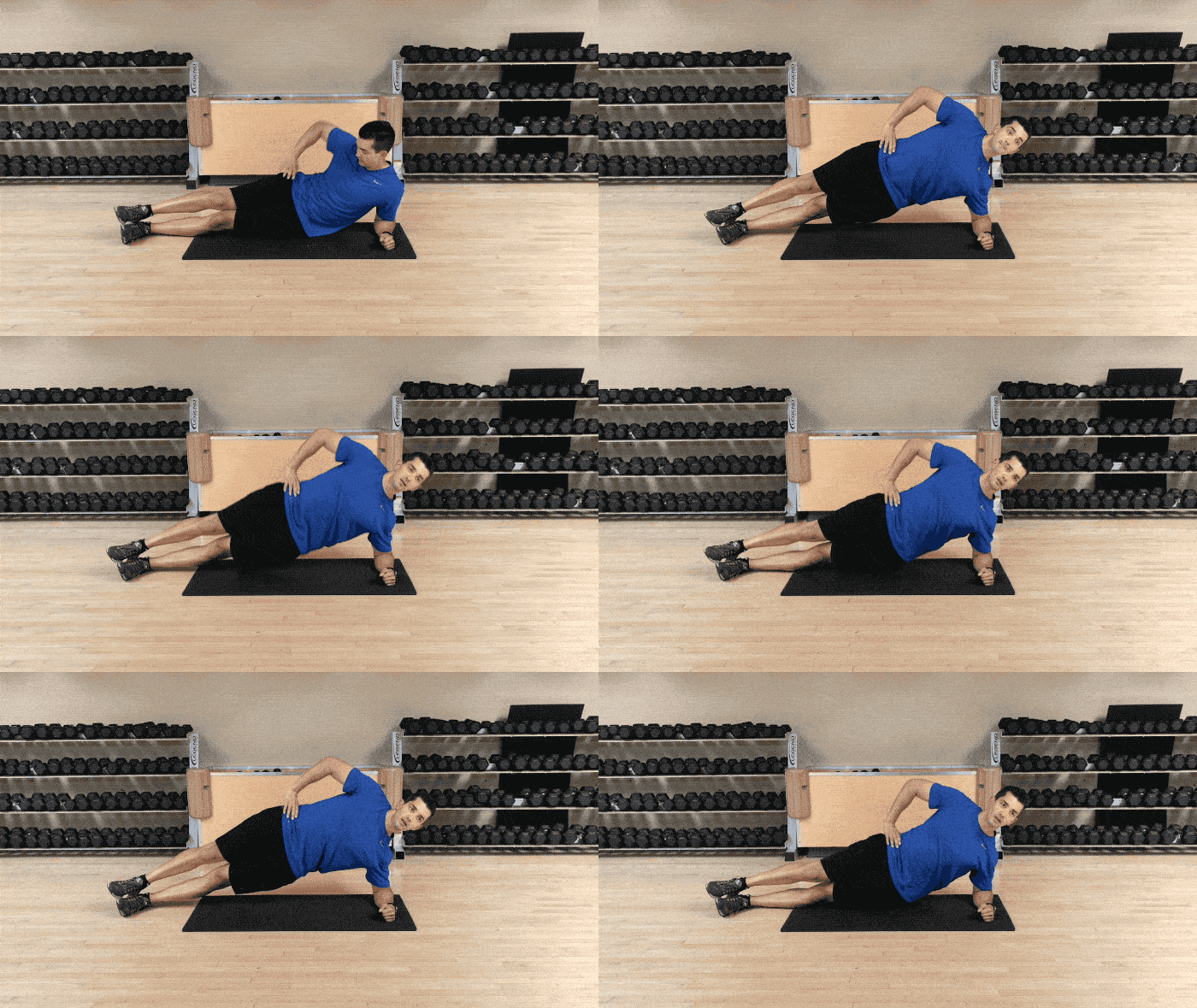
Side-ups combine a side plank with repeated hip movement, so your obliques have to stabilize your torso and actively lift your pelvis. They also train your deeper core and glutes to keep your body from collapsing or rotating, which carries over to walking, running, lifting, and one-sided movements.
Your obliques working along the side of your waist, with your glutes and shoulder stabilizers helping.
Pinching in your lower back or sharp pressure in your supporting shoulder.
Bend your bottom knee and keep it on the floor, or use a smaller range of motion.
Stack your feet, hold a dumbbell on your top hip, slow the lowering phase, or pause at the top.
Think about lifting your bottom-side ribs away from the floor instead of just shoving your hips upward. That keeps the movement in your obliques and helps prevent your lower back from taking over.
Avoid:
T-Stab Push-Ups
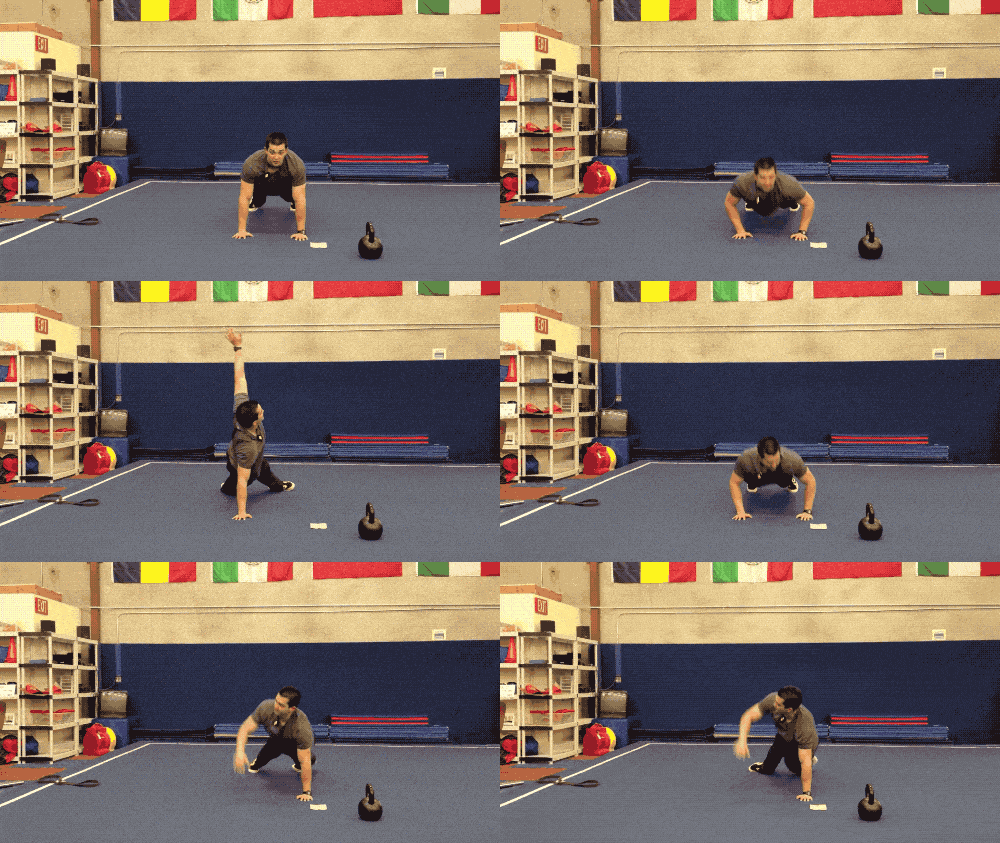
T-stab push-ups combine a push-up with a controlled rotation into a side-plank position, so your chest, triceps, and shoulders work while your obliques and deep core stabilize your torso. They also train you to resist unwanted twisting and control rotation.
Your chest, triceps, shoulders, obliques, and glutes working through the push-up and rotation.
Shoulder pinching, excessive lower-back strain, or your hips collapsing as you rotate.
Push up from your knees, elevate your hands, or practice alternating plank rotations without the push-up.
Bring your feet closer, slow the lowering phase, pause in the T-position, or add a light dumbbell.
Rotate your whole torso as one unit instead of flinging the top arm backward. Stack your shoulders and hips in the T-position while keeping your core braced.
Avoid:
Side Planks
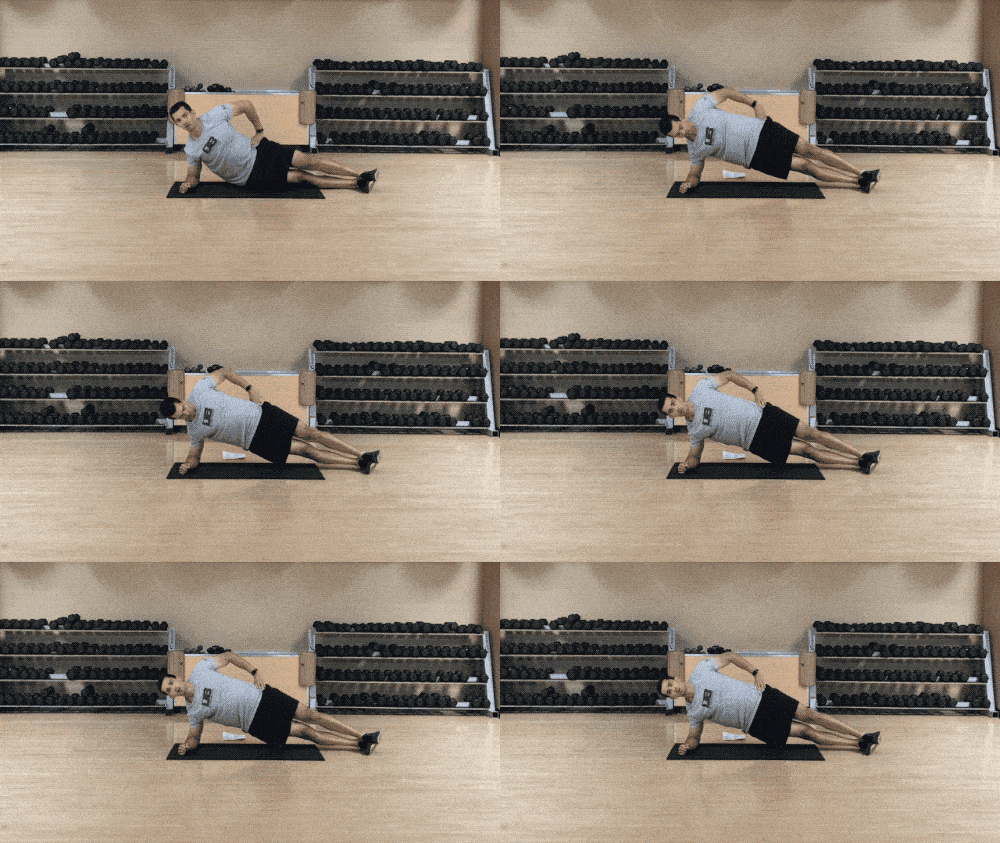
Side planks train your obliques, transverse abdominis, glutes, and shoulder stabilizers to keep your torso rigid against lateral bending. That makes them useful for building a stronger waist and improving stability for carrying, walking, running, and lifting.
Your obliques, glutes, and supporting-shoulder muscles working to hold you steady.
Lower-back pinching, sharp shoulder pain, or most of the tension in your neck.
Keep your bottom knee on the floor, stagger your feet, or shorten the hold.
Stack your feet, raise the top leg, reach overhead, add a light weight, or hold longer.
Push the floor away with your forearm while lifting your bottom-side ribs away from the ground. That keeps your shoulder active and puts more tension in your obliques.
Avoid:
Mermaid Crunches

Mermaid crunches train your obliques by shortening the distance between your ribs and hip while your pelvis stays relatively still. They also challenge the deeper core muscles that stabilize your torso during reaching, carrying, and side-bending.
Your obliques working as your ribs move toward your hip.
Your neck pulling, lower-back pinching, or momentum swinging your upper body.
Use a smaller range, bend your knees, or take more support from your bottom arm.
Straighten your legs, slow the lowering phase, pause at the top, or hold a light weight.
Think “rib to hip” instead of trying to lift your shoulder as high as possible. That keeps the movement in your obliques instead of your neck.
Avoid:
Dumbbell Woodchops
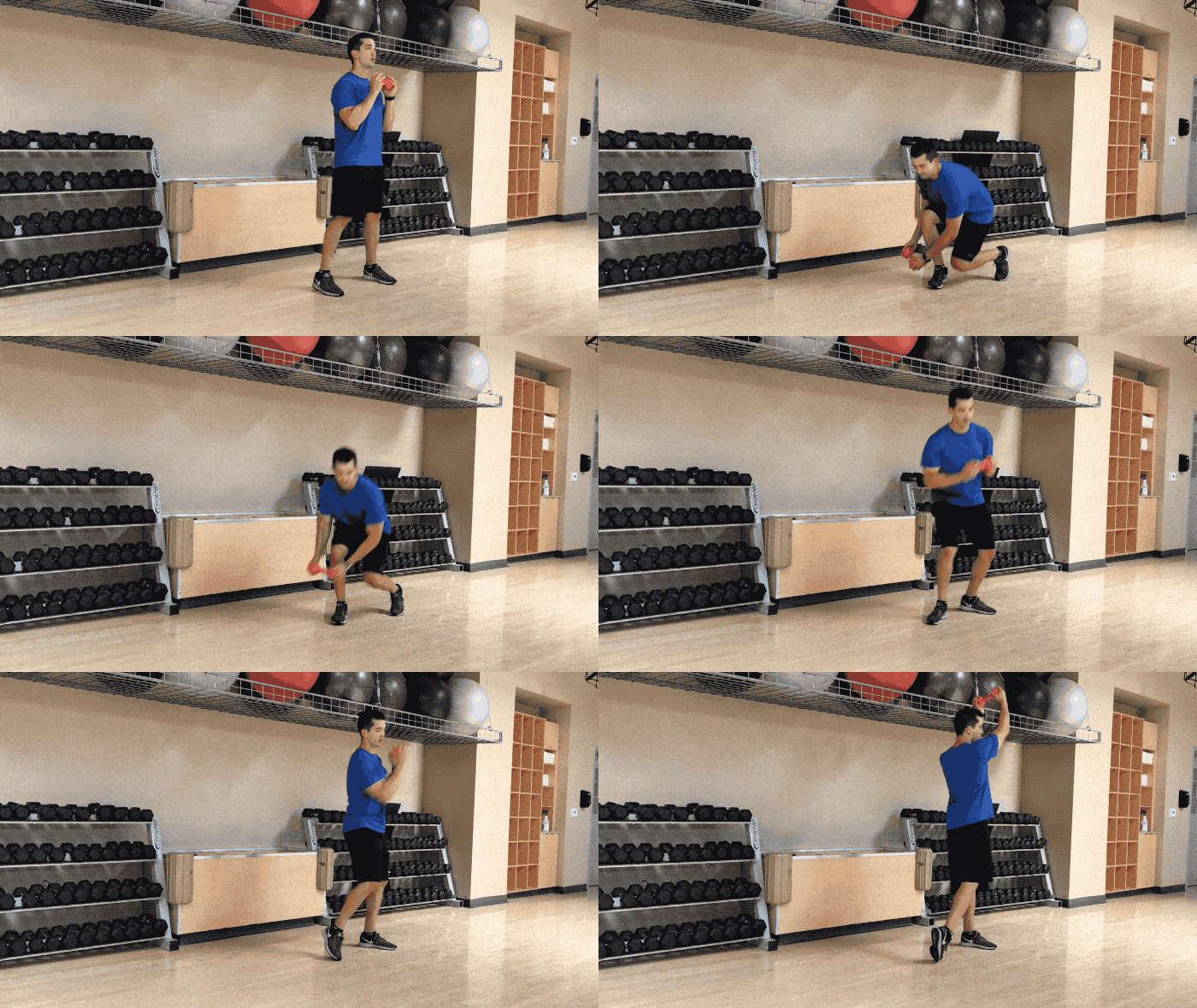
Dumbbell woodchops train your obliques, abs, shoulders, hips, and glutes together through a controlled diagonal rotation. They’re useful for sports and everyday movements like reaching, lifting, carrying, and turning.
Your obliques and abs controlling the rotation, with your hips, glutes, and shoulders helping.
Sharp twisting in your lower back or strain through your knees.
Use a lighter weight, shorten the range, or practice slowly without resistance.
Add weight you can control, slow the return, pause at the top, or use a split stance.
Let your hips and ribcage rotate together instead of freezing your hips and cranking through your lower back. Move the weight with your whole torso, not just your arms.
Avoid:
Rotating Planks
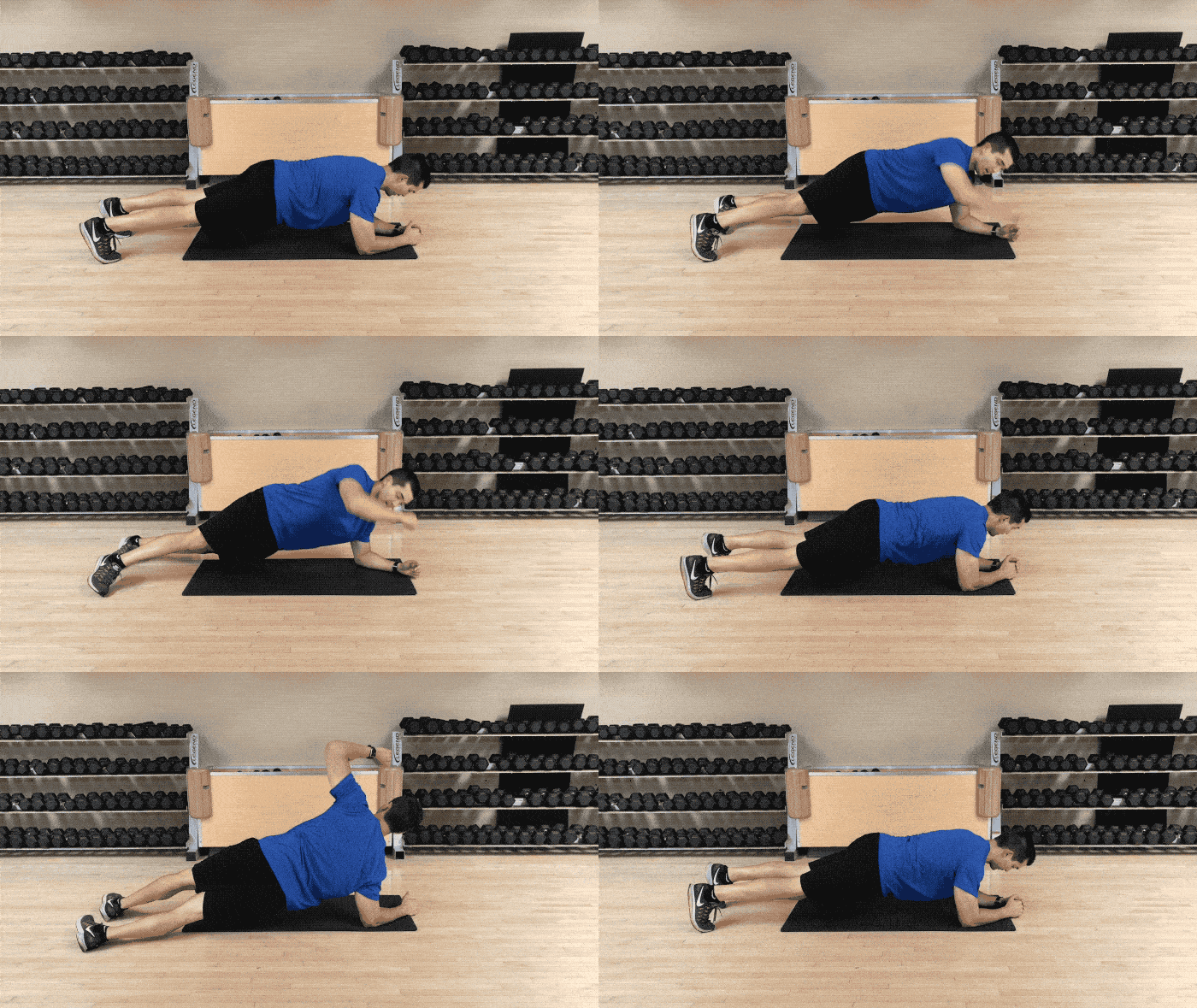
Rotating planks train your obliques and deep core to control rotation while your shoulders and glutes keep your body stable. They build the trunk control you use when reaching, turning, carrying, and changing direction.
Your obliques, abs, glutes, and shoulder stabilizers controlling the turn.
Lower-back pinching, sharp shoulder pain, or the moving arm creating all the momentum.
Widen your feet, use a smaller rotation, or elevate your hands on a bench.
Bring your feet closer, pause in the rotated position, slow each transition, or add a light dumbbell.
Rotate your ribcage and hips together instead of twisting only through your lower back. Push the floor away with your supporting shoulder.
Avoid:
Russian Twists
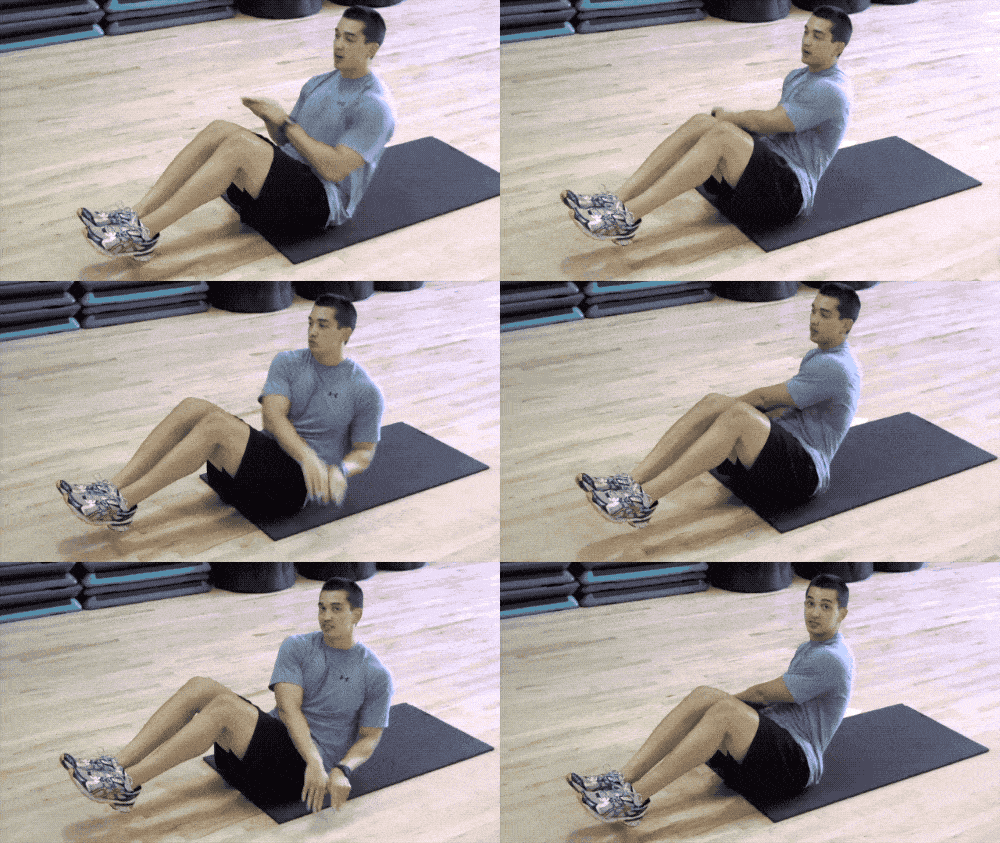
Russian twists train your obliques and abs to control rotation while your hip flexors and deeper core stabilize your torso. They can improve the rotational control you use when turning, reaching, carrying, and changing direction.
Your obliques and abs working to rotate and control your torso.
Lower-back strain or most of the work coming from your hip flexors or arms.
Keep your heels down, sit more upright, shorten the rotation, or remove the weight.
Lean back slightly farther, add a light weight, slow the rotation, pause at each side, or lift your feet only with control.
Rotate your ribcage, not just your hands. Keep the weight close and stop before your lower back starts twisting or rounding.
Avoid:
Reach Throughs
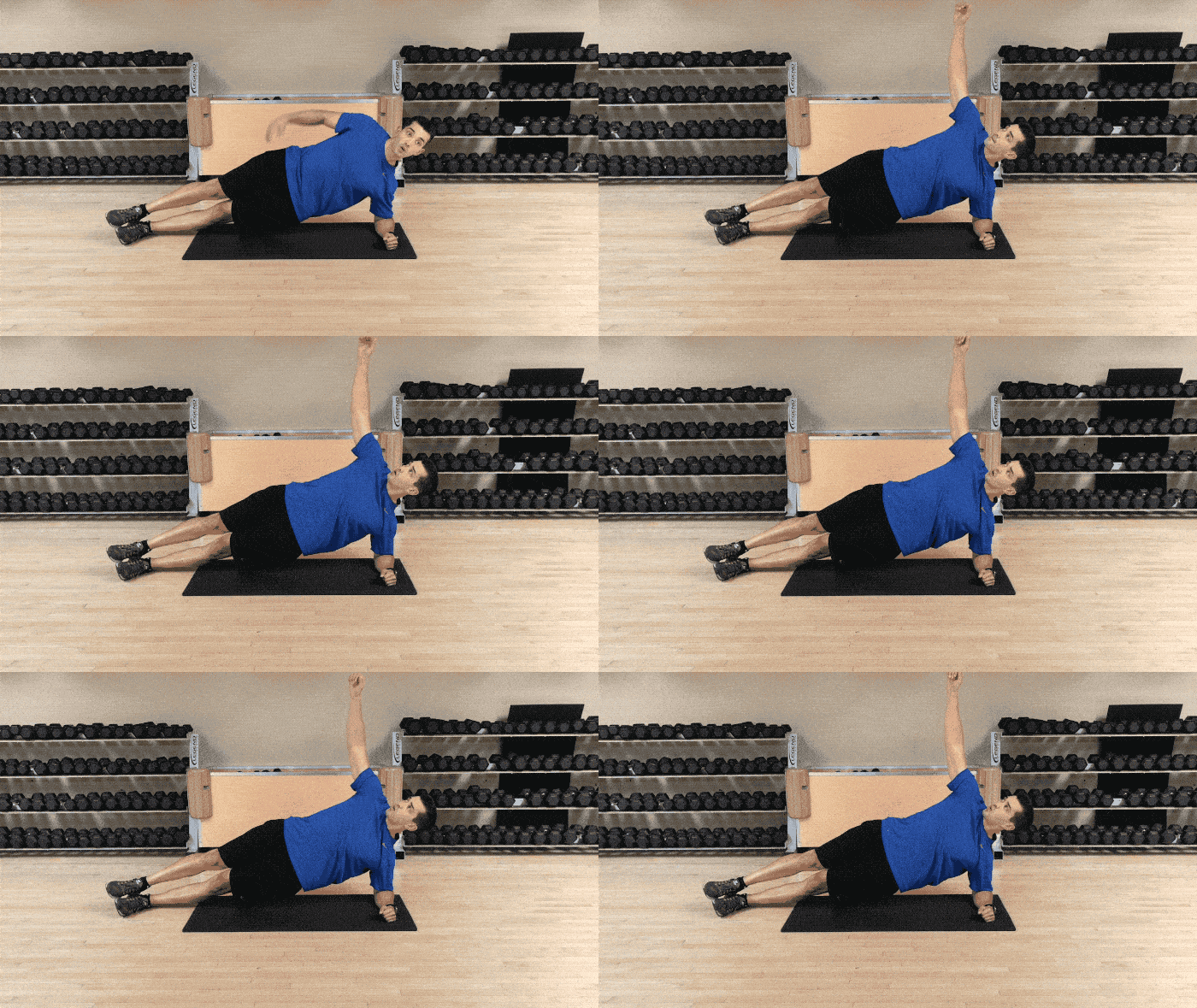
Reach throughs combine a side plank with controlled torso rotation, so your obliques stabilize your waist while your core guides the movement. Your shoulder and glutes also work to keep your body supported.
Your obliques working as you rotate, with your glutes and supporting shoulder keeping you stable.
Lower-back pinching, sharp shoulder pain, or your hips dropping with every reach.
Keep your bottom knee down, stagger your feet, or use a smaller rotation.
Stack your feet, pause at the end of each reach, slow the turn, or add a light dumbbell.
Reach underneath by rotating your ribcage, not by swinging your arm. Keep pushing the floor away so your shoulder stays strong and your hips stay lifted.
Avoid:
Cross-Body Mountain Climbers
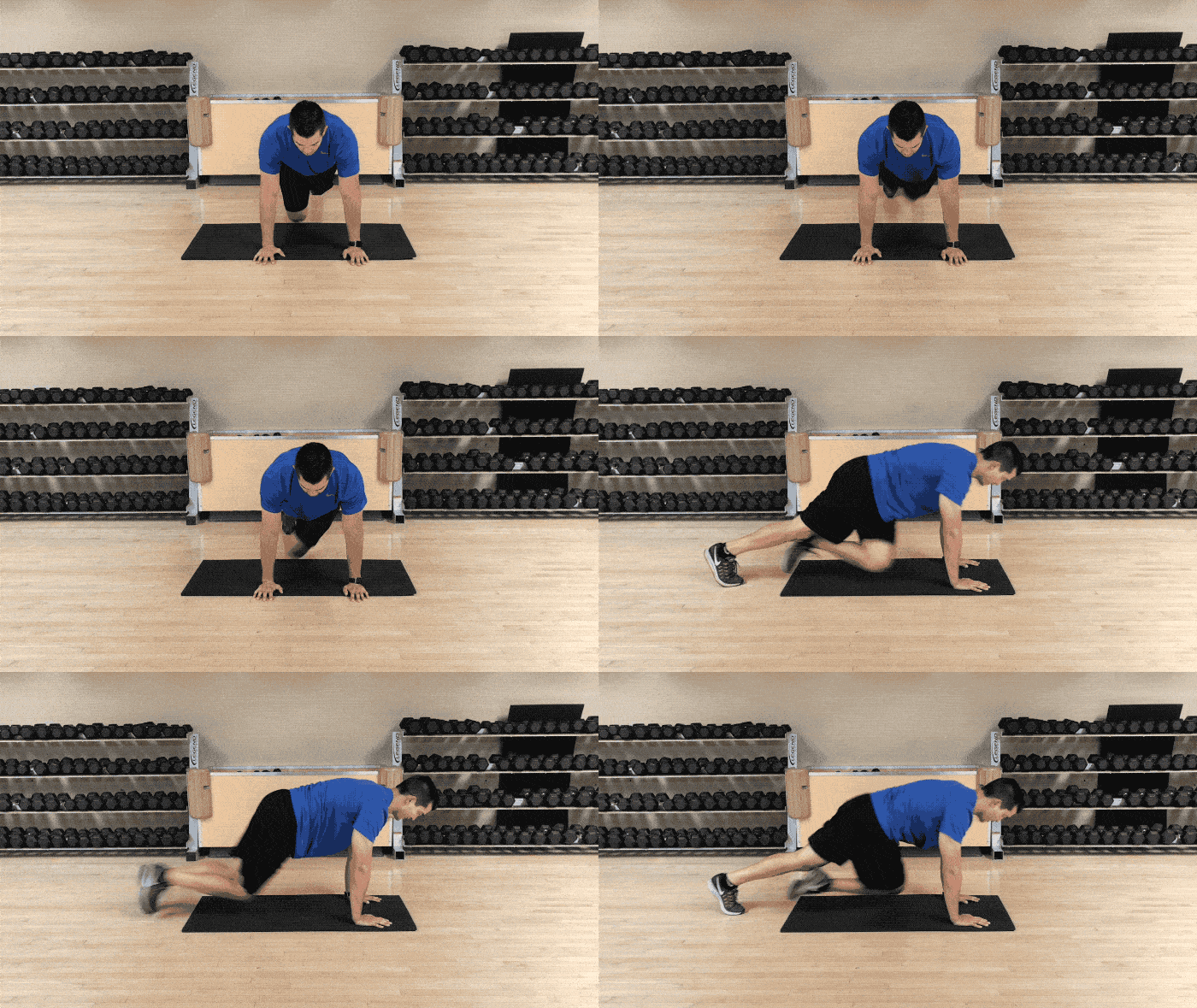
Cross-body mountain climbers train your abs and obliques while your shoulders and hips stabilize your body in a plank. They also raise your heart rate, so they work well as a core-conditioning move within a larger fat-loss or full-body workout.
Your abs and obliques pulling the knee across, with your shoulders and hip flexors stabilizing.
Lower-back pinching, excessive wrist pressure, or your hips bouncing with each rep.
Slow down, shorten the cross-body drive, or elevate your hands on a bench.
Increase the pace without losing control, pause across the body, use sliders, or extend the timed set.
Bring your knee toward the opposite ribcage instead of swinging your leg across. Keep your hips low and shoulders over your hands.
Avoid:
Reach Overs
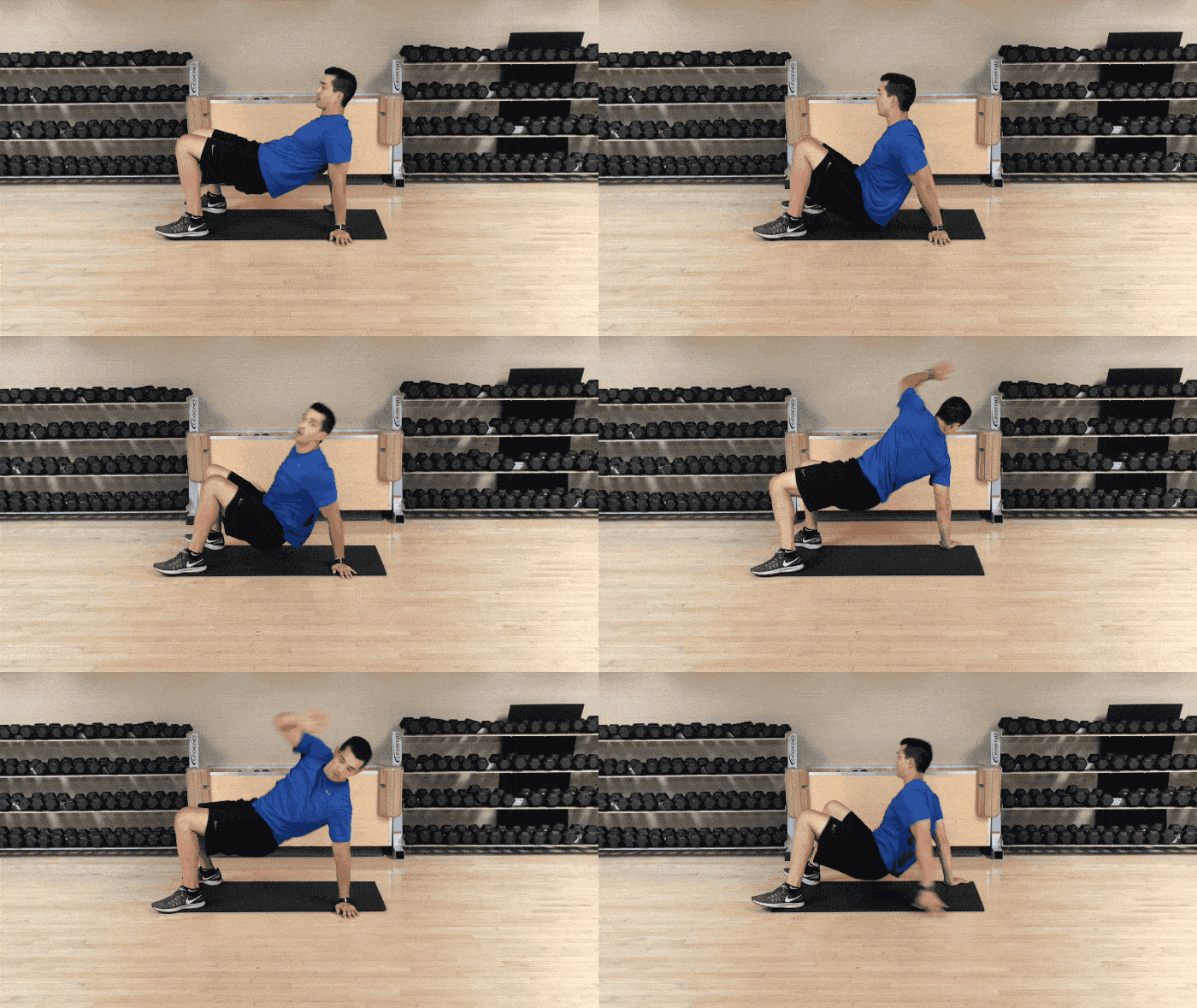
Reach overs combine a reverse bridge with a cross-body reach, so your glutes, hamstrings, shoulders, obliques, and upper back work together. They improve hip extension and rotational control for getting up, reaching, turning, and moving through the hips and shoulders.
Your glutes and hamstrings holding your hips up while your obliques, upper back, and shoulders control the reach.
Sharp wrist or shoulder pressure, lower-back pinching, or most of the motion coming from arching your spine.
Keep your hips lower, shorten the reach, slow down, or practice holding a reverse bridge first.
Lift your hips higher, reach farther, pause at the end, or slow the return.
Keep squeezing your glutes as you reach. Rotate through your upper back and ribcage instead of over-arching your lower back.
Avoid:
The workout and exercises above strengthen and tone the muscles around your waist. Here’s what actually gets the fat off them.
How to Actually Lose the Side Fat
The workout above strengthens the muscles around your waist. But the fat covering those muscles still comes off primarily through overall fat loss, not by simply training the muscles underneath it.1
That means staying in a consistent calorie deficit long enough for your body to eventually pull from the stubborn areas too.
The mistake I don’t want you making is seeing that last bit of side fat and deciding you need to slash calories even harder. The leaner you get, the more careful you need to be about preserving muscle, because a greater share of the weight you lose can come from lean tissue rather than fat.14
For a slower, more muscle-friendly cut, I’d generally rather see weight coming off around 0.5% to 0.7% of body weight per week than trying to force it off as fast as possible.15 Faster isn’t automatically better.
You can use my free calorie calculator to instantly find your daily calorie number to lose weight.
Keep your full-body strength training in place and get enough protein while you’re dieting. Around 1.6 to 1.8 grams of protein per kilogram of body weight per day is a solid target for supporting muscle retention while dieting.16
You can use my free protein calculator to instantly find your daily protein number to build and protect muscle.
Remember, you aren’t just trying to weigh less. You’re trying to lose the fat while keeping the muscle that gives your body shape.
Hitting that protein target can get harder as portions shrink, especially when your appetite is lower. BioTRUST’s GLP-1 Companion Stack combines convenient collagen protein with dedicated muscle-support nutrients, giving you a simple way to help support lean mass while dieting.
A 3-part daily stack designed to support people using GLP-1 medications or losing weight naturally. It combines muscle, protein, collagen, and appetite support to help you maintain a healthier body composition as you lose weight.
- Natural GLP-1 Support: Helps support healthy appetite signals, fullness & metabolic function
- Lean Muscle Support: Helps preserve muscle, strength & healthy body composition during weight loss
- High-Protein Collagen: Adds 20 g of protein with 5 collagen types to help support daily protein intake
- Skin, Joint & Hair Support: Provides collagen peptides to support skin elasticity, joints, hair & nails
- 3-Part Weight-Loss Support: Combines muscle, protein/collagen & appetite support in one simple daily stack

And you don’t need to punish yourself with endless HIIT because your sides are taking their sweet time. You also don’t need a ton of HIIT to get leaner. Higher volumes of intense cardio can add fatigue and make it harder to recover from your strength training. Walking and other low-intensity cardio are much easier to recover from.
I’d rather have you keep lifting, walk more, use cardio as a supplement, and get enough sleep to recover. When you’re dieting, cutting sleep short can shift more of the weight you lose away from fat and toward lean tissue.17
Walking is useful because it adds calorie expenditure without beating up your recovery, and keeping daily movement up (NEAT) can help offset the drop in spontaneous activity that often happens during a diet.
If getting your steps in is hard because you work at a desk or the weather keeps you inside, a UREVO Smart Walking Pad can make low-intensity movement easier to fit into the day. Keep the pace comfortable so it adds activity without turning into another hard workout.
Don’t chase the last inch off your waist by sacrificing the muscle that makes your physique look leaner in the first place.
To make your calorie deficit easier, grab my go-to filling, fat-loss-friendly foods in the free cheat sheet below.
One more thing before you build your whole plan around the exercises above: don’t expect them to burn fat specifically from your sides. Here’s why.
Can You Spot-Reduce Side Fat?
No, you can’t reliably spot reduce side fat by training the muscles underneath it.
Side bends, Russian twists, oblique crunches, and similar exercises can strengthen your core. But they won’t reliably make your body burn more fat from the tissue covering those muscles. You can target a muscle. You can’t reliably target the fat sitting on top of it.
The meta-analysis above found no meaningful spot-reduction effect from training a specific body part. Abdominal training studies show the same basic pattern: muscular strength and endurance can improve without extra fat loss from the area.
STUDY SAYS:
A 2011 randomized controlled trial published in the Journal of Strength and Conditioning Research had 24 healthy sedentary adults perform 7 abdominal exercises for 2 sets of 10 reps, 5 days per week for 6 weeks. The abdominal-training group improved curl-up endurance to 47 ± 13 reps versus 32 ± 9 reps in the control group, but showed no significant reduction in abdominal circumference, abdominal skinfolds, android fat, or overall body-fat percentage.10
So doing hundreds of side bends because you feel your obliques burn isn’t a good plan for shrinking the fat around your waist.
Spot Reduction Isn’t Completely Black and White
Localized exercise can affect nearby fat tissue. A few controlled trials have reported modest regional differences with specific exercise protocols, but the effects are small and inconsistent.11
STUDY SAYS:
A 2007 human study published in the American Journal of Physiology-Endocrinology and Metabolism found that one-legged knee-extension exercise increased blood flow and lipolysis in the subcutaneous fat next to the working muscle compared with the resting leg in 10 healthy fasted men. The study shows that local exercise can temporarily increase nearby fat mobilization, but it does not prove meaningful long-term spot reduction.12
Lipolysis releases fatty acids from a fat cell, but they still need to be oxidized for energy before that stored fat is truly lost. Increasing local fat mobilization does not automatically mean the area will lose a noticeable amount of fat.
So I wouldn’t call spot reduction a physiological impossibility. I would call it too small and inconsistent to build your fat-loss plan around.
Train the Muscle, Lose the Fat
Side exercises strengthen and shape the muscles underneath your side fat. Your calorie deficit, full-body strength training, and overall activity lower the fat covering those muscles.
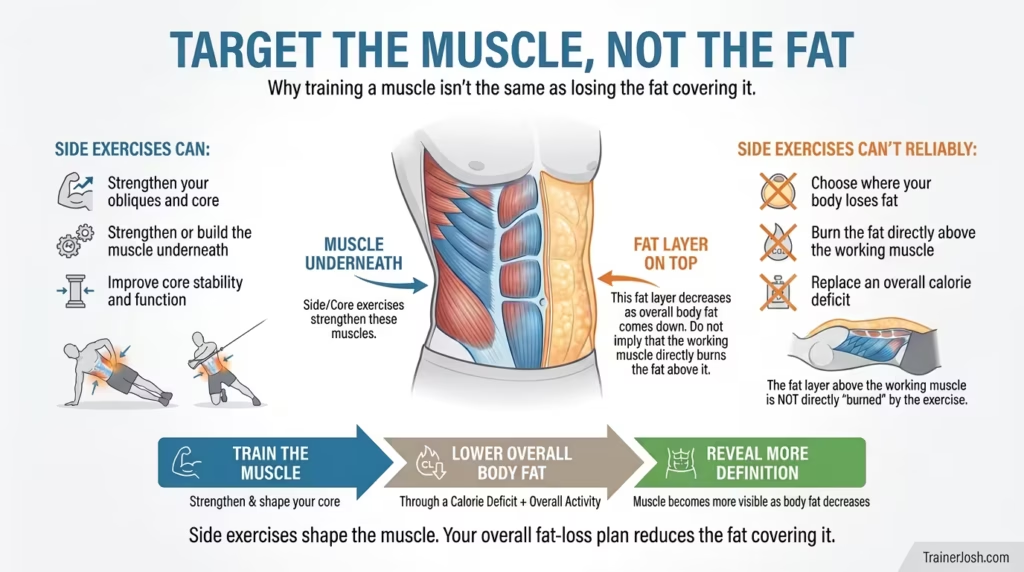
If you want a narrower-looking waist, I wouldn’t make heavily weighted side bends the centerpiece of your program. Heavy progressive oblique training can add muscle thickness through the sides of the waist, which may work against that aesthetic.13 That doesn’t mean you should avoid training your obliques.
The exercises above are here to strengthen your core, improve your shape, and add to your overall training demand while your fat-loss plan reduces the fat covering those muscles.
So if spot reduction isn’t the answer, why do your sides seem to hang on longer than everywhere else? Here’s what’s actually going on underneath.
Why Side Fat Can Be So Stubborn
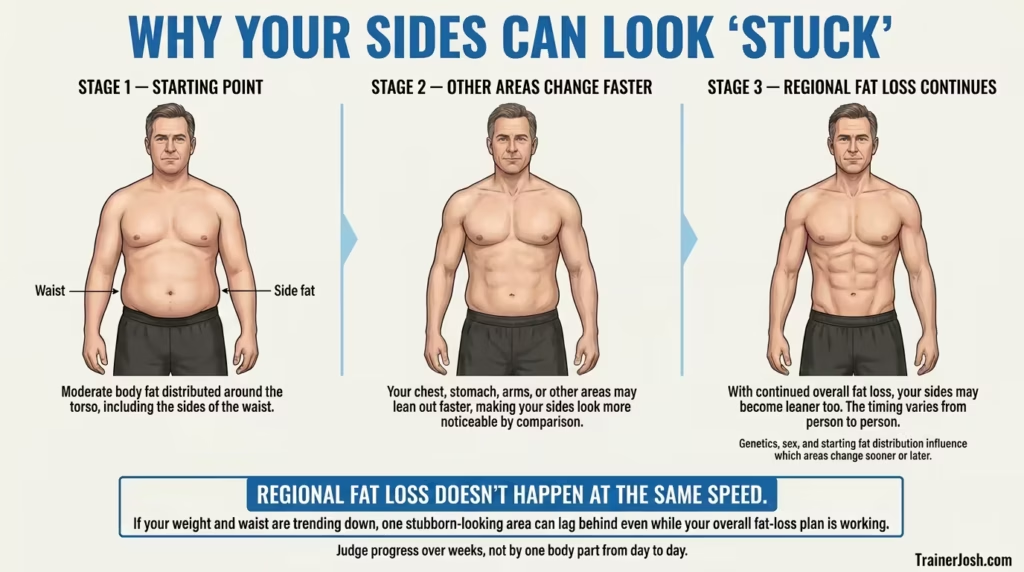
People differ substantially in where they store fat and which areas lean out first. For a lot of the people I train, the sides and lower back are among the slower spots to visibly change — and there’s some real physiology behind that, not just bad luck.
Genetics Influence Where You Store Fat
Genetics have a major influence on where your body tends to store fat, and which areas tend to hold on longest as you diet. Twin studies have found regional fat-distribution patterns to be fairly heritable2, so if a parent carried extra weight around the waist or lower back, there’s a good chance that’s one of your slower areas too. Males tend to hold more subcutaneous fat around the obliques and lower back, while females tend to hold more around the hips and thighs. None of this means anything is wrong with you — it’s just your pattern, and it’s largely outside your control.
Repeated dieting and regaining weight can reinforce that pattern. Some research has linked weight cycling to a more central pattern of fat distribution, meaning relatively more fat tends to settle around the trunk and midsection on the rebound8. If you’ve regained quickly after past diets, that’s likely part of why this area feels stubborn now — the practical takeaway is that a pace you can actually sustain matters more than another aggressive crash cut.
Some Fat Is Slower to Mobilize
To burn fat, your body first has to release it from fat cells and move it into your bloodstream, which depends partly on local blood flow and on how those cells respond to fat-burning hormones like adrenaline. Beta receptors act like an accelerator for fat release, while alpha-2 receptors act more like a brake. Some fat depots — including areas like the sides and lower back — appear to have a receptor balance and blood flow that’s less favorable for fat release4.
Insulin plays a role too, but it’s often misunderstood. Insulin is a normal, anti-lipolytic hormone that temporarily suppresses fat release after you eat5 — that’s completely normal, and it does not prevent fat loss. What actually determines whether your fat cells shrink over time is your net energy balance, not whether insulin ticks up after a meal. For practical fat loss, staying consistent with your calorie deficit matters far more than trying to keep insulin low all day.
It Often Gets Harder as You Get Leaner
The leaner you get, the harder your body tends to push back. As stubborn fat cells finally start shrinking, circulating leptin drops, and that decline can act like an alarm signal: hunger can climb, spontaneous daily movement can drop, and your body can adapt by burning somewhat less energy at rest, a process known as adaptive thermogenesis9.
None of that means your plan has stopped working. It usually means you need to protect your deficit more deliberately as you get leaner — more consistent tracking, more daily steps, and enough sleep and recovery to keep from working against yourself. Chronic stress and poor recovery won’t lock fat onto your sides directly, but they can wreck your sleep, spike your appetite, and make it a lot harder to stay consistent — which is where they actually cost you progress.
When sleep and recovery are the weak links, BioTRUST Ageless Multi Magnesium is one option I like. It combines magnesium glycinate with L-theanine to help support relaxation, restful sleep, and muscle recovery without adding a stimulant.
A 7-form magnesium complex designed for adults 40+ to support restful sleep, relaxation, muscle recovery, and whole-body health. Each serving provides 350mg of magnesium plus L-theanine and vitamin B6 for added nervous-system support.
- 7-Form Magnesium Blend: Combines glycinate, taurate, malate, citrate, Sucrosomial® magnesium & complementary forms
- Sleep & Relaxation Support: Magnesium glycinate plus L-theanine help support calm, relaxation & restful sleep
- Muscle Recovery & Comfort: Supports normal muscle relaxation, recovery & energy production
- Enhanced Absorption: Includes clinically studied Sucrosomial® Magnesium for high absorption & gentle digestion
- Heart, Bone & Nervous System Support: Provides 350mg of magnesium plus vitamin B6 for essential body functions

Side Fat vs. Love Handles
People often use the terms interchangeably, but love handles are more specific. They’re the soft, pinchable fat around the sides and slightly toward the back of your waist.
Side fat is broader. It can include fat along the sides of your waist and torso, around the lower back, or near the upper-hip transition. Love handles are one common location within that larger area.
That difference matters because not everything that makes your waist look wider is excess fat. Loose skin, your ribcage and pelvis shape, muscle development, and posture can also affect how your sides look.
For this guide, side fat means the pinchable fat around the sides of your waist and torso. If you specifically want a routine for love handles, check out my Love Handles Exercises guide.
Is It Actually Side Fat?
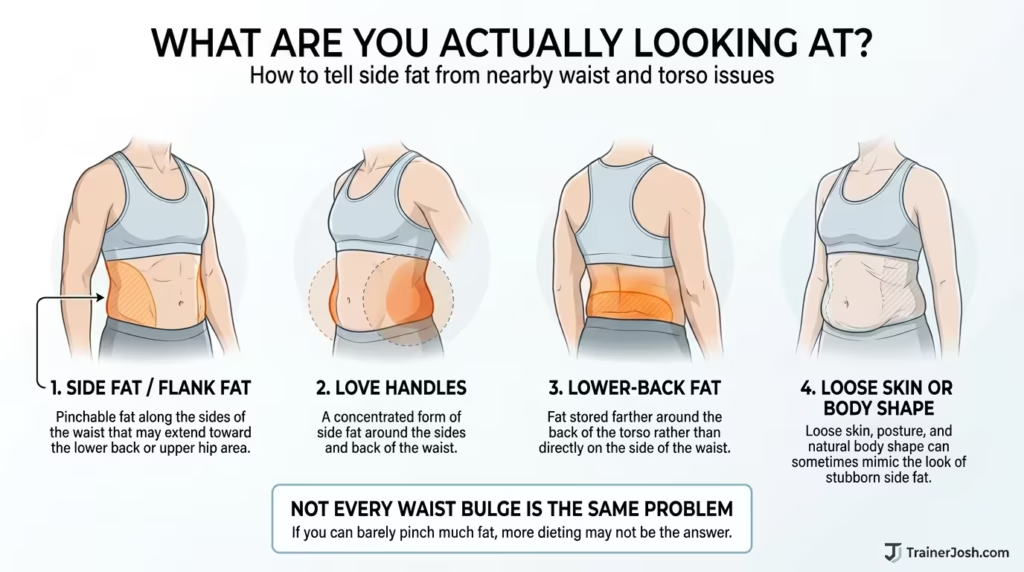
Before you try to lose more weight, make sure what’s bothering you is actually body fat.
- Pinchable fat at the sides of your waist: This is side-waist fat, including the love-handle area. It’s mostly subcutaneous fat under the skin.
- Fat farther around your back: This is lower-back fat.
- Fat lower and more toward the front: This is usually lower-belly fat.
- Loose or crepey skin after weight loss: Some of what you can grab may be skin rather than a thick layer of fat.
- A wider-looking waist with very little to pinch: Body structure, muscle development, posture, or slight asymmetry may be shaping what you see.
If there’s a noticeable layer of soft, pinchable fat, lowering your body fat can reduce it over time. If you’re already fairly lean and there isn’t much to grab, dieting harder may not change your waist as much as you expect.
COACHING TIP:
Look at the area from the front, side, and back instead of judging it from one mirror angle. If there’s very little soft fat to pinch, more dieting may not fix what you dislike. You may be seeing loose skin, body structure, posture, or a mix.
Understanding why side fat is stubborn is one thing. If you’re already doing everything right and it still isn’t moving, here’s how to diagnose it.
Why Your Side Fat Isn’t Going Away Yet
If your sides still aren’t changing, don’t automatically assume you need to eat less or train harder. Look at what else is happening first. That usually tells you what needs fixing.
| What You’re Seeing | What It May Mean | What to Do |
|---|---|---|
| Your weight and waist have both stopped moving | Your current diet may no longer be creating much of a calorie deficit. As you lose weight, energy needs can come down, and portion sizes have a way of creeping up without you noticing. | Give it at least a couple of weeks of consistent tracking. If both trends are truly flat, tighten up your food tracking first. Then make a small calorie adjustment or add some daily steps. |
| The scale is dropping, but your sides look about the same | You can be losing fat successfully while one area changes more slowly than the rest. Where you store and lose fat is strongly influenced by your individual fat-distribution pattern. | Don’t blow up a plan that’s working. Stay consistent and judge the trend over time instead of checking your sides in the mirror every day. |
| You’re getting smaller, but also getting weaker | A little variation in strength is normal while dieting, but a steady drop can be a sign that the deficit is too aggressive, protein is too low, or recovery and training need attention. | Slow the rate of loss if needed, keep protein high enough, and keep strength training in place. The goal is to lose fat without giving up the muscle underneath it. |
| You’re already lean and there’s very little fat to pinch | You may be reaching the point where what you’re seeing is partly your natural skeletal structure and proportions, not another layer of fat you can diet away. | Don’t keep cutting calories just to chase a waist shape your bone structure may not allow. Building your shoulders and upper back can also make your waist look narrower by comparison. |
| You’re only doing ab and oblique exercises | You’re putting most of your effort into the wrong lever. Core exercises can strengthen the muscles underneath, but localized training is not a reliable way to selectively remove the fat covering them. | Keep the useful core work, but let your calorie deficit and full-body strength training do most of the fat-loss work. |
| You keep starting over | Your plan may simply be too rigid to stick with. The cycle of eating perfectly, slipping once, then deciding you’ve “blown it” can keep you spinning your wheels. | Make the plan easier to repeat. If one meal goes off track, get back to normal at the next one. You don’t need another Monday restart. |
And if your strength keeps dropping, you’re exhausted all the time, or the diet feels harder every week, I wouldn’t respond by immediately cutting more food and adding more cardio. That’s usually the point where I’d look at the plan itself and figure out what needs adjusting.
Bottom Line: Figure out which problem you actually have before changing anything. Sometimes you need a small adjustment. Sometimes you just need more time. And sometimes there isn’t much more fat there to lose.
When progress is flat and portions may be drifting, use an OXO Good Grips digital food scale for a week. Weigh the calorie-dense foods that are easiest to underestimate—oils, nut butters, snacks, and dressings—then go back to simpler tracking once your portions are consistent.
Once you’ve ruled out the common snags, the next question is simple: how long is this actually going to take?
How Long Does Side Fat Take to Lose?
I know the answer you probably want here is a number… Six weeks? Two months? Three?
To be honest, there isn’t one simple number.
How quickly your sides change depends on where you’re starting, how consistently you’re losing fat, and where your body prefers to store it. Two people can lose the same amount of weight and see completely different changes around their waist.
Your starting point matters too. If you have more body fat to lose, you can generally tolerate a faster rate of loss. But as you get leaner, pushing the deficit harder raises the chance that more of the weight you lose comes from lean tissue instead of fat.18
But if you’re already fairly lean and chasing that last bit around your sides, faster isn’t necessarily better. At that point, I’d rather have you slow things down and keep the muscle you’ve built than slash calories just to reach some made-up deadline.
And remember, fat doesn’t disappear evenly. Your face might lean out. Your arms look better. Your pants get looser. Meanwhile, you look at your sides and think nothing is happening.
That doesn’t automatically mean you’re stuck.
Watch the Trend (Not the Calendar)
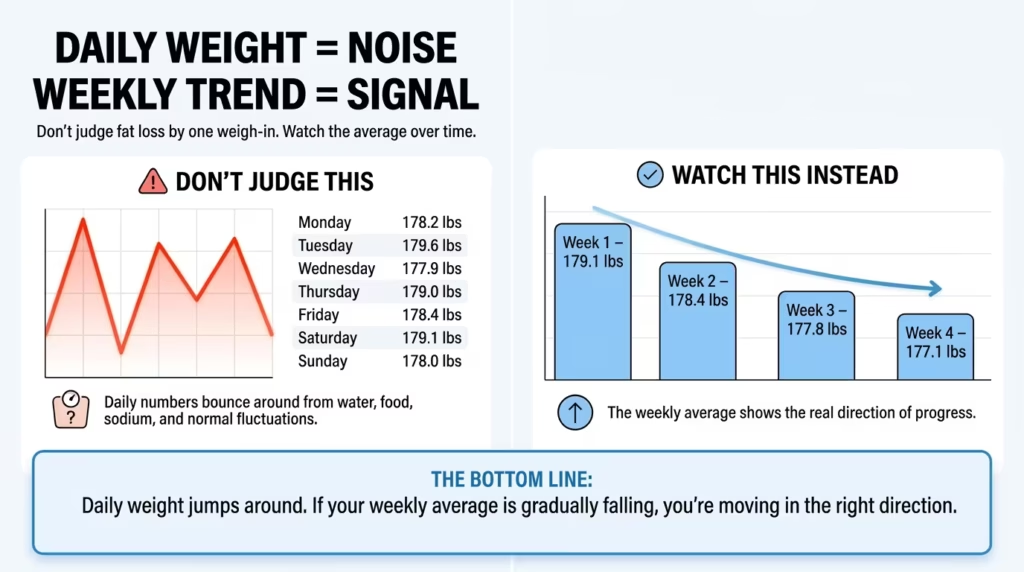
Instead of asking, “How many more weeks?” look for signs that the plan is still moving in the right direction:
- Your 7-day average body weight is gradually coming down.
- Your waist or other measurements are shrinking over time.
- Clothes are fitting looser.
- You’re seeing changes in other areas, even if your sides haven’t caught up yet.
- Your strength is mostly holding steady rather than steadily declining as you lose weight.
Daily body weight can bounce around from changes in water, glycogen, food in your gut, and other normal fluctuations. That’s why I care much more about your weekly average and the trend over several weeks.19
Some of that day-to-day noise comes from glycogen and water. Your body stores glycogen along with several times its weight in water. So changes in carbs, training, sodium, and hydration can move the scale without representing a real change in body fat.
Consistency is what determines how quickly that trend moves. A plan you can follow month after month will usually get you there faster than an aggressive diet you keep stopping and restarting.
As a general benchmark, NASM recommends aiming for roughly 0.5% to 1% of body weight per week. Slower rates are typically better suited to leaner individuals.20
One last thing: if you’re already quite lean and there’s barely any soft fat left to pinch, more dieting may not be the answer. Part of the width you’re seeing may simply be your natural bone structure and proportions.
THE BOTTOM LINE:
Don’t put a deadline on getting rid of all your side fat. If your average weight is trending down, your measurements are improving, and you’re keeping your strength… stay the course. Your sides may just need more time to show it.
How to Know It’s Working
The mirror is probably the worst place to look for daily confirmation that your side fat is going away.
Changes happen too slowly to notice from one day to the next, while water, bloating, lighting, and even how you’re standing can make your waist look different within hours.
So instead of asking, “Do my sides look smaller today?” I want you tracking a few things the same way every time.
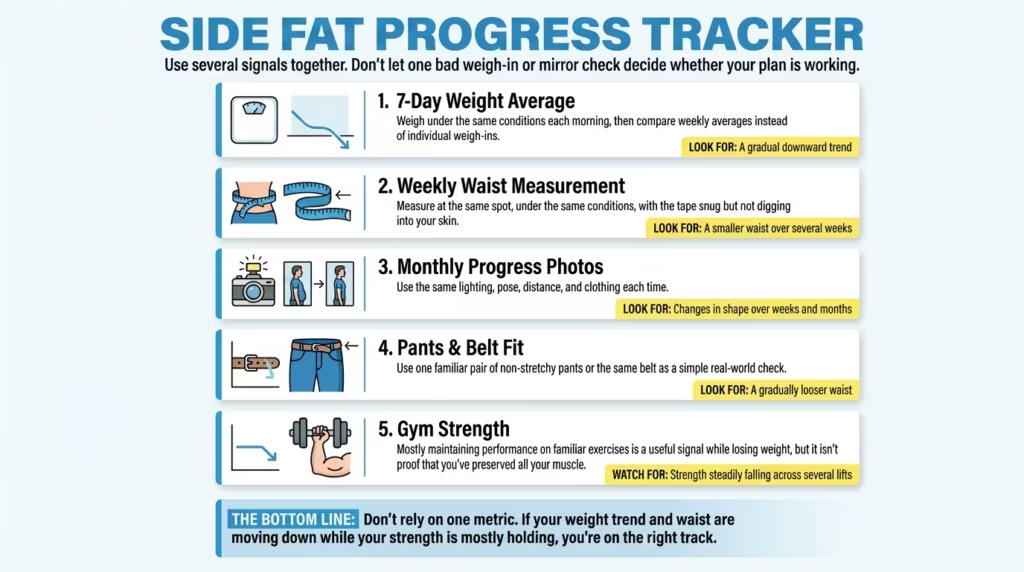
1. Watch your weekly weight trend
If you’re weighing yourself, do it under the same conditions each morning: after using the bathroom and before eating or drinking.
Then ignore the individual numbers.
At the end of the week, calculate your 7-day average and compare that with previous weeks. Water, glycogen, sodium, and food sitting in your digestive system can move scale weight around without representing an actual change in body fat.
A smart scale can make this easier because each weigh-in is logged automatically instead of relying on memory. The Etekcity Smart Scale is a solid option for tracking the trend, but focus on body weight and weekly averages rather than treating its body-fat estimate as exact.
2. Measure your waist once a week
For side fat, I actually care more about this than whether you happened to weigh an extra pound this morning.
Measure first thing in the morning under the same conditions each week. Keep the tape flat and level across your belly button, snug without digging into your skin, and don’t suck your stomach in.
I also like taking the measurement three times and using the average. Tiny differences in where you put the tape or how hard you pull it can change the number.
Then compare the trend over a few weeks, not one measurement against the next.
If you want to make those weekly measurements easier to repeat, the RENPHO Smart Body Measuring Tape is a good option. Its retractable loop makes it easier to measure your waist by yourself, and the app can save each reading so you can watch the trend instead of relying on memory. I still want you measuring in the same spot, under the same conditions, and without pulling the tape tighter just to get a better number.
3. Take photos monthly
Progress photos are useful. Daily progress photos aren’t.
Take them about once a month using the same location, lighting, distance, pose, and clothing. That’s enough time for an actual visual difference to have a chance to show up.
4. Use your clothes and strength as backup signals
Pay attention to a specific pair of pants or the holes on your belt. If they’re gradually getting looser around your waist, that’s useful real-world feedback even if the scale has been stubborn.
I also watch what happens to strength on exercises you’ve been doing for a while. Mostly maintaining your strength while losing weight is a good sign, but it isn’t proof that you’ve preserved every ounce of muscle.
If your performance starts steadily falling across your whole program, that’s something I’d pay attention to rather than automatically cutting calories even harder.
Everything above holds true at any age, but a few things become more important to get right as you get older.
Side Fat After 40: What Actually Changes?
If your waist seems harder to manage after 40, there can be some real changes happening.
But it doesn’t mean your metabolism suddenly fell off a cliff. Research on energy expenditure across the lifespan found that, after accounting for body composition, metabolism stays remarkably stable through midlife.21
And it doesn’t mean you suddenly need some special “over-40 side fat” workout either.
For women, menopause can change where fat tends to be stored.
Fat distribution tends to shift more toward the abdomen and waist as estrogen levels fall.22 You might notice your shape changing even without a dramatic change on the scale.
For both men and women, age-related muscle loss (sarcopenia) becomes more of a concern as the years add up. Daily activity also tends to decline, which can compound the problem.23
That’s why I don’t like the “just get as light as possible” approach after 40. If you chase a lower number on the scale by cutting too aggressively, you can end up losing some of the muscle that’s helping give your body its shape in the first place.
As you get older, your muscles can become a little less responsive to protein and training, a phenomenon called anabolic resistance. That’s one reason strength training and adequate protein matter even more as you age.
This is why muscle support deserves extra attention when you’re losing weight after 40. The GLP-1 Companion Stack includes myHMB, creatine, betaine, and vitamin D to help support strength, performance, and lean muscle while the fat comes off.
A 3-part daily stack designed to support people using GLP-1 medications or losing weight naturally. It combines muscle, protein, collagen, and appetite support to help you maintain a healthier body composition as you lose weight.
- Natural GLP-1 Support: Helps support healthy appetite signals, fullness & metabolic function
- Lean Muscle Support: Helps preserve muscle, strength & healthy body composition during weight loss
- High-Protein Collagen: Adds 20 g of protein with 5 collagen types to help support daily protein intake
- Skin, Joint & Hair Support: Provides collagen peptides to support skin elasticity, joints, hair & nails
- 3-Part Weight-Loss Support: Combines muscle, protein/collagen & appetite support in one simple daily stack
Don’t Change the Goal. Change the Priority.
There is no special menopause exercise, male love-handle exercise, or secret twisting movement that suddenly unlocks waist fat after 40. Your core still needs to be trained for strength and function, not because a certain exercise can force your sides to burn fat.
What becomes more important is protecting and building muscle while the fat comes off.
Keep progressive strength training at the center of your program. For extra activity, you don’t have to beat yourself up with HIIT every day either. Walking and other lower-impact cardio can add useful activity without piling a lot more fatigue onto your training.
And if floor-based ab work bothers your back, knees, or hips, use the standing and joint-friendly core variations from the workout above. You’re not giving up anything magical by skipping the exercises that don’t feel good.
THE BOTTOM LINE:
After 40, I’d worry less about getting as light as possible and more about improving your body composition. Lose the fat, keep the muscle, stay active, and give the process enough time to work.
References
- Ramirez-Campillo R, Andrade DC, Clemente FM, et al. “A Proposed Model to Test the Hypothesis of Exercise-Induced Localized Fat Reduction (Spot Reduction), Including a Systematic Review With Meta-Analysis.” Human Movement. 2022.
- Malis C, Rasmussen EL, Poulsen P, et al. “Total and Regional Fat Distribution Is Strongly Influenced by Genetic Factors in Young and Elderly Twins.” Obesity Research. 2005.
- Mauriège P, Galitzky J, Berlan M, Lafontan M. “Heterogeneous Distribution of Beta and Alpha-2 Adrenoceptor Binding Sites in Human Fat Cells From Various Fat Deposits: Functional Consequences.” European Journal of Clinical Investigation. 1987.
- Manolopoulos KN, Karpe F, Frayn KN. “Marked Resistance of Femoral Adipose Tissue Blood Flow and Lipolysis to Adrenaline In Vivo.” Diabetologia. 2012.
- Lin S, Jensen MD. “Human Adipose Tissue Metabolism in Obesity.” Journal of Obesity and Metabolic Syndrome. 2025.
- Ottosson M, Vikman-Adolfsson K, Enerbäck S, Olivecrona G, Björntorp P. “The Effects of Cortisol on the Regulation of Lipoprotein Lipase Activity in Human Adipose Tissue.” Journal of Clinical Endocrinology & Metabolism. 1994.
- Pedersen SB, Jønler M, Richelsen B. “Characterization of Regional and Gender Differences in Glucocorticoid Receptors and Lipoprotein Lipase Activity in Human Adipose Tissue.” Journal of Clinical Endocrinology & Metabolism. 1994.
- Tannir H, Itani L, El Masri D, Kreidieh D, El Ghoch M. “Lifetime Weight Cycling and Central Fat Distribution in Females With Obesity: A Brief Report.” Diseases. 2020.
- Trexler ET, Smith-Ryan AE, Norton LE. “Metabolic Adaptation to Weight Loss: Implications for the Athlete.” Journal of the International Society of Sports Nutrition. 2014.
- Vispute SS, Smith JD, LeCheminant JD, Hurley KS. “The Effect of Abdominal Exercise on Abdominal Fat.” Journal of Strength and Conditioning Research. 2011.
- Scotto di Palumbo A, Guerra E, Orlandi C, Bazzucchi I, Sacchetti M. “Effect of Combined Resistance and Endurance Exercise Training on Regional Fat Loss.” The Journal of Sports Medicine and Physical Fitness. 2017.
- Stallknecht B, Dela F, Helge JW. “Are Blood Flow and Lipolysis in Subcutaneous Adipose Tissue Influenced by Contractions in Adjacent Muscles in Humans?” American Journal of Physiology-Endocrinology and Metabolism. 2007.
- Noormohammadpour P, Kordi R, Dehghani S, Rostami M. “The Effect of Abdominal Resistance Training and Energy Restricted Diet on Lateral Abdominal Muscles Thickness of Overweight and Obese Women.” Journal of Bodywork and Movement Therapies. 2012.
- Aragon AA, Schoenfeld BJ, Wildman R, et al. “International Society of Sports Nutrition Position Stand: Diets and Body Composition.” Journal of the International Society of Sports Nutrition. 2017.
- Garthe I, Raastad T, Refsnes PE, Koivisto A, Sundgot-Borgen J. “Effect of Two Different Weight-Loss Rates on Body Composition and Strength and Power-Related Performance in Elite Athletes.” International Journal of Sport Nutrition and Exercise Metabolism. 2011.
- Morton RW, Murphy KT, McKellar SR, et al. “A Systematic Review, Meta-Analysis and Meta-Regression of the Effect of Protein Supplementation on Resistance Training-Induced Gains in Muscle Mass and Strength in Healthy Adults.” British Journal of Sports Medicine. 2018.
- Nedeltcheva AV, Kilkus JM, Imperial J, Schoeller DA, Penev PD. “Insufficient Sleep Undermines Dietary Efforts to Reduce Adiposity.” Annals of Internal Medicine. 2010.
- Alpert SS. “A Limit on the Energy Transfer Rate From the Human Fat Store in Hypophagia.” Journal of Theoretical Biology. 2005.
- Edholm OG, Adam JM, Best TW. “Day-to-Day Weight Changes in Young Men.” Annals of Human Biology. 1974.
- National Academy of Sports Medicine. “3 Simple Rules for Helping Clients With Safe and Healthy Weight Loss.”
- Pontzer H, Yamada Y, Sagayama H, et al. “Daily Energy Expenditure Through the Human Life Course.” Science. 2021.
- Greendale GA, Han W, Finkelstein JS, et al. “Changes in Regional Fat Distribution and Anthropometric Measures Across the Menopause Transition.” Journal of Clinical Endocrinology & Metabolism. 2021.
- Cruz-Jentoft AJ, Bahat G, Bauer J, et al. “Sarcopenia: Revised European Consensus on Definition and Diagnosis.” Age and Ageing. 2019.