


Ever feel that dull, annoying “twinge” in your lower back after every workout? Maybe you tried fixing it with some random stretches or heavy deadlifts, only to end up sore, stiff, and a little scared to train again.
If this sounds familiar, then you’re not the only one. Thousands of home lifters say the same thing: “My lower back is always the first thing to give out.” The truth is your lower back isn’t weak… it’s just undertrained and overworked.
The good news is you don’t need fancy machines or a full gym to fix it. You can build real lower back strength with nothing more than a pair of dumbbells. You’ll improve your posture and finally train pain-free all while at home.
The problem is that most back workouts you find online skip the muscles that matter the most: your erectors and stabilizers. They only teach you flashy moves or barbell lifts that load your spine before it’s ready. This is the common reason for feeling the same aches in your lower back.
In this guide, you’ll discover exactly how to build a strong, pain-free lower back using only dumbbells with step-by-step instructions.
Why Strengthening Your Lower Back Matters
You’re not imagining it. That dull ache after leg day, the stiffness when you bend to tie your shoes, the way your back “gives out” halfway through your workout. These aren’t just annoying quirks. They’re distress signals from a compromised foundation.
Signs of a Weak Lower Back
A weak lower back doesn’t always scream. Sometimes it whispers through everyday movements. You feel it when standing triggers a nagging ache around 1 pm, signaling your spinal stabilizers have hit their limit.
Your posture rounds forward by afternoon, and you catch yourself “chin poking.” This is that slight forward slouch that keeps your back extensors in chronic contraction, and it literally crushes your spine all day.
During workouts, the signs get louder. Your form breaks down when you’re tired. You feel a “chattering” or shaking sensation during planks. That’s your stabilizers failing.
Or you’ve developed what lifters call “gluteal amnesia.” This is when your glutes shut down, forcing your lower back and hamstrings to compensate for a lack of hip extension.
One man described it perfectly to me: My lower back is always the first thing to get sore… no matter what workout I do.
Here’s the kicker: if your lower back hurts during bicep curls, then you’ve got a systemic problem.
That pain indicates that your core bracing strategy is not working. And you’re using your lower back to stabilize movements it was never designed to handle.
Why It’s Worth Training Your Lower Back
Weak erectors don’t just cause pain, but they also cap your potential. Think of your spine as a flexible rod that needs tension cables (your torso muscles) to stay rigid under load.
Without sufficient stiffness, you create micro-movements in spinal joints. These can then trigger pain sensors and tissue degeneration.
You break form as you fatigue when squatting or deadlifting with insufficient back endurance. Those stress concentrations exceed tissue tolerance, putting you at risk of injury.
Studies show that trunk extensor endurance (not strength) predicts who develops back trouble. Your back muscles need to last the entire workout and not just lift heavy once.
A 1984 study published in Spine found that men with greater back muscle endurance were less likely to develop first-time low back pain, while those with hypermobile spines had a higher risk. In a one-year follow-up of 928 adults aged 30–60, weak trunk muscles and reduced back or hamstring flexibility were linked to recurrent or persistent low back pain.1
What Happens if You Ignore It
Skip training your lower back, and your body will learn to compensate… twisting, shifting, and moving around weakness. Pain corrupts motor patterns, creating what researchers call “aberrant motion.”
You develop spine hinges (localized segments that move too much) while other areas lock up. This is how acute pain becomes chronic.
The brutal truth: 4 out of 5 people with back pain suffer a recurrence within one year. Why? They never fix the flawed mechanics. Each acute attack sensitizes tissues further. So, less stimulus triggers more pain. It’s like picking a scab that never heals.
Your training suffers too. Without a stable core, the power generated by your hips and limbs can’t transmit efficiently through your torso. It’s like driving a sports car with a broken transmission.
Why Your Core Isn’t Complete Without It
Here’s what most people miss… core stability isn’t just about abs. Proper midsection stability requires both anterior (abs) and posterior (erectors) muscles working together as a 360-degree brace.
Training only your abs while ignoring your back actually weakens spinal support.
A properly trained back created what’s called “proximal stiffness.” This locks your core, so 100% of the force from your chest or lats goes toward the movement, rather than collapsing your torso.
This stiffness eliminates painful micro-movements, increases load tolerance, and acts as “Nature’s back belt.”
The payoff goes beyond pain prevention. Building strength in your glutes, hamstrings, and back trains your body to bend at the hips instead of rounding your spine. This simple change takes pressure off your spinal discs and spreads it to the parts of your body built to handle it.
As one lifter I train put it after months of targeted work: “My posture and lower back have been so much better.” That’s the goal… build a bulletproof foundation that supports everything else you do.
Quick Anatomy: What Muscles You’re Targeting
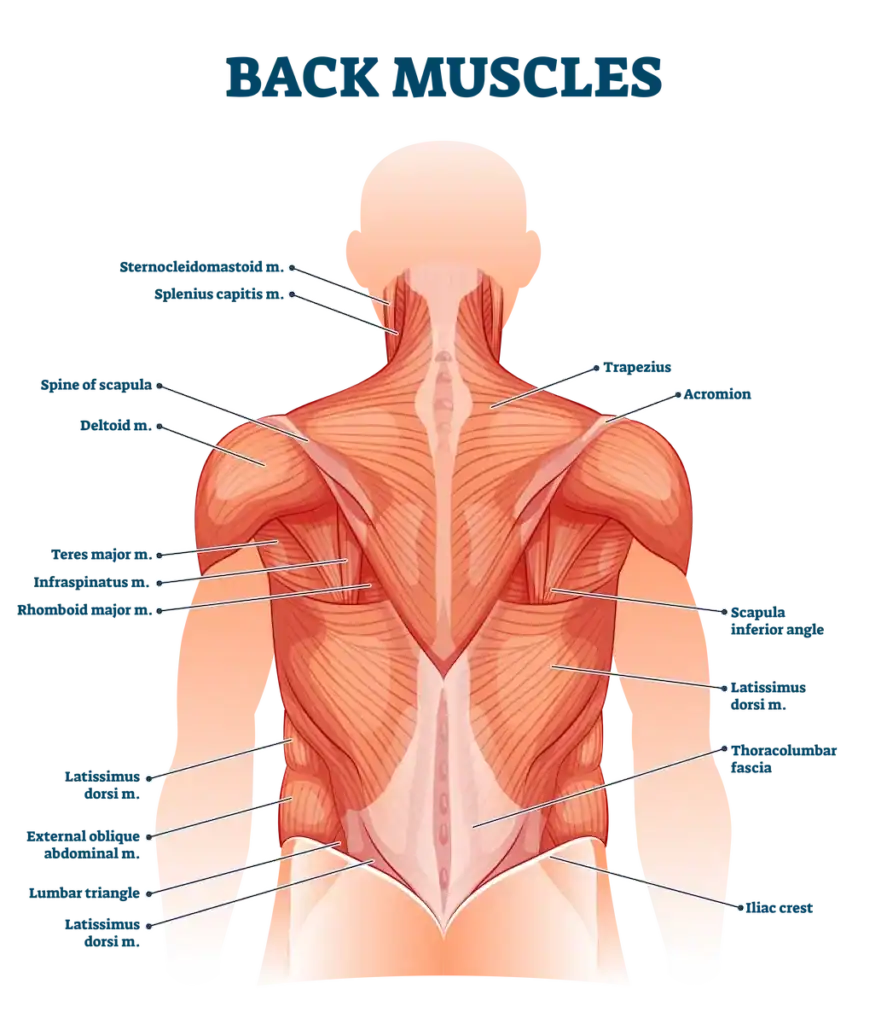
Let’s clear up the confusion. When you’re training your “lower back,” you’re not just hitting one big muscle. You’re building an entire stabilization system that keeps your spine protected while the big muscles do the heavy work.
The Posterior Chain: Your Real Power Source
Think of your back as a tent. The spine is the central pole, and the muscles are the tension cables (guy-wires) that hold everything together under load.
Here’s what you’re actually targeting:
Erector Spinae (The Main Cables)
This is the muscle group that runs along both sides of your spine, which you can feel when you arch your back.
Most people don’t realize that the upper back parts of the longissimus and iliocostalis muscles actually do the best job of extending the lower back. They produce backward-pulling forces that help stop your vertebrae from sliding forward when you bend or lift.
Multifidus (The Micro-Adjusters)
These small muscles span one to three vertebrae and act like stabilizing guy-wires at each segment. They’re built for endurance, not strength.
Their job is to anticipate motion and brace their spine before movement happens. When these muscles don’t activate on time (which often happens with back pain), your movements can feel shaky or unstable during exercises.
Quadratus Lumborum (The Workhorse)
The QL attaches to every lumbar vertebra and prevents lateral buckling. It’s your spine’s primary side stabilizer, making it crucial for walking and carrying loads. These muscles are why asymmetrical exercises (like single-arm carries) are so effective for back health.
Glutes (The Real MVP)
Your gluteus maximus and medius aren’t just leg muscles… they’re core muscles. When glutes are weak or “forget” to fire (gluteal amnesia), your lower back and hamstrings compensate for hip extension.
If your lower back hurts during RDLs (Romanian Deadlifts), then it’s likely because your glutes aren’t driving the movement.
Proper posterior chain training teaches your body to generate power at the hips. Then, to transfer it through a stiff, stable core. This is how you spare the spine from compression forces it was never designed to handle.
Why Dumbbells Are Your Strategic Advantage
You don’t need a barbell to build a bulletproof back. Dumbbells offer three unique yet critical advantages.
Spine-Sparing Load Distribution
Unlike a barbell sitting on your spine during squats, dumbbells keep the load in your hands or at your sides. This rates what’s called “proximal stiffness.” This is your core bracing to stabilize the weight. All without directly compressing your vertebrae. This is huge for someone worried about re-injuring their lower back.
Unilateral Training Reveals Imbalances
Single-arm or single-leg dumbbell moves engage your quadratus lumborum and obliques more effectively. This keeps your body from tipping to the side, preventing lateral buckling.
I tell clients after adding single-leg RDLs: “Lighter load, focuses on balance, and re-teaches the hip hinge from the ground up.” This addresses the asymmetries that can cause recurring tweaks.
The goal isn’t to isolate each muscle. It’s to train them as an orchestra. Your erector spinae, multifidus, QL, and obliques contract in synergy. Master this system, and you have the foundation for everything else.
The Best Dumbbell Lower Back Exercises
Hip Hinge Builders (Primary Strength Moves)
Dumbbell Romanian Deadlifts (RDLs)
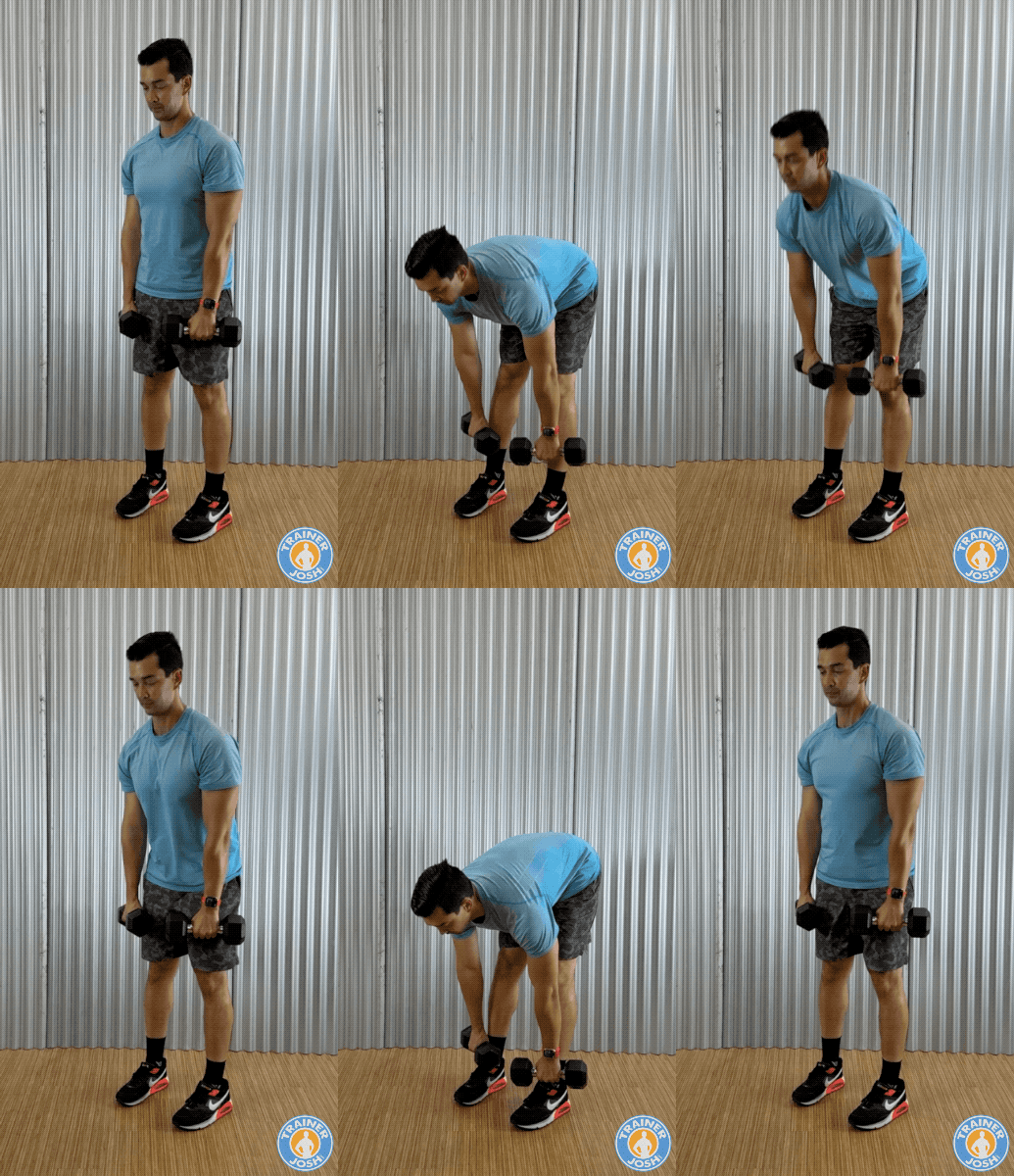
Dumbbell Romanian deadlifts are great for strengthening your hamstrings, glutes, and lower back. All while improving how you hinge at the hips. The lowering phase of the lift builds more muscle tension and stretches your hamstrings to boost strength and growth.
- Stand tall, holding a dumbbell in each hand in front of your thighs with your palms facing you. Keep your feet hip-width apart and a slight bend in your knees.
- Hinge by pushing your hips back (not down) while keeping your spine neutral. The dumbbells should slide down the front of your legs as you hinge at the hips.
- Continue until you feel a deep stretch in your hamstrings, usually when the dumbbells reach mid-shin or just below your knees.
- Drive your hips forward and squeeze your glutes to return to the standing position without rounding your lower back.
- Hit the top, keeping tension on your hamstrings, and repeat the movement.
Trainer Tip: Chest out proud, shoulders retracted, and core braced to protect your back. Think hips back, hips forward, not bend and lift. Focus on a slow three-second descent to maximize muscle tension.
Common Mistakes: Avoid rounding your lower back, bending your knees too much (which turns into a squat), or letting the dumbbells drift away from your body. Don’t bounce at the bottom and control every inch of the movement.
Dumbbell Good Mornings
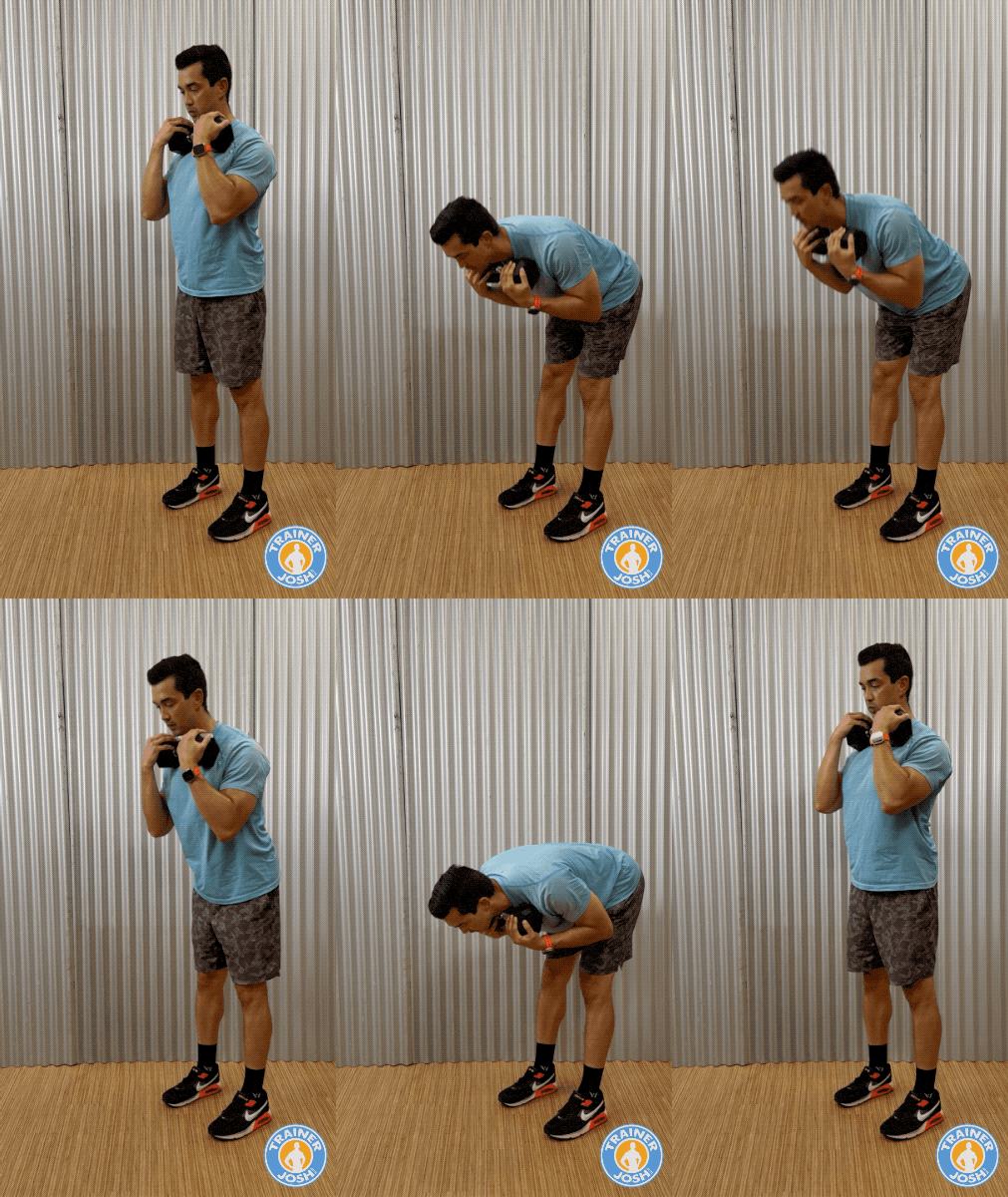
The Dumbbell Good Morning is an overlooked but powerful exercise for strengthening your hamstrings, glutes, and lower back. It’ll also reinforce proper hip mechanics. It strengthens your whole backside, improves posture, and trains you to bend at the hips instead of rounding your spine.
- Hold a dumbbell horizontally against your upper chest like a goblet squat position. Stand with feet hip-width apart and knees slightly bent.
- Use your core and keep your chest lifted with your shoulder blades pulled back.
- Hinge forward by slowly pushing your hips back while keeping a flat back. Lower your torso until it’s roughly parallel to the floor or you feel a deep hamstring stretch.
- Turn your hips forward and squeeze your glutes to return to the starting position.
- Your hamstrings throughout the movement for each rep.
Trainer Tip: Maintain a neutral neck position by gazing slightly ahead, rather than up or down. Move through your hips (not your knees) and go slow on the way down to feel the stretch. Start with light weights and master form before progressing.
Common Mistakes: Rounding your lower back, collapsing your chest, or bending your knees too much.
Single-Leg Dumbbell RDL
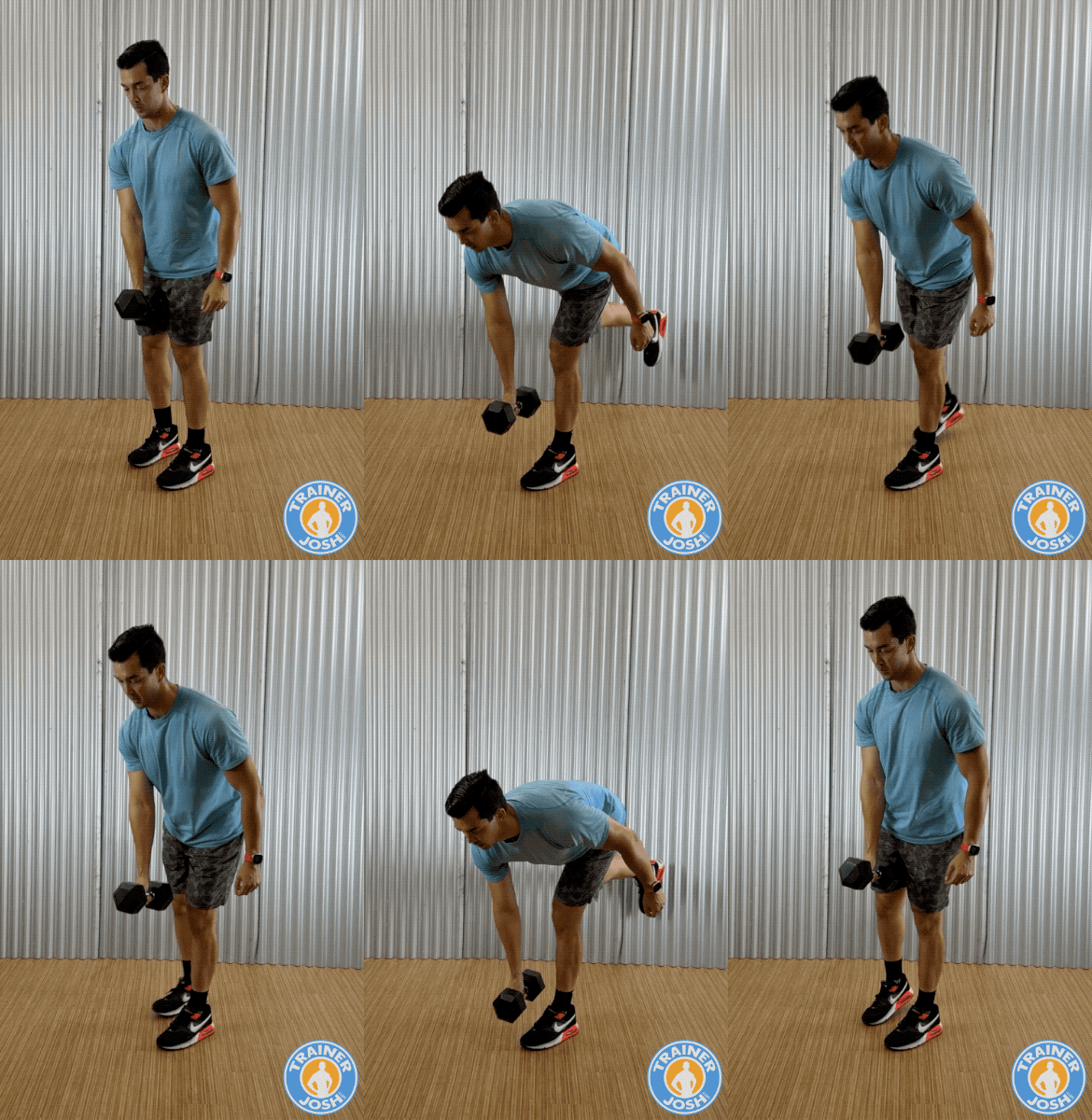
The single-leg dumbbell Romanian deadlift is one of the best exercises for strengthening and protecting your lower back through functional movement and stability. It builds the deep spinal stabilizers, glutes, and hamstrings that support your lumbar spine. This helps teach your body to hinge properly at the hips instead of flexing the lower back.
- Build your right hand and balance on your left leg. Keep your chest tall, core tight, and a soft bend in your standing knee.
- Hinge forward by pushing your hips back slowly, keeping your back flat as your right leg extends behind you. The dumbbell should travel close to your standing leg.
- Lower yourself until your torso is nearly parallel to the floor, or until you feel an intense stretch in your hamstrings, but avoid rounding your lower back at all times.
- Move your hips forward and squeeze your glute to return to the starting position. Maintain core tension.
- Complete all reps on one side before switching to the other leg.
Trainer Tip: Maintain a neutral spine and level hips throughout the movement. Imagine a cup of water balanced on your lower back. Keep your core braced as if preparing to take a punch to protect your lumbar spine. Move slowly to build stability and proprioception.
Common Mistakes: Avoid twisting your hips, collapsing your core, or rounding your back. These shift the load from your glutes and hamstrings onto your spine. Don’t overreach the dumbbell. Think “hips back, not chest down” to keep tension where it belongs.
Lower Back Isolation / Extension Work
Dumbbell Back Extensions
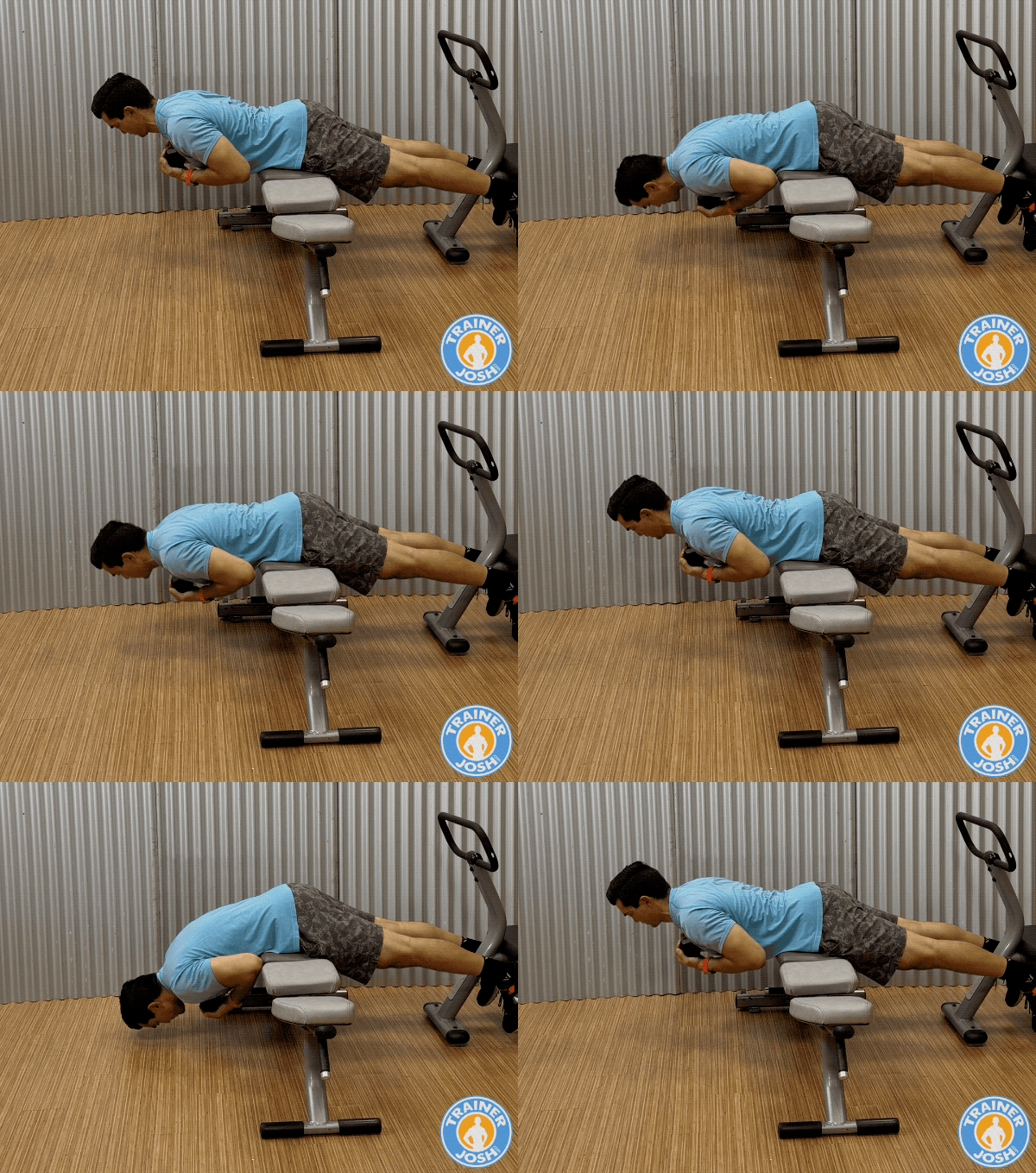
This variation of the dumbbell back extension is highly effective in strengthening and improving the endurance of your lumbar spinal erectors, glutes, and hamstrings. These are all key muscles that support and stabilize your lower back.
By lifting your spine against gravity… you strengthen your lower back, improve posture, and lower the risk of back fatigue during daily tasks or heavy lifts.
- Position yourself face down on a firm surface, such as the edge of a bench or couch, or on something elevated. This is so that your hips are supported and your torso can hinge freely. Hold the dumbbell against your chest with both hands.
- Each should be anchored, secured, or stabilized on the floor. Engage your core, keep your chest lifted slightly, and maintain a forward gaze so that your spine remains neutral.
- From the hinge point, lift your torso by contracting your spinal erectors and glute muscles so that your body forms a straight line from your shoulders to your hips. Keep the dumbbells secure and maintain controlled movement.
- Your torso back down to the starting point until you feel a mild stretch in your lower back and glutes. Do not drop fast or let momentum take over.
- Maintain tension throughout the set. At the top, avoid overextending (hyperextension) the lower back, and at the bottom, avoid rounding the lower back.
Trainer Tip: Think “ribs down and glutes on” as you lift to keep your lower back safe and engaged. Use a slower tempo (e.g., 2–3 seconds up, 2–3 seconds down) for better muscle recruitment and control. Be sure to anchor your feet or stabilize your legs so you can focus on the hinge and extension (and not balancing).
Common Mistakes: Stending the lower back at the top (arching too much) can strain the lumbar vertebrae. Rounding the spine as you lower shifts the load away from the erectors and risks collapse. Using momentum by jerking up or bouncing down instead of controlled muscle work.
Reverse Hyperextensions (Home version)
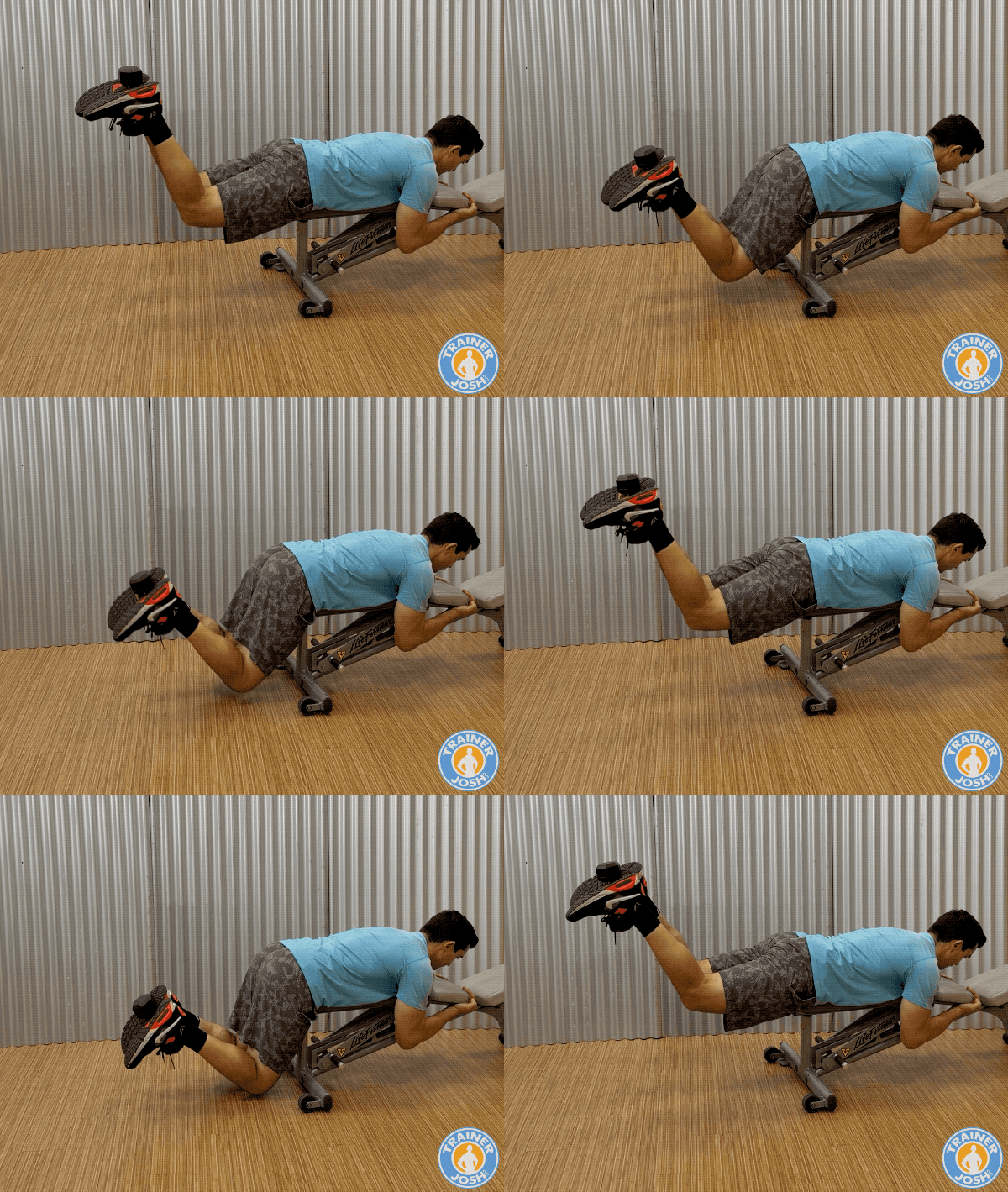
Reverse hyperextensions at home using a dumbbell are a very effective exercise for strengthening your lower back, glutes, and hamstrings. This is a suitable alternative if you don’t have access to a reverse hyperextension machine. By lifting your legs instead of your torso, this movement targets the spinal erectors from a different angle. It’ll improve lower back endurance, pelvic control, and posterior chain activation.
- Lie face down on a flat or inclined bench with your hips at the edge, allowing your legs to move freely. Grip the end of the bench for support.
- Place a light dumbbell between your feet and wrap a towel around the handle for a secure grip and added comfort. Squeeze your feet together to secure it.
- Keep your head neutral and keep your upper body still. The movement should originate from your hips, not your lower back.
- Handstrings to raise your legs until they are in line with your torso or slightly higher. Pause briefly at the top and feel your lower back contract.
- Lower your legs slowly and control until your feet are just below the bench level. Maintain tension throughout.
Trainer Tip: Lifting with your glutes and avoiding leg swings. Use a 2-3 second controlled lowering phase to increase time under tension and protect your lower back. If you’re new, start with no weight or use a tiny dumbbell. Quality control matters more than the load.
Common Mistakes: Using momentum instead of controlled muscle contraction. Hyperextending the lower back( lifting the legs too high) can compress the spine. Relaxing the core and letting the belly hang off the bench can strain the lumbar region.
Superman’s / Prone Dumbbell Lift-Offs
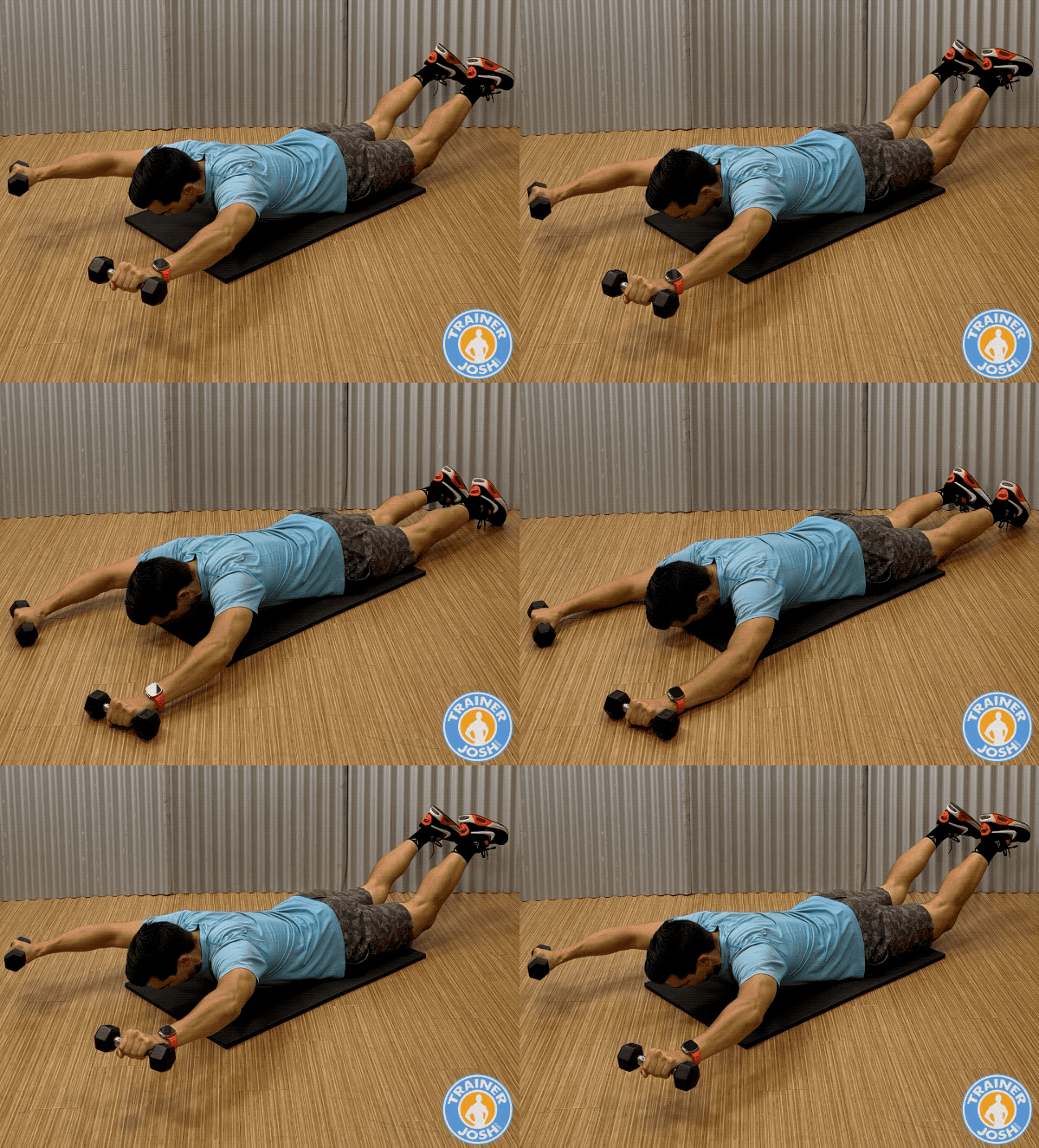
This is a potent exercise for strengthening your lower back, mid-back, and posterior shoulder stabilizers. You’ll isolate the spinal erectors and lower traps, which improve posture, scapular control, and endurance of the muscles that support your spine.
- This is the position where you are on a flat bench or on the floor with a light dumbbell in each hand. Extend your arms straight behind you, palms facing in, and keep your forehead lightly resting down to maintain a neutral spine.
- Retract your shoulder blades slightly and tighten your glutes to stabilize your lower back.
- Keep your arms straight and lift the dumbbells a few inches off the floor or bench by squeezing your mid- and lower-back muscles. Avoid using momentum.
- Pause briefly at the top (1-2 seconds), focusing on contracting your spinal erectors and lower traps.
- Slowly lower the dumbbells back down, under control, and repeat.
Trainer Tip: Think of lifting through your back, not your arms. Your elbows should remain locked, and movement should originate from your rear delts and spinal stabilizers. Keep your neck in a neutral position and your eyes down to avoid neck strain. Focus on the small, controlled movements, as this is a precision exercise and not a power move. Use very light weight (2-10lbs) to maintain form and tension.
Common Mistakes: Lifting too much weight and relying on momentum instead of slow, controlled tension. Hyperextending the lower back (arching up too much) instead of using the mid and upper back. Shrugging the shoulders instead of keeping them depressed and retracted. Looking forward during the lift can strain the neck.
Dumbbell Hip Bridges
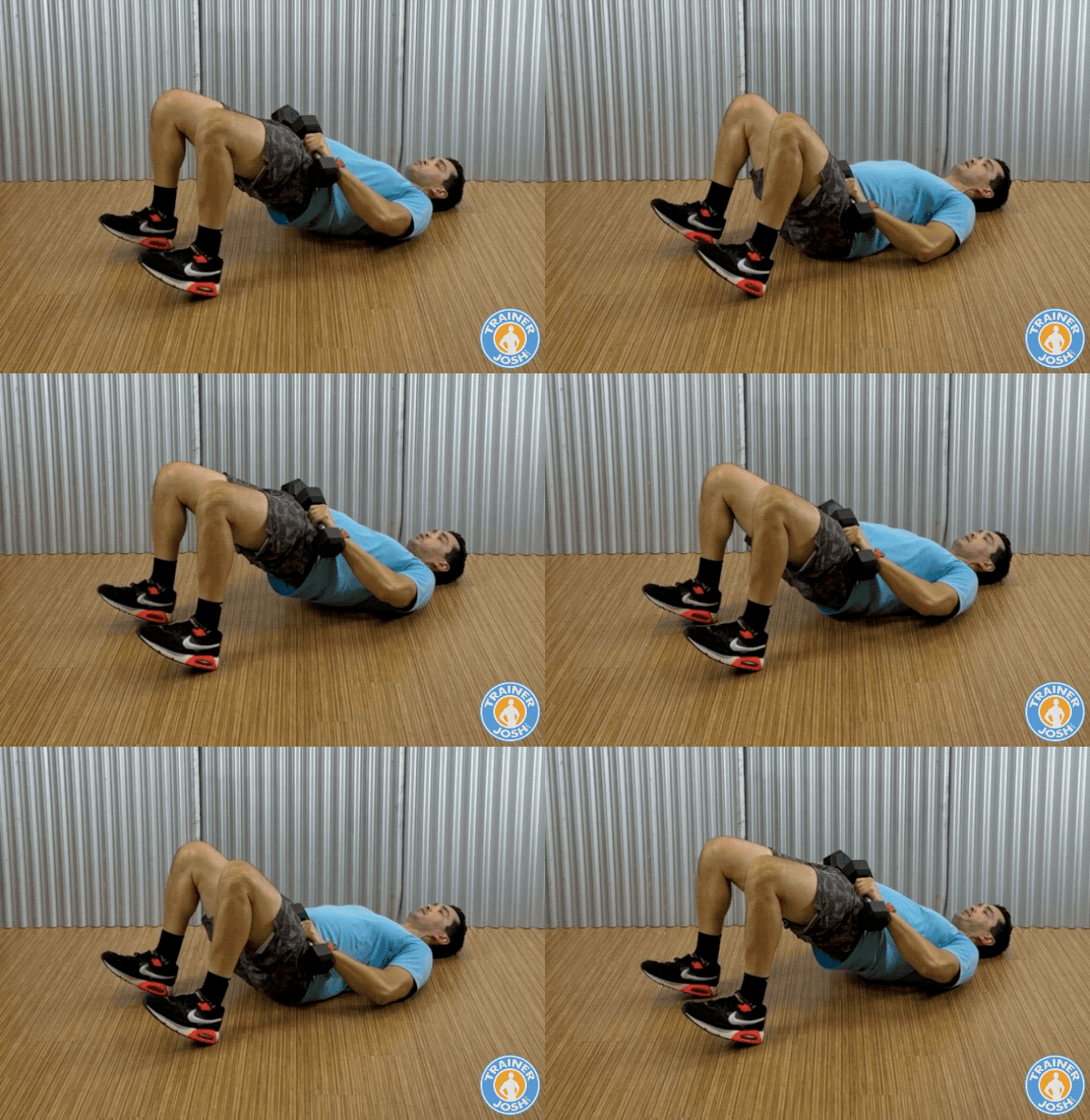
The dumbbell hip bridge is a foundational lower back and core exercise that strengthens the glutes, hamstrings, and lower back. You’ll better correct anterior pelvic tilt by teaching your body to use your hips, rather than your lower back, to generate movement. This reduces lumbar strain and improves posture.
- Lie on your back with your knees bent, feet hip-width apart, and only your heels on the ground with your toes pointed straight up. Your feet should be underneath your knees. Hold a dumbbell or pair across the top of your hips.
- Engage your core and tilt your pelvis up so your lower back goes flat against the ground.
- Drive through your heels to raise your hips up until your body forms a straight line from your knees to your shoulders.
- Pause at the top for one to two seconds and squeeze your glutes to maximize the contraction.
- Slowly lower your hips back to the ground with control and repeat. Do not let your hips rest on the ground for too long to keep tension on the glute muscles.
Trainer Tip: Think, “squeeze glutes, don’t arch back.” The lifts should originate from your hips, not your lower back. Drive through your heels, not your toes, to better activate the glutes and hamstrings. Keep your knees tracking over your toes (don’t let them cave in).
Common Mistakes: Arching the lower back instead of extending through the hips. Letting the knees flare or cave in reduces glute activation. Using momentum instead of controlled tension.
Anti-Rotation & Carry Strengtheners
Suitcase Deadlifts
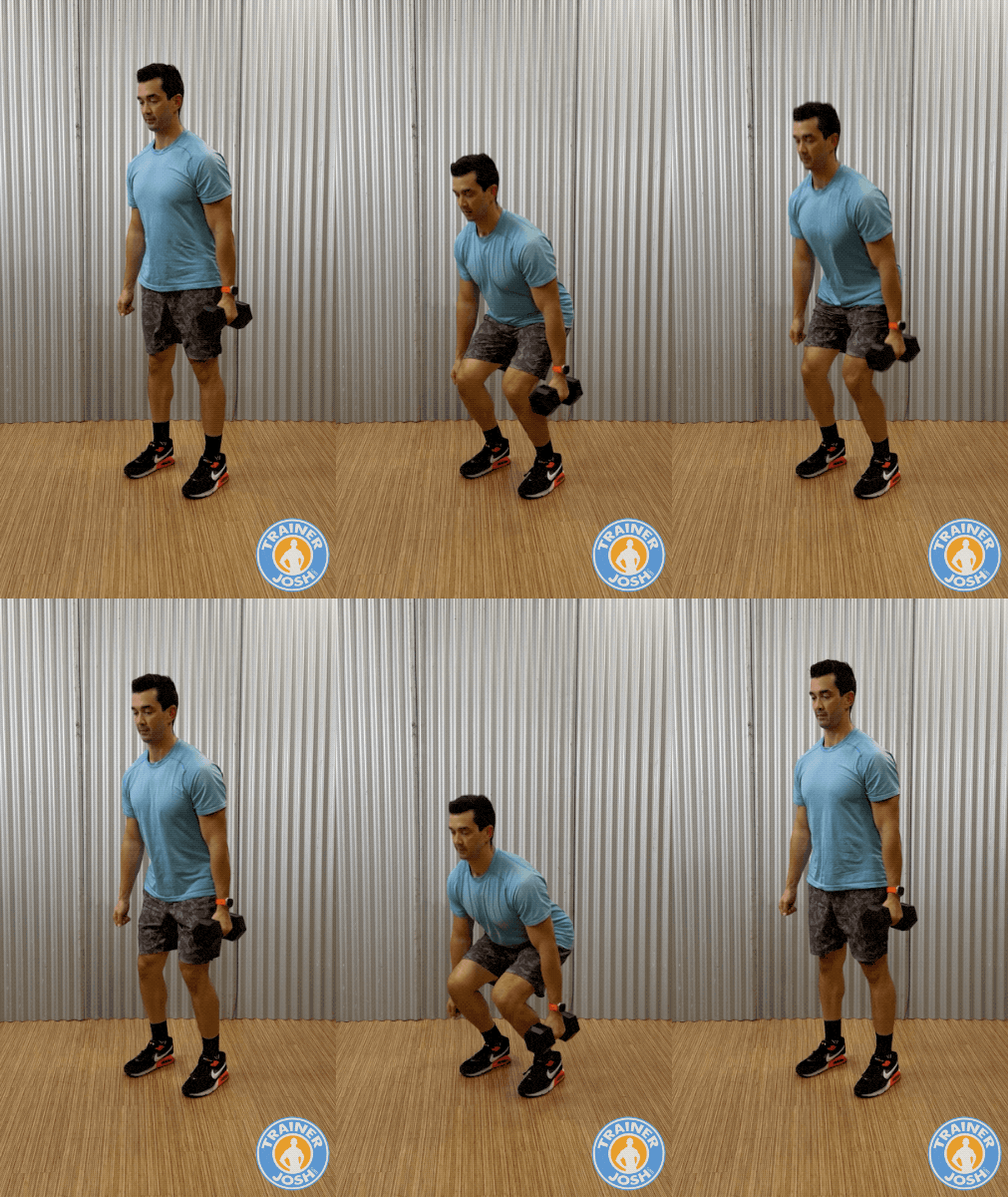
Suitcase deadlifts are a very functional exercise that builds lower back strength, core stability, and overall symmetry. By holding a dumbbell on one side of your body it’ll create an anti-lateral flexion challenge. It forces your obliques, spinal rectors, and deep core stabilizers to work overtime to keep your torso upright.
Strengthens core muscles that protect your spine during uneven or real-life lifting. Like carrying groceries or luggage. It helps to bulletproof your lower back against strain while improving posture and balance.
- Put your feet hip-width apart and a dumbbell placed beside one foot as if you’re about to pick up a suitcase. Keep your shoulders square and your spine in a neutral position.
- Push your hips back and slightly bend your knees, keeping your chest up and your back flat. Reach down with one hand to grip the dumbbell, keeping your other arm at your side for balance.
- Brace your core, drive through your heels, and extend your hips to stand tall and upright. Avoid leaning to the weighted side.
- Stand fully upright, with your shoulders even, and squeeze your glutes at the top without arching your back.
- Reverse the motion slowly, hinging at your hips to lower the dumbbell to the floor under control. Complete all reps on one side, then switch to the other side.
Trainer Tip: Keep your core brace and think about crushing your abs on the side, holding the weight to prevent tipping. Visualize a straight line from head to tailbone throughout the lift. This helps to make sure you hinge from the hips and don’t round your lower back.
Common Mistakes: Leaning too far forward with the dumbbell can shift stress to the spine instead of the glutes and core. Rounding the back during the pickup or lowering phase, shrugging the shoulder, or twisting through the torso at the top.
Bird-Dog Row
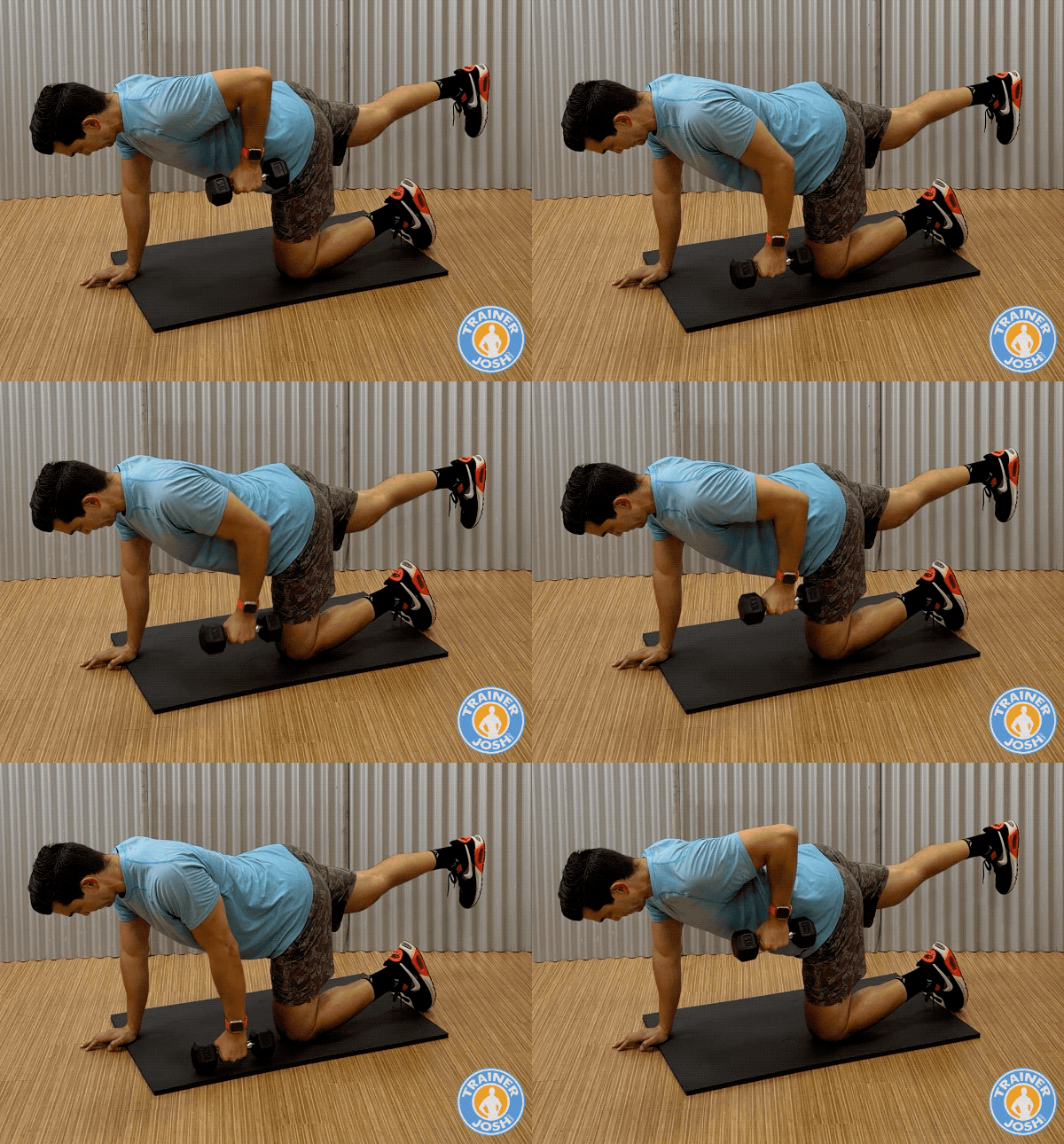
The Bird Dog Row with the Dumbbell is an advanced core stability and lower back strength exercise. It combines the balance challenge of a bird dog with the pulling strength of a row. It trains your spinal erectors, lats, glutes, and deep core stabilizers to work together. This teaches your body to resist rotation and maintain a neutral spine position under load.
- Get into a quadruped position on hands and knees with a dumbbell placed just outside one hand. Extend your opposite leg straight back so that your body forms a long, straight line from head to heel.
- Engage your core to maintain a neutral spine position. Imagine balancing a glass of water on your lower back. Keep your hips and shoulders square to the floor.
- Grab the dumbbell with your free hand and perform a controlled row by pulling your dumbbell toward your rib cage. Squeeze your back muscles at the top of the movement.
- Slowly lower your dumbbell back down under control without twisting or dropping your torso.
- Maintain full-body tension and balance. Complete all reps on one side before switching to the other arm and leg.
Trainer Tip: Focus on slow, controlled movements. The goal is stability, not speed. Keep your core and glutes tight to prevent your lower back from sagging or twisting.
Common Mistakes: Rotating the torso or opening the hips toward the rowing side can shift stress to the lower back. This can cause the back to arch and lose spinal neutrality. Using too much weight can defeat the purpose of the core control movement.
Dumbbell Pullover
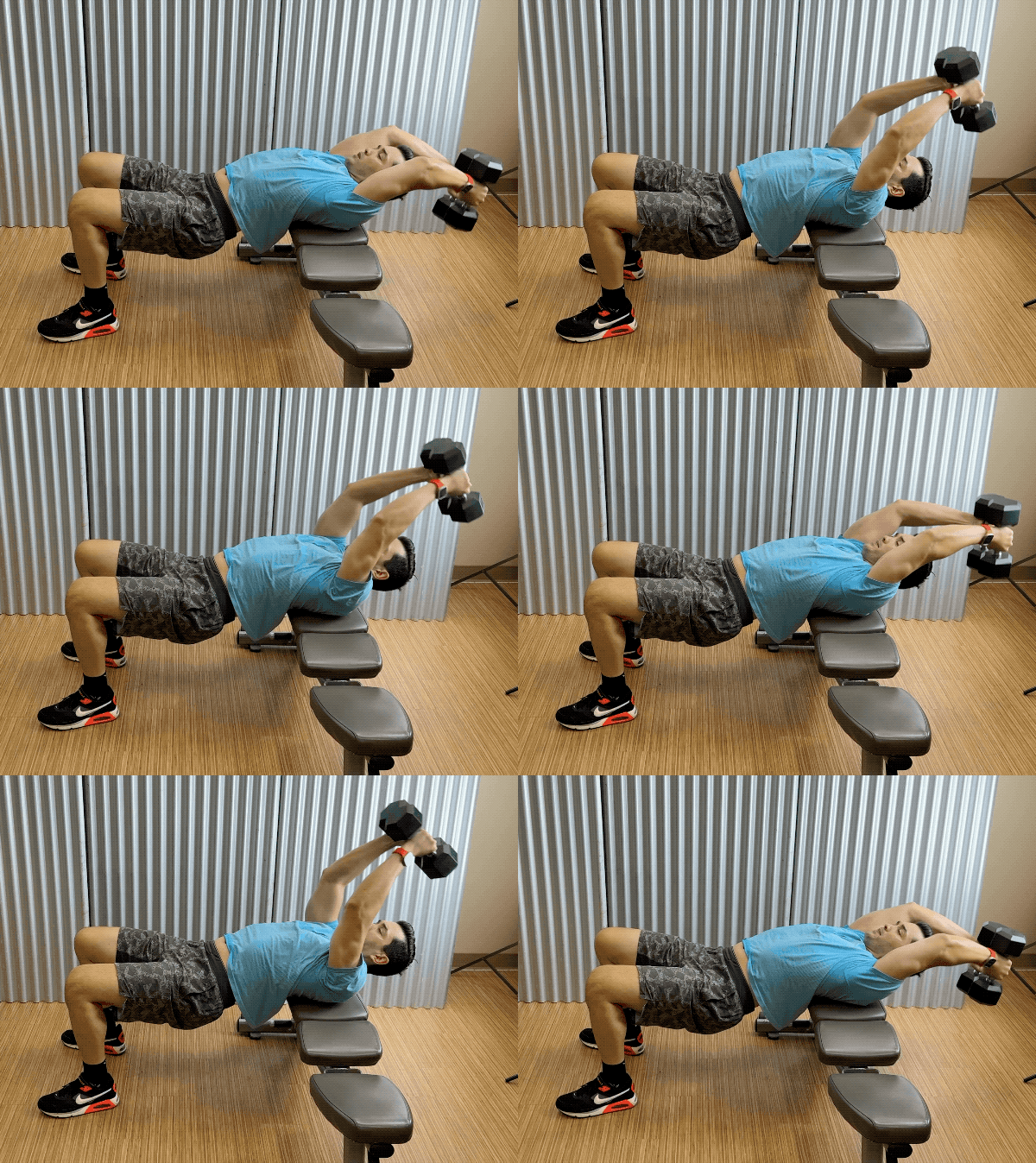
The dumbbell Pullover is a classic exercise that strengthens the lower back, lats, chest, and deep core stabilizers. This makes it a powerful exercise for building both upper body strength and spinal support. When done correctly, it teaches your body to control the connection between the ribcage and pelvis. This helps prevent lower back overextension. It also improves thoracic mobility and posture.
- Flat on a bench or perpendicular across it, with only your upper back supported. Hold a single dumbbell with both hands above your chest, arms straight but not locked.
- Keep your feet flat, core engaged, and lower back lightly pressed into the bench to prevent excessive arching.
- Slight bend in your elbows, slowly lower the dumbbell in an arc behind your head until you feel a deep stretch through your chest and lats.
- Pull the dumbbell back over your chest by engaging your lats and exhaling as you bring it up. Keep your core tight.
- Keep smooth, controlled movement throughout without losing spinal alignment.
Trainer Tip: Think “ribs down, abs on” to keep your lower back from arching off the bench. Focus on the stretch and squeeze. Keep your elbows slightly bent throughout to reduce shoulder strain.
Common Mistakes: Overarching the lower back to move the dumbbell. This shifts tension away from your back and stresses the spine. Dropping the dumbbell too low puts your shoulders at risk.
Warm-Up & Prep for a Safe Session
Before you even touch a dumbbell, you should answer the question that’s been haunting you since last time… “How do I make sure this doesn’t happen again?”
The answer isn’t stretching. It’s priming your spine’s stabilization system before load ever enters the equation.
Start Smart: Timing Matters
Never train your back first thing in the morning. Your intervertebral discs are hydrophilic.
They imbibe fluid overnight, making you taller but also increasing your susceptibility to injury. This disc swelling increases forward-bending stress and reduces load tolerance by up to 300%.0
Optimal training window: mid-morning to dinnertime. After your discs have naturally decompressed from a few hours of upright activity.
Phase 1: Mobilize Without Loading (2-3 minutes)
Your first job is eliminating viscous friction in spinal tissues without triggering pain sensors.
Cat-Camel (7-8 cycles)
Get on your hands and knees. Gently arch and round your entire spine (this is a motion, not a stretch). Don’t push the end ranges. More cycles offer zero additional benefits and may sensitize tissues. Think of it as lubricating the internal components before the engine fires.
Hip Hinge Drill
Stand with a dowel along your spine (or imagine one is there). Push your hips back while maintaining three contact points: head, upper back, and tailbone. This grooves the pattern that spares your spine.
One client told me: “I’m now realizing I was lifting with my back instead of pushing my hips through.”
Phase 2: McGill’s Big 3 (Build Your Foundation)
Dr. Stuart McGill’s research identified three exercises that efficiently create lasting core stiffness. These exercises also spare the spine from damaging loads.
Modified Curl-Up (8-10 reps)
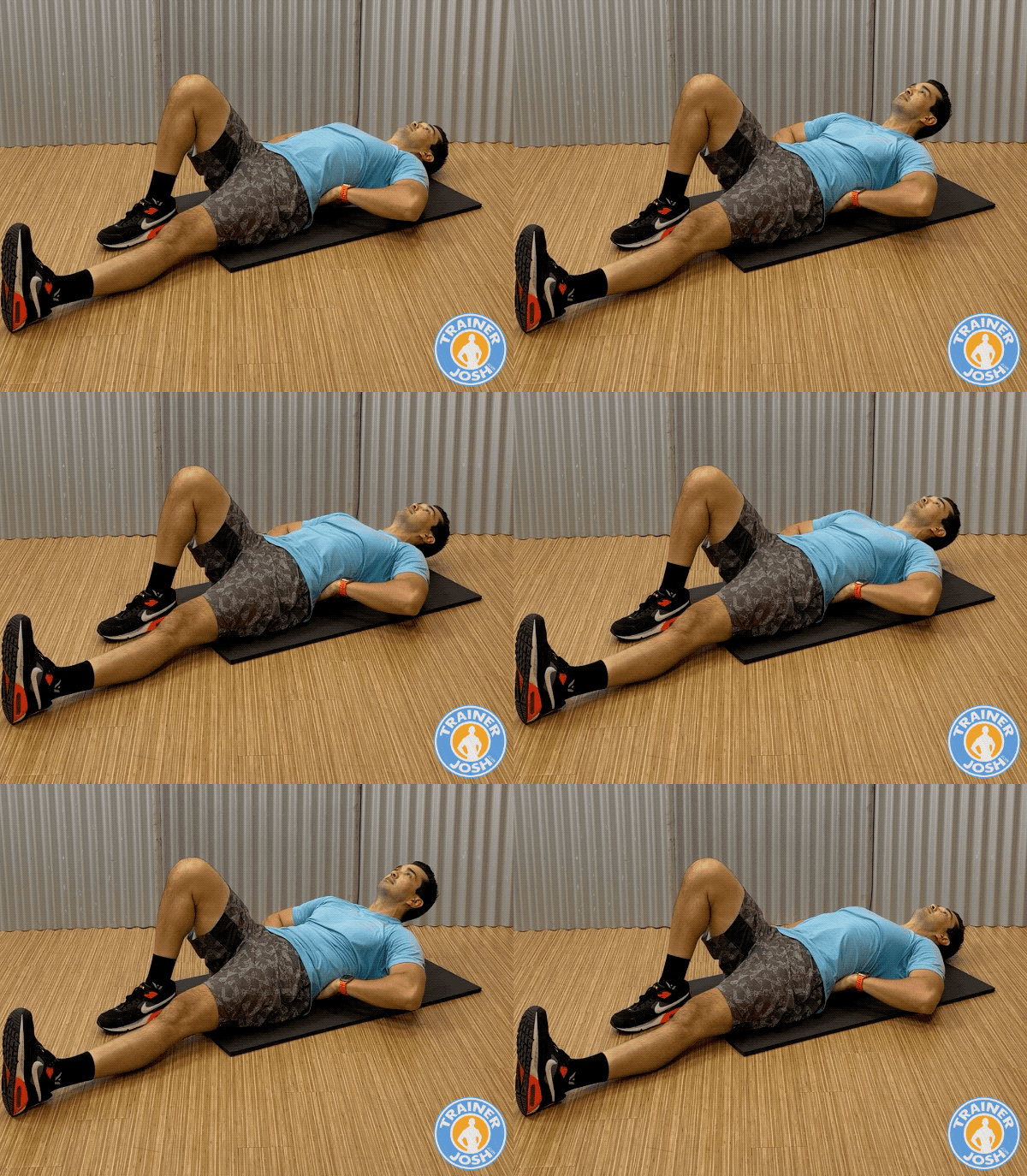
Lie on your back, one knee bent, hands under your lower back to preserve neutral spine. Lift your head and shoulders slightly off the ground (just enough to feel your abs brace). Hold 10 seconds. This targets the rectus abdominis without the 3,300 N of compression that traditional sit-ups create.
Side Plank (3 sets, 10-second holds per side)
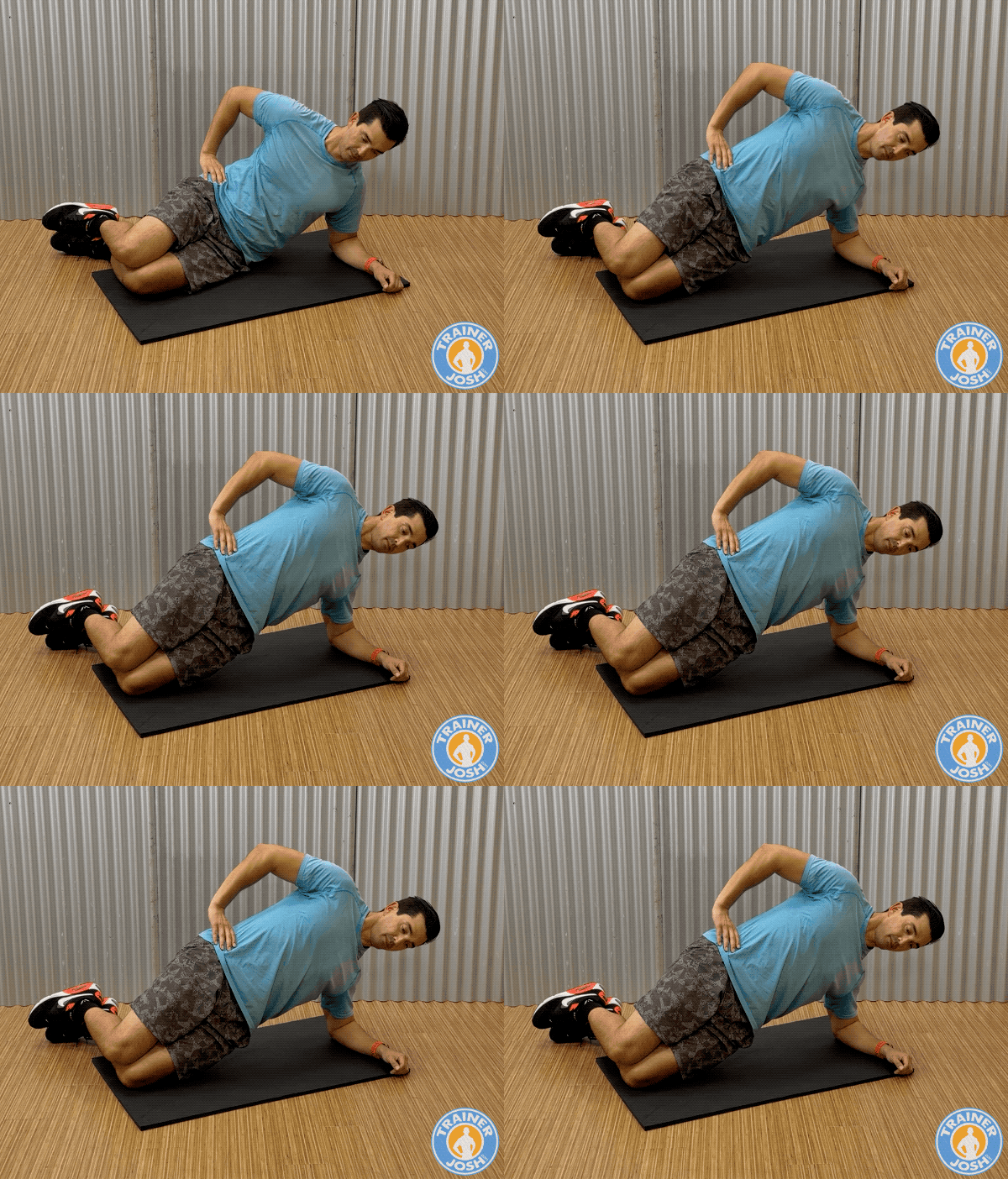
From your elbow and knees (or feet for advanced), create a straight line. This exercise connects your quadratus lumborum with your obliques and transverse abdominis.
These are the side muscles that keep your body from collapsing. Start conservatively.
Bird-Dog (5 reps each side)
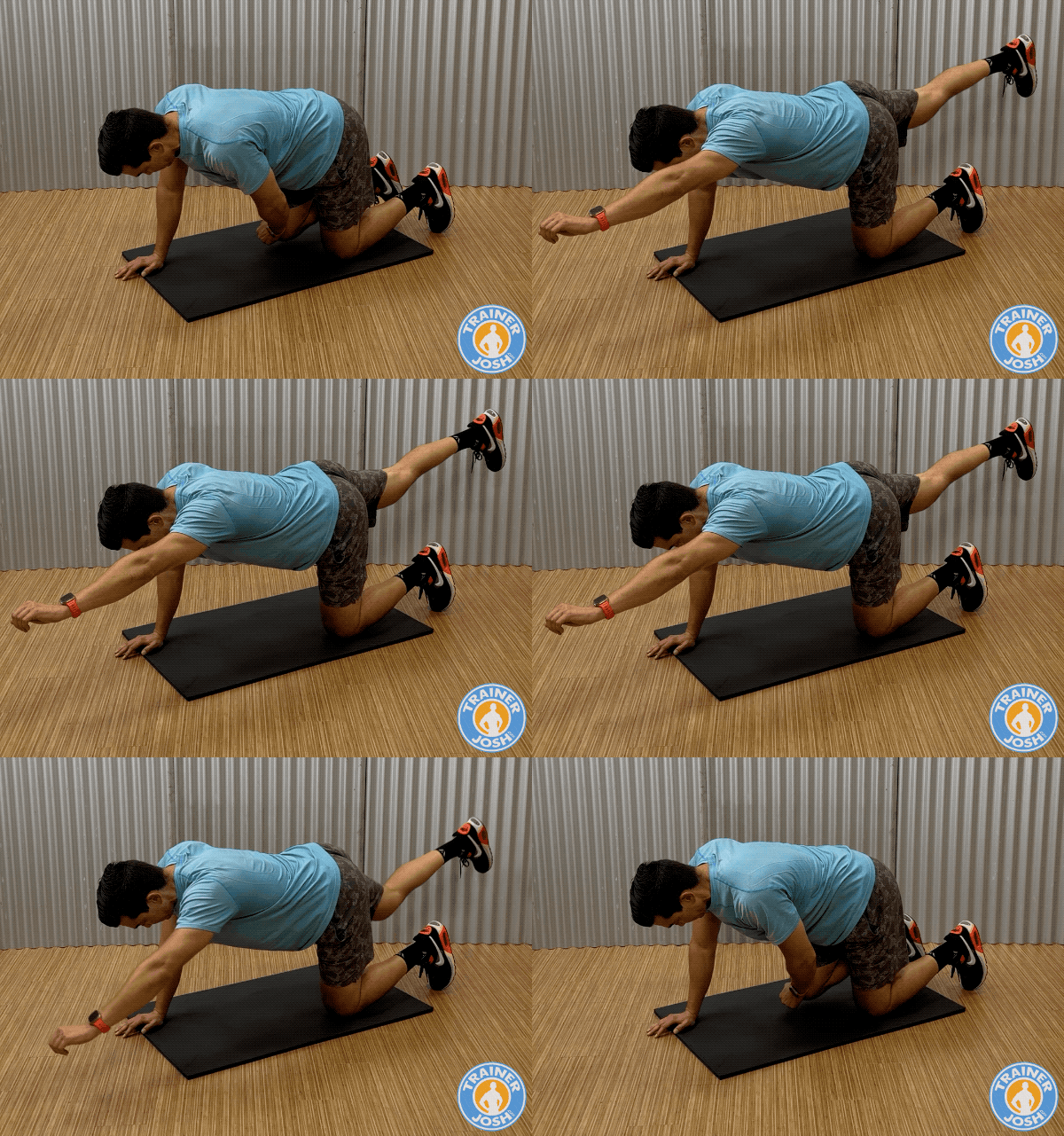
From a hands-and-knees position, extend the opposite arm and leg while keeping your lower back completely still. Hold 10 seconds.
This activates your multifidus muscles and trains your brain to recognize a stable spine before you add weight or complex movements.
You’ll challenge your longissimus, iliocostalis, and multifidus while teaching hip disassociation (moving your limbs while your spine stays locked).
The Bracing Secret: Your Pre-Lift Ritual
Abdominal bracing before every rep is what separates safe lifters from those who are injured. Bracing isn’t sucking it in. It’s a 360-degree stiffening, like preparing to get punched in the gut.
Take a deep breath into your belly, then create tension in all directions —front, sides, and back — simultaneously. This forms “Nature’s back belt.”
One client told me after we started working together, “I used to bend my lower back and brace with it instead of my core. This gave me years of back pain from exercises that should have been safe.”
The Key Cue: Brace first, then move before you pick up that dumbbell for an RDL or row. Maintain that brace throughout the entire set. The moment you lose tension, you’ll lose spinal protection.
Dumbbell Lower Back At-Home Workout
Beginner: “Pain-Free Foundations” (2× per week)
Intermediate: “Strength Builder” (3× per week)
“Desk-Job Fix” Mini Routine (10-Minute Daily)
Programming, Sets, and Progression Tips
You’ve probably seen programs promising results with “just 5 minutes a day.” But here’s the truth. Your lower back stabilizers need volume and consistency, not shortcuts.
How Often Should You Train Your Lower Back
Key Takeaways:
2-4 times a week.
You should exercise your lower back multiple times a week for stabilization and endurance training. This improves resilience rather than heavy strength training that requires longer recovery times.
Spinal stabilizers are built for endurance, not max effort. They’re composed of slow-twitch fibers designed to fire all day, every day. Training them once a week is like trying to build marathon endurance by running once every seven days. It doesn’t work.
Research-backed programs recommend three sessions weekly for a reason. Your posture and lower back will improve significantly faster due to the consistency.
You don’t have to have a dedicated “lower back workout” day, but you can add lower back exercises to your regular strength training program.
Recovery matters too. Space resistance sessions by 48 hours. A practical split would be Monday/Wednesday/Friday for direct back work. With Tuesdays/Thursdays for other training. Include one to two full recovery days weekly.
Recovery days only work if your body actually gets to relax into them. Magnesium plays a direct role in muscle relaxation and sleep quality, and it’s a mineral a lot of people fall short on. Ageless Multi Magnesium combines several forms in one dose, which is one option I like for supporting recovery on your days off.
A 7-form magnesium complex designed for adults 40+ to support restful sleep, relaxation, muscle recovery, and whole-body health. Each serving provides 350mg of magnesium plus L-theanine and vitamin B6 for added nervous-system support.
- 7-Form Magnesium Blend: Combines glycinate, taurate, malate, citrate, Sucrosomial® magnesium & complementary forms
- Sleep & Relaxation Support: Magnesium glycinate plus L-theanine help support calm, relaxation & restful sleep
- Muscle Recovery & Comfort: Supports normal muscle relaxation, recovery & energy production
- Enhanced Absorption: Includes clinically studied Sucrosomial® Magnesium for high absorption & gentle digestion
- Heart, Bone & Nervous System Support: Provides 350mg of magnesium plus vitamin B6 for essential body functions

Build Stability from Every Angle: The Right Way to Train Your Lower Back
One or two exercises won’t be enough to get the job done. Your spine needs stability from multiple angles (front, sides, back) plus integrated movement patterns.
Starting point: 3–4 exercises, 2–3 sets each.
Target volume: Work toward 15–25 total sets per session as you advance
Set/Rep Schemes: Endurance Over Everything
Most people try to train their lower back like they do their chest. Heavyweight, low reps. That’s backwards for spinal stabilizers.
For Stability/Endurance Work:
- Start: 10 reps per exercise
- Goal: Build to 30 reps per exercise
- Sets: 2–3 sets
- Examples: Bird-dogs, planks, side bridges
Isometric Holds:
- Duration: 5–10 seconds per hold
- Sets: 2–3 sets of holds
- Key: Quality over duration early on
For Compound Movements (RDLs, Rows):
- Strength focus: 8–12 reps
- Endurance focus: 12–20 reps
Progression Without Heavy Dumbbells
Limited weight? No problem. Progression isn’t just about adding pounds; it’s about increasing the challenge.
Tempo Manipulation
Slow everything down. A 3-second eccentric (lowering) turns a 20-pound dumbbell into serious work. Speed bypasses your stabilizers, allowing larger muscles to take over and compensate for the movement. Control the movement.
Pauses and Holds
Hold a 3-second pause at peak contraction. E.g., hold the top of a row for 3 seconds. This creates time under tension that builds tissue endurance without adding load.
Increasing Volume & Frequency
Increasing the workload (volume) is another primary way to progress your exercises and achieve a higher tissue tolerance. You can increase the repetitions, sets, number of exercises, and workout frequency.
To avoid a plateau and prevent stagnation, try cycling through different workout phases. This will keep your workouts fresh and your lower back muscles challenged.
Summary: Build a “Bulletproof” Back That Feels as Strong as It Looks
You’ve got the best lower back exercises using dumbbells and a workout plan. Now it’s time to execute it.
Your lower back isn’t weak because it’s fragile. It’s undertrained because most programs skip direct erector work entirely. The fix isn’t complicated but does require consistency.
Build a bulletproof lower back takes months, not days. Your spinal stabilizers adapt slowly because they’re built for endurance. Rushing the process with heavy weight before you’re ready is exactly how that “twinge” becomes a spasm.
Focus on feeling the right muscles working. Start light. Move with control. Add volume before weight. Stay consistent.