

There’s nothing so frustrating like working out hard only to look down and not see progress with your stubborn calves. It seems impossible to grow and strengthen your calves using only dumbbells.
Most people are working out their calves wrong. Either poor form, no progression, or no variety. They bounce through reps, use half range of motion, and use limited calf exercises.
While genetics can play a role in calf size and strength, you can for sure still get results once you start training them right. I thought I had a “genetic curse” for chicken legs once before, but was finally able to grow and strengthen my calves using these exercises and training strategies.
Here you’ll discover the exact dumbbell calf exercises that actually work for getting results. You’ll be able to grow and strengthen your calves at home using only dumbbells with this exercise and workout plan.
Why Calves Are So Hard to Grow
Key Takeaways:
Calves can be so hard to grow because of a few reasons like:
- Genetic factors
- Inefficient training habits
- Specific physiological characteristics
Having a short muscle belly in your calf muscle is a very important factor. Having lower muscle belly insertions (especially the gastrocnemius) makes it easier to grow your calves.
Being born with short tendons and big muscle bellies is an advantage for easily building muscle mass and strength in your calves. Don’t sweat it if you weren’t born with the genetics for great calves, because when trained properly, you can still get significant gains.
Your calves are used to everyday stresses from walking, standing, running, etc., so they’re resistant to growth. This is why it’s essential to use high-intensity and high-volume training with your calves.
Quick Tour of Your Lower Leg Anatomy
Building and strengthening your calves isn’t just about looks or aesthetics. Calves are needed for posture, balance, and just about every athletic movement you do.
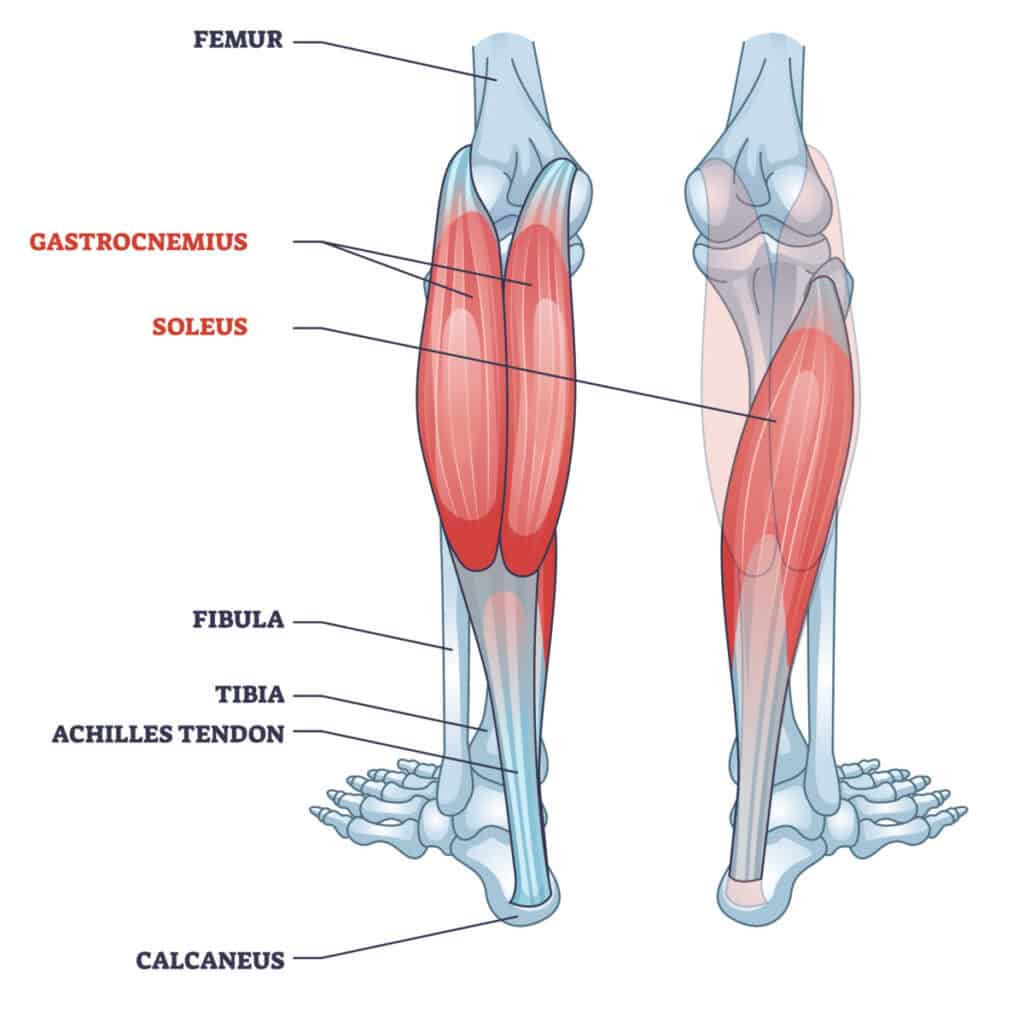
Your calf is made up of two main muscles: the gastrocnemius (upper calf and most visible calf muscle) and the soleus (lower calf).
The gastrocnemius is made up of about 60% fast-twitch fibers and responds best to 20-40 second sets. Straight-knee exercises like standing calf raises target the gastrocnemius muscle more.
The soleus is mostly slow-twitch fibers (around 88%) and responds better to higher repetitions lasting longer than 40 seconds (15-25 reps). Bent-knee exercises like seated calf raises target the soleus muscle more.
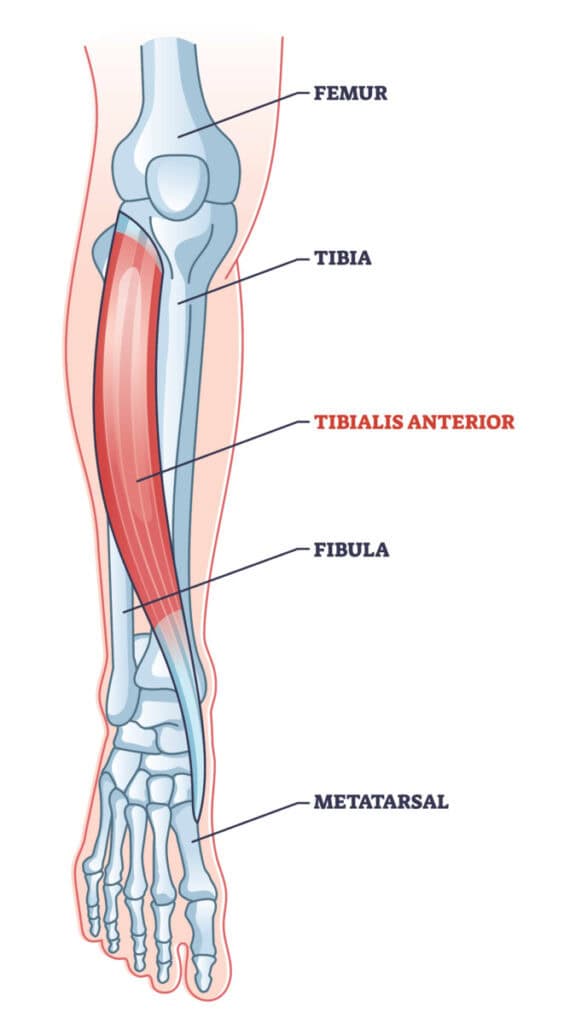
There’s also the anterior tibialis muscle (shin muscle) on the front of your lower leg that shouldn’t be neglected. It’s essential for balancing lower leg strength and aesthetics, especially if you’re training your calves.
Most people ignore the front of the shin, but strengthening the front of your shin directly helps absorb impact and decelerate safely, reducing strain on your knees. Since it forms the front of your lower leg, developing it will give you a visually complete, muscular, and defined lower leg.
Stretch your calves between sets when training the tibialis to take advantage of reciprocal inhibition. When you stretch the antagonist muscles (the calves), you’ll improve activation and contractile efficiency of the working muscle (tibialis). This helps restore ankle mobility and balance muscle tension.
How to Build Your Calves With Dumbbells
Most people assume you need extremely high volume when training your calves because they’re used all day in daily activity. But you don’t have to use punishment-level volume when training them to get results.
Calves just need a well-structured, intense session once per week with proper loading, full range of motion, and smart tempo. And this can be done using only dumbbells.
Train smart, not just hard. More volume won’t fix poor technique or programming.
These are techniques to use during your dumbbell calf exercises to get the best results:
Single-Leg Advantage: This is the secret weapon for training your calves using only dumbbells at home. Single-leg versions of calf exercises can be superior because they double the load without needing heavier dumbbells and help fix muscle imbalances.
If you have trouble balancing when doing single-leg calf exercises, then hold one dumbbell and then use the free hand to lightly support yourself by holding something.
Prioritize Full Range of Motion: Proper form with each rep will maximize muscle engagement and the stretch in your calf muscles.
You should have a complete stretch of the calf muscle at the bottom and a full peak contraction at the top of each rep. Most people use short, bouncy movements instead of working through a full stretch and contraction.
Use calf blocks at least 6 inches high and slightly rounded so you can have a full stretch below the toes. In your first dumbbell calf workouts, hold the bottom stretched position for 3-4 seconds to re-learn your calves to stretch.
Lengthened partials are an exercise method when you keep your heel at the bottom of the movement so it’s in the stretched position for the whole set. It’s really effective for breaking through a plateau and growing stubborn calves because it maximizes growth-inducing tension.
Slow Eccentrics: Use a slow tempo during the eccentric contraction (lowering phase) to increase time under tension. Controlled slow eccentric contractions will maximize stimulus, reduce momentum, and increase muscle damage (that results in hypertrophy).
An example tempo during calf raises:
- 3 sec down
- 1 sec pause in full stretch at bottom
- 1 sec up
- 1 sec peak contraction at top
This stretches the Achilles tendon and targets fast and slow twitch fibers. Your Achilles tendon has a powerful stretch reflex, so it’s easy to bounce at the bottom and let the tendon do all the work (and not work your calf muscles)
Make your calf muscles do the work instead of using the elastic bouncing energy of the stretch-shortening cycle. Manipulating your lifting tempo with a slow and controlled movement is best for calf exercises.
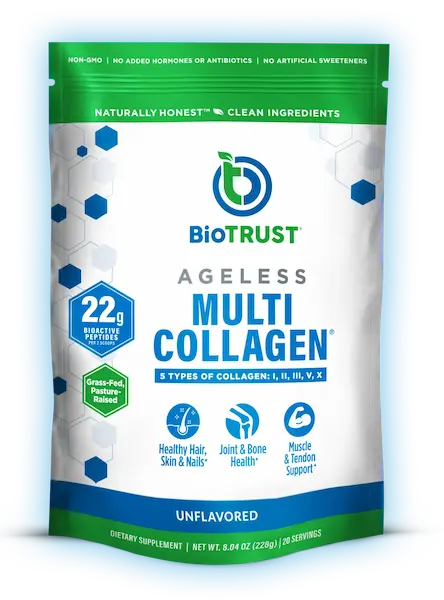
Calf training also puts repeated stress on the Achilles tendon and other connective tissues around your ankle. BioTRUST Ageless Multi-Collagen is one option I like because its five collagen types are designed to support tendons, ligaments, cartilage, and joint mobility as you train.
Powered by 5 Types of Bioactive Naturally Hydrolyzed Collagen Peptides for Full-Body Support (Odorless & Flavorless)
- Natural GLP-1 Support: Helps support healthy appetite signals, fullness & metabolic function
- Lean Muscle Support: Helps preserve muscle, strength & healthy body composition during weight loss
- High-Protein Collagen: Adds 20g of protein with 5 collagen types to help support daily protein intake
- Skin, Joint & Hair Support: Provides collagen peptides to support skin elasticity, joints, hair & nails
- 3-Part Weight-Loss Support: Combines muscle, protein/collagen & appetite support in one simple daily stack
Frequency & Volume: Many believe you need to subject your calves to daily abuse to grow and strengthen them. But 1-2x calf sessions per week with focused intensity can deliver serious results.
But you’ll need to use a full range of motion, proper tempo, and enough volume to get results. It’s more about exercise execution and intensity than just volume alone.
I don’t recommend training calves every day. If you’re training them properly with progressive overload techniques, then they will need at least 1-2 days of rest to recover and rebuild. 2-3x calf training sessions per week is the max.
People usually add on calves at the end of a leg workout. While this is an effective and convenient time to train your calves, sometimes it is better to train calves at the start of your session to give them priority and catch them fresh.
10 Best Dumbbell Calf Exercises List
Equipment Used:
These are the dumbbells that I’m using to demonstrate these calf exercises. I prefer them because they’re easy to grip, their hex shape doesn’t roll on the ground, and the hard rubber won’t scratch flooring. For calf exercises, most should be using 10-30 pound dumbbells.
I recommend picking up a set of adjustable dumbbells. Adjustable dumbbells save space and will save you money in the long run by not having to keep buying heavier dumbbells. You can change weights quickly too. They make it easier to keep progressing with your lifts, so you keep getting results.
Add a calf block so you can get a full stretch at the bottom of these exercises. You can also use an aerobic step like I’m using if you don’t have access to a calf block.
Dumbbell Standing Calf Raises
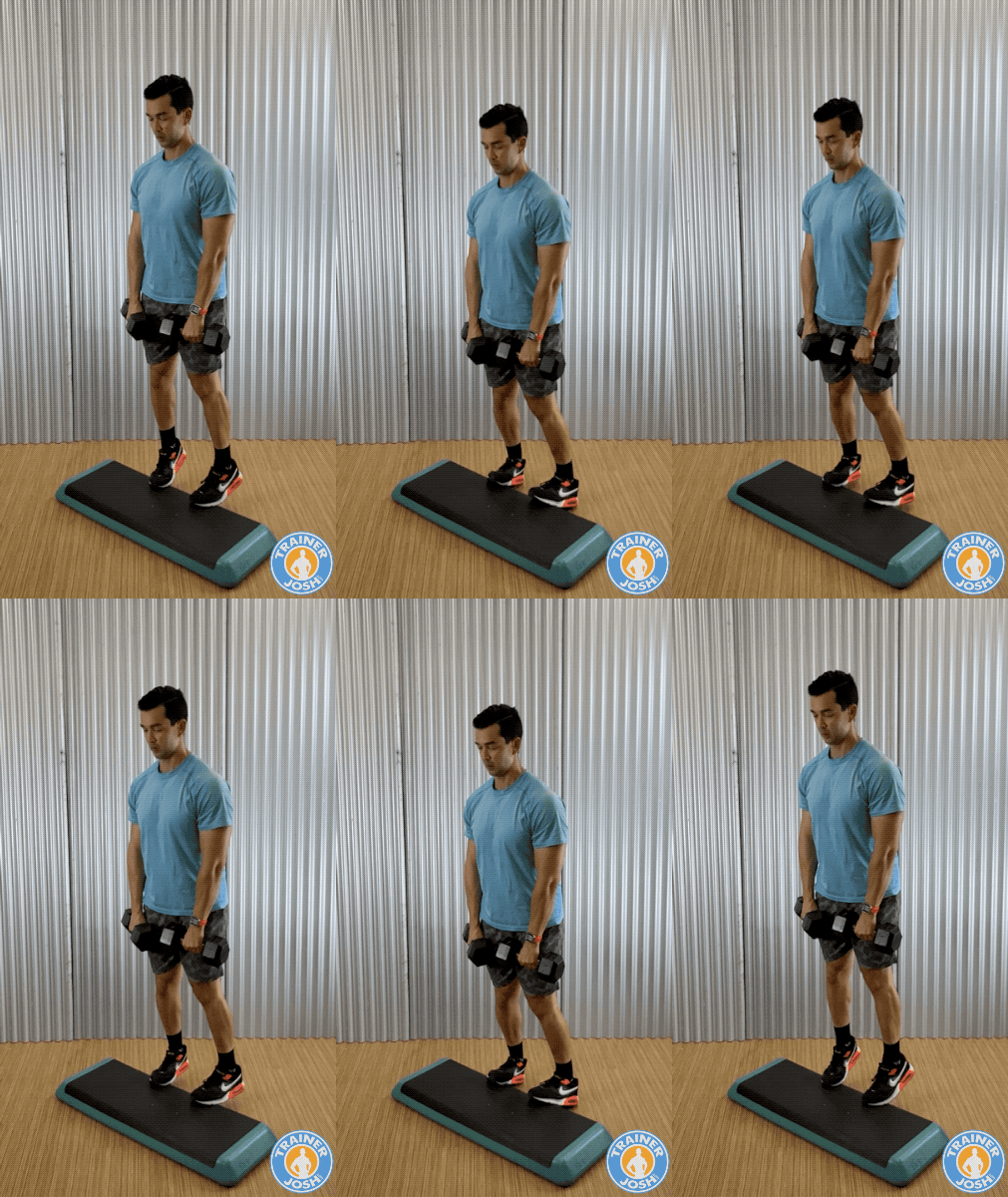
Standing calf raises are the best exercise for calves using dumbbells. It’s one of my favorite dumbbell leg exercises.
This exercise primarily targets the gastrocnemius muscle. The gastrocnemius calf muscles are best activated when the knee is straight, like in standing calf raises. It’s an essential exercise for building diamond-shaped calves. Make sure you use a full stretch, strict tempo, and no bouncing at the bottom.
- Hold the dumbbell in each hand at your sides. Stand tall with your feet hip-width apart and your toes pointed forward. Ideally, you’ll have a calf raise block to use for this exercise, but you could also use a step, as shown in the demonstration, or the stairs.
- Stabilize your body by engaging your core, keeping your legs straight but knees slightly bent, and maintaining an upright posture. If you have trouble balancing, you can use a wall or a sturdy object to help you balance (hold only one dumbbell).
- Place the front half of your foot on top of the step and then push through the balls of your feet and raise up on your toes as high as you can. Pausing and squeezing your calves at the top.
- Slowly lower your heels back down below the level of the step for a full stretch, but try not to let your heels touch the floor.
- Do more controlled reps for your target amount, focusing on keeping strict form, low tempo, and the full range of motion.
Trainer Tip: Keep your ankles steady and don’t let them rock or sway side-to-side. Pause and squeeze at the top for a stronger muscle contraction. A full stretch at the bottom and a full contraction at the top are necessary. Partial reps build partial muscles.
Foot Position Variations:
Changing your foot angle (toes in/out) can target different parts of your calf. Pointing your toes out emphasizes the inner calves (medial gastrocnemius) while pointing your toes in targets the outer calves.
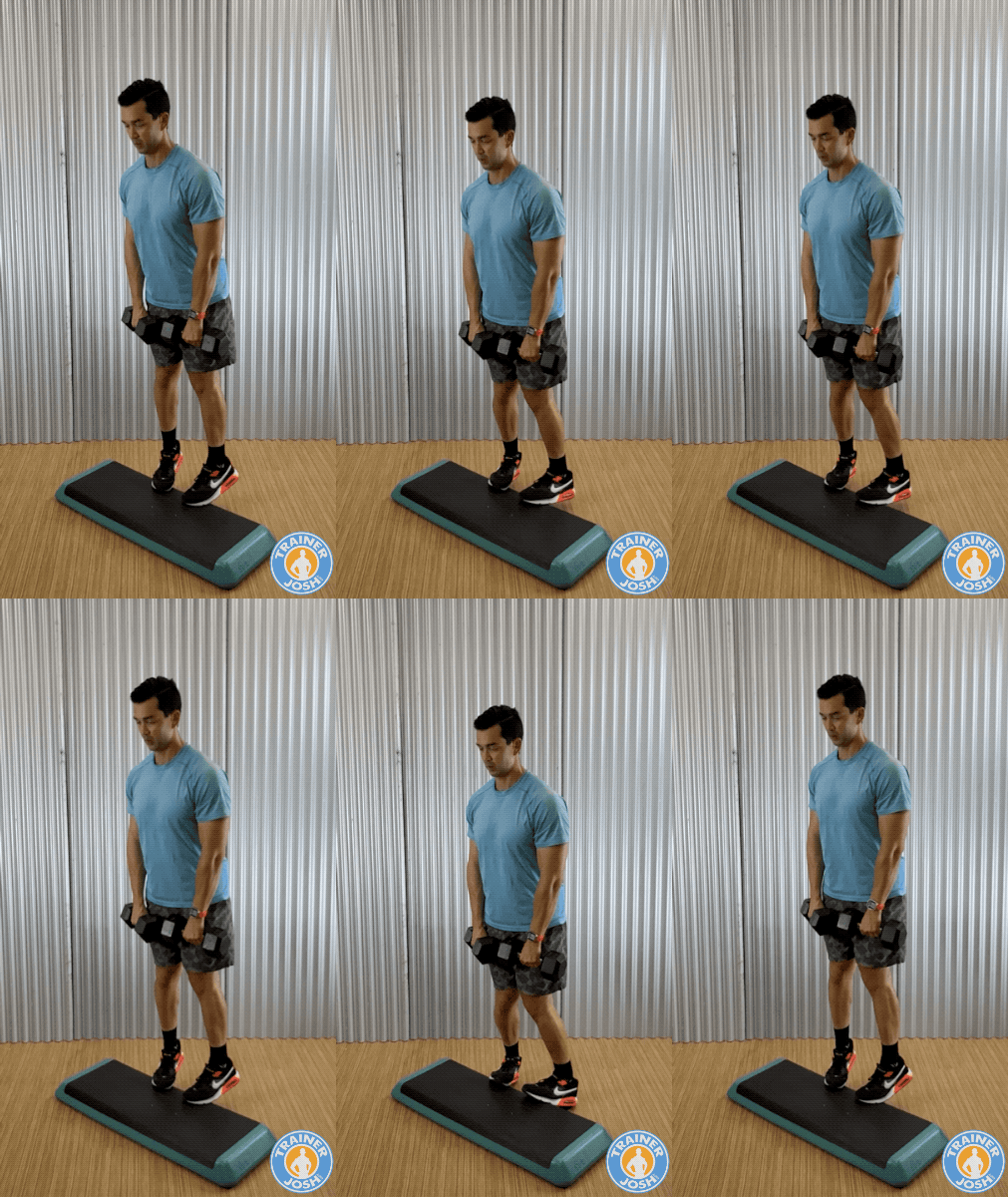
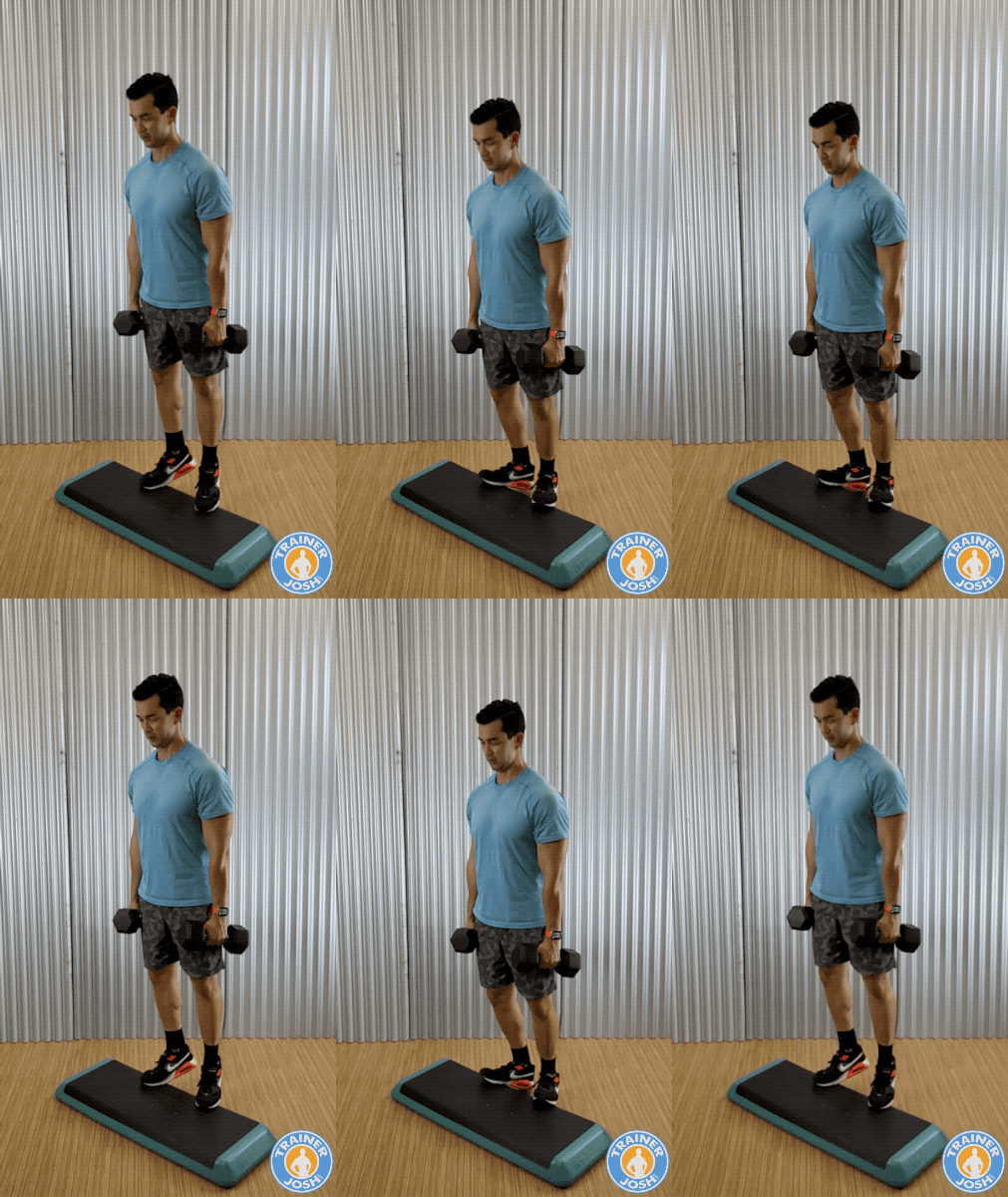
Changing up and adding different foot positions is a smart way to maximize calf development using only dumbbells. You can do this with many of the calf exercises below to mix things up and challenge your calves in different ways.
Dumbbell Single-Leg Standing Calf Raises
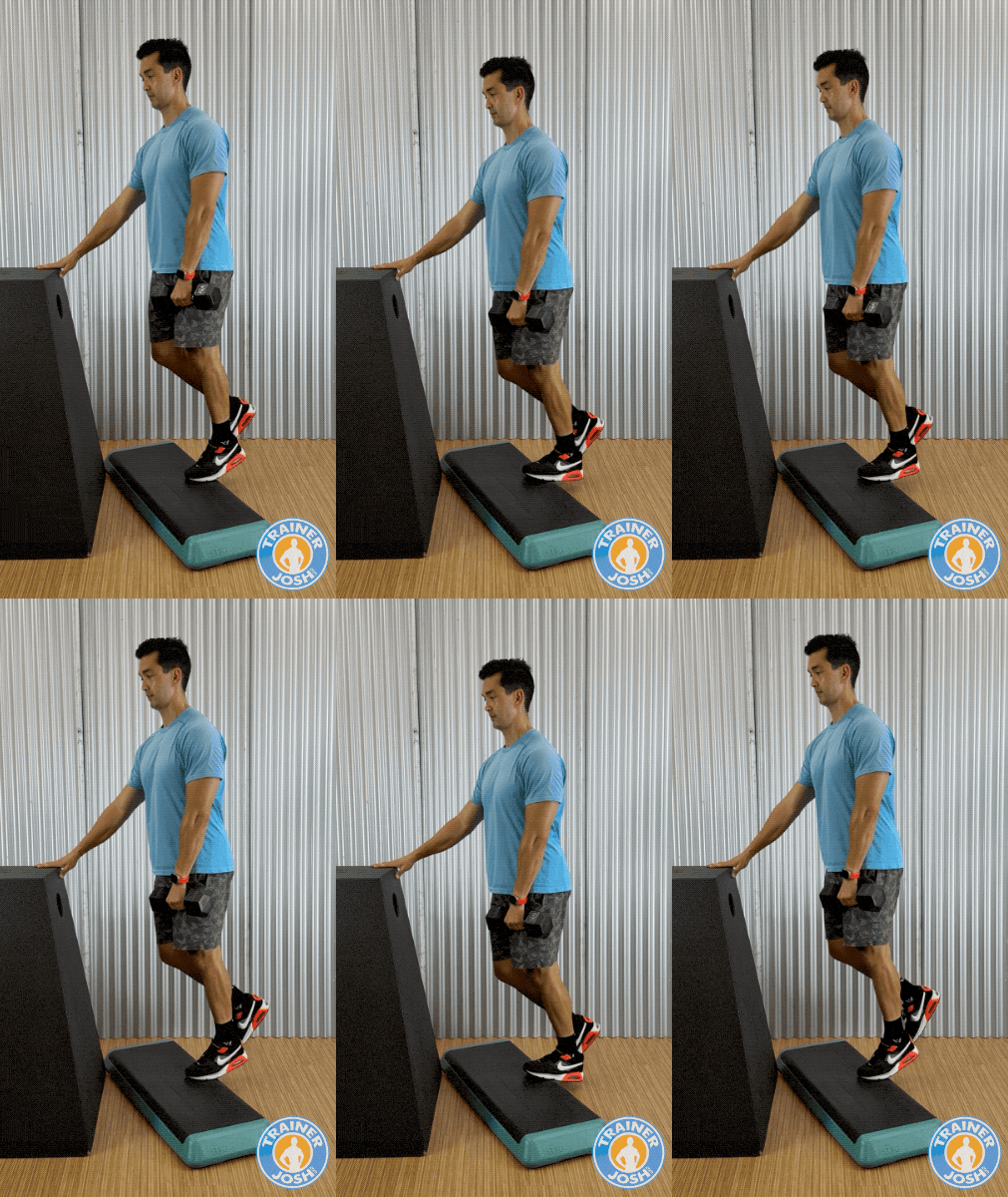
Unilateral training with single-leg calf exercises is a smart option if you’re limited to only dumbbells at home. If you’ve already maxed out standing calf raises with both legs with your current weight, then you can progress to single-leg to make it more challenging. It also fixes imbalances between the calf muscles.
- Stand on one foot holding a dumbbell in the same hand. Place your toes onto the step, letting your heel hang off, and use your free hand for light support. You can hold a wall or a sturdy object.
- Stabilize your body by engaging your core and keeping your standing legs straight but not locked out. Keep a tall, upright posture.
- Push through the ball of your foot and rise up as high as you can on your toes. Just briefly at the top and squeeze your calf muscle to maximize the contraction.
- Lower your heel down into a full stretch below the step, stopping just before the heel touches the floor.
- Keep going until you finish the desired number of reps and switch legs. Keep a slow, controlled tempo that really emphasizes the range of motion.
Trainer Tip: Focus on slowly going down to maximize muscle activation and time under tension. It can be harder to keep balance with only one leg, so focus on control and not just pushing through the reps. Try to avoid leaning to one side and keep your body upright and warm.
Dumbbell Seated Calf Raises
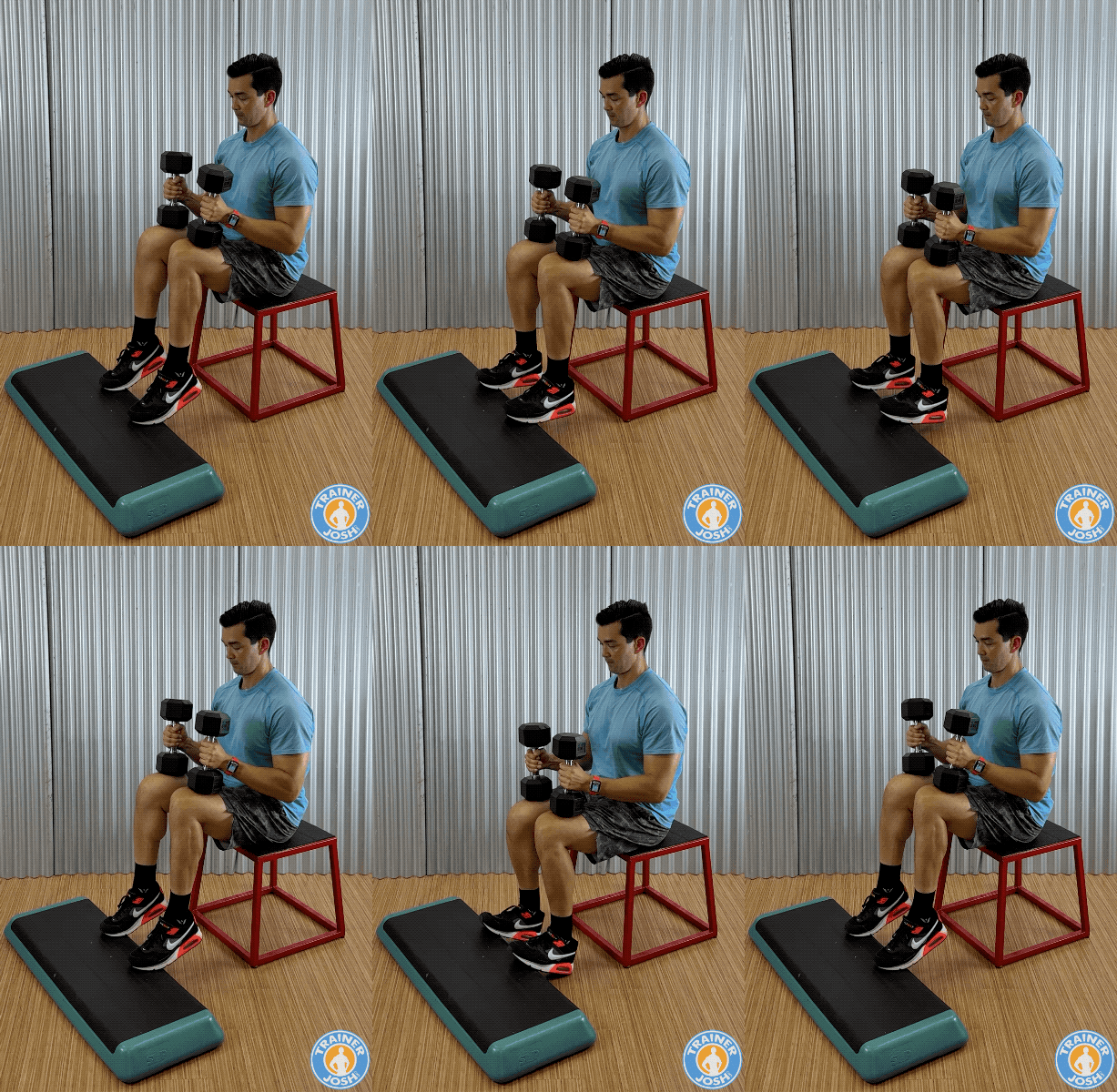
Seated calf raises with dumbbells will specifically target the soleus calf muscle. This will be crucial for building calf size, strength, and muscular endurance. The seated bent-knee position reduces gastrocnemius involvement and places it on the soleus. Since the soleus is mostly slow-twitch, it responds best to longer time under tension and high-rep hypertrophy work (15- 20+ reps)
- Sit on a bench or a sturdy chair with your feet flat on the floor and your knees bent at about 90 degrees. Place the dumbbell across your thighs right above your knees, or you can just hold the dumbbell at the bottom against your thighs. You can place a towel on top of your knees for comfort.
- Keep the dumbbell in place with your hands and sit up straight, engaging your core for added stability.
- Press through the balls of your feet to raise your heels as high as you can, contracting your calves and squeezing them at the top.
- Slowly lower your heels back to the floor, allowing for a deep stretch in your calves.
- Keep going until you finish all the reps for your target sets. Focus on slow and smooth movement and the full range of motion.
Trainer Tip: Dumbbell seated calf raises will produce the best results with strict tempo, full range, and high reps, targeting the soleus. Focus, lowering slowly for 2-4 seconds and buzzing at the bottom with a deep stretch, whole muscle fiber recruitment.
Dumbbell Single-Leg Seated Calf Raises
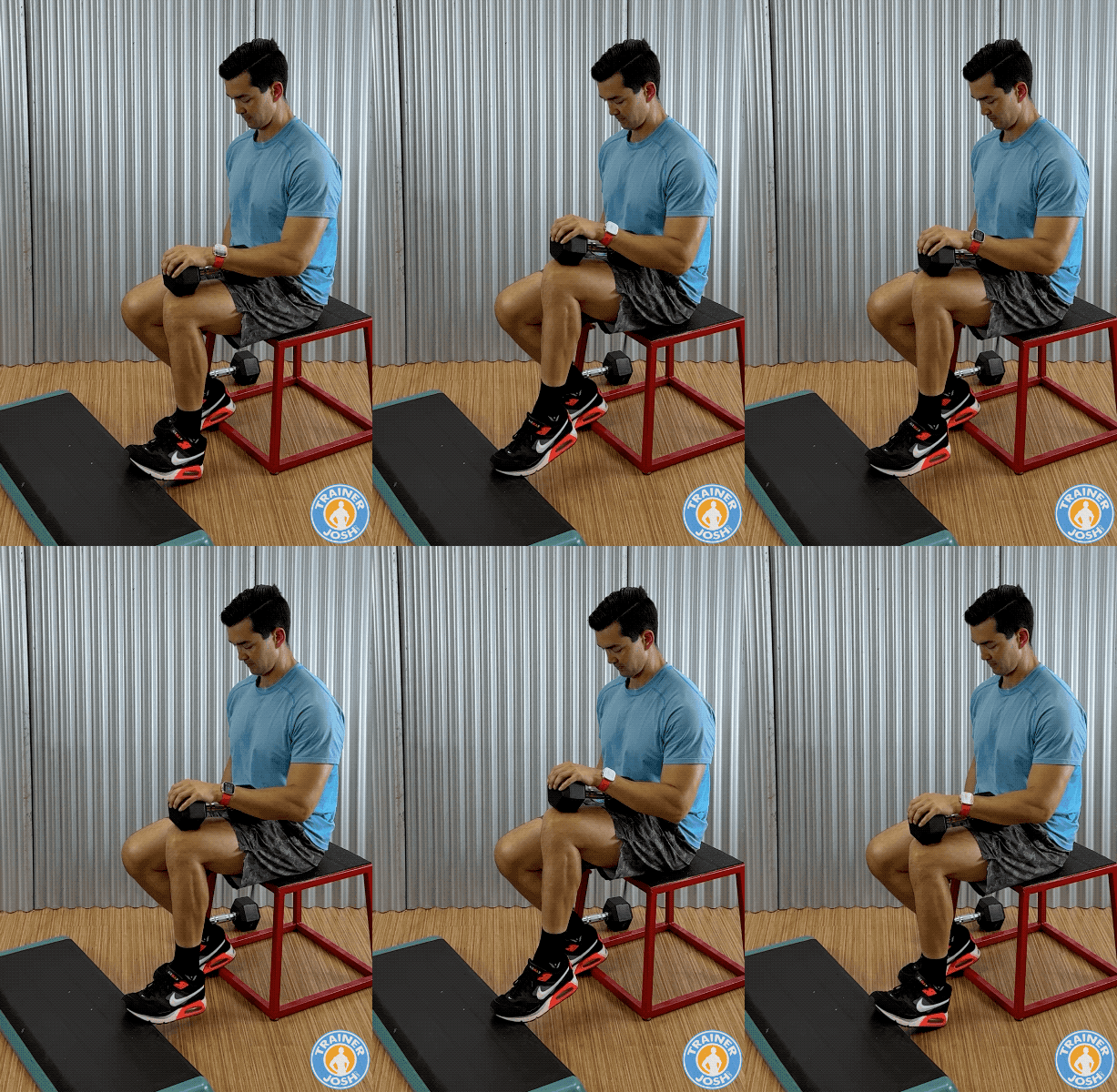
The single-leg variation of dumbbell seated calf raises will increase exercise intensity. It’s a smart option if you’re limited by dumbbell weight. You’ll also fix muscle imbalances, improve ankle stability, and increase soleus strength when working each leg independently.
- Sit on a bench or chair with your feet flat and your knees bent at about 90 degrees. Face a dumbbell securely on the top of the thigh just above the knee that will be doing the lifting.
- Place your working foot on top of the step and then press through the ball of your foot, raising your heel as high as possible. Pause and squeeze your calf at the top.
- Slowly lower your heel back down for a deep stretch at the bottom.
- Keep going until you complete the desired number of reps, and then switch to the other leg. Keep control and a full range of motion throughout the entire time.
Trainer Tip: Use paused stretches (2-4 seconds) at the bottom of each rep to increase recruitment and connective tissue adaptation. Avoid letting your knee roll inward or outward. Keep it on track in a straight line over your foot.
Dumbbell Donkey Calf Raises
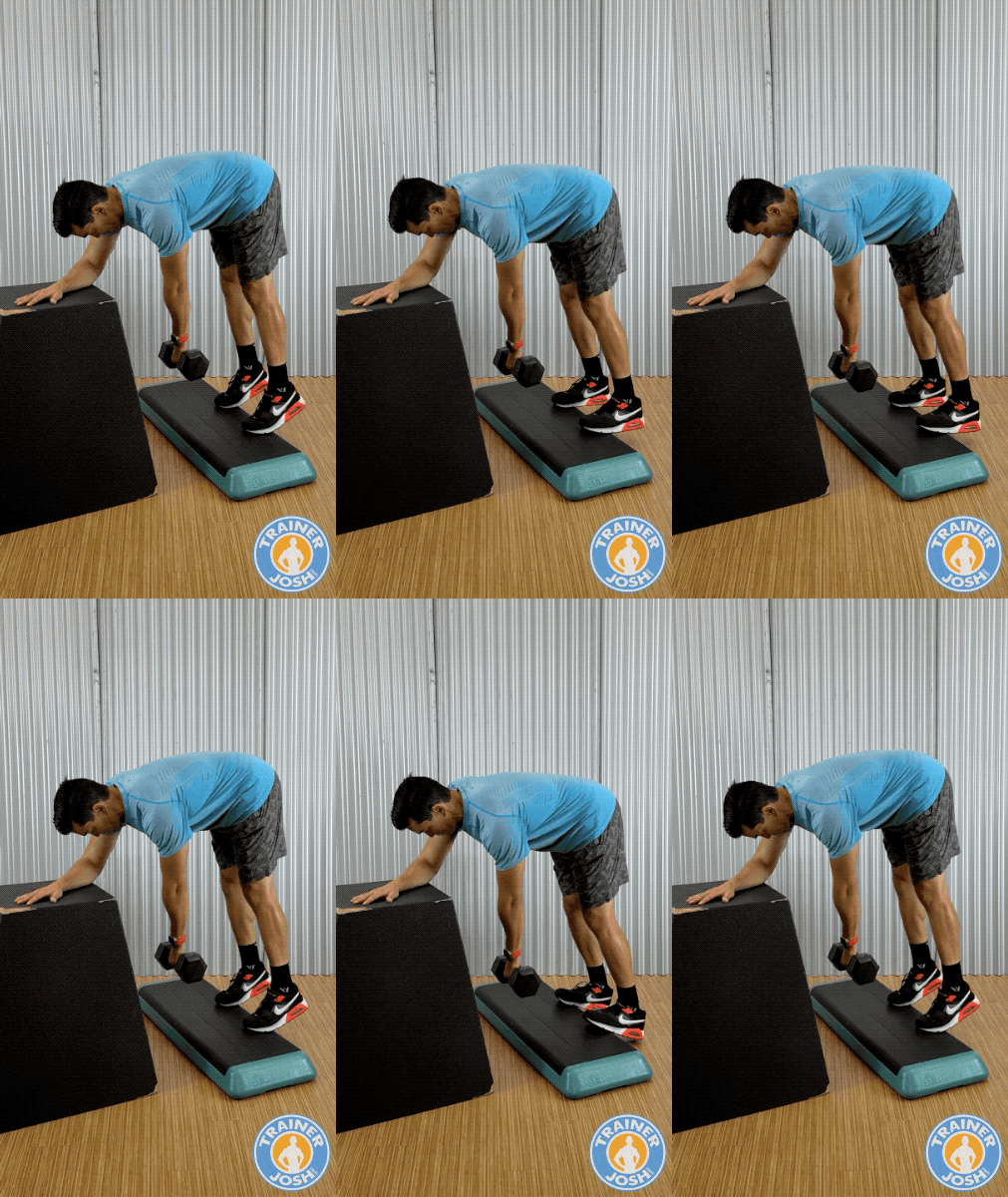
Dumbbell donkey calf raises are a powerful old-school bodybuilding exercise for developing thick, strong calves that target both your gastrocnemius and soleus. You’ll get a greater stretch at the bottom and a stronger contraction at the top by leaning forward with your hips flexed. It also puts your calves under a unique tension at this angle, compared to standing or seated raises.
- Stand with the balls of your feet on a raised platform with your heels hanging off. Hinge forward at your hips, as if taking a bow. Keep your back straight (parallel to the floor) and rest one hand on the bench or a sturdy surface for support. Hold a dumbbell in the other hand.
- Keep your knees slightly bent, hips flexed, and abs braced. Make sure your feet are hip-width apart and your toes are pointing forward.
- Press through the balls of your feet to raise your heels as high as you can. Focus on squeezing your calves at the top.
- Slowly lower your heels back down below a platform level for a deep stretch in your calves.
- Keep going and complete repetitions under control. Really emphasize a slow stretch at the bottom and a strong contraction at the top.
Trainer Tip: Try doing the single-leg variation of the dumbbell donkey calf raise for higher intensity (as seen in my demonstration). This exercise might look a little odd, but it can create high mechanical tension in your calves, leading to better growth.
Dumbbell Farmer’s Walk (on Tip Toes)
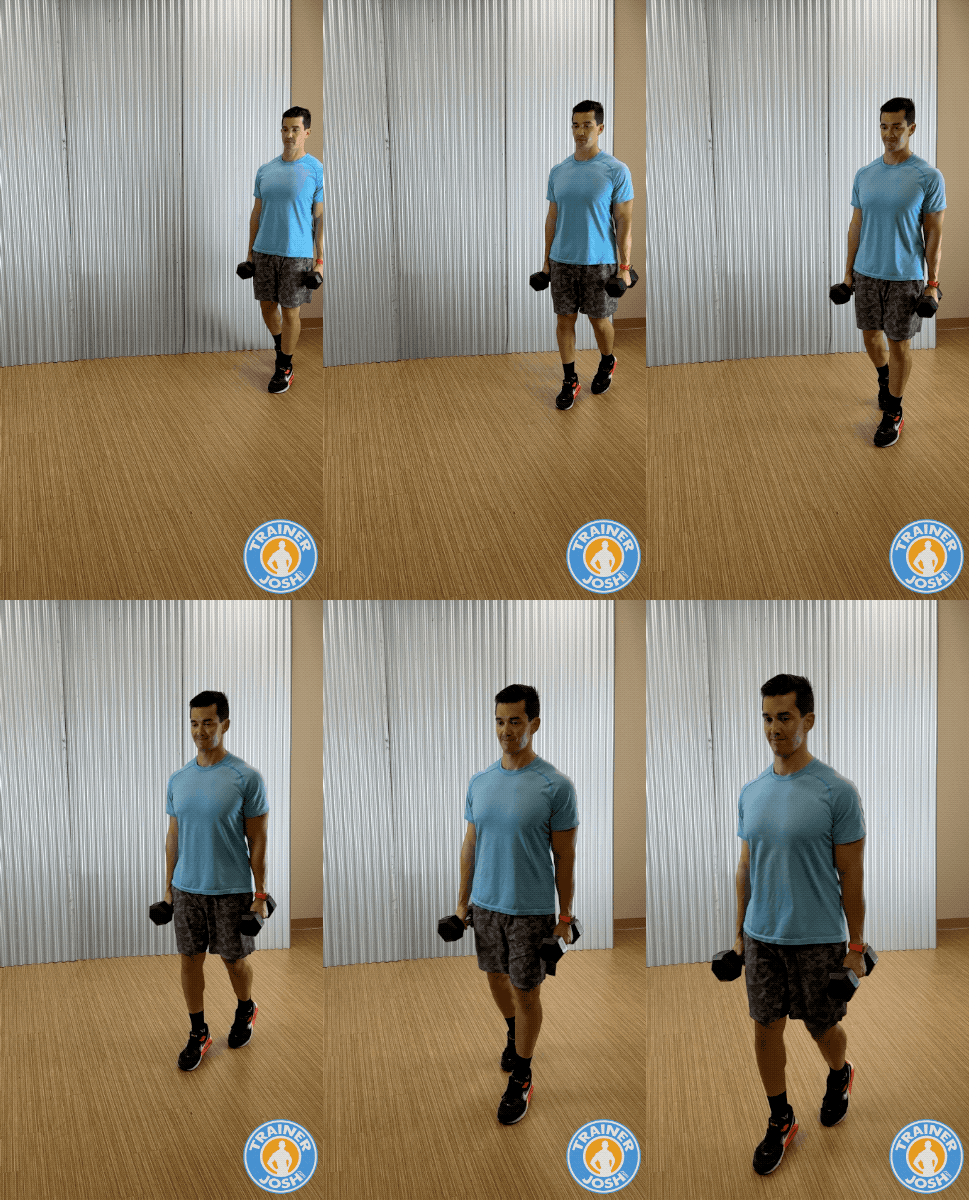
Walking on your tip toes with dumbbells will build not only calf muscle and strength but also endurance and balance. This dynamic exercise places constant tension on your calves that’ll stimulate muscle growth. It’s also great for translating over to athletic activities and sports with its powerful push-offs.
- Stand tall with a dumbbell in each hand with your arms at your sides and your feet hip-width apart.
- Rise up onto the balls of your feet (tip toes) and keep your body upright with your core engaged.
- Take slow, controlled steps forward by walking on your tip toes. Keep balance and don’t let your heels touch the floor.
- Walk for a distance of about 20-30 feet or for time (30-60 seconds). Focus on keeping your calves flexed and your movement slow and steady.
Trainer Tip: Keep your shoulders back and avoid leaning forward. It’s easy to rush through farmer walks, but focus on moving slow and deliberately for maximum calf activation.
Dumbbell Squat Jumps
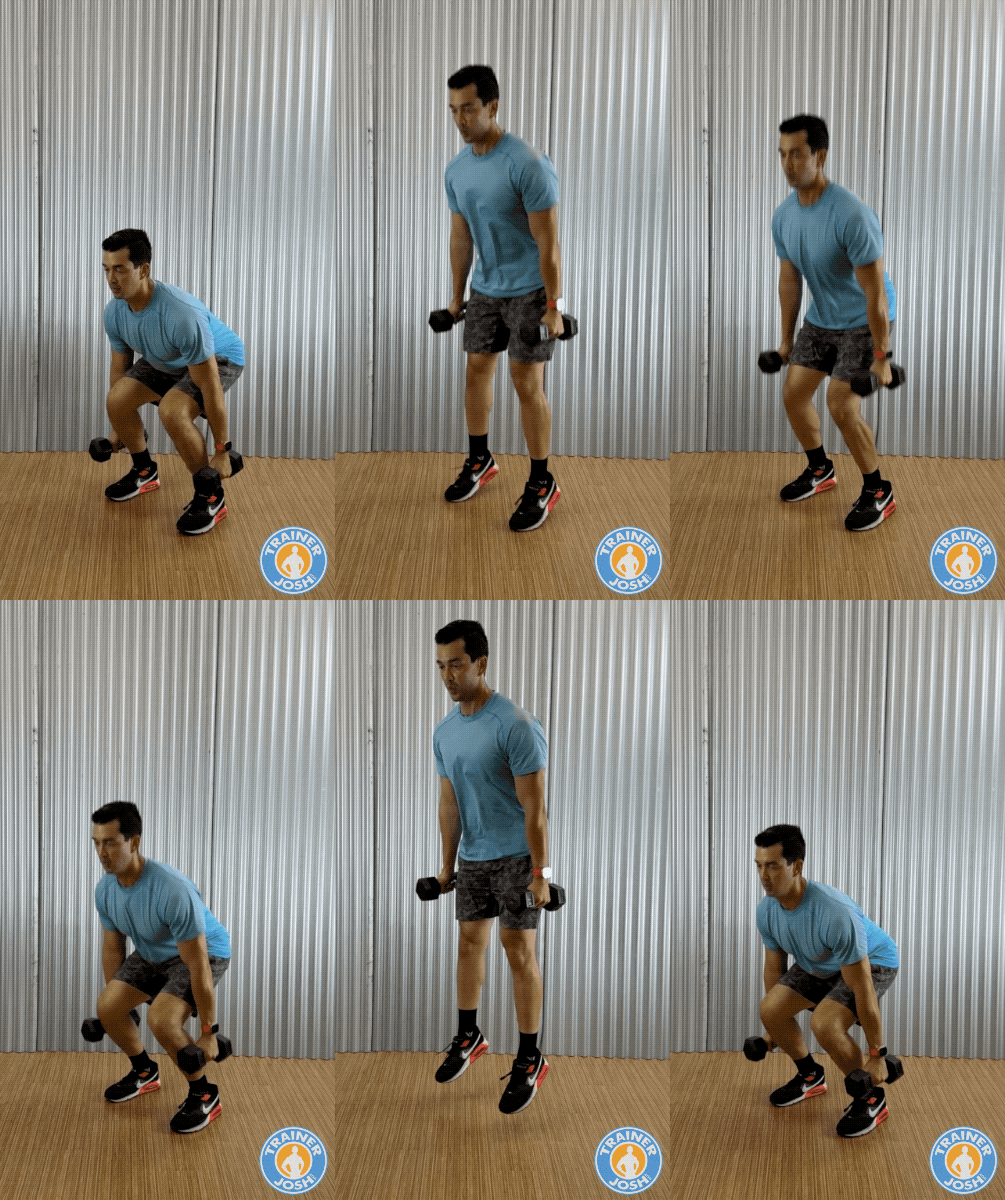
Dumbbell squat jumps aren’t only for building explosive strength and power in your glutes, quads, and hamstrings but also for creating stimulus in your calves. The calf muscles are highly activated during the takeoff phase and will enhance lower-leg power, ankle stability, and overall athleticism.
- Stand with your feet shoulder-width apart and hold a light dumbbell in each hand at your sides. Keep your chest up, shoulders, back, and core braced.
- Lower yourself into the squat by pushing your hips back and bending your knees.
- Then explosively push through the balls of your feet and jump as high as possible, focusing on a strong calf drive at takeoff. Extend your ankles fully so you’re pushing off your toes.
- Land softly back on the balls of your feet with knees slightly bent to absorb impact, immediately lowering back into the next squat.
- Keep going until you complete the target amount of reps. Keep the movement quick yet controlled.
Trainer Tip: Use lighter dumbbells until your form and landing mechanics are solid. Point your toes down (plantar flexion) at the top of each jump to maximize calf engagement. Don’t let your knees collapse inward, make sure they stay in line over your toes.
Dumbbell Rocking Calf Raise Hops
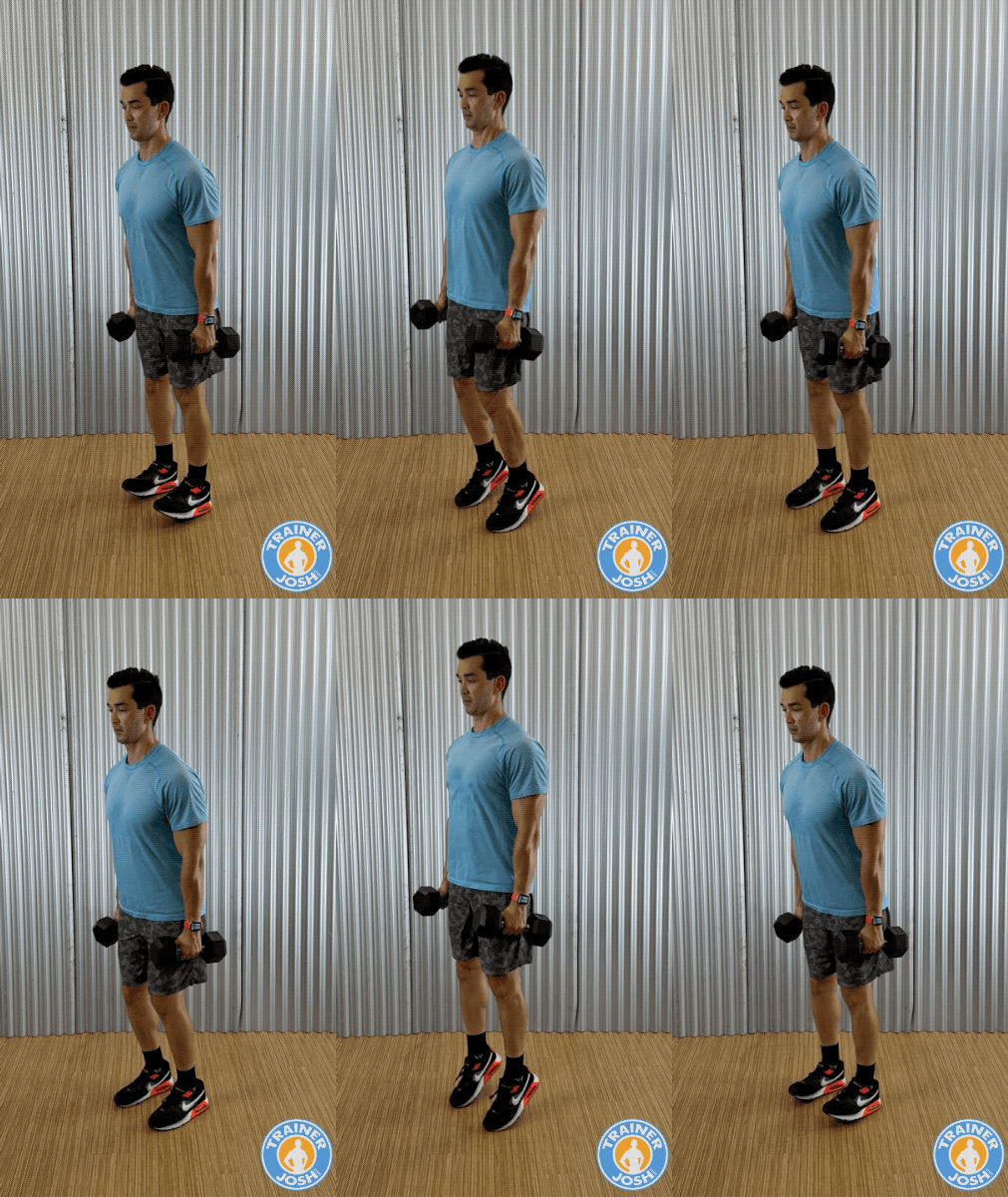
Dumbbell rocking calf raise hops combine strength, stability, and plyometric training into a single powerful exercise for your calves. The rocking motion (rolling from heel to toe) activates both the anterior tibialis and calf muscles. The hopping motion adds an element of explosive power, balance, and dynamic ankle stability. This move develops your fast-twitch muscle fibers, enhances athletic performance, and increases lower-leg resilience against injuries.
- Stand tall with your feet hip-width apart. Hold a light dumbbell in each hand at your sides.
- Start by rocking your weight back onto your heels. Lift your toes off the ground to engage your anterior tibialis.
- Roll forward by shifting your weight forward onto the balls of your feet. Rise up onto your tip toes and contract your calves.
- From the tip-toe position, perform a small hop onto the balls of your feet, rising up onto your tip toes and contracting your calves.
- Land softly on the balls of your feet. Absorb the landing and repeat the rocking motion.
Trainer Tip: Focus on a soft, controlled landing to reduce joint impact and maximize muscle engagement. Use lighter weights to start since speed and form matter more than heavy loads for this exercise.
Add this exercise to the end of your calf workout for a great finisher.
Dumbbell Toe Raises
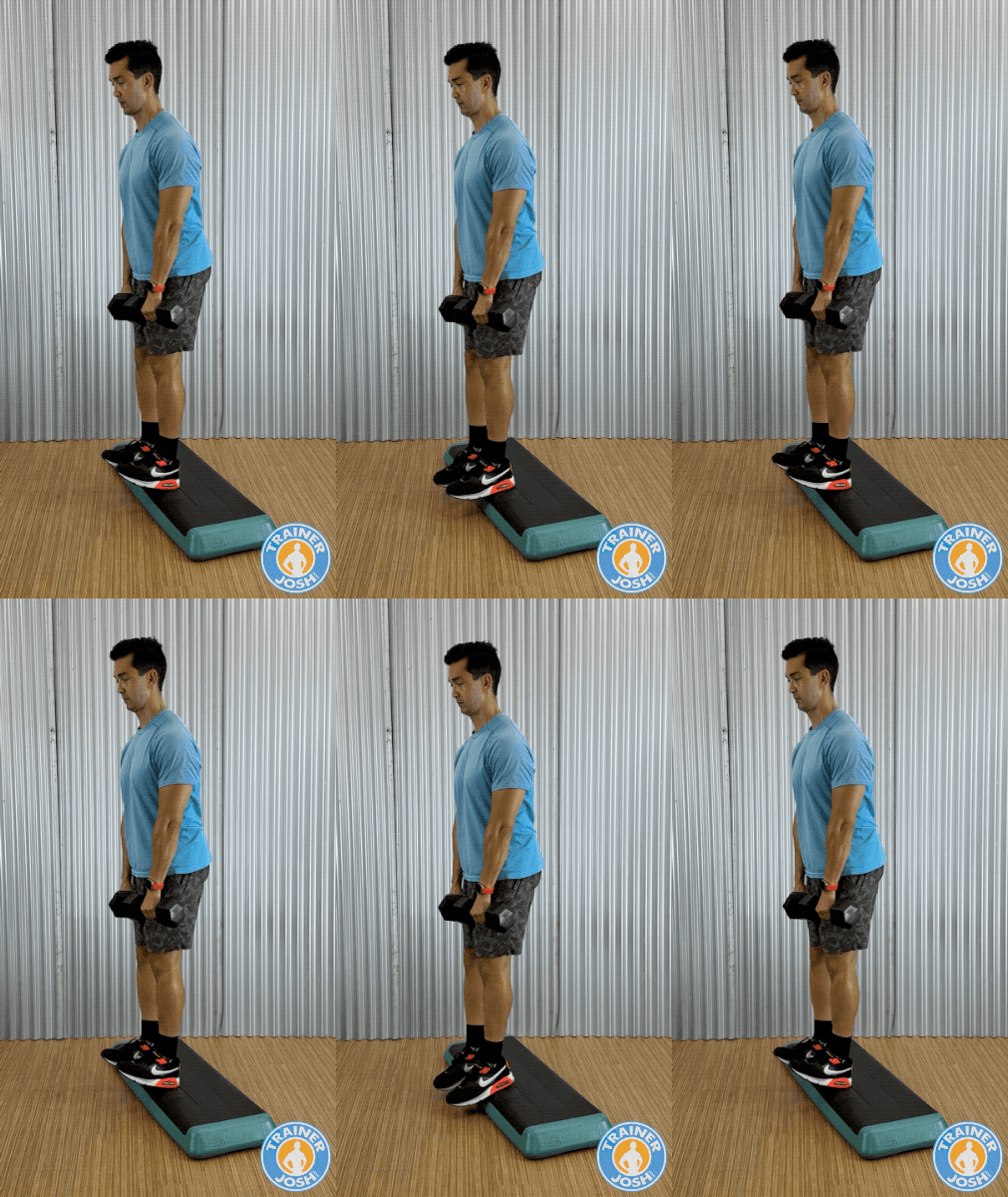
Dumbbell toe raises will target to strengthen your anterior tibialis (the muscle on the front of your shin that pulls your toes upward (dorsiflexion). This muscle plays a key role in knee health and is often neglected. It should be trained along with the calf muscles on the backside for full lower leg development.
- Stand with your back against a wall so you don’t fall backwards (or you can just do this seated).
- Hold a dumbbell in each hand. Flex your ankles to lift your toes and the front of your feet as high as possible towards your shins.
- Pause at the top and contract your anterior tibialis.
- Slowly lower your toes back to the ground in a controlled movement.
Trainer Tip: Ideally, you’ll have a small step, 2×4, or book to place your heels on for more range of motion. But you can also just use the ground, especially if you’re a beginner. You don’t need heavy weights for this one; instead, focus on form and a full range of motion. Perform higher reps (12-20).
Dumbbell Sumo Squat Calf Raises
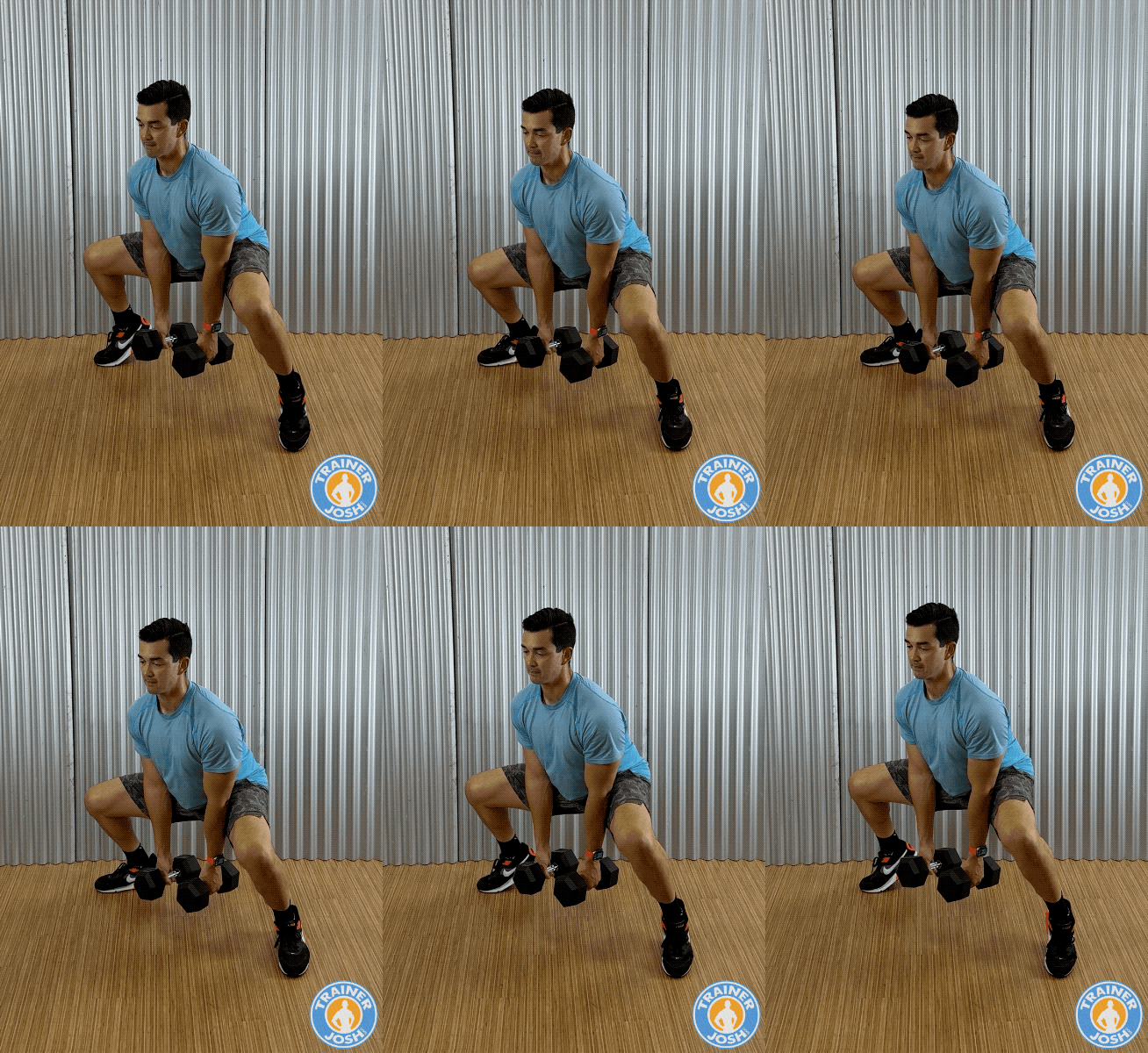
This one’s for the ladies… it’s a calf raise variation not only strengthens your calves but also challenges your inner thighs (adductors), glutes, and core. You’ll recruit more of the medial (inner) gastrocnemius head for more balanced calf development.
- Stand with your feet wider than shoulder width apart and toes pointed out at a 45-degree angle. Hold a pair of dumbbells in front of you.
- Lower yourself into a deep sumo squat position (hips back and down, thighs nearly parallel to the ground, chest upright and core braced).
- From this bottom squat hold, press through the balls of your feet to raise your heels as high as you can. Squeeze your calves at the top.
- Slowly lower your heels back to the ground while keeping the bottom squat position.
Trainer Tip: Keep your knees tracked over your toes (don’t let them cave in). Keep an upright torso position. If you don’t have the mobility to go down low, then don’t force it.
Dumbbell Calf Workout Plan
Ideally you’ll include calf exercises that target the gastrocnemius, soleus, and anterior tibialis in each workout.
Getting a pump in your calves is usually thought to be a sign of an effective workout. The truth is, your calves already have plenty of blood flow that contributes to the pump. Still, glycogen storage is the real driver of the pump and energy turnover (not just circulation).
Add in jumping rope, walking/running up a hill, and climbing stairs at the end of your calf workout for an extra cardio burn that also hits your calves. It’s a great way to get rid of ankle fat (cankles).
How to Use These Workout Plans:
A1, A2, B1 format means you do each group of exercises back-to-back (like A1 then A2), rest, then repeat for all sets before moving to the next group (B1, B2, etc.). It’s a way to organize mini-circuits or supersets, making workouts more efficient and effective.
Tempo uses a 4-digit code to control the speed of each rep: the numbers represent seconds for the eccentric, pause at the bottom, concentric, and pause at the top phases. For example, a tempo of 3111 means lower the weight in 3 seconds, pause 1 second at the bottom, lift in 1 second, and hold 1 second at the top.
Workout 1 – Beginner Plan
Be sure you’re also consuming enough protein daily to support muscle recovery and rebuilding. Use my protein calculator to quickly find your daily protein needs to get best results. Use a low-carb protein powder that’s naturally sweetened and minimally processed.
If you’re building your calves while also trying to look leaner, getting enough protein matters even more because you want to lose fat without sacrificing muscle. The BioTRUST GLP-1 Companion Stack is one option I like because it combines convenient protein with targeted lean-muscle support for a body-composition plan.
A 3-part daily stack designed to support people using GLP-1 medications or losing weight naturally. It combines muscle, protein, collagen, and appetite support to help you maintain a healthier body composition as you lose weight.
- Natural GLP-1 Support: Helps support healthy appetite signals, fullness & metabolic function
- Lean Muscle Support: Helps preserve muscle, strength & healthy body composition during weight loss
- High-Protein Collagen: Adds 20 g of protein with 5 collagen types to help support daily protein intake
- Skin, Joint & Hair Support: Provides collagen peptides to support skin elasticity, joints, hair & nails
- 3-Part Weight-Loss Support: Combines muscle, protein/collagen & appetite support in one simple daily stack

Workout 2 – Intermediate Plan
Workout 3 – Advanced Plan (the “Calf Burner”)
Your Top Calf Questions, Answered (FAQ)
Can you really build big calves with just dumbbells?
Absolutely. But only if you traing them with intelligence and intensity. Most people have a hard time getting results training calves not because of equipment, but because they cheat the range of motion, rush the tempo, and never train to fatigue.
With dumbbells you can still use progressive overload, manipulate tempo, use single-leg variations, and add loaded stretches. These are all the ingredients for hypertrophy. Big calves aren’t built by machines but by execution.
Should I do calf raises every day?
No, and if you need to then your workout programming needs work. Calves respond to quality, not daily punishment. 1-2 intelligently designed workout sessions per week with strict tempo, full range of motion, and real intensity will build better results than mindless daily volume.
Muscles grow from stimulus and recovery, not frequency alone.
How long does it take to see calf growth?
This depends on how well you train them. If you use full range of motion, controlled tempo, proper loading, and give them priority in your programming then you can see visible changes in as little as 4-6 weeks.
But if you’re bouncing through reps and training them as an afterthought, then I wouldn’t expect great results. Calves are stubborn when trained carelessly, but highly responive when trained with intent.