


You’re doing the push-ups. You’re training consistently. But when you look in the mirror, you see your chest still isn’t getting results. You’re not the only one who’s wondering if you can actually build a big chest with just bodyweight exercises, or if it’s all a waste of time.
If your goal is a bigger, more defined chest, then you can get one at home without a gym or bench press machine. But you have to do the best bodyweight chest exercises… the right way, otherwise you’ll be working your arms and shoulders.
Here you’ll discover why your chest may not be growing even if you’re consistent. How to actually make push-ups hit your chest. And the best bodyweight exercises for the chest including the upper, middle, and lower pecs.
Can You Really Build a Big Chest With Bodyweight Exercises?
Yes, you absolutely can build a big, muscular chest using only bodyweight exercises.
But the thing that most people miss is… your muscles don’t know the difference between a loaded barbell and your own body suspended in space.
They only recognize one thing: mechanical tension.
When you place enough stress on your pectoral fibers—through leverage manipulation, increased range of motion, or proximity to failure—they respond the same way they would to bench press.
The Science Backs This Up
A 2015 randomized controlled trial in the Journal of Strength and Conditioning Research found that when muscle activation (EMG) and intensity are matched, push-ups can build upper-body strength just as effectively as the bench press, producing similar 1RM and 6RM gains over 5 weeks in trained individuals.1
But the real difference? How you apply progressive overload.
Weightlifters add plates. Bodyweight athletes shift leverage.
Why Some People Grow, and Others Don’t
This is where it gets interesting… the guys who see chest growth from push-ups do three things differently.
They manipulate leverage ruthlessly. Moving your hands back into a pseudo-planche position, elevating your feet for decline angles, or using parallelets for deep push-ups all increase the load on your pectorals beyond standard variations.
They train in the hypertrophy rep range (6-15 reps). High-rep push-ups build endurance. Low-intensity sets build nothing. The sweet spot? Exercises are hard enough that you hit failure between 8-12 reps.
They do dips. Many experts consider them the “upper body squat” for chest development. Because pectoral fibers angle downward, the pushing down motion of a dip overloads the chest more effectively than horizontal pressing for some athletes.
Set Realistic Expectations
Here’s what my clients usually experience:
Months 1-2: Neuromuscular adaptation. Strength increases rapidly, but visible size changes minimally.
Months 3-4: First noticeable muscle growth. Definition improves, especially if body fat drops simultaneously.
Months 6+: Significant hypertrophy, assuming progressive overload continues and nutrition supports muscle synthesis (0.8 grams per pound of bodyweight).
Genetics play a role in growth rate, but consistency and progressive overload determine whether you build mass or just maintain.
The Bottom Line:
Yes, you can for sure build a big and strong chest just using bodyweight exercises. The human body responds primarily to tension and progressive overload… and both of these can be done by bodyweight advanced calisthenics.
Why Your Chest Isn’t Growing (Even If You’re Doing Push-Ups)
If your chest isn’t growing despite keeping up with a regular push-up routine, it’s usually due to two things. The primary culprits are a lack of progressive overload and improper muscle activation.
Push-ups can build significant muscle mass when compared to the bench press, but they only do so if you move beyond meaningless push-up repetitions and focus on total tension.
Key Takeaways:
- Progressive overload is non-negotiable: Neural adaptations improve push-up performance without building muscle mass. If you’re doing the same 3 sets of 20-rep push-ups every session, the stimulus becomes submaximal, and your body doesn’t build muscle.
- Train within hypertrophy range: Muscle growth requires 5-30 reps (30-90% of 1RM). Beyond 30 reps, you’ve shifted to muscular endurance, where mechanical tension is no longer a limiting factor.
- Fix your elbow angle: Flaring elbows at 90 degrees (“T-shape”) puts shoulders in an unstable position. Forces deltoids to dominate while your nervous system shuts down pectoral activation.
- Never lock out completely: Locking elbows at the top transfers weight from muscle to bones and joints, removing mechanical tension.
You’re Stronger… But Not Applying Enough Progressive Overload
You feel stronger, and your push-up rep count is climbing. But your chest? Still looks the same.
Here’s what’s actually happening…
The “Software Update” Without New Hardware
Your body just gave you a neural adaptation. This is like a “software update” that makes your motor cortex more efficient at coordinating muscles.
Your nervous system learned the movement pattern better. Intermuscular coordination improved. You can perform push-ups more effectively.
But the “hardware,” aka your actual muscle mass… hasn’t increased. This is why you feel stronger without looking bigger.
The Microloadability Problem
Barbell lifters can add 2.5-pound plates to each workout session. Precise, incremental progress.
Bodyweight athletes? We can’t add 2.5 pounds to our chest.
This microloadability gap makes progressive overload harder. If you perform the same 3 sets of 20 push-ups every session, then the stimulus becomes submaximal.
Your body handles this stress easily, so it has zero reason to build expensive muscle tissue.
The Intensity Threshold
For maximal muscle growth, you need to train within 30% to 90% of your 1RM. This is roughly 5-30 reps.
Beyond 30 reps? You’ve shifted to the endurance spectrum. Mechanical tension is no longer the limiting factor.
One guy told me he could do over 100 clean push-ups. But his chest hadn’t grown in months. The movement became too easy, so his body adapted by becoming efficient and not muscular.
Your Triceps & Shoulders Are Taking Over
This is the frustration I hear the most: “I don’t feel it in my chest… only my arms.”
You’re not the only one. A friend of mine, a 35-year-old training at home, told me the same thing: “Maybe my triceps are doing all the work.”
Here’s what’s stealing tension from your pecs:
The Three Form Killers
1. Elbows Flared at 90 Degrees:
That “T-shape” position you see in every stock photo? It’s a formula for a shoulder disaster.
When you flare your elbows perpendicular to your body, you place the shoulder joint in an unstable, vulnerable position.
Your nervous system sees this as instability and takes away the pectorals of neural activity. It does so by shifting the load to your deltoids for joint protection. This signals your chest to never even fire.
2. Hands Too Narrow:
Diamond push-ups are a triceps builder for sure. But here’s what most people miss… when your hands are excessively narrow, your triceps become dominant.
They jump in to handle the majority of the load before your chest ever engages. This is a compensation pattern. Your nervous system is taking the path of least resistance.
The result? Triceps get a pump, but zero chest activation.
3. No Chest Squeeze at Lockout:
Watch someone doing push-ups. At the top, do they lock out their elbows so they’re completely straight?
What just happened? The weight is transferred from the muscle to the bones and joints. Your chest literally “goes to sleep” — zero tension, zero stimulus.
Locking out removes the very mechanical tension your pecs need to grow.
The Mind-Muscle Connection Fix
The chest’s primary function is arm adduction. This is the motion of bringing your arms towards the midline of your body. Not just “pushing.” Adduction.
When you focus only on the mechanical act of pressing, then you’re missing the neuromuscular component that determines which muscles actually receive the growth stimulus.
The cue that changes everything:
As you push up, imagine you’re trying to squeeze the floor together between your hands.
You’re not actually moving your hands. But the internal cue activates your pectorals’ adduction function. It forces your chest to “switch on” and contribute to the press instead of letting triceps and shoulders dominate.
This is the mind-muscle connection that my clients who finally broke through their plateaus all developed.
One guy I started training told me, “I’ve been doing push-ups for 6 months and never felt my chest. I tried the ‘squeeze the floor’ cue and felt it fire immediately for the first time.”
You’re Missing Key Angles (Upper / Lower Chest)
Standard pushups hit your middle chest hard. Your upper chest is barely even touched.
This is why so many guys end up with a “saggy” look. They have plenty of mass in the middle and lower pec, but the upper chest (clavicular head) stays flat and undefined.
“My lower pecs got some shape, but my upper chest near my collarbone is still completely flat.”
He’s not the only one. This is the #1 chest complaint I hear from those doing bodyweight exercises.
Angular Variation Is Non-Negotiable
The pectoralis major has two distinct fiber orientations:
Clavicular fibers (upper chest) run at an upward angle from your sternum to your collarbone.
Sternal fibers (mid and lower chest) run horizontally and downward.
Standard floor push-ups primarily recruit sternal fibers. The angle of resistance doesn’t align with clavicular fiber direction… so your upper chest gets minimal activation.
For complete development, you have to attack the muscle from multiple vectors that match each fiber group’s line of pull.
The 45-Degree Sweet Spot
Here’s the practical fix for elbow position: Keep your elbows at approximately 45 degrees from your torso. Not flared wide, not tucked tight.
This angle maximizes pec recruitment while maintaining shoulder joint integrity. Your chest can handle the load, and your triceps assist rather than dominate.
Try this tomorrow: Do 5 push-ups with flared elbows. Then do 5 at 45 degrees while squeezing the floor together. You’ll immediately feel the difference.
Chest Anatomy Explained (So You Know What You’re Training)
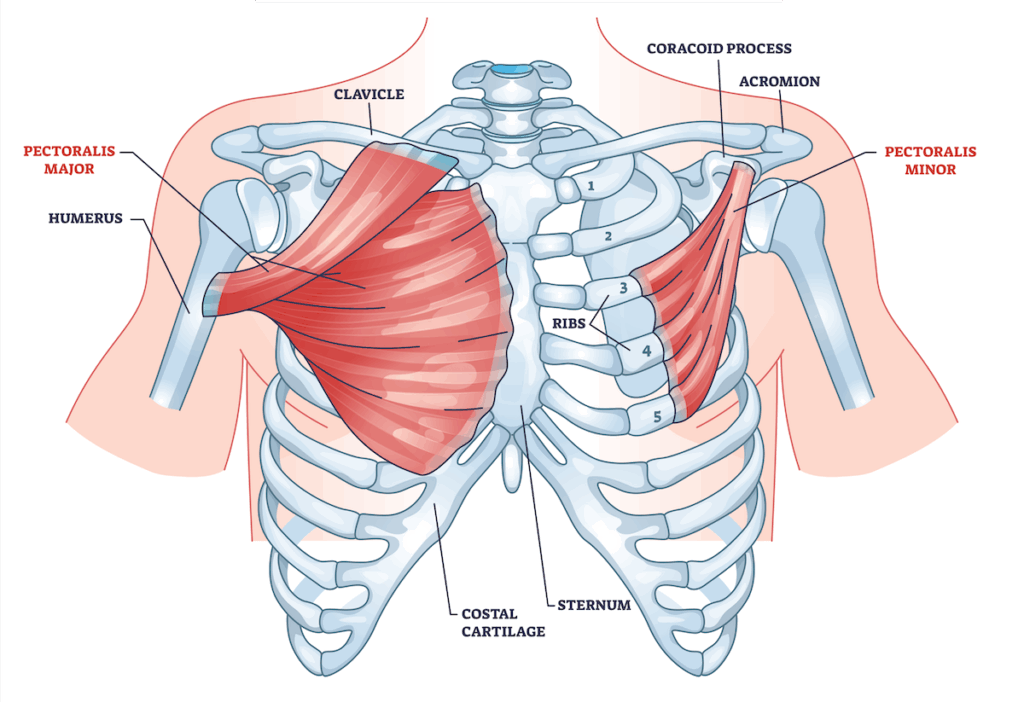
You can’t build what you don’t understand. Most guys do push-ups blindly and hope for their chest to magically grow. Then they wonder why their upper chest stays flat while only their mid-chest builds.
Here’s the chest anatomy you need to know…
The Pectoralis Major: A Fan-Shaped Powerhouse
Your chest is one large, fan-shaped muscle called the pectoralis major. Its primary functions are: arm adduction (bringing arms toward your body’s midline), shoulder adduction, and internal rotation.
But here’s what matters for training: this fan has two distinct regions with different fiber orientations and attachment points.
Clavicular Head (Upper Chest)
Also called the sternoclavicular head, this region attaches to your clavicle (collarbone).
For both men and women, this is the most visible portion of your chest. This is the area that creates that “shelf” below your collarbone when developed.
It’s responsible for shoulder flexion—the motion of raising your arm in front of your body.
Sternal Head (Mid/Lower Chest)
Called the sternocostal head, these fibers attach to your ribs and sternum (breastbone).
Most traditional pushing movements hit this area well. But here’s the key insight: the lower fibers are specifically strongest during downward pushing motions like dips.
They’re responsible for shoulder extension and adduction—the motion of pulling your arm down and towards your side.
How Push-Up Angles Shift Emphasis
Your body doesn’t distinguish between a barbell and bodyweight. It only responds to tension and the angle of resistance.
Change your body angle relative to the floor, and you’ll shift which fibers take the load:
Flat push-ups: Distribute tension across the middle and lower pec regions.
Feet-elevated (decline) push-ups: By propping your feet on a box, you’ll change the angle to mimic an incline press.
This shifts a greater percentage of your body weight to your upper body and activates the clavicular (upper) chest musculature. The higher your feet, the more upper-chest activation you get.
Hands-elevated (incline) push-ups: Placing your hands on a raised surface makes the exercise easier while focusing tension on the lower sternal head.
Rubber Band Analogy
Think of your chest like a set of rubber bands that attach to your sternum to your arms.
When doing push-ups, you’re stretching those bands with bodyweight. By changing your body angle (tilting feet up), you’re specifically stretching and “plucking” the bands at the very top (upper chest).
To maximize growth, be sure to stretch the band as far as it will go (full ROM), then release the stored elastic energy.
10 Best Bodyweight Chest Exercises
Dips (Lower Chest Builder)
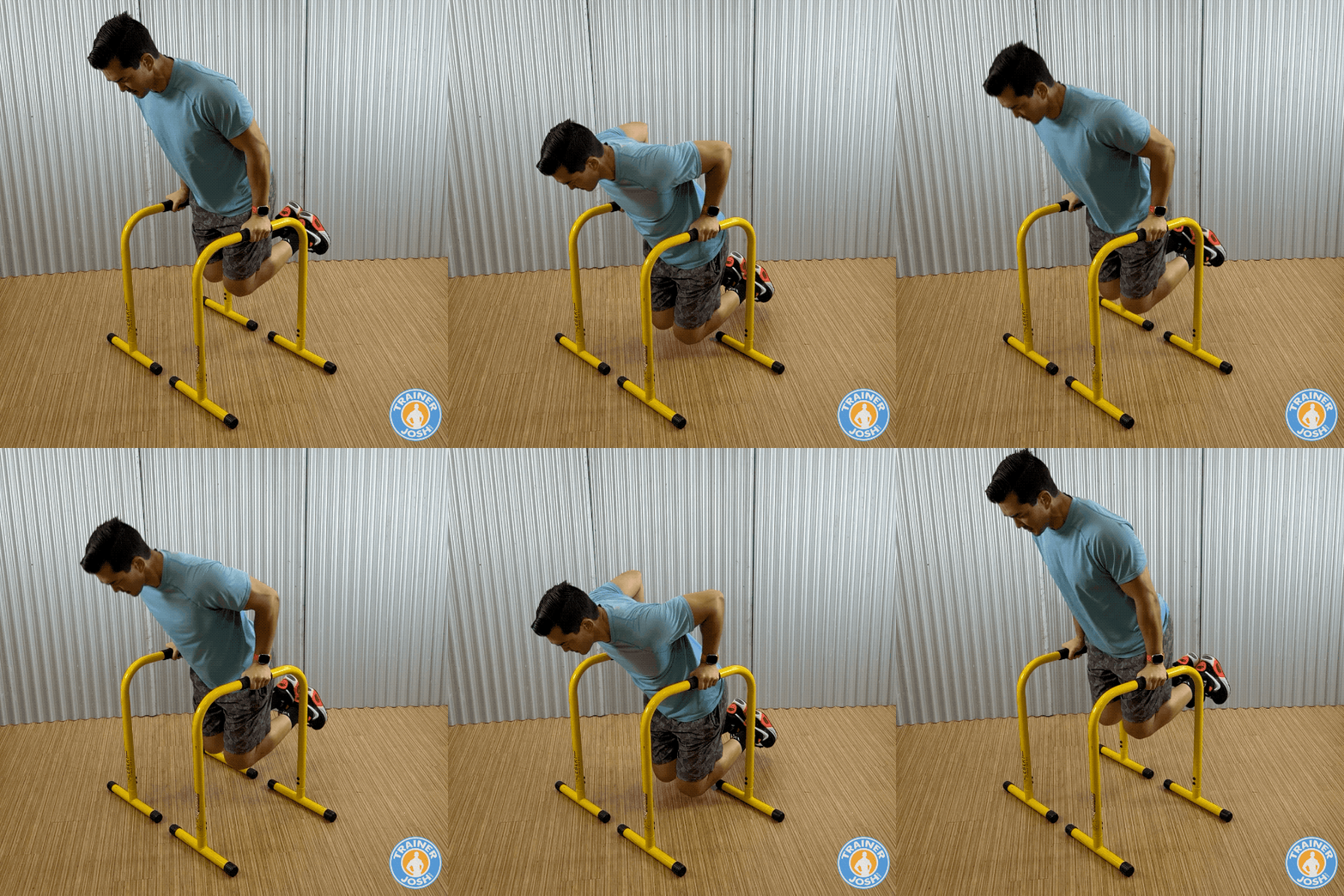
Dips are often called the “upper body squat” for chest development. They’re a cornerstone of calisthenics to build strong pushing power and muscular density.
Why Dips Build Mass
Push-ups are very effective, but dips give you a greater degree of pectoral overload because the fibers of the chest are anatomically angled to be stronger at pushing down than pushing forward.
Dips exploit this biomechanical advantage. You’re lifting 100% of your body weight compared to push-ups, where you’re only pushing 65-70%. This results in greater mechanical tension that leads to greater growth stimulus.
Primary targets:
- Lower & middle pectoralis major
- Triceps
- Anterior deltoids
The Lean-Forward Cue
This determines whether you build chest or just triceps…
Lean your torso forward at approximately 30-45 degrees. Keep your forearms vertical (perpendicular to the floor).
This angle shifts the mechanical workload from triceps to lower pectoral fibers. If you stay upright, then you’ll be turning it into a triceps exercise.
Chair vs Parallel Bar Dips
Chair/bench dips: Beginner regression. Feet on the floor support a part of your body weight. Less chest activation, more triceps isolation.
Parallel bar dips: Full bodyweight support. Deeper range of motion. Greater muscle activation and functional strength carryover.
Shoulder Safety
Bar width matters. Use bars roughly forearm-length apart (elbow to fingertips). Too wide causes shoulder pain.
Keep shoulders “packed” — pulled down and back, away from ears. Never shrug during the movement.
Elbows stay tucked close to the ribs and never flared to 90 degrees.
Depth: Stop when shoulders reach slightly below elbow level. Going deeper risks aggravating the shoulder joint.
Standard Push-Up (Foundation Builder)
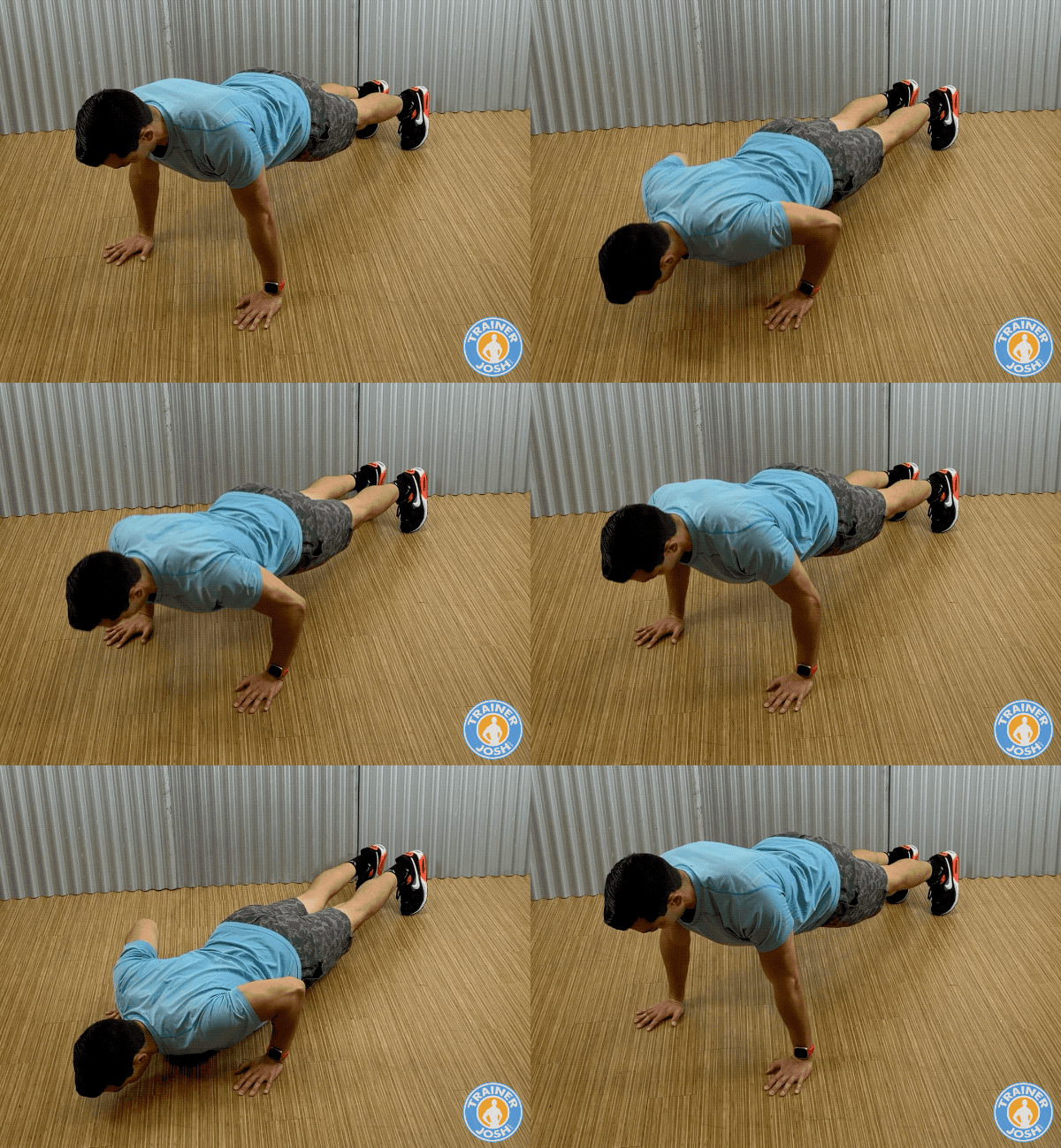
The standard push-up is the cornerstone compound movement of the most effective exercises for building a bigger chest.
What It Targets:
- Primary: Pectoralis major, triceps, anterior deltoids.
- Secondary: Serratus anterior (the “boxer’s muscle” along your ribs), traps, and entire core.
Proper Hand Placement & Elbow Angle:
Hands slightly wider than shoulder-width. Spread fingers wide, middle fingers pointing straight ahead. At the bottom, your hands should align with the power part of your sternum.
Elbow angle: 20-45 degrees from your torso. Your body forms an arrow shape, not a “T.”
Range of Motion: Lower your body in a controlled manner until your chest nearly touches the floor (roughly tennis ball height). Push back up to a full arm extension but without locking out your elbows.
Alignment: Keep your body in a perfectly straight line from head to heels. Brace your abdominals and squeeze your glutes to prevent your hips from sagging or piking up.
Pro cue: “Screw” your hands into the floor. Right hand clockwise, left counterclockwise. This creates a rotational force that locks your shoulders into their sockets for joint stability.
Common Mistakes to Avoid:
Hips sagging or butt in the air. Your body must form a straight line from head to heels. Squeeze glutes and abs hard.
Elbows flared at 90 degrees. This unstable position robs your pecs of neutral activity and stresses your shoulders.
Locking elbows at the top. Keep them slightly bent to maintain constant tension. Full lockout transfers weight to bones and joints—your chest “goes to sleep.”
Neck craning forward. Keep your head neutral. Eyes looking straight ahead.
Imagine a stiff wooden rod running from your heels to your head. If your hips sag or your head cranes, then the rod breaks. Move your entire body as one solid unit.
Easier Modification: Incline Push-ups
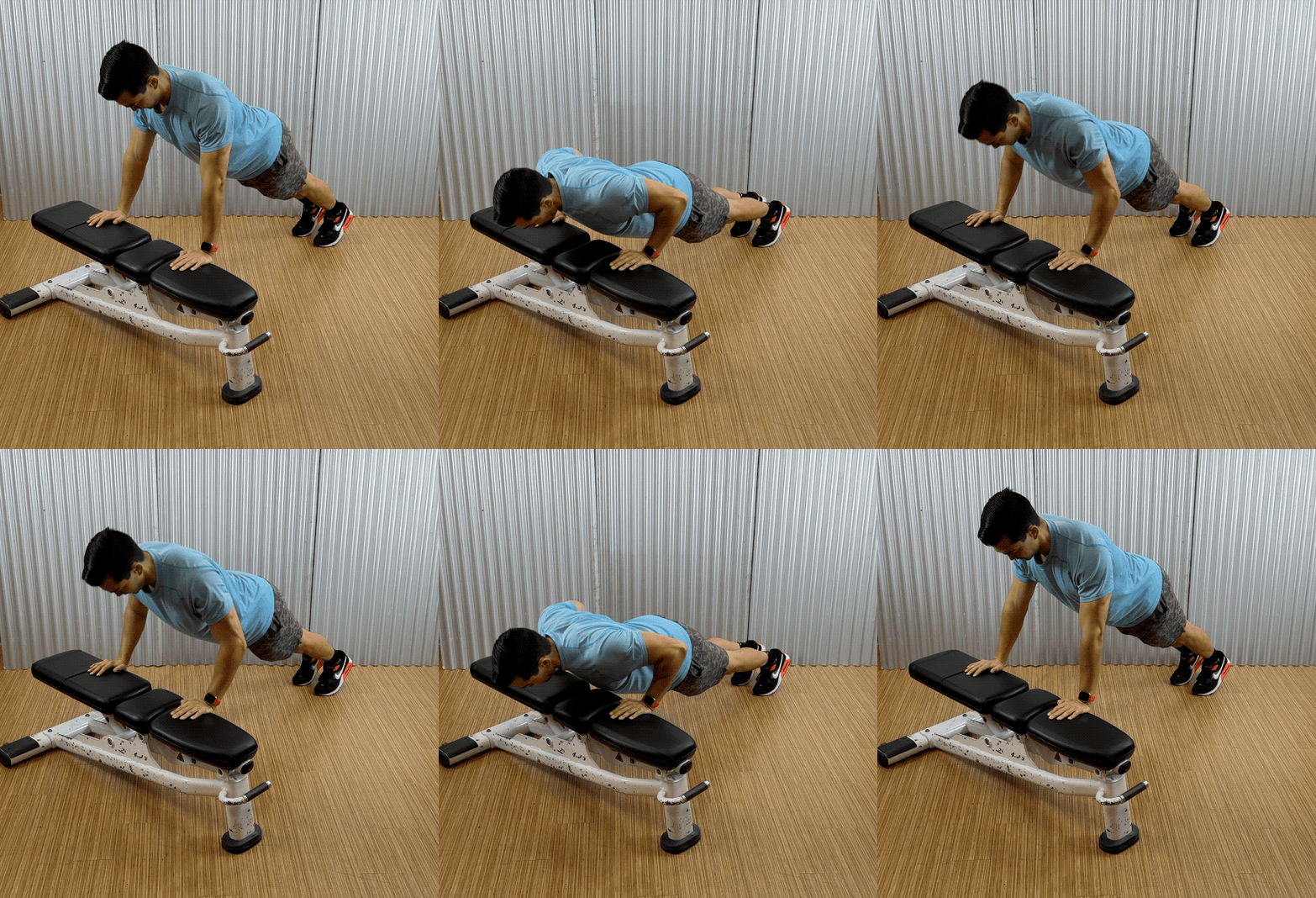
Can’t do a standard push-up yet? Start with incline push-ups.
Incline push-ups aren’t just “easier push-ups,” but they’re a precise tool for manipulating your angle to gravity. This changes how much bodyweight you’re actually pressing.
Here’s How the Physics Work:
When you elevate your hands on a wall, bench, or counter, you’ll shift weight distribution from your upper body to your lower body. Your feet now support a larger percentage of your mass. This leaves less load for your chest, shoulders, and triceps to push.
The higher the incline… the less weight you press. The lower the incline, the more you press. Simple lever mechanics.
Why This Beats Knee Push-ups:
Knee push-ups shorten your body’s lever by cutting you in half. You lose the moving plank aspect. This is that full body tension where your abs, glutes, and lower back stabilize your spine.
Incline push-ups keep your body in one straight line from head to heels. You’re training the exact motor pattern you need for floor push-ups just at a reduced load.
The Progressive Path:
- High incline (wall): ~40-50% bodyweight
- Mid incline (counter/table): ~55-65% bodyweight
- Low incline (bench): ~65-75% bodyweight
- Floor push-up: ~64-70% bodyweight
As you build strength at one height, drop the angle. Wall → counter → bench → floor.
Joint Safety Bonus:
Starting on an incline gives your shoulder and wrist connective tissues time to adapt to the stress of resistance training at a manageable intensity. You build confidence without risking injury from going too heavy too soon.
Wide-Grip Push-Up
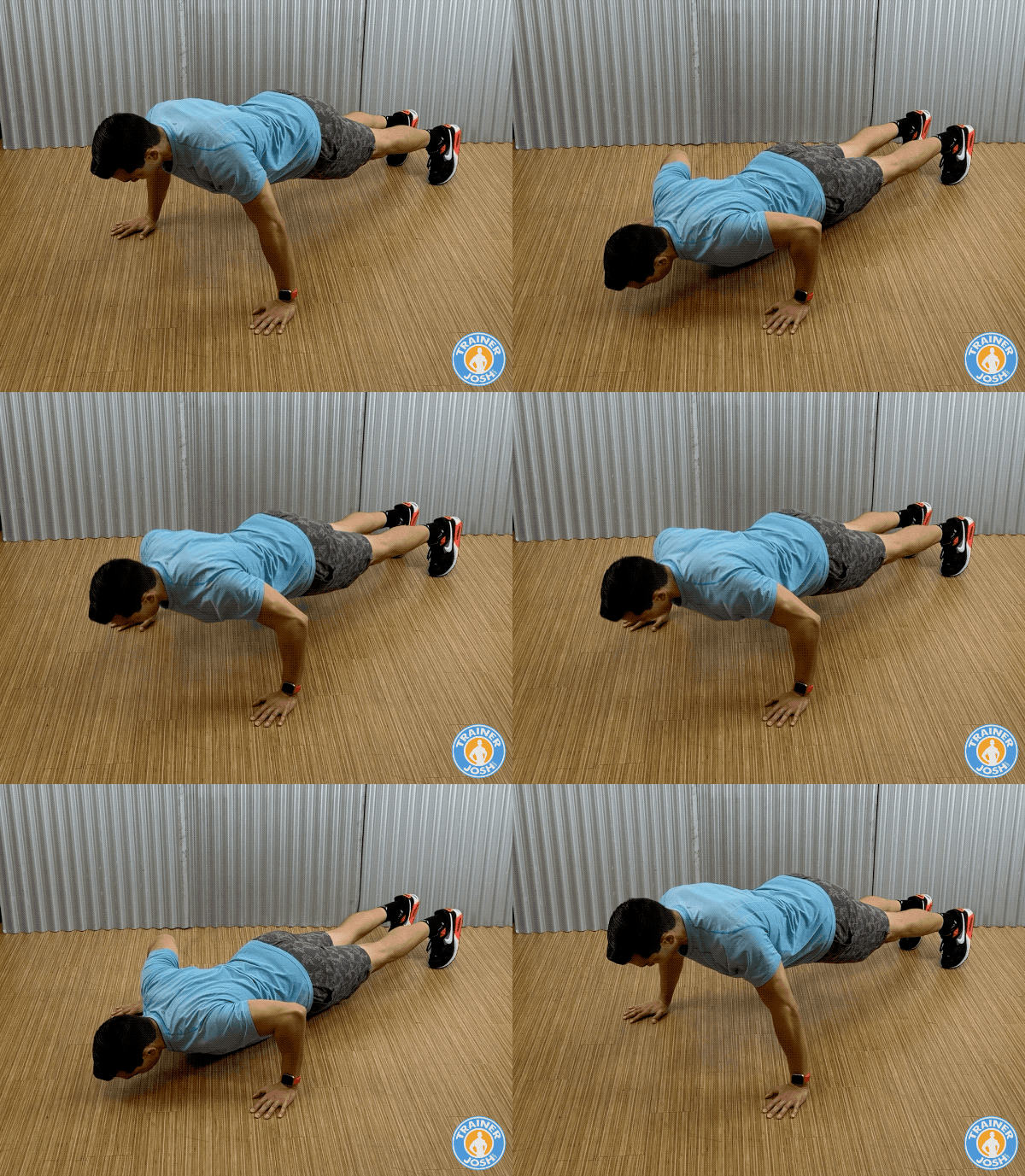
Wide-grip push-ups shift the emphasis away from your arms and towards the pectoralis major and anterior deltoids. Placing your hands wider than shoulder width reduces mechanical advantage of your arms. So this forces your chest muscles to handle a greater percentage of the load.
When to Use It
Use wide-grip push-ups when standard push-ups no longer challenge your chest. When your triceps fatigue faster than your pecs do.
It’s also a go-to for breaking plateaus. Your body adapts to specific hand positions. Widening your grip “shocks” the muscle with a new stimulus.
Position your hands significantly wider than shoulder-width (several hand widths beyond shoulders). Turning your hands slightly outward sideways can help reduce wrist strain.
Why It Reduces Triceps Dominance
Here’s the biomechanics: In standard push-ups, your elbow stays close to your ribs. This gives the triceps a mechanical advantage to assist the press.
Widening your hands forces the elbows and humerus outward and away from your torso. Your triceps lose leverage since they’re in a biomechanically disadvantaged position.
This results in your chest having to handle the “lion’s share” of the load.
The wider grip also increases horizontal adduction. This is your chest’s primary function. You’re forcing greater arm-to-midline movement, which directly targets the pectorals.
It’s a common myth that wide-grip push-ups work your outer chest more…
A 2005 study in the Journal of Strength and Conditioning Research found that performing push-ups with a narrow hand position (hands under the sternum in a diamond shape) produced significantly greater pectoralis major and triceps brachii activation—about 10% higher relative to maximal voluntary isometric contraction—than a wide hand position, indicating that narrow‑grip push-ups better maximize upper‑body muscle activation.2
One caveat: Don’t go excessively wide. Beyond 2x shoulder width, you’ll lose range of motion, and you’ll risk shoulder strain. Find the width where you feel maximum chest stretch at the bottom without shoulder discomfort.
Decline Push-Up (Upper Chest Focus)
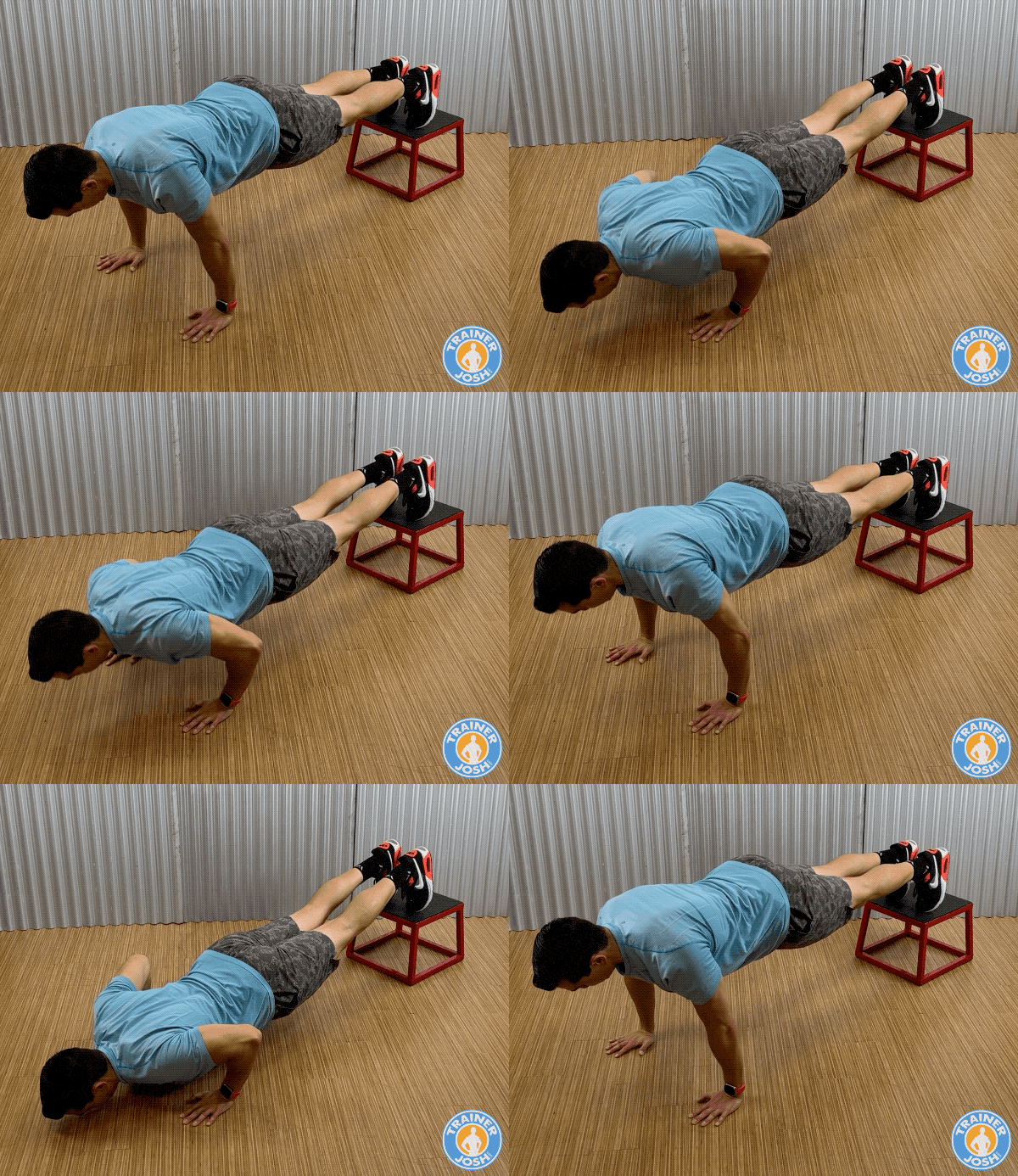
This is the fix for a flat upper chest. Standard push-ups hit the middle and lower areas. The decline angle changes everything.
By elevating your feet above your hands, you’ll mimic an incline bench press. This angle places the clavicular head at a mechanical disadvantage, forcing these specific fibers to produce more force.
This is the most visible part of your chest. The area that creates that “shelf” below your collarbone when developed.
You’ll also shift a significant higher percentage of weight onto your upper body by elevating your feet. By doing push-ups from a decline you’ll get a greater range of motion and recruit more muscle fibers versus traditional push-ups.
Foot Elevation Setup
Place your feet on a stable elevated surface… bench, chair, box, stairs, or couch.
Hands on floor, slightly wider than shoulder-width. Maintain a straight line from head to heels. Engage your core hard, squeeze your glutes. No sagging hips or arched back.
The higher your feet, the more body weight shifts to your upper body. Start with 12-18 inches and progress from there.
Note: This variation also increases the demand on the anterior deltoid and triceps compared to standard push-ups.
Diamond Push-Up (Inner Chest + Triceps)
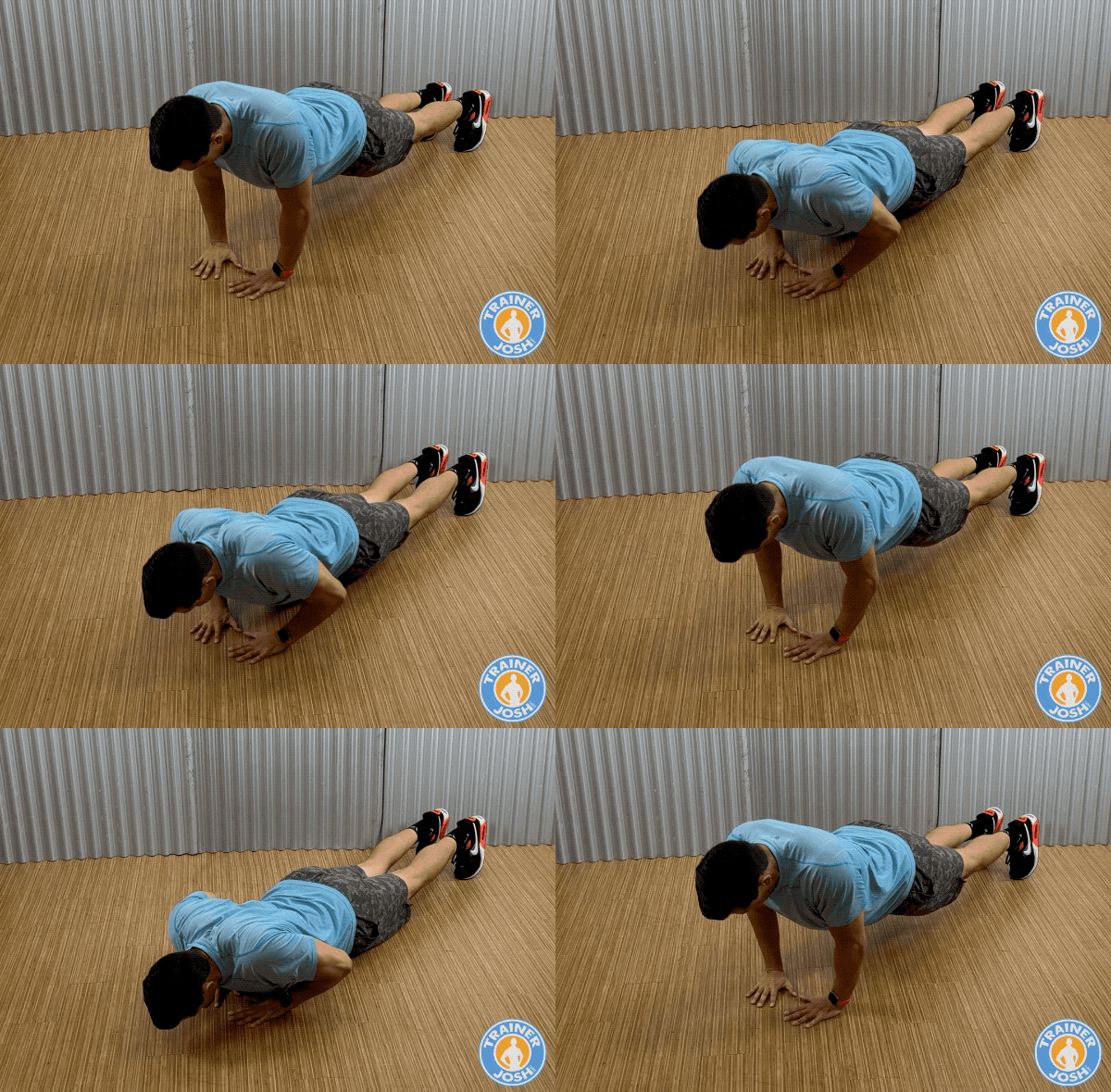
Diamond push-ups are push-ups with your hands together beneath your chest, index fingers and thumbs forming a diamond shape.
These are usually known as a triceps exercise but they’re also highly effective for building a bigger chest. This is due to the specific mechanical demands placed on the pectorals.
You’ll target the inner portion of your chest more by bringing your hands together like this. It does so through a greater degree of arm adduction.
Position your hands directly beneath the center of your chest so your thumbs are fingers touch (or very close to) forming a triangle or diamond shape. As you lower your body down keep your elbows tucked close to your ribs. Don’t let them flare out to the sides.
Who Should (and Shouldn’t) Use It
Use diamond push-ups if: You can perform 15+ standard push-ups with perfect form. You want to build triceps strength as a foundation for advanced skills like the planche.
Skip them if: You’re a beginner (start with standard or incline push-ups first). You have existing wrist, elbow, or shoulder issues. You have joint pain between sessions then that’s your body signaling that you’re overusing it.
Shoulder-Safe Alternatives
Here’s what most people miss: The classic diamond hand position creates internal rotation at the shoulder that can cause strain.
If you experience shoulder discomfort, use a neutral grip instead. Place your hands closer than shoulder-width but not touching. Keep wrists neutral, fingers pointing forward. Elbows tucked at roughly 45 degrees.
You’ll get the same triceps and inner-chest emphasis but without the rotational shoulder stress.
Archer Push-Ups (Unilateral Strength & Hypertrophy)
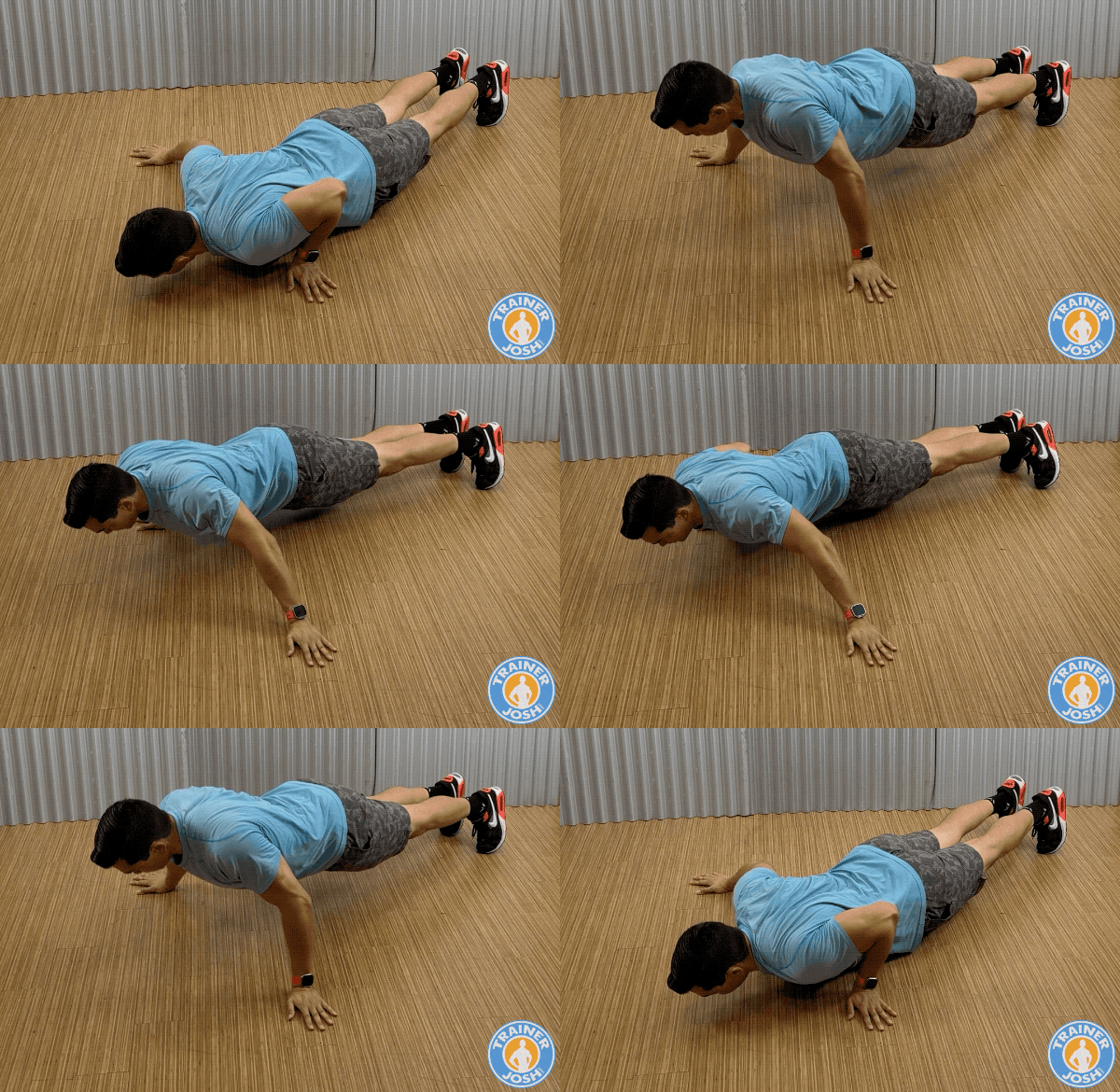
Archer push-ups are an advanced progression of the standard push-up. By shifting the majority weight load to a single limb you’ll create intene strength and stability for the chest.
These are great for unilateral strength development. They’ll help identify and fix muscle imbalances. If you’re wanting to do 1-arm push-ups then this exercise are a critical movement to develop the strength.
You’ll work your core and obliques harder because the center of gravity is displaced. Archer push-ups when done right also build stability in the elbow and shoulder joints, this helps prevent injuries.
How to Do Them:
Begin in a wide push-up position with your hands placed several hand-widths wider than shoulders. You can point your fingers forward or turned out at a 90-degree angle to reduce wrist strain.
Lower your body to one side by bending that elbow while keeping the other arm completely straight and locked out. Imagine that you’re pulling on a bow string and guiding your weight towards the bending arm.
Keep your body in a perfectly straight line as you lower yourself. Don’t let your hips sag or pike. It can help to look toward the straight arm during the lowering to make sure it’s straight.
Lower yourself until your chest nearly brushes the floor or touches the hand of the bending arm. Your bent elbow should be tucked close to your ribs.
Push forcefully with the bent arm while simultaneously “pulling” through the floor with the straight arm to return to the starting position.
Plyometric Push-Ups (Power & Fast-Twitch Fibers)
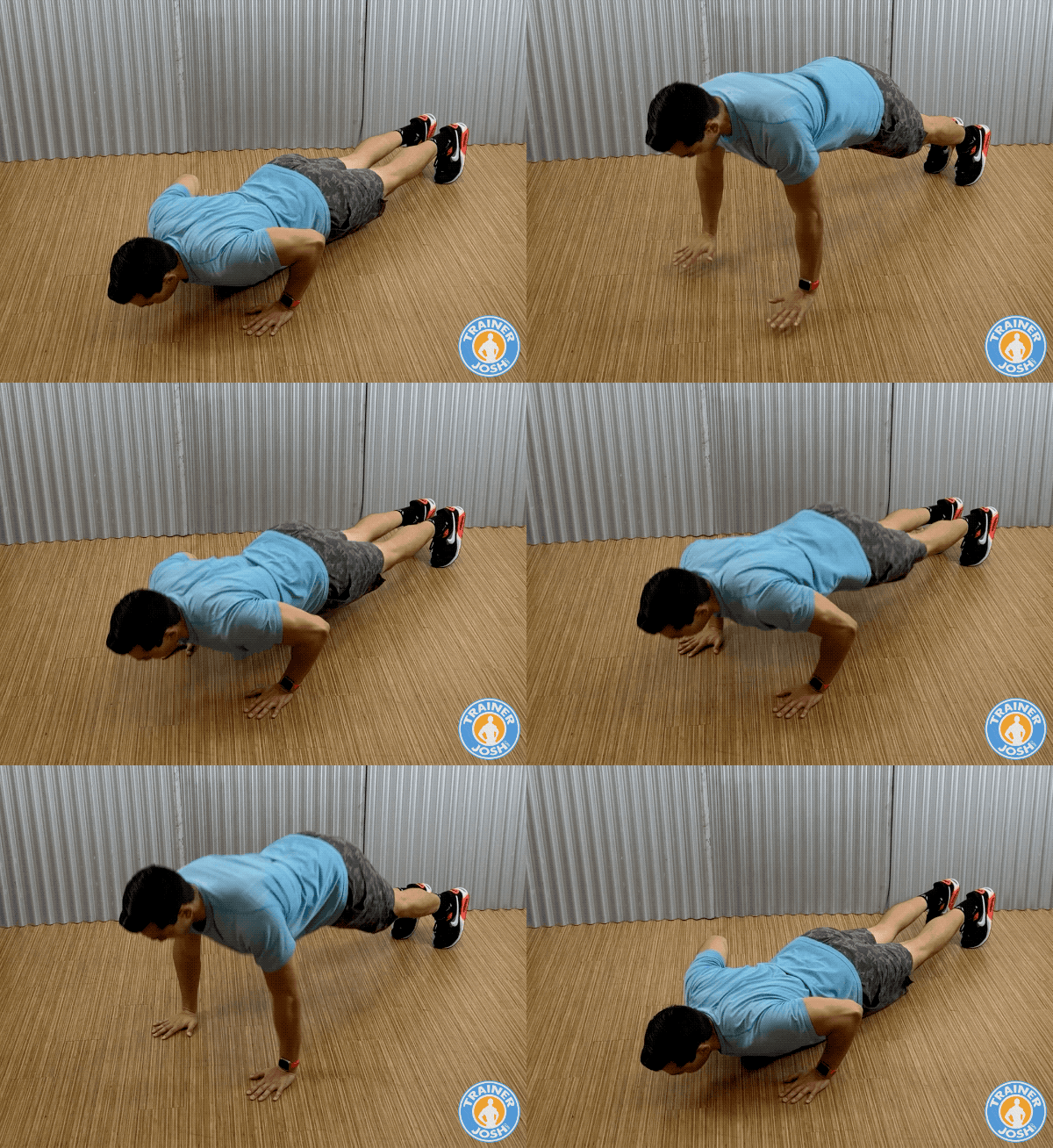
Plyometric push-ups are a quick, powerful movement designed to generate maximum force in the shortest time. They build athletic power and recruit the muscle fibers with the greatest growth potential.
Lower yourself in a controlled descent. Then explode upward with maximum force… propelling your body high enough so your hand come off the floor.
The landing is critical: Touch down with slightly flexed elbows to absorb impact through muscle eccentric contraction (not jarring your joints).
Beginners: Start with hands on an elevated surface (bench or countertop) to reduce bodyweight percentage.
Note: Be careful when doing these. If you do not have explosive strength and speed, you can fall hard on your face.
Progressions: You can progress by doing clapping push-ups, in which you clap your hands together in the air. From there, you can touch your hands to your chest/shoulders while in the air.
Explosive Intent vs. Fatigue Training
This distinction is crucial.
Explosive intent (power development): Maximum concentric speed. Execute the upward movement as fast as possible. Sets under 6 reps. Perform when your nervous system is fresh (at the beginning of the workout).
This recruits Type IIx fast-twitch fibers. These are the fibers with the greatest potential for both strength and size.
Fatigue training (hypertrophy): Time under tension, draining muscle cell energy to trigger growth. Higher reps, metabolic stress.
Don’t confuse the two. Plyometrics are done to fatigue and build endurance. You’ll lose the explosive quality that recruits high-threshold motor units.
Keep sets short. Prioritize quality of explosiveness, not quantity.
Sliding Flyes
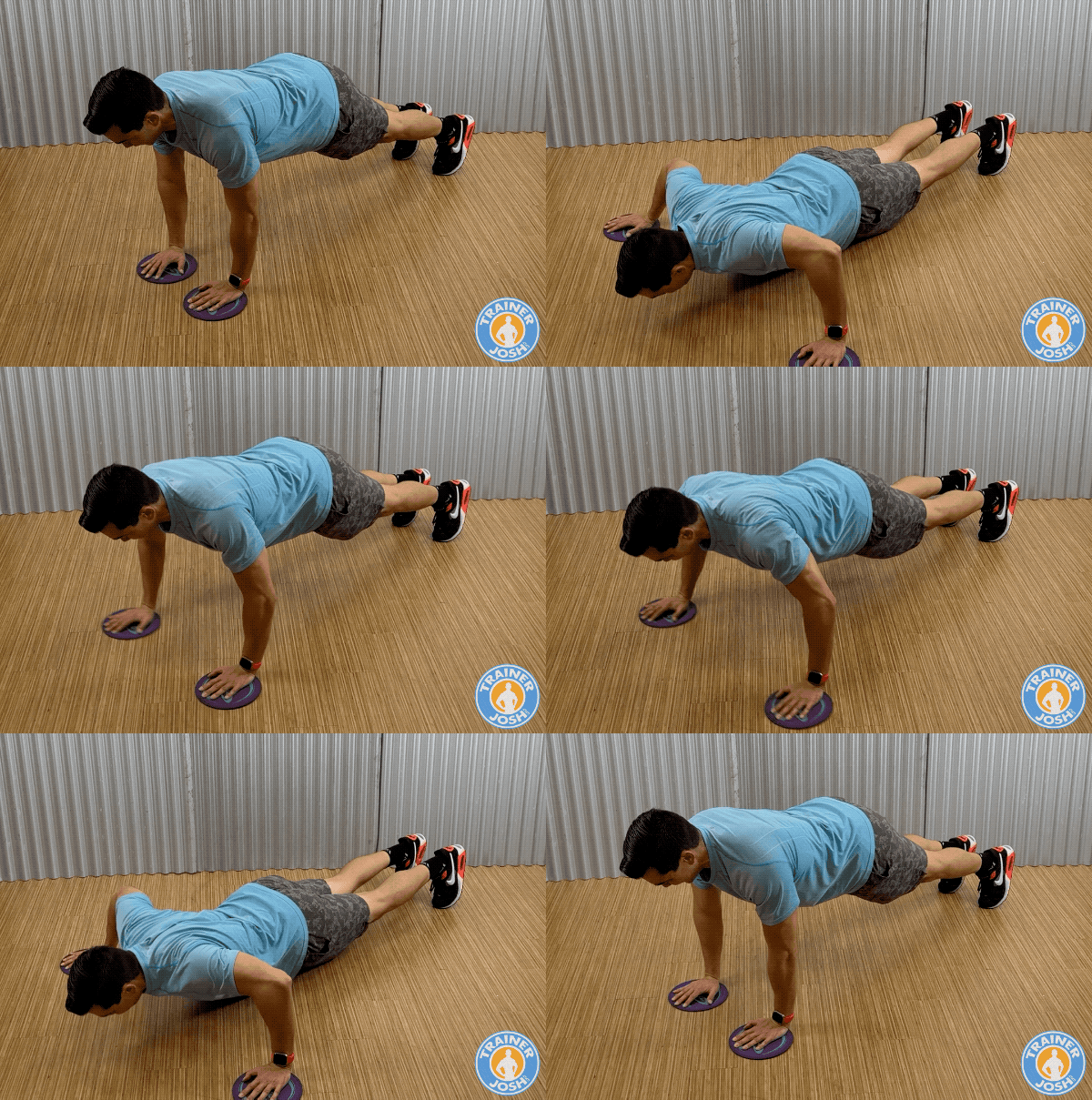
These are floor slides for the chest and are an advanced bodyweight exercise to target your pectoral muscles. They use a similar movement pattern to a dumbbell or cable fly.
You’ll first need a surface that allows for sliding. You can use specifically designed exercise sliding discs for hard floors or carpeting. Some have also been able to use paper plates or small hand towels on hard floors.
Begin in the standard push-up position with one hand on each slider. Your hands should be flared out slightly to prepare for the lateral movement.
Maintain a perfectly straight line from your head to your heels (or knees). This will keep your core engaged and prevent your hips from sagging.
Inhale and slowly lower your body toward the floor by sliding your arms out away from your body in a wide arc. Continue the “flying” motion until your chest touches the floor.
To ascend back up, exhale and push your body back up by drawing your hands back together toward the center of your chest. Try to keep a fluid gliding motion rather than choppy or jerky. Avoid “worming” so one part of your body moves before the rest.
If this is too hard, then you can use the short-lever variation from the knees. This will reduce the percentage of body weight you’ll need to lift.
You can also do controlled negatives by focusing on the eccentric phase as slow as possible. Drop to knees at bottom and push back up.
Planche Push-ups
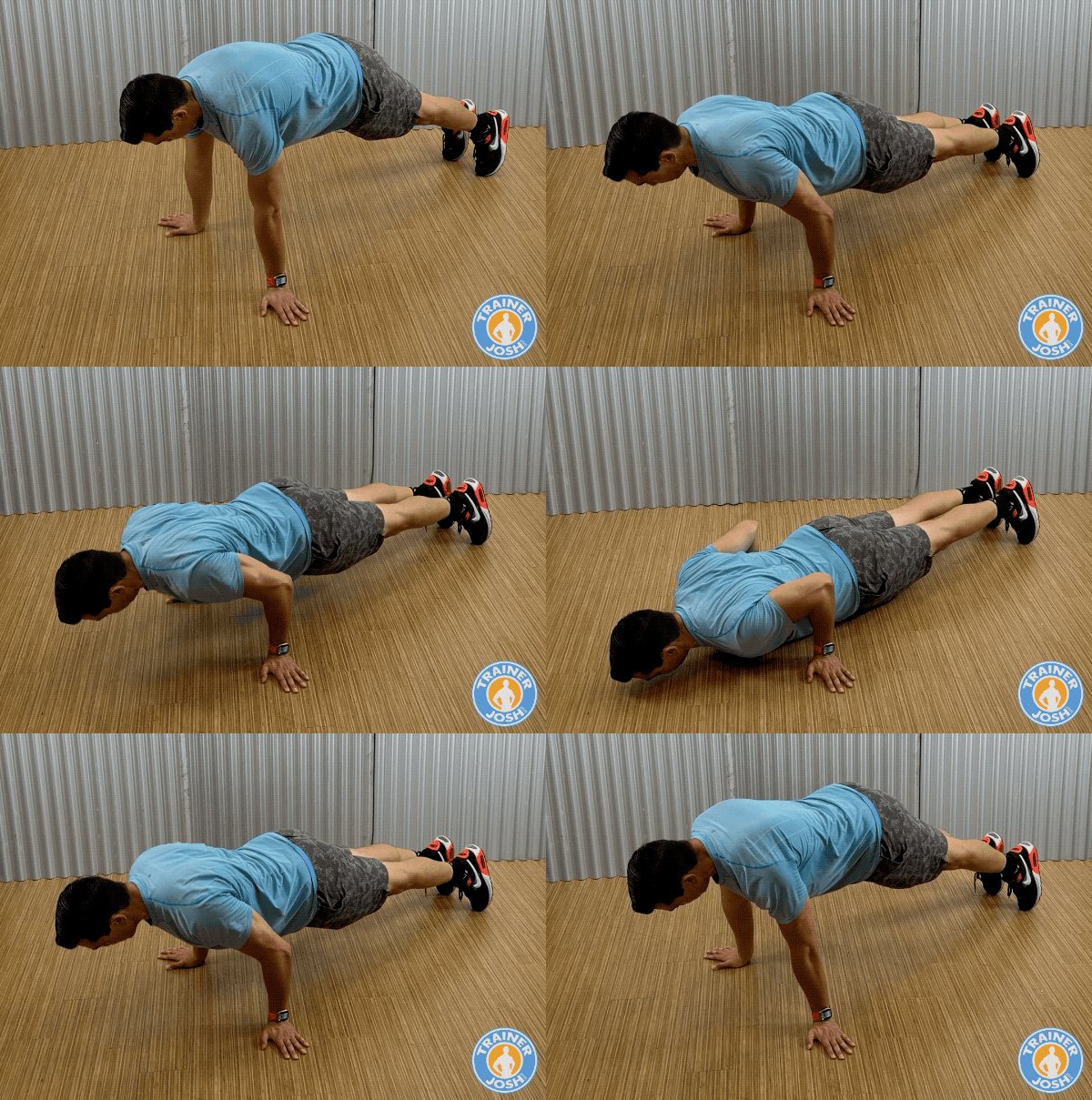
Planche push-ups are considered the ultimate upper body pushing exercise. The combine the intense muscular demands of the isometric planche hold with a dynamic pressing movement.
These are great for building extreme strength and hypertrophy. This exercise puts a ton of load on the pectoralis major (chest) and anterior deltoids (front shoulders) due to the extreme mechanical disadvantage made by leaning body forward.
You have to keep your body in one cohesive unit. Your lower back, glutes, core and legs must contract with high force to keep your torso and lower body horizontal against gravity.
Place your hands on the floor or parallettes with fingers either facing forward, sideways, or backwards. I preferred to do it sideways or backwards to reduce wrist strain and increase biceps recruitment.
Keep your shoulder blades protracted and depressed. Push your hands “through” the floor to round your upper back slightly.
From this planche hold position, lower your chest toward the floor while leaning your shoulder forward to keep your hips at shoulder height. At the bottom pause briefly without allowing your body to touch the ground or hips to sag. Push back up forcefully until elbows completely lock out at the top.
Progression Levels:
- Tuck Planche Pushup: Performed with knees tucked tightly to the chest to keep weight close to the hands
- Advanced Tuck Planche Pushup: The back is flattened and the knees move further away from the chest
- Straddle Planche Pushup: The legs are extended in a wide “V” shape to reduce leverage
- Full Planche Pushup: The body is held in a perfectly straight line from head to toes
Common Mistakes to Avoid:
- Sagging or High Hips: Dropping or raising the hips moves your center of mass closer to your arms, making the exercise significantly easier and reducing strength gains.
- Bent Arms at Lockout: Failing to fully lock the elbows at the top prevents you from developing essential straight-arm strength.
- Arching the Back: Allowing the lower back to arch (losing core tension) shifts the workload from the target muscles to the joints and can cause lower back pain.
Divebomber Push-ups
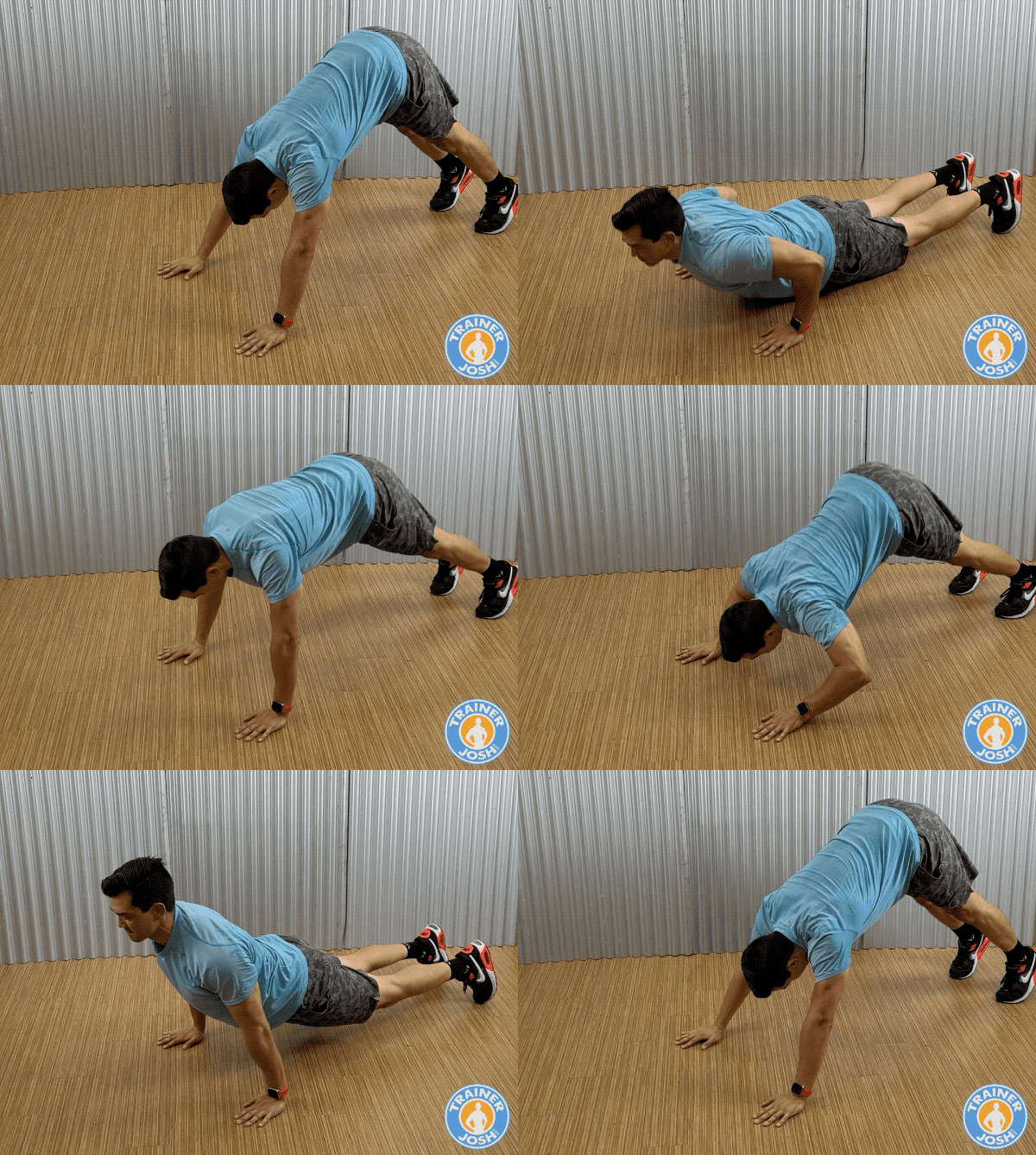
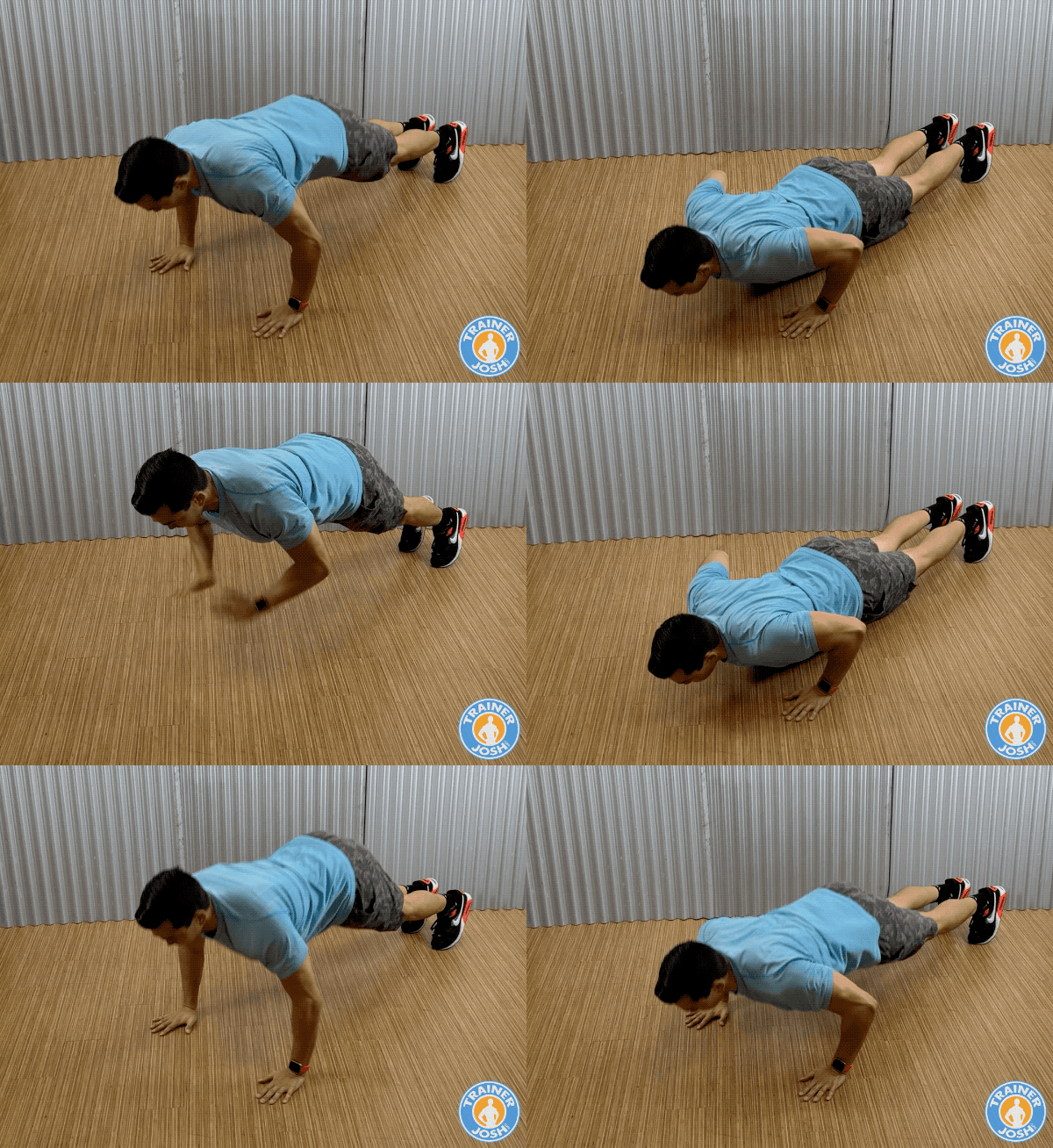
Divebomber push-ups (also known as Hindu push-ups) are an advanced compound exercise that uses yoga like movements such as the Sun Salutation into a dynamic pressing movement.
This movement mostly targets the pectoralis major, anterior deltoids, and triceps. But unlike regular push-ups, divebombers also train the hamstrings and increase flexibility in the spine, shoulders, and back.
You’ll also get a metabolic boost with divebomber push-ups. They work virtually the entire body in a fluid intense arc so they’re excellent for conditioning and burning calories.
How to Do Them:
Start in a standard push-up position with hands and feet slightly wider than shoulder width. Then push your hips up and back until your body forms an inverted “V” shape (like the Downward Dog pose).
Stick your chest out and swoop your upper body down in an arc. Bend your elbows so that your chest nearly brushes the floor.
Sweep your head and shoulders as high as possible until your arms are straight. Your back should be fully arched and you’ll be staring straight ahead with your pelvis an inch off the ground.
For a full divebomber, you can reverse the motion by sweeping the chest back close to the ground and pushing your body backward into the starting “V” position. This is the hardest part of the exercise.
Common Mistakes to Avoid:
- Cutting Range of Motion: A frequent error is failing to move in a true arc or cheating on depth by not bringing the chest close enough to the floor
- Craning the Neck: Leading with the chin or craning the neck upward during the press can cause tension headaches and inhibit force production
- Lack of Fluidity: Breaking the exercise into choppy, segmented movements rather than one fluid arc reduces the strength-building and coordination benefits
- Hips Sagging: Failing to engage the core can cause the hips to sag, which places unnecessary stress on the lumbar spine
Bodyweight Chest Exercises for Beginners (Can’t Do a Push-Up Yet)
“This is embarrassing, but I still can’t do one push-up.”
That was a 24-year-old who came to me who had been training on her own for 18 months. She felt discouraged, defeated, and ready to quit.
Here’s the truth: Inability to do push-ups is a leverage problem, not a weakness problem.
You fix it by manipulating body angle to reduce the percentage of bodyweight you’re lifting.
Step-by-Step Push-up Progression
1. Wall Push-ups (The Entry Point)
Stand at arm’s length from a sturdy wall. Hands at shoulder height, slightly wider than shoulder-width.
Lower your chest toward the wall by bending your elbows. Nose almost touches the surface.
This provides the shortest lever arm and the least gravity-induced resistance.
Goal: Work up to 15-20 clean reps before progressing.
2. Incline Push-Ups (Adjustable Resistance)
Most experts prefer incline push-ups over knee variations because they better mimic the full movement and require core stabilization through a straight body line.
Place hands on a sturdy elevated surface—countertop, table, desk, or couch arm. Maintain a straight line from head to heels. No sagging hips.
As you get stronger, gradually lower the surface height. Move from the table to the coffee table to the bottom step to the floor. This progressive lowering is your progressive overload.
3. Knee Push-Ups (Short-Lever Alternative)
If you lack adjustable surfaces, knee push-ups work. Resting knees on the ground shortens your body’s lever and reduces load by approximately 20%.
Critical form cue: Keep your body in a straight line from the back of your knees to your head. Don’t leave your butt in the air.
4. Push-Up Negatives (The Secret Weapon)
Here’s what most beginners don’t know… Your body is 120-150% stronger in the lowering phase than in the pushing phase.
Negatives exploit this strength discrepancy. Start at the top of a full push-up position. Slowly lower your body to the floor, fighting gravity the entire way.
Goal: Make the descent last 7-10 seconds.
Once you can control three consecutive 10-second negatives, you can usually perform at least one full concentric push-up.
This builds the eccentric strength that carries over to the concentric phase.
5. Full Push-Ups
Hands slightly wider than shoulder-width. Body forms a straight line from head to heels.
The “arrow” position: Arms form a 20-45 degree angle from your torso when viewed from above. Not a “T.”
Lower until your chest touches or “kisses” the floor. Push back to complete the lockout.
Progression Timeline
- Allow 1-2 minutes rest between sets.
- Start with 1-2 sets of 10-15 reps at your current level.
- Once you hit 15-20 perfect reps, move to the next progression.
Your connective tissues need time to adapt. Don’t rush it.
That woman who couldn’t do a push-up after 18 months? She was skipping progressions, trying to force full push-ups before building the foundation.
We dropped her back to incline push-ups on a bench. Eight weeks later, she did her first legit full-floor push-up. The progression works. Trust it.
Why Struggling Is Normal (Especially 30+)
You’re 35, 45, or 55. You can’t do a single push-up. You feel embarrassed. Maybe ashamed.
Here’s the reality: This is completely normal, and it’s not a permanent weakness… it’s deconditioning plus neuromuscular rust.
The 30+ Reality
After age 30, the average person loses approximately 3-8% of muscle mass per decade through sarcopenia.
If you’ve been sedentary, you’ve developed what’s called “muscle amnesia.” Your brain literally forgot how to send tension signals to muscles that have been habitually “shut off” by years of sitting.
Neuromuscular function (your nervous system’s ability to coordinate movement) begins to decline around age 30.
But here’s the critical insight: Age accounts for only about 10% of the variance in muscle-building capacity. The other 90%? Lifestyle and training consistency.
Even individuals in their 90s remain highly responsive to strength training.
Strength vs. Coordination
The push-up isn’t just a test of chest strength. It’s a complex multijoint movement requiring high-level intermuscular coordination.
It’s a “moving plank.” If your core isn’t stable, your hips sag. You lose the solid platform your arms need to push against.
Most beginners can only fire about 25% of their muscle cells. The brain hasn’t learned to recruit the full motor unit pool.
Your form breaks down from a lack of proprioception (body awareness in space) and balance, well before you reach actual muscle failure.
One 45-year-old told me, “I wasn’t able to do one push-up. My whole body felt uncoordinated, like I didn’t know where my limbs were.”
That’s not a weakness. That’s a lack of motor programming.
The Neural Adaptation Phase (The Good News)
Here’s what most people miss: The first 8-12 weeks of training produce rapid strength gains without significant muscle growth.
This is the neural adaptation phase.
Your central nervous system is getting a “software update.” It’s learning to:
- Increase voluntary muscle activation and rate coding (how fast nerves fire)
- Recruit more motor units simultaneously—from 25% to potentially 75%+
- Improve intermuscular coordination so pecs, delts, and triceps fire in harmony
- Decrease antagonist co-activation (relaxing opposing muscles during the movement)
You’re turning your nerves into “superconductors” of movement commands. This phase is about learning to drive the fast car you already have, but didn’t know how to operate.
How to Progress Once Push-Ups Get Easy
You’ve gone from struggling to do 5 push-ups to cranking out 30. Congratulations… Now what?
Most people make this mistake: Keep adding reps. 30 becomes 40, 40 becomes 50. But the chest still looks the same.
The problem: Once you exceed 15-20 reps, you’ve shifted from strength training to endurance work.
High-rep sets don’t provide sufficient mechanical tension for hypertrophy. You’re building cardiovascular capacity, not muscle mass.
The fix? Move harder, not longer.
Add Difficulty Before Adding Endless Reps
Performing 50+ push-ups is an inefficient use of time if your goal is building a muscular chest.
Strength and hypertrophy are optimized in the 5-15 rep range. Once you comfortably hit 15 clean reps, progress to a harder variation that drops you back into this zone.
This forces recruitment of high-threshold motor units—the ones with the greatest growth potential.
Elevation
The most direct resistance manipulation.
Feet-elevated (decline) push-ups shift 70-80% of your bodyweight onto your hands and shoulders. That compared to standard push-ups, which only move about 65-70%.
Start with feet on a 12-18-inch box—progress by increasing the height. Eventually, you’ll move toward more vertical pressing angles, such as pike push-ups or handstand progressions.
Tempo (Slow Eccentrics)
Time under tension without adding weight. Take 3-5 seconds (or even up to 10 seconds) to lower yourself to the floor.
Your muscles are 20-60% stronger during the eccentric phase. Slow eccentrics exploit this strength while dramatically increasing mechanical tension.
This also provides “neural re-education.” Forcing your nervous system to maintain control through the entire ROM. You’re essentially injury-proofing your joints while stimulating growth.
Most people drop to the floor in 1 second. That’s wasted tension.
Pauses
Eliminate momentum and elastic energy.
Pause for 2-5 seconds at the sticking point. This is usually when your chest is an inch off the floor.
Normally, your nervous system uses a stretch reflex to help you bounce out of the bottom position. This “free” elastic energy makes the movement easier.
Pausing forces your muscles to produce force from a dead stop. Significantly harder.
Advanced variation: The “dead start.” Lower to the floor, chest touches, relax completely for a split second, then re-fire all muscles and push back up.
Mechanical Drop Sets
Train past technical failure within a single set.
Do as many reps as possible of a difficult variation (diamond or decline push-ups). Immediately upon failure, switch to standard push-ups. When those fail, finish with incline push-ups (hands on bench). No rest between transitions.
This increases training density. The amount of work done in a set period. Your muscles experience massive metabolic stress, forcing adaptation.
One client plateaued at 40 standard push-ups. We switched to mechanical drop sets: 8 decline → 12 standard → 15 incline. His chest finally began to grow again after months of stagnation.
Stop chasing high reps. Start chasing intensity.
When (and How) to Add Load
Use the 2-for-2 rule to know when it’s time to add load. If you can knock out 2+ extra reps beyond your target for 2 consecutive workouts, then you’re ready to increase resistance.
For chest hypertrophy, once you’ve cleared 15-20 clean reps with perfect scapular retraction and proper tempo, then it’s time to add weight. That’s the sweet spot for muscle growth: the 8-12 rep range, where mechanical tension peaks and metabolic stress amplifies the growth stimulus.
But there’s a catch…
Most guys think adding load means hitting the gym. Wrong.
The Backpack Method: Old-School Genius
This is stupidly simple and extremely effective…
Grab a sturdy backpack. Load it with household items—textbooks, water bottles, or weight plates if you have them. Strap it on so the weight sits on your upper back, not your neck or lower back.
Start with 10-15 pounds. Work back up to 12-15 reps with that load. Then add 5 pounds and repeat.
One of my clients, Marcus, plateaued at 35 push-ups. Couldn’t get his chest to grow past that “skinny-fit” look. We added a 20-pound backpack. Within 8 weeks, his max dropped to 10 reps—but his chest added half an inch of thickness. The mirror told the story his rep count couldn’t.
You can also use a weighted vest instead of a backpack. These can provide better support than a backpack.
Pro tip: Use a backpack with chest straps to prevent it from sliding. Your focus should be on crushing reps, not wrestling your load into place.
Resistance Bands: Variable Tension Game-Changer
Bands offer something weights can’t… resistance that accommodates.
Loop a resistance band across your upper back (right under your armpits), grip the ends under your palms on the floor, and press. The band stretches as you rise, creating maximum tension at the lockout where your chest and triceps are strongest.
A 2015 study in the Journal of Strength and Conditioning Research found that performing 6‑rep‑max push-ups with elastic bands produced pectoralis major muscle activation and 5‑week strength gains that were comparable to a 6‑rep‑max barbell bench press.3
But here’s the reality check…
Bands shift tension toward the lockout phase, which means your triceps can dominate if you’re not careful. To keep the chest engaged, focus on explosive pressing from the bottom and squeeze your pecs hard at the top for 1-2 seconds.
Think of it like stretching a rubber band. The tighter it gets, the harder you work. But only if you’re controlling the movement, not letting momentum take over.
Why This Still Counts as “Bodyweight Training”
Adding a backpack or band doesn’t suddenly make this “weight training.” You’re still moving your body through space against a fixed surface. That’s a closed-kinetic chain (CKC) exercise.
The load you’re adding just increases the mechanical tension your chest must produce to overcome gravity. Your body weight is still the primary resistance. You’re still requiring full-body stabilization and scapular freedom.
Contrast that with a barbell bench press, where your shoulder blades are pinned to a bench, eliminating natural scapular movement. The push-up (loaded or not) keeps your kinetic chain closed and functional.
Here’s the analogy: Adding weight to a push-up is like wearing a weighted vest while running. The movement pattern stays the same, the muscle recruitment pattern remains the same—you’ve just cranked up the difficulty dial.
Advanced Calisthenics Progressions
You’ve hit 15-20 reps per set. Adding weight feels awkward, or you don’t have the gear.
Now what?
This is where most guys quit bodyweight training and head to the gym. They think they’ve maxed out what push-ups can do. Wrong.
You’re just getting started. The real chest-building push-up variations haven’t even entered the chat yet. These three progressions will humble you (and force your chest to grow) without adding a single pound of external weight.
Deficit Push-Ups: Stretch = Growth
Standard push-ups stop at the floor level. Your chest never reaches full stretch.
Deficit push-ups fix that.
Place your hands on parallettes, yoga blocks, dumbbells, or even thick books. Lower until your chest drops 2-4 inches below hand level. This increased range of motion creates a deep stretch at the bottom that triggers stretch-mediated hypertrophy.
A 2020 systematic review published in SAGE Open Medicine found that resistance training performed through a full range of motion generally produces greater lower-body muscle hypertrophy than partial range of motion training.4
Here’s what happens: The deeper stretch increases mechanical tension at the muscle’s lengthened position… exactly where growth signaling peaks.
Pro tip: Start conservative. If you’re hitting 15 regular push-ups, you’ll struggle with 8-10 deficit reps. That’s the point. You’ve just re-entered the hypertrophy zone.
Ring/TRX Push-Ups: Instability = Intensity
This is the variation that separates the pretenders from the contenders.
Rings and the TRX suspension trainer force your body to self-stabilize through every inch of the movement. Your chest, core, and stabilizers work overtime to prevent the rings from wobbling.
A 2013 study in the Journal of Human Kinetics found that suspension push-ups (TRX-style) produce significantly higher muscle activation than traditional floor push-ups for the chest, shoulders, and triceps. In 21 healthy adults (15 men, 6 women) performing both variations, suspension push-ups elicited greater normalized EMG (%MVC) in the pectoralis major (69.5% vs 63.6%), anterior deltoid (81.1% vs 58.9%), and triceps brachii (105.8% vs 74.3%) (all p < 0.05), suggesting suspension push-ups are a more advanced, higher-demand push-up variation.5
But here’s the thing most people miss…
Rings Turned Out (RTO) is the advanced version. Rotate your hands outward 45-90 degrees at the top. This reduces shoulder leverage and lengthens the pecs further. Your biceps have to fire hard just to keep the rings from flying apart.
One of my clients, Jake, was stuck at 25 standard push-ups with zero chest growth. We switched him to ring push-ups. He could barely manage 5. Within 6 weeks, his chest added 3/4 inch of thickness because his muscles were finally working under instability they’d never experienced.
Critical form cue: Keep elbows tucked at 0-45 degrees from your body. Flaring wide on unstable rings is a fast track to shoulder impingement.
Pseudo-Planche Push-Ups: Leverage Manipulation
This looks deceptively simple. It’s not.
Start in a standard push-up position. Now walk your feet forward until your shoulders move significantly in front of your hands—maybe 4-6 inches past neutral.
Lower with control. Press back up.
The forward lean shifts your center of gravity, creating a massive increase in demand for leverage on your anterior delts, chest, and core. You’re making a horizontal plank press.
The closer your hands get to your hips, the harder it gets. Full planche push-ups (the elite gymnastics move) are just the extreme version of this principle.
Common mistake: Most people arch their back or pike their hips to cheat. Keep your body in a rigid hollow-body position. Straight line from head to heels, slight posterior pelvic tilt.
If you can hit 12-15 reps of standard push-ups but only 4-6 reps of pseudo-planche, you’ve found your new growth stimulus.
How Often Should You Train Your Chest With Bodyweight?
Key Takeaways:
- Train chest 2-4x per week with 48-72 hours recovery between hard sessions
- Daily push-ups work for skill practice (GTG at 50-60% max), not for muscle building to failure
- Aim for 25-50 total quality reps for strength, 40-75+ for hypertrophy per session
- Watch for regression, sleep issues, elevated resting heart rate, or persistent joint pain as overtraining signs
- Once you hit 15-20 clean reps on a variation, increase difficulty—not just volume
Here’s where most guys get stuck.
You’re reading that some dude did 300 push-ups daily and built a “Superman chest” in 3 months. Then you read another expert saying daily training kills gains and ruins recovery.
So what’s the truth?
Both are right… and both are wrong. It depends entirely on how you’re training.
Let me clear this up.
The 2–4x Per Week Sweet Spot
For building a bigger, stronger chest with bodyweight exercises, 2-4 training sessions per week is your goldilocks zone.
Here’s why that range works:
Beginners (0-6 months training): Start with 2-3 sessions per week. Your nervous system is still learning movement patterns. You need 48-72 hours between sessions for muscle protein synthesis to complete its cycle.
Intermediates (6-18 months): Move to 3-4 sessions per week. Your work capacity has increased. You can handle more frequency without frying your CNS.
Advanced (18+ months): Up to 4-5 sessions per week with strategic programming. But this requires splitting movements and managing fatigue carefully.
The mechanism? Muscle protein synthesis stays elevated for 36-48 hours post-workout. Training every 2-3 days keeps the growth signal consistently active.
Daily Push-Ups: When It Works, When It Doesn’t
You’ve seen the “100 push-ups a day” challenges. Do they work?
Sometimes. Here’s the distinction:
When daily training works (Skill Practice): If you’re doing submaximal sets throughout the day like 50-60% of your max reps but never approaching failure. Then you’re practicing a skill, not destroying muscle tissue. This is called Grease the Groove (GTG).
Example: Your max is 20 push-ups. You do sets of 10-12 every few hours. Total daily volume: 50-70 reps spread across 5-7 sets. You’re building neural efficiency without inducing significant muscle damage.
This works for strength gains and motor learning.
When daily training doesn’t work (Hypertrophy): If you’re training to technical failure or using high-intensity variations (ring push-ups, pseudo-planche, weighted), daily training will crush you.
Why? Muscle tissue repairs in 48-72 hours. Connective tissues (tendons and ligaments) take 10x longer to recover than muscle fibers. Training hard every day accumulates damage faster than your body can repair it.
One of my clients, Derek, on his own tried the “200 push-ups daily” challenge. After 12 days, his elbows were screaming. His chest stopped growing at day 8. We pulled him back to 3x per week with progressive variations. His chest added half an inch in the next 6 weeks.
Volume vs. Recovery Tradeoffs
Here’s the formula: Intensity × Volume × Frequency = Total Stress
You can’t max out all three variables without breaking down.
For strength:
- High intensity (hard variations)
- Low volume (25-50 total reps)
- Moderate frequency (3-4x/week)
- Long rest between sets (3-5 minutes)
For hypertrophy:
- Moderate intensity (8-12 rep range)
- Moderate-high volume (40- 75+ total reps)
- Moderate frequency (3- 4x/week)
- Shorter rest (90-120 seconds)
A 2012 randomized crossover study published in The Journals of Gerontology found muscle protein synthesis plateaus after approximately 3–4 hard sets per exercise, with little additional benefit from doubling volume to 6–8 sets in a single session.6
Going beyond 8-10 hard sets per muscle group in a single session and you hit severe diminishing returns. Better to spread that volume across multiple days.
Signs You’re Overdoing It
Your body will tell you when you’ve crossed the line. Listen.
Regression in performance: Can’t hit reps you crushed last week.
Sleep disruption: Trouble falling asleep or waking up wired.
Persistent joint pain: Elbows, wrists, or shoulders aching for 3+ days.
Elevated morning heart rate: 5-10 bpm above your baseline, measured first thing in the morning.
Loss of appetite or motivation: Your body shuts down the “let’s train” signal.
These are red flags for non-functional overreaching. You’re digging a recovery hole faster than you can climb out.
Sample Bodyweight Chest Workouts
Beginner At-Home Chest Workout
Intermediate Chest Workout
Advanced Bodyweight Chest Workout
Warm-Up, Mobility & Injury Prevention
Key Takeaways:
- Warm up 5-10 minutes: light cardio + arm circles + shoulder dislocates + easy build-up sets
- Fix wrist pain with push-up handles (neutral grip), knuckle push-ups, or wrist mobility drills before training
- Prevent shoulder impingement: retract scapulae (down and back), keep elbows at 20-45° angle (arrow not T)
- Joint pain is a red flag—train around it, never through it; muscle burn is normal
Let’s talk about the stuff nobody wants to discuss until it’s too late. You’re 18 reps into a hard set. Your wrist starts screaming. Or that familiar shoulder pinch creeps in.
Now you’re sidelined for 2 weeks. Progress is gone.
This section will save you months of frustration. Most guys skip it. You shouldn’t.
Quick Chest & Shoulder Warm-Up (Under 10 Minutes)
Cold muscles tear. Warm muscles stretch.
Your warm-up should elevate body temperature and prime movement patterns (not exhaust you).
Phase 1: General Heat (5 minutes)
Jumping jacks, high knees, or light jogging until you break a sweat. You’re activating synovial fluid production in the shoulder capsule (the body’s natural joint lubricant).
Phase 2: Specific Activation (3-5 minutes)
- Arm circles: 10 forward, 10 backward, gradually increasing diameter
- Shoulder dislocates: 10 reps with a resistance band or broomstick (stretches anterior shoulder, opens chest)
- Scapular wall slides: 5 reps (teaches proper shoulder blade positioning)
- Build-up sets: 2 sets of 5-8 easy push-ups at 50-60% intensity
A 2017 crossover study found warm-up protocol significantly influenced Wingate peak power, with dynamic stretching producing the highest peak power (~9.3 W/kg) and static stretching the lowest (~8.5 W/kg), while average power and fatigue measures were unchanged.7
Skip this, and you’re leaving gains (and inviting injury) on the table.
Wrist Pain Fixes (The #1 Beginner Complaint)
“My wrists hurt after 20-25 reps.”
Here’s why: Standard push-ups force your wrists into 90 degrees of hyperextension. That’s extreme stress on a joint designed for neutral positioning.
Three solutions:
1. Push-Up Handles or Parallettes
These allow a neutral grip (like shaking hands). Eliminates wrist hyperextension. Cost: $15-30. Worth every penny. I also like using the rotating Perfect Push-ups.
2. Knuckle Push-Ups
Free alternative. Perform push-ups on your fists with wrists straight and vertical. Align the load directly through your forearm bones instead of cranking the joint backward.
Start on a padded surface (yoga mat, carpet) until your knuckles adapt.
3. Wrist Mobility Drills
Before training, perform:
- Wrist circles: 10 each direction per hand
- Floor stretches: Hands on floor, fingers pointing forward/backward/sideways, rock your weight over them for 20-30 seconds each angle.
These increase wrist flexor and extensor strength, building resilience for weight-bearing positions.
Shoulder Safety Cues (Stop the Pinch)
Shoulder impingement is the bodyweight athlete’s nightmare. It sidelines you for weeks (sometimes months).
Two critical fixes:
1. Scapular Control: Pack Your Shoulders
Before every rep, retract your shoulder blades. Pull them down and back like you’re squeezing a pencil between them. This increases the subacromial space (the gap under your shoulder joint) by up to threefold, preventing the humeral head from grinding against the acromion.
2. Elbow Path: Arrow, Not “T.”
Your elbows should track at a 20-45 degree angle from your torso—forming an arrow shape from above.
Flaring elbows out to 90 degrees (the “T” position) puts rotational torque on the shoulder capsule and crushes the rotator cuff under load. That’s how impingement starts.
Good pain vs. bad pain:
Muscle burn and lactic acid = good. That’s fatigue.
Sharp, shooting joint pain = bad. That’s structural damage to the building.
Stop immediately when joints hurt. Train around pain, never through it.
FAQ
How long until I see chest growth?
You’ll feel stronger in 2-3 weeks (neural adaptation), but visible chest growth takes 8-12 weeks of consistent progressive overload. The first month is when your nervous system learns to fire muscles efficiently—strength increases without changes in size. Actual muscle fiber enlargement requires 2-3 months for novices, longer for advanced lifters, assuming you’re eating enough protein (0.7-1g/lb) and sleeping 7-9 hours nightly. Track chest circumference with a tape measure monthly.
Are push-ups enough for the chest?
Yes, push-ups are scientifically proven to build chest size and strength equal to that of the bench press when performed with progressive overload. Research shows that when intensity matches, push-ups and barbell bench press produce identical hypertrophy of the pectoralis major. Your muscles don’t care about the resistance source, only the mechanical tension.
The catch: once you hit 12-15 clean reps, you must progress to harder variations (archer, deficit, rings, weighted) or add external load to stay in the hypertrophy zone, not the endless-endurance zone. Balance every push set with a horizontal pull (rows) to prevent shoulder impingement and “caveman posture.”
Can women build chest muscle with body weight?
Absolutely, women build chest muscle at the same relative rate as men when training with progressive overload. Research shows that push-ups and bench press produce identical growth in the pectoralis major at matched intensities. Hormonal differences (lower testosterone, higher growth hormone) mean women develop lean, athletic chest definition rather than bulk, and they often recover faster between sessions.
What if I only feel it in my arms?
Your triceps and front delts are hijacking the movement because you lack proper scapular control and mind-muscle connection with your chest. Fix it by: (1) retracting your shoulder blades down and back before every rep, (2) keeping elbows at 20-45 degrees from your torso (arrow shape, not T), and (3) consciously pulling your elbows together across the floor rather than just pushing up. Pre-activate your chest before sets by placing one hand on your pec and pushing the other arm across your body against a wall. Feel that squeeze, then replicate it during push-ups with a full range of motion, with your chest nearly touching the floor.
Are bodyweight chest exercises inferior to weights?
No, research shows that push-ups and bench press produce identical gains in chest strength and size at matched intensity levels. Bodyweight exercises are closed-kinetic-chain movements that promote total-body integration (core, stabilizers) while following safer, more natural shoulder movement patterns, reducing injury risk compared to fixed-path barbell pressing. The only advantage weights have is microloadability—adding 5 pounds to a bar is easier than manipulating leverage angles—but for upper-body development, advanced calisthenics variations (one-arm push-ups, rings, pseudo-planche) rival or exceed what most lifters achieve with weights. You’re not limited by the tool; you’re limited by your willingness to progress beyond standard push-ups.