
Here you’ll find the 10 best dumbbell arm exercises and workout plans you can use at home if you’re a woman wanting toned and defined arms or a man wanting bigger, stronger arms.
Dumbbells are a versatile and inexpensive piece of fitness equipment that gives you the ability to work each arm independently and fix strength imbalances. With these dumbbell exercises, you can focus on strengthening your arms in multiple angles to maximize your results.
Women who want slimmer, toned arms then have no fear of bulking with these exercises. This guide is beginner-friendly but intermediates will benefit from new exercises that’ll blast through plateaus.
I’ll cut through the confusion and overwhelm by giving you clear, foolproof instructions on how to do these dumbbell arm exercises for the best results. This is a simple, safe, and highly structured starting point that removes the guesswork while minimizing any injury risk or embarrassment.
How to Exercise Your Arms With Dumbbells
Key Takeaways:
Dumbbells are the superior fitness equipment for arm training because they force each arm to work independently. This fixes strength imbalances that many lifters suffer from. And you can target specific muscle heads to balance out growth and toning.
But it can feel awkward at first because of stability demands, but this instability also recruits more muscle fibers and can lead to better muscle gains than machines or barbells. Start light, focus on form over ego, and lead with your weaker arm to build balanced, stronger arms safely.
Pros:
Unilateral Training & Fixing Imbalances – Unilateral training is when you work out one arm at a time. Dumbbells force each arm to work independently. This will help correct any imbalances in your arms since many can have one arm stronger than the other.
Dumbbells can be advantageous compared to using barbells or machines because you can’t cheat by using more of your stronger side than your weaker arm. This makes dumbbells the best tool for correcting muscle or strength imbalances. It’s pretty common because most people use one arm more than the other.
Higher Muscle Activation – Unilateral arm exercises with dumbbells force your body to stabilize and generate force without help from the opposite side.1 This demand makes your nervous system recruit more high-threshold motor units (HTMU). These motor units are groups of muscle fibers that are only activated when your body senses real challenge or heavy effort.2
HTMUs control the biggest, strongest muscle fibers, which are the ones that are responsible for muscle growth and strength gains. These dumbbell arm exercises force your nervous system to wake up more muscle fibers, leading to higher muscle activation and better arm development. This is especially true if you’re a beginner or have trouble making gains.
Target Specific Muscle Heads – Dumbbells give you different body and arm positioning, which can increase the amount of work each specific head of your triceps or biceps. This helps you target weak points in your arm development so you can improve them.3
For example, with the triceps, doing exercises like overhead dumbbell tricep extension are effective for working the inner long head, while dumbbell kickbacks increase the contribution of the lateral head. For biceps, incline dumbbell curls are effective for the long head.
Progressive Overload & Muscle Stimulation – Dumbbells make it easy to implement progressive overload by increasing the difficulty. Progressive overload is the principle where you have to continually challenge the muscle, or else it will adapt to doing the same thing, and your results will plateau.4
With dumbbells, you can simply go heavier or change the tempo to increase progressive overload and muscle stimulation. Also, the variety and amount of exercise possible with dumbbells help to mix things up with the muscle stimulus to promote growth.
Program Design Versatility – You can easily and effectively use various training methods in your program design, such as using dumbbells for arms. For example, you can use agonist supersets where two exercises target the same muscle group. This significantly increases the stress on the muscle.
I like moving from one dumbbell arm exercise with a lower mechanical advantage (like incline dumbbell curls) to one with a greater mechanical advantage to help delay fatigue and activate more muscle fibers. With dumbbells, you’ll have a wide range of exercises that target specific points so you’ll get balanced development and bust through plateaus.
Cons:
Awkward at First: It can feel awkward for beginners to use dumbbells because their instability requires smaller stabilizing muscles in the shoulders to work extra hard. The instability is a benefit in the end because you have to improve smaller stabilizing muscles, but the initial awkwardness can be a hurdle for some at first.
Form Breakdown: Since dumbbells are more dynamic than machines or barbells, it’s easy to lose form or start cheating by swinging or compensating with your body to move the weight. If you’re limited to only a single set of dumbbells but they’re too heavy for you, then it can increase the chances of an injury and make it harder to keep proper form since it’ll be tempting to compensate.
Grip Limitations: As you progress up and want to increase the weight resistance of the dumbbells, then it could be challenging to hold on to the weights if your grip isn’t strong enough. Grip strength can be a limiting factor for some if you’re not able to hold the dumbbells long enough to target your arm muscles until they’re fully fatigued.
3 Must-Have Factors for Dumbbell Arm Exercises
Key Takeaways:
- High Muscle Activation: The more intensely your arm muscles work during each rep, then the faster you’ll see results in strength, growth, and definition.
- Deep Stretch at the Bottom: Fully lengthening the muscle under tension (deep stretch) sends a strong signal for muscle growth, boosting size and strength gains.
- Strong Contraction at Top: Pausing to squeeze your arm muscle at the top of each rep increases mechanical tension and drives even more muscle growth.
High muscle activation during an exercise means the targeted muscle is working extra hard with each rep. So the more you activate your arm muscles during these dumbbell arm exercises, the faster you’ll see results like strength, growth, and definition.
Varying rep ranges in your workouts can stimulate a wider range of motor units. Low repetitions (less than 6) tend to recruit high-threshold fast-twitch fibers, which can exert the highest amount of force but have limited fatigue resistance. Higher rep ranges (20 or more) tend to recruit slow-twitch motor units, which are more fatigue-resistant.
Changing your arm exercises with dumbbells is a significant factor because the motor unit recruitment order for a muscle is fixed during a specific exercise. This just means different exercises can activate different motor units and target various points along the strength curve.
A deep stretch at the bottom of these dumbbell arm exercises puts the muscle under tension when fully lengthened. This deep stretch helps to create a strong growth signal that triggers your muscles to get bigger and stronger instead of just going through a shorter range of motion.
Slow eccentrics. An exercise’s eccentric (lowering) portion is key because muscles produce up to 1.3 times more force during the eccentric contraction than the concentric raising phase. Forces maximal absolute strength and will lead to the highest level of muscular tension, which is key for gaining muscle and strength.
A strong contraction at the top of these exercises by squeezing and fully contracting your muscle will create maximum tension where the muscle is shortest and working the hardest. This creates a strong contraction and, combined with the deep stretch at the bottom, will maximize mechanical tension across the whole range of motion. This triggers more muscle growth and strength gains.
Equipment used:
These are the dumbbells that I’m using to demonstrate these chest exercises. For beginners, I’d recommend picking up 8-15 pound dumbbells, but if you’re a more advanced lifter then go with 20-25 pound dumbbells.
You can also pick up a set of adjustable dumbbells. Adjustable dumbbells save space and can save you money in the long run by not having to keep buying heavier dumbbells. It allows you to easily change the weight for progression.
I’m also using an adjustable bench for some of these exercises. But if you don’t have access to a bench, then there are other exercises below that don’t require one.
Bicep Exercises
Dumbbell Bicep Curls
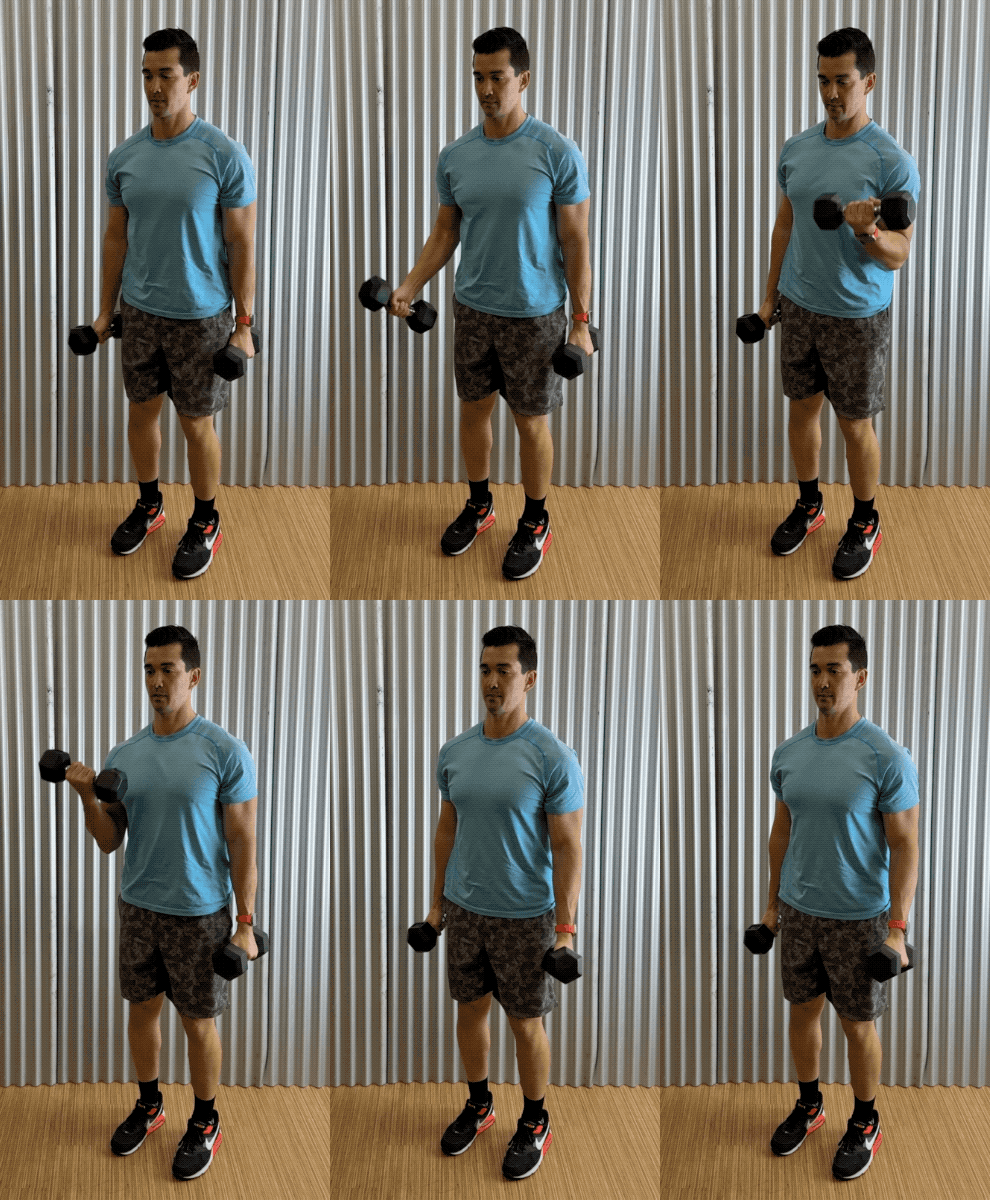
Dumbbell bicep curls work both heads of your biceps. But since your arms stay at your sides, they focus more on the inner short head. Be sure to focus on keeping your wrist straight and not swinging the weight. The stricter your form, the more gains you’ll get.
- Hold a pair of dumbbells at your sides while standing tall, your chest up, your shoulders back, and your elbows glued to your sides.
- Start with your palms facing the inside of your body. As you curl up, turn your palms so they face up at the top of the movement. Keep your elbow at your side. Don’t let it move forward—your shoulder will try to help, but that takes work away from your biceps.
- When the dumbbell reaches the top, pause and squeeze your biceps hard to maximize muscle contraction. Keep focusing on keeping your elbows back and not letting them drift forward.
- Slowly lower the dumbbell back into the starting position for 2-3 seconds. This is the eccentric phase, which is key for building muscle.
Dumbbell Cross Body Hammer Curls
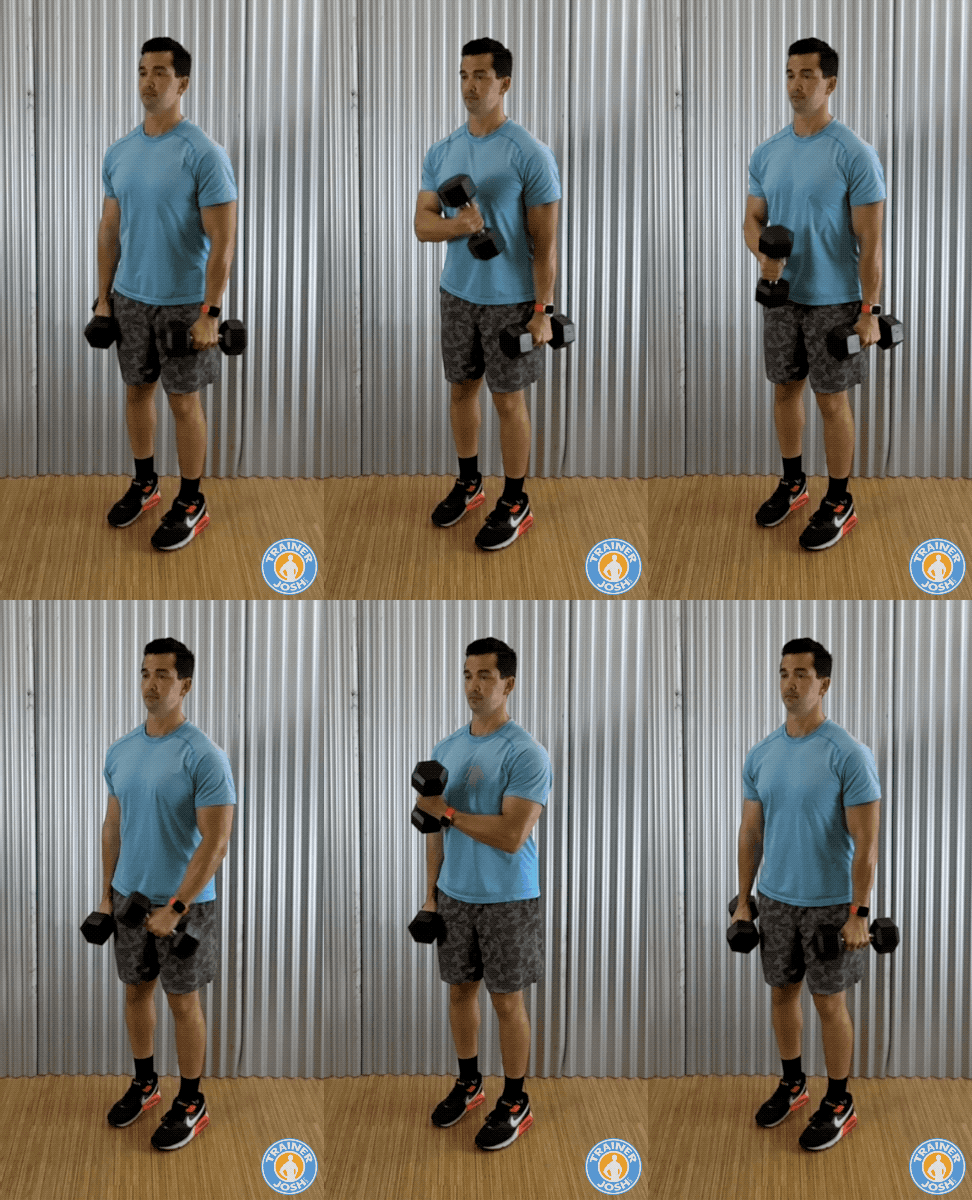
Cross body hammer curls work the brachialis (a muscle underneath your biceps) and the brachioradialis (primary forearm muscle). This helps to add thickness to your arms and improves overall strength.
- Stand tall with your feet hip-width apart, a dumbbell in each hand, your arms fully extended by your sides, and your palms facing your thighs with a neutral grip.
- Keeping your elbows close to your body, curl one dumbbell up and across your torso towards the opposite shoulder. Keep your palm facing in (thumb up) until you reach the top.
- At the top, turn your wrist up into supination to really activate your biceps. Then squeeze your biceps and your forearm hard for a second and feel that contraction.
- Slowly lower the dumbbell back to your side under control. Resist the drop to maximize muscle tension.
- You can do one side at a time to really hit that arm, or alternate sides by repeating the motion with your other arm.
Incline Dumbbell Curls
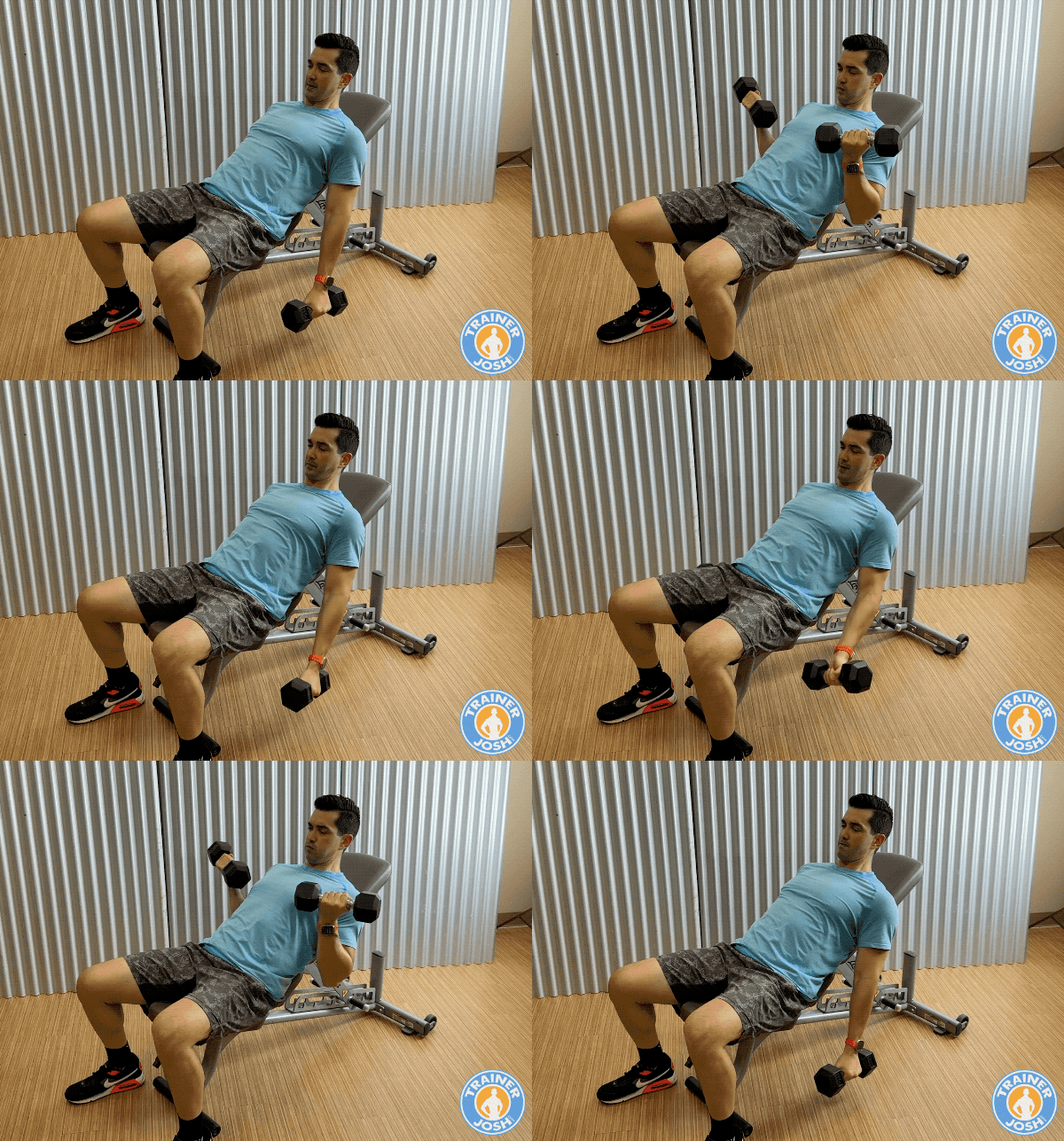
Incline dumbbell curls mainly target the outer long head of your biceps. Your arms stay behind your body, which adds more stretch and tension to the long head. This boosts activation and helps build the bicep peak when flexed.
- Set up an incline bench at about a 45-degree angle. Hold a dumbbell in each hand and lie back on the bench. Keep your feet flat, shoulders pulled back, and chest slightly arched. Let your arms hang straight down below the bench.
- Start with your palms facing toward your body to maximize the stretch at the bottom. Then, begin curling the weights up in a controlled, smooth fashion. Keep your elbows stationary while keeping your shoulders back and your chest arched.
- Fully twist your wrist so your palms face up to maximize supination and biceps activation. Squeeze your biceps at the top to maximize the contraction.
- Slowly lower the dumbbells in a controlled descent for about 2-3 seconds. Make sure your arms are fully extended at the bottom with your palms facing in for a deep stretch.
- Be sure to limit momentum by avoiding swinging or lifting your shoulders. This will increase the isolation of the bicep muscle and the exercise’s effectiveness.
Zottman Curls
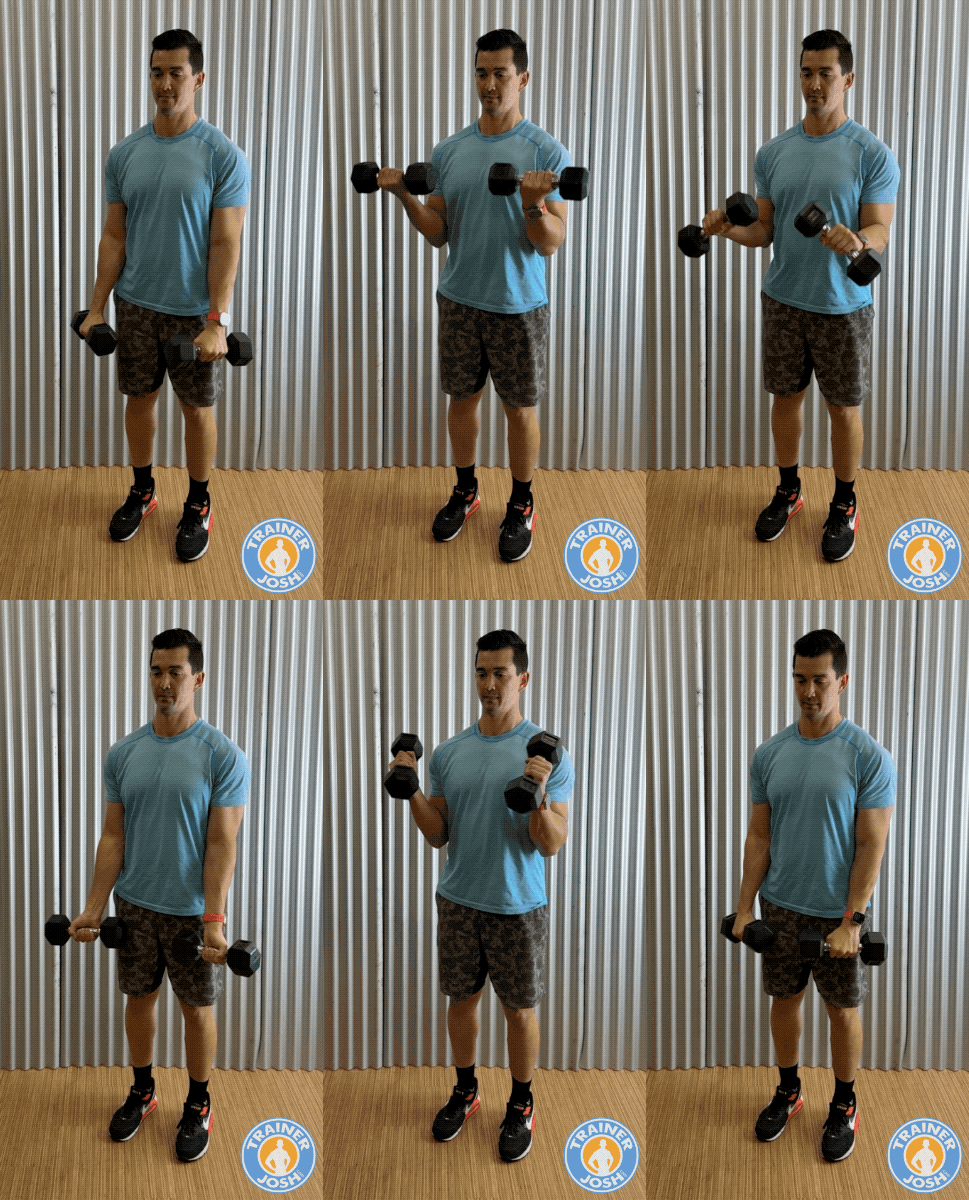
The Zottman curl is great for balanced arm development for both your bicep size and forearm strength. This exercise targets both heads of your biceps on the upward part of the curl, but then shifts focus to your brachialis and brachioradialis on the downward lowering phase. This is due to your palms being pronated (facing down). This helps to hit your forearms and your deep elbow flexors.
- Get in the starting position by standing with your feet hip-width apart and holding a pair of dumbbells at your sides with your palms facing forward in a supinated grip. Keep your elbows locked close to your torso throughout the movement.
- Curl the dumbbells up towards your shoulders like a regular biceps curl and squeeze your biceps at the top to maximize the contractions.
- Pause and rotate your wrists at the top of the curl so your palms are now facing downward.
- Slowly lower the dumbbells back to the starting position under full control while keeping your palms facing down. Go slower on the way down to emphasize the eccentric load on your brachialis and forearm.
- Reset at the bottom once your arms are fully extended by rotating your wrist back so your palms are facing up before starting the next repetition.
Tricep Exercises
Dumbbell Overhead Tricep Extension
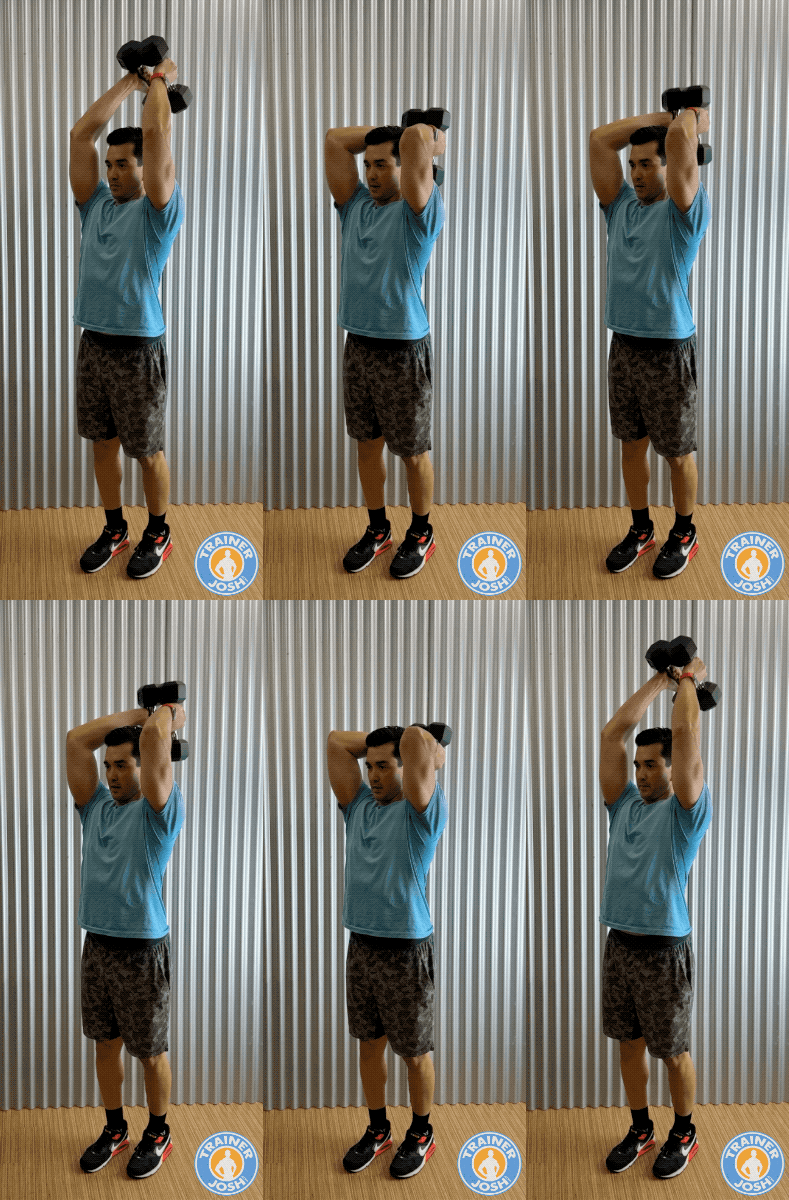
The dumbbell overhead tricep extension targets the inner long head of the triceps. The overhead position stretches the long head, allowing for greater mechanical tension and muscle growth. If you’re looking to grow your arm size, this is a great exercise.
- Stand and grab a dumbbell in each hand, bringing them to your chest and holding them together in a diamond position. Then raise your arms over your head and keep your elbows in, but do not fully lock out your elbows at the top.
- Tighten your abs to keep your lower back from arching. Then slowly bend your elbows to lower the dumbbell behind your head. Lower the dumbbell as far as you can comfortably and feel the deep stretch in your triceps at the bottom.
- Keep your elbows in and pointing forward, and don’t allow them to flare out. Then, slowly extend your arms back to the starting position by straightening your arms overhead. At the top, focus on squeezing your triceps muscles.
Lying Dumbbell Tricep Extensions
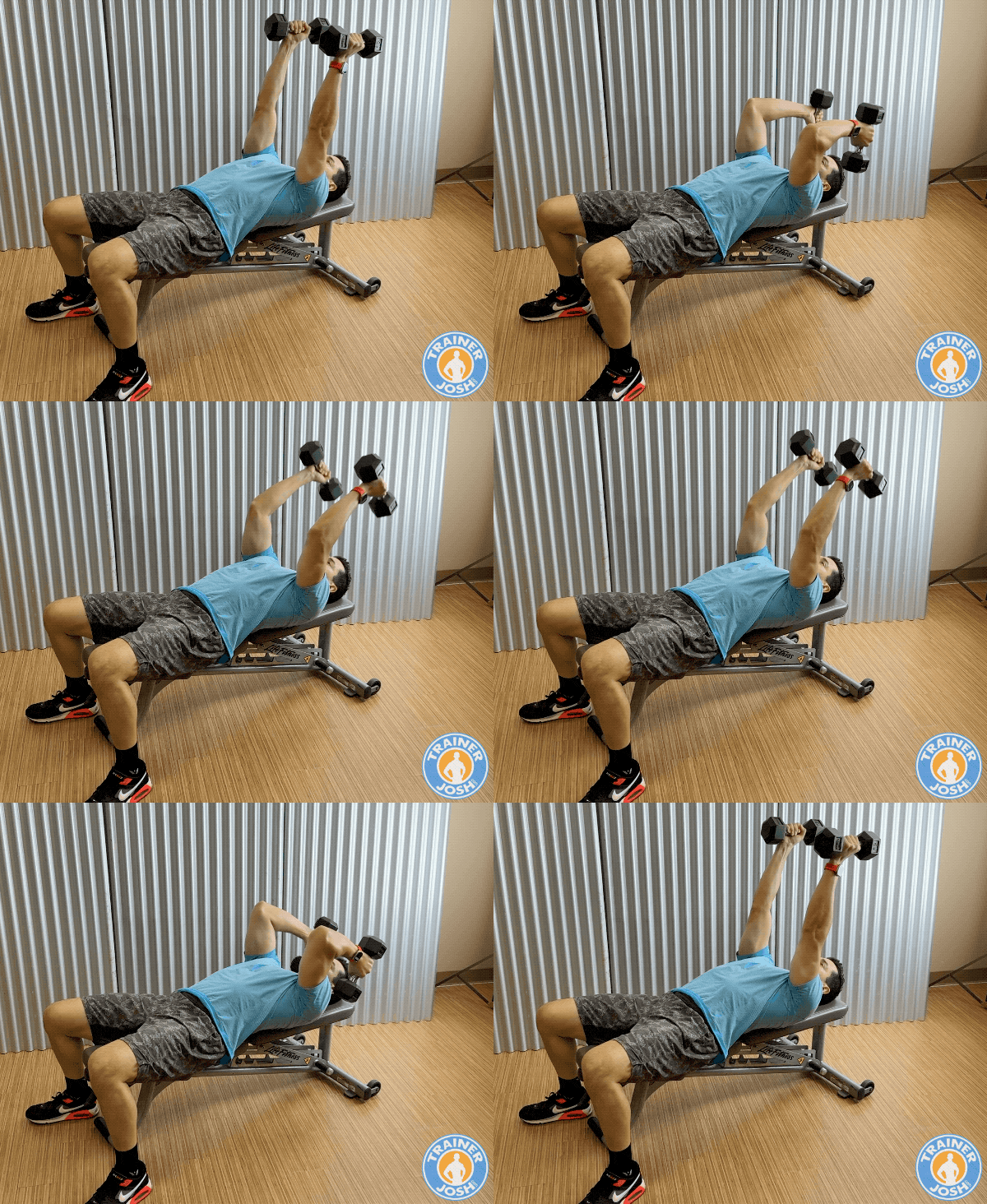
Dumbbell skull crushers can give you a slightly greater range of motion than the straight or EZ-bar curl and also help to address muscle imbalances because each arm has to work independently. For some, using dumbbells can give you a more comfortable joint angle and put less stress on your wrists and elbows.
- Lie flat on a bench while holding a dumbbell in each hand. Then, extend your arms straight above your shoulders with a neutral grip (palms facing each other).
- Keep your elbows locked in position and in line with your shoulders. Don’t let your elbows flare out. This will keep tension off your shoulders and on your tricep muscles.
- Bend your elbows to slowly lower the dumbbells just outside the top of your head or even slightly behind it.
- Pause and feel the stretch in your triceps at the bottom before extending your elbows back to the top and straightening your arms. At the top, squeeze your tricep muscle to maximize the contraction, but don’t lock out too hard.
Dumbbell Kickbacks
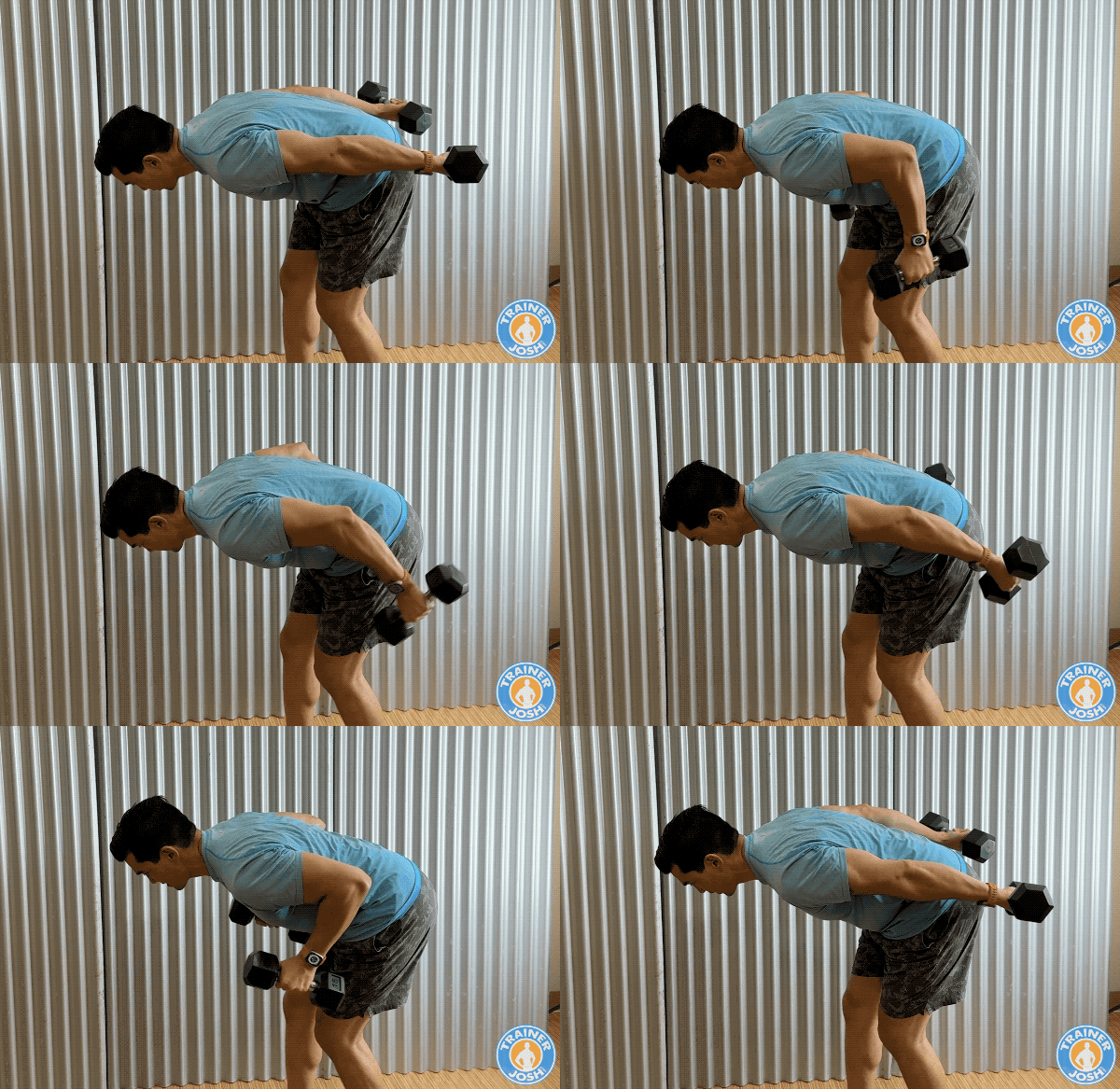
Dumbbell kickbacks are an excellent exercise for isolating the lateral head of your triceps, especially when your arm is fully extended in the lockout phase. When your arm is at full extension, your triceps will be under maximum mechanical tension, which improves muscle definition and toning.
- Stand and hold a pair of dumbbells at your sides with your palms facing your sides as well. Next, tighten your abs and hinge forward at your waist like you’re going to do a bent-over row. Keep your back flat with a neutral spine.
- Tuck your elbows by your sides and raise your upper arm until it’s parallel with your torso. Your upper arm shouldn’t move during the exercise and should be locked to your side.
- Then, extend your arm by straightening your elbow to drive the dumbbell back until your arm is fully extended. A big tip is to rotate your palms at the end to face upward to maximize contraction in the triceps’ lateral head.
- Squeeze your triceps hard at the top, and after briefly pausing, slowly lower the dumbbells under control back down into the starting position until your arms are at a 90-degree bend.
- Focus on controlling the dumbbells and do your best to avoid swinging or allowing your elbows to drop or flare outward.
Shoulder Exercises
Dumbbell Shoulder Press
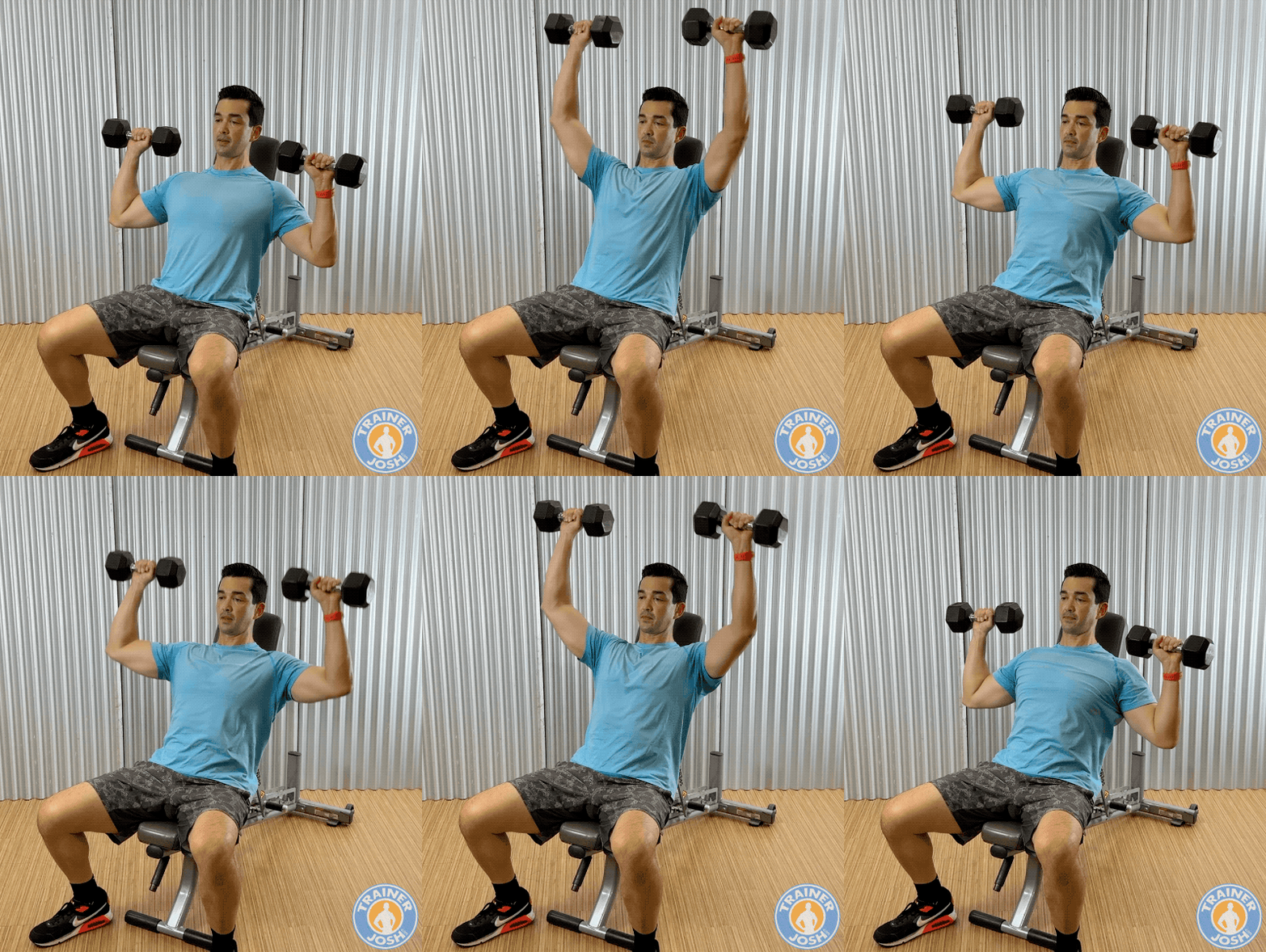
Dumbbell shoulder presses are the number one shoulder exercise because they hit all three heads. This allows for heavier weights for progressive overload, engages stabilizing muscles, and has a high range of motion. But it primarily works the front of your shoulders.
I prefer doing this exercise seated to reduce lower body involvement, back strain, and momentum.
- Set up a bench so it’s about 90 degrees vertical or slightly less. Sit on the bench and hold a dumbbell in each hand. Then bring the dumbbells up so they’re at shoulder height with your palms facing forward and your elbows bent about 90 degrees.
- Squeeze your shoulder blades together on your back. Arch up your chest and tighten your abs. Exhale and press the dumbbells straight overhead in a controlled manner until your arms are fully extended but your elbows aren’t locked out completely.
- Keep your back pressed against the bench and your abs tight throughout the movement. Do not bring the dumbbells together and clink them, but instead press them directly over your shoulders.
- Breathe in as you slowly lower the dumbbells back down to shoulder height to repeat the movement.
Dumbbell Side Raises
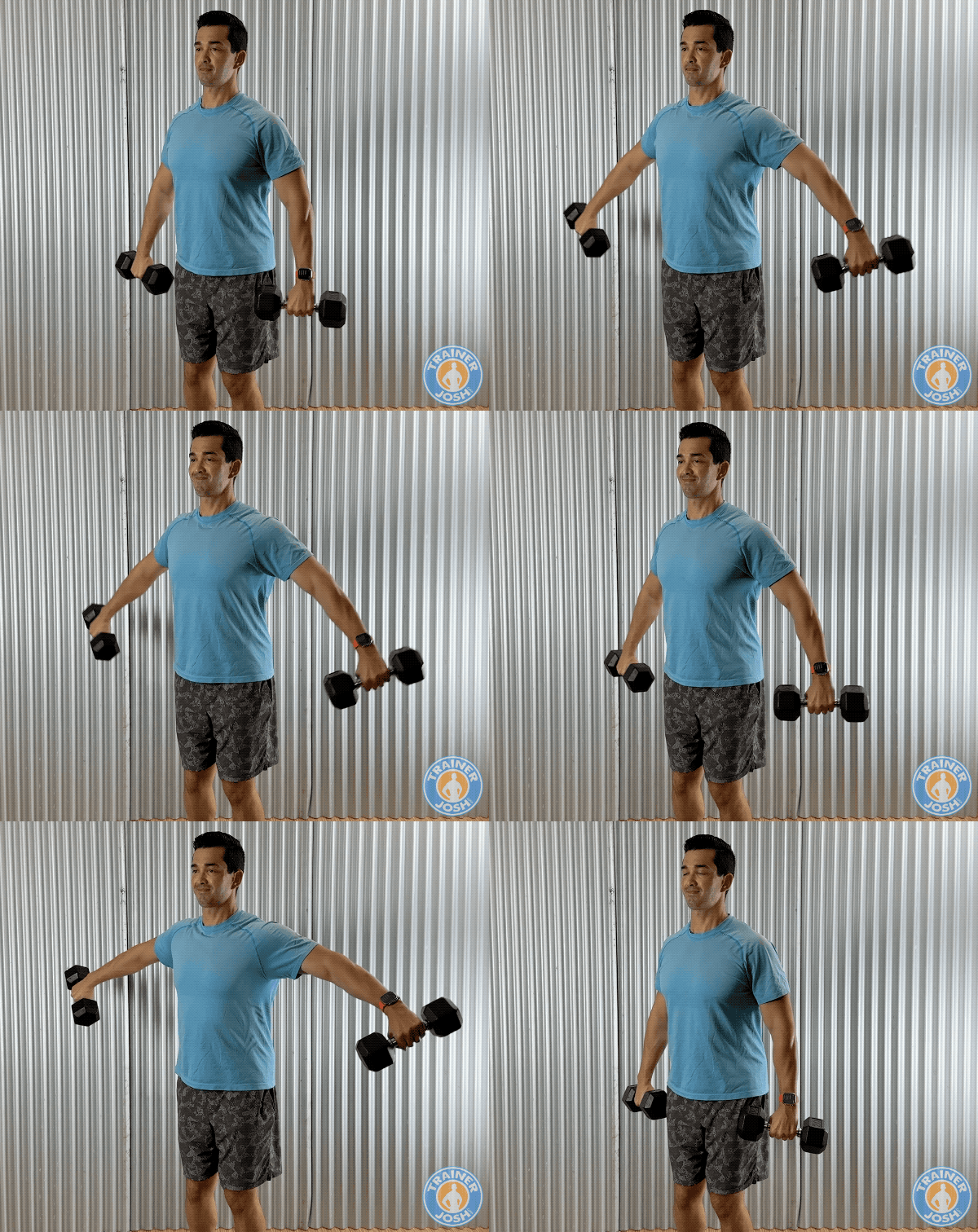
This exercise is terrific for isolating and building your side lateral deltoids. It will enhance shoulder definition and aesthetics by giving you that wide, rounded shoulder look. It also improves shoulder symmetry by balancing out the front and the back.
- Get in the starting position by standing tall with a dumbbell in each hand at your sides, your palms facing inward towards your body, and keeping a slight bend in your elbows. Squeeze your shoulder blades on your back together, arch up your chest, and tighten your abs.
- Breathe out as you raise the dumbbells out to your sides until they reach shoulder height. Focus on leading with your elbows, not your hands. Don’t allow your arms to drift out in front of your body, since you’ll compensate by using more of your traps.
- Pause briefly at the top and squeeze your side delts.
- Breathe in as you slowly lower the dumbbells back down in a controlled motion. Don’t just let them drop. Avoid swinging or using momentum to maximize the exercise.
Trainer Tip: Use a lighter weight dumbbell and have strict control to keep tension on your side delts. Tilt your pinky slightly upward at the top like pouring water from a jug to increase lateral delt activation. Keep your wrist neutral and avoid shrugging with your traps to keep it isolated on your side delts.
Dumbbell Reverse Flyes
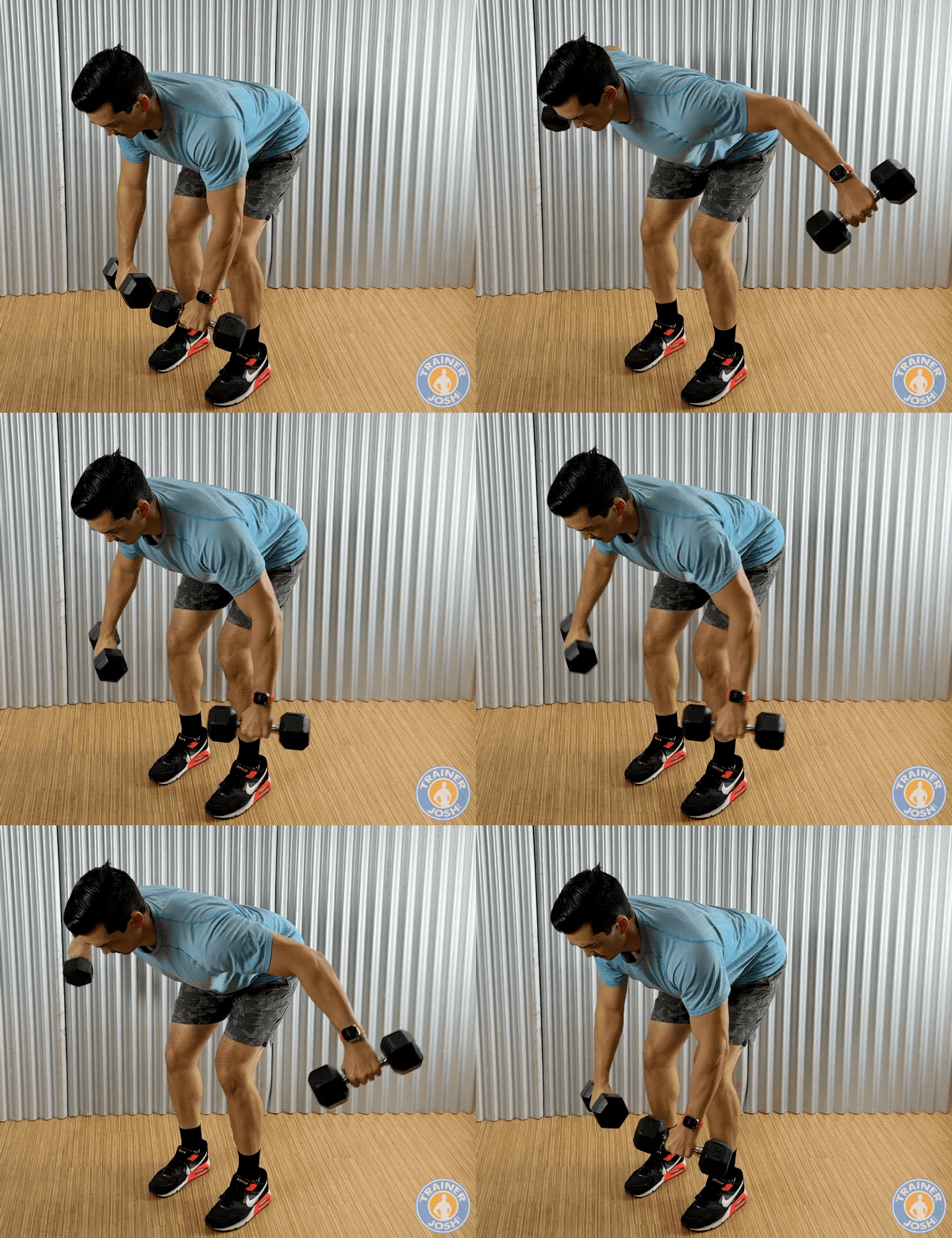
This exercise isolates your rear posterior delts. This is a very commonly under-trained shoulder head. It’ll help improve your posture by strengthening your upper back and reversing the rounded slouching shoulders.
- Get in the starting position by hinging forward at your hips with a flat back and your knees bent. The dumbbells should be hanging below your chest with your palms facing towards your legs.
- Tighten your abs to engage your core and take stress off your lower back. Squeeze your shoulder blades together and arch out your chest.
- Breathe out as you raise the dumbbells out to the sides in a wide arc. Keep a slight elbow bend and your arms in a fixed position throughout the movement.
- Pause briefly at the top and hold for a second to fully contract your rear delts. Then, breathe in as you slowly lower the dumbbells back down to the starting position in a controlled fashion.
Trainer Tip: Avoid using momentum and go with lighter weights so you can have strict control throughout the movement. Focus on pulling with your elbows, not your hands, to engage your rear delts better. Keep your neck neutral and don’t crane your head upward.
Beginner Dumbbell Arm Workout Routine
If you’re a beginner, keeping it simple and focusing on quality over quantity will be best for getting quick results. You don’t need a ton of exercises to see progress, and you’ll do a lot better by mastering a handful of the best moves for each muscle group of the biceps, triceps, and shoulders.
This not only keeps your workouts focused but prevents analysis paralysis and becoming overwhelmed with too many options. Following the same simple routine but focusing on the quality of each rep and set should be your main goal and will produce the best results.
As a beginner, a balanced arm workout will include at least 1-2 bicep exercises, 1-2 triceps exercises, and 1-3 shoulder exercises too. This way, you’ll build strength and muscle while creating well-rounded arm development for a toned, balanced, and athletic look.
Train your arms one to three times per week with at least a day of rest in between. If you want to focus on toning and strengthening your arms, you can go up to three times per week. Just make sure you give enough time to recover so your muscles can rebuild and grow. You don’t want to overdo it because that will slow your progress, cause more soreness, and even lead to an injury.
Start with 2-3 sets of 8-12 reps per exercise using a weight that feels challenging for the last 3 reps but doesn’t cause you to lose proper form. For most, this weight range can be between 5-25 pound dumbbells. As you get stronger, increase the weight, add an extra set, or slow the tempo to continue progressing. This is progressive overload, and it’s a real secret to getting long-term results.
Form and consistency will matter the most, especially as a beginner. So don’t stress about having to lift too heavy right away. Instead, focus on smooth, controlled movements that use a full range of motion. Make sure you feel the deep stretch at the bottom and a strong contraction at the top.
Don’t rush or use momentum by swinging the weight or your body. Showing up regularly and staying consistent with good form will always beat those once-in-a-while hardcore workout sessions.
Intermediate Dumbbell Arm Workout Routine
After nailing the basics and staying consistent, it’s time to take your arm workouts up a notch by increasing the training volume. Here, you want to focus on optimizing intensity, variety, and progression for continual gains using progressive overload techniques.
Prioritizing progressive overload is more than just adding weight or reps to continue getting results. Try using these proven methods in your workout routine to add variety and continually challenge your arm muscles for growth.
- Micro-progressions (add reps, slow down the tempo, add partials)
- Increase set volume (e.g., 4-5 sets per exercise)
- Used advanced techniques (drop sets, supersets, rest-pause)
Beginners doing these dumbbell arm exercises will thrive just on the simplicity and focus, but intermediate and advanced lifters should rotate their arm exercises for different grips, angles, and movement paths to hit their arm muscles from new directions.
Increasing the intensity by adding supersets, like pairing a bicep exercise with a tricep exercise back to back, will create a killer pump and make your workouts go a lot faster by improving time efficiency. For example, you could pair dumbbell bicep curls with dumbbell overhead tricep extensions.
Slow down the eccentric phase of the lift by 3 to 4 seconds per repetition. Lowering the weight slowly like this will maximize muscle tension to force strength and muscle growth. Isometric holds by squeezing at the top of a curl or extension for 2 to 3 seconds will also increase the intensity in the muscle.
If your results are plateauing and your arms aren’t growing anymore, try to change up your rep schemes and exercise order. And pick up some new exercises. It’s easy for intermediate and advanced lifters to chase the pump instead of focusing on quality reps and rest. So, always prioritize form and recovery.
You can find additional dumbbell arm exercises of mine below:
- 10 Best Dumbbell Bicep Exercises
- 10 Best Dumbbell Tricep Exercises
- 10 Best Dumbbell Shoulder Exercises
Losing Arm Fat and Building Muscle
Spot reduction is mostly a myth, and training your arms more doesn’t cause fat loss specifically around them. Fat loss comes off your whole body, not just where you lift weights.
However, new studies are showing that localized fat burning near the muscles trained can work, but only if you’re already losing weight and fat.5 So you can’t zap away your arm fat by doing curls alone, but training arms while in a calorie deficit can help melt fat from all over, including your arms.
You must consume fewer calories than you burn. Putting your body in a calorie deficit forces your body to turn that stored fat into energy. And some of that will come from fat on your arms. You’ll still build arm muscle doing these exercises in
If fat loss is your goal, strength training helps preserve the muscle that gives your arms shape—but nutrition and appetite support still matter. BioTRUST’s GLP-1 Companion Stack is designed to complement a calorie-controlled plan by supporting protein intake, appetite management, and lean muscle maintenance as you lose weight.
A 3-part daily stack designed to support people using GLP-1 medications or losing weight naturally. It combines muscle, protein, collagen, and appetite support to help you maintain a healthier body composition as you lose weight.
- Natural GLP-1 Support: Helps support healthy appetite signals, fullness & metabolic function
- Lean Muscle Support: Helps preserve muscle, strength & healthy body composition during weight loss
- High-Protein Collagen: Adds 20 g of protein with 5 collagen types to help support daily protein intake
- Skin, Joint & Hair Support: Provides collagen peptides to support skin elasticity, joints, hair & nails
- 3-Part Weight-Loss Support: Combines muscle, protein/collagen & appetite support in one simple daily stack

Use these dumbbell exercises and workout plan to build up your arm muscle. This can help add shape, toning and make your arms look leaner even with the same amount of fat on them.
In addition to these arm exercises, you’ll want to add in cardio and full-body workouts. High intensity cardio and full-body strength training help burn the fat off that was mobilized by working out your arms, which turns into actual fat loss.
Do your cardio after lifting weights. You want to prioritize your strength for lifting weights because doing cardio first will cause pre-fatigue. You’ll also burn more fat by doing cardio after lifting weights by oxidizing your body’s available free fatty acids.
FAQ
How many arm exercises should I actually do?
You don’t have to overcomplicate things. Three to five exercises that target your biceps, triceps, and shoulders per arm workout is perfect. I know many beginners can get overwhelmed by huge lists of exercises, but you’re better off focusing on the top ones and maximizing them.
Focus on feeling the muscle work with the Mind-Muscle Connection. Slow down the tempo and maximize the contraction at the top and the stretch at the bottom.
Is it okay to do arms every day?
You shouldn’t work out your arms every day. At the most, you should train your arms 2-3 times per week. And you have to remember that if you’re lifting out your back and chest, your arms will also get a secondary workout.
You should have at least a day of rest between arm workouts if you do them multiple times per week. And preferably not following a back or chest workout.
How do I fix one arm being stronger than the other?
This is common because we all tend to favor one arm over the other, but dumbbells are perfect for fixing this. When doing unilateral arm exercises, focus on starting with your weaker arm first, then match the reps on your stronger side, and over time, your strength will even out.
I don’t want to get bulky. Will lifting dumbbells make my arms get too big?
In my 20 years of experience as a personal trainer, it’s very difficult to accidentally get bulky by lifting weights, especially for women or beginners.
Building bulky muscles takes years of heavy lifting and eating in a calorie surplus. Most users will benefit from resistance training with dumbbells to make their arms look more toned and defined.
If I’m not sore the next day, does that mean my arm workout didn’t work?
Soreness can help indicate if the workout you did was effective. Delayed onset muscle soreness (DOMS) is a sign of microscopic muscle tears caused by the workout that are then forced to become stronger and grow during the rebuilding phase. Muscle soreness happens especially when introducing new stimuli, but it’s not the sole or definite indicator of a great workout.
Continue the core philosophy for building size and strength by increasing progressive overload, maximizing mechanical tension, and changing the stimulus. The goal is to create favorable adaptation through your workouts by increasing muscle size and strength.